China Views U.S. Foreign Aid Retrenchment as a ‘Historic Opportunity’
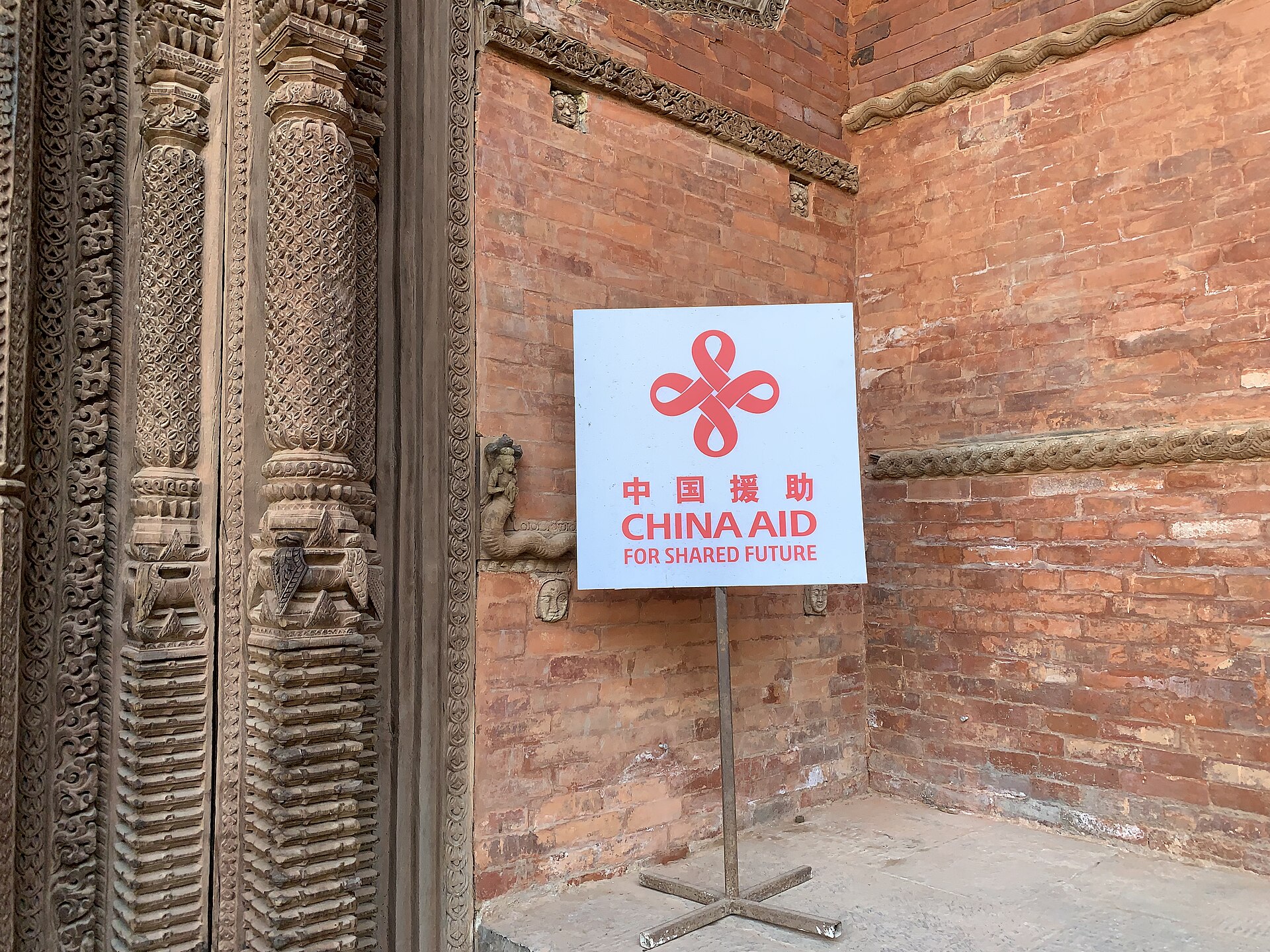

After the U.S. Agency for International Development (USAID) was dissolved in July 2025, commentators debated whether China would “replace” or “fill the void” the agency left. A year on, the answer is clearly no: Beijing appears to have neither the capacity nor the will to succeed the United States as the preeminent provider of global foreign assistance. Beyond the easy rhetorical gains of funding a few headline-grabbing projects abandoned when U.S. aid ceased, Beijing has not stepped up its commitments. The 2026 budget line items for foreign assistance and international development cooperation at the China International Development Cooperation Agency and the Ministry of Commerce (MOFCOM)—China’s two main aid-administering bodies—have plateaued or, in some cases, decreased.
Foreign aid gets limited attention in Chinese domestic media, reflecting its low salience and popularity at home. The little mainstream coverage of USAID’s dissolution focused on three themes: age-old accusations of underhanded political interventionism, turmoil in U.S. domestic politics, and pushback on U.S. commentary that China is poised to take advantage of U.S. withdrawal. More nuanced conversations, however, are playing out in Chinese academia and research institutions about how Beijing should respond to the challenges and opportunities posed by the U.S.’s abrupt retreat from the foreign aid space. The below review of articles published in the past year by top academic journals and think tanks—several of them government affiliated—reveals that experts view the U.S. foreign aid retrenchment as a “historic opportunity.” Far from advocating that Beijing replicate or replace USAID, though, they call for China to tread carefully and play to its strengths to reap the rewards. Ultimately, many influential Chinese academics and experts see the foreign aid sector and the “global public welfare vacuum” created by the U.S. retreat as a microcosm for a broader reconfiguration of international power, from U.S. “unipolar hegemony” to “multipolar co-governance,” in which China has a leading role to play.
U.S. Strategic Missteps Create a “Historic Opportunity”
Chinese scholars and policy analysts widely recognize USAID as a critical asset for U.S. foreign policy, soft power, and the global aid regime—one for which Beijing has no direct counterpart. As Elon Musk’s Department of Government Efficiency took an axe to USAID in spring 2025, a fellow at a MOFCOM-affiliated research institution mused: “Setting national positions aside, from a purely diplomatic standpoint, USAID is precisely one of the key departments of U.S foreign strategy since the Cold War—one of the agencies through which the U.S. could carry out on-the-ground work abroad and gain a deep understanding of local realities—and it plays a special role in America's globalist foreign strategy.” The irony is difficult to miss: The agency Trump and Musk dismissed as wasteful and dismantled was, in Beijing’s view, a valuable strategic tool.
In the months after USAID’s dissolution, Chinese experts on the United States analyzed the domestic drivers and international consequences of its closure. Several scholars note that because USAID was the world's largest donor, its shuttering dealt a major blow to the international aid regime and global governance efforts, and also irreparably damaged U.S. soft power and efforts to promote democracy abroad. The dean of the School of International Development and Cooperation at the University of International Business and Economics in Beijing wrote that “the Trump administration’s shutdown of USAID directly cut off the funding chains and organizational channels for numerous ‘democracy promotion’ programs, likely stalling related activities and weakening America’s soft-power capacity for political interference.” A scholar at Beijing Foreign Studies University’s Center for American Studies opined on consequences for U.S. pro-democracy efforts in China, noting that “the freeze on foreign aid has forced dozens of organizations that have long monitored Chinese public opinion, human rights, and labor rights to suspend operations or disband …. Given Trump’s disdain for traditional ‘values diplomacy’ America's willingness and capacity to intervene in Chinese human-rights issues may decline significantly for some time to come.”
Experts conclude, in sum, that the U.S. withdrawal from the foreign aid space is a massive strategic misstep that “deals a severe blow to global governance efforts across multiple fields, seriously damages U.S. soft power, weakens its capacity for overseas operations and intervention, and further intensifies domestic political polarization in the United States.” Furthermore, a scholar from the Chinese Academy of Cultural Heritage argues that cuts to aid “diminish the brand appeal of the neoliberal value system the U.S. championed” and “fully demonstrate to the world the inherent risk of its democratic political system.” Even if the U.S. resumes international aid in the future, one scholar argues, “it will almost certainly be unable to dispel recipient countries' fear of being abandoned again.”
Against this backdrop, scholars and analysts have identified a “structural rupture” of the existing international foreign aid space, the emergence of a “vacuum in global public goods provision,” and, ultimately, a period of “historic opportunity” for Beijing.
During a “Painful Period of Restructuring,” Beijing Must Play to Its Strengths, Proceed With Caution
Yet even as they identify a window of opportunity, Chinese analysts are wary of rushing through it. Scholars largely agree that the international foreign aid regime is entering a “painful period of restructuring” and assess that Beijing should not plow headlong into the vacuum Washington has left behind. The prescription that emerges is a familiar one in a system that heavily favors stability: Brace for short-term turbulence, double down on perceived strengths, and proceed with caution.
Analysts worry widely about increased political risk, arguing that “USAID’s withdrawal means not just the loss of funding in a specific field, but could trigger a series of chain reactions … thereby exacerbating existing social vulnerability in certain regions and creating significant external uncertainty for the sustainable implementation of China’s foreign aid projects.” Beyond the immediate turmoil, analysts identify other challenges—particularly in the narrative space—and urge caution and continuity. While stressing that aid programs should align with China’s official initiatives, experts are also wary of branding missteps and strive to “avoid being portrayed by external narratives as a tool of geopolitical competition and falling into the narrative trap of ‘replacing the West.’” Noting that Beijing failed to market the Belt and Road Initiative successfully to the international community and that the initiative was politicized as “the Chinese Marshall Plan,” and a “debt trap,” MOFCOM-affiliated researchers conclude that there is an “urgent need to reconstruct their narrative and discourse system” on foreign aid-related initiatives. Writing in a prominent academic journal in August 2026, scholars at the Jinan University School of International Relations note that Chinese social organizations working in international aid walk a fine line: They must align with domestic strengths and priorities but also “carefully manage the degree to which project activities are funded by government resources, guarding against falling into a ‘neocolonialism’ narrative.” All told, experts assess that, because of these challenges, China has yet to “translate more of [its] distinctive … concepts into common terminology and operational guidelines that facilitate international understanding and acceptance.”
Amid the heightened uncertainty, analysts judge that Beijing should not try to replicate or replace U.S.-style foreign aid. It should, instead, look inward, address its own challenges, and capitalize on its perceived advantages to underwrite a new international foreign aid paradigm. To do so, experts largely suggest doubling down: Continue to align closely with existing global initiatives and amplify connections with the Global South; troubleshoot and optimize China’s unique aid-trade-investment approach to “break through the limitations of a single form of aid and build a composite foreign development cooperation model”; and maintain and increase financial contributions to the United Nations and other multilateral institutions to “enhance China’s influence in governance structures, strategic planning, and project implementation.” Experts also recommend concentrating resources toward programs and regions most severely affected by U.S. aid cuts, and engaging further in “emerging fields … where international rules are still taking shape.” According to a researcher at the Chinese Institute of International Studies—a Ministry of Foreign Affairs-affiliated think tank—doing so will allow China to exploit U.S. withdrawal to “establish replicable cooperation models and policy tools in key regions, … reflect China’s moral standing in international development cooperation,” and “gradually reinforce recipient countries’ perception of China as a ‘reliable partner.’”
Foreign Aid as “a Battlefield Without Smoke”
Underpinning many of these analyses is a conviction that the turbulence currently roiling the foreign aid sector is a microcosm of a broader shift in global governance and international power. Foreign aid, experts argue, has effectively become a “battlefield without smoke,”—“a key arena for the contest over interests, institutions, and the international order” that “has been placed on the front lines, becoming—as never before—a main battlefield in the great power rivalry.” In their view, the world has reached an inflection point at which the U.S. is ceding global leadership and responsibility, and China is increasingly well-positioned to step in, on its own terms, to "redefine the power map and value baseline of the 21st-century international public welfare order."
To be sure, Western analysts have commented for years on China’s increasingly assertive efforts to shape international organizations and global governance. But while Beijing recognizes it has “achieved notable practical results” on many fronts, Chinese experts still judge those efforts as largely failing to “translate concrete achievements into normative discourse with international influence.” They attribute this shortfall to a lack of experience, insufficient talent “fluent in the international working language, deeply versed in international rules” and with adequate “cross-cultural practical capacity,” and weak international discourse power. As a result, “China’s influence over deep-level rule-setting processes—such as core agenda-setting, the allocation of management authority over major special funds, and the revision of key international standards—still lags behind traditional Western powers.”
Now, however, Chinese experts appear increasingly confident that structural changes catalyzed by the U.S. foreign aid retrenchment constitute a broader shift in the global governance system from U.S.-led “unipolar leadership” toward “multipolar co-governance,” under which China can and should play a leading role. One article argues that amid the U.S. retreat, “China can seize the opportunity to actively participate in—and even lead—discussions and the setting of relevant international standards … [T]his will help organically integrate its local practices and innovative achievements into the shared discourse and rules system.” The Jinan University scholars write that the vacuum in global public goods provision “creates strategic opportunities to reshape rules and discourse amid changes in the global governance system.” Yet another expert concludes that, “[i]n the narrative and action space left open by USAID's departure, China has both the capability and the responsibility to work … together with countries around the world to shape a fairer, more diverse, and more effective new global ecosystem.”
It remains to be seen how effectively China can capitalize on this perceived window of opportunity and convert disappointment and disillusionment with the U.S. into concrete gains. However, it stands to reason that as long as Washington keeps up the self-sabotage, Beijing can get ahead in the battle for global influence by default—without doing or spending substantially more. Some early markers suggest progress, particularly on the narrative front that most concerns Beijing. Still, although China is poised to reap the rewards from U.S. withdrawal and isolationism, its foreign assistance spending and multilateral contributions represent a very small share of its economy and are relatively low compared to other providers. Beyond the great power competition, as global aid programs continue to shrink, there are no real winners—only those left behind.