Combatting Misinformation During States of Emergency
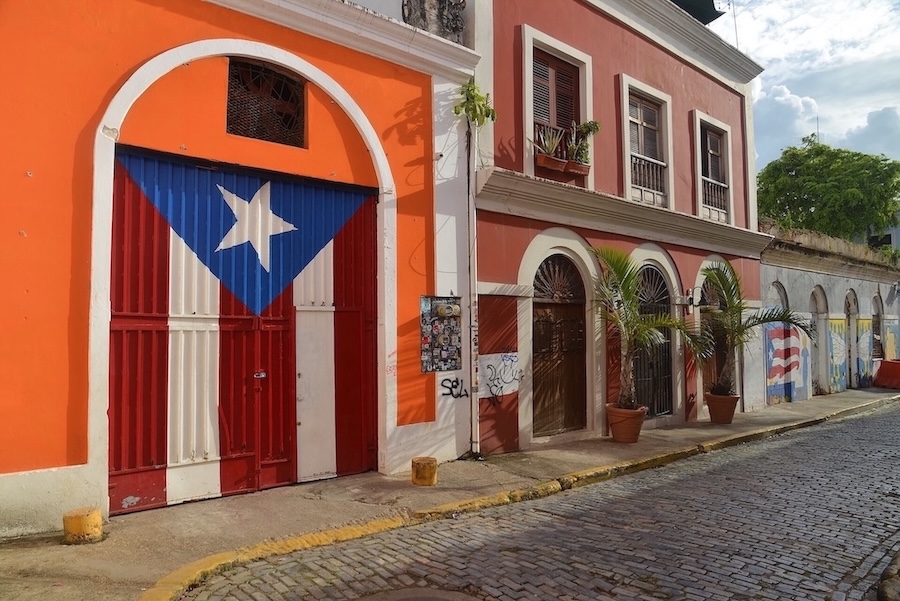

In March 2020, as a novel respiratory virus known as the coronavirus made its way across the globe, the governor of Puerto Rico declared a state of emergency, shuttering nonessential businesses and imposing a curfew on the Caribbean island’s three million residents. In its response to the unfolding public health crisis, the American territory’s government also deployed a statutory tool that criminalized the spread of so-called fake news during states of emergency. As it turned out, the statute would have staying power—the state of emergency lasted three years.
On Aug. 4, a unanimous U.S. Court of Appeals for the First Circuit struck down the law, reinforcing the First Amendment’s skepticism of state suppression of misinformation. The three-judge panel held that the statute enacted by the Legislative Assembly of Puerto Rico criminalizing certain false statements during governor-declared emergencies violated the First Amendment’s free speech protection.
The ruling has implications beyond the specific statute it considered. The Puerto Rican legislature had passed the law in an effort to combat the intentional spread of false information during disasters or crises, which can endanger public safety by sowing confusion and eroding public trust in government agencies charged with managing emergency responses.
The First Circuit’s holding, however, underscores that the First Amendment does not recede during government-declared emergencies. Despite the real dangers of misinformation, especially online, the decision follows a line of foundational Supreme Court jurisprudence suggesting that the First Amendment prefers counter speech to address misinformation to the risk of government officials marshalling the state’s power to suppress speech they disfavor.
The statute at issue in the case, the Puerto Rico Department of Public Safety Act, contained a provision codified as Article 5.14(a) of Law 20 (previously codified as Article 6.14) that made it unlawful during a declared state of emergency for a person to purposefully, knowingly, or recklessly give “a warning or false alarm, knowing that the information is false, in relation to the imminent occurrence of a catastrophe in Puerto Rico,” which puts the “safety of one or more persons at imminent risk” or “endangers public or private property.”
Writing for the appellate panel, Judge Gustavo A. Gelpí acknowledged that Puerto Rico’s stated interest in “limiting false information that risks public safety during an emergency” was “not without significance.” Yet the court ultimately held that the regulation gave the government too much power to quell speech with too few guardrails in place. The threat of punishment for speaking falsely could deter speakers from making true statements, “particularly during times of emergency when it is most imperative that the public be well-informed and the government held to account.”
The Puerto Rico Department of Justice, which represented the government before the First Circuit, filed a petition on Aug. 18 for the First Circuit to rehear the case en banc.
The Prosecution of a Pastor
Puerto Rico journalists who reported critically on the commonwealth’s handling of the coronavirus pandemic brought a pre-enforcement challenge to the false-warning statute in May 2020 in the U.S. District Court for the District of Puerto Rico. The federal lawsuit followed a chain of events that unfolded in Puerto Rico in the first months of 2020: the spread of a novel coronavirus, the declaration of a state of emergency by the territory’s then-governor, and the arrest of a local pastor accused of spreading false rumors via WhatsApp.
On March 12, 2020, then-Gov. Wanda Vázquez-Garced invoked Law 20 to declare a state of emergency. By declaring a state of emergency, the government unlocked new powers, including the authority to prosecute certain false statements under Article 5.14(a). The provision criminalized raising false alarms about “the imminent occurrence of a catastrophe in Puerto Rico” and spreading rumors or false alarms regarding “non-existent abnormalities” during a declared state of emergency. Violating Article 5.14(a) constituted a misdemeanor punishable by a maximum of six months imprisonment, a $5,000 fine, or both. If the underlying conduct caused more than $10,000 in damages, the offense was enhanced to a felony punishable by a fixed term of three years imprisonment.
The next month, the Legislative Assembly of Puerto Rico passed an amendment to Article 5.14 that also made it a crime for any person to “transmit … through any social network or mass media, false information with the intention of creating confusion, panic or collective public hysteria, regarding any proclamation or executive order decreeing a state of emergency.” The amendment was intended to discourage “conduct undermin[ing] the safety of the people and the social order” that “endanger[s] the health and lives of citizens.”
Under this new provision, the government charged Pastor José Luis Rivera Santiago for allegedly disseminating a false alarm via WhatsApp. The pastor was accused of spreading a rumor that the government was going to order a shutdown of all businesses in response to the pandemic. According to the government, Rivera Santiago’s speech led to a rush on grocery stores. The Court of San Juan later dismissed the prosecution for lack of probable cause.
The plaintiff journalists argued that the pastor’s prosecution stoked fears that they would be prosecuted next for their reporting on the government’s response to the pandemic, according to their initial complaint. The plaintiffs asserted that the statute chilled their reporting on the pandemic, a fast-moving crisis in which “inadvertent inaccuracies [were] inevitable even in the most thoroughly vetted reporting.”
While the complaint was pending, the legislature passed a law that struck the recent amendment from Puerto Rico’s books and amended Article 5.14(a) to include a mens rea component, requiring, as a condition to impose liability, that the targeted statement was made with knowledge that it was false or with reckless disregard for its veracity. The statute made it punishable for any person who “on purpose, knowingly or recklessly”:
Gives a warning or false alarm, knowing that the information is false, in relation to the imminent occurrence of a catastrophe in Puerto Rico, or disseminates, publishes, transmits, transfers or circulates through any means of communication, including the media, social networks, or any other means of dissemination, publication or distribution of information, a notice or a false alarm, knowing that the information is false, when as a result of its conduct it puts the life, health, bodily integrity or safety of one or more persons at imminent risk, or endangers public or private property.
The plaintiffs subsequently filed an amended complaint arguing that the revisions did not cure the statute’s constitutional defects. On March 31, 2023, the district court agreed and permanently enjoined the statute, ruling that it was a content-based restriction on speech that failed to survive strict scrutiny—the most rigorous standard of judicial review.
Puerto Rico’s solicitor general appealed to the First Circuit.
Interpreting Lies at the Supreme Court
Arguments before the First Circuit applied foundational Supreme Court cases on false statements. The Supreme Court has held that certain false speech, including perjury and defamation, is constitutionally punishable. But the Court has yet to clearly define where the First Amendment’s zone of protection for lies starts and ends.
On appeal, Puerto Rico made two main arguments. First, the government argued that the statute targeted only false statements made “with knowledge that they were false or with reckless disregard for whether they were false or not,” which it contended was a category of speech unprotected by the First Amendment. Second, even if the statute targeted First Amendment-protected speech, the government argued that an intermediate standard of review was appropriate because the statute was content neutral, meaning it did not discriminate on the basis of subject or viewpoint.
To support its claim that intentional false speech or falsehoods made with reckless disregard for their veracity do not receive First Amendment protection, the government cited decisions by the Supreme Court and the First Circuit that held that defamation laws may criminalize false statements that are made knowingly false or with a reckless disregard for the truth.
The Puerto Rico government argued that if the Supreme Court and First Circuit have held that the intentional spread of lies is constitutionally punishable when “the reputation of one” is at stake, then this reasoning should apply equally when the “safety of many” is put at risk during states of emergency.
In its Aug. 4 decision, the unanimous First Circuit panel stated that the government misread those precedents. Those cases were decided in the specific context of defamation—a historically unprotected category of speech—and did not stand for the broader proposition that knowingly false statements receive no First Amendment protection. The court quoted United States v. Alvarez, in which a plurality of the Supreme Court “reject[ed] the notion that false speech should be in a general category that is presumptively unprotected.” Two justices concurring with the judgment in Alvarez also agreed that false statements do not constitute a category of speech exempt from First Amendment protection.
In Alvarez, a fractured Supreme Court set aside the Stolen Valor Act of 2005, which made it a federal misdemeanor to falsely represent the receipt of a U.S. military decoration or medal. The plurality held that criminalizing a false statement alone, without any intent to commit fraud or receive a material benefit, violated the First Amendment and “would endorse government authority to compile a list of subjects about which false statements are punishable.” Justice Anthony Kennedy wrote for the plurality that “[o]ur constitutional tradition stands against the idea that we need Oceania’s Ministry of Truth,” alluding to George Orwell’s dystopian political novel “Nineteen Eighty-Four.”
Even if intentional false statements or false statements made with reckless disregard for the truth receive First Amendment protection, Puerto Rico argued that the court should apply an intermediate standard of review because the statute was content neutral. Under First Amendment doctrine, content-based restrictions are subject to strict scrutiny, which requires that a government action be narrowly tailored to achieve a compelling interest. Puerto Rico argued that the statute was content neutral because it would apply to speech regardless of its subject—from statements regarding “the imminent arrival of a hurricane” to “class schedules in schools and universities”—so long as the speech was a warning, knowingly false, and made during a declared state of emergency.
The First Circuit disagreed with the government’s analysis. A statute targeting false speech is “inherently” content based, the panel held, because the government would need to look to the speech’s truthfulness to determine whether the law was violated. The court therefore went on to apply strict scrutiny.
Article 5.14(a) Fails Strict Scrutiny
The First Circuit acknowledged the government’s interest in limiting false information that endangers public safety during an emergency, especially public health crises. Nevertheless, the panel held that the statute was unconstitutional because it lacked sufficient guardrails and the government could have achieved its interest through less speech-restrictive alternatives.
The statute was limited to governor-declared states of emergency, but this was hardly a limiting principle, according to the court, because the same act empowered the governor to declare a state of emergency.
The statute also failed to include additional limitations that appear in other false reporting statutes that narrowed their scope to a subgroup of lies where harm was more likely to result. As Justice Stephen Breyer observed in his concurrence in Alvarez, statutes “prohibiting false claims of terrorist attacks, or other lies about the commission of crimes or catastrophes, require proof that substantial public harm be directly foreseeable, or, if not, involve false statements that are very likely to bring about that harm.” In contrast, the Puerto Rico statute imposed liability merely if an intentionally false report put persons or property at “imminent risk,” a “nebulous” term left undefined by the statute, according to the First Circuit.
The First Circuit held that the government also failed to show why the regulation was necessary to achieve the government’s interest. The court cited counter speech, a First Amendment doctrine that asserts the harms caused by speech can be neutralized by more speech—not less. In the context of the coronavirus pandemic, the court reasoned that “statements arguing that masks are ineffective to stop disease transmission could be countered by government messaging explaining the benefits of wearing masks.”
For these reasons, and some more, the panel held that the statute failed to withstand strict scrutiny.
* * *
The First Circuit’s decision setting aside Puerto Rico’s statute criminalizing misinformation during state-declared emergencies reinforces a negative theory of the First Amendment. This theory protects speech not because of speech’s positive value—such as its ability to facilitate democratic governance or the discovery of knowledge—but because of a distrust of government, which may abuse its power to target viewpoints it disfavors.
Warnings that spread false information may be especially dangerous to public safety during a natural disaster or public health crisis. Yet the First Amendment’s free speech protection persists in times of stability and crisis. This protection requires the government to meet a heavy burden before it can burden a fundamental right.