Courts Are Striking Down Warrantless Flock Camera Use
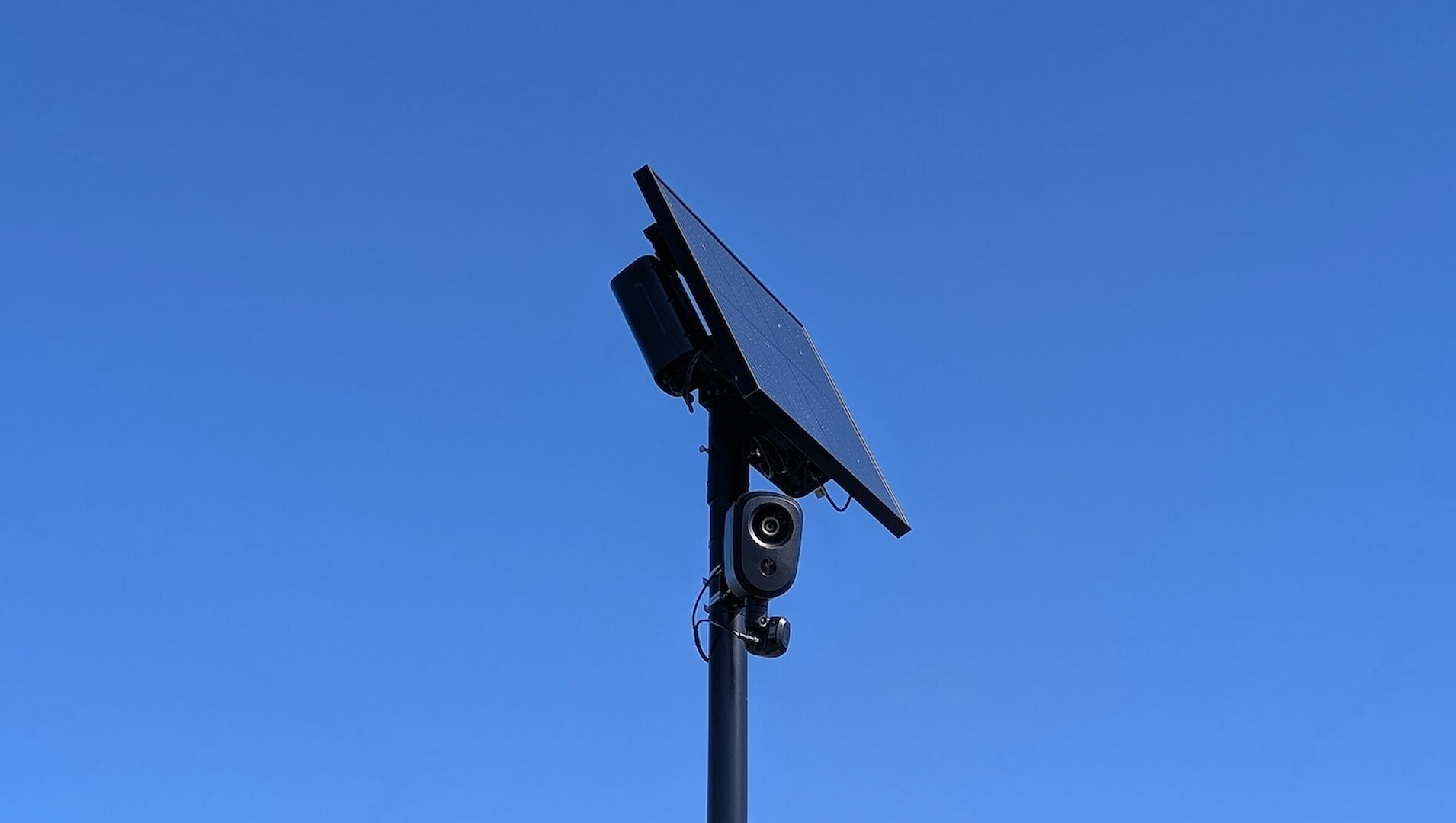

Flock cameras and other license plate readers have generated remarkable political controversy in recent years. These cameras—often called automated license plate readers (ALPRs)—record license plate numbers and track vehicles across wide areas with the goal of solving crimes.
In cities across the United States, citizens have protested and vandalized ALPRs, objecting to their potential for near-constant surveillance of public roads and public movements. ALPRs, especially Flock cameras, have also been linked to severe police abuses, with numerous cases reported of police officers stalking women using ALPR systems. Amid the backlash, more than 80 cities have canceled or declined to renew contracts for ALPR systems. Defenders of ALPRs point to studies suggesting they can reduce car thefts and help solve other crimes, though the empirical evidence is contested.

Image Source: Wikimedia Commons, see https://commons.wikimedia.org/wiki/File:Flock_Safety_ALPR_Camera_%2853833285849%29.jpg
Until recently, however, courts had ruled that these ALPR systems were legal. In the leading case, Commonwealth v. McCarthy, the Massachusetts Supreme Court held in 2020 that a license plate reader system operating at a few points on major roads did not violate the Fourth Amendment. Because the cameras captured only a few locations and recorded only a few data points about a defendant’s travels, they did not reveal private details of his life or collect a massive quantity of data about him. Accordingly, the Massachusetts Supreme Court held they did not violate the Fourth Amendment. Several federal courts subsequently reached similar holdings, finding the use of ALPRs constitutional.
Yet recent changes in the use of ALPRs and modern Fourth Amendment doctrine suggest ALPRs might be unconstitutional after all. Earlier this month, a federal court in the Northern District of Oklahoma declared for the first time that warrantless ALPR use violates the Fourth Amendment. More such holdings may follow, because modern ALPR systems have the potential to pervasively track people’s movements and facilitate police abuse in ways the Supreme Court has already declared unconstitutional.
Courts Are Starting to Find That Flock Cameras Violate the Fourth Amendment
On Oct. 1, U.S. District Judge Sara Hill ruled that a deputy sheriff’s use of an ALPR camera database violated the Fourth Amendment. In United States v. Kyle, a deputy sheriff in Tulsa, Oklahoma, ran a sport utility vehicle’s (SUV’s) California license plate through an ALPR system, which revealed the SUV had traveled across several states in the previous 30 days as captured by Flock and other ALPR cameras. In total, the ALPR systems reported more than 50 sightings of the car across multiple states.
The record was unclear about the total number of cameras involved in this multistate system, along with several other technical details of the system. This is surprisingly common in ALPR cases, in which police often do not fully disclose the extent of the ALPR systems they employ.
In any event, the federal district court held that the ALPR system’s use violated the Fourth Amendment. The court noted that ALPR surveillance followed the car for 30 days and essentially produced “a detailed log of every place [the] vehicle has been with supporting photographic evidence.” Moreover, as in Supreme Court cases Kyllo v. United States and Carpenter v. United States, the Oklahoma court felt that it “must take account of more sophisticated systems that are already in use or in development.”
ALPR systems such as the Flock system at issue in Kyle employ vast numbers of cameras nationwide, as well as cameras like the one on the deputy sheriff’s vehicle that entered its own license plate photographs back into the vast Flock system. The Oklahoma district court also noted that “[i]t is not difficult to imagine what is next: more cameras on more street signs, buildings, and perhaps on more police cars,” and possibly even drone-mounted surveillance cameras. In light of these potentially extensive surveillance systems, the court held that using an extensive ALPR system required a warrant.
The district court’s order echoed the Supreme Court’s recent opinion in Chatrie v. United States, in which the Supreme Court held that a warrant is required under the Fourth Amendment to obtain location data from companies such as Google when people use apps like Google Maps. In that case, the Supreme Court emphasized app location data’s potentially revealing nature. Even if the police obtained only a few hours of such data, they could expose people’s trips to sensitive places, including a psychiatrist’s office, a plastic surgeon’s office, an abortion clinic, a strip club, a criminal defense attorney’s office, political rallies, a seedy motel, or a gun show.
The Oklahoma district court raised similar concerns, noting that ALPR tracking could “track and log a couple struggling to start a family at the fertility clinic. It could show how often someone visits a liquor store or casino. It could show which doctor someone goes to or what lawyer’s office someone visits.” ALPR surveillance could, much like cell phone tracking, expose the private details of people’s lives by tracking their movements.
ALPR tracking can also be extensive and widespread. As the district court emphasizes, ALPRs not only often collect “mundane information,” but they also “collect[] a tremendous amount of such information all the time.” ALPRs’ prevalence nationwide and the unceasing nature of ALPR surveillance increase their potential to infringe on privacy. And ALPRs track all vehicles, in a program of “indiscriminate mass surveillance,” rather than targeting a particular suspect.
For all of these reasons, the district court held that ALPR use violated the Fourth Amendment under recent Supreme Court precedents. Using ALPRs to monitor multistate movements over 30 days would require a warrant, the district court concluded, because the “government cannot go snooping through our personal lives and business without an adequate basis to do so.”
Yet the district court wasn’t the first court to find license plate readers unconstitutional. In 2024, a Virginia state appellate court held in Commonwealth v. Bell that the use of a Flock ALPR system in Norfolk violated the Fourth Amendment. The Norfolk Police Department had installed 172 Flock cameras throughout the city. The court compared this widely distributed camera system, capable of tracking drivers throughout Norfolk, to a tracking device that follows a car wherever it goes.
The state court also noted the potential for police abuse and for malicious actors hacking Flock cameras. Because the Flock system was so widespread throughout the city, tracking people in a manner akin to cell phone or GPS tracking, it constituted a Fourth Amendment search. The state court distinguished cases in other jurisdictions that involved far fewer cameras and more limited surveillance capabilities. The Bell and Kyle cases are the first to find ALPRs unconstitutional. More such cases will likely follow.
Chatrie and the Future of the Fourth Amendment
Whether using ALPRs requires a search warrant remains ambiguous after Chatrie, and lower courts may continue to split over the issue. But the Supreme Court’s opinion suggests that pervasive ALPR surveillance likely violates the Fourth Amendment. The Chatrie opinion sharply limits the “third-party doctrine,” which formerly provided that data disclosed to a third-party service provider lost all Fourth Amendment protection, allowing the government to obtain it without a warrant or cause.
Chatrie limited the third-party provider doctrine by holding that ordinary activities that expose people’s information to third parties, such as using cell phone apps, would no longer be deemed to waive people’s Fourth Amendment rights to protect their personal information. The Court also broadened the inquiry to the duration of a surveillance practice, declaring that a surveillance technique threatens privacy if it could be used for long-term or voluminous surveillance, even when the technique was used briefly. By changing how courts assess surveillance duration and sharply curtailing the third-party doctrine, Chatrie will likely expand the Fourth Amendment’s scope dramatically.
Among other considerations, the Supreme Court discussed in Chatrie three general factors related to criteria many lower courts used in the wake of 2018’s Carpenter. A Fourth Amendment search is likely to arise under Chatrie when (a) the information at issue can reveal personal details; (b) the surveillance technique at issue has the potential to subject people to extensive surveillance; and (c) the suspect did not voluntarily disclose their data so broadly or openly as to waive their rights. (I discuss this “Chatrie test” in more detail in my forthcoming law review essay on Chatrie.)
The second and third factors here are relatively clear. As for its breadth, ALPR surveillance can extend over long periods. Flock systems store data for as long as law enforcement clients select, although Flock’s default storage options vary between seven (for new customers) and 30 days (for existing customers).
As to disclosure, drivers do not voluntarily disclose their movements to the government when they drive on public roads because driving is an ordinary and largely unavoidable part of life. The key question under Chatrie is whether ALPR data reveals private life. ALPR cases may depend, as they often did before Chatrie, on whether an ALPR system is extensive, such that it can track people traveling to sensitive locations.
This is likely to vary across ALPR systems. Cameras set up at a few points in a city or region are unlikely to expose people’s private lives. But Flock systems with hundreds or thousands of cameras in a city risk exposing private details. And even courts addressing relatively sparse camera systems might, like the Oklahoma federal district court, look to future camera systems with technological developments capable of tracking people wherever they go and require a warrant on that basis.
The documented abuses of Flock’s surveillance systems also suggest that the systems are capable of exposing people’s privacy and that ALPR cameras can lead to the “arbitrary invasions by governmental officials” that the Fourth Amendment was designed to prevent, according to the Supreme Court. Police officers have used Flock systems to track their spouses, former romantic partners, or attractive strangers. Other officers have used Flock systems to track women seeking an abortion, conduct employment background checks, monitor protesters and activists, and conduct explicitly race-based surveillance.
ALPRs’ constitutional status remains somewhat ambiguous, and even extensive ALPR systems do not appear to track people as pervasively as cell phone tracking, which follows cell phone users virtually everywhere. How a court resolves a given case may hinge on the particulars of the ALPR system used, and how revealing it can be of people’s lives and movements. But courts may also point to likely future developments in ALPR systems, or to systems in use in other jurisdictions, as a basis for requiring a warrant for ALPR use in all circumstances. Ultimately, Chatrie and the Oklahoma district court’s Flock decision suggest that these systems likely violate the Fourth Amendment in the absence of a warrant.