Did Trump Already Pardon the Alleged Jan. 5, 2021, Pipe Bomber?
Cole’s lawyers claim he’s covered by the Jan. 6 pardons. The Trump administration has made it a more interesting question than it should be.

After nearly five years, the FBI finally arrested someone in December 2025 for planting pipe bombs in front of the Democratic National Committee (DNC) and the Republican National Committee (RNC) headquarters the evening before Jan. 6, 2021. The evidence against Brian Cole Jr. seems considerable: According to prosecutors, his cell phone interacted with nearby cell towers at relevant times, his credit cards were used to purchase a wide variety of pipe bomb materials between 2018 and 2020, and he confessed to FBI agents in a video-recorded interrogation following his arrest.
But in a recent filing, Cole’s lawyers tried to play a literal get-out-of-jail-free card, filing a motion to dismiss his indictment on the ground that President Trump had actually pardoned Cole under the blanket pardon he issued for Jan. 6-related offenses on his first day in office. Cole argues that his alleged actions were “related to” Jan. 6 and that he is thus covered by the pardon. Is he right?
Probably not—at least, it is unlikely that he will prevail in court. But the poor drafting of Trump’s Jan. 6-related pardons, plus the shifting explanations and interpretations offered by the Department of Justice, leaves the door open just a crack for Cole. And through that crack, we can view the department’s bizarre handling of Trump’s pardons for the individuals who aided him in his attempts to overturn the 2020 election—in itself a microcosm of the mercurial manner in which the department has bent over backward for the White House.
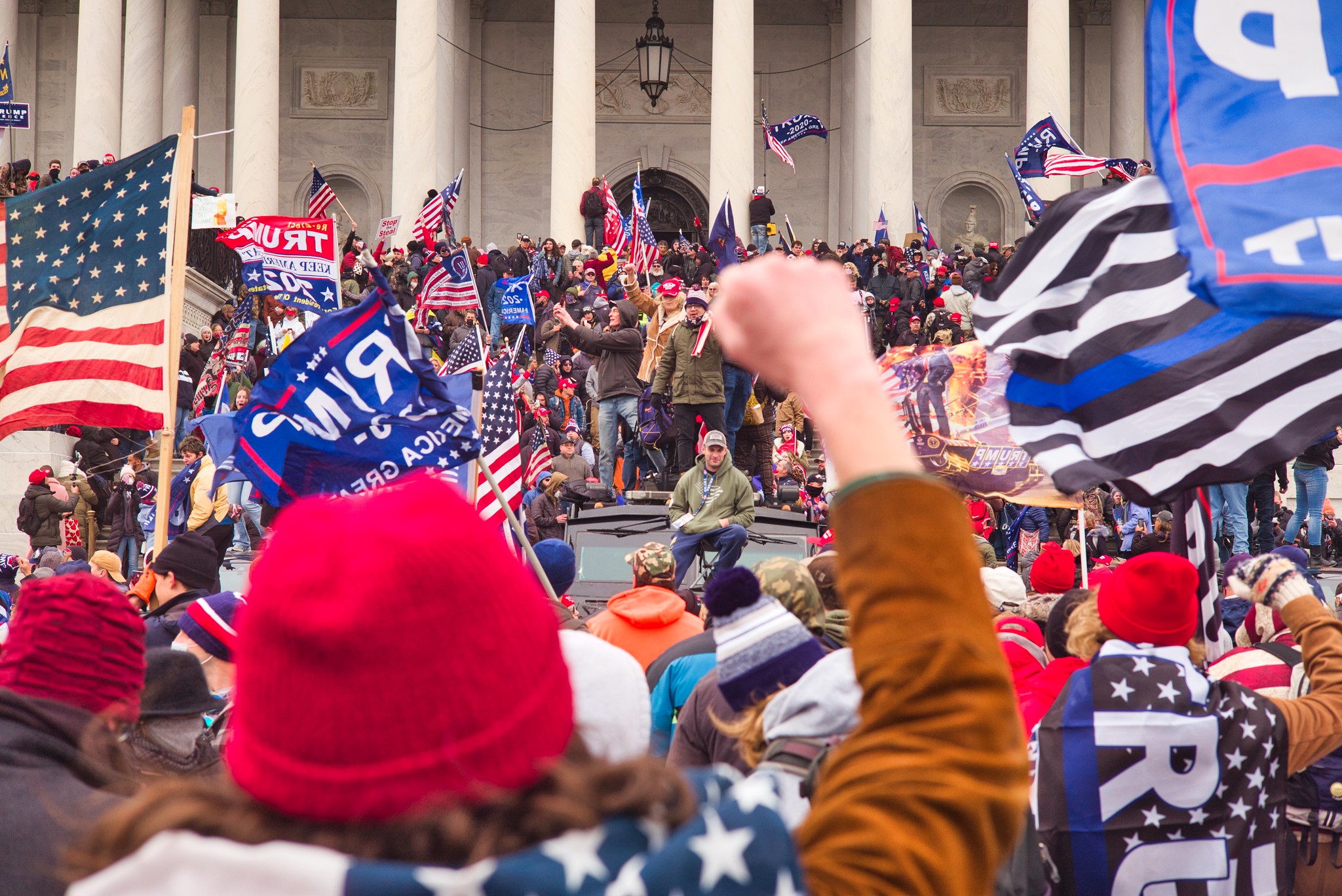
Hours after returning to the presidency, Trump commuted the sentences of 14 members of the Proud Boys and Oath Keepers, most of whom were convicted of seditious conspiracy, and granted “a full, complete and unconditional pardon to all other individuals convicted of offenses related to events that occurred at or near the United States Capitol on January 6, 2021.” In the same document, he directed the attorney general to seek the dismissal of all pending indictments related to Jan. 6.
This appears to be clear enough. If you were convicted for acts related to the Jan. 6 attack, you get a pardon. If not, then you don’t.
But the Trump administration had other thoughts.
First, the Department of Justice extended pardons to defendants with pending cases. In a little-noticed statement from a September 2025 brief, federal prosecutors wrote that 26 people with pending cases had requested and received pardon certificates, and that the department’s Office of the Pardon Attorney considered all Jan. 6 defendants to have been pardoned.
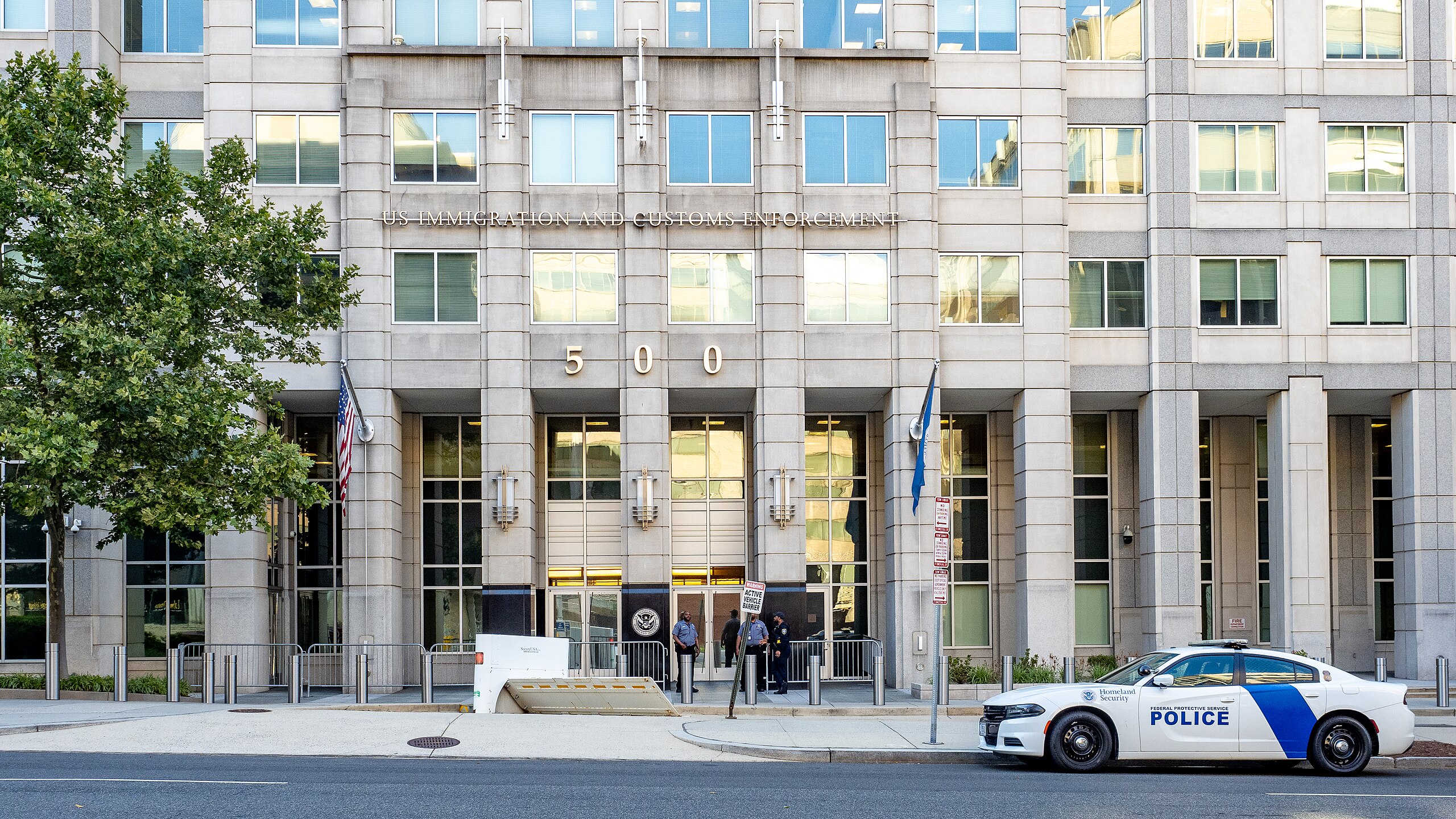
(The statement arose in the department’s ongoing prosecution of Rep. LaMonica McIver (D-N.J.) on charges of assaulting federal law enforcement officers during an incident outside an immigration detention facility in her district. McIver had sought to dismiss her prosecution on the ground that she was being prosecuted selectively, noting that the department had dismissed charges against Jan. 6 attackers who had been charged under the same statute. In response, the department argued that, as a threshold matter, “the January 6 Defendants cannot be considered similarly situated because they all were pardoned”—including those awaiting trial.)
According to the Justice Department’s brief, this makes perfect sense:
[L]ogic dictates that every January 6 Defendant was pardoned—not just those whose convictions were final—when one considers the Pardon’s title (“Granting Pardons and Commutation of Sentences for Certain Offenses Relating to the Events at or Near the United Stats [sic] Capitol on January 6, 2021”), its stated rationale, and Constitutional basis. To believe otherwise would mean that the Pardon was designed to provide no benefit for defendants whose prosecutions had taken longer to proceed through the justice system, which runs contrary to its stated rationale.
The final sentence is odd: The presidential proclamation at issue also instructs the attorney general to seek dismissal with prejudice of all relevant pending indictments. Thus, the proclamation provides an explicit “benefit” for such defendants. (Equally odd: The actual pardon certificates issued to defendants awaiting trial purport to apply “only to convictions for offenses related to events that occurred at or near the United States Capitol on January 6, 2021” (emphasis added).)
But if “logic dictates” that defendants “whose prosecutions had taken longer to proceed through the justice system” should obtain a pardon, the same logic would seem to extend to Cole. After all, the main reason why some Jan. 6 defendants had cases still pending on the date of Trump’s pardon is that their investigations had “taken longer to proceed”—that is, they were arrested later. In other words, they were in a very real sense in the same boat as Cole.
And to the extent that the title of the pardon proclamation matters—and the Department of Justice’s brief claims that it does—it provides further support for a broader application. The title refers to pardons for “Certain Offenses.” An offense is a criminal act; a pardon for an offense does not require a conviction or even an indictment. By contrast, President Biden’s pardon for the Jan. 6 Committee and its staff was issued for “any offenses against the United States which they may have committed” relating to their work. None of them had been convicted or indicted for any such offenses, but the pardon means that any future indictment would be unlawful. (As a special litigation counsel at the Office of General Counsel of the U.S. House of Representatives, I represented the Jan. 6 Committee in numerous lawsuits. I was not on the committee staff itself, but it was the closest I’ve ever come to receiving a presidential pardon.)
The Department of Justice began to expand the scope of the pardons in another way as well. Several Jan. 6 defendants argued that their pardons should be read to encompass indictments or convictions that resulted from evidence discovered through searches executed by federal agents investigating Jan. 6. Initially, the department maintained that the Jan. 6 pardons could not possibly extend to offenses committed at different times in different places.
In the middle of February 2025, however, the department flipped. The department began to agree with defendants that indictments or convictions that relied on evidence obtained via a Jan. 6-related search must be thrown out. This was tantamount to a bizarre extension of the “fruit of the poisonous tree” doctrine, under which evidence derived from an unconstitutional search generally must be excluded from trial.
In most cases, courts did not question the Justice Department’s new position. In cases that are not yet final—that is, cases that are pending trial, or on direct appeal—the government can move to dismiss under Federal Rule of Criminal Procedure 48(a). While such motions require court approval, judges typically grant them.
But when one defendant, whose case was already final, tried to avail himself of the department’s reversal, a judge pushed back. Dan Wilson had pleaded guilty to conspiring to impede or injure federal law enforcement officers on Jan. 6. At the same time, he pleaded guilty to possessing an unregistered firearm and being a felon in possession of a firearm that Jan. 6 investigators had discovered during a search of his residence. After Trump’s blanket Jan. 6 pardon, Wilson sought to invalidate his firearms convictions as well. But because his conviction was final, he could not benefit from Rule 48(a). Rather, he had to seek relief under 28 U.S.C. § 2255, the analogue for federal prisoners to petitions for a writ of habeas corpus.
After initially resisting Wilson’s arguments that the pardon covered his gun convictions, the Department of Justice reversed itself less than three weeks later, claiming that “[i]n the intervening period since the government filed its response, the government has received further clarity on the intent of the Presidential Pardon.” The department did not explain the source of such “further clarity,” but it seems quite possible that it came from the president himself, eager to do yet another favor for the most fervent backers of his coup attempt.
But Judge Dabney Friedrich of the U.S. District Court for the District of Columbia, a 2017 Trump appointee, refused to play along. “Contrary to the pardon’s plain language and structure,” she wrote in a March 2025 opinion, “the parties’ reading of the pardon conflates offenses discovered during the January 6 investigations with offenses that occurred at or near the Capitol on January 6.” Friedrich also noted that the department had been suspiciously selective in applying its expansion of the Jan. 6 pardons, seeking dismissal of cases involving Jan. 6 defendants indicted for illegal possession of guns, explosives, and classified information, while continuing to pursue cases involving possession of child pornography and conspiracy to murder FBI agents.
Wilson (unopposed by the Department of Justice) unsuccessfully asked for the U.S. Court of Appeals for the D.C. Circuit to order his release from detention pending an appeal of Judge Friedrich’s ruling. In the end, however, Wilson prevailed. Trump issued him a second pardon in November 2025 that squarely covered his firearms conviction and mooted his appeal. “Because the search of Mr. Wilson’s home was due to the events of January 6,” an anonymous White House official told CNN, “President Trump is pardoning Mr. Wilson for the firearm issues.”
(A district court in Maryland reached the same conclusion as Friedrich in a case of another Jan. 6 defendant who pleaded guilty on gun charges arising out of a Jan. 6-related search of his residence. He tried to apply the Jan. 6 pardon to his gun charges on appeal to the U.S. Court of Appeals for the Fourth Circuit, which remanded the case back to the district court. The court rejected both parties’ arguments that the pardon applied but granted the department’s motion to dismiss the case under Rule 48(a).)
So what’s the bottom line for Cole? First, as noted above, Cole can point out that the Justice Department has already taken the position that Trump’s pardon applies even before a conviction.
Second, Cole can argue that his acts related to events at or near the Capitol on Jan. 6. Indeed, Cole’s argument is stronger than the argument the administration used to extend the pardon to crimes found during Jan. 6 investigations. Friedrich concluded that the pardon “was meant to apply to offenses factually tethered to the events of January 6, 2021, rather than to incidental offshoots of the January 6 investigations.” Whatever his true motive, Cole can argue that it was no coincidence that he planted the pipe bombs at the DNC and RNC, each quite close to the U.S. Capitol, the night before members of Congress would count the Electoral College votes.
Immediately after Cole’s arrest, White House spokesperson Abigail Jackson took umbrage at an NBC News journalist’s question about how Cole’s case might relate to the Jan. 6 pardons. “It’s alarming and insulting that Fake News NBC would compare an individual who placed live bombs throughout DC to the countless individuals who were over-prosecuted and targeted by a weaponized Biden DOJ.” Many of those “countless individuals,” of course, caused considerably more damage than Cole, who (according to the Department of Justice’s brief) told the FBI that he was “pretty relieved” that the bombs did not go off and that he had placed the bombs at night to avoid causing any fatalities. At least one pardonee, Daniel Ball, allegedly threw an explosive device at police officers on Jan. 6, disorienting them and causing months-long hearing loss. Another had 11 Molotov cocktails in his truck. And, of course, at least 174 police officers were assaulted, many by rioters armed with stun guns, baseball bats, flagpoles, and pepper spray.
Another White House official, this one anonymous, told Politico that a pardon argument would be absurd. “The pipe bombs were placed on Jan 5. The pardon pertained to events at or near the Capitol on Jan. 6 and clearly does not cover this scenario.” This is very similar to what the Department of Justice originally wrote in the Wilson case, before flipping: “The convictions for [unlawful firearms possession] did not occur at the United States Capitol on January 6, 2021, and thus, by the plain language of the certificate, the pardon does not extend to these convictions.”
And Trump’s blanket pardon reportedly included conduct that took place entirely on Jan. 7, one day late. Cleveland Grover Meredith Jr. drove from Colorado to Washington, D.C., but car trouble prevented him from arriving on Jan. 6. After reaching D.C. the next day, he texted a friend in Georgia that he was considering attending a speech by House Speaker Nancy Pelosi and “putting a bullet in her noggin on Live TV.” He was arrested the same day and later pleaded guilty to transmitting in interstate commerce a threat to injure a person.
Cole could also try to avail himself of Trump’s other mass pardon related to events following the 2020 election. On Nov. 7, 2025, Trump issued a pardon to
all United States citizens for conduct relating to the advice, creation, organization, execution, submission, support, voting, activities, participation in, or advocacy for or of any slate or proposed slate of Presidential electors, whether or not recognized by any State or State official, in connection with the 2020 Presidential Election, as well for any conduct relating to their efforts to expose voting fraud and vulnerabilities in the 2020 Presidential Election.
This pardon “includes, but is not limited to” a list of 77 names, many of whom—such as Rudy Giuliani and John Eastman—were enmeshed in state-level investigations. None had been federally indicted for crimes related to the scope of the pardon. Nor was there any risk of a federal indictment. Trump’s Department of Justice was not about to pursue them. And the general federal five-year statute of limitations was set to expire.
As with Trump’s subsequent pardon of Colorado election clerk Tina Peters—who is currently incarcerated on state charges beyond the scope of the president’s pardon power—this pardon seems to fall into the category of fan service. The pardon further provided that “[t]he Attorney General, acting through the Pardon Attorney, shall administer and effectuate the issuance of certificates of pardon to eligible applicants.”
Pardon Attorney Ed Martin published—on Scribd.com, for some reason, rather than on the Department of Justice’s website—a rambling, 12-page statement touching on right-wing grievances about the 2020 election, titled “Final Pardon Statement of U.S. Pardon AttorneyEdward [sic] R. Martin Jr. on the Comprehensive Pardons for Contingent Electors and Affiliates.” The term “contingent electors” is a euphemism for the various individuals who falsely purported to be the genuine electors, casting ballots for Trump, in a variety of states that Biden won. Much of the document focuses on state prosecutions of these fake electors; the final sentence describes it as a “pardon recognizing the complete exoneration of the contingent electors and all who have been swept into this unjust vendetta against President Trump.”
One person has already tried to avail himself of this pardon. Matthew Laiss was indicted in the Eastern District of Pennsylvania for allegedly voting twice in the 2020 presidential election, in both Pennsylvania and Florida. Laiss moved to dismiss the charges on the ground that, by casting two votes—both for Trump, he claims—he “support[ed], vot[ed for] … [and] advoca[ted] for [a] slate or proposed slate of Presidential electors … in connection with the 2020 Presidential Election[.]” He notes, reasonably enough, that “[b]y casting one’s ballot in a general [presidential] election, a voter is actually selecting their state’s electors.”
The Department of Justice, however, pushed back, noting that the preface to the pardon stated that “[t]his proclamation ends a grave national injustice perpetrated upon the American people following the 2020 Presidential Election and continues the process of national reconciliation.” The pardon was intended to address conduct that took place “following” the election, the department argued, rather than conduct that took place during it.
The court declined to determine the pardon’s breadth. Instead, the court held that it lacked jurisdiction to do so because the pardon, by its terms, provided for an application process via the pardon attorney, and Laiss had not indicated that he had applied for such a pardon.
How might Cole avail himself of this pardon? Press reports following his arrest indicated that he told investigators that he believed the 2020 presidential election was stolen from Trump. If true, he has a stronger argument than Laiss that he engaged in the sort of postelection conduct that the pardon appears to have been intended to cover. And, unlike Laiss, he is not charged with engaging in election fraud of his own. Although Cole does not appear to have specifically advocated for the fake electors, as Martin seems to suggest is this pardon’s main thrust, he could fit comfortably within a plain-language reading of the pardon’s text. (Cole’s brief does not mention this second pardon, and it is not known whether he has applied for it through the pardon attorney.)
To be sure, Cole has massive hurdles ahead. Unfortunately for him, according to the department’s briefing, in his FBI interrogation Cole “denied that his actions were directed toward Congress or related to the proceedings scheduled to take place on January 6.” The department may be motivated to portray his acts as separate from Jan. 6, but Cole did not suggest otherwise in his motion to dismiss.
That said, other parts of Cole’s statements to the FBI—which collectively read as the product of a confused mind—suggest that the timing was no accident. He told the FBI that “something just snapped” after “watching everything, just everything getting worse.” Another portion of the interview, as recounted in the department’s brief, gives credence to a Jan. 6 connection:
Later in the interview, the defendant explained that after the 2020 election, “when it first seemed like something was wrong” and “stuff started happening,” he began following the issue closely on YouTube and Reddit and felt “bewildered.” In the defendant’s view, if people “feel that, you know, something as important as voting in the federal election is being tampered with, is being, you know, being—you know, relegated null and void, then, like, someone needs to speak up, right? Someone up top. You know, just to, just to at the very least calm things down.” The defendant felt that “the people up top,” including “people on both sides, public figures,” should not “ignore[e] people’s grievances” or call them “conspiracy theorists,” “bad people,” “Nazis,” or “fascists.” Instead, “if people feel that their votes are like just being thrown away, then ... at the very least someone should address it.”
Another significant hurdle is that—as the Department of Justice noted in its opposition to Cole’s motion—the first blanket pardon proclamation did not purport to extend beyond persons who had been convicted (who received pardons) or indicted (for whom the proclamation directed dismissals). And notwithstanding the department’s efforts to go beyond the most logical reading of that pardon proclamation by granting pardons to those who had been indicted but not yet convicted, Cole can point to no case where the department expanded its scope for a person who had not, at the very least, been indicted at time of its issuance. Furthermore, to the extent Cole seeks to avail himself of the second pardon, he is hampered by not having raised it in his brief.
Luckily for Cole, he need not convince a court that he is entitled to a pardon. The only person he needs to convince is the pardon-giddy president. While there is no reporting on the issue, it seems likely that Trump was the prime mover behind—or at least signed off on—the Department of Justice’s about-face on the scope of his initial Jan. 6 pardons. And, as noted above, when courts refused to acquiesce in the department’s effort to apply the pardon to Wilson’s gun crimes, Trump gave him a second pardon. Cole could throw himself at Trump’s mercy and portray himself as a supporter who never would have attracted such sustained, years-long FBI attention had his actions not occurred on the eve of Jan. 6. Given that Trump dispenses pardons like a Mardi Gras reveler tossing beads, only a fool would bet the ranch against this happening.
(The pardon is not the only unusual argument that Cole’s lawyers have raised: In a recent filing, they indicated that he might seek to pin the bombing on a former U.S. Capitol Police officer who had been named as a suspect by a right-wing media site but was swiftly cleared publicly by the FBI. Prosecutors reacted furiously to the filing, accusing Cole’s team of violating a protective order and improperly releasing private information regarding the officer; they are asking the court to hold Cole’s counsel in contempt.)
If Cole does obtain a pardon, his troubles might not yet be over. Under the law of Virginia, where Cole lived and built his devices, manufacturing a pipe bomb is a felony. And Virginia just so happens to be one of the few states where, generally speaking, there is no statute of limitations for felonies.
Cole is thus situated differently from most Jan. 6 defendants, most of whom did not commit a crime until they set foot within D.C. While some local prosecutors openly considered attempting to build separate state prosecutions after Trump’s first day of pardons, no such indictments have occurred.
Typically, people who are incarcerated prefer to do time within the federal system rather than in a state pen, so Trump might not even do Cole a favor by issuing a pardon. Still, a state conviction is never guaranteed, especially if it would require the cooperation of a politicized FBI that—although proud of its work at apprehending Cole—might be instructed to stand down and not cooperate with Virginia prosecutors.
The very possibility of a state prosecution for Cole could spur other states to reexamine whether to pursue prosecutions on their own. Might, for example, Maryland—which, like Virginia, has no statute of limitations for felonies—consider trying to prosecute Enrique Tarrio, then-leader of the Proud Boys, who spent Jan. 6 holed up in a Baltimore hotel room and was sentenced to 22 years in prison? If so, then for once a Trump pardon could perhaps lead to something good.