Faithful Execution and the Removal Power
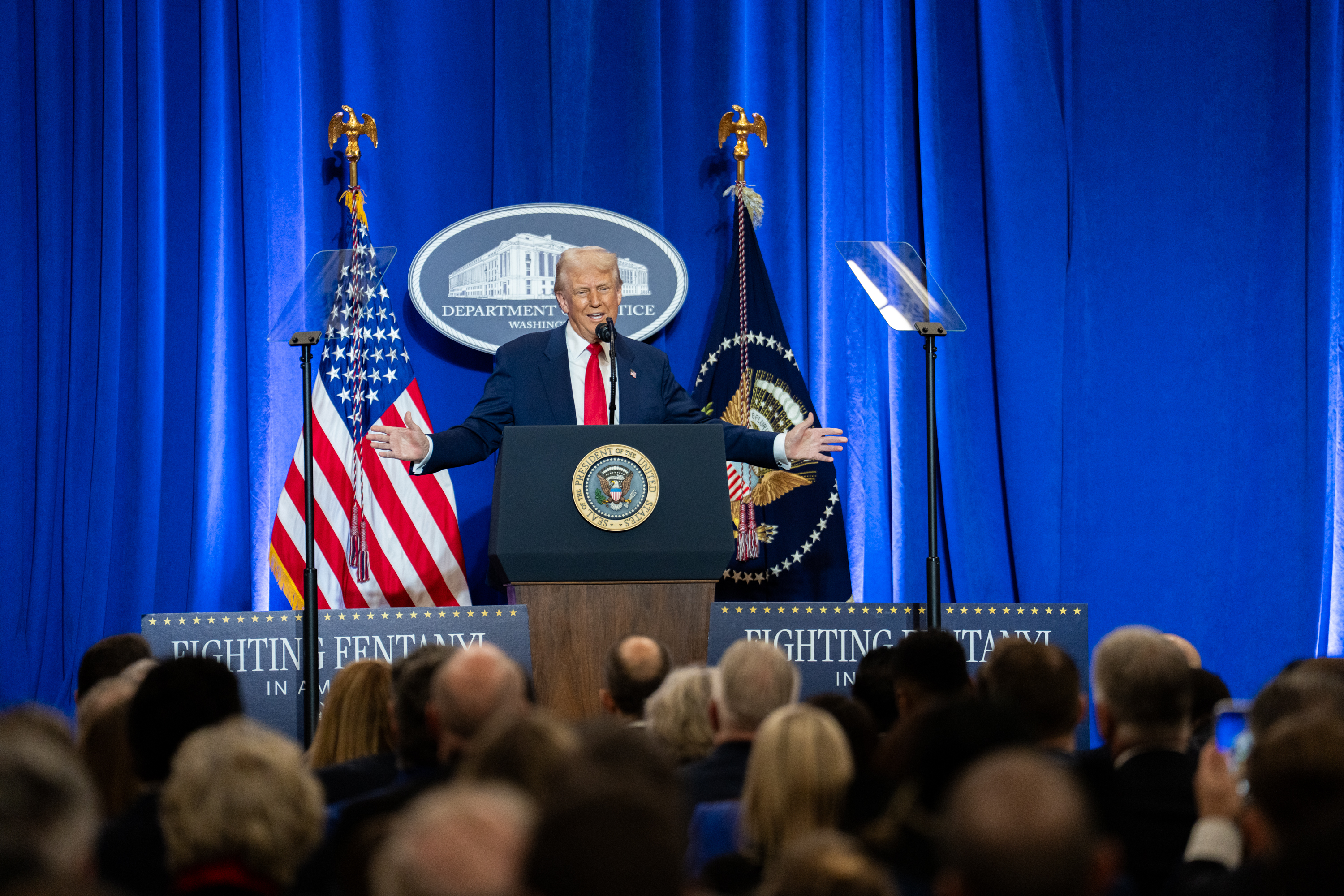


On July 9, President Trump removed or forced out all three remaining members of the Election Assistance Commission (EAC). Congress established the commission to aid state governments in administering elections and to certify voting equipment. It consists of four members appointed by the president, with the advice and consent of the Senate, who serve fixed four-year terms. Although its members lack statutory removal protections, Congress designed the commission with other devices commonly used to preserve independence from the president, including requirements that no more than two members be affiliated with the same political party and that three members agree to any action, a combination that necessarily requires all actions to be bipartisan.
In Trump v. Slaughter, the Supreme Court affirmed that Article II of the Constitution allows the president to remove principal officers—such as the members of the EAC—at will. The Supreme Court anchored its decision in the idea that the president must have adequate control over executive branch officers to carry out his constitutional obligation to “take Care that the Laws be faithfully executed.” As the current moment illustrates, however, the removal power also allows the president to undermine faithful execution by removing principal officers tasked with implementing the laws enacted by Congress.
We argue that removals of this kind exceed the president’s removal power. The Take Care Clause obliges the president to ensure the laws enacted by Congress are executed. A removal that leaves an agency legally incapable of acting prevents that execution. The Supreme Court was aware of the potential contradiction between expanding the removal power and the president’s obligation under the Take Care Clause in Slaughter, because we, the authors, filed an amicus brief alerting the Court to the issue. Courts can enforce this limit, and the Supreme Court’s decision in Trump v. Cook—issued the same day as Slaughter—supplies the remedial tools. Enforcing the Take Care Clause would ensure that multimember commissions, such as the EAC, remain capable of enforcing the laws Congress has enacted.
The Effect of Vacancies in Multimember Commissions
The immediate consequence of the July 9 removals is that the EAC cannot act. The Help America Vote Act of 2002 (HAVA) contains no quorum rule, but its voting rule operates as one. Under 52 U.S.C. § 20928, “[a]ny action which the Commission is authorized to carry out under this chapter may be carried out only with the approval of at least three of its members.” With no members in office, the commission cannot approve anything. It cannot approve new grant funding for the states, and it cannot adopt or amend the Voluntary Voting System Guidelines used to test and certify voting equipment.
Nor can the president install acting officials to perform these duties. The Federal Vacancies Reform Act (FVRA) ordinarily permits acting officials to perform the duties of vacant Senate-confirmed offices, but 5 U.S.C. § 3349c(1) excludes members appointed by the president to any multimember board or commission that governs an independent establishment. Multimember commissions are often entities within the executive branch that are not part of an executive department or the military. The EAC’s staff will remain at work, and it is possible that delegations of authority made before the commission emptied may survive thanks to an ambiguous footnote in a 2010 Supreme Court case, but staff cannot exercise the powers that § 20928 reserves to the members themselves. The only path to a functioning EAC runs through Senate nomination and confirmation.
That path is long. HAVA directs the president to consider recommendations from the House of Representatives and Senate majority and minority leadership when selecting nominees, and senators may balk at confirming nominees other than those they recommended. The Senate has not confirmed a new EAC commissioner since February 2019. Each of the members removed on July 9 was serving past the expiration of a fixed four-year term under HAVA’s holdover clause, which allows commissioners to serve until a successor takes office, because successive presidents have failed to nominate replacements. The commission’s own history shows how long the pipeline can stall: The EAC operated without a quorum from 2010 to 2014 and without any commissioners from 2011 through 2014, while nominations languished and the House twice advanced legislation to abolish the agency. Months before the midterm elections, the only federal agency devoted solely to election administration may not be able to lawfully exercise its powers—and has no realistic prospect of regaining that capacity soon.
The EAC is not an outlier. Fifteen federal commissions lacked a quorum for at least a month during the first nine months of the second Trump administration, including four major regulatory commissions: the Equal Employment Opportunity Commission, the Federal Communications Commission, the Federal Election Commission, and the National Labor Relations Board (NLRB).
Where quorums have been restored, restoration has taken the political branches the better part of a year. The NLRB was unable to decide cases for nearly a year after the president removed member Gwynne Wilcox in January 2025; the board regained its quorum only when the Senate confirmed two new members in December 2025 and they were sworn in on Jan. 7, 2026. The Merit Systems Protection Board, which adjudicates federal employees’ challenges to their removals, lost its quorum in the spring of 2025 after the president’s firing of member Cathy Harris took effect; its backlog of pending appeals grew roughly fivefold, to more than 400 cases, before the Senate confirmed a second member in October 2025.
Slaughter makes these quorums even more fragile, because the president may create new vacancies whenever he chooses. The July 9 removals extend a pattern in which commissions across the government have been rendered incapable of performing their statutory duties for extended periods. But the EAC’s members also never enjoyed the removal protections at issue in Slaughter. Their removals therefore raise a question that Slaughter did not answer: whether the president may use concededly lawful removals to strip an agency of the capacity to execute the law.
Faithful Execution as a Limit on Removal
Article II commands that the president “shall take Care that the Laws be faithfully executed.” The Supreme Court has long treated this obligation as a limit on presidential power as well as a source of it. In Kendall v. United States (1838), the Court held that the postmaster general could be compelled to perform a duty imposed by statute notwithstanding the president’s contrary instruction: “To contend that the obligation imposed on the President to see the laws faithfully executed, implies a power to forbid their execution, is a novel construction of the constitution, and entirely inadmissible.”
A removal that destroys a commission’s capacity to act forbids execution just as effectively as the direct order at issue in Kendall. Although this is not a concern in the vast majority of executive branch agencies given the FVRA’s assurances that an acting official is available to perform the duties of the removed officer, it is a concern for multimember agencies, such as the EAC, where no acting official is forthcoming. Accordingly, HAVA remains on the books, Congress continues to appropriate funds for the commission to distribute, and the EAC has assigned duties that no other agency may perform. Yet after July 9, it is likely that no one may lawfully exercise those powers.
We propose that the Take Care Clause, which obliges the president to execute the laws for the benefit of the people who enacted them through their representatives, serves as a bar on removals when doing so would prevent an agency from functioning. The Constitution assigns the power to create federal agencies—and the power to abolish them—to Congress. It simply cannot be the case that the president may remove officers and leave a commission without the membership its statute requires for action; doing so would allow the president to accomplish through attrition what Article I reserves to the legislature. In the instant case, execution of HAVA is suspended for as long as the president declines to nominate successors.
This proposal would not restore the tenure protections the Supreme Court rejected, and the commissioners removed on July 9 have no legal entitlement to their seats. The president may remove any executive branch officer for any reason, so long as their agency is able to function. It simply recognizes that Congress enacted HAVA—as with all statutes—as the public’s representative. In this case, Congress meant to provide states and voters the concrete benefits of grant funding for election administration, federally tested and certified voting equipment, and a uniform registration form that eligible citizens may use to register anywhere in the country. Many states rely on EAC certification before they will purchase or deploy voting machines. When removals leave the commission unable to act, the injury falls on election officials preparing for the midterms and on the voters they serve. A doctrine that polices removals vindicates that public right, not any officer’s private claim to continued employment.
We propose a simple, objective test: Does the removal leave the commission below the threshold its statute sets for transacting business? If the answer is yes, the removal is unconstitutional until it can be done without inhibiting the government’s functioning. This test would prevent multimember commissions, such as the Merit Systems Protection Board, from losing their quorums due to presidential removals alone. The president is free to nominate a replacement commissioner and remove the incumbent as soon as the Senate confirms the replacement. Allowing an alternative result violates the president’s obligations under the Take Care Clause.
Cook Provides the Remedial Path
Although the EAC’s removed commissioners need not be the only plaintiffs to challenge their removal, if they choose to do so, Cook supplies the framework a court should apply. The government argued in Cook that courts play no role in reviewing the validity of a removal and that, at most, a wrongfully removed officer may recover back pay after the litigation ends. A majority on the Supreme Court rejected both positions. Removal determinations are judicially reviewable, and a court “may order that a removed Governor remain in office during the pendency of litigation” if the officer is otherwise entitled to a preliminary injunction. The Court reasoned that, absent interim relief, the president could keep an officer out of office “for very lengthy periods of time” while litigation proceeded, whatever the merits. That functional concern applies with greater force to quorum-destroying removals. The injury runs for the length of the confirmation pipeline, and the EAC’s pipeline has not produced a commissioner in more than seven years.
On the merits, courts should hold that a removal that destroys a commission’s capacity to act is ineffective until the Senate confirms a successor. Applied here, the relief is broader than a single reinstatement but narrower than it may sound. Because § 20928 requires the approval of three members and the fourth seat was already vacant, each of the July 9 removals independently eliminated the commission’s capacity to act, so a court would preserve all three members in office. The remedy then dissolves seat by seat. The moment the Senate confirms a replacement for any member, the president’s removal of that member takes effect. The president and the Senate retain complete control over who ultimately serves on the commission; the injunction controls only the timing. Courts applying this rule would also give the political branches the correct incentive: A president who wants a commission gone from his administration must ask Congress to abolish it, and a president who merely wants different commissioners must nominate replacements.
Replacement-as-removal has historical precedent. In his “Commentaries on the Constitution of the United States,” Justice Joseph Story described removal as occurring by operation of law when the Senate approves a new nominee to replace an incumbent. As David Driesen argues, Justice Story understood the Constitution to mean: “If the President believes that an officer should be removed, he must nominate a successor. If the Senate approves the nominated successor, that approval removes the predecessor from office.” Slaughter itself relied heavily on the “Commentaries” for its theory that the president enjoys an absolute power of removal.
The administration may read Cook narrowly, focusing on the Federal Reserve’s substantive protection in the central bank’s distinct historical tradition. But Cook’s remedial holding rests on a different footing. The Court located the power to keep a removed officer in office in equity’s traditional protection of de facto officers during litigation over title to office—a rationale that does not depend on anything unique to central banking.
What Comes Next?
The more immediate question is what the administration does with a commission that has no commissioners. Last year, Trump issued an executive order directing the EAC to add a documentary proof-of-citizenship requirement to the national mail voter registration form and to revise its voting-system standards. Federal courts blocked those directives. With no members in office, the lawful route to those changes is closed. If the administration nonetheless directs the commission’s staff to alter the form or the guidelines, the resulting litigation would move quickly—likely to the Supreme Court’s emergency docket, as Rick Hasen has already observed.
Slaughter grounded the removal power in the president’s duty to take care that the laws be faithfully executed. Whether that same duty constrains the removal power when removals leave an agency unable to execute its statute is the question the July 9 removals put to the courts. How the courts answer will determine whether the agencies Congress has built remain capable of executing the laws Congress has enacted.