GAO Goes After State (Again) for Treaty Practice
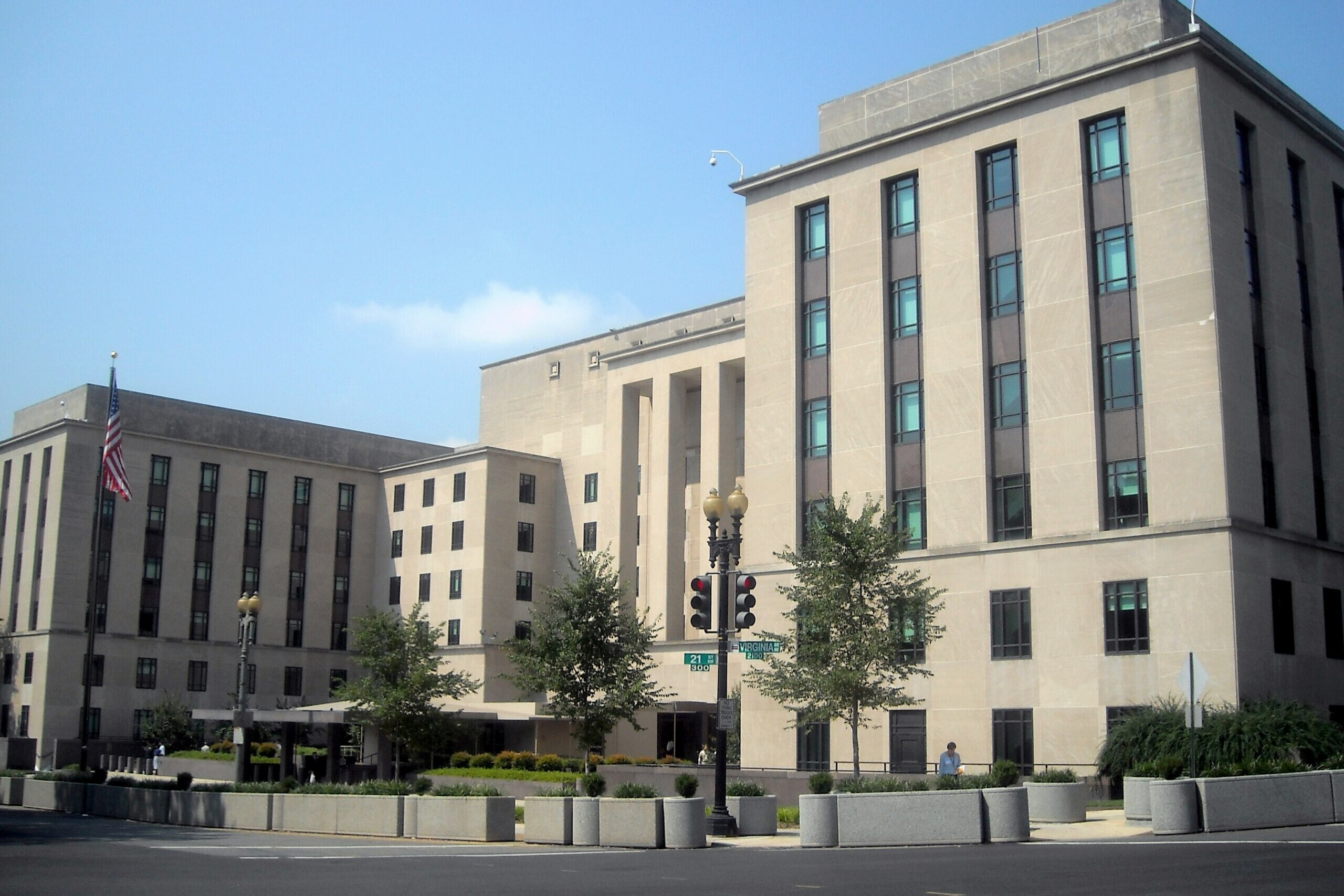

The State Department has long had a love-hate relationship with the Case-Zablocki Act. That statute confirms the department’s central role in U.S. treaty-making but also puts it on the hook for keeping Congress and the public properly up to date on all U.S. treaty-making activity. A recent Government Accountability Office (GAO) report concluded that from 2023 to 2025 the State Department failed to meet its Case Act responsibilities. The report deserves attention, especially where the Trump administration appears even worse at keeping Congress and the public in the loop on its international deal-making.
The Case Act was enacted in 1972 after Congress discovered that the executive branch had concluded various executive agreements on defense matters without congressional awareness. The act originally required the secretary of state to report all binding U.S. international agreements (other than those sent to the Senate) to Congress within 60 days of each agreement’s conclusion. Despite the workload this required, the State Department has long loved this statutory requirement because it gives the department leverage to push other agencies (e.g., the Department of Defense, the Office of the U.S. Trade Representative) to consult and report on their own agency-level agreement-making.
At the same time, however, the State Department’s treaty office, which oversees compliance with the act, has come to hate it because the practice doesn’t always align with the law’s requirements. Simply put, agreements regularly go unreported or get reported late. Congress has periodically gotten quite upset about this, denying federal funding in 1988-1989 and then again in 2005-2007 for all implementing agreements reported late.
These episodes were not fun for the State Department’s lawyers. Unfortunately, they also didn’t do enough to ensure real oversight of which agreements the U.S. made, whether and how the reports were sent to Congress, and their publication more broadly. In 2020, Oona Hathaway, Curtis Bradley, and Jack Goldsmith highlighted in their magisterial Harvard Law Review article that, despite heightened reliance on executive agreements, the State Department’s reporting under the Case Act continued to be delayed and often accompanied by perfunctory or ambiguous legal justifications. Their separate Chicago Law Review article highlighted the executive branch’s rising use of legally nonbinding agreements to circumvent the Case Act entirely. The Obama-era U.S.-Iran deal—the Joint Comprehensive Plan of Action—was probably the most prominent example of this phenomenon. Both articles led Congress to act again.
In 2023, the Case-Zablocki Act was amended in major ways. The law now requires reporting significant nonbinding instruments to Congress along with binding ones. Hence, the State Department must report new U.S.-Iran deals such as the recent memorandum of understanding, even if the agreement is nonbinding, a point that’s a bit murky at present. Congress also required monthly reports on U.S. international agreements (both those signed and those concluded), while insisting on providing legal authority details for all reported instruments, both binding international agreements and covered nonbinding instruments. Under the amended law, State Department bureaus and other government agencies such as the Defense Department now have 15 days to deliver their agreements to the State Department treaty office, and the State Department has to post agreements and their legal authorities within 120 days of entry into force or operation. Previously, the State Department had 180 days to publicize the text of international agreements it had reported to Congress. The amendments also require the GAO to audit the State Department’s implementation of these amendments every three years for nine years (see § 5947 of the National Defense Authorization Act for Fiscal Year 2023). On June 23, the GAO released its first report doing so.
So, how did the State Department do? Not terribly well. The GAO report notes that the State Department reported a total of 311 binding agreements and qualifying nonbinding instruments during its study period (October 2023-March 2025). This data is interesting on its own. Like the first U.S.-Iran deal, nonbinding agreements can achieve significant foreign policy goals, and political forces often pressure nations to comply with their terms. But they differ from binding international agreements in the speed at which they can be concluded and their overall flexibility (unlike binding agreements, nonbinding instruments can usually be terminated immediately, and noncompliance will not trigger any legal sanctions or binding dispute settlement). As it turns out, of the 311 agreements, 88 are nonbinding, showing just how significant an aspect of foreign policy these sorts of nonbinding agreements have become (indeed, the topic is now on the agenda of the U.N. International Law Commission, the Council of Europe, and the Organization of American States, where I helped develop some guidelines). Interestingly, when it comes to compliance, the State Department’s practice vis-a-vis nonbinding agreements seems to reveal better and more timely reporting across the board.
Overall, for the 2023-2025 period, the GAO concluded that 90 of the 311 reported agreements were reported to Congress late. Among the 90 agreements, the State Department ran an average of 2.3 months late. The report does not point fingers directly, but the most frequent offenders appear to be bureaus within the State Department itself as well as the Departments of Defense, Energy, Justice, and Treasury, NASA, and the Millennium Challenge Corporation, a U.S. foreign aid agency that fights global poverty through economic growth. (The staff at these agencies were the ones the GAO interviewed for its report.)
The State Department had more problems in terms of publishing agreements on its website, posting the covered agreements audited just more than half the time (53 percent). The GAO also emphasized just how poorly the website functioned for posted agreements, which is a real problem where the website has become the primary vehicle for meeting the Case Act’s publishing requirements, giving the public transparency into which agreements the U.S. concludes and why. The GAO flagged how binding agreements are posted on separate pages from their legal justifications; nonbinding instrument texts are posted to a third page, with their legal justifications on a fourth. The GAO also complained about a lack of linkages between agreements and their purported authorities, along with the absence of search functions across these postings.
So, why the delays? State and other agencies reported administrative issues, translation delays, and other logistical challenges. The GAO report, however, suggests more systemic reasons, including the fact that the State Department doesn’t track whether agencies or bureaus are meeting the 15-day reporting requirement to get their agreements to the treaty office so that it can make a timely monthly report to Congress. The GAO also noted specifically that the State Department does not regularly confirm with other agencies that they’ve reported all their required agreements.
More substantively, the GAO expressed concern with the State Department’s insistence on using a blanket statement of the president’s constitutional foreign affairs power to justify all nonbinding agreements. In doing so, the GAO complained about the absence of references to any specific statutory or constitutional citations that could support the negotiation and conclusion of legally nonbinding instruments.
Meanwhile, since the GAO’s review period ended in March 2025, things have only gotten worse. The second Trump administration has repeatedly flouted the Case Act’s requirements. As detailed in Lawfare’s own lawsuit, the Trump administration has declined to post or offer legal explanations for a wide array of executive agreements, including those on “deportation of foreign nationals to Latin America, economic and defense partnerships in the Middle East, and trade with various allies.”
In terms of remedies, the GAO report makes seven recommendations for the State Department to fix its deficiencies:
- Instituting a process for tracking the timeliness of submissions to the treaty office by State bureaus and other agencies.
- Periodically assessing submission timelines and taking steps to improve as needed.
- Updating interagency templates/transmittal sheets to ask for more authorizing and implementing information on qualifying nonbinding instruments.
- Establishing a mechanism to report noncompliance with the Case Act and communicate those reports effectively.
- Periodically requiring agencies to “confirm” their compliance with the submission requirements of the Case Act.
- Establishing written, standard operating procedures for publishing agreements to mitigate delayed postings beyond the requisite 120 days.
- Optimizing the website for better discoverability and search functions.
The State Department’s responses to the GAO seem (mostly) contrite. The department has indicated that it is prepared to implement five of the seven recommendations. The two it resists? Recommendations five and six. The State Department complained that asking other agencies to attest to their own compliance would be unreasonable and perhaps unlawful (in response, the GAO has said that instead of attesting, other agencies could be asked to “confirm” their compliance). The State Department’s objections also highlighted how it had never been asked to do anything like this with its 500 other mandated reports. As for the publication standard operating procedures, the department insists that it already has these sufficiently in place. The GAO pushed back on this point, though, highlighting that the department never updated its processes as the publication deadline dropped from 180 to 120 days and how better compliance could follow in doing so.
I’m not sure the State Department has earned the benefit of the doubt given the decades of difficulties it has had in meeting the Case-Zablocki Act’s requirements. If the need to get agencies to confirm their own compliance is novel, history suggests such novelty is warranted. Short of funding delays, there are insufficient incentives to report treaties. The reality is that careers get made in negotiating and concluding agreements, but reporting them to Congress is a thankless, entirely administrative task.
Likewise, I think posting nearly half of all U.S. international agreements after the congressional deadline of 120 days suggests it’s high time the department did a holistic review of its own processes. I was surprised to see, for example, the GAO report mention the continued use of the “Treaty Information Management System” (a system I worked with during my own time in the treaty office over two decades ago). That system was adopted before the current digital age; hence, I think the GAO is well within bounds to push the department to move forward and faster on plans for new systems to upload, review, and publish U.S. international agreements subject to the Case-Zablocki Act.
At the same time, as someone who worked in the treaty office long ago, I welcome the GAO’s nudge—and the State Department’s receptiveness—to fix the website. I’ve learned how to navigate the various pages over the years. But the reality is that they are terrible vehicles for informing the public about what agreements the United States is making. And as Gregory Fox and I have argued, it’s not like the situation has gotten better since the GAO audit period ended in March 2025; a fact Lawfare’s own lawsuit reinforces. Add in the recent kerfuffle over the Trump administration reporting the Islamabad memorandum of understanding to Congress (without clarity on whether this was being reported under the Case Act or the Iran Nuclear Agreement Review Act), and it seems as if the State Department is going to need to keep its leverage under the Case Act for the foreseeable future.
Today, amid global upheaval and an executive branch dedicated to bootstrapping as much power to itself as possible, the core purposes of the Case-Zablocki Act remain as important as ever. Congress must be apprised of the deals the executive branch is making (or has made), and the public surely needs public transparency into those same commitments. As bureaucratic as it may seem, the GAO’s report marks an important inflection point for U.S. treaty practice.