Hitler’s ‘Flood the Zone’ Strategy

Timothy Ryback is the author of a number of books, including a particularly interesting and original one on Hitler’s book collection. He has also written on Hitler’s rise to power (a prequel to the present book) as well as about rock and roll in communist Eastern Europe. He has a gift for combining his prolific historical work with serving as the director of the Institute for Historical Justice and Reconciliation in the Hague, an organization dedicated to “address[ing] unresolved historical legacies in multi-ethnic and multi-cultural societies.”
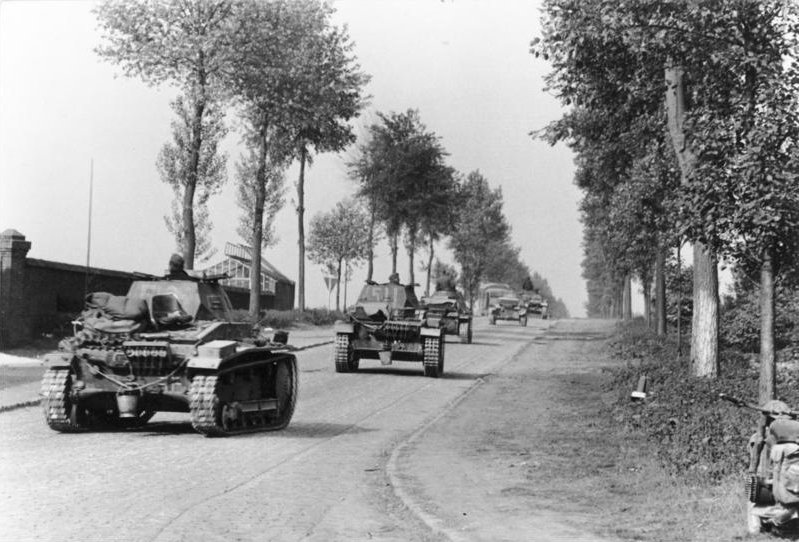
His new offering, “53 Days: How Hitler Dismantled a Democracy,” is a readable tour of the remarkable period from Jan. 30, 1933, when Hitler was sworn in as Reich chancellor, to March 23, when he cajoled and bullied the Reichstag to pass an “Enabling Act” solidifying his dictatorial power. The speed and violence of this transition was shocking to everyone. Almost no one, whether in Germany or outside, had expected it: In January, political experts from across the spectrum had assumed that Hitler was a cipher who had been captured by the conservative establishment, led by Reich President Paul von Hindenburg, former Chancellor Franz von Papen, and others of their ilk.
What followed Hitler’s appointment as chancellor was a kind of “flood the zone” strategy—an early election call, a blizzard of executive orders curtailing press freedom and giving Hitler’s paramilitaries police powers, a crescendo of violence, then the shock of the Reichstag fire followed by thousands of arrests. The election of March 5 produced somewhat underwhelming results for the Nazis—contrary to their own expectations, they fell short of a majority—but at the end of the month they got their Enabling Act anyway.
Ryback tells this story well in a concise 194 pages. His book has two main arguments, both of them implicit rather than stated expressly. In fact, on the evidence of the text, I am not even sure he is conscious of the second argument.
Ryback is certainly conscious of the first argument though: The process by which Hitler consolidated dictatorial power provides a strong parallel and perhaps precedent to that of Donald Trump’s second term, especially through most of the year 2025. The chapter titles alone make this clear enough: “War on the Press,” “Purging the Civil Service,” “Co-opting the Corporates,” “Guardrails.” We learn of Hitler’s use of emergency decrees under the famous Article 48 of the Weimar Constitution to curb the press, give his paramilitary followers police powers, and remove Jews and likely political opponents from the civil service. When Ryback describes Reichstag president Paul Löbe and statistician Ernst Julius Gumbel talking about the reasons for the political failure of Germany’s Social Democrats, any reader in 2026 will feel they could have been talking about today’s feckless American Democrats.
Specialists will not find much new information in Ryback’s account, but because of his focus on recent contemporary parallels, he does see some interesting things that other historians have not usually noted. Hitler liked tariffs and introduced some early in his time in power. He acknowledged that the tariffs might cause a rise in prices, but he argued that the long-term gain in German economic sovereignty would be worth the short-term pain. This is in fact a theme Ryback could have developed further, although admittedly some of the most important moments in Hitler’s demonstration of his crude economic thinking lie beyond the tight chronological boundaries of Ryback’s book. Hitler, for instance, railed against German companies outsourcing jobs to China in his “Second Book” of 1928 (which remained unpublished until after World War II). Hitler had no notion of mutual gains from trade and thought only about enhancing wealth through acquiring territory. If he had become president of the United States, no doubt he would have coveted Greenland and Canada.
Ryback shows us as well how elites in the corporate and academic worlds quickly knuckled under to Hitler, and the story with which the book ends—the spinelessness of the Reichstag in adopting Hitler’s Enabling Act on March 23, 1933—will remind many of the Republican-led Congress of the past two years. Only the 94 delegates of the Social Democratic Party who were able to be present (many had already been arrested or fled) voted against Hitler’s bill. Ryback gives full credit to the brave and eloquent speech against the act by the Social Democratic caucus leader Otto Wels, who looked Hitler in the eye and said “no Enabling Act can give you the power to destroy ideas that are eternal and indestructible.” Historians are usually much too quick to write off the courage of what Wels did.
Ryback’s other implicit argument has to do with how we make sense of what Hitler did in the first months of 1933. This is where it is hard to say how conscious Ryback is of the argument he is making, in part because of the style in which he tells the story and in part because of his citation practice.
Let me explain this a bit. Ryback’s account is based overwhelmingly on printed primary sources—particularly newspapers from the time, along with published diaries and memoirs. These are virtually all in German, a rare virtue in trade books about this period in history, which in the hands of English-speaking writers often rest only on English language sources. Ryback cites only a handful of archival sources and an even smaller handful of secondary sources.
This is where an issue arises. The function of secondary sources in an account like this lies in how they help an author to frame the story. For almost a century a lot of very smart people have thought about how to understand Hitler’s coming to power. The published residue of their thoughts provides, among other things, a menu of choices for how to think about large questions of interpretation. Spoiler alert: Pretty much everything that can be thought about the Nazis’ rise to power and the downfall of Weimar democracy has been thought before.
I am fond of a German saying, “Literaturkentnis schützt vor Neuentdeckungen,” which translates, roughly, as “book learning protects against new discoveries.” This could, of course, mean that too much book learning stultifies the imagination and makes a person unoriginal—which is probably true. But the other, bitingly ironic meaning is that unawareness of book learning may give you the innocent but mistaken feeling that you have come up with new ideas.
There are two large paradigms that have structured research into Nazi Germany, including its beginnings. The first, the “intentionalist” paradigm, views the Nazis’ every move as the product of deliberate choices rooted in the Nazis’ worldview. Intentionalism grew out of the Nuremberg war crimes trials. The need to prosecute defendants for participating in a conspiracy to commit crimes against peace, war crimes, and crimes against humanity drove the prosecution teams to present the Nazis as carefully calculating people with a clear plan and a clear endgame. This disposition spilled over into history writing for the first decades after World War II.
The second paradigm in interpreting Nazism, functionalism, arose in the 1960s as a critique of the supposedly overly formulaic, overly “Hitler-centric” nature of the intentionalist approach. Where intentionalists saw Hitler as a capable, if evil, dictator, with a clear plan that he executed in careful steps over time, functionalists saw a weak and often confused man, an improvisor, largely incapable of coherent planning, even, in the words of one functionalist historian, a “weak dictator.” The things that Nazi Germany did, the functionalists told us, arose more out of institutional chaos and often grassroots initiatives than from some grand Hitlerian design.
Most historians will tell you that while the intentionalist-functionalist debate became intense and sometimes bitter in the 1970s and 1980s, it calmed down in the 1990s with the two sides meeting in the middle and is now over. But some recent historians—including Thomas Weber, author of “Becoming Hitler,” about Hitler’s early days, and me—have argued that there has been a “neo-intentionalist” resurgence in recent years (Weber actually prefers the term “constructivist”), and our own works embody this trend.
The point is not whether you agree with Weber and me about this. The point is that it doesn’t hurt for a writer about Nazi Germany both to reflect on the question of intentionalism versus functionalism and to be explicit about the reasons the author has embraced one approach or the other. Ryback’s account is squarely intentionalist, and in that sense I am happy to welcome him to our neo-intentionalist fraternity. His Hitler is purposeful, a man with a plan. Ryback seldom refers to Hitler’s infamous Mein Kampf by its title. Instead, he refers to Hitler’s “playbook.” The whole structure of Ryback’s book suggests a carefully calibrated, step-by-step plan to dismantle the democracy of Weimar and replace it with Hitlerian authoritarianism. Ryback has a doctorate in history and might very well be familiar with historians’ interpretive frames, but since he cites few secondary works and discusses none, it’s hard to be sure. There are certainly other ways to see Hitler’s consolidation of power. A proto-functionalist writer named Fritz Tobias, author of an influential 1962 book on one of the most important moments in this process, the Reichstag fire, came to the striking conclusion that “blind chance, an error”—he meant Hitler’s assumption that the Reichstag fire was a communist coup attempt—unleashed all the horrors of Hitler’s regime. I think Tobias was either crazy or dishonest, or both. But his views were picked up by many influential historians who were less crazy and more honest, including the late Hans Mommsen. The point is that it is intellectually important to consider these possibilities, indeed to consider if the real parallels between Hitler’s rise to power and Trump’s efforts to build an authoritarian government lie above all in the chaos and incompetence of their rule.
A careful reader will detect places in Ryback’s text where he has in fact drawn on sources in ways not fully reflected by his citation practice. He mentions the shooting death of Hans Maikowski, for instance, a Nazi storm trooper killed on the night of Jan. 30, 1933. The Nazis, very typically, alleged that Maikowski had been killed by communists. Ryback notes, however, that “evidence suggested Maikowski had been gunned down by a fellow storm trooper.” The Berlin police did indeed gather such evidence. It is to be found in some archival files in Berlin’s city archives, the Landesarchiv Berlin. I know of at least one secondary source that has also discussed this evidence. But Ryback doesn’t cite any of that. The only source he cites for his assertion is a book by future West German President Theodor Heuss, which was published in 1932 and therefore could not include any reference to Maikowski’s shooting. In a previous footnote, Ryback refers to an article from Time magazine that deals with Maikowski’s funeral but does not mention the possibility that Maikowski was shot by one of his own men. Ryback must therefore have gotten his information from a source he doesn’t name. In the historian’s code, this is bad practice and bad manners.
Ryback’s new book is nonetheless a valuable and highly readable summary of these crucial moments of world history. Let us hope that this is the year the parallels from that time to our own start to lose their relevance.