How AI Data Centers Are Shaping Politics
AI data centers are fueling local backlash. These concerns—some real, some overstated—are shaping elections and policy.
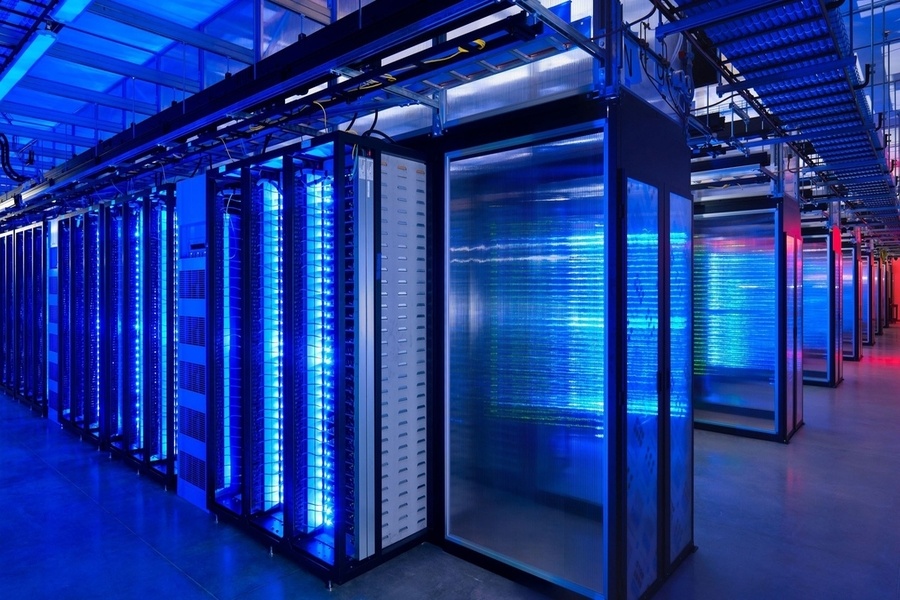

Across the United States, the rapid buildout of hyperscale data centers to support artificial intelligence (AI) infrastructure is no longer just a technological or economic development, but a political flashpoint with intense bipartisan pushback from local communities. The scale of the backlash has escalated a sense of urgency to act from both ends of the ideological spectrum. President Trump’s recent deal with major technology companies, also included in the White House’s National AI Legislative Framework—aimed at protecting American consumers from rising electricity costs tied to the AI data center boom—and the Artificial Intelligence Data Center Moratorium Act, introduced by Sen. Bernie Sanders (I-Vt.) and Rep. Alexandria Ocasio-Cortez (D-N.Y.) to impose a nationwide pause on new data center construction, both show that the politics of AI infrastructure has reached the national stage.
Unlike traditional data centers that primarily handle data storage or cloud services, AI data centers house high-performance computing clusters that consume vastly more electricity and land, and in some localities place significant stress on water systems. In Virginia, home to the highest concentration of data centers both in the U.S. and worldwide, these facilities already account for 26 percent of the state’s electricity use, compared to 4 percent nationally (a figure projected to rise to 7-12 percent by 2028). The scale of these data centers’ existing and potential impacts has prompted a legislative response, with over 60 data center-related bills introduced in Virginia this year alone.
Similar tensions are unfolding in many other states, where data centers—once viewed as apolitical engines of economic development—are now shaping electoral and legislative outcomes. According to Data Center Watch, between April and June 2025 alone, 20 proposed data center projects, worth a combined $98 billion across 11 states, were either blocked or delayed due to local resistance. That figure represents two-thirds of the projects Data Center Watch was tracking for that quarter. From the desert Southwest to the Mid-Atlantic, AI data centers are reframing debates over land use, affordability, resource scarcity, environmental harms, and corporate and governance transparency.
Between Rhetoric and Reality: Why Communities Push Back on Data Centers
The growing opposition to data centers has intensified as they increasingly impose pressures that are already straining local communities: rising household costs, resource constraints, environmental externalities, and declining trust in how major economic decisions are made. Taken together, these concerns have mobilized people from both ends of the political spectrum, uniting conservative rural residents worried about land use with progressive climate and consumer advocates—all against the backdrop of other AI-related anxieties.
Affordability has emerged as the most immediate and politically salient concern. Utility costs have become a bigger source of economic stress for households, with public polling showing that roughly 23 percent of American voters now believe essential utility services have become unaffordable. Hyperscale AI data centers require major investments in new transmission lines, interconnection upgrades, and energy generation capacity, incurring costs that are often shared across ratepayers rather than borne exclusively by developers.
In multiple states, consumer advocacy groups have reported a surge in complaints and public utility commission filings as residents question why electricity bills are rising alongside large-scale data center development. In some regions, research has shown that data center development is a major driver of rising electricity rates. A June 2025 analysis by Monitoring Analytics, the independent watchdog for the Mid-Atlantic grid operator PJM Interconnection, found that 70 percent, or $9.3 billion, of the region’s electricity price increases in the prior year could be attributed to surging demand from data centers. Spread across PJM’s roughly 67 million customers (about 26-28 million households based on the U.S. Census household sizes average), the $9.3 billion translates to $300-$400 per household per year on average (roughly $25-$35 per month). Nevertheless, some analysts argue that the price spike reflects PJM’s future demand and supply forecast, which has a record of miscalculation. This analysis suggests that institutional market design, not just data center electricity consumption alone, amplified the impact on household bills.
Resource and environmental impacts, particularly water and air quality, form a second source of opposition, though their impacts are highly localized rather than national in scope. AI hyperscale facilities rely on power-intensive chips that generate substantial heat, which must be dissipated through cooling systems. Many of these systems, such as evaporative cooling, require large volumes of water. National estimates of data center water use vary widely and are highly sensitive to methodology, meaning that some figures are easily misinterpreted or misleading when presented in aggregate terms or reported in mainstream media.
But the political and environmental challenge is not water insecurity. It is the concentration of new demand in already water-stressed regions, including parts of Arizona, California, Illinois, and Virginia, where two-thirds of U.S. data centers built or proposed since 2022 are located. While the sector’s total water consumption is much smaller relative to agriculture and other industries, the impact of AI data center construction and operation on local water availability and quality can be acute. In Newton County, Georgia, for example, residents living near a $750 million Meta data center reported their well water running dry or becoming contaminated shortly after construction began.
Air pollution has also entered the debate as utilities and developers increasingly rely on onsite or nearby natural gas turbines to meet data centers’ reliability requirements. These backup or peaking generators can emit nitrogen oxides and other pollutants, raising concerns about air-quality degradation and environmental justice, especially when facilities are sited near residential areas.
Economic benefits, particular to rural areas, are real but contested. Data centers can generate substantial tax revenue and long-term fiscal benefits for host jurisdictions. However, these gains are often partially or fully offset by generous tax abatements and incentive packages, the details of which are frequently opaque. At the same time, data centers tend to create few permanent jobs once construction is complete, even as AI-driven automation fuels broader labor-market anxieties. For many communities, the value proposition is tenuous and unclear.
Adding to the frustrations of local communities is the lack of transparency surrounding these data centers. Many tech companies rely on nondisclosure agreements (NDAs) with local officials, utility providers, and economic development agencies to keep details about water use, electricity demand, and siting plans hidden from the public until deals are nearly finalized. In one instance in Hermantown, Minnesota, residents only learned of a planned Microsoft data center after records showed city, county, and utility officials had discussed the project for over a year without public notice, sparking intense local opposition. Resistance to AI data centers thus fundamentally stems from a lack of multistakeholder discussions about trade-offs inherent in AI-driven growth and negotiation about what mix of benefits and burdens is acceptable for a given locality.
From Local Backlash to National Flashpoint
As the localized costs of AI infrastructure become more visible and widely discussed, simmering tensions against AI data centers are manifesting into tangible political shifts across the ideological spectrum. In 2025, Democrats flipped two Public Service Commission seats in Georgia by more than 25 points, campaigning largely on rising utility costs. In 2024, voters in Warrenton, Virginia, ousted the entire town council following approval of a controversial Amazon data center project. Virginia Gov. Abigail Spanberger, a Democrat, won her election last year in part by discussing higher energy bills and making affordability a core message of her campaign. In Arizona, conservative suburbs like Chandler and progressive cities like Tucson are both pursuing referenda and lobbying to overturn data center projects, with Arizona Gov. Katie Hobbs pledging to eliminate tax breaks for new data centers and focusing her agenda this year on reducing utility costs. Meanwhile, national Republican figures are also weighing in. GOP governors, including Utah’s Spencer Cox and Florida’s Ron DeSantis, have expressed concerns about unregulated AI infrastructure growth. Former Rep. Marjorie Taylor Greene (R-Ga.) has issued warnings about the environmental risks of AI data centers.
These developments have produced two broad policy responses. On one end are AI populists—lawmakers who are calling for outright moratoriums on data centers. At the national level, Sen. Bernie Sanders (I-Vt.) has publicly urged a pause on AI data center development. At least six states, including New York, Georgia, Maryland, Oklahoma, Vermont, and Virginia, have introduced legislation to impose temporary halts on construction. Multiple towns and counties in at least 14 states have passed moratoriums to impose a complete pause on data center development.
The majority of state governments are more tempered in their response, trying to strike a balance by targeting specific concerns through regulations. Minnesota’s legislature passed a comprehensive bill that would require hyperscale facilities to use at least 65 percent carbon-free electricity, submit environmental impact statements, and pay fees to support low-income energy programs. Oregon lawmakers are considering a bill to make sure data centers shoulder a fair share of electricity costs, separating ratepayer burdens from corporate demands. In California, Gov. Gavin Newsom signed into law a bill regulating data centers’ energy use but vetoed a bill related to water-use disclosures of data centers.
Most telling are the trajectory shifts among governors who were once among the industry’s most enthusiastic champions. Pennsylvania Gov. Josh Shapiro has dialed down his initial enthusiasm for data centers and is proposing guidelines requiring companies to fund their own energy infrastructure and meet environmental standards. Illinois Gov. J.B. Pritzker and Maryland Gov. Wes Moore have followed a similar trajectory. Pritzker and Moore previously courted the industry through tax breaks and permitting relief, but have since proposed a moratorium on data center tax incentives and new environmental guidelines for the sector, as rising electricity bills began registering with voters.
Heading into 2026, the politics of AI infrastructure are intensifying. Utility costs have become one of the new “cost of eggs” concerns, deeply intertwined with cost-of-living anxieties that will dominate the upcoming midterms and determine control of Congress and governors’ offices. What began as community pushback has already shaped the 2025 off-year elections in Virginia and New Jersey, with implications for competitive 2026 races in Georgia, Pennsylvania, and North Carolina.
In several 2026 races, candidates are explicitly campaigning on data center policy. In Michigan’s open U.S. Senate race, Democrat Abdul El-Sayed has issued “terms of engagement” for future projects, demanding protections around water use, energy costs, and community input. In Michigan’s governor’s race, Republican Tom Leonard is calling for a one-year moratorium on data center construction. At the gubernatorial level, Wisconsin state Rep. Francesca Hong is running on a platform that includes a statewide pause on data center development. Democrats plan to hammer Republicans over electricity prices in 2026. This strategy is promising, given that polling shows roughly 60 percent of Trump voters are worried about AI’s rapid development and nearly 80 percent believe it needs more regulation.
Federal and Corporate Acceleration: Managing Public Backlash Without Slowing Down
The political pressures laid out above have prompted serious responses from both Washington and Silicon Valley. How they are responding, however, reflects a tension between accommodating public concerns and maintaining the pace of infrastructure buildout.
The Trump administration has embraced building AI infrastructure as a national priority, framing it as essential to economic competitiveness and national security. This priority was codified in Executive Order 14318 and the AI Action Plan. The executive order directed federal agencies to fast-track permitting for data center projects, including those on federal lands, and signaled a government-wide commitment to “facilitating the rapid and efficient buildout” of AI infrastructure. The AI Action Plan focused on the expansion of hyperscale data centers, which the Department of Energy projects will more than triple their electricity use by 2028.
However, amid rising concerns over electricity prices, water use, and local resistance, the administration has recently softened its messaging. Major AI developers, including Microsoft, Google, Meta, Amazon, Oracle, OpenAI, and Anthropic, recently signed a nonbinding compact with the White House and committed to paying 100 percent of the costs for new power generation and transmission infrastructure needed to support their data centers. They also agreed to sign long-term energy contracts to ensure costs aren’t passed to households if projects underperform. The compact represents a rhetorical shift to demonstrate responsiveness to public concerns without undermining industry growth.
At the same time, several companies have moved to directly address community concerns. Microsoft, a major shareholder of OpenAI, launched a “Community-First AI Infrastructure” framework and pledged to stop accepting local tax breaks, pay for energy upgrades, and cut water usage. Anthropic has followed suit and committed to covering grid upgrade costs and bringing new power online. Four of the largest tech companies, Google, Microsoft, Meta, and Amazon, have also pledged to be “water positive” by 2030, meaning they will return more fresh water to the environment than they consume. Nevertheless, there is little clarity on whether water-positive efforts will actually benefit the same local watersheds affected by data center operations. Similarly, it is unclear how Microsoft, OpenAI, and Anthropic will scale their investments in electricity and energy across all new facilities.
Beyond voluntary corporate commitments to communities, the industry is also increasingly engaging in electoral politics to shape the policy environment surrounding AI infrastructure. Political spending networks tied to AI companies are backing candidates across competitive races. A pro-innovation super PAC known as Leading the Future has reportedly raised a total of $125 million to support candidates who advocate rapid AI development. Another network of super PACs funded by Public First Action, whose only disclosed donor to date is Anthropic, has spent millions backing candidates emphasizing pro-safety measures. However, the political messaging financed by these groups has largely framed AI policy around innovation, regulation, and geopolitical competition rather than the local economic concerns driving much of the public backlash against data centers. While communities debate and push back against the tangible costs of AI infrastructure, much of the financing shaping the electoral landscape is focused on broader issues of technological leadership and AI’s existential risks.
The AI Infrastructure Boom and the Risk of a New Bubble
Local and national politics over AI infrastructure are happening against a macroeconomic backdrop that raises the stakes considerably. Zooming out, the bigger question now emerging is not just how to govern AI data centers, but what kind of economic future they represent. The current scale of AI infrastructure investment is staggering. In their latest quarterly reports, the “Magnificent Seven” tech giants, especially Microsoft, Google, Amazon, and Meta, collectively spent $102.5 billion in capital expenditures, with projections that capital expenditure could reach $650 billion in 2026. By comparison, the entire combined capital expenditure of major U.S. automakers, construction equipment firms, defense contractors, and even ExxonMobil is expected to total just $180 billion.
Analysts have pointed out that the amount of AI investment rivals the railroad boom of the 19th century. Despite the potential longer-term economic gains, the historical caution of the railroad booms of the past is that they ended in dramatic crashes. One analyst argued that today’s AI boom is being financed heavily through opaque private credit markets and off-balance-sheet debt vehicles. A Boston Fed study and senior bankers also warn that defaults in the private credit markets tied to data center expansion could pose a systemic risk to the financial system. Meta’s $27 billion data center deal, flagged by its own auditor as a “critical audit matter,” is one example of how aggressive financial engineering is being used to sustain rapid growth. Even the White House’s AI czar, David Sacks, acknowledged that a slowdown in AI-related investment, which accounted for about 40 percent of 2025 GDP growth, would risk putting the economy into a recession.
While concerns about rising electricity bills, water stress, and non-transparent leasing deals are real and politically potent, one leading AI thinker argued that such a narrative has spun out of control, as AI’s resource consumption is comparable to that of other large industries. The relevant question, she emphasized, is how AI compares to other industries and the relative value our economy and society get out of it. Trade-offs will have to be made.
For now, Big Tech’s data center buildout is reshaping the physical, political, economic, and even aesthetic map of America. But whether that transformation proves beneficial and equitable—or ends in a crash reminiscent of the railroad busts or the dot-com bubble—may well be contested and negotiated through this year’s midterm elections. The answer voters give in November could shape not only the future of AI infrastructure in America, but the broader question of who benefits from, and who pays for, this wave of technological and economic transformation.