How Judge Reyes Became the Lorax

“I am not the Lorax,” Judge Ana C. Reyes said, in Dr. Seussian cadence, during September proceedings in D.C. Preservation League v. Department of Interior, a case about President Trump’s plans to renovate a public course. “I do not speak for the trees. I am a judge.”
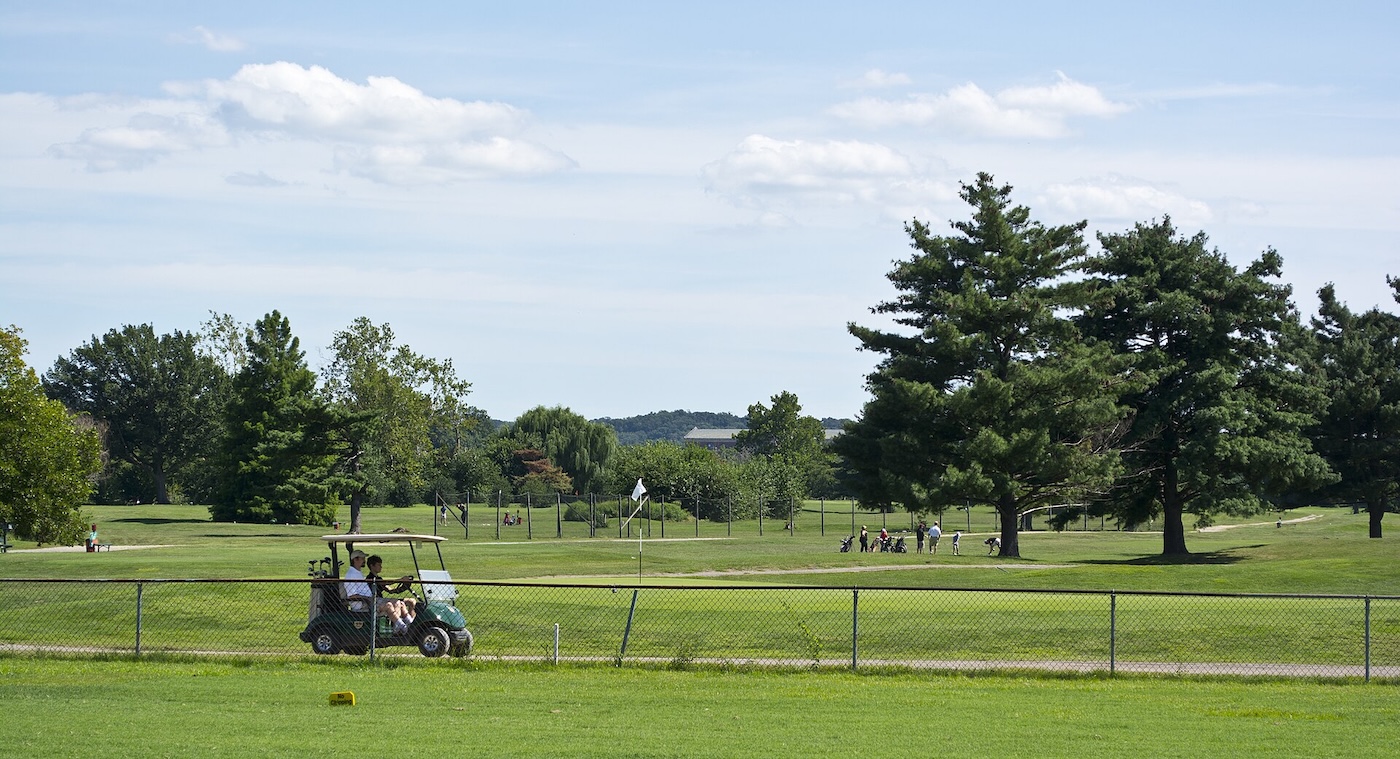
But a month later, this judge ended up having to speak for the trees after all, when she issued a preliminary injunction preventing the National Park Service from razing the historic East Potomac Golf Links’s oaks, maples, and more—after it had already chopped down nearly 530 trees over the fall holiday weekend.
“You know why I’m furious right now?” Reyes asked on Oct. 12, in the first of two evidentiary hearings. “I was hearing from everyone on plaintiffs’ side that this was going to happen, and I said repeatedly, ‘No, I trust the government.' I trusted you all not to do precisely what we have done.”
The government, you see, had repeatedly insisted in her courtroom that not only did no plan actually yet exist to transform East Potomac according to the president’s vision—it was just in the “conceptual” phase—but also that, if it ever became more concrete, they would give notice and undertake all the requisite procedural steps before beginning to put any such plan into place with irrevocable changes. Now, hundreds of trees were gone for good.
To add insult to injury, the Justice Department and the National Parks Service (NPS) insisted during and following the first of these two October hearings, held a week apart, that there was still nothing to see here: The president had given “at most … preliminary thought” to the design, and the chopping was part of an entirely separate, seven-year-old plan. The government apparently found Reyes’s stated fury itself infuriating enough to submit a fiery motion to disqualify her from the case.
Then, the weekend before the second hearing, which occurred Monday, Oct. 19, the president seemed to prove his Justice Department attorneys wrong—or dishonest. Trump took to Truth Social to announce over multiple posts that “the Department of the Interior … has developed”—yes—“a plan to build a World Class Championship Golf Course on the site of the current East Potomac Golf Links.” Construction, he proclaimed in a later post, would begin “IMMEDIATELY!” Despite this, at the second October hearing, the government continued to insist that no final plan existed—essentially instructing a federal judge not to believe the president of the United States.
One might wonder why any of this matters—except to golf enthusiasts, of whom nongolf enthusiasts don’t tend to think much about. Even Reyes said in the initial status conference, “I know nothing about golf whatsoever.” Later, she remarked, “I could care less about this golf course … all I want to do is make sure that we’re following the law.” (She ended the proceedings by inviting anyone to “bring me a baseball dispute.”)
As it turns out, understanding the case in its entirety does require some understanding of golf, or at least of golf courses—as well as all manner of legal technicalities. But to focus too closely any of the above misses the figurative forest for the literal trees: The fight over the fate of East Potomac Golf Links has revealed the almost impossible position the courts find themselves in when they can’t trust the government after all.
“This started as a case about golf,” Reyes writes in her opinion granting the preliminary injunction. “That good walk spoiled. But it has become much more.”
A Good Walk Spoiled, Spoiled
The story of D.C. Preservation League—or, as Reyes has now dubbed it, Lorax v. Once-ler redux—is long and winding, but it begins, in a sense, with the demolition of the East Wing of the White House. The government couldn’t start building a ballroom with all that dirt and debris on the lawn, so the rubble was trucked away. Some of it traveled across the National Mall and to Hains Point, whereupon workers deposited it on the East Potomac Golf Links’s par-34 White Course.
Why East Potomac? The National Links Trust, the nonprofit then operating D.C.’s three municipal courses with the aim of restoring and renovating them, originally referred all questions to the Interior Department. Golfers continued golfing, with a new hazard in the way of any poorly struck ball between the fourth and ninth holes that some alarmed advocates believed might contain asbestos and other harmful contaminants. Eventually, the Wall Street Journal offered some answers: Interior Secretary Doug Burgum had suggested sending the dirt to the course to act as “fill” for a redesign that, it turns out, the president was hoping to carry out already.
Two or so weeks after that report, in late December 2025, the Interior Department revoked the National Links Trust’s 50-year lease, with 45 years remaining. In January, Trump confirmed he hoped to turn East Potomac into a “world-class, U.S. Open-caliber course.” In February, someone finally decided to sue.
Teeing Off
D.C. Preservation League v. Department of Interior began in February. Two golfers and an advocacy organization filed a complaint followed by a motion for either a §705 stay under the Administrative Procedure Act (APA) or a preliminary injunction preventing the government from implementing the “Washington National Plan” to redevelop the East Potomac course. They alleged violations of the APA, National Environmental Policy Act (NEPA), Section 106 of the National Historic Preservation Act (NHPA), and the NPS Organic Act.
The Justice Department, represented by Environment and Natural Resources Division trial attorney Michael Robertson, averred that there was no such thing as the Washington National Plan yet. There was merely, if you will, a Washington National “conceptual proposal”; there was, therefore, no final agency action or anything to review under the other procedural statutes. Indeed, the government wrote, “what they claim is a legal violation”—the lack of process—is instead “indicative of the fact that no such agency action has occurred or is imminent.”
Judge Reyes, at the initial status conference, indicated that she would prefer that the parties “figure out if there's a way forward that doesn't involve me.” While she laid out a litigation track, she also urged the two sides to “think about whether or not the dispute that we think is here is actually here.” She also praised Robertson rather copiously: “This was one of the more exceptional government briefs I have seen in three years on the bench.”
This attitude characterized her approach at the beginning of the case. As the plaintiffs contended, the dispute was factual at its core: The strength of the government’s arguments on the merits depended on the accuracy of their attestations about the state of play. Reyes erred on the side of assuming that accuracy, giving her all the less reason to intervene.
Just under two months later, on May 1, however, NOTUS reported that the administration would close the East Potomac courses at the end of the weekend and begin “landscaping, deferred maintenance and tree-clearing work” before eventually commencing “major renovations,” expected to be led by well-known golf course architect Tom Fazio. The Washington Post reported soon after that the same top Trump fundraiser responsible for raising money for the ballroom was soliciting donations for a nonprofit to support the “comprehensive redevelopment” of the East Potomac course.
These events prompted the plaintiffs to file a motion for an emergency conference in which they asked, again, for the court to rule on their earlier motion to block the redevelopment plan—or at least provide temporary relief preventing any steps toward implementation apart from routine maintenance while she considered it.
Reyes, however, held firm to her faith in the government’s good word.
On May 4, convening a remote hearing from a trip at three in the morning Istanbul time, she was noticeably piqued that the plaintiffs had come to the court after hours on a Sunday without giving a heads up to Justice Department counsel. Under her questioning, NPS officials including National Mall and Memorial Parks Superintendent Kevin Griess said it was “business as usual” at East Potomac, with no closure planned. He had merely been given a verbal direction to take an inventory of any dead, dying, or hazardous trees. Government counsel maintained that this was a matter of routine maintenance and had nothing to do with the course renovation; no one had communicated that major renovations would take place anytime soon.
“I don’t want to be the overseer of Parks and Rec,” Reyes explained. “I’m no Amy Poehler.” Indicating that she wasn’t going to impose a temporary restraining order (TRO) or grant any other form of relief “just yet,” she requested instead that if NPS embarked on activity on the course beyond cutting down, say, 10 trees that are “on death’s door,” they provide notice. She was, she said, giving the government “the benefit of the doubt” that “we’re not going to be in a situation where we have bulldozers bulldozing down trees and no one has alerted me first.”
“You can understand why, let’s just say, given some issues around the District recently, I would have a particular concern that we not act first and ask forgiveness later,” she warned. “That’s not acceptable. If anything like that happens … there are going to be serious consequences.”
“Understood,” said Robertson.
The Turn
Within the week, there was more news. On May 8, NPS announced a deal by which the National Links Trust would renovate D.C.’s two other municipal courses, Langston and Rock Creek, but NPS itself would renovate East Potomac, transforming it into “a top-tier 18-hole championship golf course capable of hosting pre-eminent tournament golf.” A week after that, Burgum unveiled the design for East Potomac on X. The next month, on June 28, Trump, Burgum, and Fazio toured the site with renderings in hand.
"It was determined that, on this fantastic site, with water and unparalleled views of D.C.’s Monuments, we will build one of the Greatest Golf Courses anywhere in the World,” Trump proclaimed on Truth Social after the visit. “The Course is virtually unplayable! Work on the new Course, which willgo quickly, will begin on September 1st.”
Certainly, this had an effect.
Reyes held a hearing on the plaintiffs’ motion for a stay or preliminary injunction on a sweltering July 2. Tourists in town for the America 250 celebrations roamed the courthouse plaza in search of shade. Everyone, the judge recommended at the outset of the proceedings, should consider watching “The American Experiment” on Netflix. Also, how about that U.S. men’s national soccer team? Watching them win, she said, was a reminder of “what it feels like when we actually all remember that there is far more that unites us than divides us.”
Paean to unity complete, she had some pointed questions for the government: “In light of all that’s happened, are we still contending that there is no final agency action?” The government’s answer was, of course, that was indeed still what we were contending.
“Here is what we’re not going to do today,” Reyes announced that day. “I'm not going to have the President of the United States and the Secretary of Interior say something in public … and then come in court and say that what they are saying isn't actually what they are saying.”
Except that is exactly what the government came into court and continued to say. Trump’s posts weren’t irrelevant, exactly: “From the President’s mouth to their ears, Your Honor. . . . They are moving forward,” Robertson acknowledged. But too many things were “statutorily required to happen” to conclude that this forward motion would definitely carry the government toward a golf course by summer’s end.
“Is it the government’s position that the president of the United States was wrong and that in fact there has been no final decision to begin [building] a golf course…on Sept. 1?” Reyes asked.
“Our position is both things can be true,” said Robertson.
“No,” replied Reyes. “Both things cannot be true…We don’t live in Schrodinger’s golf course.”
Nonetheless, while Reyes repeatedly rejected the government’s formalistic view of what constitutes final agency action, she still asked the plaintiffs, five times over, “So what?”
“Their problem is final agency action,” noted Reyes. “Your problem is the merits.” Which is to say, she seemed close to convinced that she had jurisdiction but far from satisfied that she had any reason to impose injunctive relief. Even if there was indeed final agency action, and even if that final agency action had taken place early enough in the process that NEPA and NHPA violations had already been committed via the dirt-dumping, “What can I do?” “You want me to put them in jail? What do you want me to do to them?” “What am I going to enjoin?” (Precisely how dangerous the contaminant levels in the soil are to human health remains in dispute even now.)
The plaintiffs’ answer was: “an injunction against any meaningful ground disturbance that is inconsistent with East Potomac’s historic design.” But the Justice Department, Reyes said, was “telling me that they are going to go through the NEPA process and all these other processes before they break ground.” She refused “to assume that the agency is going to act in bad faith before they have acted.”
Instead, she did only what she had done previously. She asked that plaintiffs and the court would “get enough notice before some major thing happens.”
To Michael Robertson, the government counsel whose advocacy she praised throughout the litigation as “excellent” and “terrific,” Reyes said, “I have 1,000 percent faith in you.”
At one point during the July hearing, plaintiffs’ counsel said his clients harbored “deep concerns” that the government would actually perform a “good faith NEPA and NHPA review.”
“I think a lot of people in this country would share that concern,” Reyes replied. “A lot of people wouldn’t. You know what we do in that circumstance? We wait to see if they actually do it in good faith or not.”
We waited, and we saw.
Fore!
The tree-cutting resumed in mid-August. The Washington Post reported that NPS chopped down a cherry tree near the 14th green of the Blue Course, and “more than 60” trees on the course in total around the perimeter and parking lot as well as in playing corridors across East Potomac’s three courses.
The Justice Department, asked by plaintiffs about the cutting, characterized it once again as routine maintenance. At a Sept. 3 status conference, Robertson put the total in East Potomac Park as a whole at 150 trees removed, claiming that all of those were “hazardous, dead, dying or invasive.” Future removals, he said, would rely only on those same four criteria.
“There is no implementation of a new design,” he reiterated, and the government would have notified the court if such implementation were imminent.
Reyes said once more that she had no reason to doubt the government’s explanation. This was the point at which she confirmed for the world that she is, despite what the upset people leaving her “countless emails and voicemails” seemed to believe, not the Lorax. The next day, she denied the plaintiffs’ outdated original motions as moot in anticipation of amended and supplemented versions—beginning a new round of briefing.
Five weeks later, as part of that briefing, the government submitted a declaration from NPS Director Jessica Bowron stating that “plans remain in the conceptual stage.” The same day, at 4:55 p.m. on the Friday before a holiday weekend, NPS entered a “notice of activity” to the court. This notice came with an attached affidavit from Kevin Griess announcing that the agency was “planning to carry out a tree management and cultural landscape rehabilitation project at the Golf Course” beginning the following day. This project would require the cutting down of hundreds of healthy trees.
This activity, said the notice, was pursuant to recommendations in a seven-year-old report completely separate from “proposed rehabilitation or redesign” of the East Potomac course currently under litigation—and intended to restore the course to its original historic character. The next morning, the trees started coming down by the hundreds.
Out of Bounds
“I don’t know how I could have made it any plainer that I did not want what has happened to happen,” Reyes said in a remote emergency hearing on Monday, Oct. 12, a federal holiday. “I have given the government every single benefit of the doubt that it would not do precisely what it has done.”
On Oct. 9—the day the government gave notice of the impending tree-cutting—a new Justice Department attorney had entered a notice of appearance. As deputy chief for the Environment and Natural Resources Division, she was significantly senior to Michael Robertson, the counsel whose representations Reyes had been relying on for months. This attorney, Marissa Piropato, not Robertson, appeared at the emergency hearing. (“I’m sure he wants to be here,” Reyes remarked mid-hearing. “Maybe.”)
This convening featured no charming references to mustachioed storybook creatures, nor to Mrs. Pac-Man, the Red Sox, aliens at Old Faithful, or any of the other curiosities with which Reyes had livened up previous hearings in the litigation. On the contrary, Reyes was, in her own words, “thoroughly unamused.”
The judge asked Piropato when she first learned of the plan to clear what turns out to have been about 530 trees. Either late on Oct. 8 or the morning of Oct. 9, Piropato replied.
“I am just at a total loss to understand what has happened here, other than—Occam’s Razor time—that the government intended to do precisely what it has done,” Reyes said.
“Your honor, we did our best—”
“No, you did not do your best,” fumed Reyes. “You did your absolute worst.”
Reyes and attorney Abbe Lowell, for the plaintiffs, then swore Griess in as a witness and examined him.
A timeline took shape. Griess submitted the tree removal plan to NPS headquarters on Monday, Oct. 5, and Bowron approved it on Tuesday, Oct. 6, at 5:39 p.m. The court and plaintiffs did not hear anything at all until 4:55 p.m. on Friday, Oct. 9. The rest, however, was murkier. Griess claimed he had developed the plan—whose details were devised by the landscape architects, arborists, and urban foresters on his staff—to follow the recommendations of a 2019 document known as the Cultural Landscape Report (CLR) to restore the East Potomac course to the vision of its original architect, Walter J. Travis. He did this, he testified, on his own initiative. While he was “aware” of the president’s plan, as publicly described on social media and in news reports, he hadn’t been briefed on it professionally.
But his explanation of why he never mentioned the seven-year-old CLR in any previous tree-related declarations wasn’t terribly convincing. Neither was his account of why the decision to implement it occurred so suddenly and with such urgency. And when questioned on who told him to prioritize trees over other maintenance on East Potomac throughout his tenure, Griess answered, “The White House—excuse me, the Washington office of the National Park Service. Mr. Frank Lands.”
So Reyes hauled in Frank Lands.
It turns out that Oct. 5 was also an important day for Lands. That day, he had a meeting with Gregory Wischer, deputy chief of staff for the interior secretary—a young political appointee who has been intimately involved with the portion of the president’s D.C. Safe and Beautiful initiative dedicated to the president’s personally directed reconstruction projects.
The purpose of this meeting, Lands said, was to begin implementing the CLR “as soon as practical”—with safety and compliance in mind. (Lands stated this “compliance” was achieved by establishing a “categorical exclusion,” the same mechanism the government had relied on to dump the dirt. This exclusion deemed the tree removals, you guessed it, “routine maintenance” exempt from further NEPA analysis.) The speed with which a dozen NPS staff and officials worked to implement a seven-year-old plan within days, Lands said, wasn’t so remarkable after all: It was merely the “normal course of business” of the D.C. Safe and Beautiful program.
There was more at stake in the hearing than the resolution of the motion for relief. The questions asked at the hearing, Reyes emphasized that day, went to “whether or not I’ve been lied to.”
She granted the plaintiffs’ motion for a TRO on Oct. 13, ruling that the tree-razing was an “interim decision” made in the course of carrying out the Washington National Plan that itself was “indisputably final.” The government’s alternate version of the story, she said, “asks rather a lot of coincidence.” Her conclusion on the limited record: Officials “raced to undertake the TMP because President Trump demands haste on his redesign, and not because of some newfound zeal to implement a small part of a seven-year-old CLR.” She scheduled a second round of testimony, this time from Wischer and Acting NPS Director Bowron, for Oct. 19—where she would also hear arguments on a preliminary injunction.
Reyes summarized her findings in her TRO opinion thusly: “Breakneck speed to clear trees that posed no harm. The reason? Disputed. The budget? Unclear. The environmental impact? Unstudied. The urgency? None. Next steps: bulldoze hundreds more.”
Playing Through
If the government’s explanation made any sense at all from a layman’s perspective, it definitely didn’t make sense from a golfer’s. How could the administration simultaneously be executing a plan to restore East Potomac to what Walter Travis intended in the 1920s and entertaining a proposal to renovate East Potomac to what the current designer, Tom Fazio, intends in 2026? An enthusiast of the sport put it to me this way: A Travis course is to a Fazio course what an English garden is to a French garden. One embraces the natural landscape as it exists, and the other imposes order on it. (The earlier analogy I proposed to this golf enthusiast—Travis is to Falling Water as Fazio is to Mar-a-Lago—was rejected as “unfair to the Faz.”)
No golfing exegesis was necessary to understand the president’s Oct. 18 post on Truth Social—the day before a hearing Reyes had scheduled to continue taking testimony about the tree-hacking. In the post, Trump announced the imminent overhaul of East Potomac: The “Department of the Interior, under the auspices of Secretary Doug Burgum, and in conjunction with famed Golf Course Architect, Tom Fazio, has developed a plan to build a World Class Championship Golf Course on the site of the current East Potomac Golf Links, located in Washington, D.C.” Work would begin, he added, Nov. 15.
The accompanying rendering of the plan looked absolutely nothing like Walter Travis’s original design. The entirety of Hains Point, including its ring road popular among all manner of recreationists, had been subsumed. What’s more, the three courses of varying difficulties that now make up East Potomac Golf Links had collapsed into one, marketed to the elite rather than the everyman.
Trump even mentioned trees for good measure. “When the East Potomac Course was originally built, it was famous for no trees, with views of Washington, D.C., for all to see,” wrote Trump, “but now it is completely overgrown, dysfunctional, and unsafe.” In a second post, he thanked, among others, the Interior Department, adding he would rely for any needed updates to the plan on “the Experts in Parks and Recreation, whose experience and knowledge in Seawalls, Landscaping, and Design are second to none.”
Two days before the Trump post, the Justice Department had filed a motion seeking to disqualify Reyes from the case. Associate Attorney General Stanley Woodward Jr. was the only signer. He alleged that she had proved herself insufficiently impartial and had “hamstrung the Government’s legitimate attempts to maintain East Potomac Park from the outset.” The evening before the hearing, Reyes denied it.
But Trump’s Oct. 18 Truth Social post also raised questions about assertions the government had made in its brief opposing the preliminary injunction, the same day as its motion to disqualify the judge. Ahead of the hearing, Reyes ordered the government to answer a question: Did it continue “to take the position … that, ‘there is no final agency action’ and that ‘at most [] the President has given preliminary thought to’ the plan to rebuild East Potomac Golf Course”? The Justice Department said—in yet another motion, again signed only by Woodward—that, yes, it did.
“We also respectfully note that the Court’s order mischaracterizes Defendants’ position. Defendants did not portend [sic] to represent the actual position or mental impressions of the President in arguing that no final agency action had occurred.” Apparently, when its attorneys had characterized Trump’s plan as “nascent,” they’d just been spitballing.
Play It as It Lies
At 5:08 a.m. the morning of the second half of the evidentiary hearing in D.C. Preservation League, Trump posted again on Truth Social: “The judge on the case is a crazed lunatic, who courthouse tapes will reveal, may be insane?” The Interior Department was allowed to “do this First Class renovation ‘as of right’” and needed no approval. Work on the course would begin “IMMEDIATELY!”
The alleged “crazed lunatic” did start the proceedings rather theatrically. She told the Justice Department attorneys in the room to indicate whether they were willing to sign on to Woodward’s submission averring that there had still been no final agency action. Woodward objected. She told them to raise their hands. Woodward objected, and no one did. She ordered them to come to the podium and sign the filing. Woodward objected, and instructed them not to respond, and no one did. She gave the Justice Department until that afternoon to file a brief explaining why its attorneys shouldn’t respond to her order. Later in the hearing, however, she decided to drop the matter.
The testimony began shortly thereafter. Wischer, Burgum’s deputy chief of staff, took the stand again. He had a favorite phrase: “cleaning up the course,” which he relied on repeatedly as he asserted that the tree-chopping was part of a broader beautification effort. He said he had discovered the CLR on the Internet over the course of that effort—though he didn’t stumble upon it, in his telling, until late September 2026. But he also testified that he was, somewhat inexplicably, aware only of the CLR’s recommendations for East Potomac and not for the other two D.C. courses the report covers just as thoroughly. And Wischer, like the other officials who gave testimony that day, devoted himself to a narrow portion of the expansive report: the trees.
Abbe Lowell examined Wischer for the plaintiffs. He entered multiple photographs of Trump’s June 28 visit to the East Potomac course as exhibits. The interior secretary is there; Tom Fazio and his son, Gavin Fazio, are there; Natalie Harp, the president’s close aide, is there. And Wischer is there, holding visuals of what he calls “various conceptual proposals for the golf course” as well as a folder of documents that he says contain “pictures of cleanup work we’d already done.” As for the new renderings the president unveiled over the weekend, Wischer testified that he had received texts of those renderings a few days before Trump posted them from the younger Fazio.
Yet still, Wischer maintained that razing hundreds of healthy trees related solely to the seven-year-old CLR he had so recently discovered and had nothing to do with the Washington National Plan, which he had been shepherding for months. As for whether the course would indeed close on Nov. 15, as the president had said? Wischer said he knew nothing about that either: “The Truth Social post is the only place where I see that.”
Next, NPS Acting Director Bowron gave testimony. Precisely who told whom to do what when had been fuzzy throughout the evidentiary hearings. But she clarified that it was Wischer who set the tree-chopping onrush in motion. According to her, he asked her on Sept. 29, the week before the already documented scramble, to develop a compliance path to put the CLR in place “with respect to vegetation management.”
Similarly to Wischer, Bowron stuck to her story. She said that her pledges throughout the litigation that NPS would only undertake “small projects” to address “outstanding deferred maintenance and repair” were accurate. Lowell asked, “Your testimony is that the removal of hundreds of trees, with a plan to do more but for the rain, was the same as a small project to address deteriorating conditions?” (“Healthy, noninvasive” trees, Reyes chimed in.) “Yes,” Bowron said. “How?” asked Reyes.
Throughout the hearing, Reyes expressed incredulity at the government’s version of events. “There is no universe where all of this just coincidentally happened at the same time,” she remarked at one point. “We’re not dealing with quantum physics here,” she added at another. (Soon after, she corrected herself to acknowledge that “I guess we’re all in quantum physics all the time.”)
But she also appeared resigned to her predicament, at least for the time being: “He’s going to testify what he’s going to testify,” she said of Wischer. Attempts to pierce beyond this testimony to probe the interior secretary or the White House’s involvement more deeply were reliably met with Woodward’s objections based on attorney-client or deliberative-process privilege, on which Reyes ordered briefing.
Getting answers matters, not only because they could reveal whether or to what extent Reyes was deceived but also because the reality is relevant to the merits.
At the close of the evidence—nearly four hours after Reyes first called the court to order—Reyes heard legal argument on whether to grant a preliminary injunction. Frustrated, she asked the Justice Department, “I’m being told by the President of the United States that the golf course is going to close on November 15th. And you’re telling me that there is no plan to close the golf course. So who do I believe? Do I believe the President of the United States, or do I believe you?”
Then, just before adjourning, she offered a solemn and unexpected coda.
“CNN is reporting I’m getting a lot of death threats,” Reyes said. “This is where we are. A federal judge getting death threats over a golf course. I really don’t think this is what the Founders envisioned.”
Suspension of Play
Reyes granted the plaintiffs’ motion for a preliminary injunction in the evening hours of Oct. 26. She reminded readers that her ruling “does not end the round: it simply marks the ball until the parties can fully and fairly litigate this case.” So it seems the judge who began this case by proclaiming with apparent pride her utter lack of knowledge about golf has learned something after all.
The order was about as specific as can be: The government and anyone working with them “shall not cut, fell, remove, girdle, top, or substantially prune or otherwise damage or impair any tree in East Potomac Park.” The government also must provide ten business days’ written notice before closing or irreversibly modifying the park. Oh, and if all that wasn’t clear enough? The government must alert her to any ambiguity, so that she can resolve it.
The “Washington National Plan—which the Court defines as a plan to destroy the current East Potomac Golf Course and to replace it with a modern, championship-style course designed by Tom Fazio—exists,” determined Reyes. The Justice Department had rebutted that view only by urging the court to disbelieve the president’s repeated statements to the contrary. And it had made no plausible showing of injury should it be prevented from cutting down the trees post-haste, whereas the plaintiffs—well, just ask the Lorax.
As for the government’s arguments about the “strong separation of powers equity in the executive branch managing its own affairs,” Reyes was clear: Separation of powers “is not a talismanic incantation that permits the Executive to run amok, unchecked.” On the contrary, the government ignores that “separation of powers is the flip side of checks and balances,” and “an independent judiciary is a linchpin of those checks and balances.”
The president, for his part, was displeased. “DEPARTMENT OF INTERIOR TO APPEAL THIS UNCONSTITUTIONAL REQUEST,” he boomed in a lengthy Truth Social post. East Potomac Golf Links, he protested, would close after all on Nov. 15. “To have to give advanced notices to a judge who has no expertise in Golf, Architecture, Landscape, Construction, or anything else having to do with building such a World Class Project, is not fair, appropriate, or Constitutional.”
He even came up with an entirely new, almost cinematic justification for the project: “The Course is extremely dangerous to play, in that the narrow and nondescript fairways are far too close together, leading to a constant barrage of people being hit with wayward shots, and the echoing throughout the air of the word, ‘FORE!’”
Par for the Course
What’s perhaps most striking about the history of D.C. Preservation League is that Reyes indicated throughout that the government might well win. Initially, she didn’t believe there had been final agency action that even justified her involvement. She was skeptical that the government, assuming it followed all the rules, couldn’t do what it wanted with the course.
“You understand that as a matter of law I can’t stop them from changing the golf course?” she asked the plaintiffs on July 2. “I can’t say I just think that’s not something you should do.” She also trusted the government, loudly, over and over again. “I want to trust that people are acting in good faith and have them acting in good faith until proven otherwise,” she said the same day, “and you [government counsel] have not proven otherwise to me in this litigation.”
The problem was (and is) that the respect didn’t (and doesn’t) flow both ways. The president could very well have hopped through the hoops necessary to win the judiciary’s blessing to construct his glitzy golf course—but he and his advisers disdained to. And Reyes received no credit for her restraint. On the contrary, she was still painted as a paragon of hostility and histrionics according to the Justice Department, an “endlessly enraged” leftist according to Stephen Miller, and a “crazed lunatic” according to the president.
Really, Reyes was left with no choice but to do exactly what she wanted to avoid all along. Closing out her preliminary injunction opinion, she writes, “The Court earlier stated, ‘I am not the Lorax. I do not speak for the trees.’ The Court still does not speak for the trees. It speaks only for the rule of law.” Which recalls Dr. Seuss’s own conclusion: Unless someone like her cares a whole awful lot, nothing is going to get better. It’s not.