International Legal Challenges to the Trump Administration’s Immigration Policies
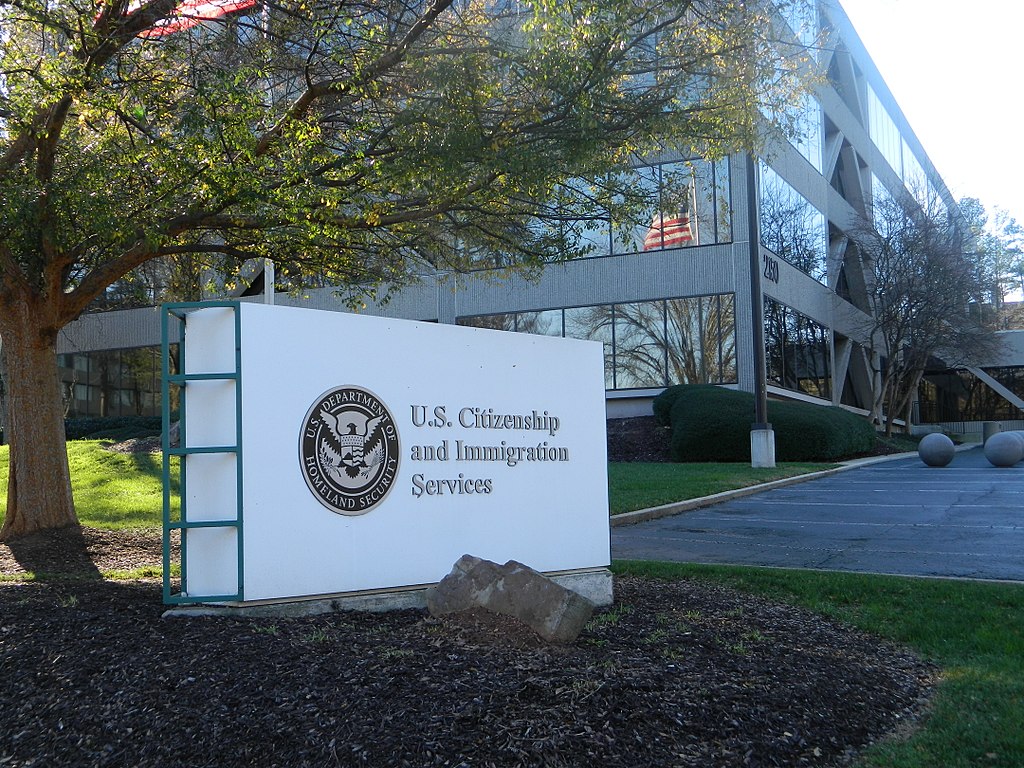

Last September, Department of Homeland Security agents approached immigration attorney Andrew Lattarulo at Logan International Airport in Boston, Massachusetts. Federal agents confiscated his phone without a warrant, alleging they had “reasonable suspicion” that Lattarulo was employing undocumented workers.
Days later, Lattarulo filed suit against the government for violating his First and Fourth Amendment rights. Lattarulo alleges that this search was done due to “his expressive material criticizing President Trump’s immigration policies and his association with clients of mixed immigration status” and that the search exposes privileged communications to an adverse agency.
Lattarulo’s case is not unique. Under the current administration, actions by Department of Homeland Security agents across the country have obstructed immigration attorneys and deprived noncitizens of liberty without due process. For Lattarulo, his case is ongoing, and the court has not yet held a hearing on the merits.
While suits under U.S. domestic law may provide relief to Lattarulo, there is no easy judicial mechanism to curb alleged unlawful practices by Immigration and Customs Enforcement (ICE) on a large scale, which go beyond individual domestic violations of law but instead amount to systemic violations of human rights. Under international legal frameworks, warrantless searches and seizures, arbitrary detention of noncitizens, and rapid deportation by federal ICE and Customs and Border Protection agents violate fundamental human rights norms and warrant intervention by international accountability mechanisms.
One such mechanism for calling out and potentially curbing unlawful activity is the United Nations special rapporteur system. Special rapporteurs are independent experts charged with monitoring compliance with international law. The special rapporteur is responsible for reviewing complaints submitted by third parties, and if the rapporteur finds a complaint meritorious, she will file a communication with the country alleged to have violated international law and solicit a response. Typically, these complaints elicit responses from the defending countries, either addressing the allegations or outlining plans to rectify the situation.
The Trump administration may not respond to international law complaints. But complaints have additional aims beyond a response from defending countries. For example, complaints can also document ongoing human rights violations and provide a road map to avoid allowing these patterns to repeat themselves under a future administration. By placing these violations on an international stage, complaints seek to hold countries accountable to treaty obligations and to the broader norms of international human rights law, while also pressuring domestic actors to remedy ongoing harms and prevent their reoccurrence.
On Jan. 18, the University of Chicago Law School’s Global Human Rights Clinic and Immigrants’ Rights Clinic filed a complaint with the United Nations Special Rapporteur on the Independence of Lawyers and Judges. (The authors contributed to that filing.) The complaint alleges that the Trump administration’s policies targeting immigration judges and attorneys violate the International Covenant on Civil and Political Rights (ICCPR). Ratified by the United States in 1992, the ICCPR enshrines basic human rights principles, which extend to noncitizens. For example, Article 13 of the covenant provides that a noncitizen must be provided an opportunity to present reasons against his expulsion and “to have his case reviewed by, and be represented for the purpose before, the competent authority or a person or persons especially designated by the competent authority.” Article 14 expressly ensures equality before a competent tribunal and the right to counsel, the upshot being that noncitizens have a right to a competent and impartial adjudicator and full and effective representation of counsel. Taken together, the ICCPR codifies a fundamental right to due process in every judicial proceeding, regardless of immigration status.
The complaint alleges numerous violations of these fundamental human rights. It documents how, over the past year, the Trump administration has interfered with two key bastions of due process in the immigration system: immigration judges and lawyers. The administration has fired hundreds of immigration judges, shrunk the number of members on the Board of Immigration Appeals by half, and issued guidance that favors ICE over noncitizens by removing discretion from judges’ hands and encouraging detention and deportation. At the same time, the complaint alleges that the administration has taken measures to ensure that citizens remain unrepresented, including unlawful searches of immigration attorneys like Lattarulo, arbitrary detention and transfers of migrants, and intimidation tactics designed to discourage representation of clients. Against a national backdrop of hostile ICE actions, arrests in the courtroom, patently unjustified raids, and hundreds of cases in which the administration defies court orders granting habeas relief—the administration’s tactics result in a lack of due process for noncitizens.
The University of Chicago’s law school clinics prepared the complaint by conducting a series of interviews with over a dozen former immigration judges and immigration lawyers. During the interview process, several patterns emerged.
First, since Trump’s inauguration, over 200 immigration judges have left their posts either by taking an early retirement offer or through terminations and involuntary transfers by the Trump administration. While most fired judges interviewed did not receive a reason for their termination, many suspect that their previous employment, grant rates, citizenship status, or political leaning are the cause. Others believe the administration is firing everyone, attempting to destroy a system in which cases are carefully considered by those with subject matter expertise. In their place, the administration has appointed new immigration judges who align with the president’s political beliefs, fostering an environment in which judges fear making impartial judgment. This strategy undermines the impartiality of judges, both in practice and appearance, as is required by Article 14 of the ICCPR, to which the United States is party.
The administration has also issued multiple internal memos that prioritize arbitrary performance metrics, rather than reasoned and thoughtful deliberation. One such policy pertains to the decision to issue removal orders in absentia. Many of the judges interviewed commented that prior to the change of administration, they would not always order a noncitizen removed in absentia the first time they failed to appear in court. Now, the administration requires immigration judges to order noncitizens removed at the first no-show. The current system not only has curtailed immigration judges’ discretionary authority in individual cases but also has fostered a hostile environment that discourages them from making impartial, well-reasoned decisions.
Second, the Trump administration has characterized noncitizens as criminals, targeted individuals based on national origin, and hindered noncitizens’ access to courts by utilizing courthouse arrests. Such practices likely violate Article 2 of the ICCPR, which requires the United States to respect and ensure the rights of all individuals within its territory “without distinction of any kind.” The complaint alleges that, instead, the United States has constructed a two-tiered legal system that segregates access to justice based on citizenship status. Combined with the widespread use of in absentia orders and motion-to-dismiss practices, the presence of enforcement agents poised to arrest noncitizens impedes access to justice and results in unequal and discriminatory implementation of ICCPR protections. By deterring noncitizens from appearing in court through fear of arrest and then swiftly dismissing their cases when they fail to appear, the system leaves attorneys and noncitizens at the mercy of immigration judges because attorneys are incapable of reopening closed cases unless an immigration judge favorably exercises their discretion. These practices erode impartiality in a system designed to adjudicate immigration proceedings fairly and without bias, as immigration judges increasingly function as an extension of the administration’s enforcement tactics rather than as neutral arbiters.
Third, the current administration has hindered the ability of immigration lawyers to locate and communicate confidentially with their clients held in immigration detention. Noncitizens are arbitrarily transferred without access to counsel and are left in remote facilities away from major population centers. Even when attorneys attempt to access the facilities, they have been turned away. Coupled with prolonged and inhumane detention, these practices amount to clear human rights violations against noncitizens. But the lack of access to counsel also raises a separate concern: When attorneys cannot reach their clients, the structural safeguards meant to ensure due process erode, enabling rapid and unlawful deportations. These actions violate the due process guarantees of Articles 13 and 14 of the ICCPR.
The government’s practice of rapid and undisclosed transfers, including to facilities across state lines or inhumane locations offshore, not only prevents attorney contact but also deprives noncitizens of their liberty and risks their safety and health. These practices raise concerns of enforced disappearances, a violation of customary international law in which a noncitizen is deprived of liberty at the hands of the government. In some situations, international law may serve as the only method of recourse for noncitizens. Reports and policy memos indicate that ICE can remove noncitizens to countries that they have never even visited—outside the purview of U.S. courts—and so quickly that they do not have time to contact an attorney.
Lastly, the search and seizure of immigration attorneys’ devices and the use of force against those protesting immigration practices in the U.S. chills speech—in violation of ICCPR Article 19, which codifies the right to freedom of expression. And while freedom of expression may be restricted in certain circumstances to protect the “rights or reputations of others,” “national security,” or “public order,” the UN Human Rights Committee requires that any restrictions be provided by law, be necessary to achieve a cited legitimate aim, and be proportionate to the interest sought to protect. The Trump administration’s current practice does not comply with these requirements of international law. The search and seizure of attorneys’ devices chills attorneys’ speech related to government accountability and prevents immigrants from receiving potentially life-saving information. Similarly, the use of force against those protesting on behalf of immigrants, like the violence used against protestors in Chicago after ICE’s September 2025 raids and seizures, threatens to silence those willing to speak out against the targeting of and abuses perpetrated on immigrant communities. These actions not only violate ICCPR Article 19 but also allow immigration officials to further isolate and harm immigrants with minimal concern about public criticism.
These practices are not isolated accidents. Taken together with many other similar incidents, a troubling pattern emerges, one that represents the coordinated erosion of the rule of law in the U.S. immigration system. Immigration judges face pressure to comply with mandates or risk removal, attorneys are obstructed from effectively representing their clients, and the resulting system produces real-world consequences for noncitizens, whose fundamental rights are violated daily. In combination, these actions defy the rule of law, stifle noncitizens’ ability to contest their removal, and violate international law.