Lawfare Daily: Can the President Declare an Elections Emergency?
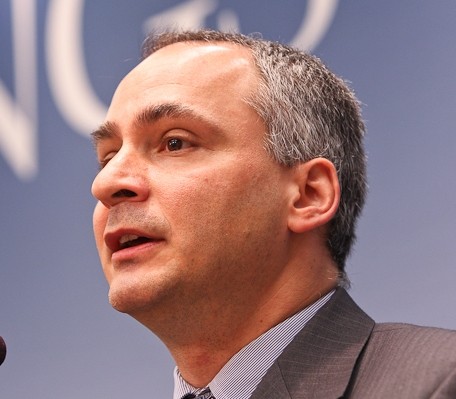
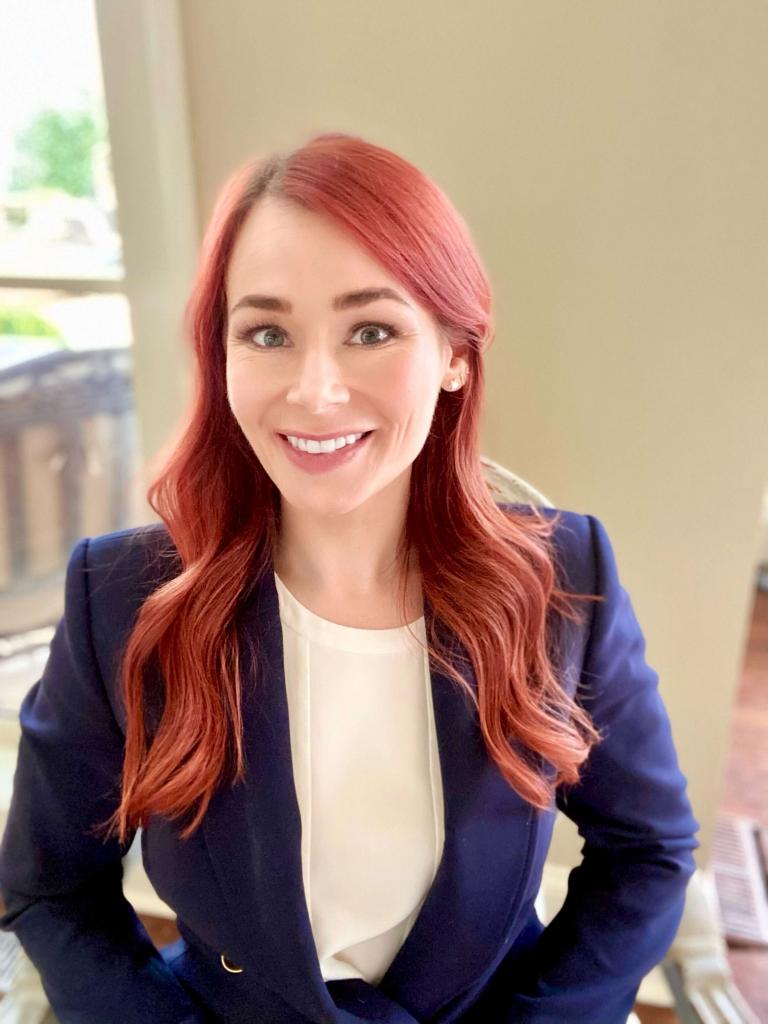

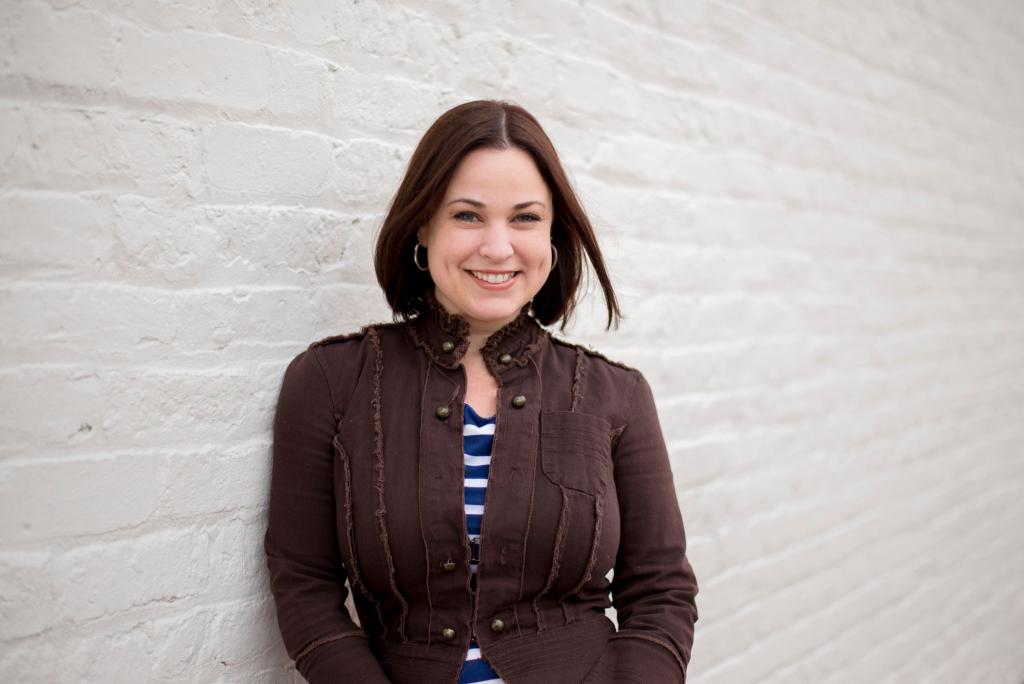
A draft executive order has been floating around that would assert presidential control over elections all over the country. Lawfare Editor in Chief Benjamin Wittes sits down with Lawfare Senior Editors Anna Bower and Molly Roberts, authors of the recent Lawfare article, “In Case of Emergency: The Dubious Legality of Trump Allies' Draft EO,” to talk through what it would do, who was behind it, and how seriously we should take it.
To receive ad-free podcasts, become a Lawfare Material Supporter at www.patreon.com/lawfare. You can also support Lawfare by making a one-time donation at https://givebutter.com/
Click the button below to view a transcript of this podcast. Please note that the transcript was auto-generated and may contain errors.
Transcript
[Intro]
Anna Bower: This Juan
O Savin character got a coalition together and, and it was drafted and then now
it's been circulating and allegedly has, has the attention of the White House.
Benjamin Wittes: It's
the Lawfare Podcast. I'm Benjamin Wittes, editor in chief of Lawfare here
with Molly Roberts and Anna Bower, both Lawfare senior editors.
Molly Roberts: One
big risk is that the president issues this order. He issues it close to the
election and it's unclear to states whether they're supposed to comply. It's
also possible that red states would go ahead and comply, even though their laws
haven't been properly adjusted to do this, that they would say, oh yeah, we're
gonna try to enforce all of that.
Benjamin Wittes:
Today we're talking election craziness. A draft executive order has been
floating around that would assert presidential control over elections all over
the country. How seriously should we take it? What would it do? And who was
behind it?
[Main Podcast]
Alright, Molly, start us out. How did you get on this crazy
subject?
Molly Roberts: Well,
I unfortunately often read the president's TruthSocial posts, and I'd been
seeing some ominous looking Tweets, Truths, whatever we're supposed to call
them where the president was saying that he was going to present a quote
unquote irrefutable legal argument in the form of an executive order on the
subject of elections, kind of related to the stalling out of the Save America
Act in Congress.
So I'd been keeping an eye on that and thinking, oh God, what
could this be? And then the Washington Post published a story about the
president considering an executive order on elections. So I thought, oh, maybe
that's what it is, and started to look into it.
Benjamin Wittes: So
the president has issued an executive order on elections once before.
Molly Roberts: He
has.
Benjamin Wittes: So
for those who are a little bit tied around the axle about this whole subject
and can't keep the legislation separate from the prior executive order,
separate from the future executive order that may or may not be real. Give us a
little bit of background here to situate people. What has already happened and
what are they proposing in legislation and what is contemplated in further
executive orders?
Molly Roberts: Yeah,
and I don't blame people for being confused and having trouble keeping up
because it's a lot of overlapping, but not exactly overlapping objectives over
the course of a lot of time and coming in a lot of formats, some of them sort
of hypothetical and some of them already existing. So I guess the place to
start would be with the March 2025 executive order, and that is an executive
order that was issued.
And that executive order was also about voter identification,
registration, having to do with showing their papers, citizens showing their
papers when registering to vote, it mostly tried to achieve that mandate by
instructing the Election Assistance Commission, which is an independent agency
that supports election administration to change its registration forms, which
it sends by mail to require a passport or a photo ID that proves citizenship.
And I don't know if people remember getting their Real ID. It
was a big slog. That seems like a pretty intense form of ID. It does not prove
citizenship. So that's an ID that almost nobody has. So that's what that was
trying to do. It didn't try to make Americans vote in person, but it tried to
make registration harder, and that was kind of the main thing that that act
did.
It also had to do with the decertification of a lot of voting
machines, and they could only be recertified if they met really stringent
standards that experts said were super expensive, super time consuming and just
not really feasible to get done before the midterms.
So that was the March order did not fare well in court. The
central provisions of it have been blocked by three federal courts, so not
working out great for the president and his allies who want to make it harder
to vote essentially. And seemingly to make it harder for demographics that they
think will be voting for Democrats to vote.
So that brings us to kind of the political drama of the moment,
which is the Save America Act in Congress. And the Save America Act is really
similar to what we were just talking about with the March executive order, but
not completely the same. So it would require the vast majority of Americans to
register to vote in person and to show a photo ID, but also proof of
citizenship. So passport birth certificate, but the everything has to match,
which can be difficult.
So like one big example that people have brought up about for
whom this would be difficult is women who changed their names when they got
married. And so that's the Save America Act. It does not ban mail-in ballots.
Although the president has wanted it to ban mail-in ballots, it would make it a
little harder to vote by mail.
And then it would also force states to submit voter rolls
regularly to the Department of Homeland Security, which is ties in with a
separate effort that the White House has been undertaking. And I think that's
kind of the TLDR on the Save America Act. And again, it, it looked for a long
time like it was definitely not gonna pass. And now it's way more of a real
legislative battle over that.
Which brings us to this draft executive order, and I know I've
been going on and on and on, but that brings us to the draft executive order,
the Save America Act, when it looked like it really wasn't going to pass. And
still now, the president was quite upset about it and was tweeting a lot about
how he really needed to achieve these objectives.
He was saying there will be voter ID for midterm elections,
whether approved by Congress or not. He said, the people of our country want
the citizenship not exactly requirements, right, an enforcement of those
requirements. They don't want mail-in ballots, which again, not actually in the
act. He also said that they don't want transgender for everyone, which is
something he's been pushing to get in the Save America Act. But I think that's
more off the table.
Benjamin Wittes: And
just to be clear, that has obviously nothing to do with elections, right?
Molly Roberts: Yeah,
yeah, yeah. Nothing to do with elections.
Benjamin Wittes: Okay.
Molly Roberts: He, he seemed to get a little distracted
in the middle of his tweet and move on to some culture war stuff. He said,
playing in women's sports, open borders and transgender for everyone. So he
mentioned it, but even these activists who I'm about to get to, they didn't
even try to put that in their order.
So the draft executive order, and Anna can talk about who the
activists are pushing this, but it would try to achieve sort of a combination
of what's in the Save America Act and what's in the March 2025 order, and then
add some stuff on top of that, particularly as regards mail-in ballots. It is
way stricter on the question of mail-in ballot than any of those acts.
So I mean, I could go through every single detail of what it
is, but that would take me, and I've already been going on for like five
minutes. That would take me like five zero minutes. It is basically kind of
every election, deniers fantasy wishlist. So I'll stop there.
Benjamin Wittes:
Alright. So give us the history of this draft executive order. It shows up the
other day a few weeks ago in a Washington Post story, but it actually has a
little bit of history before that, before we get to the characters who were
behind it. Is this an order the president is preparing to sign, or should we
assume that the president, like what's the status of this draft executive
order? Where does it come from and what do we think the president is likely to
do with it?
Molly Roberts: I
think Anna can speak to that for sure. I, the details of where and who it comes
from, I think that. As far as the bigger picture question of basically, how
seriously should we be taking this? The people involved are really fringe
actors. The legal theories they're putting forth are, I don't even know if
fringe is the word. They're just totally laughable. They're really easy to
dismantle. But the president has a history of taking those kinds of people.
Benjamin Wittes: Do
you mean it's not an unassailable legal argument?
Molly Roberts: It's
not unassailable. It's not irrefutable, it's not ironclad. It's the opposite of
all those things. You could puff and puff and blow it down.
So it's hard to read it and take it seriously, but also think
back to 2020 when the president did seriously entertain a draft executive order
that similar to this one would've declared a national emergency on elections so
that he could go in and seize voting machines using the Department of Defense.
He recently said he regrets not doing that. He didn't do it,
but he thought about it. So I think that reading this executive order and
saying, ah, the president is going to sign exactly, this would be a little
silly, but it would also be naive to think that he's not considering any of the
ideas at all, that bits and pieces of them might work their way into policy
that maybe even more dangerously, a slightly stronger version of this could end
up on his desk.
Benjamin Wittes: All
right, Anna, where does this thing come from, and who is the the strange cast
of characters who gave rise to it?
Anna Bower: Yeah. So
Ben, we, we talk about this in the piece that the origin story here is a little
bit murky. It's, it's very hard to pin down. And it's not entirely clear
exactly who all was involved in the drafting of this 17 page draft elections
executive order.
It's also not even clear if like, how many versions are, are
circulating of this order? We spoke to, for example, Peter Ticktin, who is a a
friend of Trump's for many years. They've known each other since they were
teenagers. They were at the New York Military Academy together.
Ticktin, subsequently has, has, is a, is an attorney and has
represented Trump unsuccessfully actually in, in civil litigation in Florida
that he brought against Hillary Clinton and others, that was the case in which
Tikton and Alina Habba and others were, were sanctioned for making
representations to the court that were frivolous according to the court.
But we, we spoke to Mr. Ticktin because he was named in this
Washington Post article as one of the proponents of, of this draft executive
order. And he provided a copy of it to Democracy Docket prior to our
publication of our article. And so we spoke to him and what he told us is that
he wrote a kind of precursor to this 17 page version that is now circulating,
and he does not know who wrote that particular version.
But, but that version is the one that he has sent to President
Trump. According to him, he says he emailed it to Trump. I did not know that
Trump even had an email. I mean, I'm sure that he does, but I didn't know he
emailed, so it, not entirely sure exactly how that works, but Tikton told us
that he has a direct line of communication to the White House and to Trump.
He also told us that, you know, he's raised this issue with
Kurt Olsen, who is the White House election integrity supervisor and has been a
long time election denier before his current position in government. And then
we also spoke to Ticktin about who else is kind of a proponent of this order,
and he named a few familiar names: Patrick Byrne, Mike Flynn, and then Stefanie
Lambert, who is an attorney who is now awaiting charges on election tampering
in Michigan. So, you know, it's, it's kind of a familiar cast of characters who
are the proponents of this, and it's not entirely clear, although Ticktin said
that he has reached out to the president.
Trump himself in response to questions from reporters has said
that he didn't know what people are talking about when they asked about this
draft executive order. So it's not entirely clear exactly to what extent the
White House or Trump himself is considering it. However, we did a little bit
more digging into the history of, of this particular order, and it's, it's
pretty it's a pretty fascinating story, Ben, the people who were involved after
we spoke to Ticktin, I did a deep dive on rumble listening to old podcast and
videos about this national emergency and draft executive order.
And as far as I can tell from, from what we've uncovered in our
reporting, one of the key figures here is this guy who goes by the name Juan O.
Savin. He is a QAnon figure, kind of QAnon influencer. His real name is Wayne
Willett. He's a former private investigator in Washington State according to
reporting from The Daily Beast.
And, and he, you know, kind of became this QAnon influencer.
There's a conspiracy theory about him actually, that he has never confirmed nor
denied, but kind of seems to play into it a little bit in his public
appearances. But there's this theory that he himself is actually. JFK Jr.–who
died in the nineties famously, but living under an assumed identity.
Benjamin Wittes: So
it's not really a conspiracy theory, it's kind of a fantastical like delusional
system.
Anna Bower: Yeah,
it's, it's completely delusional and, and people have all these theory and
like, this is a theory, I should say in QAnon. There's a few people in QAnon
that QAnon followers think could be JFK Jr. 'cause there's the–
Benjamin Wittes: And just
to be clear, we're not talking about the reincarnation of JFK Jr. We're talking
about the, he didn't die in that plane crash.
Anna Bower: Yeah.
Benjamim Wittes: And has been secretly living under–
Anna Bower: Yeah. And
there's a version of the conspiracy theory that involves the person who is, is
JFK Jr. living under assumed identity, revealing himself and, and teaming up
with Trump as a–
Benjamin Wittes: Running
right to go after the pedophiles.
Anna Bower: Yeah, to
go it. So, I mean it's a crazy, it's crazy, right?
Benjamin Wittes:
Jesus. You never thought you'd be talking about on the Lawfare podcast.
Right?
Molly Roberts: There
are also so many dead candidates. You'd think they'd diversify a bit. You'd
think they wouldn't, you know, choose only JFK Jr.
Anna Bower: But, but
like he kind of plays into it, this Juan O. Savin figure by like, like whenever
he does podcast, he won't, he will never, ever put his face on camera. It's
always like kind of pointing the camera in a different direction so you can
only hear his voice because people think that his voice sounds like JFK Jr for
some reason. And there's like all these video cuts of people comparing his
voice to JFK Jr.
Anyway, so this Juan O. Savin character who himself, you know,
has a history with some of these election conspiracists like Patrick Byrne and
Mike Flynn because he was, this Juan O. Savin was, you know, one of the people
who was making a lot of claims about the 2020 election. And, and he has said on
podcasts that he convened in January of shortly after the inauguration in 2025,
after the 2024 election he convened a group of what he called Legal Minds and
Election experts to try to put together a draft executive order like the one
that, that we, that eventually became the 17 pager that democracy Docket
published and that Peter Tiktik provided to them.
And, you know, they worked, he said over a course of several
months this coalition of people, they went through 13 versions of this order
until they finally settled on the one that was released back in, I believe it
was April of 2025. Different versions of this 17 page draft executive order
started being circulated. And Ben, I should mention too. Note that the draft
executive order is 17 pages. 17 is a number that is important in QAnon
followings, because–
Benjamin Wittes: We
have reached the numerology stage of the conversation.
Anna Bower: Because Q
is the 17th letter of the alphabet. And so a lot of QAnon followers see the
number 17 as a kind of coded signal.
Benjamin Wittes: Right.
Anna Bower: And, and,
and whether or not that's worth–
Benjamin Wittes: It’s
good that we're talking about this.
Anna Bower: Yeah.
Because, you know, I'm giving you all of the color around who created this
draft executive order that allegedly the president might you know, be using as
a source for some future executive orders.
But so, so Juan O. Savin talks about this. He makes these
claims, and I mean, keep in mind, this is the same guy who is the subject of a
theory that he is actually JFK Junior. So, you know, maybe don't take his word
as, as truth, take it with a grain of salt, but he claims that, you know this
has been, this 17 page draft executive order has been on the president's desk. That
is something that it is going to happen.
And then, you know, beyond that there's other people who have
claimed involvement, who confirmed to us that wanna, they were part of the Juan
O. Savin coalition. We talked to Tim Canova, who was a law professor at Nova
Southeastern University School of Law. He was a part of this coalition of
people who got together to try to draft this thing, and he also indicated to us
that one of the leaders in kind of coordinating this group was a man named
Garland Favorito.
Now, Garland Favorito probably is not a familiar name for people
who are listening to this podcast, but it was a very familiar name to me
because I've reported a lot on election happenings in Georgia. Garland is a
very well known election activist in, in Georgia. He runs a very influential.
Group called VoterGA.
Now we, we also contacted Garland, and so I should, and I
should mention this, that he claimed when we, when we were asked him for
comment that he has not read the executive order and he declined to comment on
it he did not specifically address the question of whether he was one of the
people involved in coordinating this order.
But in terms of other people, it's also other kind of, you
know, election integrity activists. People like Mark Cook, Laura Scharr who are
involved in various states with kind of so-called election integrity work and
who have been also proponents of a 2020 election conspiracy theory.
So that's the group, Ben, and, and as far as we can tell that
is kind of the history of it, is that this Juan O. Savin character got a
coalition together and, and it was drafted and then now it's been circulating
and allegedly has, has the attention of the White House.
Benjamin Wittes: So I
listen to you and I think, wow, this sounds like a bunch of kooks. And my
immediate instinct is to not take seriously the idea that the president would
actually sign this. And so Molly, walk me through why I should take this
seriously.
Molly Roberts: Sure.
So I guess one thing that I would add to everything Anna just said is that soon
after the post story about the existence of this executive order, ProPublica
reported that Michael Flynn had convened Election Integrity Summit at which
Kurt Olsen, who Anna just mentioned, and Heather Honey, who has a role
overseeing election integrity at the Department of Homeland Security were in
attendance.
And so those are officials in the administration who are confabbing
with these people. And Heather Honey had previously floated exactly this idea
that Trump could declare a national emergency to justify taking more control
over elections. I think another reason to take it somewhat seriously is that
the president really likes invoking national security and declaring national
emergencies to pursue his agenda.
I mean, he's said and invoked national security for the tariffs
of course, we know that from the Supreme Court case. And he has invoked it for
things that people are less aware of, like terminating offshore wind projects
or even continuing to construct the White House Ballroom because the, under the
Eastern Wing, there's a bunker that is an emergency bunker for the president
and sort of saying that the whole project is imperative for national security
because of that and stopping construction, this is the representation the
Department of Justice made in a lawsuit against them for the construction would
imperil the president.
And so he, he likes declaring national emergencies and he
definitely is of the view and has essentially articulated the view that saying
national security, declaring a national emergency lets him do things that
otherwise he's not able to do. And of course a big thing that he's not able to
do that he's been very clear about wanting to do that he has explicitly said he
wants to do in his tweets is take more control over elections.
So I would say that that is the reason I take it seriously. And
of course, as I mentioned, he did entertain, we know that he entertained and
you know, he himself looked at and has said that he regrets taking a similar
but different, I suppose you could view it as more extreme action after the
2020 election. So I think that those are the reasons to take it somewhat
seriously.
But again, I wouldn't take it seriously in that I, I wouldn't
say. This 17 page executive order, every provision of it, he would try to enact
via executive order. And I also wouldn't say that the precise legal reasoning
in it is reasoning that he would attempt to deploy and we could talk more about
the precise legal reasoning in it.
Benjamin Wittes:
Yeah. So we're gonna get to that in a minute. But, so you are not suggesting
that he will, that this draft executive order will be signed as such. You are
really suggesting more that he has said that if the SAVE Act does not pass, he
will sign something and this is one of the inputs on what that could be.
Molly Roberts: Yes,
exactly. I think another big reason to take it seriously is he already tried to
do it. He did it, and then he tried to do something really similar in March 2025,
and the problem was that I mean, there would be problems with saying there's a
national emergency too, but the idea here would be here's everything they told
you you couldn't do in that draft executive order. You can try to do it again.
All you have to do is say, national security is, say national emergency.
And we know that actors in the administration are interested in
looking at the idea of foreign interference in the election, and that would be
kind of the pretext. The idea would be this is a national emergency, this is a
national security threat because there's been interference by, and then there's
a whole host of other conspiracy theories involving China, Venezuela, even
Serbia.
And so when we look a little more closely at the legal
reasoning here. It also points more to that idea that they would be trying to
establish foreign interference in the election in order to declare that
national emergency. But again, the foreign interference thing, something that
Trump has been interested in, something Tulsi Gabbard has been interested in. Certainly
something Kurt Olsen has been interested in.
Anna Bower: I will,
I'll also just add that like in this second Trump administration, there is a
case for taking fringe actors seriously. And I, and by that I mean not the
substance of, of what they're arguing seriously, but when they say they're
going to do something or when they say they have some kind of policy impact on
the White House to take that seriously.
Because these are people who are now at the center kind of,
they're really, they all, they are fringe, but they're, they have real
influence and power on the people who are at the highest level of power in the
government. You know, Garland has connections with Kurt Olsen. So Peter Tiktin
goes way back with Trump.
Like these are the proponents allegedly of, of this order. And
there are people where there's, you know, verifiable connections between them
and the president and, and the people around him. And so I think that there's a
case for, you know, taking that seriously even if you don't take the ideas
seriously.
Benjamin Wittes:
Alright, so let's talk about this legal theory. As I understand it, it's
basically that although the Constitution gives line authority for the holding
elections to the States, and although the body that it allows to regulate, that
is Congress, not the executive branch. If the president whispers the words
national emergency or maybe national emergency in all caps with exclamation
marks, he can override the constitution, the pretty clear language of a few
different constitutional provisions and sort of assert authority over it. Is
that the basic theory here, or is there more to it than that?
Molly Roberts: That
is the basic theory here. There is more to it in that there are details.
There's not more to it in that it's a much stronger legal argument with real
serious substance. So as you said, the president doesn't have any authority
over elections. The elections clause of the Constitution says that it's up to
the states, but that Congress has the power to make or alter such regulations.
So what power does the president have? So the idea here is
basically that. National emergency. There's two magic words that give the president
all the powers that Congress would otherwise have. One interesting thing that
we experienced when we were chatting with these people from my point of view at
least, was that they kept, just kept saying, well, the National Emergencies
Act, the National Emergencies Act.
They seem to believe that the National Emergencies Act was the
statute that empowered the president to say national emergency and then take
whatever actions are necessary, whatever actions he deems necessary to resolve
a national emergency that he's declared.
Now, some of them did seem to believe that he would actually
have to establish the existence of this national emergency, which goes to the
foreign interference thing I was saying, rather than just declare a national
emergency. You know Michael Scott style, I declare bankruptcy and you're good
to go. But once he's established a national emergency, they seem to think he
can do anything.
That's sort of a profound misinterpretation of the National
Emergencies Act, which really does pretty much the opposite. It reigns in the
president by saying that he has to declare the emergency, then point to a
specific statute that gives him specific powers. The problem here is that no
statutes give the president power over elections. The kind of very odd thing
that they do in the draft executive order is they do point to statutes, but the
statutes they point to just don't work in this context.
So the first thing they do is they discuss a separate existing
executive order from 2018 that order's called ‘Imposing Certain Sanctions in
the Event of Foreign Interference in a United States Election.” And it declares
a national emergency to deal with foreign interference in elections. And then
it creates a process for imposing sanctions on individuals and governments who
are found in a threat assessment by the DNI to have interfered.
And that EO used IEEPA, the same statute that the president
tried to use to impose his tariffs. And it actually makes sense in that context
because IEEPA is an economic powers statute and what they are doing in that
executive order that Joe Biden extended and that his administration eventually
applied to Iran and Russia is imposing sanctions.
But what the activists in this draft executive order seem to be
doing is saying, yep. You can still cite IEEPA, but instead you take all these
actions related to elections, and it doesn't really make any sense. I mean, it
doesn't make any sense at all because IEEPA has nothing to do with elections.
But even if you try to get more into the nitty gritty of it and
say, all right, what is the text of IEEPA mention? The closest thing you can
find is that it does mention property belonging to foreign entities. And you
could say, maybe that has to do with the voting machines, and they would be
trying to kind of repossess voting machines, but then the voting machines would
have to be not only foreign owned, they'd have to be owned by a foreign
adversary who was determined to have interfered with elections, so doesn't work
The drafted executive order also mentions the Defense
Production Act, and it mentions the Federal Information Security Modernization
Act. And neither of these really works either. The latter is even stranger.
First of all, it's not an emergency statute. Second of all, its purpose is to
make sure that federal agencies, critical systems are secure. It doesn't have
anything to do with federal agencies taking control from the states of systems.
And also the EO has tons of transparency provisions. That's
kinda what we were talking about with the voter roles, getting those from the
states. But the, the EO also says DOJ, you need to provide access to the
administrators of elections having to do with your criminal databases so that
we can make sure that felons don't vote, stuff like that. And the order might
actually violate the Federal Information Security Modernization Act with those.
So it's funny that they invoke it.
And then the Defense Production Act again doesn't work. That
has to do with mobilizing private industry toward national defense and
emergency preparedness doesn't have anything to do with mobilizing the state
systems around whatever you're trying to achieve. So that's the way more detail
than you need or should want, but that's what they're trying to do to skirt
this massive problem that the president has no authority over elections.
Their issue again is that they need to point to a statute.
There aren't any statutes that give the president authority over elections. So
in this draft deal, they're just pointing to a bunch of sort of random
statutes. It's not gonna work. They don't have anything to do with elections.
Benjamin Wittes: So
you're actually making me feel better about this whole thing. We have a bunch
of, of a weird menagerie of Anna's favorite kooky people. They've all got
gotten together and they've written, a piece of gibberish legally. And if the
president were to sign it, it would just, as the last executive order fared
badly in court, this one would fare worse because as you say, it's based on a
legal theory that's kind of nonsense. So what is the real risk here?
Molly Roberts: Yeah,
it's a really good question. So one risk, one big risk is just chaos, right?
One big risk is that the president issues this order. He issues it close to the
election, and it's unclear to states whether they're supposed to comply. It's
also possible that red states would go ahead and comply, even though their laws
haven't been properly adjusted to do this, that they would say, oh yeah, we're
gonna try to enforce all of that.
And also, if you try to enforce all of these requirements that
close to the election–aain, chaos, administrative chaos, like some of them are
just impossible really to enforce. And it could result in people's ballots not
being counted or just doubt over the results in the end because you know, he
said you were supposed to do this. Maybe some states said that they were going
to do this, and then the results come through and what was followed, what was
not followed? What was the law actually?
This is by election deniers who spent and are continuing to
spend time and energy after 2020 seeing these false narratives about what
happened in that election. Do we just have a repeat of that? So that's one
thing.
You know, another possibility is that the White House doesn't
listen to the courts. And what does that look like? Again, it's tough when it
comes to trying to force states to, or counties to conform to registration or
ID requirements. If you wanna do something like ensure that ballots are hand
counted, which is a big part of this EO, or that mail-in ballots aren't tabulated,
you'd probably need to send in some form of federal forces.
So what would that look like and what would that mean? Having
those federal forces on the ground when it comes to also just voters being
intimidated from voting. And then I think the most troubling possibility is
that the president could try to seize voting machines or ballots after the
election had taken place, saying, well, I issued this emergency order.
It wasn't followed, and it should have been followed. And in
order to enforce it, I have to seize voting machines or ballots. So, I mean,
that's a, not listening to the courts thing, which would be obviously like a
five alarm fire for, for a ton of reasons.
Benjamin Wittes: So
Anna, what is your impression of the expectation of this group of people? Are
they waiting for the president to sign this any day or do they, are they
waiting for the SAVE Act to fall apart, and then the president will step in
and, and sign this? Or do they imagine it's gonna be sliced and diced and
incorporated into a White House draft? As you've kind of trolled around this
group of people, what, what do you have the impression that they're looking for
here?
Anna Bower: I think
it varies, but I, I mean, like, for example, Juan O. Savin think is very
convinced that like, I mean, he's been convinced for months that any day now
Trump is gonna sign this draft executive order. And he has claimed at one
point, and, and this is I believe this is quoted in our piece at one point in
December on a podcast appearance.
He claimed that what he's been told is that 80 to 90% of what
is in that 17 page draft executive order that's been circulating is what will
end up in Trump's eventual executive order. That's based on that Peter Tikton.
Meanwhile, when we spoke to him, you know, he made the claim. One way or
another, either, whether it's before the election happens or after the election
happens, there's gonna be an national emergency declared. So there, there, at
least with those folks.
And then also you can look at. Statements that people like
Michael Flynn or Patrick Byrne have made, in which they've also urged a
national emergency. I think they think one way or another, eventually it's
gonna get to a point where, where Trump is going to declare national emergency
and do something with elections related to that declaration. But I, I, I can't
say with precision that there's an overwhelming, you know, view about. Oh, like
it's gonna be after the SAVE Act vote collapses and, and that kind of thing.
Benjamin Wittes:
Alright, so let's imagine a nightmare scenario, which is, you know, we're much
closer to the election than we are now, and the president issues something like
this. Details might vary, but something that asserts broad power over elections
in the immediate proximity to an election. How quickly do you think the courts
could get their act together to enjoin it or to, you know, to do something
about it?
Molly Roberts: So I
think fairly quickly depending on the judge. So those who were challenging the
EO would try to file with judges, they thought as would be friendly to their
motions, and then they would probably, you can tell me whether you disagree. But
it seems possible that they could get a ruling for a TRO, a temporary
restraining order within hours. It would be going on all around the country.
And because the Supreme Court has a ban on nationwide
injunction, so you'd probably have equivalent motions all around the country,
and I mean, unless this EO targeted to the 15 places in which we need to
nationalize voting, which is what President Trump has said, then the question
would be how fast would this get to the Supreme Court and what would the
Supreme Court do?
So ideally, the Supreme Court would say, we need to move as
fast as possible because this is so disruptive. It's so close to the election.
But there is a snag is my understanding, which is something called the Purcell principle.
And the Purcell principle is that the courts can't issue rulings that change
election rules when it's super close to an election.
And so the question is, how would the Supreme Court look at
that? Would the Supreme Court say, oh, court shouldn't be changing the rules,
or is the fact that what's disruptive, what's changing the rules so close to
the election, the executive order itself, something that would change that? But
you guys can chime in on whether you think anything about that is wrong or
needs elaboration.
Anna Bower: I mean, I
don't even know how close they could do. Like my question is just like, it
seems to me like this whole scheme would be practically like unworkable if they
issue it too close to the election because it will just not be possible to
implement some of the things that they want to do with this EO if you do it
within 60 days of the election.
Like at that point like elections, you have to do a lot of
advanced work with, like ordering the ballots and, and programming the machines
and doing all this stuff. And like the way they wanna do it would require all
new 'cause, like they wanna do hand marked paper ballots. Like it, they they
wanna have all these systems that are just like you, you would have to do it
further than 60 days before the election. Right? I do you agree, Molly?
Molly Roberts: I do.
Which is why I think the biggest threat is chaos, right? I think it almost
doesn't matter whether the courts say, hey, you can't do this because what are
they saying, hey, you can't do that. The administration or states would
practically be able to do.
So again, I think that for a lot of it, you really can't do it
ahead of time, although I do think the issue is if you claim that a bunch of
voting machines that are being used are all of a sudden like invalid, then
de-certified, then what does that mean? What does that mean for the votes that
were cast?
So you still need and want something from the courts that says
no actually. We can count those votes, right? So there there are little bits of
it where I think that it matters that the courts chime in and then there are
other bits where I think that, I just don't know how you would possibly achieve
it, meet that administrative burden so close to the election.
But I think that if you have states who day of are saying, oh
my gosh, we don't know whether we can count these ballots, then you want
ideally a court ruling as soon as possible that tells them whether they can or
can't.
Benjamin Wittes: We
are going to leave it there. Anna Bower. Molly Roberts. Thank you both for
joining us today.
Molly Roberts: Thank
you.
Benjamin Wittes: The Lawfare
Podcast is produced by the Lawfare Institute. You can get ad-free
versions of this and other Lawfare podcasts by becoming a material
supporter of Lawfare at our website, lawfaremedia.org/support. You'll
also get access to special events and other content available only to our
supporters.
The podcast is edited by Jen Patja, and our theme music is from
ALIBI Music. As always, thanks for listening.