Lawfare Daily: Chris McGuire on the Nvidia Scandal and the Chips That Got Away, November 20
Chris McGuire joins Julia Curlee to discuss the spy scandal that forced out Nvidia’s Jensen Huang.
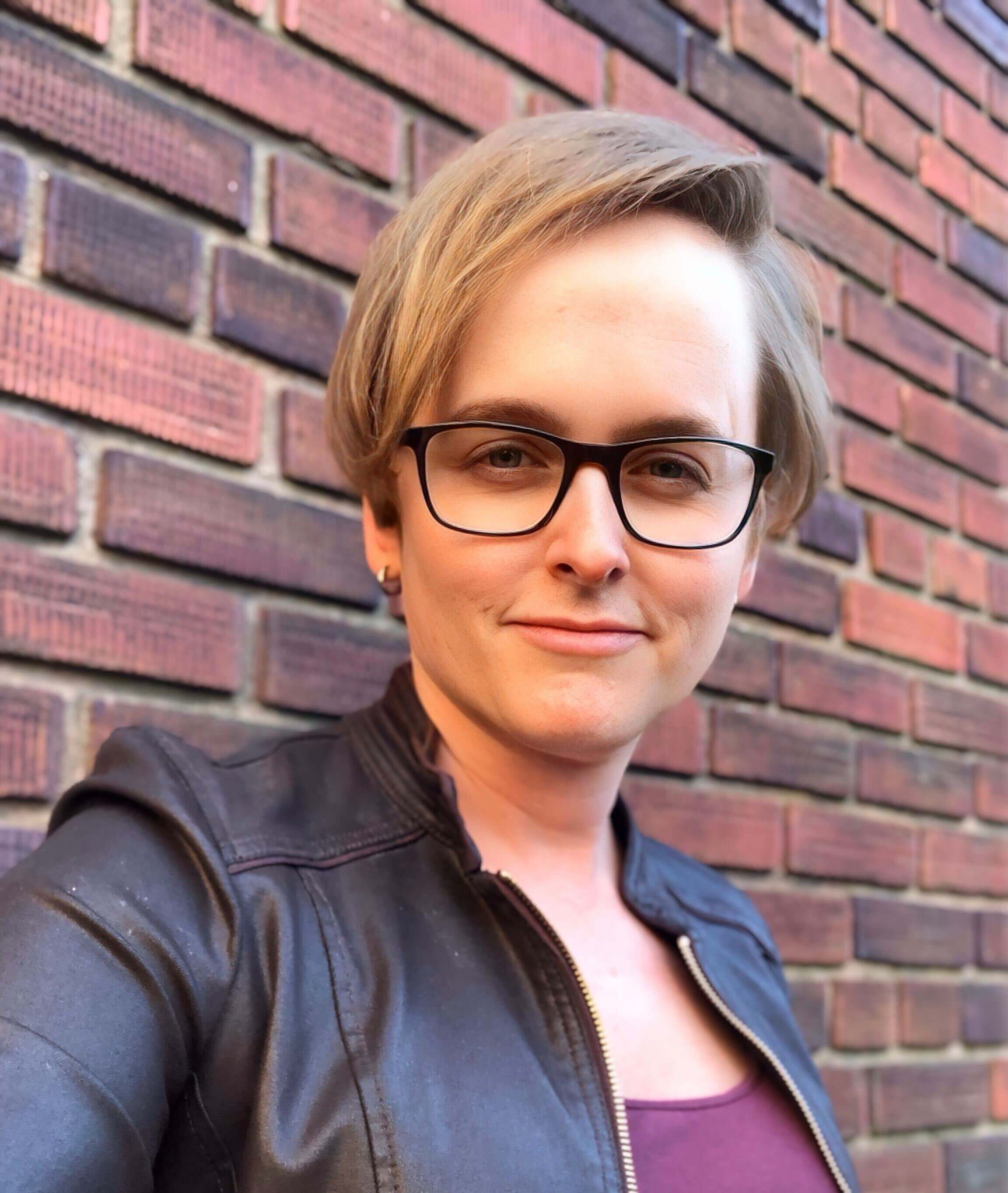
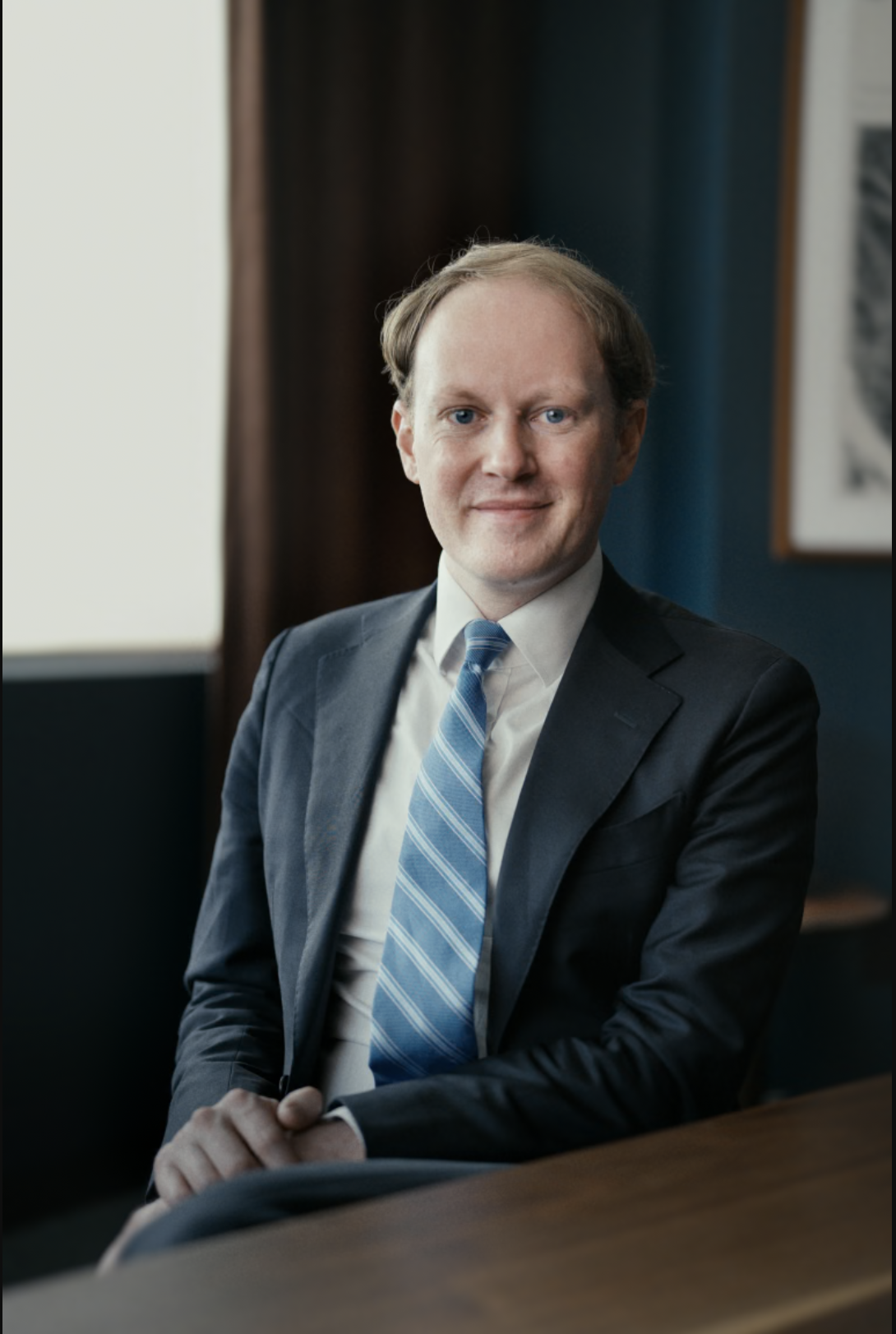
Chris McGuire, senior fellow for China and emerging technologies at the Council on Foreign Relations and a former National Security Council official, joins Lawfare Public Service Fellow Julia Curlee to discuss the spy scandal that forced out Nvidia’s Jensen Huang. They examine how advanced Nvidia chips reached Chinese AI labs through Megaspeed, a Singapore company once run by suspected Chinese intelligence asset Alice Huang, and why the Commerce Department never cut off the flow of chips. They also discuss what China gained, Congress’s next moves, and how the scandal will impact this week’s Trump-Xi meeting.
For more, read McGuire’s “Howard Lutnick Has Got to Go,” in the New York Times.
To receive ad-free podcasts, become a Lawfare Material Supporter at www.patreon.com/lawfare. You can also support Lawfare by making a one-time donation at https://givebutter.com/lawfare-institute.
[Intro]
Serhii Plokhy: He said that he was killing the pope to attract attention to the imperialism of the two superpowers that was happening in the world at that time, and that imperialism in the Soviet case, that was the invasion of Afghanistan, and in the American case, that was the American actions in Salvador at that time.
Mykhailo Soldatenko: It’s the Lawfare Podcast. My name is Mykhailo Soldatenko, a Lawfare contributing editor, and today I’m joined by Harvard history professor Serhii Plokhy.
Serhii Plokhy: I started researching the story being absolutely convinced that the Soviet Union was behind this assassination, and was almost determined to prove it.
And the more I studied and researched the materials, in more and more trouble I was with my original theory.
Mykhailo Soldatenko: Today, we are talking about his new book, “Killing the Pope,” which tells the history of an assassination attempt on Pope John Paul II during the Cold War, and related investigations, trials, and propaganda battles.
[Main podcast]
It also explores who was behind the assassination attempt, including whether there are any signs of security services and organized crime involvement in the attempt. So just to kickstart our discussion, I was wondering what motivated you to write this book, and what are the main things that you wanted to tell the readers?
Serhii Plokhy: Well, the book is focused on the assassination attempt on John Paul II, which happened in May of 1989. So that was the beginning of the last decade of the Cold War, and the events that unfolded around that assassination and also investigation, trial after that became what I call in my book, the last battle of the cold war.
I have sort of a personal interest in that in that story since really May 1981. I, at that time, was a graduate student in Ukraine in the Soviet Union, working out of all themes and topics on the intersection of Ukrainian Polish history, and history of religion. And certainly that assassination attempt on John Paul II was a big, big, big event, and it would continue be a big event for the next almost 10 years with the international media reporting on it.
And the question was, we knew who was, who pulled the trigger. That was the Turkish right-wing terrorist called Mehmet Ali Ağca. But who was behind it? The idea was that it couldn’t be just a lone shooter, that someone was behind that given how important the figure of John Paul II was for the history of the Cold War. And nothing that I saw and later read about that story really satisfied my curiosity enough, never provided the answers that I would think that they were not final, but that they were convincing enough.
So, but the best way to study the subject is to write a book. That’s what I did.
Mykhailo Soldatenko: And so, one of the main character of the book is obviously John Paul II, and he was the first non-Italian pope in almost 500 years. So, could you tell a bit about the personality of John Paul II, and what role did he play as the pope during the Cold War?
Serhii Plokhy: You are absolutely right. He was the first non-Italian pope in half of a millennium. By now that looks quite banal, right? The current pope is coming from the U.S. and spent time in Latin America. His predecessor was from Latin America. His predecessor was from Germany. But that’s a new normal that was certainly not normal for 500 years, and that tradition was broken by a person who came really from behind what, during the Cold War, was known as Iron Curtain.
So, the place where communism really ruled almost half of the world, and communism by definition was atheistic, and getting a figure that would be prominent enough to be elected the pope coming from that part of the world was a big deal. For pope himself, he also was proud that he was not just a Polish pope.
He was talking about himself as a Slavic pope, so that was also the first Slavic pope. And Slavs traditionally, which is incorrect, but almost exclusively associated with Byzantium, with Eastern Christianity, and here we had a Catholic Slav becoming the pope. But more important than that was that he moved from Kraków the traditional capital of Poland, to Rome, the former capital of the Roman Empire, at the time when the world was divided into two camps, at the time where the biggest concern was a potential nuclear war, at the time when really Afghanistan started, the Afghanistan story started.
The workers in Poland a few years later went on strike, created the free trade union called Solidarity. So, a lot of things were happening in the world at that time. Reagan soon became soon became the president in the United States. So, he became not just a major figure in the history of the church, the first non-Italian pope and the first Slavic pope in 500 years, but also a major figure in the Cold War that was at that time reaching one of its really most dangerous moments.
There… is belief that the year 1962, the Cuban Missile Crisis, and then 1983 were the most dangerous moments in the history of the Cold War and the history of the world. So, he was right there, right in the middle of the most important, the biggest political battles and crisis, and cultural battles and crisis of the time.
So, attention of the world was on him. The spot- the spotlight was on him, and then out of a blue, he gets assassinated and miraculously survives, and the question is who did it? That’s the question from which a lot of not just books, but also legal proceedings, investigations, and other things start. Whodunit.
Mykhailo Soldatenko: In your book you tell about a joke that when the Pope was elected, there was a red smoke in Rome because the Soviet authorities and the Polish communist authorities were nervous about the election of the Pope from Poland. Could you tell a little bit about this and why there was this anxiety in the Soviet camp?
Serhii Plokhy: Yes. The signal, whether the pope is elected as a result of a secret vote of cardinals or was not elected comes through that smoke, either black or white smoke that comes from a chimney of a chamber where the, in Rome, in Vatican, where the vote is taking place. But I write about red smoke because that was a major biggest concern for the communist leaders of Poland in particular, but also communist leaders of the Soviet Union at that time.
And the first reaction of the communist leader of Poland was quite interesting. He said something like, Jesus Christ, coming from a communist, so that was a shock. And then when he met his party leaders, the members of Politburo, to discuss this crisis situation, he said, we have a problem.
It’s almost like, Houston, we have a problem, without mentioning Houston. And he explained that the situation in which they were to, to his wife. The leader’s name was Edward Gierek, and he said that, well, it’s a big, big event for us as Poles, but it’s a big problem for us as communists.
And Poland was a problematic place in the communist camp for the world communist movement because, the communists were ruling the country, but there were other forces and even institutions that really refused to accept communist communism, at least communism in its Soviet incarnation.
So, the key institution was the Catholic Church that was traditionally very strong in Poland. Poland existed without a state for roughly 150 years, the entire 19th century period, and the church became, Catholic Church, became a symbol of national identity and the only national institution that was there.
So, that was one thing that the communists were never, were able to put under control, and that what made the career of John Paul II, who was born in 1920 near Kraków and had the name Karol Wojtyła that what made his career possible. So, another thing that was there was that the Polish communists never were able to fully collectivize the agriculture.
So, a huge sector of agriculture remained to be in the private hands of the Polish farmers. And then by 1980, they also lost control over the workers’ movement with the workers’ strikes. So, maybe they were paranoid, but there was also a good reason to be paranoid. They were sitting on the power cack to a degree, and looked at the election of the, this Catholic bishop, who was always in opposition to the communist regime, as a big problem, and they didn’t exaggerate.
Mykhailo Soldatenko: So, moving to the next character, the man who pulled the trigger, Mehmet Ali Ağca. So, could you please tell briefly about him and how the assassination attempt happened, and what were his alleged motives?
Serhii Plokhy: Yeah, so, Mehmet Ali Ağca is a young man at the time when assassination takes place, a little bit older than 20 years old, but with already some significant experience in assassinations and terrorist activities.
He really becomes a more or less active figure in the society in Turkey when he goes to school, then he goes to the university. And at that time, and this we are talking about 1970s, Turkey is a really very dangerous place to go to the university or to go to school. There are fights going on between the pro-communist or leftist student organizations and rightist organizations, and one of them is Grey Wolves.
And Ağca is either formal member or closely associated with the Grey Wolves. And these groups routinely attack each other at the ... These attacks and then really engage in massacring each other. So, for a young man who is looking to make mark on the world around him, it looks like that getting the gun and shooting somebody for the cause is the way to go.
And he becomes part of the group that assassinates a liberal editor of one of the leading Turkish newspapers, and then he is being caught. He is in prison, but his Grey Wolves organization that backs him has good connections in the government because they’re the youth group of the Nationalist Party that exists in Turkey at that time, and that Nationalist Party is represented in the government.
They have also a lot of allies among the intelligence services, among the police, among the judges, and so on and so forth. So Ağca miraculously, after admitting that he assassinated or took part in the assassination of the, that prominent liberal figure, miraculously escapes from prison. He escapes around the time when John Paul II makes something really a very historic move.
For the first time, he goes in decades, if not centuries, the pope goes to Istanbul, to the ... one of the capitals of the Muslim world. But he goes there, quite interestingly, to make peace with the patriarch of Constantinople, who is still there in Istanbul, so to make peace between Eastern and Western Christianity.
And before he comes, there is an, a letter signed by Ağca, who is in hiding now, published by the same newspaper, Milliyet, whose editor he assassinated or helped to assassinate, and that letter says that the pope is really the agent of world imperialism, and Ağca will assassinate him unless he stopped that visit.
So, the pope and Ağca get connected in that way during the pope’s visit to Istanbul, the security is of course, very on the high alert. No assassination takes place. John Paul II leaves safely Istanbul and Turkey. But the problem is for Ağca that he is in hiding. He really wrote that letter somehow to distract attention of police from following him and focusing on the pope.
But he can’t really stay in Turkey because he is a hunted man. So, he looks where to go, and he first goes to Iran around the time when the Islamic Revolution takes place here, and it turns out that Iran is not very welcoming location for the for the Turkish assassins at that time.
So, he leaves Iran, and then he decides to go to and hide somewhere in Europe. The problem is, for anyone who looks at the map, Turkey really ... To get from Turkey into Europe, you have to go through Balkans, you have to go through Eastern Europe, part of the world that back in 1980 was controlled by the Bulgarian communist government, was controlled by the Soviet Union.
So, you have to cross the Iron Curtain, and that brings Ağca into a contact with the communist world, which would then become a very important part of the story when he tries to assassinate the pope and the Italian magistrates, the Italian authorities would try to figure out what the heck happened, who was behind that assassination attempt.
Mykhailo Soldatenko: And so, what were his alleged motives? So, in that first letter that you mentioned, there were references to imperialism represented by the USSR and the United States. Was that the same motive that he voiced during the trials and later on?
Serhii Plokhy: Yeah. Ağca came up with one zillion theories and explanations of why he did that, and each of them really fit exceptionally well the agenda, the media agenda of the moment. He spent a lot of time blaming Bulgarians, the Soviet Union.
We can talk about that later. His latest accusation was made really a year ago when the new Pope Leo visited Istanbul for the first time again since Pope’s visit, John Paul’s visit back in, in 1980, 1979. And Ağca was there giving interviews and telling that well, of course, he did that because he was really on, on the same page with the current pope who criticized Israel and Netanyahu, so that was about, about the Israeli policies.
And then he claimed some role in the dissolution of the Soviet Union. So, it just the latest take. And before that, he would accuse Ayatollah Khomeini for doing that. He would accuse KGB and other things. So, the only really basis on which we can say what motivated him, at least on the surface, was the letter that was found on him immediately after the failed assassination attempt.
And there he made a statement which was roughly in line with the ideology and slogans of the Grey Wolves, of this nationalist, radical nationalist Turkish organization of the time, and he said that he was killing the pope to attract attention to the imperialism of the two superpowers that was happening in the world at that time, and that imperialism in the Soviet case, that was the invasion of Afghanistan, and in the American case, that was the American actions in Salvador at that time. It’s a strange way to attract attention to the crimes, real or alleged, of the two superpowers by shooting the Pope who has no clearly anti-communist… and doesn’t have relation to what is happening in terms of American policy in Central America and Latin America.
But that’s what is there. My personal belief is that the real motivation for him was something that he stated at one of the interrogations, and where he said that ideology was secondary for him. What he wanted actually to become the most famous assassin of his age, and I should admit, he probably succeeded in doing that.
At the time when within a year and a half, you have assassination attempt on President Reagan, the assassination of the president of Egypt, Sadat. At the time when you have assassination of John Lennon, attempt on assassination of Queen of England, Elizabeth. We forgot, almost forgot about all of that.
We still talk about Mehmet Ali Ağca.
Mykhailo Soldatenko: So, one of the main themes of the book is who was behind the plot, whether the Ağca was a lone shooter or there were somebody, some entities behind that assassination attempt. And so, could you please lay out the main investigative theories at the time and tell briefly about the so-called Bulgarian connection theory, according to which the Bulgarian Secret Service ordered the assassination to please the Soviet masters?
Serhii Plokhy: Yes. Well, one thing that we know for sure that Ağca was helped, and he was helped by the members of the cell of the Gray Wolves organization, which was based in Switzerland, and they delivered the gun. The big question is whether they knew what the gun would be used for, whether they approved assassination when Ağca suggested that he wanted to do that, or they decided to do that.
That’s the question that still remains to be unanswered. But beyond that, there was general assumption that, of course, a figure of such prominence and such importance in the Cold War of the time, like John Paul II, he couldn’t be assassinated just by one guy, even with the help of other members of organization for really crazy reasons like the Soviet invasion of Afghanistan or the American actions in Salvador.
So, someone had to be behind that, and that was also the assassination was an opportunity that the intelligence services all over the world could not allow to just go away without trying to produce an information operation of a sort. Now we are familiar more and more partially because of the actions of the Russian intelligence services with the information operations, but they’re there for a long period of time.
And the first to start the pointing fingers at bigger actors was the Italian military intelligence. And Italian military intelligence, their main enemy during NATO was, of course, the military intelligence of the Soviet Union. So they produce a report blaming the minister of defense of the Soviet Union, of course, their main adversary, Marshal Ustinov at that time, for giving an order to kill the Pope allegedly in the presence of the ministers of defense of other countries, Warsaw Bloc, so the communist countries at that time.
The assassination happens in ‘81. The Polish Solidarity Movement starts in August of 1980, and really threatens the communist regime in Poland. Moscow at that time is really sending signals wherever they can send a signal that they’re preparing to invade. So, it’s a major crisis at that time, and the Italians are there saying producing the propaganda line that, of course, the Soviets were behind that.
And it, on the surface it looked like it made a lot of sense. And a lot of people in the Italian political establishment and in the American political establishment, including President Reagan and including the head of the CIA at that time, really buy and are seriously invested in this idea that the Soviets had to be behind that because it made a lot of sense.
So that was one theory that became really a dominant one, and then it developed into, acquired some specific characteristics. And, specifically, the Bulgarians were accused of executing the assassination attempt itself on behalf of the KGB, either following the direct order from KGB or trying to please their master by assassinating the figure who was perceived as a threat to the Soviet Union.
On the top of that, there would be other theories as well, which again, had on the surface looked quite logical. So, the response from the Soviet side, including from East Germans who were running together with Bulgarians, their own misinformation operation, was that… no, no, no. Come on, guys.
Look who is Ağca. He is a representative of this right-wing group in Turkey. Who is behind the right-wing groups in Turkey? It’s, of course, CIA. CIA is really trying really to discredit the Soviet Union. The Americans are really the masterminds of that assassination. So, a classic Cold War situation with one side using enormous, both sides using enormous resources trying to blame the other side.
And then on the top of that, there is idea that, well, it’s quite possible that it is mafia that is behind the assassination attempt because the Grey Wolves really worked closely with Turkish mafia, which is absolutely true. And Turkish mafia worked closely with the Italian mafia and Cosa Nostra.
And Cosa Nostra was really very unhappy about the Pope and the Vatican because the Vatican refused really to bail out a major Italian bank, the Banco Ambrosiano, that collapsed, and mafia lost a lot of money. So, the mafia wanted to get money out of Vatican. Pope refused to do that. All of that is true, by the way.
And on the basis of that is based the theory that mafia, one way or another, was around that. And last but not least, there is always this attraction of what is happening in the corridors of the Vatican when the light is not on. Is it possible that the cardinals who were unhappy with the election of John Paul II, the Vaticans that were corrupt and were involved in the mafia schemes were trying to get rid of John Paul II?
And if you say this is crazy, the answer to that sort of reaction would be, well, John Paul II is John Paul II because he succeeded John Paul I, who ruled only for a little bit more than one month, and then surprisingly, unexpectedly died in his sleep in his bed. Are you saying that this is a natural development?
No. Then if you agree with that, you should also took seriously the theory that the cardinals really decided to get rid of John Paul II, and decades later there would be an Italian mafia guy who would say, of course, I was there, and the cardinals ordered me as a good Catholic to kill John Paul I. I listed four major theories.
Some of them, all of them eventually became conspiracy theories, but that’s just the tip of the iceberg. There are all sorts of variations of each of, on each of this conspiracy theory.
Mykhailo Soldatenko: Going back to the alleged Soviet involvement, so you touched upon this a little bit, but why would Soviets be interested in killing the Pope?
And you mention in the book that the Pope sort of, they tried to use the threat of invasion in order to motivate the Pope to have a restraining effect on the solidarity movement. So maybe could you expand a little bit on this, and also tell why in your book you argue that this theory is not plausible?
Serhii Plokhy: I will make this disclosure. I started researching this story being absolutely convinced that the Soviet Union was behind this assassination and was almost determined to prove it. And the more I studied and researched the materials, in more and more trouble I was with my original theory, which I didn’t mind with… that’s an indication that this is a good book and a solid research if you start with one theory and eventually you end somewhere else.
But my belief was based on the fact that John Paul II was a symbol of resistance to communism. John Paul II had strong influence on Solidarity. John Paul II gave a visibility to the Polish protest that otherwise it probably would not acquire. John Paul II was a direct line between Lech Wałęsa, who led those protests, and President Reagan at that time.
So, all good reasons for the KGB that before that was involved in assassinations, that was their modus operandi for a long period of time, that they would go after John Paul II, that would be not just a legitimate target in terms of their Cold War modus operandi, but also the target that would make sense.
And as I was digging deeper, I realized that John Paul II, under the context of 1981, was really playing a role that the Soviets wanted him to play. They didn’t want the Solidarity movement really to completely destroy the communist regime in Poland. And in that sense, they would had to intervene militarily.
They didn’t want to intervene militarily because they were already stuck in Afghanistan, and they didn’t want to get another Afghanistan. So, they were trying to blackmail not just the pope, but the world as a whole. It was this idea that either Solidarity actually stops this sort of activities, or the Red Army or the Soviet Army would march into Poland like it marched in Czechoslovakia in ‘68, like it marched in Budapest in 1986, like it marched in or parachuted in Kabul in 1979.
And the pope really was really concerned about that sort of development because for him, that man, that whatever freedom, human rights and other freedoms that the Solidarity was able to gain as the result of the activities would be gone. And in that sense, the Soviets had a back channel with the pope, and they were trying to play him.
So ... And he played along for his own reasons. I’m not saying here who was right, who was wrong in assessing the situation in terms of the outcome, but that was the reality on the ground. So, for Soviets, killing the pope would be shooting themselves into a foot.
And then there was another reason why the Soviets would or were not really involved. And that reason really goes back to the, one of my previous books about the KGB assassination of the leader of Ukrainian nationalist movement in Munich in 1959. His name was Stepan Bandera. And that assassination became known to the world in general because the assassin himself escaped to the West and then testified about this assassination, and more than that, that he met with the head of the KGB at that time, and the head of the KGB awarded him for the assassination with the Soviet medal.
So that news really destroyed the political career of that head of the KGB. His name was Shelepin. He wanted to become the general secretary, the leader of the Soviet Union, and that was one of the factors that was played against him by his own colleagues. So now we are in 1981, where the next leader of the Soviet Union, waiting for the current leader, who was Brezhnev, to die, is Yuri Andropov.
Yuri Andropov is the head of the KGB, and he would succeed Brezhnev in 1982, and he was super careful not to get into the situation of Shelepin, ordering the assassination that would actually then be used against him. My research shows that indeed he didn’t order that assassination, but it didn’t help him much once he became the leader of the Soviet Union in 1982.
The entire campaign that it was the USSR and the KGB that ordered assassination of John Paul II blew completely as it went almost nuclear. So not just the Soviet Union, Andropov was accused of ordering the assassination of John Paul II. But again, that was the scenario that he was very much concerned about, and he was very careful in 1981 not to get involved in anything that would undermine his chances becoming the next Soviet leader.
So, that’s where my research at least led me in terms of really figuring out the possible Soviet role in that story. The Soviets then contributed, of course, to the propaganda warfare, but that’s a different story.
Mykhailo Soldatenko: So, in your book, you argue that most of those theories, they are not plausible.
And so, what’s your explanation how this assassination attempt happened? Was there somebody behind Mehmet Ali Ağca, or he was just a lone shooter?
Serhii Plokhy: Well, we… as I said, we know who was the shooter. So, we… the police got him. Actually, he was apprehended with the help of a nun.
When you, when you see nuns and you think that they are fragile and spend all the time praying, and if you have any bad ideas in your head, just keep moving and get those ideas disappear because nun can already on record apprehending the assassins, so assassins to be.
But the point is, okay, we know who pulled the trigger. We also know that he was assisted by his Grey Wolves associates. But Grey Wolves is really highly disorganized organization or the way how it was at that time. They were making their decisions on the fly almost. So, we can say that there was a conspiracy that involved Ağca and Grey Wolves.
That’s probably as far as we can go. Other than that, I couldn’t find one big state player, either the Soviet Union, the United States, the Bulgarians, the Italians, or even the Italian mafia, who really would benefit from assassinating John Paul II. Assassinating John Paul II for mafia meant that it would not get its money back.
For the Soviet Union, it meant that they could completely lost control over Poland and would have to create another suicidal move like it was with the Afghanistan. The Polish authorities who were, whose identity was really split between being a Pole and being a communist would never gather themselves to do anything of that sort against their own native son and so on and so forth.
So, I think that what we have there is a combination of really lone gunner driven by his own either psychological problems or visions of grandeur of becoming famous, and that was the case with a lot of assassinations that were taking place in the late 1970s and early 1980s. Assassination on the Ronald Reagan was done by the guy who was, who wanted to impress an American actress who he never met.
So we have this the, this elements in Ağca’s behavior, but also we have a general culture of that period in Turkey, in Italy late ‘70s, early ‘80s. It’s Red Brigades, it’s Grey Wolves. It’s a time when for a young person without much other prospects, making career as an assassin looked like a good career move, but also something that was extremely cool.
So, I bring together here the culture of terrorism that really was flourishing around that time and the personality of the assassin to be himself. Now, one thing that it occurred to me that didn’t occur before, that John Paul II, the pope, is really a low-hanging fruit in terms if you want to assassinate a major political figure.
It’s very difficult to get to the president of the United States. It’s very difficult to get to the Queen of England. It is very difficult to get even to some major star. But with the pope, there is a schedule when he appears on the square, and at that time, there was no really, it’s much of a screening who was there.
So, if it didn’t work today day two days later, there will be another opportunity. And the sort of the mileage that you get from assassinating John Paul II is probably, given that it’s really international figure, is even much bigger than assassinating of a editor of the Turkish newspaper that what Ağca was trying to do before that.
Or as he said to the investigators, he considered to assassinate the royalty in England, but then when he discovered that she was a woman, he decided not to do that. So, the, that was really technically easy assassination to do. By the way, it was done in so amateurish way that the CIA expert inside argued against the Soviet and Bulgarian theory saying that, well, the KGB or the Bulgarian intelligence would never do something so amateurish, so non-professional.
So, it had to be non-government actor there. That’s so, in many ways, John Paul was a target of opportunity.
Mykhailo Soldatenko: So just going back a little bit, so you mentioned that Soviets started a misinformation campaign against the CIA and the Americans. So, I’m curious, what was their main argument? Why would the United States be interested in this?
Serhii Plokhy: Yeah, the key argument was connecting Ağca to Grey Wolves, which wasn’t a problem at all. Grey Wolves to the nationalist and fascist tendencies in Turkey. And then there was a line that was established by the Soviet Union, of course, through the entire Cold War, that the Americans are the fascists of today.
They, of course, support the… all right-wing organizations and all right-wing terrorist organizations as well. If there is assassination of a liberal editor in Istanbul, of course, the CIA had to be behind that because a few years later, the military coup takes place in Turkey. Turkey is, of course, a NATO country, so it’s all about American attempts to keep Turkey within NATO, and Turkey is supposed to be a threat to the Soviet Union.
So yeah, that’s, that line was there for years and decades, and there were plenty of people in the West who were buying this line, and till today, you can see references to that, people who believe that, of course. Of course, that was the CIA plot.
Mykhailo Soldatenko: So, to wrap up our discussion, in your book you say that this story provides unique insights into the history of the Cold War.
So, can you maybe give several examples? What does it say about this period of history?
Serhii Plokhy: Well, one thing is that a lot of things that are happening in the world really are framed by the context of the Cold War what I described to you were internal fights within Turkey, the rise of terrorism there, and then the assassin who is trying to go after John Paul II, the leader of organization that was there for millennia before the Cold War, and continues after the Cold War quite successfully.
But all of what happened now is viewed from the prism of Cold War, through the prism of the fight between the Soviet Union and the United States, capitalism and socialism, atheism and religion, and intelligence services are there helping to frame that narrative, and push the conspiracy theories to the level which they wouldn’t reach otherwise.
The Italian investigators, instead of investigating what happened and what didn’t happen, are going after the, or try to meet the expectations of the public in general, that of course it had to be the Cold War, American-Soviet conflict type of event and assassination. And what my investigation tells that, well, 75, 80% of what happened there had no connection to the Cold War at all.
And that’s also connecting that to the world of today, the role of the intelligence services in really bringing us into this world in which we are today, of post-truth, post-factum, a world full of conspiracy theories. The roots of all of that is really in the fights of the Cold War, at least immediate roots, and especially the last decade of the Cold War.
And the case of assassination attempt on John Paul II really tells in detail how that atmosphere was created, who are the players, and how generally we as a public are prepared to believe in something that is not true, but fits our preconceived ideas about what should happen in the world. And then in the middle of that appears a person like Ağca, who really has personally, I believe, difficulty distinguishing between truth and not truth, lies and what he imagines, but more importantly, has this almost extraordinary ability to sell his bizarre stories to the public. And the public keeps consuming them because that’s what public wants to hear.
And that really raises the question about our responsibility as consumers of what is going our way, now through social networks more than legacy media, and really a responsibility to distinguish conspiracy from reality and make responsible decisions. The world failed to do that in case of the assassination attempt on John Paul II, and keeps failing today.
So, my book is an attempt really to attract attention to that reality of the Cold War, but also the reality about today’s informational sphere.
Mykhailo Soldatenko: I encourage everybody to read Professor Plokhy’s excellent book. Thank you for joining Lawfare Podcast, Professor.
Serhii Plokhy: Well, thank you. It was a pleasure.
[Outro]
Mykhailo Soldatenko: The Lawfare Podcast is produced by the Lawfare Institute. If you want to support the show and listen ad-free, you can become a Lawfare material supporter at lawfaremedia.org/support. Supporters also get access to special events and other bonus content we don’t share anywhere else. If you enjoy the podcast, please rate or review us whenever you listen.
It really does help. And be sure to check out our other shows, including Scaling Laws, Rational Security, Allies, The Aftermath, and Escalation, our latest Lawfare Presents podcast series about the war in Ukraine. You can also find all of our written work at lawfaremedia.org. The podcast is edited by Jen Patja with audio engineering by Noam Osband of Goat Rodeo.
Our theme song is from Alibi Music. And as always, thanks for listening.