Lawfare Daily: How Social Media Threatens Democracy, with Rick Pildes


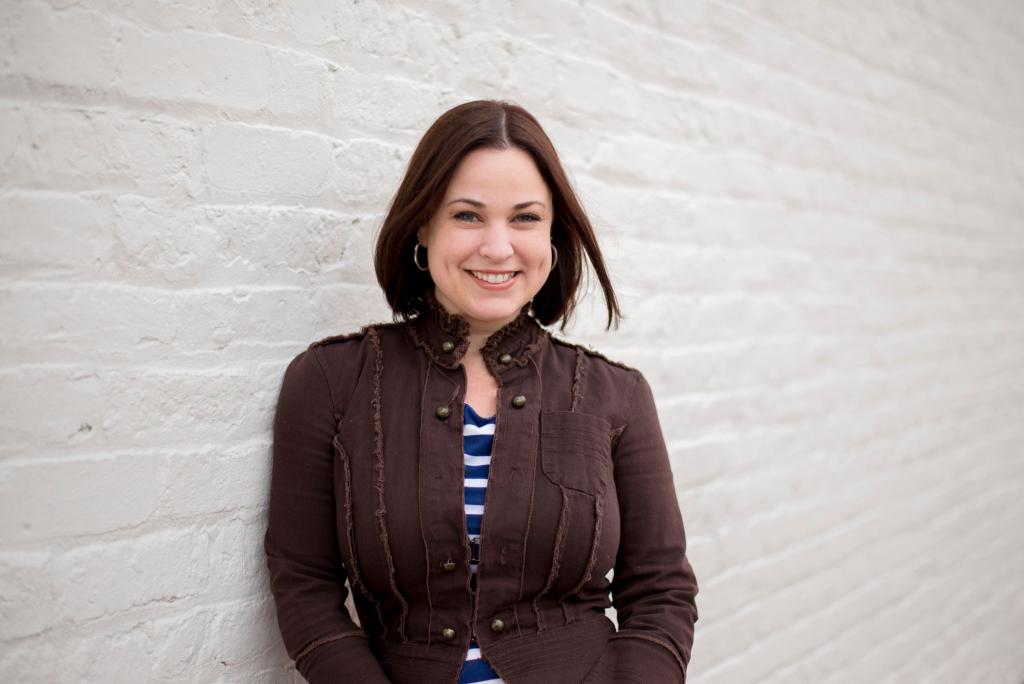
On today’s episode, Lawfare Senior Editor Kate Klonick sits down with NYU law professor Rick Pildes to discuss his article, “Political Fragmentation in Democracies in the West,” which was featured in a New York Times opinion column by Thomas Edsall on the link between smartphone and social media use and threats to democracy.
The two discuss the admittedly sprawling topic from a historical perspective—comparing the impact of the internet to that of the printing press, the radio, and cable television on social orders. But they also discuss how this technology that once held such promise for democracy is now impacting the United States political system in a unique way—in particular, the ability social media has to further polarize a two-party system's information ecosystem while also revolutionizing small-donor-based campaigns. The result is some very anti-democratic outcomes from what was seen as such promising democracy-empowering technology.
To receive ad-free podcasts, become a Lawfare Material Supporter at www.patreon.com/lawfare. You can also support Lawfare by making a one-time donation at https://givebutter.com/lawfare-institute.
Click the button below to view a transcript of this podcast. Please note that the transcript was auto-generated and may contain errors.
Transcript
[Intro]
Rick Pildes: If we
could get a handle on the issues that preoccupy a lot of the discussion of the
platforms, you know, offensive speech or hate speech or disinformation, I still
think the effects of these technologies would be incredibly profound.
Kate Klonick: It's
the Lawfare Podcast. I'm Kate Klonick, senior editor at Lawfare,
with Rick Pildes, professor of constitutional law at New York University Law
School.
Rick Pildes: We may
be, you know, moving to a sustained era in which there's much more widespread
participation politically, there's much more mobilization of people in politics
because of these new technologies. But it will also mean that it will be very
easy to mobilize opposition to government no matter what government is doing, mobilize
dissatisfaction.
Kate Klonick: Today
we're talking about an inescapable question. For those of us that study the law
and technology: is social media responsible for the fall of Western democracy?
[Main Podcast]
I wanted to kind of start with walking the audience into what
prompted me to reach out to you and have you come on the podcast.
And that was something that I was not expecting, which was a
Thomas Edsall column in the New York Times, which is, social media killing
democracy. And I––nothing against Edsall, I like him, but I don't, he's 84
years old. I didn't exactly expect him to suddenly be weighing into the debate
over social media.
And so I was surprised at how great his column was, actually.
And it'll be in the show notes for those that want to take a look at it. And
we're going to be having a few more of the people that he interviewed on,
because I thought it was a great mix of individuals. You––I was really relieved,
when I read it, that you were actually at the top of his quotes of the first
sources that he went to, which immediately lent his column some credibility.
And I believe that, as you've now told me, that a lot of what
he references in that column comes from a recent paper that you wrote, “Political
Fragmentation in the Democracies of the West,” which is forthcoming in the BYU
Journal of Public Law.
And so I just kind of was hoping that we could, you know, start
there, have a conversation about, you know, both that article, but the general
topic.
And I think it's just a wonderful thing to be talking about in
the next––frankly, always, but in the next year as we head into the midterm
elections. So do you want to give us just a quick synopsis of what parts of the
article that you kind of brought up were most compelling to Edsall's thesis on
social media and democracy?
Rick Pildes: Well,
first of all, let me say I'm impressed you looked up Tom Edsel's age. I hadn’t
known how old Tom was.
I think he, he has this wonderful niche, you know, you know,
pulling together experts on different subjects and then knitting them together
into these extended essays he does.
So I'm happy you asked me about this article on political
fragmentation in democracies. That's actually a theme I've been writing about
for probably a decade now, initially focused on the U.S. but then also extended
to most of the Western democracies, which I think are all undergoing over the
last 10 to 15 years very similar structural transformations, facing relatively
similar challenges. Failing to meet those challenges effectively in the eyes of
many of their citizens.
And one of the things that I have found that's very striking is
the way in which democracies have become, in my view, much more politically
fragmented. That's my, kind of, term for this.
And this is most obvious in the Western European countries that
have proportional representation systems. So there, one of the things people
don't appreciate, I believe, about how proportional representation had worked
in Western Europe since World War II is that, even though they are
proportionate representation systems, most of these democracies were
effectively, for all practical purposes, two- or two-and-a-half-party systems.
So there was a large center-right party or coalition, a large
center-left party or coalition. They either gained a majority who could govern
or they needed one smaller party as a partner to form a majority to govern. And
as dissatisfaction with democracy began to become more and more prevalent over
the last 10 to 15 years, what we've seen in Western Europe is the, I mean, collapse
is a little strong, but the real hemorrhaging of support for the traditional
center-left or center-right parties throughout most of Europe, and the
tremendously quick rise of third or fourth or more political parties.
Some of the most successful over this period of time have been
the new right parties in much of Europe. And it's created a situation in which
the parliaments there no longer are governed by one major party or one and a
half parties, but they are fragmented between many political parties and there
are lots of consequences for democracy that follow from that.
France is maybe the most extreme example right now. France
actually doesn't have a PR system, but they've had multiparty democracy for a
long time, and the National Assembly there has become so politically fragmented
between the Macron, kind of more centrist forces, Marine le Pen's National
Rally Party on the right. There's the sort of various parties on the more
extreme left.
And France has essentially become ungovernable. I don't think
it's unfair to say France right now is essentially ungovernable.
Kate Klonick: No. The
government has fallen, I mean, in the last three weeks, and been set back up
again. And then fallen again. Yep, yeah, exactly.
Rick Pildes: Once
again. Macron went to snap elections, so the government collapsed. And he hoped
with new elections they could overcome this fragmentation. They didn't. They're
having tremendous struggles.
But this also the same thing went on in Germany. Germany, until
their most recent election for the first time, was governed by a three-party
coalition.
The problem with these fragmented parliaments is that, when you
try to put together a governing majority, first of all, it can be much more
difficult to actually form a government.
The governments are more fragile, because the coalitions are
often in sort of ideologically incoherent. So, you know, Germany's government
before the last election, the three-party coalition included the Green Party
and a kind of libertarian free market party along with the Social Democrats.
So, to step back for, you know, the larger frame here,
governments seem to be not dealing effectively, in the eyes of many citizens,
with major cultural issues. Immigration is the main example of that in Western
Europe.
And they also seem to be unable to deliver on the economic
dimension for many of their citizens. Those are what are driving, in a large
sense, the search for new alternatives, the disaffection, the constant
dissatisfaction. And yet, when you get these more fragmented political systems
as a result of all of that, it makes it even harder for these governments to
deliver.
So the U.S., I think, has been experiencing some of the same
things over the last 10 to 15 years. But with our two-party system, that
dissatisfaction gets expressed within the parties as opposed to the creation of
new parties. It's structurally very difficult to create new, effective new
third parties in the us.
So instead what you see is like real internal fragmentation of
the two major parties. And the, to me, the most striking illustration of this
is that the Republican party continually kind of devoured its own speakers of
the house. I mean, this is the third most important position in the government.
And the party just can't find agreement on who will lead it.
Now, that's been more stable recently once Mike Johnson became
speaker. But when John Boehner wrote his memoirs after, you know, having been
speaker and being pushed out, before Paul Ryan took over and was pushed out,
before Kevin McCarthy took over and was pushed out, but when Boehner wrote his
memoirs he called the Republican caucus, he called it ungovernable. And he also
called it the Chaos Caucus. And leaders of the parties in the U.S. now have
much less capacity to bring their party members along on difficult legislative
deals.
The Democratic Party, as we know, you know, is conflicted
between, its more progressive wing and its more moderate wing. That's the
Hillary Clinton, Bernie Sanders, you know, presidential primary election, which
left very bitter feelings within the Democratic Party between those two
factions during, I don't want to go too much detail in the initial––but during
Joe Biden's administration, you saw some of these conflicts play out in very very
significant ways. And I certainly expect in the Democratic primary for the
presidency in 2028, you're going to see these deep divisions in the Democratic
party get played out.
So that's the way fragmentation works in the U.S. It's much
more internal division within each of the major parties. As opposed to the way
this gets expressed in Europe, which is the proliferation of these parties.
Kate Klonick: Yeah,
no, I think that's such an important point, and you summarized it beautifully
because I actually didn't know––I was like, should we just leave the Europe
question as its own separate thing?
Because it's such a, there is such a difference. But it is
interesting how it's the same but different in these two different ways. And
you kind of highlight the main factor, which is just the number of parties
involved in the system.
Rick Pildes: You
know, to put this in the largest but most important perspective, it's this
pervasive dissatisfaction with democratic governments that all, basically all
the Western democracies have experienced over the last 10 to 15 years in ways
that they haven't seemed to be able to resolve yet.
Kate Klonick: Okay.
So let's switch to kind of the––that's an excellent summary of the kind of like
the––we can all agree, you've sold me that things are more fragmented and
harder to govern. For sure.
What I kind of want to tease out and is more the question of
how the causation comes from social media. And so one of the things that I
think is so interesting here and as a student of particularly American history,
you kind of can't help but point to the rise and fall of a lot of different
moments, especially in media history and communication on presidencies, on
everything else.
But just the larger questions––and you actually are quoted in
the Edsall column on saying this, which is that, that there's no question that
new technologies have contributed significantly to the political fragmentation
roiling near all Western democracies. And then you actually, you kind of put
the point on it yourself, the printing press, the radio, cable television gave
us the Protestant Revolution, Joseph Goebbels, and the, you know, and I put in
the C-SPAN effect.
How is social media different from me is, I guess my question
is like, okay, let's take your premise that political fragmentation is
happening in democracies. Let's take your premise that this is new and worse
than it's been before.
Why is it that you believe that social media in particular is the
reason that this is happening, and why is it different from something like
radio or C-SPAN? How is this not a continuation of C-SPAN, for example?
Rick Pildes: Well,
first of all, when I think about democracies and technology in our era, I tend
to talk about the communications revolution, not just social media.
So, I view cable television, you know, the rise of C-SPAN,
cable television, all of that to me is part of the new communications era that
we're in. And social media, the internet, and the like is, you know, kind of,
you know, the further development of this new technological––
Kate Klonick: Puts it
on steroids.
Rick Pildes: Yes. You
referred to something that, that Tom Edsall asked me about in that column and
that I commented on. So he asked, you know, are the costs of social media
greater than the benefits?
And, you know, of course you can't really answer a question
like that, especially right now. But I did say that people forget, or I'm sure
lots of people don't know or think about, the fact that when the printing press
came in, it was unbelievably disruptive for a long period of time.
And the great example of that is that, as I say in the piece,
when Martin Luther nailed his 95 theses to the church door, you know, he didn't
just do that. The printing press had been recently invented and his tract was
distributed widely and very quickly throughout Germany and then throughout
Europe. And there's no question the printing press played a major role in
catalyzing the religious wars that followed for, you know, a very extended
period of time.
And then I also mentioned that, you know, Joseph Goebbels had
famously said, without the radio and the airplane, we would not have been able
to do what we, the Nazis, did. And in fact, the story about the radio in the rise
of Nazism is a fascinating story in technology because the Germans actually,
there was a cheap radio that they had mass-produced, they required people to
have in their homes.
Kate Klonick: It's a
little bit the opposite of like fireside chats and FDR.
Rick Pildes: Yes,
exactly. So, you know, there are previous technologies that have had incredibly
horrific consequences for the world.
On balance, you know, is the radio and the printing press, you
know, a positive? Sure, I mean on balance. But in the early stages in, with
both of those technologies, there were incredibly dramatic and terrible
effects.
Now, that's not to say anything specific about social media. Just
to sort of say it's hard to put these things in perspective, especially when
you're kind of in the early stages of these developments.
Like all that said, I do think that communications revolution
has had profound effects on democracy. And I think that all the discussion
about disinformation, or hate speech, or, you know, fake videos and the like,
don't really begin to scratch the surface of how profound these changes have
been.
Or put another way, if we could get a handle on the issues that
preoccupy a lot of the discussion of the platforms, you know, offensive speech
or hate speech or disinformation, I still think the effects of these
technologies would be incredibly profound.
Kate Klonick: I think
that's exactly right.
Rick Pildes: And I
think one simple way to talk about the effect is so, so Emmanuel Macron, who I
think is more philosophically inclined than most political leaders, said
there's been a leveling of authority.
And I, I think that's a really nice, concise phrase for how the
communications revolution has affected actually not just politics, but lots of
other institutions. But in politics in particular, for better and worse, you
know, social media and the communications revolution makes it much, much easier
to mobilize criticism of government, to mobilize opposition to government, to
mobilize even not particularly organized or structured opposition, to challenge
the development of government policy before it can actually get developed.
Many many many ways we can talk about this in more detail, in
the American context in particular. But in many many ways, politics is just
transformed. And the fundamental transformation, I believe, is this leveling of
political authority. This undermining of political authority, if you will.
The delegitimation of political authority. That is kind of a
constant with social media. Now, there's lots of times when, you know,
authority should be undermined and delegitimate and mobilizing opposition, you
know, to government is very appropriate in certain contexts. But if we're in a
world in which it's more widespread participation is made possible by these
technologies.
More, more widespread opposition––irtually, no matter what
government is doing, you know, there are always going to be interest groups,
people who are upset with what government's doing. If all of this can be
continuously mobilized, it makes it very difficult for governments to develop
the kind of concerted power and the legitimacy to be able to tackle effectively
the challenges that are causing all of this dissatisfaction in the first place.
And so I describe what I think is kind of a perverse dynamic
that's at work that I see, which is there's been this pervasive dissatisfaction
over the last 10 to 15 years throughout the West with democracies. That has
produced, with the aid of the communications revolution, this much more
fragmented political sphere. And that much more fragmented political sphere
only makes it all that much more difficult for governments to be able to form
the kind of concerted power and legitimacy and authority to actually respond to
this dissatisfaction.
And so it, it seems like no matter what government is in power,
whether it's a government more to the left or more to the right, people remain
dissatisfied. And they continually search for alternatives.
And, you know, at a deep level when democratic governments,
over significant periods of time, are perceived by many of their citizens to be
failing to deliver for them effectively on the issues that they consider most
urgent, that's a dangerous situation. People at a minimum can be angry,
alienated, distrustful, withdrawn.
You know, even worse, it can spawn longings for strong men or
strong women figures who can cut through all of this. You know, I alone can fix
it.
So the paralysis or the dysfunctionality of democratic systems,
which is one way of describing what we've seen over the last 10 to 15 years, at
least as seen by many of their own citizens, is a very fraught period for
democracy.
And it's even more fraught in this era, as it has been in
previous eras, but it's even more fraught now because you have authoritarian
regimes like China, which may be seen by some people as actually being more
capable of delivering on––like generating more prosperity for the, for citizens
and the like.
I'm, you know, I don't want to get too far into China and
what's actually, how we should actually see China. But certainly it's out there
as a, as an alternative model now. Which was also true in the twenties and
thirties, you know, with fascism in Germany and Italy. There are real worries
that if those regimes prove more able to deliver for their citizens, would more
people in the West in the US in particular, start being attracted to that
model?
Now, obviously World War II completely changed that. Those
models were completely vanquished as any kind of legitimate possibility. But
Joe Biden was very aware of this when he was president. I mean, he said a
number of times––I'm not going to quote him now, but he didn't put it in these
terms exactly. He has, he clearly saw his historic role as being able to show
that democracies could deliver again, effectively, as against the Chinese
authoritarian one-party kind of alternative. He articulated that a number of
times and it's absolutely clear that's how he defined his historic role.
Kate Klonick: I think
that's, I think that's a really interesting point. I want to separate out two
ideas that you kind of brought up, and then I want to kind of ask a follow up
question.
But, you know, I loved the leveling what we're seeing. There's,
I think you said it to Macron saying that there's been a leveling of authority.
And of course that is the entire promise, frankly, of like the new and open
internet from the techno-utopian idealism of the ’90s and into the 2000s was
that there was a leveling of authority. And there was the thought that this was
going to be a moment in which we tested the very basic concepts of democracy
that we've like dreamed about in Madisonian democracy. That like the idea of
minority factions, being able to find each other and organize and voices being
able to be lifted up.
Another way of putting kind of Macron's statement about the
leveling of authority is that there's a lack of gatekeepers. And that is at
every level. There's a lack of media gatekeepers. There's a lack of fact-checking
gatekeepers. There is a lack of like gatekeepers on like the very spectrum of
technology.
Cable is different because it requires equipment, requires a
spectrum. And there's a limited spectrum that we set up an entire agency to
oversee and kind of run. There's no spectrum issues on the internet. And
there's even fewer that now with TikTok and everything else. I mean it's like,
it's unbelievable.
Nevertheless, I kind of think that this is this fascinating
question of like, we got so much democracy. And does it mean that we, we're
wrong about all of the things that we've talked––I mean, this is a gigantic
question, but I think it really has to, you have to ask it.
Which is, okay, how can you claim to kind of set up this
empowerment of individuals that is unprecedented in human history, absolutely
unprecedented, not just in your ability to speak, in general, but in your
ability to have access to more information than we've ever had ever in human
history.
And in many ways, like this was the Meiklejohnian ideal. This
was the ideal of, we are meant to go out there and have free speech
specifically so that we can self-govern effectively in these democracies.
And instead we're seeing everything fall apart. And so, which
brings me to my second kind of point. Which is kind of like the ri––which you
bring up and I think is really huge, about dissatisfaction, how dissatisfied
people are in their government. And how that leads to the fragmentation and
people casting around for answers.
And this, I will draw a little bit on kind of my cognitive
neuroscience background and like my background and kind of a lot of like
cognitive psychology, which is like that, like the pure, huge increase in media
consumption and visibility of everything in the world, has given us this
saturation of things, such that we are just exposed to so much more. Such that
we will never––it's like impossible to be satisfied, because we are seeing so
many more harms.
Like if you just show people more things going––like these
things are happening all the time, but it's the pure representation effect that
Kahneman and Tversky talk about, right? The more you show people, the more
they're going to be dissatisfied.
And so I kind of just really wonder––and I want to pivot, this
is like kind of the biggest, most philosophical point we'll hit today, but then
I want to kind of pivot back to the hard, some of the hard issues that you talk
about, I thought were fascinating about campaign finance and other types of
things and fundraising.
But I'm just kind of curious, like how do you kind of explain––can
you explain like this disconnect? I feel like it's a disconnect, and I do this
for a living also. So I am just kind of curious. But you know, you focused more
on elections, more on the democracy side of things, and I focus more on the
social media side of things. So I'm just really curious if you see the same
things I'm seeing.
Rick Pildes: Well,
let me start with the first set of issues you raised in your comments. It's
definitely true, of course, that the technology revolution has empowered
individuals, provided access to information, you know, in ways that have never
been true before. But we don't like to talk so much this way now, but
authority, the ability to marshal authority effectively, is critical to being
able to make democracy and government work.
And what I mean by that, is suppose you imagine a legislature
which has no political parties, you know, everybody's a free floating atom, you
know, they all have access to all sorts of data and information. And you're
trying to kind of move that, that entity, you know, towards some policy on some
significant issue.
If you have to cobble together, let's say the U.S. House, 435
individuals, and get them all to agree on us, you know it exactly how to
structure legislation and all of that. If you have 435 individual free atoms,
you can see how difficult that process is.
One of the things political parties do and have historically
done is they organize coalitions. They organize people that have generally
similar views on broad matters. And then the party can sort of function, is an
entity with authority, if you will. And in two-party system, the other party does
the same thing. And then you can try to have, to the extent you need,
compromise or negotiation on certain issues, you know, that can be done.
I, if you don't have organizations that make decisions, even on
questions like what is the agenda for the legislature? If you don't have some
authority to be able to do that, if it's a free-for-all all the time, ou can
easily see how intractable that would be and how difficult that would be to
make the political system work.
So you have a party, elect a speaker, the speaker can kind of
set the agenda with other, you know, party leaders. Parties can make these
individual free floating atoms take positions that are difficult for them that
they don't really want to take. But the party, you know, if the party is
committed to go a certain direction, and if party leaders have significant
authority, they can put together a majority that can move the process in some
direction.
So that's what I mean by the leveling of authority. When
political parties, if we want to focus on parties, you know, get kind of
stripped bare in the way that social media and the communications revolution
enables––and this is particularly true in the United States––it just, it
becomes much, much harder to actually make the political process function,
'cause you actually need to be able to marshal concerted power, concerted
authority, or the ability to marshal concerted authority. Concerted power is
tied to having some authority in the top of organizations that can push the
organization forward in a certain direction.
You know, you or I may disagree with one party or the other,
the direction they take, but I think if you think of––now this is overly
extreme, but if you think of social media as turning every politician, every
member of the House into a kind of an autonomous atomistic free agent I think
that helps sort of picture what I'm trying to capture.
There is much more of that now. Now it's true that our
political parties in the U.S. were also divided at earlier periods in the 20th
century, but they were divided in such a way that there was a center that could
form. So there was a coalition––usually conservative Democrats and conservative
Republicans in the era in which the two parties were also internally divided in
much of the mid 20th century––but the process could work because there were
coalitions that could be formed.
Now the fragmentation pushes towards the extremes, so it
doesn't create more of a center. It's a––we have both polarization, but also
this fragmentation. So the parties are very far apart and their wings are further
to the left or further to the right, and there just isn't a center that gets
formed.
Kate Klonick: So I
think this naturally brings up the campaign donations question, because I would
argue that like the––and I, maybe you kind of, I think, kind of say this in
your paper, but the idea that people were divided before. And they had to find
the center of the party and/or appeal to the center.
I mean, that was a pragmatic––there was a pragmaticism around that.
They had to find the center of the party and appeal to the party because they
were relying––that was the best way to raise money. That was the best way to
get big donations. That was the best way to kind of appeal to the machine. To
appeal to the machine was to raise money.
And that is actually, I think, a really important part of kind
of the––you highlight and you have written about significantly, which is the
rise of small-scale donations, that social media and the internet generally.
And we, I mean we can––I say social media and in this context, just truly like
everything from the Netroots movement in the 2000s to like, you know, that
launched Obama and Howard Dean, on upwards.
It just has become de
rigueur now. It is just like how people raise money. And you, you give a number
of kind of examples in your article of Josh Hawley, Marjorie Taylor-Greene,
like all of these kind of people who have are able to kind of stay on the edges,
and the fragmentation is able to be maintained and not meet the middle of like
the party because they have independent sources of funding. And tremendous,
huge sources of funding.
So I’m kind of like––talk a little bit about that, and kind of
talk about how we square that with the fear that we had after Citizens
United of the corporation behemoth taking over, which also––we seem to be
in the midst of, in various types of, I mean, I just feel like this moment is
so full of contradictions, and your article highlighted so many of them
beautifully. And I just like, I’m kind of––so I'm just thrilled to be able to
nerd out on this stuff with you.
Rick Pildes: So these
are particularly American phenomenon, because we have a system of campaign
finance that's based on––it's a privately finance system. We don't have public
financing at the national level in the way that most major democracies do.
So one of the things that used to be true in Congress is if you
were early on in your career in Congress, you were invisible. You, you couldn't
reach a national audience. You were very dependent on the party leadership. You
wanted to move up in the party hierarchy. You cared about what committee
assignments you were on. The better committee assignments would attract
attention to you that would also help you raise money. You were more dependent
on the party for financing, as you said.
And so one of the ways the communications revolution has
changed politics is, you know, first of all, people can now reach massive
national audiences without filters of various sorts. So, AOC is a good example
of this. When she first went into the House in her first year, she went in with
something like 9 million followers on––if you combine I forget the, you know,
Instagram and Twitter at the time, and one other platform.
And that dwarfed. I think the next highest person in the
Democratic party was Nancy Pelosi, who was the speaker at like 2 million, and
then everybody else was like at 200,000. So in her first year in the U.S. House,
she has a national audience she can immediately reach. So that's one piece of
this story.
The second piece is that especially as smalldonor platforms for
fundraising got developed. With ActBlue first and the Democratic side and then
eventually WinRed on the Republican side, people began to realize they could
also raise money in these new ways, which was through, you know, small
donations where the transactions cost for raising that mon––for communicating
about that raise, that money, had become much lower. And the transaction costs
for giving that money had become much lower. So it was like what used to be
called direct mail campaigns back in the ’60s and ’70s and ’80s became these,
you know, social media campaigns.
And people learned that what got you attention on social media
was being more extreme, more outrageous, more ideological, and that not only
got you more attention, it also helped turn on the spigot of these small
donations.
And individual donations in general have become a bigger and
bigger force in political campaigns. So what we know is that individual donors
in general, small and large, tend to be more ideologically extreme than the
average American. They're more polarized than primary election voters are.
Individual donors are more activists. And therefore they tend
to be more the ideological poles of both parties. That's true for big and small
donors, but small donors in particular are really attracted by these viral
moments of outrage. That's how you get the attention of people. That's how you
turn on the spigot of small donors.
And so I think one of the hidden drivers of polarization in the
U.S. that we're not, we don't talk about all that much, is the way the
elections are financed, and in addition, the way, the role of small donors in
the financing system. So most of the discussions about campaign finance, you
know, tend to about be about these issues of equality, issues of political
participation.
Tho––and those are real issues, but I don't think we appreciate
the extent to which our individual privately finance system contributes to
polarization. And then to link this to our earlier discussion, once individual
politicians figured out they could reach a national audience, they could raise
money without having to go through the political party. They became much less
dependent on political party leaders.
And this is part of why. John Boehner, for example, called his
Republican caucus ungovernable. Because there were people in safe seats who
weren't going to get thrown out in a general election. They could have
visibility through cable television, social media. They could raise plenty of
money on their own. Especially if they were more extreme, more ideological, got
more attention, and that's part of why things became much more difficult, in
fact, to stay with John Boehner.
He has a very interesting story about Michele Bachmann, if
people remember Michelle Bachman, who was kind of an early––
Kate Klonick: Of
course.
Rick Pildes: The Tea
Party, like House Freedom Caucus sort of person or Tea Party sort of person.
And she wanted to be on some important committee, and he didn't want to put her
on there.
And she basically said something to him like, well, it doesn't
matter. I'm gonna go on, you know, cable television. And he said in that
moment, I realized how much the world had changed. And the fact that she wants
this committee job and I don't want to give it to her, and she can say, I don't
care about you I have my own constituency. They can outrun you out, circumvent
you, get me what I want without your committee assignment.
And that's a really nice example of the decline of the power of
party leaders in authority government to bring along their recalcitrant members
to make difficult deals.
Now, you know, right now the Republican party––his was not true
in Trump's first term, but right now the Republican Party seems to be finding
ways to act in a concerted fashion as a party. They did manage to eventually
put together the, what I guess is called the Big Beautiful Bill, which was a
very large piece of legislation. But that's the only thing they've done of
great significance legislatively.
Most of what's been happening is that President Trump has been
governing through executive orders. Not through the political, not through
Congress, not through the political process in the larger sense, just through
his own executive orders.
So we'll see if the Republican––if this Republican party is
going to be able to overcome the forces that pull it apart in today's political
climate and actually deliver, you know, major legislation, whether you agree
with it or not. Or whether it will be like in Trump's first term, where they
couldn't deliver on healthcare reform even though it was the major thing or one
of the major things they'd promised in the election, because the party was too
divided to fragmented about what to do about healthcare.
Kate Klonick: Yeah.
So this brings us to what I think is a tremendous end to your article, where
you talk about the irony that all of this ability that social media has given
individual political actors, these atomized political actors as you call them,
or these you call them pop-up political parties when referring to kind of
Europe, or you call them, I think, the free agent politicians of the United
States, all of which I think are great kind of terms.
You could kind of categorize them as just like the overbranding
of America. The rise in brand culture, the rise of your ability to kind of create
your own brand, slap your name on it, raise money off of it, and go forth.
And I think that one of the things to tie this back to the, how
this is more of a continuum than a new thing with social media is a, social
media has certainly lowered the friction level between seeing something on
TikTok and the seconds that you have––how hard it is for you to then hit a
donation button, right? Or how easy it is for you to spread something really
quickly.
But, you know, this––I just, it occurs to me that I haven't
really defined it for the audience, but if people are not aware, the C-SPAN
effect is this idea that essentially when cameras went into Congress and C-SPAN,
which was this idea that transparency would be great for democracy and we would
create this public channel to, to broadcast the most boring of boring types of
conversations, what ultimately happened was that we got a lot more floor
speeches. And we got a lot more performance.
And so what happened was that you would have, and this is kind
of, I mean back in, this––so this is like 1980s. And Dave Pozen, actually he
disagrees with the C-SPAN Effect, but Dave Pozen at Columbia Law School has a
paper that I think nonetheless kind of like draws down the polarization effects
of the C-SPAN Effect.
But kind of is the idea that you stand up and then someone
clips it. And you make a pitch. And it's not, it doesn't matter if you're
speaking to an empty chamber. You, someone clips it and they post it on, you
know, and it's––it runs in your local news, in your local news clip to like
your constituency, and you fundraise off of it.
And this just could not be more the case in social media. Like
you give AOC, you give Pelosi, you give, I mean, it just happens over and over
again. All of these moments that are just generated for the media. The irony of
this, of course, is that the more visible and seemingly––and this is called
kind of, you know, there's various names for it, but one of the names for it is
the transparency paradox, which is the more transparent everything is, the more
performative it becomes.
But that doesn't mean that real conversations stop happening.
They just happen further away from the public eye, or they happen offline, or
they happen in Signal chats or they happen in like face-to-face meetings. And
so the irony is that there are some of these things still happening, but this
is actually much less visible than it ever was.
There is less discourse that's going to be meaningful discourse
that’s ever going to happen again on the U.S. chamber floor, as long as you can
run a camera in there, than we had before.
And so you end with this point and I just kind of––I'm
interested in, would love for you to expand on it.
Rick Pildes: So yeah.
I'll make a point about the U.S. Congress. That's very much a reflection of
what you've been describing. So there are a lot of complaints that lawmaking in
Congress, to the extent it happens, is a much more centralized process in which
the leadership of the party gets together with key figures in the party, and
they kind of put together the legislation in the leadership office, if you will.
And then present it to the party and basically say, you know, here's the
package. Take it or leave it. And sometimes they won't even allow amendments to
be considered on the floor.
And there's a lot of writing that says Congress should go back
to regular order. And regular order meant legislation was developed kind of
from the bottom up. So it meant the committees of jurisdiction would, you know,
start with the consideration of a bill and then they would have hearings. And,
you know, and things would move up the system. And now it matters. The
committee process matters less.
So why is this centralization occurring in Congress? It's not
like the speaker of the House or the leadership in the parties has suddenly
become more greedy and more power-hungry than they were in the past. It's that
leaders discovered that in the age of transparency, and then communications
revolution as well, it had become incredibly difficult to actually get
legislation through the traditional committee process.
So, one of the things in the post-Watergate reform era, in this
effort to purify politics, you know, one of the pieces of legislation that was
passed was that committee hearings, you know, have to now be open.
This is part of the transparency reform. Who can be against
transparency?
But as committee meetings became more open, it became much
easier for interest groups that didn't like what was happening to, you know,
kind of start mobilizing opposition. And with social media that became much
more, you could do this much more efficiently.
And, you know, putting together complicated political deals or
legislation, you know, it often is––everything's part of a package. You know,
okay, I'm giving this up, but I'm getting that. And you have to have the whole
package put together before you can really kind of sell it.
By the way, when we do international negotiations, we don't do
them this way. Those are done in secret, basically among the players, and then
it's presented publicly and defended publicly.
So there, there are reasons for, you know, that we don't have
peace negotiations on C-SPAN. And so one of the effects of opening up the
process to this extent, and then with the way you can mobilize opposition
through social media, is political parties and their leaders realized we have
to centralize this process.
We have to work on putting together a package, you know,
without this kind of ability to kind of constantly disrupt it as we're in the
middle of the negotiation process.
People might not like that. But if you want the legislative
process to deliver, both parties, you know, have come to the view in the house,
that they need to structure the legislative process that way in the new
transparency social media age.
And so it's fine to be nostalgic about return to regular order,
but those cries don't really recognize what has driven this change. Frances
Lee, who I think is one of the best scholars we have on Congress, has written
specifically about this, including interviews with staffers who say all of
this.
Kate Klonick: Yeah, I
think this is great, and I think this is a wonderful kind of point about the
continuum of this process. So, you know, we all might blame social media, but
I'll be sitting over here in a corner blaming C-SPAN.
Rick Pildes: And so, can
I say something about C-SPAN? Just becauseºº
Kate Klonick: Yeah,
of course. No, I'm joking mostly about the C-SPAN, but I am curious––
Rick Pildes: No.
CSPAN is total––you're completely right in what you said about C-SPAN. So Newt
Gingrich would tell you, I think he said this, he would not have been able to
do what he did.
Kate Klonick: Yep.
Rick Pildes: Without
C-SPAN.
Kate Klonick: Just
remind the audience members what it was that he did.
Rick Pildes: So, so,
so the Democratic Party had controlled the house for 40 or 50 years. And that
was thought to be likely a kind of a permanent state.
People referred to what they called the Sun Party and the Moon
Party, the Democratic Party in the House was the Sun Party. And the Republicans––and
they understood they were going to be a minority party. And they tried to, you
know, move legislation as much in their direction as they could.
Newt Gingrich came in and he thought the way to change this
dynamic was to really polarize conflict and to be much more confrontational.
And he realized that with C-SPAN televising the proceedings in
the house, even though the camera's just a fixed camera, you could use this new
communications technology to generate this confrontational dynamic. So as you
said, he had members, Republican party members, they'd get up, they'd make
their one-minute speeches on the House floor that no one would pay any
attention to outside of a few people in DC.
They'd make it to the C-SPAN camera. There might have nobody in
the chamber, just a few people. But you say these provocative, confrontational
things on C-SPAN, it gets now picked up in other places. And you can start
mobilizing this much more confrontational style of politics.
And he understood that the power of this neutral camera to
really change the dynamics in Congress was something he could leverage through
this polarizing, confrontational style that was a major, you know, major
element in the development of the much more polarized political parties, and
the much more polarized politics that we have.
And he was right in the sense that he was successful. And in
1994, the Republicans managed to capture control of the U.S. House for the
first time in, you know, 40 or 50 years. And it completely transformed our
politics.
And without C-SPAN, it's very unlikely he could have done that.
And I believe he said that.
Kate Klonick: No, he
did. And you talk about it in your article, which again, for those that are
looking, it will be in the it will be in the show notes.
We have to wrap, but I wanted to ask you one last question. You
end with this great kind of cry to kind of something that our friend Jonathan Rauch,
who had written a book on this, on kind of these exact issues called “The
Constitution of Knowledge: A Defense of Truth.”
You end with kind of this idea that Jonathan points out that
the mass circulating of newspapers of the late 19th century full of rumors,
sensationalism, and misinformation. And at some point, journalism
professionalism came in with institutional structures.
And we, and this is kind of the beginning of our conversation
earlier today, which is just that the, this is––this has happened before, and
we fixed it. And like things are disruptive and they've happened again. We had
religious wars and then like things settled that back down and everything else.
You end, though, with a very pessimistic note.
You say that you cannot imagine, envision, an analogue for the
hyper-decentralized world of the digital age that would meaningfully and
appropriately reduce the fragmenting pressures it generates on democratic
politics and governments. I wonder if that is––and this is, I'm just curious,
like, do you truly think that there's no hope? Or do you, just can't see what
that solution would look like?
And so that's kind of actually, if you like, just kind of a
short question. Do you––is it like you can't imagine the technical solution? Or
you just don't think that, do you think that maybe this is coming, bringing to
a head philosophical, fundamental questions that will never be resolved?
Rick Pildes: So I
never know how I want to end conversations like this or how I want to end
articles like this. You know, I have different moods about all this from, you
know, time to time.
What I speculate about the end of that article is we may be,
you know, moving to a sustained era in which there's much more widespread
participation politically. There's much more mobilization of people in politics
because of these new technologies. But it will also mean that it will be very
easy to mobilize opposition to government no matter what government is doing, mobilize
dissatisfaction. We may be in an era of like constantly turbulent sort of
politics. I don't think that's going to change.
Now, it may be that some––here are various things can, that can
intervene in politics. There can be war there that, you know, causes major
changes in the way people see politics. Maybe, you know, some things will
change in a way that there will be really strong majorities who can actually
govern for a period of time in some of these democracies.
But I do believe––I don’t know if you consider this
pessimistic, I do believe the new technology age means the ability to disrupt,
to oppose, to challenge, to criticize will be constant at a level that we're
not used to. And there are benefits from that, but there are also costs to a
democratic system in which this kind of constantly churning, constantly
turbulent, constantly disaffected kind of opposition will be easily mobilized
and expressed. And that's going to be a real challenge as it has been for
democracies, not just in the U.S. but everywhere going forward.
Kate Klonick: Yeah.
Thank you so much for coming on and joining us. Rick, this was so great to talk
to you about. And it's a tremendous article and I'm really glad that you, your
ideas on this and the article ideas get such great play in the Times and that, I
don’t know, we're talking about this stuff.
I think it's super important, and time for a more sophisticated
conversation around a lot of these questions than the one that we've been
having for the last 10 years. So thank you for helping with that.
Rick Pildes: Well,
thanks so much, Kate. It's always fun to see you and talk about these
technology and law and democracy issues with you.
Kate Klonick: The Lawfare
Podcast is produced in cooperation with the Brookings Institution. You can
get ad-free versions of this and other Lawfare podcasts by becoming a Lawfare
material supporter at our website, lawfaremedia.org/support. They'll also get
access to special events and other content available only to our supporters.
Please rate and review us wherever you get your podcasts. Look
out for other podcasts, including Rational Security, Allies, The
Aftermath, and Escalation, our latest Lawfare Presents
podcast series about the war in Ukraine. Check out our written work at lawfaremedia.org.
The podcast is edited by Jen Patja and our audio engineer this
episode is Cara Shillenn of Goat Rodeo. Our theme song is from ALIBI music. As
always, thank you for listening.