Lawfare Daily: Prosecuting Terrorism and the Pursuit of Justice, with Jake Tapper
.jpg?sfvrsn=7534a2da_3)
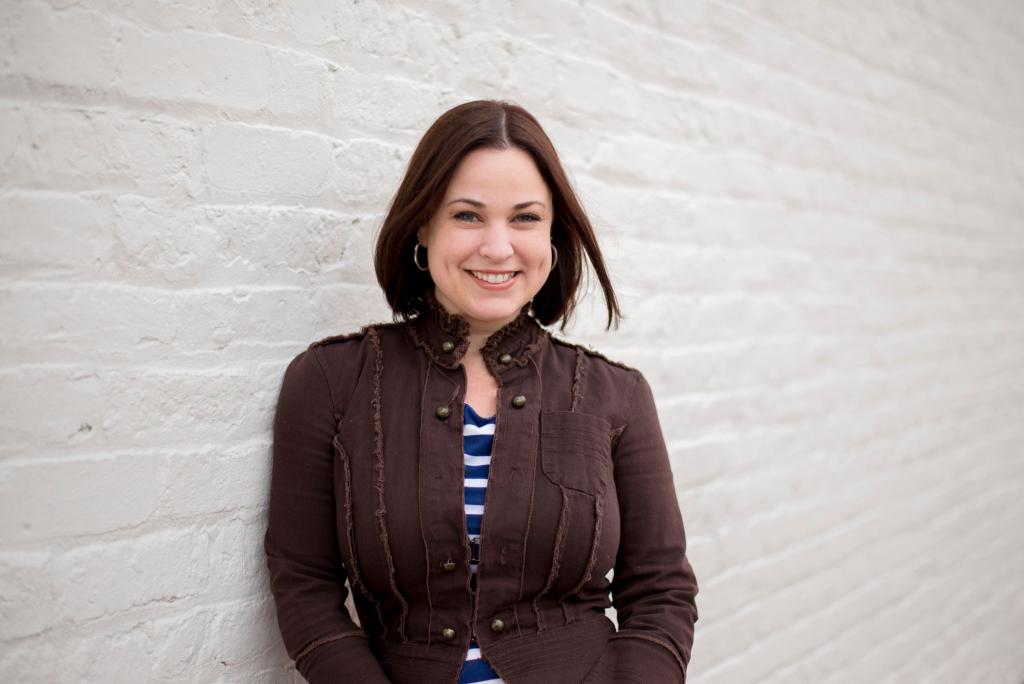
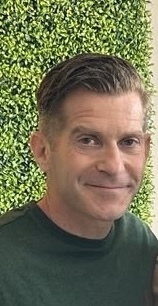
Lawfare Public Service Fellow Michael Feinberg sits down with Jake Tapper, the lead Washington anchor for CNN, to discuss his new book, “Race Against Terror: Chasing an Al Qaeda Killer at the Dawn of the Forever War.” The book chronicles the investigation, prosecution, and ultimate conviction of Spin Ghul, an Al Qaeda operative who became the first major international terrorist tried in a U.S. civilian court.
Feinberg and Tapper explore what the case reveals about the American justice system in the post-9/11 era, the politics of counterterrorism, and how terrorism prosecutions have influenced the people and policies at the center of national security.
To receive ad-free podcasts, become a Lawfare Material Supporter at www.patreon.com/lawfare. You can also support Lawfare by making a one-time donation at https://givebutter.com/lawfare-institute.
Click the button below to view a transcript of this podcast. Please note that the transcript was auto-generated and may contain errors.
Transcript
[Intro]
Jake Tapper:
President Obama had come into office, obviously, in January 2009, and he wanted
to prosecute the war on terror more according to American values and ideals,
which meant he wanted to try terrorists in criminal court as much as possible.
But the idea of bringing foreign terrorist to Brooklyn or to Manhattan to
prosecute him scared so many people.
Michael Feinberg: It
is the Lawfare Podcast. I'm Michael Feinberg, a public service fellow
with Lawfare, here today with Jake Tapper, CNN's chief correspondent and
the author of the new book, “Race Against Terror: Chasing an Al Qaeda Killer at
the Dawn of the Forever War.”
Jake Tapper: Loretta
Lynch talked to me about how she came from a military family. And how as a U.S.
attorney, you often meet victims of crime who feel just completely ignored by
the system.
And she wanted to make sure the Losano and Dennis
families never felt––that they felt like the country did care, and the country
was fighting to bring some small measure of justice to the killings of these
two individuals.
[Main episode]
Michael Feinberg:
Today we're talking about Jake Tapper's new book, which details the
investigation, prosecution, and first conviction ever of an international
terrorist operative in a U.S. civilian court.
Now, I want to sort of start off by talking about the genesis
of the book. Outside of the main narrative, you speak, I think in the afterword,
about hearing this from a father of one of your son's friends at a birthday
party, right?
Jake Tapper: Yeah.
Michael Feinberg: You
want to talk a little bit about how that came about?
Jake Tapper: Well, I
mean, it's the kind of story that––I guess it could happen anywhere, but it's
more prone to happen in a place like New York or DC, where there's a
concentration of both journalists and people in the law enforcement community
who work on terrorism cases and issues.
My son was turning 13, this is three years ago, and he is a big
fan of airsoft and paintball and that sort of stuff. So we had a paintball
birthday party for him out there in rural Virginia. And because it's so far––and
you're a new father, so you'll understand this someday––but because it's so far,
instead of making the adults drive four hours, I decided to have refreshments
for the adults so they could just stick around, enjoy the nice October day and
hang out for a couple hours while the kids did whatever they were doing to each
other in the woods with airsoft guns or paintball guns, I guess.
Anyway, this dad walked up to me and said that he knew a lawyer
and a veteran named Dave Roller, who I had written about in this book called “The
Outpost” about Afghanistan that came out in 2012. And I said, yeah, that was a
really tough book to write because the Pentagon keeps its crappy records and
they don't share anything with anybody.
And he said, oh, tell me about it. And then he proceeds to tell
me this incredible story. It starts with him as an assistant U.S. attorney at
the Eastern District of New York U.S. Attorney's Office, which is Brooklyn as
you know. And they get a call one day from the FBI from an agent you're
probably familiar with named Ari Mahairas.
And Ari says, we just got this crazy call from Italy. They've
picked up this guy on the deck of a cruise liner––during the Arab Spring, all
these people are fleeing Libya, Tunisia––and he was, you know, picked up with
them and he says he's a member of Al-Qaeda.
He's killed Americans in Afghanistan, and he tried to blow up
the U.S. Embassy in Nigeria. His name is Spin Ghul. Have you ever heard of him?
And they had heard of him. The Americans fly over to Italy for Spin
Ghul’s hearing in an Italian court, and he confesses. He tells this incredible
story over multiple days, and when it's all over, the Italians are like, great,
take him. We don't want him. He hasn't really done anything to us other than
some unruliness on the ship.
But the Americans can't take him. It's 2011. It's the Obama
era. They can't just whisk him away to Gitmo. That's not happening anymore. And
Obama wants to try foreign terrorists in criminal court, which is also the only
conditions under which the Italians will release them.
So, from then on, there is this race against the clock to prove
Spin Ghul committed these horrific acts against American servicemembers and
tried to blow up the U.S. Embassy in Nigeria, before the Italians get fed up
and put him in a refugee camp from which he'll easily escape because those are
minimum security operations.
And it's a story, it's a book about, well, the tale that this
guy, this dad, Dave Bitkower, was telling me it was a story about sleuthing. He
then starts proceeding to tell me about how they built the evidence to lock Spin
Ghul up for the rest of his life. And it was an incredible story. For you, maybe
just a common story, I don't know. But for me, as a guy who watches CSI and
watches Cold Case and Law and Order and loves police procedurals, loves hearing
about how bad guys are caught and prosecuted successfully, it was, I just
couldn't, it was just such a great story.
And when he was done telling me the story––and he went on for a
while because I think, you know, I think it's fair to say it was the case of
his life––I was like, well, has anybody––this is a natural question for a
journalist after the story is done––has anyone ever told the story before? Has
anybody written about this?
And other than some stories in the press about his trial, about
Spin Ghul’s trial, no. Nobody had really told the most interesting part of the
story, which is the detective work that went on by the FBI agents, by the
various investigators, by the assistant U.S. attorney. So that's how the story
came to me.
And you know, I got Bitkower’s number and within a week or two
I was having lunch with him and his fellow assistant, U.S. Attorney Shreve
Ariail, and then I was being hooked up with other attorneys and FBI agents and
the like, and, it was, you know, just really fascinating. And again, I don't
know, for an FBI agent, how a book like this reads, but to a civilian it was
just really just a great yarn.
And that's what I tried to write. I've written fiction and
nonfiction. I tried to take some of the lessons I've learned from writing
fiction and apply it here and write this as if it's a fictional thriller, a
page turner. But it's all true and was really, you know, I felt it was fun to
write, but also, when it came to the service members, and the unheralded people
who work in the Justice Department and the FBI, an honor to write about.
Michael Feinberg:
It's funny you ask what it would be like for an FBI agent to read this, because
I actually very much appreciated this book because this is the sort of book,
when I was still a special agent, that I would readily give to friends or
family who wanted to understand the sort of things on which I worked that I
could never talk about.
I thought you did a very good job capturing what an actual
investigation is like and sort of demolishing the myth that it's always
adversarial between the assistant U.S. attorneys and the FBI special agents
involved. It seemed like you really captured the team effort that goes into an
endeavor like this.
Jake Tapper: Yeah, I
mean, I think it's fair to say that not everybody knows what everybody else is
doing, and there is, you know––it's not like I didn't sense any turf issues
when writing the book.
You know, the FBI folks were very insistent on me knowing that
they were following Spin Ghul before the assistant U.S. attorneys were. And I
think the assistant U.S. attorneys, in some instances didn't fully appreciate
what the FBI agents were doing, but I'm not really interested in that stuff. It
doesn't really, I mean, and it wasn't really like a major source of tension or
anything like that.
I was just more interested in how it worked. And catching the
bad guy. And the fact is that there was a lot of stuff––I mean, I think
probably it's fair to say that the FBI agents, if they've read the book, have
learned things that they didn't know that were going on, and vice versa with
the U.S. Attorney's Office.
But as a general note, yeah, this is––it wasn't written this
way. It was written to be a page turner, a thriller, a true crime book. But as
a general note, it was––it ended up also being a love letter to a functioning Justice
Department, which I don't know we have now.
Michael Feinberg: I
have thoughts on that, but it's probably a conversation best saved for another
day.
Jake Tapper: Over a
beer perhaps. Yes.
Michael Feinberg: Or
multiple.
Jake Tapper: Yeah.
Michael Feinberg: So,
you know, you mentioned that this case, while ultimately successful, started
with a lead from a foreign country, from Italy.
Jake Tapper: Yeah.
Michael Feinberg: And
I was not familiar with this case except by name before I read your book, and I
was a little surprised when I saw that Italy was so cooperative. Because in the
not-too-distant past, before they came into contact with Spin Ghul, there had
been what I will politely call a kerfuffle between American counterterrorism
operations and the Italian government.
Jake Tapper: You mean
when they indicted a bunch of CIA officials for kidnapping? Yes.
Michael Feinberg:
Yes. I was wondering if––
Jake Tapper:
Convicted them, not just indicted them. Convicted them, yeah.
Michael Feinberg:
Yes. Quite a few of them, if I recall. I was wondering if you could sort of
give the background of how that particular extraordinary rendition––or
kidnapping, depending on your point of view––in Italy colored the behavior of
the Italian government this time around.
Jake Tapper: So I
think the guy's name was Abu Omar and he was an Egyptian cleric who had fled
Egypt and was living in Italy. And the Americans working with the Italians kidnapped
him, whatever you want to call it. Extraordinary rendition is the polite term.
And took him to a foreign country where he was tortured. And
then he's now free in Egypt, I think. That's the last time I heard about him.
He was in Egypt. Yeah.
I don't want to overstate the cooperative spirit. The Italians
were mad at the Americans. Mad at the Americans for any number of reasons
having to do with the war on terror.
First I think as a general note, there were a lot of European
officials, European leaders, who were very disappointed with how the Bush
administration prosecuted the war on terror. In terms of Gitmo, in terms of
extraordinary rendition, in terms of enhanced interrogation––otherwise known as
torture––in terms of declaring people enemy combatants.
I mean, there was a lot of new or newly rehabilitated law
having to do with terrorists that the Europeans did not like. And there was
this ticking clock. I mean, one of the reasons I think that the Italians were,
they were cooperative with the Americans in the sense that they wanted America
to get this guy and lock him up.
They were eager for him to leave. They didn't want to be
housing him any longer than they had to. And he, in fact, you know––as you
know, and maybe some of your listeners know, the fact that the pickup came in
June of 2011, that's when they got Spin Ghul. And it was, I think within the
year, within a year, that he was extradited and brought to the United States.
That is rapid for the Justice Department working with a foreign
government. As you know, these things often take years and years and years and
years. So that, I think, demonstrates how much the Italians were eager to have
him out of their country.
But the Italians were also putting forth a lot of strings. Spindle
came with strings attached. The Americans could take him, but he couldn't go to
Gitmo, he couldn't be tried by a military commission, and the death penalty had
to be off the table. So, I think there was a degree to which the Italians also
felt, well, we are calling the shots here. And we think this is an al-Qaeda
terrorist.
We don't want him killing people. I don't know how much they
ever would've actually sent him to a refugee camp, but I sensed that the
Americans really felt like that was a legitimate threat, and so they needed to
indict him and extradite him as soon as possible. And so that was done as
quickly as possible.
Michael Feinberg: And
I assume it was helpful for the prosecution in negotiating these caveats and
parameters with Italy in that there had recently been a change of
administration in the United States that very much wanted a sort of proof of
concept for trying a terrorist subject in a civilian court rather than through
a military commission?
Jake Tapper: Yes. Oh,
so President Obama had come into office obviously in January 2009, and he
wanted to prosecute the war on terror more according to American values and
ideals which meant he wanted to try terrorists in criminal court as much as
possible.
It was weird rereading and re-report this about 2011, 2012,
2013. But it reminded me of just how terrorized the American people were still,
more than a decade after 9/11, but the idea of bringing a foreign terrorist to
Brooklyn or to Manhattan to prosecute him scared so many people. And honestly
was, you know, and it was bipartisan. Schumer didn't want them. Peter King, the
Republican congressman, didn't want them.
Bloomberg, who I think was a mayor and was independent at the
time, didn't want them. There was very little support for this, whether it was
Spin Ghul or Khalid Sheikh Muhammad who was down at Gitmo. There was just a p––it
was just not going to happen.
And in fact, while Obama was leading this government that was
trying to bring Spin Ghul to the United States to prosecute him, there was an
effort to block Obama from being able to do it written into the Defense
Authorization Act. And the last-minute concession that Obama got was that he
could get, he could seek a waiver.
You know, nobody was allowed to be, no foreign terrorist was
allowed to be brought into the United States for a criminal prosecution, but he
could announce and sign a waiver. So, they got a waiver for Spin Ghul, and I
think he's the only one. There's been a waiver for now. Flash forward to today.
Spinel was the very first, and as of now, only foreign terrorist tried in a U.S.
criminal court for killing American service members abroad.
But now Trump is trying to do the second one, which is this guy
Jafar, who was part of the Abbey Gate conspiracy. We can go into later as to
what's going on in the Eastern District of Virginia––
Michael Feinberg: Yes.
Because there's a very interesting wrinkle––
Jake Tapper: Yeah.
Michael Feinberg: ––in
prosecution of that case, which we'll get to in a minute.
Jake Tapper: Yeah, a
hundred percent. But I do think it's interesting that Trump announces this and
has joint address to Congress this year, I think was March. And there is no
outcry. There is no one saying you can't bring him to Virginia. Because it's
hard to explain to people if they don't remember, but there was a tangible fear,
not only what happens if he's not convicted––do we then release him, and he is
just like at the Starbucks in Manhattan and killing people?
But also there was this fear of, is al-Qaeda going to try to
break him out prison? Is he going to escape? Is he––and there was almost this infusion
of superhuman powers that we assigned to these people, like that they were
deadlier than any, anyone.
Yes, of course, these are horrible criminal terrorists, no
question. But they don't have superhuman powers.
And it was, I don't wanna say it's an irrational fear because 9/11
happened and that was terrifying. But there was this very tangible fear in this
first term of the Obama years that does not seem to exist anymore.
When I tell people Jafar is just a few miles away from us,
where I'm sitting here in DC in, I think he's in a jail in Alexandria, people
can't believe it, you know? But it's kind of just accepted.
Michael Feinberg:
Yeah. So let's go back to Jafar and to Abbey Gate just for a second, 'cause
there's something I want to tease out here.
EDNY. It’s one of the four best national security practices
within the Department of Justice. There's a crosstown rivalry with SDNY, of
course, and then there's the DC U.S. Attorney's office and the Eastern District
of Virginia. And those are really the heavy hitters for counter-terrorism
prosecutions in the United States.
Jake Tapper: And just
to interrupt the––if people are wondering who decides which one of these
jurisdictions gets the terrorist, it has to do with where the terrorist is
arrested, I believe. Right? If they're in Africa, it goes to one place. If it's
in Afghanistan, Pakistan, it goes to another place.
Right? Isn't that how it's done?
Michael Feinberg: It
depends, and I don't know how it is right now, but generally speaking, there is
a multifactor analysis having to do with geography. The investigating squad out
of the FBI at 26 Federal Plaza. But even with those parameters, a lot of times
it will come down to what's called the DAG fight, which is when both offices
that very much want the case and the publicity that comes with it will appeal
to the Deputy Attorney General's office and essentially have a sort of
formalized debate about which office gets to run with it. But I don't think
that was an issue here.
Jake Tapper: No, he
was picked up in by the Italians. I believe Europe went to the Eastern District
of New York. I think that's how it happened here.
It just automatically, it just went from the Italians to Bill
Nardini who was at the Justice Department desk in Rome, and he calls the
special agent in charge, Ari Mahairas, att the FBI, who then automatically goes
to the Eastern District of New York because that was the jurisdiction. That's
how it happened
Michael Feinberg: Right.
Now, one of the benefits of that system is at the time the Eastern District of
New York had a real murderers’ row of top-notch national security prosecutors.
You not only had David Bitkower and Shreve, but you also had younger attorneys
like Melody Wells, who now is running the national security program for the
Northern District of Illinois, which has Chicago.
You have a lot of people who were involved in this case who
really knew what they were doing, not just in this case, but then went on to
even bigger things later in their careers because of their success.
Jake Tapper: Yeah.
Michael Feinberg:
That's not really what we're seeing happen with Jafar and Abbey Gate the past
week in the Eastern District of Virginia.
Jake Tapper: Yeah.
And so let's talk about that. So one of the things that I have found, that I've
learned while writing this book––and part of the book takes place in
Afghanistan, which I knew a little bit about from covering the war in
Afghanistan, writing a previous book about it, et cetera.
But I didn't know a ton about prosecuting terrorists and all
these issues until I wrote this book and researched this book, and one of the
things I came to appreciate is, first of all, this isn't easy. This is really
tough.
Like, locking away Spin Ghul was a huge, huge effort. And look,
people can differ and people can, you know, I mean, I wrote the book not to be
a polemic. It's not a political book. Politics are in there, but I'm not taking
a position. And liberals and conservatives have read the book and thought that
it proved their point of view on whether these people, these terrorists should
be tried in criminal court or just sent to Gitmo.
And that's fine. I don't want the book to have a point of view
on that. But one of the things I did learn is this isn't easy. And it is really
important to have experts in the same way that you would if you're going to
have an appendectomy, you want the best surgeon. When you are going to
prosecute a terrorist, you want the best prosecutors.
And I don't think––and FBI investigators as well. And I don't
think I've fully comprehended that because I, because honestly you guys are
very secret about stuff and we don't know because, you know, there isn't a lot
of sharing when it comes to this sort of thing. Even when James Comey was
sharing what he did share, it was stuff about politics. It wasn't about
prosecutions.
But in any case, one of the things I learned is how important
it is to have Melody Wells or Dave Bitkower, or Shreve Ariail or others.
There's a guy that is in the book who would not cooperate with me at all, so
this is not me blowing smoke to somebody who was a good source, named George Toscas,
kinda legendary in the FBI was in the National Security Division. Had been at
the Justice Department since 1993. And he had experience.
What do I mean by he had experience? We learn more––people,
human beings––from our failures than we do from our successes. I think we, we
learned more.
He had a failure. He had been trying to prosecute some Hutu
murderers who killed Westerners in Rwanda. And he was prosecuting this case
during the first Bush administration, first Bush term George W. Bush. And the
judge threw out their confession because they had been interrogated by these
Rwandan police who were part of the rival Tutsi clan.
And this judge thought that it was basically torture and fruit
of the poison tree, et cetera. And these murderers are now free men in
Australia. So George Toscas had been burned by this. I learned this from his
colleagues, not from him, but he, from then on, I think probably came even more
of a hardass.
And if you were an FBI agent, an assistant U.S. attorney,
whatever, trying to get a tough prosecution okayed––getting the U.S., getting
the Attorney General to sign off on it, getting President Obama to sign off on
it, getting John Brennan to sign off on it, that was nothing. Getting George Toscas
to sign off on it, that was your big hurdle because he was the hardass in the
Justice Department.
George Toscas is no longer doing this for us, us Americans to
keep us safe. He's not doing it. Because he signed off on the Mar-a-Lago classified
documents warrant, when Trump came into office, he was sidelined. And it's an
absolute disgrace that he is not doing what he does best because of this
political consideration for a legitimate classified documents investigation.
And it gets worse. The guy who was prosecuting Jafar just a few
weeks ago was fired, is a guy named Michael Ben’Ary. Again, never talked to him
in my life, doesn't respond to emails, doesn't respond to texts. Like I'm
doing, he's not, I'm not saying this because he's done me any favors.
Michael Ben’Ary was prosecuting Jafar, even though there was a
lot of turbulence going on at the Eastern District of Virginia because the
previous U.S. attorney, acting U.S. attorney Erik Siebert had been fired, because
he wasn't bringing charges against Letitia James, the New York Attorney
General, or James Comey, the former FBI director.
He was replaced. Lindsay Halligan came in. And now Michael Ben’Ary
was fired because some MAGA person posted on social media that she supposed he
opposed the prosecution of Comey too, which there's no evidence of it.
And she wasn't even stating it as a fact. She was surmising it.
And he's gone and he wrote a letter, a public letter saying this hurts the case
against Jafar, and the current Justice Department leadership is more focused on
going after the president's perceived political enemies than they are in
protecting the American people.
That is, as you know, very rare for a prosecutor to ever say
publicly, and kind of terrifying. So that's where we are. And I hope that they
are replacing Michael Ben’Ary with prosecutors who know what they're doing. But
I have my doubts because it seems like all they care about is loyalty to Trump
and not expertise in locking away terrorists.
And if the Jaffar case is half as complicated as the Spin Ghul
case, this is not going to be easy. I mean, I don't know the circumstances
under which Jafar confessed, quote unquote, to the Pakistani authorities. Is
that going to be admissible? I have no idea.
Michael Feinberg: A
lot of people, they watch Law and Order or similar shows and they think they
have a good idea what a national security prosecution is going to be like, but
they don't realize how different it is and what an art form it really is.
Because you have things you don't have in a standard murder
trial. You have classified evidence that you can't reveal in open court outside
of very specific procedures. You have information from foreign governments that
those governments don't want to admit they gave you.
You have confidential sources who may still be embedded with
terrorist organizations whom if you publicize their role, they're going to get
killed. This is not the sort of thing where you can hire a recent law school
graduate and assume that they're going to be able to step into the shoes of a
Michael Ben’Ary or somebody like a David Bitkower.
Jake Tapper: No it's
crazy. Yeah. No and I mean, when you read, and presumably some of your
listeners or viewers will read my book, and you'll see this is tough. Like
they, they literally had to fly to Nigeria twice, two different trips to
Nigeria. And, you know, witnesses had been killed, witnesses were in Gitmo and
not able to testify.
I mean, it was for the grace of God that they were able to find
physical evidence. So, I don't know how they're going to do Jafar. I wish them
success, you know, but you can't just put an insurance attorney from Florida
who's MAGA-loyal and expect that this is––which is Lindsey Halligan, the
president's acting U.S. attorney in the Eastern District of Virginia––and just
think this is going to go well.
I mean, she, yeah, she
got an indictment against Comey and she got an indictment against Tish James,
but indictments are not the ball game. Indictments are relatively easy.
Michael Feinberg:
That's very true. There is, the old statement is, you've heard a million times
you could indict a ham sandwich.
The burdens of proof for a criminal conviction are
significantly higher than what you need to get an indictment. And I was really
glad, in the context of this discussion and in the book that you mentioned,
George Toscas’s role in this, because as somebody who worked national security
matters my entire career, I very much knew of George Toscas by reputation.
At the time I was in the FBI, he was the highest-ranking career
employee at the Department of Justice and still held that title when he was
pushed out recently. But speaking candidly, he was viewed as kind of a pain.
Jake Tapper: Yeah. Journalists
think so too, by the way, because he wouldn't––
Michael Feinberg: I
have no doubt.
Jake Tapper: ––he
doesn't respond to any of our questions.
Michael Feinberg:
Well, I mean, for our issue was a little different, which is getting him to yes
on an indictment was always a very uphill battle. And it's not until you're
more seasoned as an investigator or a prosecutor that you realize you want
that.
You want somebody who is going to poke holes in your case up
until the very last day, so that the final indictment you present to the grand
jury or the final summation you make to the jury, is as strong as it could
possibly be, and you've game-planned every possible weakness you may have.
Jake Tapper: Yeah, I
mean that the idea that he's not going to help the jaffar prosecution. Makes us
less safe. There's no politics involved in this. I'm not saying this from an
anti-Trump perspective. I don't even know what George Toscas’s politics are.
Like I said, I've never talked to him. He's never communicated
with me in any way. I tend to think that, I mean, just as a general note, I
tend to think of prosecutors and law enforcement as more conservative because
of what they do for a living. But you know, that's just an assumption. I have
no idea what his politics are.
I know that there were classified documents at Mar-a-Lago and
no one has credibly disputed that. You could argue that they shouldn't, they,
you know, that there's an over-classification problem in the government, and
I'll agree with that a thousand percent. But the idea that there were
classified documents at Mar-a-Lago, the president––the former president at the
time––was refusing to hand them over, and there was a credible investigation as
to they, they weren't being stored securely, that's for sure.
And he signed off on a warrant. I mean, that's kind of a no
brainer.
Michael Feinberg:
It's also his job.
Jake Tapper: Right.
The political action would've been to deny the warrant that would've been the
political action.
Michael Feinberg:
Correct. Because then you would be treating Trump very differently than you
would be treating any other defendant in a mis–– or subject at that point in a
mis––
Jake Tapper:
Including Biden. Including Pence, including, you know, Reagan, including all
the other people who have had classified document issues. And remember, there
was a special counsel that investigated Biden for his possession of classified
documents. Robert Hur?
Michael Feinberg:
Yes. Who is a Republican DOJ Appointee, who was the U.S. attorney for Maryland.
Yeah, for a long time. Yeah. People will always forget there
were simultaneous special counsel investigations going on.
Jake Tapper: Yeah, and
I mean, I wrote a different book that came out earlier this year about Biden
and his acuity issues. And one of the themes of that was that Robert Hur was
doing his job, and got unfairly assailed by the left and the right for how he
did his job.
And it was really, honestly, a shame. And you know, Biden
basically fired Merrick Garland in the midst of all this, when people leaked to
the press that he wouldn't be part of a second Biden administration.
You know, again I look at Robert Hur the same way I look at
George Toscas, which is the same way I look at David Bitkower, which is people
doing a very difficult job, you know, and trying to do it to the best of their
ability.
Michael Feinberg: Her
got a lot of flak for, I don't remember the sentence by memory, but he
essentially made a judgment about how a jury might perceive President Biden's
recollections.
And a lot of my friends got really upset about that because
they thought it was an unfair way to portray somebody who hadn't been charged.
But they forget that part of a prosecutor's job, whether you're a line AUSA or
a special counsel, is you have to assess candidly, how are your potential
witnesses and defendants going to appear in court?
Jake Tapper: Yeah.
And this is also part of Erik Siebert not wanting to bring charges against
Comey or Tish James, which is, can I get a conviction?
It's not, can I get an indictment? It's, can I get a conviction.
I don't know one prosecutor who wouldn't love the pelt of a
public official on their wall. I mean, every prosecutor I've ever met, every
FBI agent I've ever met, would love to take down a senator, would love to take
down anyone in public life. If they work for the public integrity unit, that's
their bread and butter.
And you know, there, there are cases in the past that people
think that was overreach, whether it's Ted Stevens or the first Menendez case,
I guess not the second one given that he's in prison right now. But, whether or
not you can get a conviction is always the question. And when Robert Hur’s
report came out and he said that he thought that Biden would present as a
well-meaning elderly man with a poor memory, this was in February 2024.
He had sat through about five hours of interviews with Joe
Biden in October, 2023. And those five hours of, obviously, the transcript and
the audio has been released. And they're pretty shocking in terms of how
meandering Biden seems and how off focus and how much he just seems like a
well-meaning elderly man with a poor memory.
But Hur was raked through the coals for that. And then came the
debate in June, and Biden seemed like a well-meaning elderly man with a poor
memory. And Hur, who had been, had seen his reputation, dragged through the mud
by Democrats and had a tough time finding a job, which is usually not the case
for a special counsel. They usually are not, or do not have difficulty finding
a job, 'cause it's a prestige position.
He was vindicated and thankfully he's, you know, employed and
able to raise money for his family and all that. But it was really crappy. But,
you know, the question of can I get a conviction is so paramount, and something
that I think a lot of people forget.
Can I get a conviction against Hillary Clinton? That was a
question that James Comey had to answer.
Michael Feinberg:
Yes. People don't realize how much work goes into a prosecution, and how many
nuances there are to make sure that you have that victory at the end. And as a
result, a lot of decisions that aren't political appear politicized, just
'cause people don't understand what's going on behind the curtain.
And I think you do a really good job of laying that out as you
detail the investigation, prosecution, and ultimate conviction of Spin Ghul.
But I want to shift gears a little bit because that's only one of the stories
you tell in the book.
And you spend a lot of time doing something I didn't expect
when I first picked it up and saw the jacket copy, which is, you spend a large
part of the narrative amongst the soldiers who were the victims of Spin Ghul’s
attack in particular, the 82nd Airborne.
Jake Tapper: Yeah. So
the ambush that Spin Ghul engaged in was very early in the Afghanistan war in
April 2003, at a place called Firebase Shkin, which was right near the Afghan-Pakistan
border.
And he was, you know, he was being tried for killing two
service members, Airman Ray Losano and Private Jared Dennis. And it's always
difficult, but also I feel an obligation as a journalist to tell the stories of
these soldiers as I did in “The Outpost,” because they are as unheralded as the
FBI agents and assistant U.S. attorneys, if not more so.
And I thought that we needed to understand what had been taken
from us, both as a country and also just the Gold Star family members who lost
their loved ones. And also the service members who to this day are physically
or psychologically damaged because of what happened. Right?
There is a soldier in the book who is right now having a major
mental health crisis, somebody I got to know while writing this book. And these
scars do not heal with time. They stay forever. And it's just a question of how
people best deal with them.
So yeah, I told the story of Jared Dennis and Ray Losano and
their service, and the service members. And I thought it was an important part
of the story and also would make the stakes higher. Because you see the evil
that is done to these men. And it also was an important part of the
prosecution.
One of the FBI agents, a woman named Raushaunah Muhammad––so, Ray,
so Jared Dennis was this kid––he was kid, he was 19 when he was killed, that's
a kid, you know––and he was from Antlers, Oklahoma. He was a Native American
kid, kind of a goof, kind of a class clown.
And he would write home and call home and talk about what he
was experiencing in Afghanistan. And he's a sweet kid, and I included a few of
his letters to kind of get across who he was, letters to his mom, and his
innocence, his naïvete.
One of the things he writes about is how cool it is that the
Afghans are so much like the Oklahomans he knows. Except instead of branding
their animals, they dye them, with like pink dye or green dye or yellow dye.
And he got a real kick out of that. Raushaunah Muhammad kept a photograph of
one of these pink chickens at her desk to remind her of what all this hard work
was for. Jared Dennis's sweet soul had been taken from this earth, and the pink
chicken reminded her of Jared Dennis.
And that's, I think a lot of what made these men and women work
so hard to bring justice to Spin Ghul. Loretta Lynch––who was the U.S. attorney
and then the Attorney General during this period––Loretta Lynch talked to me
about how she came from a military family, and how as a U.S. attorney, you
often meet victims of crime who feel just completely ignored by the system.
And she wanted to make sure the Losano and Dennis families
never felt that they felt like the country did care and the country was
fighting to bring some small measure of justice to the killings of these two
individuals.
Michael Feinberg: And
as a reader, I really appreciated the fact that at no point did it feel like
the service members were politicized or being used as a justification for civil
trials over military tribunals or anything like that. And I mean––this is a
sort of tangent––I'll note, you know, when I saw the film adaptation of your
other book about soldiers, “The Outpost,” I was a little shocked when I got to
the end credits.
Because I didn't realize who it was directed by when I started
it. But it was somebody who is very outspoken on a lot of political and
military issues. Who, while a West Pointer himself, I believe––
Jake Tapper: Yes.
Michael Feinberg: ––is
very much on the left anti-war side of the spectrum, and I think it was a real
testament to the source material that the story never got portrayed in a way
that seemed like it was advocating for a political point.
Jake Tapper: I'm so
glad you said that. I feel a hundred percent the same way. I wrote “The Outpost”
not as a polemic against the war in Afghanistan. I kind of see the story of
this outpost, I kind of see it as a metaphor for the war in Afghanistan, people
going into a country with the best of intentions and things not going the well,
the way they wanted it to, and a lot of good men being killed.
But I didn't write it to be an anti-war book. I wrote it to
just tell the story of “The Outpost” and be a tribute to the men who served
there. I did not want the movie to be a polemic either. I didn't want it to be
preachy. I wanted just the story to tell itself and people can draw whatever
conclusions they want.
And Rod Lurie, I thought, did an amazing job. And you're right,
he's a very outspoken liberal and some of his previous work reflects that,
especially. The one he did with Joan Allen, what was it called?
Michael Feinberg: “The
Contender?”
Jake Tapper: “The Contender,”
yes, “The Contender,” that, in which she's a yeah, she's––anyway, dragged
through the mud by Republican congressmen. And I didn't want that, and he
didn't either.
I don't think I had to convince him of that. I mean, I told him
that was one of the things that I thought was important about the book and what
I would hope would be the case for the movie, which is, you can watch that
movie as a conservative or read the book as a conservative and think, ‘look
what amazing people we have,’ and not take a position on the war.
You can read it or read the book or watch the movie as a
liberal and think oh, that's insane, we never should have been there. You can
bring whatever you want to this story and you'll find evidence to disappoint
your point of view. But that's not my job. My job is just to tell the story and
to include all those points of view.
And I try to do the same with this book too. And I included the
perspective of the judge. The judge, Cogan, later––and it's very rare for a
judge to give an interview, but I, you know, I had impressed upon him, this is
not a political book. I just want to know your points of view on these things,
on these decisions you made, et cetera, why you made them.
And he later also told me, and this is in the book, like that,
he kind of thought the trial was ridiculous. He thought it was a show trial for
Obama to show off, look how idealistic we are, and look how our courts work in
this amazing way.
And he thought, you know, Obama, you're the president. You can
do whatever. You can lock Spin Ghul up forever, and you don't have to go
through all this effort.
And that's his point of view and it's perfectly legitimate. And
Hugh Hewitt told me that's how he felt about it. And again, I'm not here to
give my point of view. I am as politically agnostic as I can be on a lot of
these things. And my job, I feel, is just to tell the story and let the chips
fall where they may, as long as I'm including all of the information.
I do think, and this is not in the book––so this is a, this is
my perspective, but it's not part of the book––I do think that prosecuting Spin
Ghul, probably, and it's impossible to prove, probably was the better idea than
putting him in Gitmo. Because I think if he had been sent to Gitmo, he probably
would be free by now.
He probably––because there wouldn't have been this huge effort
to amass evidence against him. And he probably just in the sturm and the churn
of Gitmo would've, at some point, somebody would've said, why are we holding
this guy? He’s been here 10 years. The only thing we have is some confession.
He seems crazy to us anyway.
And then he may have, you know, he would've been released and
then I think he would've gone and killed as many Americans as possible, as has
happened with some Gitmo detainees. So, I do think that trying him in a
criminal court probably made us safer just based on the history of what
happened to other people at Gitmo.
But that's not an argument. That's just kind of like a
speculation.
Michael Feinberg:
Yeah. It's worth noting, you know, Guantanamo as a venue for judicial
proceedings––we're over two decades now, and I think the number of convictions.
Jake Tapper: Two.
Yeah. It can be counted on one hand,
Jake Tapper: Two with
nine plea, nine plea deals. I think two convictions.
One of those convictions, I think, part of it was thrown out of
court, whereas the criminal prosecutions of terrorists in criminal court. It's
more than 600. So the numbers are pretty stark.
Michael Feinberg:
Yeah. So I basically just have two more questions for you before we wrap things
up, and the first is going to seem a bit off topic.
It really struck my eye when I saw it in your book, and I
suspect other people who have a real solid background in national security affairs
might have the same thought. And you mentioned one of the CIA officers involved
in this case was an individual named John Kiriakou.
Jake Tapper: Yeah.
Michael Feinberg: And
the name jumped out at me because I worked counterintelligence investigations
my whole career.
And Mr. Kiriakou was sort of famously prosecuted or persecuted,
depending on your point of view, for revealing to the media expansive amounts
of information about the CIA's various torture programs.
And I was curious––and again, this may be calling for wild
speculation on your part, so feel free to, you know, demur––do you think that
the experience he had seeing how an overt civil transparent process could work,
may have colored how he viewed what the agency was doing in other parts of the
world?
Jake Tapper: I don't
know. His case––there's this one chapter on the capture of a terrorist named Abu
Zubayda. And this happens in 2002 in Pakistan.
And the reason that that case ends up being important, or that
seizure ends up being important, is because there is evidence seized in that
raid that proves that Spin Ghul was who he claimed he was.
And what was interesting was the raid was done with the FBI and
the Pakistanis. And I talked to, you know, the FBI people who were on the
ground there. And then the CIA took possession of Abu Zubayda, and he was
whisked off to a black site and tortured. And nothing after that was usable in
a court of law.
But because the FBI had been part of it––had not just part of
it, had been leading the raid before the CIA got involved––that evidence was
admissible because the FBI was doing everything by the book. And at the time,
the CIA––and look, I don't, I'm not trying to impugn the CIA, they were doing
what they were commanded to do, and I'm not trying to impugn the Bush
administration, they were doing what they thought they needed to do in a very
perilous time when the world was terrified 'cause of 9/11––but the decisions
they made made prosecution impossible for any number of people. And I think
there are about 15 people left at Gitmo.
So I don't know if it colored Kiriakou’s view that he saw the
FBI doing things by the book and then all of a sudden the CIA was doing them
off the book. But the contrast of what was done to Abu Zubaydah was stark. And
it was just interesting to me to, well, first of all, just to write about this
raid, because I hadn't heard about it even though it has been written about
before.
But also just the contrast of it, that the FBI was still doing
things by the book after 9/11 and the CIA was not. And that meant in this court
case––and the trial came in 2017 during the first Trump administration during
this, the court case––that they could be using this evidence seized 15 years
before in Pakistan because the FBI was doing everything by the book, there's a
chain of custody for what was seized, and all the rest.
I just thought that was really, really interesting. And John Kiriakou
I've had on my show before, he is always an interesting guest. I know he is a
controversial guest, but I think that his opinion about––you don't even have to
share his opinion about the immorality of torture to believe that it hurt the
ability of the United States to wage the war on terror because so much evidence
became inadmissible.
Michael Feinberg:
Yeah, and Spin Ghul obviously stands as a real contrast to that, because he is
ultimately tried above-board in a transparent fashion with all the forensic
evidence you would expect, like the Koran that had his fingerprints on it from
the side of the battle.
And it's not a happy ending, of course, because there was
tragic loss of American lives that led to this, but it's a successful ending
for the prosecutors involved.
And my final question for you is, in the course of your career,
you've probably covered countless counter-terrorism operations, whether
military or civilian investigations, prosecutions, negotiations, and so on and
so forth. What is the one lesson that you think we should draw from the trial
of Spin Ghul that makes it stand out for you apart from all those other
matters?
Jake Tapper: I think
that––and this is such a unique case, 'cause like I said, it's to this day, the
first and only foreign terrorist tried in a criminal court for killing service
members abroad––and the attempts to try Gitmo detainees were largely perceived
as unsuccessful, because not only were politicians blocking it, but when they
brought Ghailani, who was the only Gitmo detainee ever tried in criminal court,
because the case went so sideways, because evidence was thrown out because of
torture, and so Ghailani was acquitted by a Manhattan jury of 284 out of 285
charges.
The jury did convict him on one charge, which meant he went
away to prison. But that sent a chill throughout the national security
apparatus. Oh my God, we can't bring these guys to trial in criminal court.
Witnesses will be thrown out, they'll be found not guilty, and then they'll
walk.
That was the fear. I will say that I think that the way these
prosecutors and FBI agents and others did their job made it so Spin Ghul can
never hurt anybody ever again. I don't know that it can be replicated with
every FBI or CIA, arrest of every terrorist because I don't know what evidence
exists and the conditions under which they're brought into custody.
But I do think that Spin Ghul––on Earth 2.0, he's captured in
2008 in the Bush administration, I think he's a free man and he is killing
Americans abroad. Because I just think the effort wouldn't have been there
because these JAG attorneys at Gitmo, they don't have the time or expense to
travel the world and build a case.
And so even if he had been prosecuted, who knows what they
would've been able to try him with other than a confession. And any first-year
lawyer without evidence would be able to argue, as a defense attorney, this
guy's nuts and you have no evidence against him. And as the book goes into
detail, I mean, there are questions about his sanity and about his competence
to stand trial.
I mean, how much a judge believes in them or not is another
matter. So, I think it made us safer, because I think that Spin Ghul was a very
dangerous man. He was a zealot. He wanted to kill as many Americans as
possible, and I think he would've, and I think he would've been freed.
I don't think he's, you know, these last 15 guys at Gitmo are
the most dangerous guys. Some of them you'll meet in the book, Hadi and Faraj
and others. You've heard of Khalid Sheikh Mohammad and the rest. Spin Ghul was
not that, he was not an upper-level al-Qaeda operative. He was just under them.
And he would've been freed and he would've killed people.
And so, I think, you know, in any number of ways this case
could have gone south. If the Italians had let him go or put him in a refugee
camp, if the case had failed, if they hadn't worked as hard as they did to
build the case, if Toscas hadn't been there demanding, every T is crossed and
every I dotted, if Bitkower hadn't been assigned, if Shreve hadn't been
assigned, and all the rest, but it went well.
So I do think that's the lesson. Is that our system of
jurisprudence, while it can take a while and can be bureaucratic and annoying,
makes us safer.
Michael Feinberg: And
I think we'll leave it at that. Jake Tapper, thank you very much for appearing
on the Lawfare Podcast and we'll speak to you soon.
Jake Tapper: Thank
you so much. Great to be here.
Michael Feinberg: The
Lawfare Podcast is produced in cooperation with the Brookings
Institution. You can get ad-free versions of this and other Lawfare
podcasts by becoming a Lawfare material supporter at our website, lawfaremedia.org/support.
You'll also get access to special events and other content available only to
our supporters.
Please rate and review us wherever you get your podcasts. Look
out for our other podcasts, including Rational Security, Allies,
The Aftermath, and Escalation, our latest Lawfare Presents
podcast series about the war in Ukraine. Check out our written work at lawfaremedia.org.
This podcast is edited by Jen Patja and our audio engineer this
episode was Cara Shillenn of Goat Rodeo. Our theme song is from ALIBI Music. As
always, thank you for listening.