Lawfare Daily: The Besieged District Judges, with Reynolds Holding and Judge Jed Rakoff

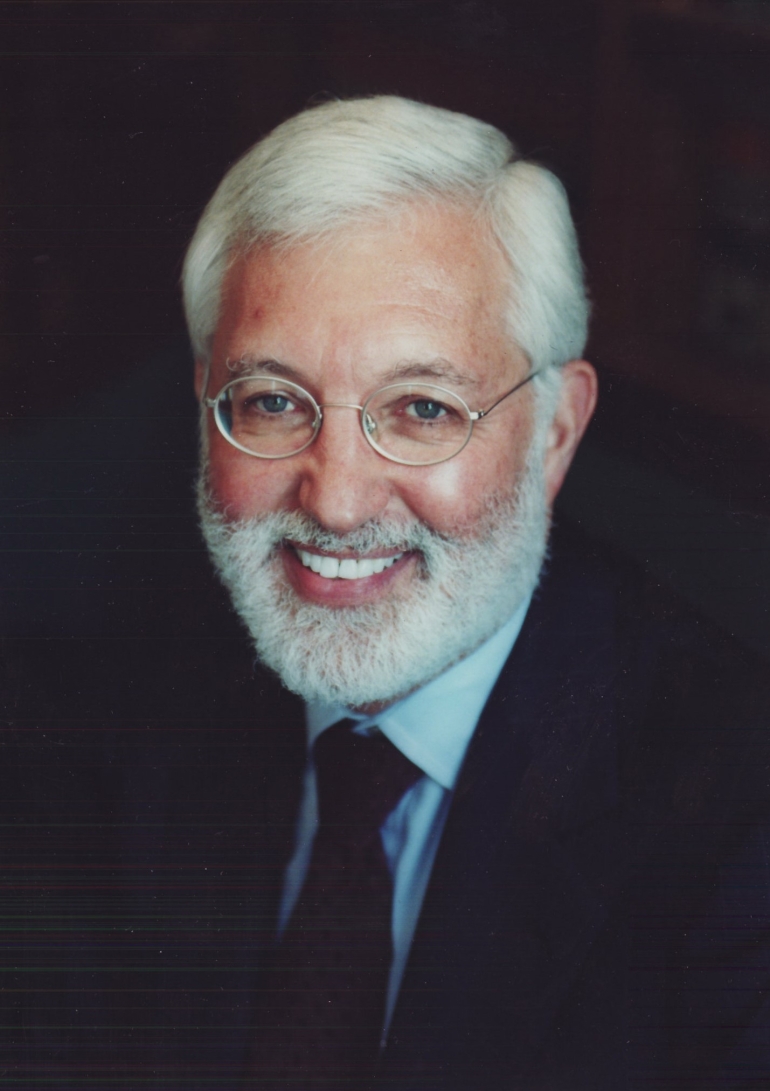

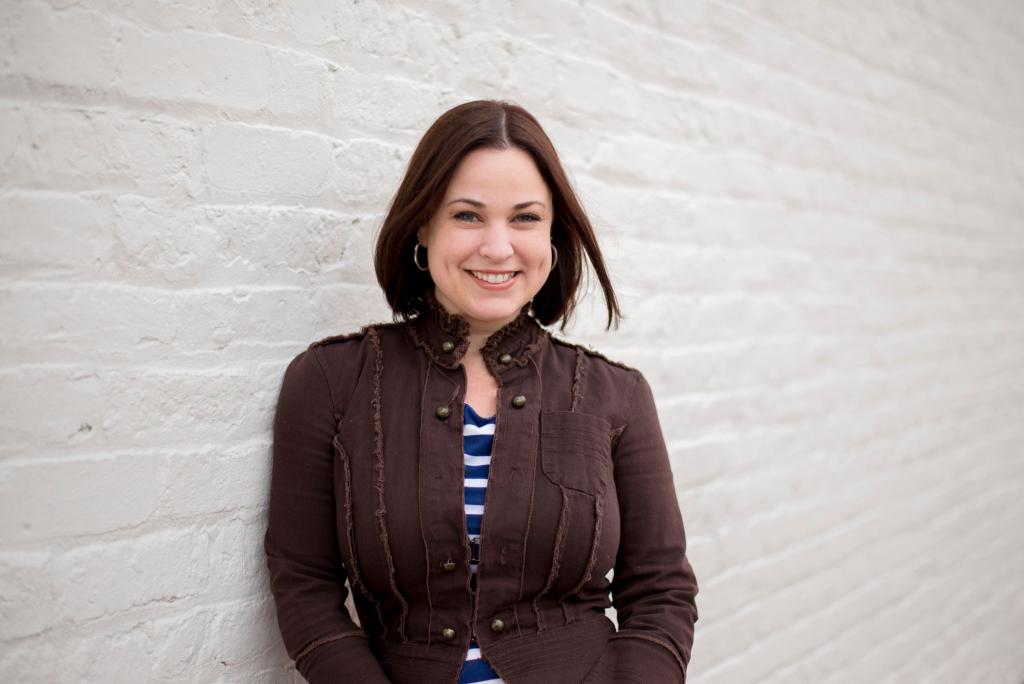
Veteran legal journalist Reynolds Holding, author of "Better Judgment: How Three Judges Are Bringing Justice Back to the Courts," and U.S. District Judge Jed Rakoff, one of the judges featured in his book, sit down with Lawfare Senior Editor Roger Parloff to discuss the role of district judges in our justice system. They also discuss the attacks those judges are enduring today from the Department of Justice, the White House, Congress, and even members of the U.S. Supreme Court.
To receive ad-free podcasts, become a Lawfare Material Supporter at www.patreon.com/lawfare. You can also support Lawfare by making a one-time donation at https://givebutter.com/lawfare-institute.
Click the button below to view a transcript of this podcast. Please note that the transcript was auto-generated and may contain errors.
Transcript
[Intro]
Reynolds Holding:
These judges are applying the law. These judges are not being creative. These
judges are not figuring out how to get around some issue, trying to get a
certain result. I mean, it's very clear in, I think, every case, that the law
is what they're following.
Roger Parloff: It's
the Lawfare Podcast. I'm Roger Parloff, senior editor at Lawfare,
and I'm with Reynolds Holding, author of the book “Better Judgment,” and U.S.
District Judge Jed Rakoff.
Jed Rakoff: I think
all judges should be active in looking closely at the cases that are presented
to them.
And the fact that the parties may have come to an agreement is
highly relevant. We want to encourage agreements where possible. But we don't
want to encourage collusive settlements.
We don't want to encourage settlements that are contrary to the
law.
[Main episode]
Roger Parloff: Today
we're talking about Ren’s book, about district judges, and about, quote, “bringing
justice back to the courts.” So Ren, what was your goal in writing the book,
and what did you mean by bringing justice back to the courts?
Reynolds Holding: In
writing the book, my goal was that I wanted to tell the story about the people
who do the real work of the federal courts, I mean, so much attention is paid
to the Supreme Court, as you know.
So many people write about it, talk about it, worry about it. And
I wanted to tell the story of the men and women who have the last word in the
hundreds of thousands of cases every year that never go up on appeal, that the
Supreme Court never comes close to seeing.
The people who, in relative obscurity, stand up every day for
the rule of law, and who in some cases are now about the only public figures
calling out––let's call it the adventurous view of the law, some would say the
lawlessness, of the current administration. And trying to hold it accountable.
And that's not the Supreme Court. That's the federal district
court judges, people like the three judges I write about.
And I wanted to tell their story. I wanted people to understand
what these judges do how they go about their days. How they grapple with issues
and reach decisions and write opinions, and how they interact with their clerks
and what goes on in their chambers.
I also wanted to find out who these judges are, not just as
judges, but as people. How they grew up, what experiences and people shaped
them. And most important is, I wanted to do this all in an accessible way.
This is, you know, I want to emphasize this is not an academic
or legal book. On one level, it is just a story about some really fascinating
characters.
Roger Parloff: And how
did you choose, broad brush, these three particular judges?
We can go into later some things that Judge Rakoff did, but
what did they have in common, these three that you chose to hone in on?
Reynolds Holding:
Just to step back a minute, I also wanted to make a broader point, and this
will lead me into why I chose these three judges.
As you know very well, deputy Attorney General Todd Blanche
recently talked about there being a war with the courts or on the courts.
And it was a terrible thing to say, but in a sense he is not
wrong. The truth is that there have been other moments in American history when
at least a rhetorical war has been waged on judges. Think of the period during Reconstruction,
after the expansion of the federal judiciary.
Think of the pushback at the turn of the century to the so-called
Lochner era. Think of the pushback from the other side to FDR’s court-packing
effort.
The most recent one before now started in 1956, when southern senators
issued the so-called Southern Manifesto, which was of course was a response to
the Brown v. Board school desegregation decision and a virtual
declaration of war against the courts.
And over the following 60, 70 years or so, that war took the
form of really a broad effort by Congress and the Supreme Court itself to cut
back on judges' authority, and more importantly, on the pe, on the ability of
judges or of people to get into court. The court and Congress and corporations
particularly conjured these notions like a litigation explosion and soft on
crime sentences to establish mandatory arbitration and mandatory sentencing
guidelines, and heightened pleading standards and restrictions on class actions
and habeas corpus. And on and on.
I chose these three judges because to tell these that broader
story, I wanted to do it through the lives of these three, each of whom came of
age roughly during that period since the Southern Manifesto, nd on the bench
have found ways to resist these efforts to diminish their authority and their
ability to bring people into their courtrooms. And really the ability to find
the truth and make a record and do what they see as justice.
And these three judges I selected because, I mean, most of all
because I think each of the, each of them is a really interesting character,
but also they have done––they have carried out this sort of resistance in very
different ways that reflect their very different experiences.
Roger Parloff: And just
for the reader, name the other two that you chose besides Judge Rakoff.
Reynolds Holding:
Sure. There's Carlton Reeves, who is a district court judge in Jackson,
Mississippi.
He grew up as a black person in Yazoo, Mississippi during the
1960s and 70s, and faced the racism and the poverty that were typical of that
place and time. But also found out that as he was growing up, justices of the
Supreme Court, but also lower court judges were making it possible for him to––he
attended the first desegregated first-grade class in the state.
Made it possible for him to go to the best public schools and
universities, to go to the stores and restaurants and hotels and the other
places he wanted to go to. And to make it possible for him to become the man, he
is today, which is a district court judge and also the chair of the Federal
Sentencing Commission.
And he has told me, you know, many times that these people,
these judges were, to him, heroes. The second judge is Judge Martha Vasquez.
She sits on the district court in Santa Fe, New Mexico. She's the daughter of
immigrant parents, one undocumented from Mexico, who grew up literally picking
oranges and gardening alongside her parents and friends in Southern California
and living that immigrant experience.
She had an older brother, someone she just adored and had never
been in any real trouble of any kind, and he ran into money problems and tried
to resolve them by selling marijuana, and he got caught up in a federal drug
sting and ended up being sentenced, under the mandatory sentencing guidelines,
to 30 years in prison.
And Martha lived through his trial and saw how the judge in Los
Angeles, Manny Real, who was sort of an infamous judge at the time, see how the
judge treated him, which was very poorly. And resolved that she would become a
judge herself. And she said to herself, in effect, I can do this.
And she did. And now, as I say, she sits on the court in Santa
Fe, New Mexico.
And then there's Judge Rakoff. And I won't try to tell his
story, but I did want to mention that what first struck me and of course what
struck a lot of people was how, in the aftermath of the financial crisis, in
the cases that the SEC had brought against banks for their alleged role in the
crisis, he refused to sign off on settlements that allowed the banks to neither
admit nor deny the allegations against them.
When he was doing this, and this would've been about 2011, I
was an editor at Reuters at the time, and we were in an 8:30 story meeting and
sort of reviewing the news and seeing what we would say about it.
And one of the, one of the pieces, one of the news items, was
Judge Rakoff had refused to approve this settlement.
And at the time, I don't know if, remember, I mean, it was
really a remarkable thing. And I remember someone saying in the story meeting,
you know, well, somebody ought to write a book about this guy.
And I essentially took that to heart. And that was, that's sort
of the origin story of the book.
Roger Parloff: I
appreciate that.
Let's go back to the Todd Blanche statement. You mentioned the “it's
a war, man.” This was in front of the Federalist Society last week.
And he used the phrase several times. And he said, and he
talked to the young lawyers and he said, we need you because “it's a war, and
it's something we will not win unless we keep fighting.”
“It's hard to get the media, it's hard to get the American
people to focus on what a travesty it is when you have an individual judge be
able to stop an… administrative policy that's constitutional and allowed just
because he or she chooses to do so. So it's a war.”
Judges, is there anything you can say about that comment?
Jed Rakoff: It's very
wrong. Totally wrong. The judges who have, by applying the law, found that some
of the initiatives of the current administration have been contrary to law are
judges of a very wide variety of backgrounds.
Some were appointed by Donald Trump in his first term. Some
were appointed by Reagan, Ronald Reagan, way back when. Many in between.
And what we've tried to do in common is what our job is, which
is apply the law. And I'm sorry that Mr. Blanche doesn't recognize that the
beauty of the American legal system is that it's premised on the application of
reason and logic to statutes and precedents.
And district judges don't always get it right, of course.
Though the statistics suggest that more often than not, we do get it right,
since the reversal rate is fairly low. But if we get it wrong, that's what
appeals are all about.
So it's troubling to be that anyone would see this in terms of
emotions, armaments, warlike activities. It seems to me to be a very misplaced
analogy.
Roger Parloff: And
just to back that up so you don't have to take Judge Rakoffs word for it,
Professor Vladeck has done some statistics here, and I'll just, he says there
have been 154 rulings he's aware of granting a TRO or the like, and they've
involved 121 different judges appointed by seven presidents in 29 district
courts across 10 circuits, 41 by Republican appointees and including 15 by
Trump appointees.
And he says that among the ones in front of Republican
appointees, the emergency petitions were granted 62% of the time. Against the
government, in other words.
Reynolds Holding: Just
wanted to emphasize something that Judge Rakoff said, which was, these judges
are applying the law. These judges are not being creative. These judges are not
figuring out how to get around some issue, trying to get a certain result. I
mean, it's very clear in, I think, every case, that the law is what they're
following.
I mean, this criticism coming from the deputy attorney general
and others, they don't offer any substance.
I mean, I sit there and I think, what exactly did these judges
do wrong? What are you claiming? Where did they go off the rails? Anything?
And there's really nothing. Also it's obviously at a time when
judges are getting all sorts of threats.
Roger Parloff: Let's
talk about that. What does this rhetoric mean in terms of the security of
judges and I'll ask Judge Rakoff first, if you can address that.
Jed Rakoff: There has
been from time to time throughout history attacks on judges. Some judges have
been murdered. Others have been seriously maimed or disabled.
Usually the perpetrators are people who are very mentally
disturbed, but that doesn't mean they're totally unaffected by more general
rhetoric.
Every case is different, and it's hard to speak in generalities
here, but the statistics are that, over the last few years, and particularly
over the last few months, there's been an increase in the number of threats to
judges.
And the beauty of our system of law is that an independent
judge can make a decision without having to fear retaliation in any form.
So I'm very proud of my colleagues, who have not allowed this
kind of threats to affect their decision. But I can't say that it's totally
absent from their minds.
Roger Parloff: Ren,
do you have anything to add to that from your conversations with other judges?
Reynolds Holding:
Only that every judge I spoke with has had the experience, has had threats have
gotten the voicemails. And just, you know, have heard horrible things directed
at them. And so my se––and I've certainly heard other judges have experienced
the same, and it seems to be, it just, I'm struck by how, how widespread it is.
And I think, you know, I would not be surprised if Judge Rakoff
had had this experience as well.
Roger Parloff: Have
you, judge?
Jed Rakoff: I have,
although one case, believe it or not, was a little bit humorous. This was some
years ago, and I picked up the phone around six o'clock at night in my
chambers, and the person on the other end said “is this Judge Rakoff?”
And I said yes. And he said, “I'm going to murder you.” Which
was, you know, something of good opening line, I suppose.
Reynolds Holding: Got
your attention.
Jed Rakoff: Right. So
what you're supposed to do in that situation, which I did, was keep the person
on the phone and press a button that will allow the marshals to come up and
trace the call.
So I pushed the button, and eventually the marshals did come up
and trace the call. But in order to make that work, I had to continue talking
with him. So I tried to find out exactly what it was that I had done that got
him so upset.
And it became obvious, after a little, while that he was upset
about a decision that had been made by a different judge.
And I was so tempted to say, may I transfer your call?
Roger Parloff: I see.
Jed Rakoff: In any
event he was eventually arrested and things worked out at the end.
Roger Parloff: So
we've talked about Blanche, and of course we're not talking really just about
Blanche. It's the whole, it's DOJ, it's the White House and Congress, but a
little bit even from the Supreme Court.
We got this separate opinion by Justice Gorsuch in the NIH v.
APHA case, suggesting that lower court judges are defying Supreme Court
orders. He says, lower court judges may sometimes disagree with the court's
decisions, but they are never free to defy them, dot dot dot, this is the third
time in a matter of weeks that this court has had to intervene in case in a
case squarely controlled by one of its precedents.
And of course, the kicker is that he was writing that opinion
in partial dissent, because he had misinterpreted himself the prior precedents
that he thought were so, so obviously clear. These obviously has to do with the
Supreme Court's emergency docket.
I don't know the degree to which you've grappled with this, Judge
Rakoff, but what's your perspective on these Supreme Court emergency docket
rulings?
Jed Rakoff: I think
it's unfortunate that they have become more common than in the past because
what is the justification for a judge exercising authority in any democracy? It
is the application of reason that can be presented.
The public can evaluate it. The higher courts can evaluate it
and figure out whether, yes, that was good logic or bad logic. So the Supreme
Court, when it issues these emergency rulings, doesn't give reasoning.
Sometimes no reasoning at all, just a stay. Other times like one or two
sentences, but nothing more.
So I think to do that once in a blue moon, in an extreme
emergency, you can understand they might have to act very quickly to do it, as
has been the case recently, in a great many cases involving major issues, seems
to me somewhat contrary to the fundamental justification of why we have judges
at all.
Reynolds Holding: And
in that case, in the NIH case, I guess the district court judge, I think
it was William Young, explained, essentially, I didn't think I was not
following precedent. I didn't know––in fact, he was saying, I didn't know that
emergency order of a couple of lines was precedent.
Do you think he was right, Judge?
Jed Rakoff: Now you
got me because the basic rule is that federal judges cannot discuss pending
cases, not only before themselves, but before other judges.
So. I get––and you know, in a criminal case, it's taking the Fifth,
I guess, in this case it's taking the Third. The Third Article of the
Constitution.
Roger Parloff: So I
guess the, but the hypothetical thing that seems is you get this result. You
don't get an explanation. And then you have all of these precedents above you
in the, in your case, the Second Circuit and the Supreme Court from, you know,
fully briefed opinions from maybe 1971. If you know, if anything from 1971
still applies.
So take it from there. How do you navigate?
Jed Rakoff: Well, in
any case, when district judges get the case, the first thing we do is we look
at the charging instrument. It's either a complaint in a civil case or
indictment in a criminal case.
And sometimes you can see that it fits well within existing
precedent. Other times, you can see even at the outset that it's raising new
issues. And to be frank, it's always sort of thrilling to see a case that's
raising new issues. The Supreme Court has the last word, but district judges
have the first word. And it's nice to have the opportunity to look at new cases
and new issues.
But when you get a new issue, even then, you don't just think
about it in the abstract. You go back in the common law tradition and see what
precedents are in the area. You go back, if there's a statute involved, and
look at the language of the statute.
And so you begin your homework right at the beginning, before
the issue is joined, so to speak. And then of course, you are very much
affected by what the lawyer said, ’cause this is an adversary system.
In one or two cases I’ve gone beyond what the lawyer said, I
always felt in those situations that I had to give the lawyers lots of
opportunities to be heard, if I'm introducing some thought that is different
from anything they've said in their papers. But also I would only do that on
rare, rare occasions, and I think that's true for my colleagues as well.
Roger Parloff: Yeah. Let's
turn to this thing Judge Mark Wolf did recently in Boston.
He resigned. He's a senior judge, a Reagan appointee. He then
wrote an article in The Atlantic that says, among other things, “President
Donald Trump is using the law for partisan purposes, targeting his adversaries while
sparing his friends and donors from investigation, prosecution, and possible
punishment, dot dot dot. The White House is assault on the rule of law is so
deeply disturbing to me that I feel compelled to speak out. Silence for me is
now intolerable.”
I'm gonna let Ren address this one first. What was your
reaction to that one?
Reynolds Holding: My
reaction was, isn't Mark Wolf exactly the kind of person we want to have stay
on the bench?
I mean, there's a lot you can say in an opinion. There's a lot
you can say in speeches and in articles. You know, the ethics rule is, of
course––and I'm not gonna be able to quote it––but essentially to uphold the
integrity and people's faith in, in the judiciary. And also implicit in that, I
think, is to educate––and I'm actually channeling Judge Rakoff here––is to
educate people about the judiciary.
And we've seen, I mean, and especially over the past year or
so, I mean, we've seen so many opinions, very carefully thorough, thoroughly
reasoned opinions of 60, 70, 80, a hundred pages that have set out exact––not
only the law, but also have gotten some very, sort of compelling and sometimes
spicy language in them.
And people, you know, and they've been well covered by people
like you, Roger. I mean, the public is finding out what judges think and what
they are saying, not perhaps by reading the opinions themselves, but certainly
by the great coverage that many of these decisions have gotten.
So my first reaction was, I mean, it, you know, I can certainly
understand how Judge Wolf thought it was time to retire. I mean, I don't know
what the docket is like up in, in Massachusetts, but, you know, maybe he's not
getting much that many trials anymore and maybe it's not exciting.
And he is a senior judge and I think he just turned 80 and he, I,
you know, I, my assumption was he just didn't want to deal with it anymore. And
it was easier––but I just wondered, are people going to hear him now as just
another voice among all the voices that are critical of this administration,
whereas before, on the bench, he may have been, had more of an impact and more
people would've paid attention to?
Roger Parloff: Yeah.
Judge what, if anything, can you say about,
Jed Rakoff: I don't want
to comment on Judge Wolf's resignation. I don't know everything that was going
through his head. Being 82, I regard him as a kid.
But I will say, following up on what Ren just said, for
example, Judge Wilkinson, a conservative judge on the Fourth Circuit, in one of
these cases that was very sharp in its criticism of the administration and the
administration's approach to law.
And so I don't think that's precluded by the fact that you're
deciding a case. It may be, in fact, called for by the very activity that
you're addressing.
Roger Parloff: Our
listeners will know who Judge Rakoff is. They might not know the name Reynolds
Holding.
It's actually the first time Reynolds and I have seen each
other face to face, but I've known the byline for a long time. The byline tells
you that you're going to read something really well written and exactingly
accurate.
He's worked for Reuters and ABC News, Time Magazine Legal
Affairs, which was a good publication. It's no longer around. San Francisco
Chronicle. And he's now a research scholar with Columbia Law School.
And a long time ago, he practiced at Debevoise & Plimpton.
Let's talk about why. Judge Rakoff’s role after the financial
crisis, after the subprime fiasco, why that interested you so much, Ren. And
then maybe I'll see if the judge can talk about that as well.
Reynolds Holding: Well,
I think at the time so many people were angry that no one was holding the banks
accountable for the financial crisis to the extent they deserved to be held
accountable. I mean, certainly they were doing things that affected the economy
and the financial system and perhaps the crisis itself.
And you know, we forget, I mean, what an incredible time that
was and how angry people were. And when suddenly a federal judge of all people,
he puts his hand up and says, wait a minute, I want to understand what you did.
We're just sort of––I'm not a rubber stamp. I'm not just going to say, yeah,
the settlement's in the public interest without having, without knowing what went
on, what you did.
And of course, this goes back to the policy of the SEC since I
think the seventies where they found it easier to settle cases to bring lots of
cases and settle them with the added enticement. You don't have to, you don't
have to admit wrongdoing. You don't have to admit the allegations against you,
but you can't deny them. And that's a whole interesting topic in and of itself.
You know, in my world, which was Reuters, which was primarily
financial news, this was big news. And it really, you know, we all felt it deserved
further inquiry.
Of course, a lot of the people who were in the press felt the
same way. I mean, I think Rolling Stone called Judge Rakoff a hero of
sorts for our time.
I think New York Times wrote an editorial saying something
like, Judge Rakoff is angry. We should all be angry.
So it was, I mean, it, thinking back, I mean, at the time it
seemed an obviously important and newsworthy development.
Jed Rakoff: So I have
to say that Ren, in his book, has said such nice things about me. But when my
wife read the book, she said to me, who is this guy? I'd like to meet him
sometime.
Roger Parloff: I
wondered if those rulings, which I think involve those rulings refusing to approve
a rubber stamp, the settlements.
I mean, it was a while back and it was finance, which is not Lawfare’s
focus, Lawfare is sort of focused on national security, but are there
any lessons that are applicable to, more universally, from what you were trying
to do there that might apply today?
Jed Rakoff: I think the
part of all that that I’m most proud of is the impact it had on some of my
colleagues. There is always a natural tendency if you're a judge, if a case is
quote, settled, so to speak, and it goes off your docket.
That's great. So I'll just rubber stamp it, because it's one
less case I have to deal with.
And in the case that first got me interested, which was a case
SEC brought against Bank of America, it struck me that this was such a weak and
almost pointless settlement in a major misconduct that was part of the
financial crisis that Ren has just mentioned, that I should take a closer look
at it.
And a number of my colleagues subsequently began to take closer
looks at a variety of government initiatives than they had in the past. And
that I thought I'm very proud of the extent to which my little case, my little
effort encouraged them to do that.
There's this title that sometimes given, I think mostly
unfairly, to judges as being activist judges. I think all judges should be
active in looking closely at the cases that are presented to them. And the fact
that the parties may have come to an agreement is highly relevant.
We want to encourage agreements where possible. But we don't
wanna encourage collusive settlements. We don't want to encourage settlements
that are contrary to the law, et cetera. So I do think to extent my little
efforts had an effect on other judges, I am proud of that fact. In terms of
current events, I think the cases that we were talking about earlier where many,
many judges have held the administration's activities to be contrary to law,
didn’t involve activists at al.
Those were mostly cases that were frankly not hard cases for
the judges to apply existing precedent and find that misconduct had occurred.
Reynolds Holding: I
mean, certainly the impact shortly after you––I mean, you, of course, were
reversed and ultimately had to––or at least, ordered by the Second Circuit to
approve the settlement.
Jed Rakoff: Not in
the Bank of America.
Reynolds Holding: Not
in the Bank of America. Correct.
Jed Rakoff: Later on
though yeah, I got too cozy in doing this. And the Second Circuit said, you're
going too far, boy, remember whose boss.
So, they did reverse me later on. And you know, you never know
that you're really right till you get reversed by a higher court.
That's the strongest indication you got it right.
Reynolds Holding: And
of course the SEC for a while there said, okay, we're not going to, you know,
we're going to, we're going to not do the ‘neither admit nor deny thing. And
important cases, of course, that I think pretty much went by the wayside. I
just wonder, and you certainly had this impact on your colleague, many of your
colleagues, who––many, most if not al of whom also faced the obstacle of appeal
and were in essence, reversed.
But do you think that just your experiences, knowing your other
colleagues, do you think that they are now just sort of generally more willing
to, as you say, take a closer look, and to essentially ask why, you know, what
really happened here?
Jed Rakoff: Yes, I do
think that has come about.
You know, a lot of this needs to be put in the context of
particular cases and particular facts. There's an old saying that the facts
drive the law, and I think that's particularly true at the district court level.
When we're seeing a situation, a factual situation that has
been sufficiently difficult felt a need to come to court to fight about it.
And so, more than the higher courts which are naturally focused
on broader legal issues, perhaps, we are very much looking at the facts. And
the reason I mention that in this context, the SEC’s ‘neither admit nor deny’
policy, where they would settle a case with someone that they had accused of
wrongdoing, but agree to a settlement in which the defendant did not admit that
they had done anything wrong, originally was devised by a very great SEC
Director of Enforcement Stanley Sporkin, who later became a federal judge.
In the investigations that led to the Foreign Corrupt Practices
Act, there was an open question, a very open question before that act was
passed as to whether paying foreign bribes violated U.S. law.
And so Stanley Sporkin wanted to get a better idea of what the
factual situation was, how widespread this was. Was it true of just one or two
rogue corporations, or was it very common?
And so he said, okay, we're not sure whether this violates the
securities laws. This is before the Foreign Corrupt Practices Act, but if you
tell us candidly, whether you've been paying foreign bribes or not. We will
allow you to present that. We'll not go after you, and we'll accept that you
are neither admitting nor denying that you did anything wrong.
And in that context where he needed to develop a real factual
basis for what later became federal law, I think the ‘neither admit nor deny’
made a certain sense.
The problem with it is it became just a crutch for the SEC
settling cases without their having any impact on the development of the law or
in public knowledge and policy.
So a good example of that is the development of insider trading
law. For a long time, the SEC could not develop that law in the courts because
every time they made an accusation, the party agreed, without admitting or
denying we did anything wrong, we promise not to do it again.
So I had the situation when I was head of the fraud unit of the
U.S. Attorney's Office in the Southern District of New York, that Stanley
Sporkin himself was frequently calling me and telling me how frustrated he was
because he was trying to develop the law of insider trading. And the settlements––thanks
to frankly, a policy he had initiated—he wasn’t able to develop the law.
The factual context makes a great big difference.
Roger Parloff: That's
very interesting history. Of course, right now, we don't know if domestic
bribes still violate the law. But it's a separate issue.
I guess one question I did want to ask, I think a reader might,
a skeptical reader might, you know––there are judges that we probably don't,
district judges we probably don't admire.
You know, if we, if you spotlight one of those judges, and I
don't want to name names and attribute anything to you guys, but you know, we
might get a different book.
And of course, we might also get, over the course of the next
several years, some more appointees that we don't admire.
How will that affect the message of your book, if at all? Ren?
Reynolds Holding:
From my point of view, what I admire is not necessarily how cases come out and
how judges, you know, the conclusions, the judges that I write about reach, but
just the fact that they're accepting their responsibility, really, to hear the
cases. To pay attention, to delve into them, to hold a trial if necessary.
I mean, obviously we have very few trials now, but they’re
really a great way to find out what happened, to find the truth.
And I admire judges who are willing to do that, whether they be
Republican appointees or democratic appointees. Judges who do that. Judges who
do justice. I mean, that’s the subtitle of my book, Bringing Justice Back to
the Courts.
And I don't mean particular results. I mean working to do your
job, in a sense, as a federal court judge, but also more importantly, to allow
people to get into court, to access the courts, to bring their problems before
a judge, to have them addressed and resolved, you know, one way or the other.
I mean, that's––if you're not doing that, if you're just
sending everything to mandatory arbitration or you're sending, you know, you're
raising pleading standards where it's very difficult for people to actually get
a complaint, to have their complaint survive, then you're taking, you know,
you're taking away an essential part of the judicial system.
So, you know, that's, I––and that's the message I want to
convey in my book. Although I do it through judges that I just find particularly
interesting. And also they're very diverse. I mean, they're from different
places, there are different ethnicities, there are different backgrounds, and
which I think speaks to the fact that this is not just a narrow slice of
judges. This, these are types of judges who represent a great diversity on the
bench.
Roger Parloff: One
thing it might be difficult to comment on, but you brought up Judge––
Jed Rakoff: That
never stops you, Roger.
Roger Parloff: That
this is, you know, is factually driven.
And what I've been seeing, you know, is that the district
judges in D.C. and elsewhere, you know, you will get these 90-, 100-page
rulings, 200. And they go minute by minute through the record, they will hold a
hearing and they will go minute by minute for the preliminary injunction—not
the TRO, but the preliminary––these findings will be, on appeal, just, it's
almost as if they didn't occur.
It's as if their suggestions or guidance or, you know, like,
it's as if the allegations of the complaint, which you can say those are
allegations. I just don't see the facts being––on appeal, you know, you used to
have to find clearly erroneous––I, it's getting glossed over, but I don't know
if you've, anyone else is noticing this frustration that I have.
Jed Rakoff: I think
there are two different aspects of what you just described.
One is the focus of the district judge on the facts that I
mentioned before. And the higher courts, under established precedent, usually
are required to give a fair degree of deference to those factual
determinations.
They could then decide if the judge made an error of law.
That's a different question, but to ignore the facts is, I think, contrary to
accepted precedent in the legal system.
There's the well-known joke on––you guys have probably heard
it, but I can't help repeating it because I think it is so true––of the
difference between the three levels of judges.
And it involves, three judges go duck hunting. And they only
have a permit to shoot ducks. Not other birds.
By the way, Justice Scalia was a big duck hunter, but that's
another story.
They're out there and a flock of birds flies by. And the
Supreme Court justice puts up his gun, and then he puts it down and he says,
you know, that looked like a duck, but I'm not sure it is in accordance with
the original meaning of the word duck. I'll have to look at the Federalist
papers and see how they define “duck.”
And then the second bunch of birds flies by, and the court of appeals
judge puts up her gun and then she puts it down. She said, you know, while I
personally was quite convinced it was a duck, I don't think I should shoot
before I consult with my other two colleagues. We'll have to have full briefing
on this matter, and I'm gonna stay my shooting until that time.
And then a third bunch of birds flies by, and the district
judge puts up his gun, bang! and a bird falls to the ground. And as
they're going through the mud to pick up the bird, he turns to his two
colleagues and he says, ‘sure hope it's a duck!’
Okay. So that's the difference between the three levels.
Roger Parloff: We're
almost out of time, but I do want to ask Ren, at least, one more question. You
know, you sort of put the––like I said, the way books work, you sort of put it
to bed before January 20th of this year. And so as a result, the world has
changed a lot since you put it to bed.
If you had a little postscript to add on to it, what would the
gist of that be?
Reynolds Holding: A
postscript, I mean, you can write a whole book, or at least half a book, on
what's gone on since January 20th. And I wish I had––I wish I had the
opportunity to write about it.
But I think the point I would take and want to include in some
kind of postscript or addendum is that so much of what has happened, supports the
themes that I touch on in my book.
I mean, you know, I talk about the Southern Manifesto and the
virtual war on the courts that was launched then. Now we have an actual
declaration of war on the courts. And we have resistance from district court
judges. And not just, you know, not just people from––not just judges who are
Democrat-, Democratically appointed, which the three judges I talk about are,
but from also other judges. From judges appointed by Ronald Reagan and G.W.
Bush and Trump himself.
And it's a very diverse crowd. And it really sort of emphasizes
the basic point of my book, which is, judges are good for democracy. We need
judges to allow people into court to address their issues. And any notion that
we have that Congress can deal with it, or the President can deal with it, I
mean, that's sort of been, you know, been annihilated in the past year or so. And
judges really are the only people left who are public officials who are trying
to hold power to account. And you know, just yesterday I saw a post on X from a
very prominent lawyer and legal commentator who said, you know, when we get
through this, and we will get through this, we'll look back and ee that it was
the federal district court judges that held it together. That held us together.
And I responded in another tweet, ‘Amen.’ I also provided a
link to my book.
But you know, I agree. I agree with her. I think that's right.
I think we'll look back on this and, you know, I don't want to say I told you
so, but I told you so.
Roger Parloff: Okay.
Well, we're going to leave it there. But I want thank you so much both of you,
Ren and Judge Rakoff. Really appreciate your doing this.
Reynolds Holding: Well
thanks so much for having me, Roger. It was fun.
Jed Rakoff: Lots of
fun. Thanks.
Roger Parloff: The Lawfare
Podcast is produced in cooperation with the Brookings Institution. You can
get ad-free versions of this and other Lawfare podcasts by becoming a Lawfare
material supporter at our website, lawfaremedia.org/support. You'll also get
access to special events and other content available only to our supporters.
Please rate and review us wherever you get your podcasts. Look
out for our other podcasts, including Rational Security, Allies,
The Aftermath, and Escalation, our latest Lawfare Presents
podcast series about the war in Ukraine. Check out our written work at lawfaremedia.org.
The podcast is edited by Jen Patja and our audio engineer this
episode was Hazel Hoffman of Goat Rodeo. Our theme song is from ALIBI music. As
always, thank you for listening.
.jpg?sfvrsn=4a061296_3)