Lawfare Daily: The Military’s Operational Technology Cyber Vulnerabilities
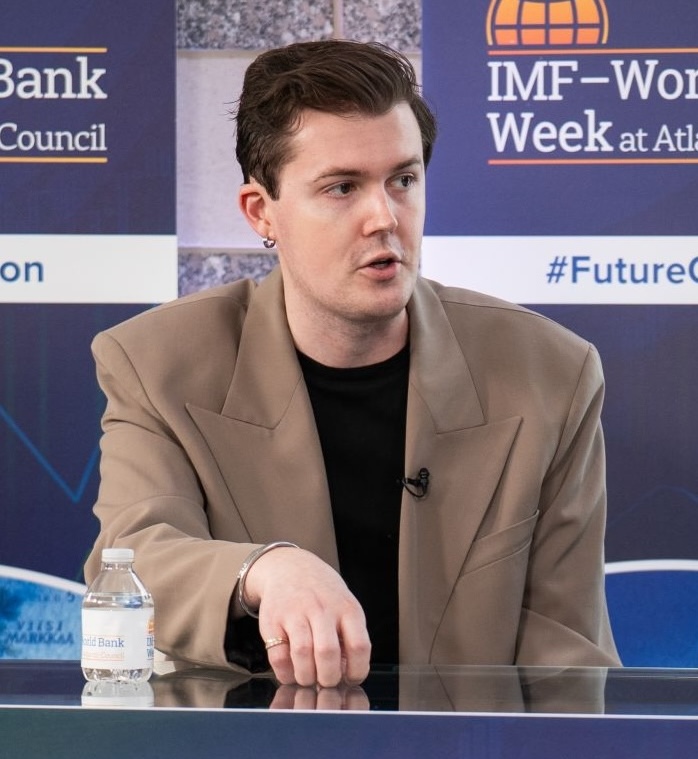



Andy Grotto, William J. Perry International Security Fellow and the founder and co-director of the Program on Geopolitics, Technology, and Governance at Stanford University’s Center for International Security and Cooperation (CISAC), and Jim Dempsey, a senior policy adviser to that program and a Lecturer at the UC Berkeley Law School, join Lawfare’s Justin Sherman to discuss their recent study on the U.S. military’s domestic operational technology (OT) cybersecurity vulnerabilities, domestic installations’ dependencies on critical infrastructure both “inside the fence” and “outside the fence,” and how U.S. adversaries could exploit the flaws. They also discuss the myth of the air gap; the Pentagon's Energy Resilience Program; the role that standards, regulations, and procurement could play in strengthening the cybersecurity of OT systems on which the military depends; and what the threat landscape will look like in the coming years.
Resources:
- James X. Dempsey and Andrew J. Grotto, “Ensuring the Cyber Resilience of Critical Infrastructure Serving Domestic Military Installations: Questions for Senior Leadership,” The Cyber Defense Review 10, no. 2 (2025): 115-138
- Jim Dempsey and Andrew J. Grotto, “The Pentagon’s Operational Technology Problem,” Lawfare, December 15, 2025
To receive ad-free podcasts, become a Lawfare Material Supporter at www.patreon.com/lawfare. You can also support Lawfare by making a one-time donation at https://givebutter.com/lawfare-institute.
Click the button below to view a transcript of this podcast. Please note that the transcript was auto-generated and may contain errors.
Transcript
[Intro]
Jim Dempsey: We are
talking dependency on private sector contractors, who themselves then, in their
products and services, are dependent upon these industrial control devices and
these operational technology systems, which are vulnerable.
Justin Sherman: It's
the Lawfare Podcast. I'm Justin Sherman, contributing editor at Lawfare
and CEO of Global Cyber Strategies, with Andy Grotto, founding director of the
Stanford Program on Geopolitics, Technology, and Governance, and Jim Dempsey, a
senior policy advisor to that program and a lecturer at the UC Berkeley Law
School.
Andrew J. Grotto: If
we want the utility to provide an extra level of resilience beyond what its
business interests would support to meet, you know, a national policy need, you
know, involving, you know, a higher degree of resilience for military
installations because they need to, you know, potentially, you know, project
power overseas. Well, that, that's a gap, right? And that gap's not gonna fill
itself.
Justin Sherman: Today
we're talking about the U.S. military's domestic cybersecurity vulnerabilities
and operational technology, how adversaries could exploit them and what the
future of this landscape holds.
[Main Episode]
We are gonna speak today, as we heard in the introduction,
about your excellent recent study, which was published at the end of 2025 in
the Cyber Defense Review, linked as always below this episode, which is titled,
“Ensuring the Cyber Resilience of Critical Infrastructure Serving Domestic Military
Installations: Questions for Senior Leadership.” Since, of course, this is the Lawfare
Podcast. I'll also note that listeners can find an excellent summary piece of
said study published on Lawfare as well. So to jump right in, to start
by framing for us, A, what motivated you to write this study in the first
place, and then, B, some of the high level questions you were seeking to
address by doing so.
Andrew J. Grotto:
Thanks Justin. It's really good to be here and looking forward to talking about
a topic that has certainly bothered me for well over a decade now. When I came
to Stanford in 2017, I'd spent the previous several years as the senior director
for Cyber Policy and the National Security Council, you know, was very, very
concerned.
Then again, you know, 10+ years ago about the ability of
adversaries to surveil and penetrate American critical infrastructure. OT,
operational technology, presents a different set of challenges than IT when it
comes to security. This is something that we can maybe go a little bit deeper
into further into the program, but, you know, applying all the insights and
lessons from IT to OT directly isn't as straightforward a proposition.
You know, fast forward nine years and an opportunity came along
to a partner with the Army Cyber Institute at West Point. To look at, in
particular, the critical infrastructure cybersecurity posture around U.S. military,
specifically army installations. And you know, this was before the public
revelations about the Volt Typhoon, you know, a series of attacks you know, the
Chinese PLA intrusions on critical infrastructure. And we set about to try to,
you know, understand what risk management looks like from the perspective of
both the local army installation as well as the critical infrastructure
providers who provide them with services pursuant to procurement contracts.
Again, with an eye towards trying to, you know, you know, if
not solve at least make some headway on this problem that I think has really
dogged American cyber policy, again, going back at least, you know, 10+ years.
Justin Sherman:
There's a lot to dive into in the study, so perhaps we can sort of break this
up into various components.
Before you get into assessing the current state of some of the
risks you, Andy, were just speaking about, how did you both go about mapping
the army's critical infrastructure dependencies, including how did, in this
case, how does one go about finding those dependencies and the sources you use
to sort of inform that assessment?
Andrew J. Grotto: We
had a great graduate student working with us as a research assistant. And we
challenged her to essentially find out what she could about the critical
infrastructure dependencies of two army installations in particular. Using open
source, you know, online and other resources.
You know, the kinds of resources that, that a threat actor
without access to intelligence or any other proprietary sources would have
access to. And we asked her to focus on these two installations, electricity,
natural gas, water and freight rail dependencies. You know, she looked at you
know, materials posted on the installation's websites, on the Pentagon's
website as well.
You know, local, state and federal environmental and other
reports on the installation or their critical infrastructure providers you
know, government databases, you know, so for example, the U.S. Energy Information
Administration has this energy atlas which includes a map of electric
generation facilities and transmission lines.
And, you know, she used you know, some of the search
capabilities to, to discover OT systems online. You know, she was able to put
together a very detailed description, you know, of the installations, critical
infrastructure dependencies, including maps descriptions of specific equipment
even supply chain dependencies.
In fact, in one case she was even able to identify one of the
provider's use of a specific industrial control system that had a known
vulnerability in it which was later patched. We estimate it took her probably
about 20 to 30 hours to develop each of these dossiers, but you know, obviously
an adversary, a resource, a well-resourced adversary, could spend a lot more
time than that and compile dossiers that go much deeper, including drawing on
their own intelligence sources.
And by the way we, you know, we don't really address in our
report the reasons for why so much information about critical infrastructure is
readily available from public sources, suffice it to say it is.
Jim Dempsey: I did a
little bit of my own knocking around as well, Justin, and there are good
reasons why a lot of this information is public.
Government contracts are public, so when a utility gets a
contract to supply water, electricity, or natural gas or any other service. For
good and just reasons that contract is public. Companies often issue press
releases when they get new contracts, either to be a supplier or to do
construction of critical infrastructure on a military installation, they'll
issue a press release.
So for a variety of good reasons, there's a lot of public
information. There's water quality reports for army installations, which
basically indicate where the army installation gets its water. So across the
board sector by sector, there's a lot of information out there, and as Andy
said, we're not even talking about what an adversary could obtain by illegal
means.
We, we were just talking a hundred percent open source.
Andrew J. Grotto: And
U.S. military installations in the United States are dependent on civilian
critical infrastructure. Almost without exception, right? You know, the,
whether it's an army installation different service you know, they sit within a
community, and you know that same community's power water, you know, water
treatment rail will also service the installation.
And so that means in essence that these installations are
purchasing these services from critical infrastructure providers, which is to
say they're contractors. They're contractors who for whom the government is not
their only customer, right. You know, they also provide services to their local
communities who also have an interest, by the way, in understanding water
quality and having, you know, information available to them to hold their
critical infrastructure service providers to account.
So, so a lot of good reasons for the information to be public,
but I think the key point to really hammer here is that the Pentagon in the
United States is deeply reliant upon civilian critical infrastructure for a
vast array of essential services.
Jim Dempsey: This
point that Andy's making about the dependence on private sector contractors is
relevant whether you are purchasing electricity from a generation and
distribution network outside the fence, or whether you have a generation
capability on the base itself.
Because in both cases, whether you're bringing in electricity
as almost every base is on a transmission line or whether you're generating it
on base, the company that has built the infrastructure is the same company. Everything
that's on base is built by a contractor and in many cases, everything that's on
base is owned and operated by a contractor.
So the same point applies. We're talking dependency on private
sector contractors who themselves then in their products and services are
dependent upon these industrial control devices and these operational
technology systems, which are vulnerable.
Justin Sherman: All
really important points. I mean, as you're saying, we'll come back to some
components of this, but you mentioned Andy, the PLA, right. And I think that's
a great point too, because we hear, rightfully so, about the incredible
sophistication of threat actors like Volt Typhoon and what they're doing in our
infrastructure, and at the same time, maybe it loses some of what you're both
saying, that yes, the Chinese have very sophisticated capabilities.
At the same time, a lot of the baseline information about what
bases might be dependent upon in terms of infrastructure is just out there in
the open. So, but this is a great segue, Jim.
So give us that overview then of—what are those dependencies
that you found, right? What does that look like across energy, across water
systems and other categories of critical infrastructure you were investigating?
Jim Dempsey: The
theme of the Army Cyber Institute Project that we got funding under to do this
work, the theme of that overall project was resiliency. What is—and readiness.
What is the readiness of our war fighters? Can we deploy the
military assets that we have in the United States, which we depend upon in the
case of any major conflict anywhere in the world; can we rapidly and
efficiently in a timely fashion get those troops and tanks and other resources
on rail cars and on ships in order to protect them abroad. Can the planes take
off? Can the ships leave harbor?
And in all of these cases, all of those forces, all of those
war fighters depend upon some very fundamental things. Electricity, water,
wastewater treatment, natural gas, rail, transportation, telecommunications, so
some very mundane things are critical to you know,
Secretary Hegseth has emphasized lethality, and lethality depends
upon the best and most efficient and most resilient drones and ships and tanks
and weapon systems. But it also depends upon the same things that all of us
depend upon in our daily lives. Water, power, gasoline, natural gas,
wastewater, treatment and disruption in any of those, it's, there's no doubt
would impede the ability to readily deploy America's war fighting resources.
Justin Sherman: Let's
talk then about the risks facing all of the infrastructure you just mentioned.
So in this study, you write that operational technology or OT systems are uniquely
vulnerable, whether as you alluded to, they're on base or they're off base. And
we'll get in my next question to specific flaws and classes of flaws that these
systems are known to exhibit.
But first, to focus on the actors that are interested in
threatening the systems in the first place. One, what are U.S. adversaries
doing in the OT and cyber intersection? And two, what kinds of cyber activity
or capability development are we talking about here, right? Is this sort of
well distributed in the range from pure information exfiltration to outright
disruption? Is it pretty heavily skewed one way or the other?
Jim Dempsey: Well, as
Andy said the warnings that—the recognition that adversaries are infiltrating
our domestic critical infrastructure that's been well known now for years.
2018, CISA issued an alert that Russia was found in U.S. critical
infrastructure. 2020, CISA and the NSA warned that cyber actors had shown their
willingness to conduct malicious cyber activity against critical infrastructure
in the U.S. by exploiting internet accessible OT. May 2024, U.S. and allied
agencies warned that pro-Russian activists had were targeting and gaining
remote access to OT systems in North America and European water, wastewater
dams, energy, food and agriculture sectors.
October 2024, Iranian cyber actors. April 2024, report from Mandiant
and Russian hackers had infiltrated a Texas water facility. February 2024, federal
agencies warned that cyber actors sponsored by the PRC had prepositioned
themselves on networks of U.S. critical infrastructure with the goal of
conducting disruptive or destructive cyber-attacks.
So there has been an a, a steady drumbeat of these reports over
the years, which are not, and they're not talking in hypotheticals. The reports
are reports of finding the bad guys in our network, and of course we saw last
year, one of the most consequential of these, and one of the most remarkable of
these, which was the PRC infiltration of the U.S. Telecommunications Network,
including access to massive amounts of call detail records, as well as some
interceptions of actual live communications.
So, and then just a month ago December, another alert by CISA
and partner agencies, a dozen European agencies joined in this as well as the
Australians and the Canadians, pro-Russian activists conduct opportunistic
attacks against U.S. in critical global critical infrastructure.
The interesting point about that one is the report was
basically saying these guys are relatively unsophisticated. They're these sort
of hybrid hacktivists, sort of pro-Russian, tolerated by this, or outright
supported by the Russian government conducting attacks against critical
infrastructure. And these were not the APTs, these were not the advanced
persistent threat attackers using, though, minimally secured internet facing virtual
network connections to gain access to OT control devices, water, wastewater,
food, agriculture industry.
So a very, again, not hypothetical very long running problem,
very well known that adversaries are positioning themselves.
And I guess again, we, maybe we jumped over one point. An awful
lot of U.S. cybersecurity policy in the past 20 years, if not longer, has been
focused on information technology—data, bits and bytes that are, you know, the
digital equivalent of papers and reports and documents.
We're talking here though about operational technology, which
are devices that control, not reports and papers and documents, et cetera, not
information, not personal data. They control things. They control physical
things, the valves, the switches, the other controllers that are central to dams,
water, electricity, manufacturing. Every manufacturing plant in the country
today of any size is highly automated and is controlled by those machines are
controlled by industrial systems and the technology of those industrial control
systems, that's. what is also vulnerable.
And that's where the adversaries, in addition to stealing all
of our information, both intellectual property as well as government secrets—the
adversaries are targeting this technology that controls physical processes.
Andrew J. Grotto: No,
no country, you know, tolerates espionage, right?
Governments try to fight it. They try to you know, prevent it
from happening. But, you know, even when it does happen, you know, there's sort
of a, you know, a sense among governments that okay, you know, nation-states
spy on each other, and that is, you know, maybe not, you know, tolerable is a
matter of policy, but we all sort of, you know, wink, wink nod that, yeah, okay,
you know, we're all gonna spy on each other.
What makes the intrusions into OT, especially, you know, power,
like, you know, water systems like that, different is, you know, there is no
real intelligence value to breaking into those networks, right? There's no
classified information there, right. There’s, you know, it's not documents and
data that the bad guys are after.
It's the ability to then or in the future, hold that asset at
risk for disruptive purposes. And so, you know, attacks on OT are escalatory in
a way that, that, that espionage is not, again, we don't tolerate espionage. We
try to prevent it from happening, but it's just different than would be acts of
sabotage.
The, you know, if you look at threat reports put out, you know,
by, by, you know, groups like Dragos and others who track OT security threats,
the incidents is going up. You know, Jim alluded to this.
Further complicating matters is the fact that as IT,
information technology, and OT become more integrated, more embedded, attacks
on IT can trickle over into disruptive impacts on say, manufacturing. You know,
this has happened a few times even recently, you know, for the beer drinkers of
the world, Asahi Brewing in Japan had their brewing operations disrupted for a
period of time because of a ransomware attack against their IT systems. You
know, Jaguar Land Rover in the UK also, you know, had a five-week manufacturing
outage because of an IT ransomware attack.
Again, you know, these are all attacks on IT spilling over into
OT, or at least having an impact on physical operations. But even those are
different than the types of attacks that, that Jim and I have been focused on,
which is, you know, OT attacks focused on specifically critical infrastructure
where there is no discernible, you know, intelligence collection rationale.
The only reason why an adversary would break into these systems
is to hold them at risk.
Justin Sherman: I'm
very glad you made that point. Undoubtedly, we all are tired, I don't know how
long folks have been trying to draw out those distinctions you're saying, and
yet we still hear those getting conflated, including just the other day, a
mainstream article I was reading on, you know, how are we gonna stop our
adversaries from doing XYZ cyber espionage thing?
And I thought, okay, there's lots of problems with this
sentence, including the word “stop.” So, but that's a, once again, we're
transitioning well here. So what are then some of those major flaws in OT
systems? Are there ones that concern you most from the military perspective?
Are there, whether it's water, energy, something else, are they pretty, to be a
bit reductive about it, equally vulnerable? Are there ones that really stand
out as having particularly egregious flaws or potential impacts of exploitation
of those flaws?
Jim Dempsey: I think
the risk reaches across sector, and in part it reaches across sector and
sectors, whether it's transportation or water or electricity or natural gas.
They are in a way, to the extent they are networked, to the
extent that these devices are connected to the internet will, get to that in a
second, but to the extent that these infrastructures are dependent upon
operational technology and these industrial control devices, then these
infrastructures are equally vulnerable.
In part because these devices and these features and these
functions apply across infrastructures—that the particular industrial control
device, a particular sensor, may be common across a wide range of applications.
And we're seeing that this technology, this operational technology, these
controllers these sensors which collect the data and then the net networks that
transmit the data to some central point, and then it gets analyzed and can be
acted upon either with or without human intervention that these networks of
devices are phenomenally vulnerable.
January 22nd, CISA, the Cybersecurity and
Infrastructure Security Agency, which has a whole function devoted to
industrial control systems. January 22nd, CISA released eight separate
advisories on eight separate kinds of industrial control devices made by all
the leaders. Johnson Controls, their iSTAR configuration utility, Rockwell
Automation, Schneider Electric, quasi-household names. I don't, maybe not
household, not used to others, but these are very big, very common companies
who have devices in lots and lots of industries, as well as other companies
that to me at least, aren't.
Eight, eight advisories of vulnerabilities on, on one day. Back
on January 14th, for example, CISA issued one advisory on a Siemens set of
products, industrial edge devices. The advisory listed over 60 separate Siemens
products or product versions that had a particular category of vulnerability.
And what are these vulnerabilities? Some of them are remarkably fundamental.
Not infrequently, these OT devices use default passwords or have no password
protection. Others do not protect the integrity of messages during
transmission.
So you've got a sensor, and then you've got a processor and
then an actuator that acts upon that information. But if the channel of
communication between the sensor in the field and the control function at some
central location, if that communication itself is not encrypted, then it's
vulnerable and the bad guy can change that and send bad data to the system and
every, everything is toast from then on.
So no passwords, no encryption or software vulnerabilities, a
lot of these industrial control devices, even though they control physical
functions and processes, they are software based. And what was remarkable to me
as I dug in on this, 'cause, you know, I've written a lot about software
liability and the vulnerability of software, particularly in information
technology systems, but when I, what I learned when I started diving into the
operational technology side of things, the OT devices have exactly the same
types of vulnerabilities that the IT systems have. Buffer overflow, for
example, one of the CISA alerts issued yesterday on a device Johnson Controls
devic, buffer overflow, common well known and avoidable flaw well known in
software documented, I think for—people started talking about buffer overflow, I
think 50 years ago.
One industrial control product that was the subject of assisted
advisory two years ago had four software vulnerabilities attributable to
weaknesses on the list of the 25 most dangerous software weaknesses. You know,
it's Mitre compiles a list of software weaknesses and it ranks them in terms of
how dangerous they are. These are all, again, well known. The list is a lot of
repeats on the list from year to year. This one product had four different
software vulnerabilities.
One, one more data point. Microsoft reported in 2023, that 78%
of industrial network devices monitored by Microsoft defender for IOT, 78% of
these devices had known vulnerabilities.
And then on top of that, even if they do have security features,
humans installing them often override or bypass the security features. So we've
got a serious, widespread problem.
Justin Sherman: I
want to draw this out a little further 'cause I love one of the examples you
included in the study of the very dynamics you're talking about. And then we'll
move on.
But just briefly, one of those examples to illustrate this
problem is you say in the study, is that we need to forget the myth of the air
gap, referring to when a system is not internet connected and therefore in some
view that therefore it's, you know, unhackable or something like that.
Can you draw that out? Why is this a myth that severing
internet connectivity will render these systems entirely secure?
Jim Dempsey: It's not
that severing the connectivity will render them secure. It's that in reality
they are rarely severed.
The sort of standard line about OT, what has been for decades:
‘Oh, don't worry. That device, that system, that industrial control process, it's
not connected to the internet, so the bad guys can't get it. It is air gapped.
It is cut off from the internet.’
And again, and again, and again, when we did this research,
Andy and I heard, forget it, that the benefits of internet connectivity, the
benefits by the way of connecting your IT network and your OT network are so
great that it's unavoidable. And even though you may have a policy or a
guideline, don't connect. Don't connect. Devices get connected.
And we cannot assume, even if you assume, or even if supposedly
the device is not accessible by the internet, in most cases it turns out that
when the, a really good, assessor goes in there, they'll find connections,
often magnitudes greater numbers of connections than the system operator thinks
they have.
Andrew J. Grotto:
And, you know, there, there tailwinds to this trend of, you know, connecting OT
to broader networks are strong. If you think about, you know, all the, you
know, excitement about using AI, for example, to optimize electricity,
distribution and transmission in the United States, the only way to do that is
if the systems are connected, right?
I mean, that's just the reality, you know, so we're perhaps in
a, in an early phase of, you know, a push to connect even more of the, these OT
assets to the internet, again, to derive all sorts of significant benefits. You
know, it's worth reminding folks that, you know, cybersecurity risk management
is an optimization problem, right?
If you don't, if you wanna avoid cyber risk altogether, like, don't
buy a computer, don't, you know, don't use digital technologies, but obviously
you know that's a pretty extreme measure. You forgo all the benefits. And so,
you know, it comes down to an optimization problem.
And one of the challenges that both Jim and I have been
thinking about for a long time is, you know, who decides what the right balance
is, right? Does an individual company, an individual critical infrastructure
provider decide for itself, this is my risk appetite, or does the government
have an opinion on this?
Jim has used this great phrase about critical infrastructure,
cyber regulation in the United States as kind of this patchwork quilt. You
know, some sectors have no requirements. Some do, but there's certainly no
uniform set of expectations and problems emerge if, you know, we think about,
you know, from the standpoint of a U.S. army installation, its vision for what
its resilience needs are, could very well be different than the privately owned
critical infrastructure operator.
And, you know, if you think about, you know, sort of basic,
kind of microeconomic terms, like externalities, right? And in essence, you
know, if we want the utility to provide an extra level of resilience beyond
what its business interests would support to meet, you know, a national policy
need, you know, involving, you know, a higher degree of resilience for military
installations because they need to, you know, potentially, you know, project
power overseas.
Well, that, that's a gap, right? And that gap's not gonna fill
itself. The incentive for the private provider has to come from somewhere. And
one way that that Jim and I argue one source is procurement, the government's
procurement power. And, you know, using that to sort of close that gap between
what an, a national policy level of resilience looks like versus what the, you
know, again, the privately owned critical infrastructure providers, business
interests are when it comes to resilience.
Justin Sherman: Let's
talk about procurement in a moment. I wanna sort of break down part of the way
you describe the responses that are ongoing to this set of issues, both quote
unquote “inside the fence” and quote unquote “outside the fence.”
So with respect to systems inside the fence, you write that the
Department of War is implementing what is called the Energy Resilience Program,
and then with respect to OT systems that lie outside the fence, you mentioned
the sort of patchwork landscape of cybersecurity regulations and standards. So
what do those two look like? What is that energy resilience program doing? And
then what do you think the landscape does or does not do with respect to
sufficiently protecting this infrastructure outside the fence?
Jim Dempsey: So it's
not like the depart—I mean, the Department of War is well aware of this
problem. They totally are aware of their dependency on privately owned and
operated, or municipally owned and operated, critical infrastructure and that
their bases receive a lot of critical infrastructure from off base utilities.
So what the military has been trying to do and spending
billions of dollars in building more on base capacity, particularly electricity
and water. More on base capacity under what they call the Energy Resilience Program.
Billions of dollars.
Here's the problem. Camp Lejeune—Marine Corps base, obviously—gave
a contract to expand its on base electrical generation capability, including a
solar, and as Andy says, suggested more broadly, a very sophisticated, a load
management system that connects all the devices. And the goal is to have ability
to live off the grid for 14 days to sustain critical operation.
So every military installation in the United States is under
this mandate, flowing from Congress, to achieve islanding, it's called. You island
off the base from its dependency on the public utility outside the fence. So
what did Camp Lejeune do? It had to go to the public utility outside the fence,
Duke Power, in order to build the inside the fence on base electrical grid.
And what did Duke Power do? They bought and installed batteries
made in China that had internet connectivity. So in the effort to island off
the base and to make the base self-sustaining, basically the Marine Corps and
its contractor Duke Energy had imported the vulnerability on base. And that is
what said to us, we need to look at the procurement power and how it is being
used.
The utility on base, all the operations on base fall outside of
really any regulatory structure. It's not FERC regulated. It's not regulated by
EPA, as Andy said. There's, there is no regulation of the cybersecurity of
water drinking water and wastewater treatment.
And what exists for pipelines only covers the big pipelines
following the colonial incident. Doesn't really cover the last mile that
carries the natural gas to the base. The electricity, same thing. The Federal
Energy Regulatory Commission working in a sort of self-regulatory,
co-regulatory process with industry, has very detailed and sophisticated
cybersecurity standards for the bulk electric power system.
But again, it doesn't really, it doesn't apply to what's on
base and it doesn't really address some of the last mile distribution
questions. And so at the end of the day, really the only power in the absence
of Congress acting to actually regulate these critical infrastructures, the
only lever and but a potentially strong lever that the government has is the
procurement power.
But while there are government procurement standards for
information technology, and any government contractor in the country is now
under this CMMC, Cybersecurity Maturity Model Certification process, for their
IT systems, there's no similar system of regulation through the procurement
process for operational technology.
Justin Sherman: I
feel like we're noticing a theme here. We throw operational in front and
suddenly we're relatively lacking. I want to get also to kind of the future
threatscape in a second, but just quickly give us what is the rundown on the
procurement set of levers that are available, and then which ones do you think
are best positioned to be used to strengthen OT cybersecurity?
Jim Dempsey: So
obviously, the government can, in its contracts, require whatever it wants to
require, and it does obviously set standards, pretty stringent standards, for
the IT systems that it procures itself and now it is reaching to the IT systems
owned and operated by the contractors in fulfilling any kind of government
contract through the CMMC.
So the government could do the same thing for operational
technology. The government has for its facilities, something called a UFC
document, which is supposed to be a Unified Facilities Controls—it sets
criteria. I looked at that in detail, and on some of the key points, it's
pretty open ended.
It has a sentence saying you should not connect OT systems to
IT systems. But if you do, be careful. Literally, that's almost exactly what it
says. And it doesn't say how to do that and doesn't say what you do from a risk
management perspective, recognizing that you are likely to have connections and
there's really not much out there.
You know, we've, we're in this middle of this massive, and I
think, the price tag is $5 billion, of ripping and replacing the Huawei and ZTE
switches from the telecommunications backbone to get the Chinese devices out of
the telecommunications network. Although Salt Typhoon didn't attack Chinese
devices, they attacked Western made devices that were vulnerable in order to
get in, which is an interesting problem and an interesting illustration of the
lack of regulatory action on that, telecommunications side, but on the energy
side, we have a lot of Chinese products. Lots and lots of Chinese equipment has
been imported.
And so what, first we need and what we recommend in the paper
is—first we need an inventory. The start of any cybersecurity program is
inventory. What's on your network? What's connected to your network? An
inventory to determine: is Camp Lejeune the only domestic installation that has
Chinese made products on base in critical infrastructure? I'm guessing it
probably isn't, but it would be nice to find out. I think right now no one
really knows how many China-made products are on U.S. military basis in
critical infrastructure.
And then secondly, whether the products are China-made or not,
we need some really deep look and careful look at the connections of the
current devices. And then we need a document that can be incorporated in
contracts the way that NIST documents on it are incorporated in documents. So
again, on the IT side, when the government purchases IT or when its contractor
uses IT, even if the government's not purchasing IT, if the government is
purchasing a tank or takes something unclassified—still, we have a strict
requirement, 110 separate controls roughly applied to the IT systems of
contractors. We have nothing on the OT side.
My understanding is that something has been drafted or is in a
process or there's a process to try to come up with something—that needs to be
accelerated. We need, in my view quite strongly, I believe that we need to have
some criteria for contractors on the OT side, similar to what we have on the IT
side.
Andrew J. Grotto: It,
you know, in so far as that the Pentagon sees a gap between the level of
resilience needed to meet national policy, national defense needs versus the
level of resilience that a critical infrastructure operator finds acceptable,
you know, in procurement contracts, it needs to, you know, make that clear and
then specify, okay, you know, what do you, the contractor need to do, to meet
that higher need, and that, that's where the standards come into play. It's
hard to, you know, chart that course.
You know, Jim and I are both lawyers, right, as lawyers, right.
It's hard to, like you, you can wave your hands about, you know, doing better.
But unless you've actually got language in the contract that gives both parties
some guidance on where the provider needs to be, the odds of success, of the
provider achieving that, hitting that market are pretty low.
And then, and this piece, you know, I think is in some ways, more
and more impactful on the practical reality of incentivizing better security in
the part of critical infrastructure. And that is who's gonna pay for it? Right?
You know, and you know, the government's gotta be prepared to pay for a higher
level of resilience, right.
If it wants infrastructure operators to invest more in
security. It's gotta be prepared to pay for it. And many of these critical
infrastructure sectors, you know, think water as an example, right? They
operate on razor thin margins. I mean, you know, they're not making, they're
not making money.
And so, any additional requirement put on them that requires
investment on their part is going to be tough for them to meet just as a, just
as a reality. And I think one, you know, one, one of the reasons why I think
it's been so hard to have a coherent kind of national level policy debate
about, okay what level of resilience do we think critical infrastructure across
the bar needs to hit, is all these questions about who, who pays for it?
I'll offer this as a hypothesis. I think if the government, Congress,
the executive branch, were willing to pay for example, you know, the water
sector, which, you know, vehemently objected to EPA’s kind of tentative foray
into cybersecurity standards a few years ago, I think if the EPA was in a
position to say, we want you to do more and we're going to help you by you
know, furnishing resources. I think it's a completely different conversation,
and I don't think we end up where we are in today, which is the water utilities
suing the government, EPA getting scared, pulling the guidance back, and then
obviously having the Supreme Court intervene later to drastically reduce the
government's general ability to regulate.
Justin Sherman: Well,
speaking of policy will or perhaps political will, where do you think the
department is most likely to move or not move in the next year or two ahead.
And then when you think about the future threat space, we've heard sort of the
core cluster of typical U.S. adversaries mentioned throughout this
conversation.
I imagine China's, if not at the top, pretty high on that list,
but how do you then, in addition to what the department might do, think about
what adversaries might be doing in the coming years that concerns you the most
in this area?
Andrew J. Grotto:
Well, Jim alluded to the CMMC program. These are the new cybersecurity
requirements that the Pentagon requires for all contractors.
Those are now in effect, and I think, you know, over the
coming, you know, 12 months, both the Pentagon and its contractors are going to
gain a ton of experience in how procurement requirements for cybersecurity
intersect with kind of both, you know, the realities of service provision, but
then also the cost questions.
I'm actually feeling more optimistic than I have in a while
about the prospects for the Pentagon really picking up this OT security issue
because, you know, as Jim mentioned, it's not like leadership's not aware of
it. It's really, I think a question of how and if the Pentagon were to take,
you know, Jim and my advice and conduct an inventory.
I think that's a first step. I think Jim's absolutely right
that they will not like what they find. That's our prediction. You know, that
creates a lot of room for again, a discussion not only of what are the types of
OT standards that providers need to implement in order to achieve a
satisfactory level of resilience.
But then, okay how do we create the market and investment
conditions to, to fulfill those requirements? Again, a lot of that comes down
to who's gonna pay for it and, you know, and which, which obviously has a
budget dimension to it. And so the Congress will play a huge role as it often
does in shaping the Pentagon's IT broader digital technology operations.
Justin Sherman:
That's all the time we have Andy. Jim, thanks for joining us.
Jim Dempsey:
Pleasure.
Andrew J. Grotto:
Thanks Justin.
Jim Dempsey: Thanks.
[Outro]
Justin Sherman: The Lawfare
Podcast is produced by the Lawfare Institute. If you want to support the
show and listen ad-free, you can become a Lawfare material supporter at lawfaremedia.org/support. Supporters
also get access to special events and other bonus content we don't share
anywhere else.
Please rate and review us wherever you get your podcasts.
Look out for our other podcasts, including Rational Security, Allies,
the Aftermath, and Escalation, our latest Lawfare Presents podcast
series about the war in Ukraine.
Check out our written work at lawfaremedia.org. The podcast is edited by Jen Patja and our audio engineer of this episode was Cara Shillenn of Goat Rodeo. Our theme song is from Alibi music. As always, thank you for listening.