Lawfare Daily: The New U.N. Security Council Resolution on Trump’s Gaza Peace Plan, with Amb. Jeffrey Feltman and Joel Braunold
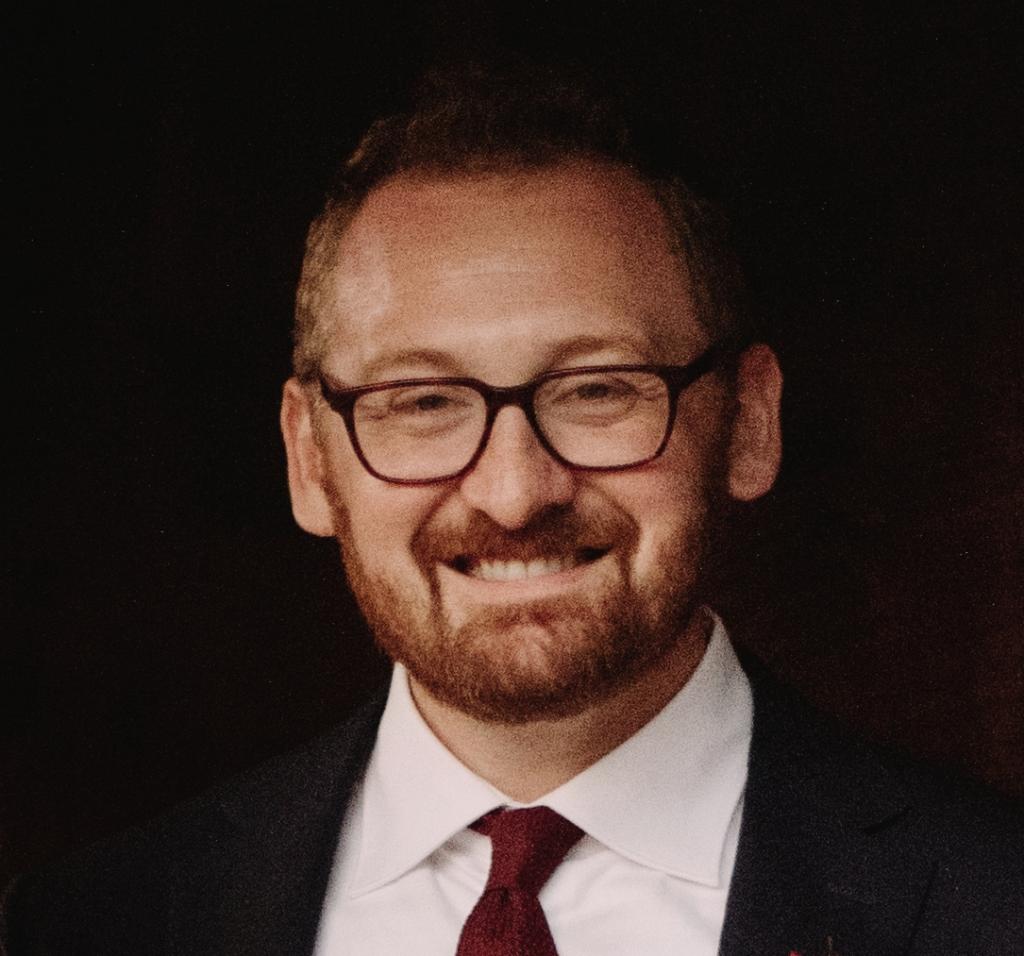


For today’s episode, Lawfare Senior Editor Scott R. Anderson sits down with Joel Braunold, Managing Director of the S. Daniel Abraham Center for Middle East Peace and a Lawfare contributing editor, and Ambassador Jeffrey Feltman, the John C. Whitehead Visiting Fellow in International Diplomacy at the Brookings Institution, who previously served as Undersecretary General for Political Affairs at the United Nations as well as the Assistant Secretary of State for Near Eastern Affairs, among other senior U.S. diplomatic positions.
They discuss Resolution 2803, which the U.N. Security Council adopted earlier this week to endorse and help implement President Trump’s peace plan for Gaza, including how it conforms and departs from usual international practice, what it says about the political positions of the various parties involved in the peace plan, and how it may (or may not) help contribute to an enduring end to the broader conflict—as well as a possible path to Palestinian self-determination.
To receive ad-free podcasts, become a Lawfare Material Supporter at www.patreon.com/lawfare. You can also support Lawfare by making a one-time donation at https://givebutter.com/lawfare-institute.
Click the button below to view a transcript of this podcast. Please note that the transcript was auto-generated and may contain errors.
Transcript
[Intro]
Joel Braunold: Look,
my most likely scenario of what, of what will probably happen in the end is
we'll have ISF on the border, not in the towns. I just, I can't
imagine––whether that's on the yellow border, where is Israel currently is, and
then it slowly moves backwards, or whether that starts on the bigger border,
I'm not sure. I think that probably it depends on if they can get funders to
fund in the Israeli side of Gaza, if there isn't an agreement with Hamas.
Scott R. Anderson:
It's the Lawfare Podcast. I'm Senior Editor Scott R. Anderson,
joined by Joel Braunold, managing director of the S. Daniel Abraham Center for
Middle East Peace, and Ambassador Jeffrey Feltman, currently at the Brookings
Institution, but previously undersecretary general for Political Affairs at the
United Nations as well as an assistant secretary of state for Near Eastern
Affairs.
Jeffrey Feltman: And
it's very hard to imagine that even if there is a political process with some
kind of disarmament, DDR, decommission office, et cetera, that it will be
sufficient to meet the Israeli demands.
The Israelis are going to make the perfect the enemy of the
good. And we don't have good yet, but even if we do.
Scott R. Anderson:
Today we are talking about the new UN Security Council resolution embracing
President Trump's peace plan for Gaza and what it might mean for the broader
conflict.
[Main episode]
Scott R. Anderson: So
Ambassador, I wanted to start with you. We've had a dramatic and notable week
at the UN Security Council, even by UN Security Council standards, which is a
pretty high bar.
We've seen something that maybe some people thought would never
happen: a UN Security Council resolution strongly backed by the Trump
administration, hard fought for, and ultimately won, in some way anointing what
is really a pillar of the Trump administration's foreign policy as also a
pillar of the United Nations system’s foreign policy, at least in regards to
the Gaza conflict, of this particular moment in it.
Talk to us about the process that got to this extraordinary
resolution. This is UN Security Council Resolution 2803, for folks who haven't
been following, that buys into and endorses, more or less, the Trump Gaza Peace
Plan.
Talk to us about how exactly we got to this resolution, which
ended up getting votes from 13 members of the ecurity coCuncil and two
abstentions from Russia and China, letting it move forward.
Jeffrey Feltman:
Well, I mean, first of all, um, I mean, thanks for having me on. It's good to
be here with Joel.
It's a bizarre resolution. It's unlike any resolution that I've
ever seen. I worked for the UN as Undersecretary General for Political Affairs
for six years. I've studied UN––I've been part of the blob as we've been called
in Washington and New York, and I've never seen a resolution like this.
But I will say that the Trump administration, despite what some
of us may think about the Trump administration when they were coming into
office, despite what we may evaluate in terms of other statements, this is not
the first time that they've turned to the UN in this year.
In September, they turned to the UN to create the Haiti gang
suppression force with another resolution. They went to the UN and pushed very
hard to get Ahmed al-Sharaa, the interim president of Syria, and his interior
minister off the sanctions list.
So in fact, there's a pattern now, that we can see where the
Trump administration has seen that there's value in going through the UN.
Now, the value may be because of burden-sharing in terms of
cost. Or the value may be that, that their realization that other member states
expect UN Security Council authorization. The member states that would
participate in the International Stabilization Force for Gaza that's in the
Trump Peace Plan would expect to have some kind of Security Council cover for
their participation.
So the resolution itself is bizarre in how it's worded in that
the Security Council is authorizing a Board of Peace without any clarity about
what the Board of Peace membership will be, the International Stabilization
Force without any idea the size of the ISF or the participation of countries in
the ISF.
So it's strange in that the Security Council seems to be
giving, you could say a blank check to the Trump administration to follow
through on the Trump administration's comprehensive plan, the Trump plan.
But it's not so strange when we see a pattern of the United
States going to the UN in order to get others on board.
Scott R. Anderson: So
it's an interesting note there, because it is kind of at least the most public
step in this process of turning to the UN.
How exactly did we get here for this resolution? We know early
on there were other drafts floated without discussions about Palestinian
rights, and we saw a careful massaging and negotiation around that language.
Can you give us a little bit of background about what the
negotiations looked like behind the scenes to eventually get to where we are
today?
Jeffrey Feltman: My
expectation is that when the Trump administration officials started talking
with people about the ISF, about the participation in reconstruction,
humanitarian assistance, people said ‘we gotta have the UN there, you know, we
need to have authorization.’
Now, there's some things that I expected to see in the
resolution ultimately that weren't there. You know, there's something called
Chapter Seven. Chapter Seven of the Security Coun––of the UN Charter is what's
usually cited for enforcement missions.
And the ISF, while it's not a UN mission, looks like it's
supposed to be an enforcement mission, which would usually require Chapter
Seven authorization authorizing lethal force, the use of lethal force.
That's not there. Although some of the language, Chapter
Seven-like language is there, “use all necessary measures.”
So I was kind of surprised that didn't get added. I would've
thought countries like the UAE would've said, ‘Hey, if you want us there, you
gotta tell us explicitly Chapter Seven.’
But I would imagine that what happened is, as you know,
officials and Trump administration looked at how to take that 20-point plan
from October and implement it.
They came to the realization that member states are going to
expect the UN. That 20-point plan itself is fairly vague. It has you know––each
of those 20 points can have a whole book written under each of those 20 points
to try to fill it out.
So you've got a vague resolution that refers back to a vague
20-point plan with the details still to be worked out.
And the Security Council said, go ahead.
Scott R. Anderson:
So, Joel, let me turn to you on some of that political context. How essential
do we get a sense that UN Security Council imprimatur was to some of the
parties that we expect to participate in this arrangement?
We know the UAE, a couple of the regional governments are
expected to play a major role, Mohammed bin Salman talked about as potential
member of the Board of Peace and the other organizing bodies.
But of course, we've heard other governments might be involved,
particularly in the ISF contingent. I think Indonesia and Pakistan have been
mentioned in the past few weeks. Other countries might be contributing forces
as well.
So talk to us about how, exactly, significant this was. Was
this a necessary precondition to getting this plan moving forward? Or is it
something that's become more of a––it has more symbolic value than actual
operational value?
Joel Braunold: Well,
I would say no UN Security Council resolution is just symbolic, right?
It has legal weight, even if it's weird. Much of the chagrin of
much of the international human rights and accountability community were
outraged by this resolution, given most of the things that Jeffrey just said.
That it's completely bizarre, doesn't reference previous resolutions and other
things.
Let's start this way. I think as Jeff said, the Trump
administration has gone to the UN when it finds utility. And in many ways, and
I think we've spoken about this before, Scott, everything with Trump world and
Trump foreign policy is about utility. What is useful, what is the tool that
gets us there?
I think that as we are now seeing on Russia-Ukraine, this idea
of not having massive peace accords, but having sort of an ideas document that
drives the situation forward is something that they like to do.
And that's what the 20 points was. And once it moved beyond a
hostage ceasefire deal, and then it needs boots on the ground, people need to
ask, well, what's the legal environment in which we're operating? Um, this has
always been a question, you know, according to the Oslo Accords, Gaza is a PA
zone, but of course it's not run by the PA 'cause Hamas took over in a coup.
And so what is the legal context of which you want to have the
World Bank fund things if the PA is not in control? And as one of the
conditions of the ceasefire, the Israelis were not countenancing that the PA
would be back at the table.
And so the UN Security Council resolution is essential if you
want to spend international mechanisms or send people's troops there with any
legal format that people feel secure.
Because as much as the Trump administration and the Israelis
really don't care about, you know, international legal things, it's just not
their, it's not their prime––while their legal systems, of course, work out and
do their different things, it's not their prime motivator. For many other
countries, of course, it's their prime motivator. They want to stay within the
bounds of international law. And this now gives not just the imprimatur, it
gives the mandate for them to now participate in this exercise.
Now we can get into the views from Jerusalem and Ramallah, and
they're very different. But what happened at the UN is fascinating because the
peace plan––and basically on the ground in Gaza, the PA, at this point, they're
not relevant. There's no one on of the PA in Gaza, and they're not a force to
be reckoned with. In Turtle Bay, the PLO has much more power than the state of
Israel, despite them not actually being a recognized state by the UN Security
Council.
So how the, what the dynamics were that led to this are
fascinating, and the spins that are going on in Jerusalem and Ramallah that are
happening in order for this to move forward.
But it is important to say in the text of the resolution, it's
basically the Trump plan. The language and the text around Palestinian
statehood, all the other things that are referencing, are all things that
occurred in the 20-point plan.
So despite these massive, shocking political screams that
sometimes you're hearing from Jerusalem, ‘how could it say a pathway to a
Palestinian state? How could it reference the French-Saudi initiative?’
I mean, that's what the Trump peace plan did. But there is very
big difference, in Jerusalem, from President Trump saying that and the United
Nations Security Council saying that. And that's an important distinguisher for
them as well.
Jeffrey Feltman:
Following up on Joel's good comments, it's worth noting that during the
negotiations for this text, after the initial draft was done and then there
were a couple revisions, Algeria was quite opposed.
Algeria is sort of a revolutionary country, you know, prides
itself on its revolutionary past. And it's also the site where Yasser Arafat in
1988 declared the Palestinian state. Algiers.
And so Algeria was representing the Arab group, was opposed to
this, despite all the other Arab countries that, that Trump mentioned being in
support of it. It was the PLO office in New York coming out and support this
resolution that got Algeria on board.
And as Joel and I were discussing just before you came on, it
also contributed, I think, to the Chinese and Russians deciding to abstain
rather than veto. Once the Arab group and particularly the PLO were on board,
it would've been very hard for China and Russia to––who were trying to enhance
their relationship, particularly with the Gulf countries––to then go against
it.
So the PLO office, as Joel said, was key to the passage of this
resolution in my view.
Joel Braunold: So
let's dig into why. Because it's fascinating that how, but why, right, why
would the Palestinians do this?
Because many of the international legal community, you know, if
they've just been declared a state by France and the UK, why then do you now
have a resolution that puts a pathway to statehood, subject to different
conditionality of something they've already recognized?
Something––that is where Jerusalem is finding solace. So let's
start with Ramallah, with your permission, Scott and Jeff, and then we can go
to Jerusalem.
So the Palestinians, especially in Ramallah, have been
struggling to get the Trump administration to articulate a West Bank policy. On
Gaza, we know that they wanted the ceasefire. But it seems and has been that
their entire perspective towards the West Bank has been in the context of Gaza.
Even when it comes to settler violence––which now Huckabee
today, Ambassador Huckabee said is terrorism. He says it's a minority faction.
That when Marco Rubio was asked about that Secretary of State Rubio, he said,
you know, this could upset the Gaza ceasefire.
So everything about what was going on in the West Bank was
subject to what it was doing in Gaza. So Ramallah was really trying to look just
like at the UN, how could we be relevant to the Trump administration?
And one thing that we've spoken about a lot on this podcast is
prisoner payments. You know, they had a hiccup on their implementation. You
know, it was big, reported two weeks ago, they fired the finance minister of
the PA. They've tried to get back on track to demonstrate they're an investible
property. And that, you know, Riyadh, who has been backing Ramallah pretty
heavily, you know, that there's something to talk about.
But the Trump administration needed Ramallah on this, okay?
They needed Ramallah in order to get the PLO office in New York to bless this,
for this to be able to move forward.
And I think that what Ramallah made the decision of was like,
look, we want to be relevant to the Trump administration. We can't spend
another three years on the outside being smacked around with this Israeli
government.
And for the first time, we've got the whole region dedicated
about putting the Palestinian issue back on the agenda. We can't be the ones
why this doesn't work if the rest of the region's on board.
So I think having the Saudis, the Qatari, the Turks, the
Egyptian, yeah, all of the endorsers of the deal pushing this puts Ramallah in
a difficult position they didn't wanna be in.
And they saw a political advantage. They said, look, if we are
endorsing this and Hamas is opposing it––which they are, okay, Hamas has come
out publicly and opposed it––we look like we are the positive actors and the
region will endorse us, and Hamas are the negative actors.
Now, publicly, it seems that the Witkoff-Hamas meeting that was
supposed to take place in Istanbul was canceled.
Why was it canceled? Rumored Israeli pressure, whatever. I'm
sure the others were like, if Hamas is opposing you publicly and Ramallah is
welcoming you publicly, why would you––Let the mediators deal with Hamas! Why
don't you deal more with Ramallah?
So Ramallah saw a chance to take a march on Hamas––and, a very
rare win for Ramallah, it's publicly popular on the ground, because
Palestinians don't want to see the war continue.
And as much as they don't trust Trump vis-a-vis their interest
versus the Israelis towards what, they see him as a very effective mediator.
And they saw that Trump managed to restrain Israeli action and stop the war. If
it requires them to accept this UN resolution, not only to keep the war being
stopped and not giving an Israeli excuse to sideline their political opponents,
and Hamas, and to build relevancy in DC while also getting wins from the region
by doing so, seems like a win-win-win.
Because otherwise they could have stood on their laurels and
saying, no, this is where, these are our rights and stuff. But the region and
the world would've passed them by.
And I think that they felt like, at this point, that there's no
utility in that. And there actually is a way to try and build branches to Trump
world.
But it is a big change for the PA. The PA's entire traditional
strategy has always been international law, moral authority, legal authority. And
even if that means power politics on the ground, it doesn't matter.
They made the strategic decision––which is controversial,
especially with the international diaspora––to sacrifice some of that by
supporting this in order to get real, on-the-ground victories for themselves.
Now the question will be, will their regional allies and their
own reforms enable them to build a West Bank policy with DC that enables them
to overcome some of the challenges they're having with Jerusalem?
Jeffrey Feltman:
Joel, fascinating and I agree with your analysis, which is much deeper than my
own would've been.
But Scott, it's worth pointing out that the PLO supported this,
that Ramallah supported this, despite the fact that there's even a little
poison pill in the resolution. Where it talks about, you know, the Board of
Peace will oversee basically everything.
The ill-defined board of people will oversee everything. But
there will be a group of technocratic Palestinians that might do the day-to-day
governance, service delivery, things like that.
And it says Palestinians from the Strip. Now, that was, I
think, intentionally put in there as a sought to Netanyahu in his cabinet to
say, ‘it's not Ramallah that's coming in, it's not, we're not, you know, we're
not giving this to the PA right now. We're not giving this to the PLO, because
it's Palestinians from the Strip.’
But it basically, if you follow the letter of the resolution, means
that people who have experience in Europe, in the Gulf, who are Palestinians,
who happen to be from Tulkarm like Salam Fayyad, would not be able to
participate in this because of the wording.
Joel Braunold: So
like counts as from the Strip? Ironically, there are PA ministers from Gaza,
right?
And so the question of the dotted line between the technical
board and the PA still needs to be worked out. But I think that for the Trump
administration, this was––they didn't want to negotiate the particulars at the UN,
right?
They knew that's not a strong place. But they know they needed
this in order to actually have a serious conversation with other countries
about how to move this forward.
So the PA got out of the way as a speed bump for them, a very
big gift that the PA gave the administration. I think that them and their
regional lives will now want to see, you know, that they're taken more
seriously because they were not, the fly in the ointment here, where they could
have been.
And I think that they made a strategic decision not to be, and
to actually get on board, which is interesting. And to steal a march, as I said,
domestically, build relationships with Washington, further their relationships
in the region. And to distance themselves, to––if the ceasefire fails now
because Hamas refuses to move along with this and the mediators can't get them
on board, the PA becomes the obvious address for where to turn to if Hamas
can't be reformed in a way that they will actually move this forward.
Scott R. Anderson: So
I want to come back to the Jerusalem view some of the regional reactions and
implications. Before we do that, I want to spend a little time on the technical
terms of the UNSCR itself and what exactly it means.
Because of course this is taking a U.S. proposal, which did not
expressly implicate the UN system at all, and bringing it into the UN system to
some degree. Although to what degree, I think is a question I want to put to
you, Ambassador.
What does this mean in terms of particularly the Board of Peace
and the ISF? To what extent are these integrated with the UN system or is this
really, as it says for the Board of Peace, a welcoming, a kind of casual
endorsement?
We don't see things that we've seen in prior things, like a
express grant of, like you said, Chapter Seven authorization for the use of
force.
We don't have any here even express grant of privileges and
immunities. It says you'll have authority to negotiate privileges and
immunities, but doesn't actually expressly give any for any involved personnel.
And it's not clear that UN rule, what the UN role is going to be, exactly, in
the Board of Peace, at least by my reading, or whether it's going to have a
substantive role versus more of kind of an observer participatory role.
So talk to us about our sense about how both those two key
elements––the Board of Peace and the International Stabilization Force it’s
supposed to establish––are likely to interact with the UN system moving forward
under this resolution?
Jeffrey Feltman:
Scott, it's worth noting that in the first draft of the resolution, there was
no reporting requirements at all to the Security Council.
The proposal was we authorized this up until December 31st,
2027, which is a long mandate by UN standards. Many mandates are only six
months, but most are every year. And with no reporting requirements to the
security council whatsoever.
So now there are reporting requirements written. The Board of
Peace is supposed to submit every six months a report to the Security Council.
But that's a very tenuous oversight mechanism for the Security Council. It's
not the Board of Peace and the International Stabilization Force do not rely on
UN-assessed contributions. So there's not a, there's not a budgetary oversight
that the UN would have.
There's some passing references to international law, including
international humanitarian law in the resolution, but there's no set
accountability or even specific reporting requirements. Most resolutions that
authorize a UN peacekeeping force, for example, would say, you must report on
blah, blah, blah.
There's none of that in this resolution. These are not UN
entities that were authorized by the Security Council. They're not relying on
UN funding. And all they have to do is give a report every six months.
There are references to the UN in terms of humanitarian
delivery, but it would be under the Board of Peace oversight.
So if you have UN entities that have been delivering
humanitarian assistance or trying to deliver humanitarian assistance throughout
the war, one wonders what their relationship is to the Board of Peace, because
you could read the board, you could read the resolution saying the Board of
Peace now has authority over these, how these humanitarian deliveries that the
UN has been doing will be managed, will be managed in the future.
So it's really a very tenuous relationship with the Security
Council in the United Nations. But I think that the members of the Security
Council ultimately decided that if you don't back this, then the UN––then the Security
Council becomes irrelevant.
It's sort of the same argument about Ramallah. This isn't, you
know, that probably a lot of legal offices in the Security Council capitals
looked at this resolution askance but decided that it's better to support it,
rather than put themselves in the category of being spoilers of possibly
risking the war breaking out again and of getting on the wrong side of Trump.
Joel Braunold: So I want
to pick that up, Scott, and sort of move it to sort of the Jerusalem view.
So I think that building up on what Jeff just said, that you
can see this in two very different veins, okay. And it depends about where you
start. Traditionally, if you look at, Trump won, right? The main point of a lot
of their foreign policy in the region, as evidenced through the Abraham Accords,
was integration of Israel into the region.
Okay. That was the whole aim and that was the driving force.
And you'd argue that continued to Biden, even when you listen to Secretary of
State Blinken or you listen to Jake Sullivan, the former national security
advisor, you know, all of their ceasefire arrangements were trying to restart
normalization with Saudi Arabia.
Okay. That was like part of the cadence of the whole aspiration
of what they were trying to do.
I think we've seen an inversion especially over the past three
months of the Trump administration, even if it's not a public strategy, but how
the region sees it. I think they see this Board of Peace, and the reason I
would say that they were willing to ignore their legal challenges and to move
forward, is they see this as a restraining of Israeli action in the region rather
than its integration.
We've seen Saudi and Turkey and Qatar all get massive
diplomatic and security wins from the US all in some way to sort of just being
like, we don't care about Israel's QME, it's qualified military edge. This is
irrelevant to us. These are allies who are helping us with problems and, you
know, they want to have weapons, that's fine and we'll sell them weapons.
They want to be a major non-NATO ally? You can be that. I think
that especially after the signing of the ceasefire agreement, the speed in
which the CMCC, the Civilian Military Coordination Center, was set up in Kiryat
Gat.
The fact that CENTCOM basically has been restraining Israeli
actions in Gaza, by the Israelis having to ask the Americans before they can do
something.
And yes, I'm aware that there were major bombings in Gaza on
the Hamas side today and what it is, but Netanyahu wanted to take more
percentages of Gaza after one of the, one of the ceasefire breaks, and the
Trump administration prevented it.
And now that we're seeing rumors that the US is going to build
a military base in Syria, and maybe that the model from Kiryat Gat can go there
and maybe even potentially in Lebanon, what you are seeing is a pushback of
what the Israelis have tried to do post October 7th.
Post-October 7th, the Israeli mentality was
international law, international boundaries, these are all irrelevant. The only
language this region understands is force, and we will enforce these things not
through UN Security Council mechanisms but through force of arms.
We've seen that in Lebanon with the ceasefire there, and the
argument was, we'll do the same in Gaza, and we'll do the same in Syria, and
we'll do the same with Iran, if that's what we need to do, and everywhere else.
I think that the region is seeing, and Ramallah, the best way to restrain
Israeli action is to put Trump there. The sort of argument that Trump made to
Ukraine that the best way to protect you against Russia is if I'm invested
there, I think that the Arabs see that very much vis-a-vis the Israelis.
If the Americans are there and that they're interested in
creating peace and they're invested there, then that's probably the best
restraint.
Now for the Palestinians, it's huge gamble. You are basically
believing that the President Trump will protect you against the Israelis. Now,
I'd say not only is there a utility argument that made them that and that the
region argument, but this Israeli government and their visions as they had
just, you know, as we spoke about Scott––four weeks before the ceasefire. We're
talking about annexing the West Bank, we're talking about expulsion of
Palestinians from Gaza.
And we've seen no annexation, no expulsion, no territorial
expansion in terms of the Trump declaring that to the Israelis, that they see
this as a restraining.
And now we get to the view from Jerusalem. When the UN Security
Council thing started, it was, you could hear the squeals coming out of
Jerusalem being like, we don't like the UN, we don't like anything with the
Security Council. We trusted it when it was President Trump, but not when it's
a UN Security Council.
And as this was being negotiated, it was clear that the Israeli
red line was, you know, no Ramallah. And as long as it's the text of the 20
points, that'll be fine.
But at the same time, on the ground in Israel, it's been very
clear in the opposition of said this, that their ability to operate in Gaza has
been restrained by the CMCC.
The CMCC has basically taken over all humanitarian aid work.
And we're seeing from reports that, you know, these aren't experts on Hamas or
Palestinians. This is, you know DOW, I should say now, DOD or Department of War
Pentagon, just can-do, what's the problem, let's solve it.
And sort of COGAT, who are the Israeli normally responsible for
the Palestinian Territories who are very restrained by their own politics or
sort of sitting on the side as CMCC’s moving forward.
I think Israelis understood that, but we've seen over the past
week different very pro-Benjamin Netanyahu media outlets in Israel, Amit Segal,
Channel 14, sort of spin this as this isn't so bad. You know, this is really,
you know, these states who recognize the state of Palestine, now, clearly
they've had to vote on this and they haven't recognized the state of Palestine.
You know, the PA has to go through these reforms. It's going to
take them a millennia to go through these reforms and, you know, it's never going
to happen. So Jerusalem's trying to find a way that it can dictate, saying this
is fine. It's just basically not real, and don't worry about it and don't lose
any sleep about it.
But when you actually take a step back for the first time,
you've got internationals involved in Israeli business in a very significant
way. International troops are going to be involved in some way. Now, as we
said, we don't know, you know, they, the Israelis want them to disarm Hamas.
How is that going to work? What's that going to look like? Are they going to be
in between the IDF and Hamas? What does that look like?
These are things that the Israelis have tried to prevent since
the establishment of the state of Israel. They did not want international
forces on the ground. They now have international forces on the ground.
And I think that from some regional perspectives, the hope is
that what started in Gaza can flow to the West Bank and eventually it can go
there. Now the Israelis will resist that with tooth and nail. The Israelis will
claim that this UN Security Council resolution, for the first time since Oslo,
really splits Gaza and the West Bank into two territorial categories and
doesn't allow them to come back.
And so how this is implemented will dictate whether this is the
Israeli vision or this is sort of the regional international vision.
Scott R. Anderson: So
that's really useful context to bear in mind. It's these two perspectives that
brings us to one of the primary questions we're going to face. Kind of the next
phase of this, which is the composition of this Board of Peace.
We only really know one individual who's on it. That is
President Trump. We know Tony Blair was involved in organizing it. He's ref-,
discussed as, you know, a possible deputy effectively, or some other sort of
day-to-day head. Because presumably the president of the United States cannot
actually be that involved day-to-day in what this will be doing.
Other people involved, you know, Mohammed bin Salman, crown
prince of Saudi Arabia, other prominent regional figures, presumably Turkey,
Qatar. The other guarantees of the peace in Egypt will have representatives as
well.
I'm kind of curious if you have a sense, Joel, first about who
we are expecting to see beyond that kind of list of most likely folks. And for
you, Ambassador, actually maybe I'll start with this.
One thing that UN Security Council resolution does, I think is
interesting is that it actually defines a limited scope of what the Board is
supposed to be doing, or at least that what it is authorizing the board to do.
It's actually one of the few active, affirmative, what in kind of lawyerspeak
we would usually think of operational provisions is that it actually authorizes
member states to participate in the BOP and kind of subordinate bodies it has
to establish for certain enumerated purposes that mainly line up with the
agreement, but nonetheless are constraining to some extent.
Is that an avenue that of influence for the UN Security
Council? That scope of authorization, that it gives it a little bit of a foot
in the door for saying, ‘Hey, BOP, if you go too far beyond your scope, if you
go too far to what you're doing, you, if you run too far beyond what we defined
here, that's space for UN security, UN pushback or criticism.’
Or is this really, it struck me as one of the weirder
provisions and in is otherwise a fairly soft document, to be very specific in
enumerating specific areas of responsibility. I'm just kind of curious what you
think of the operational or political effect of that.
Jeffrey Feltman:
That's kind, I'm trying to play it out in my mind and I'm not, I––you know,
unlike you guys, I'm not a lawyer, so I'm looking at this from the politics of
the Security Council.
Let's say that the Board of Peace does something that, that
goes well beyond the language there. Would the Security Council remove its
authorization? Before the expiration? I can't see that happening. The U.S.
would veto resolution that would remove the, that would remove the
authorization.
As I said, there's no financial stakes for the UN. I suppose
that the UN could, to the extent that the UN is participating with the border
piece on delivering humanitarian assistance, I suppose they could say, as they
did to the Gaza Humanitarian Foundation, you know, we're not, we don't want to
work with these people anymore.
That, that could be one aspect. But in general, I don't see the
UN Security Council having the tools to enforce strict application of the
authorization to the Board of Peace.
And you probably saw António Guterres’s warm welcome of the
Resolution. I mean, first of all, there's a relief, there is a resolution on
Gaza that passed. But I think part of it is António Guterres, like the Security
Council, like the PLO in Ramallah, wanted to make sure that he, that the UN
system––not the Security Council, but the system, the Secretary General and the
secretary, all the agencies, funds and programs––were not going to be an
obstacle, were not going to be on the wrong side of this.
Scott R. Anderson:
And so I think that puts really kind of the imprimatur on who exactly is going
to be composing this Bureau of Peace to determine what exactly they're going to
be doing. If there's not that much constraint that can be imposed beyond, you
know, at least before that 2027 expiration of this authorization.
Joel, talk to us a little bit about that. And Ambassador, I
invite you to weigh in as well.
Who do we think is going to compose this body? And you know,
frankly, at what level––you're going to have a body of these technocratic
Palestinians operating beneath it, but frankly, in most bodies, you would have
something between the president and the technocrats executing the day-to-day
policy, keeping things on track. Who is likely to be the functional day-to-day
people with responsibility for manning this enterprise?
Joel Braunold: So two
things. One I am also not a lawyer. Just full disclosure. So-
Jeffrey Feltman: You
sound like one. You sound like a very good one.
Scott R. Anderson: I know
that's not always a compliment, Ambassador. You should be careful.
Joel Braunold: My
mother would be very proud of you saying such things, but no, I'm a philosopher
by training. I'll take that one as it goes.
Okay, so all we have, Scott, are two things. We have President
Trump's statements where he said, I think it was yesterday, lots of world
leaders want to be on this Board of Peace and everything else.
I think we're looking at world leaders. You know, you said
Turkey would be on this board. I think the Israelis would have a heart attack
if President Erdogan was on the Board of Peace.
And yet this is the point. Do they have any control now on
who's on the Board of Peace? Did the Israelis exert any control? I don't know
how they could, they basically, they––both sides have basically said to the
White House, you deal with it. And both sides are hoping that the White House
is on their side.
If you look at the past three weeks, if you're in Jerusalem, is
that really a smart bet? If you are in Ramallah, what else have you got to
lose? So who's on the Board of Peace? It is completely in the hands of
President Donald J. Trump.
And I'll say something else that I said to Jeff beforehand, and
something that I've looked at in my non-legal sense. When I looked at the
resolution, when I looked at the Board of Peace in this peace deal, it did not
say President Donald J.
Trump would be the chair. It said that Donald J. Trump would be
the chair. So is this a post post-presidency as well? I note that the mandate
runs out technically when his term of office runs out. Are they just hoping
that a Democrat does something different?
What happens if JD Vance wins and decide, you know, my former
boss, this is a great way to keep him involved? Is this in, you know, ad
infinitum, in perpetuity? I don't know.
And I think there's massive questions there. Is he financially going
to benefit? Are we going to see Trump properties all over Gaza, like seriously
and legitimately? The other document we have is the Times of Israel leaked the
Blair plan that the President Trump's team were looking at.
And they had an entire org chart about where the Board of Peace
would be. There'd be an executive secretary that would have various different
elements, and then there'd be a technical committee that would sit under them.
So there are org charts that sit under that. I think that what Jared Kushner––and
when Steve Witkoff isn't solving every crisis in the world have been doing over
the past few weeks is running around the region trying to understand who will
get involved, who will fund on what.
I think where we're up to right now, and this goes to the Board
of Peace, is a bit of a deadlock. The UN Council Resolution was essential if
you wanted anyone but Qatari money to be funding anywhere in Gaza. So you've
now created a mechanism that it doesn't just need to be Qatari money, which is
good from the Israelis’ perspective and from the region, who doesn't want to
see Qatar just dominate this space.
The second piece is, will Hamas agree to disarm? And at the
moment they've said no, so the mediators are now going to have to push about
what does disarmament look like now in the Board of Peace Resolution in the ISF
and in the ceasefire, the Israelis got in there.
There needs to be milestones and timetables and everything else.
And the Israeli expectation is that the ISF will do this disarmament. And if
they don't, then the ceasefire’s off and the Israelis go back to war.
I mean, can Hamas get away with some level of symbolic
disarmament? Do they take their offensive weapons out and that's enough for the
Americans? Like who gets to say it's enough?
And it seems it's going to be this Board of Peace. Now again,
if the board of peace is stacked full of guarantors of the agreement and
regional actors who want to see Gaza, just, they want to see this stopped and
do not have the same interest as the state of Israel in terms of their risk
assessment, the level of disarmament necessary, I would argue, would be less
than if this was just the Israelis making the call. The only two countries that
are called out that need to be consulted with Israel and Egypt because they
border these and that whatever happens on the ISF needs to be coordinated with
them.
At the moment, we've got Gaza split into two. I can't imagine,
unless there's one single governance construct, that you are going to see
anyone outside of the Qataris willing to fund in just the American Israeli side
of Gaza if that's being run by the IDF. I just don't, I can't imagine that's going
to happen.
And I don't see us, as taxpayers in the U.S., I don't see
Congress giving the administration the resources to do that. One of the only
places that Congress can actually play a role, because it's something that the
administration want to spend on.
So Hamas now becomes the major question. And I think that as
Kushner ran around the region, there was a question of, what is this going to
look like? Who's going to fund and how are you going to get involved? I think
that Hamas at the same time, has been reconstituting its power on its side of
Gaza. And we've had this whole issue of the 200 Hamas members in the tunnel.
And I'll finish this quote, this answer, off with this, 'cause it's very
indicative of what's going to happen.
You have 200 Hamas, it seems, militants in a tunnel. And they were
on the Israeli side. And so there was a whole negotiation about how could you
get them out or do they have to surrender? Do they have to surrender to the
Israelis? Do they have to give up their weapons? Could they be given third
party transfer? The Turks clearly got involved and got Hadar Goldin's body back
as part of at least the beginning of the opening of the negotiation, which was
a very big deal in Israel.
So now the Americ––like a lot of the guarantors, like, they
gave back the body, the guarantee was that if they give up their arms, they can
go and they have amnesty.
The Israelis are like, no. And that this is now the test case
for the ceasefire. You have 200 people on the Israeli side. What is necessary
if they agree to exile? Which country is going to take the?
And at the moment, there haven't been any takers to who's going
to take them. So these now very practical details that everyone kicked to the
long grass, we'll deal with it as everyone deals with the Board of Peace, now
it comes down to what happens in Khan Younis. Now it comes down to what's
happening in Deir al-Balah.
It's not about palaces in Dubai and in Riyadh and everywhere
else. It's now about the real difficulty of people who have survived an
atrocity, right? And now as they're trying to rebuild their lives, how's that going
to work?
And the last thing I'll say on this, outside of disarmament,
all of this mythology that people are going to move to these megacities and Rafah
when they're originally from Gaza City, I mean, that's not how Gazans work.
Gazans are from particular areas and have particular property
rights, especially those who chose not to leave and decided to stay on their
land. They're not just going to give up their land rights to move somewhere
else. And so now, as the rubber hits the road and how this going to work, it's going
to become extremely complicated.
And again, the Board of Peace is now legally responsible for
that piece of territory. That is not the state of Israel, that is not the state
of Palestine, and that is not Egypt. It's this new entity. And who staffs it,
if it is regional actors, will diminish and dilute the Israeli ability to
affect it and will only have the American chairmanship as the hope that will
hold their equities in that.
Scott R. Anderson: It,
it's a fascinating structure.
And I would note just one oddness that's jumps out here, is
it's actually almost a three-tiered structure of leadership. Because you have
both the Bureau Board of Peace. But in terms of defining the benchmarks for IDF
withdrawal and other key aspects of implement agreement, the BOP actually
doesn't clearly itself actually have a role in that.
That’s actually agreed to by the ISF, the IDF, Israelis, the
United States, and then the guarantors. Which is never actually clearly defined
anywhere, but presumably the four states that are involved in enumerating the
agreement
Joel Braunold: You
tell me how the Turks and the Israelis are going to come to an agreement on
what those milestones look like.
Like I just, it's just an absurdity. But practically the
Americans are going to run the ISF, even if it's not their troops on the
ground. That'll be them in Kevlar.
Jeffrey Feltman:
Because the same ambiguity is on the Palestinian reform package. You know, the
Palestinians is supposed to comprehensively reform, but it's not clear in the
resolution who decides exactly, okay.
The PA's reformed enough that now, and the reconstruction
started that now the PA can go back to Gaza.
Joel Braunold: And
are we taking a reformed new Palestinian society in Gaza and implementing that
in the West Bank? Are we taking West Bank standings and putting that into Gaza?
When you are Israeli, the three things you care about most are
prisoner payments, education, and incitement. Sort of media incitement, right?
But do they really care about health standards? Do they truly
care about building codes that Ramallah has been pushing in their area? No.
So are there places that you could import––and we've already
seen this on Rafah, the agreement said that we are going to use the same
agreement that was in January. The January agreement about Rafah was EU ban
with basically non-identified PA officials on the border stamping passports,
saying that this is still a sovereign ancient entrance into Palestinian
territory. So they're finding ways that they can live with the compromises
politically on both sides.
This entire thing is a fudge. It's a fudge to try and move this
thing forward and allow each side to claim its same victory speeches. I
actually think that's very smart diplomacy, given the intractable nature of
this.
But which way this actually goes depends on who convinced
President Trump they're more useful, which goes back to the beginning of the
conversation of Ramallah. They've, in my view, correctly diagnosed with the
help of regional actors helping them understand this that the critical thing to
understand is if you are useful, you have a seat at the table.
I think the UN's got this. The Israelis are in the difficult
position that they are constantly the squeaky wheel of saying no, we can't deal
with this, no, we can't deal with this, no, we can't deal with this. At what
point does that Israeli ‘no’ become so frustrating to the White House that they
just steamroll over it? We don't know, and maybe it won't.
Ambassador Derm––with Ron Dermer now stepping back in a formal
role, there's a real hole in that U.S.-Israel relationship and Israel's also
going to elections where the populist mentality is not one that is
conciliatory. So how did the Israelis deal with their own internal politics as
this is being set up over the next 12 months while they're going to elections
is incredibly complicated for their own politics.
Scott R. Anderson: So
I want to get to this question of Palestinian reforms and next steps. Before we
do, though, I want to spend just a minute on the ISF itself, Ambassador. We've
already talked about the fact the ISF is not going to be a UN peacekeeping
body. It's not going to get UN peacekeeping funds. Presumably this is going to
be completely independent entity run up by different member states with
contribution, maybe kind of like the MFO in the Sinai, which has been kind of
operating on multilateral, bilateral non-UN grounds for half a century.
Now at this point, give
or take, do we have a sense both who is going to contribute to this and what it
means that there isn't Chapter Seven authorization for what it's doing yet?
It also that this resolution also clearly endorses certain
tasks that it will be responsible for. That will entail presumably, at least
the threat of the use of force, most likely the actual use of force. So from
this document, do we have a different sense about what exactly its scope, it's going
to be who's likely to participate, how its structure might look, or is that
still just a black box that we're all guessing at?
Jeffrey Feltman: I'll
be interested to, to hear what Joel has to say, because I think it's still
pretty much a black box. I think it's a conversation that's going on between,
you know, Washington's envoys Jared Kushner with comp, et cetera, and a lot of
different countries.
It's worth noting, Scott, as you well know, that the Security
Council has authorized other non-UN forces at times. This is not unique in
being a non-UN force that has UN Security Council resolution. You can go back
to Bosnia and the IFOR after the date in Accords, for example, or the, now the
gang suppression force in Haiti. So that's not altogether unique, but I think
that what's unique is that it's so ill-defined when it came to the Security Council
for authorization that it's not clear.
There's not even a, there's usually, in a Security Council
resolution, a discussion about authorized troop levels, even if it's not a UN
peacekeeping force. There's no mention of that in this resolution. And you hear
numbers like 20 to 30,000 being needed an area that's only twice the size of
the District of Columbia, that's now divided into two.
So you would have, you would have IDF on part of it, 20 to
30,000 on the other part. Hamas, who knows? But I would guess that there are a
lot of governments that are saying, you know, we don't want to disappoint
President Trump. We need to find a way to do this, but how are we going to do
it? We don't have the Chapter Seven reference.
Hamas has opposed this. We don't know, as Joel had mentioned
earlier, whether there's going to be renewed IDF conflict. We get stuck between
the IDF and Hamas. I mean, if Israel couldn't demilitarize Hamas with all of
the methods that Israel has used over the past two years, how would the ISF be
able to demilitarize Hamas, decommission all the weapons without some kind of
agreement with Hamas?
You know that I think that you're going to, that the countries
that would be most interested or the most likely countries would be countries
that would believe that they have the type of relationship with Hamas, that
they would be able to come up with a method short of using lethal force to have
some kind of disarmament. And that'd be countries like Turkey and Qatar, which
are going to be anathema to Israel.
Joel Braunold: The
Israelis have already banned the Turks from submitting troops, you know, they
said no. So the Turks’ position's ‘fine, we can't guarantee the agreement.’ You
don't want to, and I think that they've said that to the Americans. And the
Americans are like, that's pretty logical.
And then said to the Israelis, what do you want to do now? I
mean, the Indonesians have publicly pledged 20,000 troops. They said that in
their UNGA speech.
I don't think Indonesians speak Arabic, or if they do, I don't
think it's colloquial or Palestinian Arabic. And you know, the President Trump
keeps talking about the Grand Field Marshal of Pakistan.
So I'm assuming that the Pakistanis have made some level of
commitment, but I don't know what that looks like.
Jeffrey Feltman:
Although Pakistan also said that they thought it should be blue helmets that
they expected to be, you know. Yeah.
Joel Braunold: So I don’t
know what that looks like. Look, my most likely scenario of what will probably
happen in the end right, is you'll have ISF on the border, not in the towns.
I just, I can't imagine––whether that's on the yellow border,
where is Israel currently is, and then it slowly moves backwards, or whether
that starts on the bigger border, I'm not sure. I think that probably it
depends on if they can get funders to fund in the Israeli side of Gaza, if
there isn't an agreement with Hamas.
But I think you are going to have Palestinian-trained security
forces that have significant security backing by the Egyptians and potentially
by the Israelis by not getting in the way of doing a lot of this. And Hamas
having some very symbolic disarmament in terms of the, like very clearly
offensive weapons being put into warehouses in places under lock and key and
under monitoring in some way.
But it, for all of that to happen, Jeffrey, the argument is
that Hamas agreed to this was the 20-point plan they agreed to. Now, President
Trump agreeing, saying that Hamas agreed, even though they had only agreed to
the first seven points of his 20 point plan and not the other 20, is part of
the problem.
And Hamas's rejection of this right now, the mediators are going
to have to get onto them and just be like, you've got to find a way to live
with this and find a way. But to have disarmament absent of a political process
again, seems to be an anathema.
Which is why, added to the UN Security Council resolution, were
the last three points or the last two points of President Trump's plan that
spoke about a pathway to a Palestinian state and also a political process
sponsored by the United States.
Because to have disarmament without that, it's just not going
to happen. Or also like it's not going to be a yes/no question. There's going
to be phased. And is there a role for a reformed different political party that
isn't Hamas to stand in the PLO elections, and then you could have one––and
then is there like a DDR system just like there was after the Second Intifada,
while the al-Aqsa Martyrs’ Brigades became part of PASF?
Does Hamas militants, some of them get brooms and some of them
get guns, like we've seen in other conflicts? So there are opportunities, but
all of those require significant involvement. And I don't know if we're there
as parties yet.
Jeffrey Feltman: And
it's very hard to imagine that even if there is a political process with some
kind of disarmament, DDR, decommissioning weapons, et cetera, that it will be
sufficient to meet the Israeli demands.
That the Israelis are going to make the perfect the enemy of
the good. And we're, we don't have good yet. But even if we do.
Joel Braunold: So
that, that's the question, again, to the Board of Peace. And let's look at the
events of today. Israel claims Hamas broke the ceasefire. Clearly they had
America’s permission to go, and they killed 30 people.
And they were going after Hamas commander, which breaks their
commitment not to hunt down Hamas. Because they're like, if you break your
commitment, we'll break our commitment. And from the Israelis, they're like,
look, they said they'll disarm. Where's the disarmament, right?
But then they'll also say back that you––as in we, the Israelis––promised
that there would be, if there are PA reforms––against your PA reform point,
Scott, you've got, again, the two-headed Israeli government coming out, where
you've got Belazel Smotrich, the finance minister, every day.
He took 25% of Sebastia, which is Area B, yesterday through the
civil administration, and just sort of eating away at the West Bank. You've got
massive levels of violence being perpetrated by Jewish terrorists against
Palestinians in the West Bank. Now you've got Palestinians now committing
terrorists attacks against Israelis in the West Bank. That's heating up.
Because you can only keep the stuff quiet for so long.
Ramadan's coming in February. I'm very worried about that. Again, we, it's been
kept quiet for the past two years, but if this is boiling, what does that look
like?
You can't end this without there being some sort of pathway
forward. And so the peace plan transitioned the Israeli pressure on the PA from
collapse to reform. But not the entire Israeli government is there. And most
importantly, I'd argue, the Likud, which makes up the central part of the
Israeli coalition, they're in their primary system right now, and their primary
voters are far closer to Smotrich and Ben-Gvir than they are to Prime Minister
Netanyahu, and especially when it comes to the PA.
And Bibi's now being attacked from the opposition to the right,
saying, you've now agreed to a Palestinian state. You are agreeing to
resuscitate Ramallah. They haven't reformed.
And so it goes back to, the PA has to demonstrate that it can
reform. And that's not just their commitment to the Europeans or to the
Americans; it's to the Gulf and to the Saudis. They have to demonstrate they
can reform.
It starts with prisoner payment reform. They have to complete
it and be able to pass an order that they've gone through and that this system
is done. If they've done that, they then need to move to education, and
demonstrate that there are reforms there and then that they've made a
commitment to the Europeans of elections within a year.
If they can do those, they've resuscitated themselves to the
point that they will become increasingly more relevant. And politically, for a
president in the White House who cares about utility, they were not a sticking
point, but they were helpful. And so can they parlay that into having a policy
that includes them and moves their political issues forward as well as going to
be the open question of the day.
Scott R. Anderson: So
we've only got a few minutes left together. Let me move, ask you a bit of a
concluding question or maybe a ask you to look forward a little bit, Ambassador,
drawing from your long experience with reasonable precedent for this––what is, in
the end, an unprecedented sort of resolution and peace plan, but you've seen
the United States engage with the United Nations system in a lot of different
areas, both Israeli-Palestinian conflict. We of course saw a similar UN imprimatur
following the U.S. invasion of Iraq that helped establish the transition
process there, transition forces. In some ways, positive model, in some ways a
negative model, and cause problems that are hopefully people are learning from.
Where do you think this fits into that trajectory? You know,
what are the lessons that you think people will look back and take away from
the good things about those things it might accomplish, how effective it might
be? What are some of the things that give you concern that people may look back
on and regret, either from the perspective of the United States, the parties to
the conflict, or the broader UN system?
Jeffrey Feltman: I
mean, I would be very surprised if anyone that was involved in drafting this Resolution
2803, looked back at the Peace Implementation Council of Bosnia or the Iraq
example, or Timor-Leste, or Cambodia, you know, that even though there's been
other examples of UN Security Council authorizing, sort of, governing
institutions, transitional governing institutions, be they UN or be they non-UN,
I doubt that this resolution was rooted in any of that experience.
I would be very surprised if anyone looked at any of that
anyway. But what concerns me is. I don't think we have much time for this to
work. The example that Joel gave of what happened today is shows the risk––we
look at what's happening in Lebanon, where the Israelis are the impatient with
the disarmament of Hezbollah and they’re increasing their strikes in Lebanon.
I think that if the Board of Peace and the International Stabilization
Force, whatever we may think of the legal mandate behind them, if they don't
get started on that, what Joel described as restraint, we're going to be back
to war.
I hope that there is more going on in terms of implementation,
in terms of building the structures to make this work than is apparent to me
from the outside.
Scott R. Anderson:
Joel, let me turn to you and put it one more, a little bit different, political
context, and regional context. And that is the broader arc of the
Israeli-Palestinian conflict that you know better than just about anyone.
This is a notable document, right? Do you like the peace plan
itself? We have seen, at least the way I posit it, in a piece that I've gotten
a lot of criticism for, for Brookings a couple weeks ago, it kind of brought
the two-state solution back from the dead from a U.S. policy perspective. All
of a sudden in a version of the two-state solution is a bipartisan point of U.S.,
foreign policy of some sort or something like the two-state solution, how
meaningful is that likely to prove?
The Palestinians are making a big bet here saying by getting
what is a, you know, weaker, but nonetheless, you know, bipartisan,
ideologically, departure endorsement from the Trump administration by saying,
having the Trump administration say, yeah, we see and are working towards a
path towards greater Palestinian autonomy and self-determination in statehood
former, otherwise, they see that as a big win.
I'm curious how you feel about that? And how much of that
hinges on the success of this plan, the success of the broader peace in Gaza, what
happens in West Bank? What are the component parts to see that strategy that
the Palestinians need to be leaning into bear fruit that we should be watching
in the weeks to come?
Joel Braunold: Scott,
you know, it's really an answer for a full podcast that I know we sometimes
podcast on. We may do that again sometime soon. We do that again sometime soon.
Look I think that if you are the Palestinians, the first Trump administration
was a heart attack administration for you.
You started off with big hopes. Basically you got deflated. The,
lots of your red lines were breached. A peace plan was put down that destroyed
all of your red lines. You became a party of ‘no.’ The region abandoned you.
The Saudis broke off relationships with you and the region normalized relations
with the state of Israel.
You then went through the Biden administration, where they
couldn't even get the consulate reopened to you in Jerusalem. And despite many
promises and pledges, nothing really happened. You had sort of an [inaudible] process
that on paper was supposed to build some relations between you and the
Israelis, but never was implemented. And I think President Abbas, during that
time, made the decision that there's really no point in dealing with the state
of Israel.
Or at least under this government, there's no, there's nothing
to talk about. And sort of went and said, I'll rebuild my relationships with
the Abraham Accord countries, which he successfully did with Morocco and the
UAE and especially with the Saudis. And what I want in return is irreversible
steps towards statehood.
And in many ways, he cashed that shit out in the Saudi-French
initiative where he convinced the Saudis and the French that the response to
the Gaza War, which––really was a stress test to everyone of what happens if
you ignore this conflict for too long. And it's just impossible given the
peculiarities of this particular conflict.
He cashed that shit out on the Saudi-French initiative where he
received nine recognitions, including two UN Security Council permanent
members, and there was no annexation that was in response despite the fact that
the Israelis promised a response.
There wasn't because, you know, the Americans that were
convinced by their regionalized that wasn't relevant. So now President Abbas
looks at where he's got up to knowing that there's no one really to speak to in
Jerusalem, that the region wants this conflict to move on. The region wants to
move on.
He's got his recognitions that lock in the state of Palestine
within multiple different Western capitals that he's made sure that the
Israelis can't annex them out of existence and now ask himself, now what? Now,
you know, in the twilight of my presidency, what is it that I should be doing?
You know, I'm 90 years old.
I think that whereas the Palestinians have always had this
inverse power dynamic internationally, the, you know, the streets of the West
and in the academy, this and the international legal community and at the ICC
and at the ICJ, these huge amounts of support for their cause.
And really sort of eating the Israelis’ lunch on a power
dynamic when it comes to the actual implementation, there's this feeling like
no one's going to stop the Israelis anyway, and the Israelis will burn down all
international law to prevent it from happening.
Anyway. I think that in Ramallah they basically made the
decision that we've got as far as we can on an internationalization strategy.
We actually did very well. We've got ourselves back on the agenda. There's
nothing left to do. The Israelis proved in Gaza, there's no limit that they'll
stop and they'll go after everyone and they'll destroy until there's nothing
left to destroy.
And in that case, maybe it makes more sense to throw in with
the one world leader who's managed to restrain Israel, which was President
Trump. And what we need to do with that is work with him. Now, you know, they
don't want to be left with the deal of the century. And I think that what they
want to do is to try and demonstrate that they can be reasonable and rational,
and that the Israelis can't be reasonable and rational.
But for them to be able to demonstrate their reasonable and
rationality they need to be able to reform. So in many ways, they have put
their national self-determination in actuality, not in legality, but in
actuality on their ability to reform, which I'm sure will drive their
supporters internationally nuts.
But from them sitting in Ramallah watching settlements grow
every single day, they're like, that strategy hasn't done anything. And maybe
this one will work.
Will it, is the big question, because you are sacrificing
something that you truly controlled, which was your moral authority and legal
authority, in order to get into the role of, can we now trust world powers to
restrain Israeli action and to help us actually get somewhere better than where
our population has been?
And if all of these sort of man on the street––if you are
someone in Ramallah or you're someone in Hebron, or you're someone in, or you
are someone in Gaza. You want to see the Israeli killing stop and for your
dignity and rights to improve, will this now be a pathway for that to actually
move forward?
And it's a big question and it's a huge gamble, but I think
that if we don't want to see a return to just utter violence, we're going to
need to hope that this gamble works and work towards it. And in many ways, President
Trump, through this Board of Peace, takes on this mantle to do it.
Now, do you trust it? I don’t know. I don't. I don't know how
anyone could be certain, and I would argue, I don't know how you could be
certain in one way or the other. President Trump has demonstrated a complete
bucking of all orthodoxies when it comes to U.S. foreign policy and basically
global international policy in terms of what he did at the UN Security Council.
So the Palestinians have decided to change their tactics. Will
it work? I mean, Hamas had been continuing down a path of violent resistance as
we saw on October 7th, and we saw what the conclusion of that was. The Israelis
can be not just systemically but acutely, far more violent than you can be,
right?
And you can scream at the world to make them stop and this is
what they've got. But if you turn back to violence, the Trump administration
will allow the Israelis to do whatever they want. So that pathway has been shut
off. The international legal discourse of reached a point where the U.S.
doesn't care about international law, and the Russians clearly don't care about
international law. And you've lost two members of the UN Security Council.
You can hurt the Israelis internationally, but domestically,
they'll continue to destroy you. So then the question is, what's left? To sort
of throw yourself on the good graces of the Trump administration and hope that
works.
Hope isn't a strategy, but I think it's more than just hope.
I'd say, Scott, if this was just a Ramallah strategy and the rest of the region
wasn't with them, it would be incredibly stupid and very risky because the PA
and the Palestinians, just given their standing in Washington, don't have the
heft to move this themselves.
But if they're standing really with the Saudis, the Qataris,
the Turks, the Emiratis, the region as a whole, and they're like, look, Ramallah
is doing its best and they're not standing in the way and they're trying to
move forward, and you need to make sure that what happens in the West Bank
doesn't upset your signature achievement in Gaza, and that this can actually
lead forward to a political process if the Palestinians are reasonable, I think
it puts the pressure back onto Jerusalem to now come up with a policy towards
the Palestinians.
Because I'd argue that there hasn't been a policy towards the
Palestinians since the Second Intifada, for various different reasons. And now
as the Israelis go to an election, the coalition and the opposition needs to
develop a policy.
The coalition policy at this point is very clear: collapse the
PA.
I mean, it's not the official policy. The actual official
policy of this government is not to collapse the PA, but when you look at the Finance
Minister and what he's doing and his open stuff, and the National Security
Minister and the primaries, that seems to be where they're moving towards.
The opposition––of course, it's not popular to campaign on this––is
going to need to have a policy towards the Palestinians. And I'd say as my last
piece of a very long answer––I warned you this was a whole podcast––I'd argue
that for the Israelis, it actually takes on huge additional weight. Not just on
their relationship with the region, which, you know, they'll claim the Saudis
don't actually care. The Emiratis don't care.
I'd actually claim it takes on huge weight with their now
bilateral relationship with the United States. I think that we know that the
Democrats are going through a complete revolution vis-a-vis their relationship
with the state of Israel. And I'd claim that post-Trump MAGA world is also
going through an equal revolution.
We don’t know where it's going to, where it's going to land, okay.
As this relationship moves from a values relationship to an interest
relationship, what interest did the Israelis share with America that they could
offer vis-a-vis the region? And how long can they continue to maybe just be an
irritant if they're trying to dominate the region at the expense of other U.S.
allies like Saudi and Turkey? Can they find a way to coexist and co-do that?
And that requires them to have a policy towards the
Palestinians, so they can say what they are for when they speak to Democrats
and when they speak to whether it's America First or whatever, becomes the new
Republican ideology. What are they for when it comes to the Palestinians?
Because again, something we spoke about before President Trump
was inaugurated, but after he was elected, the Israeli right has misread the
American very badly. I think that they have assumed that they were anti-Palestinian,
they were fine with expulsion and everything else.
I think that the American right were no lovers of the PA or
like Palestinian nationalism, but were not Israeli supremacists, they weren't
Jewish supremacists.
You know, the nativist right is not Jewish supremacists. It's
white supremacists. And so I think that's been a big misreading, not just in
America, but also in, in Italy where you've got a right-wing prime minister who
is increasingly becoming more pro-Palestinian by the day and elsewhere.
So I think that as the Israelis reconstitute their analysis,
the need for them to have a policy towards the Palestinians becomes important
not just for their regional relationships, but for their most important
relationship vis-a-vis the United States. Because as every other country in the
world has tried to lessen their level of dependency on the U.S. when President
Trump came in knowing that everything is tradable, the Israelis up their level
of dependency, as we've seen with the Board of Peace and everything else.
So they're now stuck with significant more American
intervention in literally their backyard. And now they need to be able to
articulate a policy that they can sell to their population because without
that, they're adrift. And them being adrift by themselves can very quickly
transform into a real position of weakness in the region, where the region
chooses to move on with U.S. support and the Israelis are stuck where they are.
And I think that's really the challenge moving forward.
Scott R. Anderson:
There's lots more to dissect there. I think we'll have to save that for that
next podcast. For the time being, Ambassador Feltman, Joel, thank you for
joining us here today on the Lawfare Podcast.
Joel Braunold: Thanks
so much, Scott.
Scott R. Anderson: The
Lawfare Podcast is produced in cooperation with the Brookings
Institution. You can get ad-free versions of this and other Lawfare podcasts
by becoming a Lawfare material supporter at our website,
lawfaremedia.org/support. You'll also get access to special events and other
content available only to our supporters.
Please rate and review us wherever you get your podcasts, and
look out for other podcasts, including Rational Security, Allies,
The Aftermath and Escalation, our latest Lawfare Presents
podcast series about the war in Ukraine. In addition, check out our written
work at lawfirmmedia.org.
The podcast is edited by Jen Patja and our audio engineer this
episode was Cara Shillenn of Goat Rodeo. Our theme song is from ALIBI Music.
As always, thank you for listening.