Lawfare Daily: The Trials of the Trump Administration, August 7
Listen to the August 7 livestream as a podcast.
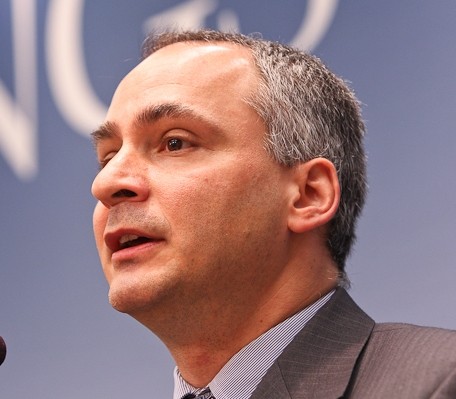



In a live conversation on YouTube, Lawfare Editor in Chief Benjamin Wittes sat down with Senior Editors Eric Columbus, Molly Roberts, and Roger Parloff to discuss the Trump administration requesting the Supreme Court stay the district court’s order halting the enforcement of the mail-in voting executive order, updates on where TPS stands following the Supreme Court’s order, developments in the Reflecting Pool prosecution, the D.C. Circuit blocking the ballroom construction and more.
You can find information on legal challenges to Trump administration actions here. And check out Lawfare’s new homepage on the litigation, new Bluesky account, and new WITOAD merch.
To receive ad-free podcasts, become a Lawfare Material Supporter at www.patreon.com/lawfare. You can also support Lawfare by making a one-time donation at https://givebutter.com/lawfare-institute.
Click the button below to view a transcript of this podcast. Please note that the transcript was auto-generated and may contain errors.
Transcript
Benjamin Wittes: It is Friday, the 7th of August, 2026. It is 4:00 PM in Washington, D.C., and folks, you are watching Lawfare Live. I'm Benjamin Wittes, editor-in-chief of Lawfare, and it is the Trials and Tribulations of the Trump Administration. And I am here with three Lawfare senior editors: Molly Roberts, Roger Parloff, and Eric Columbus, who are appearing randomly on your screen, not in the order that I say their names.
And, and we’ve got a lot to talk about, but we are starting today, you heard the grand ballroom music to introduce the show, we are starting today with breaking news in the ballroom litigation. Molly, as our, as our specialist in litigation over absurd construction matters, we have a D.C. Circuit ruling in the ballroom. No, which is really a secure bunker with a drawn la- drone launch pad that's not there at all so that we can have waltzes, but is there to protect the president against enemies foreign and Antifa. What did the D.C. Circuit decide?
Molly Roberts: I was gonna say, I'm not sure we can even call it a ballroom anymore. It's a “single integrated project that includes bomb shelters, state-of-the-art hospital and medical facilities.” That's only the beginning of this tweet that President Trump did, or Truth, that President Trump did reacting to how upset he is over this ruling.
Benjamin Wittes: Maybe we should only call it that, “the single integrated facility.”
Molly Roberts: It's, it's very, very ominous, I have to say. He was very upset about it. And also, I should mention, 'cause I think the context around this is interesting and important, he's been, he's obsessed with this. He's been tweeting about this earlier this week as well, even before the decision came down. And in an earlier tweet this week, he mentioned how important this was going to be to the people of D.C. for operations both defen- for, for defense and for offense, which I do not know what that could possibly mean.
Benjamin Wittes: When, when the people of D.C. go on offense against, like, the state of West Virginia or something?
Molly Roberts: Well, who knows? I don't know. But the range of possibilities, none of them is even remotely comforting. So, in any case, what happened this week and what prompted the latest Truth Social screed was that the D.C. Circuit 2-1 affirmed Judge Leon's preliminary injunction blocking above-ground construction of the ballroom, but permitting below-ground construction, where we all know there's a presidential bunker to continue under a safety and security exemption.
And so then the litigation is going to continue to play out, but with this injunction in place. So this was Judges Millett and Garcia in the majority, and Judge Neomi Rao in the minority. For which we should also note she has been commended in this Truth Social post in no uncertain terms. She's the “highly respected Judge Neomi Rao.”
And in any case, so what happened here, and I think it was relatively expected from the litigation, was that the D.C. Circuit ruled against the government on basically every point, starting with standing, or standing in all caps exclamation point, as the president has said several times, and this is important, too, because it's the basis on which Judge Rao dissented primarily.
But the National Trust for Historic Preservation brought this lawsuit, and it did that via one of its members, Allison Hougland, the woman walking her dog, according to the president, who said that she was injured by the construction of this ballroom because she enjoys walking through Lafayette Square, walking through the president's park, and admiring the “Republican simplicity of the building for which it was designed,” and that its “modest style, size, and scale is part of a message that this is a home for a president, not a palace.” And you contrast this with the Capitol, and it's really the only way to appropriately appreciate and understand Pierre L'Enfant's plan. And the majority agreed that that is a cognizable injury. It's a particularized injury. And then they found that the National Trust had associational standing also because the historical architectural injuries are within its area of expertise and concern, and that makes it germane.
And that's where Judge Rao broke with them. She focused on germane-ness by saying that statutory authority, when the, the National Trust is a congressionally chartered nonprofit, and that if its statutory authority didn't explicitly say anything about protecting the White House itself or about construction, then you couldn't use it to, to say that it was germane. And the, the judges, they didn't buy that, and they said that what she cited was, didn't really have anything to do with congressionally chartered nonprofits or with the issue.
So then to the merits, they found that the Constitution's Property Clause gives Congress control over all real property belonging to the United States, but that Congress, as they put it, “placed a statutory exclamation point on these powers” with the main statute issue here, which is 40 USC § 8106, that says you can't erect a building or structure on any reservation park or public grounds of the federal government in D.C. without express authority of Congress.
So that's really the central issue here. Is there express authority of Congress? And the government had located that in two places. One of them was the National Park Service Organic Act. One of them was a law having to do with maintenance, alterations, improvements to the executive residence, having to do more generally with management of the executive residence, 105(d) of that.
So what they found was sort of interesting. Essentially, they found you need to succeed on both of these. If you just succeed on one, you can't do it because of this strange arrangement by which the White House, the executive residence, is purporting to be running this project, but doing it with donations that only the National Park Service is able to get and give to it. And there's a sort of complicated argument involving the Economy Act, where one agency delegates authority to another.
Side note there, given that the government had initially managed to get the TRO and the PI denied partly because it was saying the White House isn't an executive agency, so there's no APA claim here. The judges are, were a little piqued by that and saying, "Well, you know, you're trying to use the Economy Act, but earlier you were saying this wasn't an agency."
But even agency question aside, the idea is essentially that you can't transfer the funds for the White House to do something if you, the National Park Service, don't have the authority to do it. And if you're the White House, you can't have authority transferred to you if you don't have authority of your own. So you essentially needed both statutes for that reason, and they said neither statute works. The National Park Service Organic Act is about preserving and conserving the parks. That's not what you're doing here. And the §105(d), first of all, is an appropriation authorization. It's not an authorization. Congress didn't appropriate funds, so you're not authorized. But also, even if you had the funds, you're not authorized because the maintenance contemplated here is not as vast a reconstruction project as you're attempting in this case.
So that's basically what they said on the merits. They kind of continued after and talked about separation of powers, and the basic idea was that this is an infringement on Congress and the government didn't actually make any Article II claim, which makes it easier to not have trouble with the separation of powers analysis. But Congress has the authority when it comes to the property to make the judgment of how to protect the safety and security of the president, and has plenty of expertise to do that. And so, as the litigation goes forth, this doesn't stop the ballroom if Congress wants to authorize it, but it does stop the ballroom, at least for now, if Congress doesn't, which it hasn't.
Benjamin Wittes: And I had thought that Article II of the Constitution included inherent authority to build large ballrooms based on the fact that, you know, George Washington had one at Mount Vernon, and, and there, you know, there was that time that everybody remembers when John Adams built a giant claw to have a, a, a ultimate fighting competition in the new White House lawn. What about the f- the "but I can 'cause I really want to" argument?
Molly Roberts: Yeah, shockingly, they were not persuaded by that, and, you know you'll say, I kind of doubt that Judge Leon, as it goes forward, is going to be persuaded by that, too. Whether the Supreme Court is persuaded by that, I think is, is going to be the question. The president has said that he's going to move forward right away and appeal to the Supreme Court. Yep.
Benjamin Wittes: And, and would it be a, an emergency docket? I mean, an, 'cause it's an emergency ballroom, or would it go up as a, as a, I mean, is this the merits docket at the D.C. Circuit? What's the posture right now?
Molly Roberts: I actually don't know the answer to that question. I don't know whether it, I mean, I, I imagine that they could allege that it's an emergency because they're saying that it's the security, the safety and security of the president that's at stake here.
Benjamin Wittes: Right. Well, that would be an argument for expediting it. The question is, is this on some kind of a stay motion, or is it just Judge Leon issued an injunction and they appealed it? Do you know the answer to that, Roger, what the, what the posture of this case is?
Roger Parloff: I thi- I, I didn't read the, the whole opinion. I, I, I do- so I'm, I'm not sure. I-
Benjamin Wittes: All right. I have, I have stumped the panel with-
Molly Roberts: No, the-
Roger Parloff: I thought-
Molly Roberts: The, the, they had requested a stay pending appeal, and so, is that part of the question? So, so they had appealed the preliminary-
Roger Parloff: Yeah.
Molly Roberts: Injunction, and they had requested a stay pending appeal, and now the motion for the stay is denied as moot, and they've affirmed the grant of the preliminary injunction.
Benjamin Wittes: I see. Okay. So it, you know, you could imagine it going up either way, right? Either as an emergency stay matter or as a just appeal the injunction and accept that you're not gonna be doing this construction during the pendency of this Supreme Court term. All right. Well, Thank you, Molly. And, you know, we, Molly is, you know, monitoring from afar all crazed building matters that may happen, and we have theme music for all of them. You know, golf courses and, you know, we, we got it covered.
But we will be back if there's any late-breaking developments in ballroom construction. Roger let's turn to one of your favorite subjects, your favorite scorecard issues, which is who is ahead in the vindictive prosecution grant motions. So far I think Kilmar Abrego Garcia is still out front 'cause he's had one granted. But he's behind in that Jim Comey has two of them right? But the SPLC had a rocking good one, and it got denied. So SPLC, like Kelmar Abrego Garcia and Petrova 1-SPLC 0. Why did they lose this?
Roger Parloff: Well, honestly, I didn't think this was o- one of the strongest it I'm, I'm not gonna hide the ball. There is a, a, a Trump appointee judge here, Emily Marks, but I'm not a, 100% sure that Judge Boasberg would've ruled differently. The, I, this is a case where it's, it, it really, it heavily is gonna hang on w-when it goes to trial the, the facts, whether the, the government can really make out what it's alleged.
Here they were argu- the judge found that not only would she not dismiss for on vindictive prosecution grounds, but sh- she, they, she would not grant discovery. And th- they hadn't shown, and, and the basic thing was, for her, that they couldn't show animus on the part of the U.S. attorney for the Middle District of Alabama, who she considered was the one bringing it. You know, they could show animus from Trump, they could show animus from Kash Patel, they could show some, some senators Grassley and, and some representatives like Jordan and, and, and Roy. But you know, the, the those people weren't even in the executive branch, and it all it all basically came down to you couldn't show that the U.S. attorney for the Middle District of Alabama was, was tainted.
The and, and this wasn't a case where although, although Trump and Blanche and Patel all made sha- you know, sharp comments after the indictment, there wasn't a ton of it before the indictment. There was a ton of it from, like I said, representatives and senators but it was hard to even show that that this was something Trump wanted beforehand.
There, there, one of the key points, one of the key arguments they made had to do with, after the Kirk assassination the, a lot of the right focused on the SPLC hate map, which a list of hate, what they categorize as “hate groups,” which included Turning Point, Kirk's group, and it also included a group called Liberty Counsel which they say treat as a hate group relating to LGBTQ stuff. And after the assassination a lot of these groups wrote to Stephen Miller, and they you know, wanted to get back at SPLC. But they, in a letter, the letter didn't call for an indictment specifically. And then one of those groups, Liberty Counsel, did reach out to the FBI, and they presented a theory, apparently, of fraud, which is close to the one that's charged in the indictment.
And the then U.S. attorney, or acting U.S. attorney, for the Middle District did open an inquiry, but he also closed it. And, and so, there was a speculation that somehow that theory, which would have been to retaliate against SPLC's protected First Amendment speech, was how this got on the, got prosecuted. But there were those gaps between i- i- it was a, it was a bit speculative.
And so she thought, the judge thought that this didn't merit discovery. It was, it would be a fishing expedition. It wa- it, it hadn't really created that presumption yet. And a lot hinged on timing, that there had been an investigation under the first administration, Trump administration. It was dropped during Biden. It was reopened during Trump. And, and, and so the argument was that this was politically inspired. But she said, you know, "There, there are diff- different administrations have different priorities. I can't, I can't use that."
So, and, and she actually did rule against the government on one of its arguments. The government was trying to say that it had a, that it was arguing that a vindictive prosecution is very narrow. You, it, it, it can basically only be when you are retaliating against somebody's exercise of a specific legal right, like say when somebody appeals a conviction and wins, and it comes back down and, and then you add new charges. And they were saying you can't, you can't just have a, have one based on retaliating against First Amendment protected sh- speech, and she said that's simply false simply wrong, obviously.
So, anyway it, and she does talk about the presumption of regularity and so on. So, anyway, that's, that's it. It was not, to me it was not a shocker. I can't, I can't slough it off entirely on her being a Trump appointee.
Benjamin Wittes: Yeah. I'm a little bit perplexed by the absence of discovery more than, I mean, it doesn't seem like they've I, I, I mean… It may be a lacuna in the law, which the law assumes, the law of the vindictive prosecution, and Molly, you know this law better than I do, but, so correct me if I'm wrong, it presumes that the vindictiveness is on the part of the person who's bringing the case or the investigator who investigated the case rather than that they're working for somebody where the corruption is kind of way, way above the line level of the people who are dealing with it.
But it does seem like if you're, you know, and so you saw this in the Abrego Garcia case where they're arguing, "Hey, you know, maybe Todd Blanche has it in for this guy, but, but this was made by, by, on the merits by the U.S. attorney and the acting U.S. attorney." And then, like, there's some point at which the law needs to recognize that if you're, if, if the president hates your guts, and there's a reasonable inference that that's why the case is happening, like, that's inside, not outsi- that's not a defense against the charge of a vindictive prosecution. Molly, were you trying to get in?
Molly Roberts: Yeah, yeah. No, I think that, I mean, you're the stalking horse theory of it, where the person on the line doesn't have a personal grudge but is enacting the personal grudge of someone above them, that definitely can be a vindictive prosecution.
I mean, that's what we saw with Lindsey Halligan, but you have to show that they're acting as a stalking horse. You have to show that they are, like, enacting that grudge and that, you know, through some, whether they are doing that because they know that it's true or whether they're doing it because they've been directed, and you have to show that that's what they're doing rather than-
Benjamin Wittes: Right. But, but there's no inference about it, right? It's not like, And, and the government, so the Lindsey Halligan example is a great one. The government's response is, "Hey, they haven't shown that Lindsey Halligan has has a hatred of them. All their statements are about the president." And we're like, "Well, she was put in the office 'cause-"
Molly Roberts: Right.
Benjamin Wittes: You know, and it never got ruled on.
Molly Roberts: Right. Right. Right. But it was a strong motion because it was, it was showing that she was put there for that position, and it was very clear that the president was making sure that whoever was in that position was willing to do that and that he was going to fire anyone who was in that position who wasn't willing to do it.
And so, I mean, we, I mean, it didn't get ruled on. You're right. But definitely in cases on vindictive prosecutions, the stalking horse, that's like part of the, part of the canon, and I imagine that the bar is relatively high to show that someone is a stalking horse, but it, it's, that is a route you can take to try to prove a vindictive prosecution.
Roger Parloff: And I think that case shows how much stronger, the Lindsey Halligan case, I mean, you know, the guy, Siebert, the guy before her, had been forced out because he wouldn't bring the case.
Benjamin Wittes: Right.
Roger Parloff: She bring- he brings in somebody who has no criminal experience and was working for him and she gets an indictment in five days. And you know, that we didn't have facts here like that, or the SPLC didn't have facts like that
Benjamin Wittes: All right, this may be the last time, guys, that we have the Olympics theme played because the case against David Hearn, the Olympic canoeist who had the temerity to take a chip of paint off of the, the base of the Reflecting Pool, has gone away. And, and, well, sort of gone away.
Roger they, they moved to dismiss it. They said, "Oh, we were shocked, shocked to find out that the damage predated Mr. Hearn's malicious tearing of the thing, so he couldn't have done $1,000 of damage. Maybe he only did pennies of damage. But we were dis- Who could have known that, that somebody had already vandalized it?” And by somebody, we mean it was badly installed and the president drove a car over it. “Who could have possibly known that?” But then, there was a hearing. The case hasn't gone away. What is going on in, and the, and will this be the last time we play the Olympics theme to introduce a discussion of this case?
Roger Parloff: Well, i- importantly, I think we can play the theme again. Well, we'll be able to play the theme again. It was “dismissed” today, I'm using air quotes if you're listening on, to the podcast version. But, or yester- yesterday. But, but we haven't yet determined. The litigation goes on, and we will determine whether it's gonna be dismissed with prejudice or without prejudice. And the briefing will continue till at least around August 25th. So last week either-
Benjamin Wittes: So we get at least one or two more-
Roger Parloff: Yeah.
Benjamin Wittes: Olympic themes music.
Roger Parloff: Yeah. Oh, good. So that's the important thing.
Benjamin Wittes: That's the important question.
Roger Parloff: Okay. Yeah, so I think it was just a week ago, it seems like months, but it was just a week ago, it might've been right after our podcast or during it, that the government filed this motion to dismiss. Now remember the, the event was June 19th, that's when David Hearn was arrested. And then he was indicted July 2nd. And then, so, it was last week, July 28th, they moved to dismiss.
And a- as you know, they blamed the Department of Interior and the contractor, Atlantic Industrial Coatings, especially the Department of Interior. They said you know, we had requested, quote, "everything" from them, dozens and dozens of communications. But it wasn't until July 17th when they went out to the Reflecting Pool with the defense expert and the drain, the thing had now been drained that they noted extensive damage throughout the now drained pool. “It was the first time USAODC became aware of significant damage throughout the pool, and accordingly, we requested all docs from DO- DOI,” that's the Department of In- Interior. They produced 695 megabytes, and then they took days to go through that. They discovered, lo and behold, a rushed and flawed installation and a botched installation.
Obviously the d- Hearns' lawyers don't accept that and that it, they feel it, it was obvious from the get-go there was they submitted a, under seal, a damage assessment from before the indictment. And obviously there was no rush. There, I, I mean, there wa- there was no need to rush except to please Trump. You know, the guy was, he was out. It's not like he was detained and you couldn't keep him detained without an indictment. You could have finished, you could have drained the thing and found out first what was going on before you indicted.
Benjamin Wittes: Right. Is it, isn't it just to put, not to put too fine a point on that, Roger, but generally speaking, we do the investigation before we indict people, right?
Roger Parloff: That, well, prior administrations took that approach.
Benjamin Wittes: Okay.
Roger Parloff: This one, this one often we've seen does, does not really view that as the, as the op- modus operandi. The, and then over the weekend, Trump gained fury. And then he, he said that Pirro choked and “folded like an umbrella,” and the important things here are that he doesn't really say she got it wrong. She says she, you know, she, she “folded,” though. And he also hallucinated. He invented a theory that she, that the judge had been vicious with her, “vicious.” And, and that that's why she backed down. And of course, the judge was never i- in Pirro's presence. You know, Pirro never came to the, the hearing.
Benjamin Wittes: Right. She wasn't arguing the case herself.
Roger Parloff: No, of course not. And, and in fact, neither judge was ever vicious. I mean, they were, they were professional. The, the second time, I mean, there was a, the second time that Judge Adelman was a little stern, you know, "Well, if you're going to tamper with the, with the eviden- you know, with the site you do that at your own risk." But no, nobody was vicious to, to poor Judge Judies, Je- Jeanine.
So, anyway and the so Hearns' lawyers I think just a couple days ago asked that it be dismissed with prejudice, pointing to Trump and Burgum's behavior, saying, "Look, the," you know, if you didn't think this was political before, look, I mean, you have the President of the United States throwing a tantrum. There's obviously a, a danger of more harassment and a renewal of the prosecution. You need to dismiss with prejudice.
And so that's, we'll have more briefing. We, we have a reply brief from, from Pirro's office, and then we'll have a sur-reply from Hearn, and that should be done by the 25th.
Benjamin Wittes: All right, so plenty more time, opportunities to play the Olympics theme music. All right, Eric, first of all, your background has changed. Are, are you also remote following events from afar?
Eric Columbus: I am.
Benjamin Wittes: Excellent. Well, I like the f- the fireplace background and it's, it's, it's, it's a good, it's a good look.
Eric Columbus: Thank you.
Benjamin Wittes: Better look than Todd Blanche has had this week. And, see what I did there?
Eric Columbus: Nice. That's very nice.
Benjamin Wittes: Yeah, I, I thought it was, I was proud of it. Anyway Todd Blanche has as his confirmation vote, which looks increasingly good for him, approaches, he has revised his, the settlement documents with, in that IRS case involving Trump, in a fashion that, you know, the one that created the slush fund and immunized Trump against all actions forever involving taxes. So, what is the status of that case now? Has, has what does the government now say it is and isn't obliged to?
Eric Columbus: Well, to be precise, Todd Blanche has not revised the settlement which he has no unilateral power to do but, but rather he has revised the orders that he issued in the wake of the settlement and that purported to rely on the settlement. The, he revoked the, his order that had established the quote, "anti-weaponization fund." He says that's gone. Now of course, that does not underl- that does not revoke the underlying settlement with the Trump family in which the government pledged to create such a fund. So, in theory, Trump could sue to seek enforcement of that settlement and to require-
Benjamin Wittes: Right. It's crea- argue a breach of the settlement agreement.
Eric Columbus: Exactly, yes. And then secondly, he put out an order to clarify his, the, his second day order, if you will, his May 19th order that gave Tr- the Trump family immunity from all audits or other pending claims that the defendants in the case might have. And he clarified some things that I think were, were all, and actually were in fact intended by DOJ, but he, but he clarified them to make clear that one, it applies only retroactively. If Trump cheats on his taxes next year, there could still, this does not preclude an audit.
Two and that the, the immunity applies only to the def- claims that could have been brought by the defendants in that case, meaning IRS and the Treasury Department, and does not apply to other agencies. And notably does not mean that if there, if there had been a crime that Trump had, had committed the Department of Justice could still prosecute for him. That was my reading of and Anna Bower’s reading of the documents, although they were written so poorly that it was not clear that that was the case. But after several reads, that was what we had concluded. And he did this to because he was getting, asked by Cornyn and Tillis about it, and these small changes appeared to suffice to win their votes, which is kind of sad.
Benjamin Wittes: Re- remind me why it is appropriate for the acting attorney general who is seeking to be the Senate-confirmed attorney general to be conducting a settlement agreement with a former client with whom he has a continuing fiduciary attorney-client relationship, and why it is appropriate for him to be revising the terms of the Justice Department's policies, retroactively putting the United States in breach of the explicit terms of those agreements that he negotiated. Is that, just where does he get the, I'm not sure if the term is, why is it appropriate? Where does he get the cojones to do that?
Eric Columbus: I, Doesn't seem very appropriate. I, I do think that he claimed that he was not personally involved in the negotiations which-
Benjamin Wittes: No, but he's, he's personally involved in making representations to the Senate about what he is doing by way of putting the United States in breach of those agreements, right? He's not recused.
Eric Columbus: No, correct. And yeah, e- e- exactly. And but that, that ironically kind of cuts against the, I mean, he's ironically putting himself in breach. He's breaching an agreement with his former client.
Benjamin Wittes: Correct.
Eric Columbus: Which just makes it even weirder and-
Benjamin Wittes: Like, like I, I, I actually think he has a, he had, there's a, I, I am not a legal ethicist and I'm not claiming expertise here, but if I were, im- imagine the situation in which Donald Trump and Todd Bran- Blanche have a falling out, which you know, To- he tends to do with his prior lawyers. See Ty Cobb, right?
So imagine the situation in which a year from now they don't get along as well as they do today. What prevents Donald Trump from arguing truthfully that Todd Blanche supervised the negotiation of a settlement with me and my family in which he promised us immunity, then when it became convenient for him, he abrogated the agreement with the signed agreement between the United States and the Trump family and made representations and policy adverse to us that subjected us to potential liability on behalf of the United States in violation of an agreement that he had supervised with his client.
Eric Columbus: Well, it wouldn't have been, I, I don't think he's Blanche was abrogating the immunity agreement. He's abrogating the part of the agreement that enabled the anti-weaponization fund.
Benjamin Wittes: Sure. But, but then, so two years from now you have an administration of whatever party that says, "Wait a minute, this agreement is already toast because Todd Blanche abrogated it, so clearly the other provisions aren't enforceable." And they go after $100 million and say, "Hey, Blanche got rid of this agreement." They would not be wrong to say that, and Trump, God bless him, would not be wrong to say, "My lawyer shouldn't have done that to me," as Attorney General of the United States trying to get a permanent job.
Eric Columbus: Shouldn't have done what to him?
Benjamin Wittes: Shouldn't have abrogated the agreement on behalf of the United States and-
Eric Columbus: Of the anti-weaponization? Yeah, I suppose. You're suggesting that he would kind of just sue Blanche.
Benjamin Wittes: Well, I don't know what remedial action he might take. My point is that Todd Blanche's conduct is not ethical vis-a-vis the United States, and it doesn't seem to me to be ethical vis-a-vis his former client, Donald Trump, either, though it may be convenient for Trump right now.
Eric Columbus: And, and then of course-
Benjamin Wittes: Where, where am I wrong?
Eric Columbus: I, and I don't think that's necessarily wrong at all. I think then of course the, the, maybe even the, people are kind of losing sight of the, the substance of this, given all the procedural irregularities. The substance of it is that it's completely absurd for, to settle a claim that Trump, Trump correctly claims that he was, his taxes were illegally leaked, his tax returns, and as a result of that, Todd Blanche is, is essentially releasing him from an audit that reportedly was set to cost him $100 million. And the, the, the, the, the remedy has no connection to the violation of Trump's rights.
Benjamin Wittes: All right. I just wanna say for all of you who practice law out there, when you go into government, don't involve yourself in the disposition of cases involving your former clients. It's a, it's a simple bright line rule. Don't do it. Speaking of revisions, Eric, Democracy Forward has revised its complaint in the slush fund case to add a challenge to the immunity provisions. How do they get standing to challenge the immunity provisions?
Eric Columbus: So the new plaintiff is the National Treasury Employees Union, which represents all basically the civil servants at Treasury and IRS, the people who will need to implement the, the immunity, immunity deal and basically end the ongoing audits.
And what they argue is that this lawsuit, sorry, that, that, that what it, what ending this, the audit, violates a provision, a statutory provision that forbids the president and various other officials, but notably not the attorney general, from seeking to end or start an audit against any specific taxpayer.
And so they're saying that Trump has violated that law, which apparently is a criminal statute, and that, and that also that they would be, that the, the payout of the, rather the, the cancellation of an audit that would cost him $100 million is essentially a, an emolument to the president a benefit in addition to his salary paid by the federal government in violation of the Domestic Emoluments Clause. And the argument on standing is that forcing the participation of these civil servants would require them to violate their oath of office, to swearing allegiance to the Constitution, and possibly expose them to criminal liability.
Now, I'm a little bit not certain about the criminal liability because the statute that applies, that forbids Trump from asking anyone or directing anyone to, end an audit. I don't see how that, I think that crime is complete when the ask is made, and I don't see how the recipients of the request would be i- in violation of the law. The domestic emoluments clause issue is an interesting one. I, I think that the standing argument is stronger there. Whether it is actually an emolument to receive a cancellation of an audit that might cost you money I don't know the answer to that one. And perhaps-
Benjamin Wittes: Call it an issue of first impression.
Eric Columbus: Yes, to say the least. They're also alleging on the merits that it is arbitrary and capricious and beyond the, the statutory powers of the attorney general for him to settle a case in this way with a settlement that is so far afield from the claims at issue in the, in the underlying civil case.
I mean, they're right about that, whether it's, whether it, it is in fact, I mean, but, but the government has extremely broad settlement authority, and I, I'm not sure that they are correct that that is actually a violation of, of the law for the government to settle it that way. But we shall see. It's before Judge Brinkema in the Eastern District of Virginia, who has been, shown herself to be very sympathetic to the, the plaintiffs' claims in other respects.
Benjamin Wittes: All right. Finally, in this DOJ politicization cone, we have yet another vindictive prosecution motion, this one from Don Lemon about frankly, whose case I had forgotten 'cause so many people had been dropped from it. Eric what is the status of poor Mr. Lemon's case, and when should we expect him to be convicted as a member of Antifa and locked up for the rest of his life?
Eric Columbus: Don Lemon, just to refresh the memory of those who've tried to block it out, is the former CNN host who was kind of rode along with a bunch of protesters in a protest in a church in St. Paul, Minnesota, in, I believe, January. They were arrested for a violation of, of all things, the FACE Act, the Freedom of Access to Clinic Entrances and also a conspiracy-
Benjamin Wittes: Because they attacked an abortion clinic, right?
Eric Columbus: Well, there is a provision that is very rarely used that applies to churches.
Benjamin Wittes: Right.
Eric Columbus: And we will find out in a minute why it's very rarely used. But his, his he's arguing that it was vindictive basically because, the basic argument is that, "Look, Trump hates me. He has hated me for, like, 10 years. He calls me the stupidest man on television, and he's trumped up, if you will, these bullshit charges against me." And that's basically the, the, the motion. It is not as impressive a litany of hatred as Jim Comey mustered in his vindictive prosecution argument in his first indictment. But it is still pretty impressive, and he asked for the case to be dismissed or at minimum for there to be discovery in the case.
That's only one of the three motions that he's filed. He's also filed a, a motion arguing that it violates the First Amendment to charge him because he was basically participating in a journalistic capacity. And I guess more importantly because he was, there was nothing that he did that violated the terms of the statute which, he did not in fact block anyone, he argues, from accessing the, going into or, or leaving the church. And that a fair, these statutes need to be construed with the First Amendment in mind, and that there's no way in which he can in fact be convicted on the basis of that. He said-
Benjamin Wittes: He's got a bit of a Comey problem here, which is he may have, I think it's, I agree with you, it's a less righteous vindictive prosecution motion than Letitia James or Jim Comey has, but it's pr- you know, it's not implausible. But there's this other, just as with Comey's case in Virginia and frankly with Comey's case in North Carolina, there's another path to dismissal. You don't reach the question because Lindsey Halligan is illegally appointed. You don't reach the question because arranging seashells or taking pictures of the way somebody else arranged seashells on the beach is First Amendment protected speech.
You don't reach the question because if you're there doing journalism and you're not violating the, you're not alleged to have blocked anybody's entrance to the church, you can't have violated the statute, right? And so it just seems like there's this category of plainly vindictive prosecutions that never get adjudicated as such because the, they're so vindictive that they violate other rules that are clear before you get to that.
Eric Columbus: I, I think that's yes, that's quite possible. To call that a problem depends upon one's perspective.
Benjamin Wittes: Well, I, I, no, that's a really good point, but I wanna say from my position as a citizen, I want some of these cases resolved on the basis that you're actually not allowed to maliciously go after your political enemies, and that there's, there's something deficient about our collective adjudication of these cases, that you have one case after another that is the, what joins them is they're malicious prosecutions against Trump's enemies, but they're all being dismissed, or very large numbers of them are being dismissed because, you know, the union leader maybe didn't do this, and the, and, you know, Don Lemon's being a journalist and, and Jim Comey's prosecutor was unla- and Letitia James' prosecutor was unlawfully appointed.
And so you never actually have adjudication about what binds these cases together, which is the Trump administration is lawful- lawlessly oppressing the people that Trump really hates. And I do think that's sort of a problem at the level of, like, how we as a society are responding to these cases.
Eric Columbus: Yeah, I mean, I, I don't disagree. I mean, although certainly the individual defendants have the incentive to throw everything they can. I,
Benjamin Wittes: I am not, it would be malpractice-
Eric Columbus: Yes.
Benjamin Wittes: Of their lawyers not to be making these arguments. I'm just saying it produces a weird, a weird outcome that lowers the stakes for Trump.
Eric Columbus: Yeah. And to, just to, to, to finish the Don Lemon loop, his final motion, which is also, I think fairly strong, is a challenge has, is, is twofold. It's a ch- first, it's a challenge to the statute under the Commerce Clause arguing that there's not a sufficient nexus between the religious activities of the church and interstate commerce, which was the hook for the statute. And courts courts of appeals have unanimously upheld against Commerce Clause challenges the abortion parts of the statute because abortion is a business that takes place in interstate commerce.
Religion and churches, however, are, are very differently situated, and, and there are, there's not much case law on this. There's a concurring opinion in the Second Circuit by Judge Walker who says that it cannot be justified by the Commerce Clause. There's also an argument that he makes that this, the conspiracy against rights statute that you, kind of, bootstraps the FACE Act is, is kind of cannot be used here because that requires a, a government action which is not present here.
I will add just to plug Lawfare's work, that all, everything in his, as, as far as I can know, everything in Don Lemon's motions, all the issues that he raised in all three of them were previewed in a piece that Anna Bower, our former public service fellow Troy Edwards, and I, the three of us wrote about the Don Lemon case shortly, a few weeks after he was arrested. And it's just a very fascinating case because there are just so many issues presented.
Benjamin Wittes: It is an excellent piece, and I was going to plug it if Eric didn't. So, you should all return to it. It will give you a very good sense not of the briefing that has happened, but of that, that briefing was going to happen.
All right, it is time, Roger, for our immigration roundup. And before anybody gets upset with me when I say immigration roundup, I don't mean we're gonna be rounding up immigrants. I mean, we are rounding up immigration cases. We got a whole lot of action in the TPS revocation front. Gotta say this one tears at my heart a lot. I know a lot of people who are here on TPS, and how bad is it?
Roger Parloff: It's very bad. So I think three countries I think terminated the TPS this week, beginning with Haiti, probably the, the roughest.
Benjamin Wittes: Have conditions in Haiti substantially improved?
Roger Parloff: The Supreme Court has decided that that doesn't matter.
Benjamin Wittes: Yeah, but I, it matters to me. If we're gonna send hundreds of thousands of people back to Haiti, I'd like to know that conditions there are such, are substantially different from the conditions that arose giving rise to TPS in the first place.
Roger Parloff: No, they're worse.
Benjamin Wittes: Okay. Just checking.
Roger Parloff: Today South Sudan and Burma, it seems the, stays or the postponements were lifted as to them.
Benjamin Wittes: Any improvement in the conditions of either South Sudan or Burma?
Roger Parloff: Not that I know of. I don't think that played any role.
Benjamin Wittes: Okay.
Roger Parloff: The, what's, what's going on is obviously the, the, in those cases, the lawyers are attempting to file amended complaints that th- they, they raise some new claims, they recast some claims that were APA claims as constitutional claims.
And Judge Patti Saris of the of Boston s- found that the proposed new claims would be futile and unlikely to succeed. And again, I have to agree with her as a, if, as an attorney looking at the situation, that's probably right. And but, you know, it anyway, that and so she denied further postponement. Same thing just a few hours later if that in Chicago Judge Kennelly case involving Burma or Myanmar.
The, in fact, one of the arguments, one of the new arguments that's been raised, and, you know, I, I have to say it's, it, that is not what I would say is strong, you know, the, when TPS was created w- was before we had a Department of Homeland Security, and so all of the decisions are to be made by the attorney general. And in fact, this is something that e- everyone writing about this always puts brackets and then puts the secretary in there because it s- the attorney general makes all decisions. And there is a general statute somewhere I've I have it written down 8 U.S.C. § 1103, I think. And it, it explains, okay the Department of Homeland Security secretary, now that one exists, is gonna handle all the decisions in this title except, and then, you know, there's a bunch of things the attorney general keeps. It's not a very clear statute.
So the argument now, and it's comes late in the day and nobody has argued this before, is that, well, you know, these were retained by the attorney general and, and so Judge, I mean, so Secretary Noem shouldn't have ma- been making these decisions. That's not a very strong argument in my humble opinion. But, you know, on the other hand, you've got people that are about to be sent to their death. So, that's the situation and the judges are dutifully saying, "I don't think that's strong."
Somalia is gonna, Judge Allison Burrows is, is struggling with these issues. She issued an administrative stay last Friday. Over the weekend a representative, Andy Ogles, who I guess lost his primary, presented articles of impeachment against her. General Counsel Percival called it a mutiny. We will see what she does. Some of these judge, and of course, Brian Murphy has to make some decisions involving Ethiopia. Murphy has already been, you know, publicly chastised by the Supreme Court in the DVD case. So, we're looking at people that are, judges that are in tough spots. And it's a very, it's a sad week and but we know how these are ultimately gonna end.
Benjamin Wittes: Yeah, I mean, I will just say about this that TPS was created as a way of giving the president flexibility to allow people to come here. It was mostly contrived with the idea of natural disasters, I think, that there are, you know, places like Montserrat where you have, like, these, you know, volcano makes the island uninhabitable, right? So you bring people to the United States.
But it has application to situations in which there are humanitarian disasters of other kinds, including man-made ones.It can be used to deal with large numbers of people on a temporary basis, and it is not imagined, I, I think it is fair to say this is not a legal argument, it was not imagined as something where you throw a switch depending on political whims and d- and upset the lives of hundreds of thousands of people.
And you know, it is not, it was really imagined as a way of giving the president flexibility to admit people who are, you know, who wouldn't be eligible for immigration visas. And it has been used by presidents of both parties for wonderful humanitarian gestures that have protected the lives of a lot of people, and I've never seen it used to, you know, mass deport people before. That's not what it was ever imagined to do, and the idea that it would be being used that way is, is, you know, I think would be a genuine shock and horror to the people who created it. And-
Roger Parloff: I will, if I could just the read Judge Burah's own lines explaining that administrative stay. She said "The court's decision to enter an administrative stay was informed by the fact that if or when the revocation of TPS takes effect, over 1,000 people may face grave risks of severe physical violence if removed to a country suffering a humanitarian crisis that has led the president to refer to it as one of the most dangerous in the world, as well as forced separation from community and family in the United States, including their minor U.S. citizen children, all due to an abrupt reversal of government policy that has been in place for three and a half decades."
Benjamin Wittes: Right. These are not, you know, at some level when you're playing with TPS, you're playing with very large numbers of people's lives. The numbers in the cases of places like Syria and Burma are presumably pretty small. The numbers in, when you're talking about Haiti are not small. The numbers when you're talking about Ukraine are not small. And, and, you know, the conditions in certain countries are not conducive to normal human life. And Haiti is certainly an extreme example of that.
All right. We have a preliminary injunction in the case of the Iranians who are suing Marco Rubio alleging that, this continues to shock me, Roger, that the U.S. government is providing the Iranian government confidential information on asylum seekers by way of deporting them. Like-
Roger Parloff: Well-
Benjamin Wittes: Do we have any ground truth on whether this is true? And I mean, obviously it's true enough to grant an injunction on the basis.
Roger Parloff: No no, no injunction has been granted. I might have maybe I wrote that whatever you're reading from in misleadingly.
Benjamin Wittes: Oh, there, I'm sorry, there was a hearing on it.
Roger Parloff: Hearing, yeah.
Benjamin Wittes: Yeah.
Roger Parloff: No. There was a hearing and Judge Reyes, I think we're pretty far from an injunction still. This is a, still a f- cloudy situation. We do have one, we do have a declaration from the government about what they claim is going on.
But yeah, last March, Trump began, the Trump administration began, deporting Iranians, and that requires something called a, you get a, a, a travel document. You need to get a travel document. So the, the State Department and the DHS began to speak to the Iranian interests section of the Embassy of Pakistan. That's how you do this. And they provided them a list of 150 people. And, and then in November a lot, a lot of Iranians in detention centers reported to ACLU that they were being required, told to meet with Iranian, an Iranian official, and that the official had information about the state of their asylum cases. And they were being pressured to agree to go back. One claimed that her fingerprint was forcibly placed on a document saying that she was agreeing to either go back or to be sent to an African country.
The government did provide a declaration from an ERO official. That's the Enforcement and Removal Office of the ICE. He said, "Well, we need to get a travel document, and the discussions that we have are routine. We have to share enough n- information to get the travel document. We don't share confidential infor- we would never do that." There have been three charter flights to Iran since September 2025, the last one in January 2026, before the war. None since Epic Fury, which was February 28th. “Last November, yes, a guy from the Iranian interest section did go to detention centers, and the ERO offered Iranians the opportunity to speak with them. They didn't require it. Some did, some didn't.”
And and so, Judge Reyes isn't sure right now what she can do with this. You know, she's got a handful of declarations. Even if a ICE guy did violate their confidences, and even if it will result in their deaths, that doesn't prove a policy, which is the legally important thing. So how does she prove a policy? Also, there's a concrete injury problem because apparently we aren't, there aren't discussions since the war started, or I guess that's a little disputed. Th- there aren't removal flights since the war started.
So, she wants more evidence about whether she even has jurisdiction in late August and early September so or early September. So, she's moving carefully. She does think there's organizational standing for this group. It's the Iranian American Legal Defense and Fund… The government… But I don't know where this is going.
Benjamin Wittes: Well, I have to say, we have found the one good thing about the Iran war decision, which is that it does appear to have stopped, at least temporarily, forcible repatriations of people seeking asylum to Iran. All right.
Roger Parloff: And I could say these are people like Christians that have, that are, LGBTQ people,
Benjamin Wittes: Yeah, and this is, this is a government that the president on a regular basis points out has killed some number of tens of thousands of people this year in protests, right? I mean, it's not you know, this is not a regime to which you should be erring on the side of repatriating people.
All right. Judge Boasberg has in, in some tension with his usual propensity to rule on things himself and not let the government move things to Texas or to South Central America by moving people, has transferred to the Southern District of Texas a Federal Tort Claims Act case brought by a Venezuelan man who was earlier sent to CECOT. Why did he let go of this one?
Roger Parloff: Yeah, and I sort of, wanted to include this case because it's one of sort of a steady stream of cases that get no attention where Judge Boas- Boasberg, excuse me, “BOSE-berg,” two syllables, does the thing that he feels he is compelled to do by law, even though it's not the thing he might want to do or the thing I was hoping he would do.
So this is a case brought by Neiyerver León Rengel, who's a, a Venezuelan who was sent to CECOT that day on March 13th and fourth- March, March 15th and 16th of 2025 after Boasberg told them not to, to, told them to turn around the planes basically. And so he was bringing a Federal Tort Claims Act case for being the torture that he says he endured at CECOT and, and, and for not getting his due process here before being sent.
But Judge Boasberg found that the case had to be brought in the Southern District of Texas, although all the defendants that allegedly wronged him are here in D.C. The conduct they were directing happened in Texas, foreseeably. He was arrested at his home in Irving, which is actually Northern District, but then detained in the Southern District and then flown out of a airport near Harlingen in the Southern District.
And so he said "I, the law is clear. I, I, I have to transfer this." And, and of course, nobody knows the facts better than he that, that this case is about. So i- it was a sort of, and i- it wasn't a related case, it just fell to him by lot- lo- lottery. But nevertheless, it will go to somebody else
Benjamin Wittes: All right, folks, we have a new entrant in the ongoing competition for the most awesomely named federal judge. And it is a judge whose work I have never come across before the Honorable Maame Ewusi Mensah Frimpong of the Central District of California. And I apologize to Judge Frimpong if I have mispronounced any of her forenames. But I just wanna say that is right up there with the best names on the federal bench.
And Judge Frimpong has held the Department of Homeland Security in civil contempt for, quote, "intentionally and not in good faith failing to comply with discovery orders" in the ongoing case over what are, have come to be called “Kavanaugh stops.” Eric, first of all what is a Kavanaugh stop? And secondly, what is Judge Frimpong's complaint against the Department of Homeland Security?
Eric Columbus: A Kavanaugh stop is a kind of a mocking term that folks on social media applied to s- what Judge Kavanaugh described in his concurring opinion in when this case reached the Supreme Court. The majori- the, the court, court majority enjoin- basically overturned an injunction that Judge Frimpong had, had imposed. And typically, as, as usual, they don't, as is co- often these days, they did not provide any reasoning.
And it, it- Judge Kavanaugh wrote a brief concurring opinion in which he said that the stops at issue here, where ICE agents kind of stop people and demand that they, you know, show their papers, et cetera, that these are u- are usually very brief stops, and, and no one gets hurt, and then people go about their, their business the rest of the day.There are lots of counterexamples to that, of course, and so people have mockingly been calling them, you know, Kavanaugh stops.
Judge Frimpong, who by the way, she was a a former colleague of mine, is a political appointee in the Department of Justice. And I can vouch for your pronunciation of her first name. I, I cannot speak to the other names.
Benjamin Wittes: Well, I, I, I think it is a fabulous name, and I want, I thi- I think more federal judges should have awesome names
Eric Columbus: And you should hope for, I think, for more Democratic presidents because I think there's a greater diversity of nameage in- It,
Benjamin Wittes: It's true, although I think J.P. “Brulee” has a great name. I, I, you know, I mean, not at the order of Judge Frimpong or Sparkle Sooknanan, but I, I do think that there's there are great. You know, the point is you want names that are fun to say on Lawfare Live: The Trials and Tribulations of the Trump Administration, and, and also fun to make puns on. And, you know, names like, names like you know, Merrick Garland. There's, you can't do anything with that. I, I mean, he was a great judge, but, like, there's, it's just not a fun name to say.
Eric Columbus: It's fair enough. But okay, so, so in this case, what happened is that, in the, the plaintiffs are trying to prove, among other things, that DHS, ICE, is stopping people without reasonable suspicion. And in discovery they're trying to get they're tr- they trying to get, among other things, communications among DHS officers, among ICE agents, and a lot of whom apparently use their personal phones to do this. And there's an order that ICE image the personal phones of a, a large number of ICE officers and turn them over to the plaintiffs.
And ICE has, or DHS has been saying in litigation, "Oh, this takes a long time, it's an ongoing time-consuming process," and apparently they have not even begun it. And they've not even b- they've got permission, apparently they need permission at the first level from the, the officers in order to do this. They ha- have received such permission, but they just haven't begun this very lengthy process.
Which raises some suspicion perhaps about what is in those messages and that they may be trying to hide. Judge Frimpong has, has imposed, has held them in civil contempt, and at least for now been imposing, opposing, imposing, “imposing” $500 fines per day against DHS, which-
Benjamin Wittes: On a federal agency?
Eric Columbus: On a federal agency. And which DHS has been paying, or at least they paid so far. For the first week.
Benjamin Wittes: Yeah, that seems, it seems eminently affordable.
Eric Columbus: It's the cost of doing business.
Benjamin Wittes: Can I ask a stupid question? I did not know you could hold an agency in contempt as opposed to the, the head of the agency or an official of the agency. Back when Judge Lamberth went on his spree of holding cabinet officials in contempt in the Indian Trust Fund cases in the, I guess, late '90s, early aughts they were always directed against an individual rather than, like, the Department of Interior. Is, i- i- is it a thing to hold an agency in contempt rather than the responsible officer?
Eric Columbus: Well, I, I, I guess, maybe I was a little bit less than clear. The, she holds defendants in contempt, and the defendants include the head of DHS, who at the time was Kristi Noem and now is Markwayne Mullin. So-
Benjamin Wittes: I see.
Eric Columbus: Yeah, and they run against him, but effectively against the agency.
Benjamin Wittes: All right. Molly. The Trump Organization, as we all know, has been the subject of a woke debanking, for political reasons crusade, by, among other people, the Capital One Bank Guy who features in those commercials for Capital One. And I like to imagine that he personally has been, like, on a crusade to to debank the Trump Organization. Capital One claims that's not true, and that he's actually completely innocent, and that there are legitimate reasons for this. What's going on there? What is the Capital bank guy's defense, Capital One Bank Guy's defense?
Molly Roberts: Yeah, the Capital One Bank Guy at least a stalking horse for the woke radical Antifa Capital One board. So what happened this week is that, so, in 2021, Capital One gave notice of its plan to close 300 bank accounts affiliated with Trump and the Trump family and the Trump Organization. And then in 2025, the Trump Organization and Eric Trump sued Capital One, alleging that that had been done because of Capital One's woke beliefs.
So now, in this case, which is ongoing, the complaint has been thrown out twice, but the Trump Organization has been invited twice to write an amended complaint. Capital One Financial has now made a filing saying that these closures were done after, ah, no, terrible time for my dog to bark! Were done after review by anti-money laundering experts.
And so the goal is to get the case, which, you know, is supposed to be about illegally denying services to the Trump Organization on these political grounds, dismissed. But what's interesting here, what makes it so relevant, is that it's the first time that a bank has stated formally a link between money laundering concerns and the president's family businesses. And it's not a straight up accusation of illegal money laundering, but it's a declaration that it was for anti-money laundering reasons that were arrived at after months of analysis and review according to the bank's rules and to government rules were what prompted the closure of the accounts.
So, it's not a great look for the Trump administration. It's sort of similar, we're not covering the ongoing litigation between the Trump and, between Trump and BBC this week, The BBC this week, but in that case, a judge on very technical grounds delayed Trump having to hand over these financial records in this defamation case. But the fact that he has to hand over the records that are not going to look good for him is a result of him being super litigious and having brought this case, and it's kind of similar to what's going on in this Capital One case. Like, great, now everybody knows that the bank closed your accounts because they were worried about money laundering.
Benjamin Wittes: Right. All right. On election matters Molly, while we have you, the administration has asked the Supreme Court to stay a district court order that prevented the federal government from applying provisions of this new executive order on mail-in voting to the 23 states that have sued to block it along with D.C. Any sense of where that's going and whether any of these provisions, these are data acquisition provisions, will be immediately enforceable against states that don't wanna participate in this?
Molly Roberts: Yeah. So the state of play is basically that the first, so, so in the First Circuit, well, U.S. District Judge Indira Talwani had concluded that these claims were ripe to review for the upcoming midterm elections and that the provisions having to do with the Postal Service refusing to transmit ballots to anyone who didn't show up on a list of eligible voters that states would submit to it, so a way to get this list of voters to whom states intended to transmit mail-in ballots from the states. She had concluded that that and a similar directive to DHS to draw up a list of voters was un- that those were unconstitutional and that she could, she could judge that now, and she could issue a preliminary injunction that would apply to the midterms, although she judged that it wasn't ripe for any future elections.
The First Circuit agreed with her, and so that is what the administration is appealing. It's all in contrast to what's been happening in D.C., where Judge Carl Nichols ruled that the claim wasn't ripe, and then a D.C. Circuit panel, contrary to some expectations because it had seemed like the panel, which was Millett, Wilkins, and Katsas, would tilt in favor of, of the challengers to the executive order, affirmed that ruling. Although they explicitly stated that they hadn't taken into account that USPS is moving forward and had issued a notice of proposed rulemaking.
But in any case, so the administration is appealing the First Circuit ruling, and it's making that same ripeness argument. It's saying the agencies haven't yet decided how they'll implement the order. The order isn't self-executing, and in fact it says you should do this in accordance with law. And so, there shouldn't be an injunction against them doing that because actually, if ultimately it turns out that the agencies do this in a lawful way, they'll have suffered irreparable harm in being prevented from it because there won't be enough time before the midterms for them to do these things they want to do to protect the vote, basically.
And so the government has asked the justices also, well, did ask the justices also to issue an immediate administrative stay while the Court considered it. The Court has not done that yet, and this is an emergency application. This week, the states, the 23 states who won this injunction from Talwani, and D.C., submitted their own filing pushing back and saying that pausing the order would let the government rush out this legally indefensible program. And, and notably, even in the decisions favorable to the administration here, the merits haven't been addressed. Nobody has said, "Oh, it is legal," or even that it's likely to be legal. But anyway, they say the injunction's narrow, only applies to these states, only applies to the midterms. It's ripe because the deadlines are tight, so states are having to figure out whether and how to comply, and they need to be able to mount a challenge now.
So what will the Supreme Court do? I mean, if I had to guess, I obviously do not know, but if I had to guess, they will do something similar to what the D.C. Circuit panel did and say that it's not ripe. But I think that very few people believe that there's any way that the administration is going to manage to implement this in time for the midterms anyway. It is really, really close to pull off what they're trying to pull off, which has to do with a complete redesign of ballot envelopes, and the agencies aren't that far along in implementation.
That said, the s- 23 states and D.C. suing kind of have a point, which is that they're in this bind right now where they have to decide where they have to decide, "Are we going to assume that it will go into effect before the midterms? And should we try to be prepared to have different ballots? And, and, and so should we be concerned that the Postal Service might say that they're not going to transmit those ballots?" And I think that that's a real thing to be worried about. But my guess is that the states will not comply and continue not complying, and none of this will be ready in time for the midterms anyway.
Benjamin Wittes: All right. Eric, the Justice Department has taken the rather surprising position that if you are a January 6th rioter and you claim that you were tr- mistreated by police on January 6th, but you didn't make that claim until after January 6th, 2023 your claim is barred by, time-barred, under the Federal Tort Claims Act. And I wanna ask you why the administration is taking such a hard line against access to the courts by people who allege police brutality by a weaponized justice system that was, in a woke fashion deployed against supporters of the president. Seems outrageous to me… You're muted.
Eric Columbus: This is, in fact, what the law says. The Federal Tort Claims Act requires you to bring your claim within two years of the alleged tort that the federal government committed against you. And now I believe that it is discretionary on behalf of the government to raise this statute of limitations defense, and it may be a little surprising that we're get- we're seeing it here.
And one thing that Anna Bower and I have written in our pieces about the anti-weaponization fund is that, to a large extent, the government can use the Federal Tort Claims Act as a way to accomplish what it wanted to do, what the Trump administration wanted to do using the, the slush fund. But what I think, we did note these, the statute of limitations issue here, but we weren't sure how it might all play out. And it does look, in this ca- at, at least with regards to things that actually happened on, on January f- 6th itself, that the administration is, at least, in this one case trying to play in accordance with the law.
Now, I don't know whether this was kind of somehow part of the Todd Blanche nomination campaign, that they wanted to do it this way in order to make him look good, or whether, in fact, I was being a little bit too pessimistic about, about DOJ here. I mean, to, to paraphrase H. L. Mencken, "No one ever went broke overestimating the venality and corruption of the Trump Department of Justice." But i- in this case, it does seem like they are taking a, a position that is both justified and against the interests of its ideological allies.
Roger Parloff: I, yeah, I'd just like to second that. It was a really, to me it was also surprising, and I, I think it's an important case 'cause it, it was brought by three individuals, but it was a putative class action. One of the three individuals was, t- two of them were not actually arrested, but one was sort of a, a, he was charged with assault, with assault of a officer. He was never convicted 'cause it, it, case didn't reach trial. Alan Fisher, he was supposed to be a, a affiliated with the Proud Boys.
But they name 30 other people among the which is a little unusual. They name specific class members who have also gone through the initial process of filing civil c- claims that pr- precede a, a, a F- FTCA claim, and they included some big players, like Pizzola, Dom- Dominic Pizzola who got 10 years of course. The guy that, you know him, he, he, he broke the first window or cleared out the first window. C- Christopher Worrell, another Proud Boy who also got 10 years. The gov- government wanted 14 years for him. He came with body armor. He came with carrying bear spray and sprayed it into officers' faces.
So this, you know, this would've, this would've been something. And also, the, the, the, and the government just played it, you know, like the real government, you know, like the real DOJ. And they even said, "Also, you know, y- you shouldn't be bringing this in the Middle District of Florida. This is a D.C. case. E- even if you don't dismiss, you need to send it back to D.C." So these are really important things I, I didn't see coming. It's, you know, somebody there is still doing their job.
Benjamin Wittes: All right. Finally today, Roger, a matter that I can't give a a mocking introduction to. Judge Mehta has dismissed the eight cases of Oath Keepers, six of whom were convicted of seditious conspiracy in a trial that you are one of a very small number of people who sat through and wrote an opinion in doing so that is a bit of an elegy to the case and a reminder of who these people really are, and with what level of regret he was forced to act. Talk about it and talk about his action and your feelings on the subject.
Roger Parloff: Yeah, this was, this was the eight remaining Oath Keepers whose cases had, who did either did not get pardons or whose cases hadn't been dismissed yet. These were, they were all charged with seditious conspiracy. Six of them, I think six convicted, all convicted of something.
And he goes, you know, as you know, at this point, his hands are tied. He, his precedents are clear. He has no, but he goes through, first, he, he describes what each, almost all of them did. In fact, one of them, Ed, Ed Vallejo, after he wrote this, has moved to strike. You know, he says, "Well, now after you're dismissed, I'm innocent. You, you need to strike." Anyway, but he goes through and he describes what they, what they were proven to have done. He goes through the government's reasons and, and shows that they are circular. They make no sense. He specifically says this does not serve the public interest, but he says, basically, "It's, it's not up to me."
And, and then he says "This is the last of the prosecutions seeking to hold accountable those responsible for the events of January 6th. That book is now closed. To- today's epilogue diminishes the gravity of that day, denigrates the work of the prosecutors and law enforcement officers who secured those convictions, and excuses criminal acts that caused a centuries-long pillar of our democracy, the peaceful transfer of presidential power, to buckle. The court cannot write a different ending."
Benjamin Wittes: Well put Judge Mehta, and a sad day for everybody who had to read that opinion and I'm sure a very sad day for the judge who had to write it. We have three questions in the queue. The anonymous attendee asks for all of the panelists, and I want a two-word answer from each of you: the percent, the number, and the percent, the word “percent.” What chance what chance, what likelihood that the Supreme Court allows the ballroom to go forward? Molly, you have two words.
Molly Roberts: 20%.
Benjamin Wittes: Eric, two words.
Eric Columbus: Well, sorry, Molly, you say 20% that allows it to go forward or 20% that it-
Molly Roberts: Oh 20% they block it? No, I said 20% go forward. You think I'm being super pollyannaish, I guess, to get that reaction.
Eric Columbus: I, I was gonna say, yeah, I, I was gonna say 80%.
Benjamin Wittes: All right, 80%. Roger, what percent? Whoops, you're muted, Roger
Roger Parloff: 75%.
Molly Roberts: Oh my gosh.
Benjamin Wittes: Well, I, I'm gonna, I'm gonna go with the answer that you can't b- get wrong, wrong with, 50% because that way I'm right either way.
Roger Parloff: What per- what percent is six out of nine? I can't do the comp- the math
Benjamin Wittes: That would be 67%.
Roger Parloff: Okay. I'll go with 67%.
Molly Roberts: Oh.
Benjamin Wittes: John asks "Is Eric prepared to talk about Katie Fang's case involving Todd Blanche?"
Eric Columbus: No, and this is one where I think ripeness, shall we say, has been an issue for why we've not yet put it on our agenda. Every order seems to be in order to, you know, produce things to give to the judge to look at, things of that nature. There is going to be a hearing next week on it, and it, maybe there will be some more news that'll come out of it that will be worth discussing here. So, come back next time.
Benjamin Wittes: David asks a question for Roger. "If David Hearn gets granted dismissal with prejudice, does he have any basis to get his legal expenses paid? Can he petition the court for this, or is that a separate lawsuit?"
Roger Parloff: Interesting. I, it, it sounds like they might be gearing up for a separate lawsuit. I mean, I, I don't have any in- just from their public statements where he could certainly try to get that, plus more. I don't know a provision where in the criminal case itself you make, you make, you can ask for attorney's fees or legal expenses.
Benjamin Wittes: So there is the Hyde Amendment, the, the non-abortion Hyde Amendment but that is in federal cases and this was, of course, filed in Superior Court in the District of Columbia. I don't believe it would apply here, although the application of the Hyde Amendment to the District of Columbia is a matter that I don't, I've never looked at, and I assume it is not, but I wouldn't say that confidently.
Roger Parloff: Does the Hyde Amendment go, you would go to the judge in the criminal case, or you bring a separate-
Benjamin Wittes: I believe it is. Er- Eric may remember this better than I do. I believe the Hyde Amendment is a, for a case, it is a petition to the judge for a case that is not substantially merited. Is that, is that-
Eric Columbus: It, it's some-
Benjamin Wittes: My memory of that accurate?
Eric Columbus: Yeah, it's something like that. It also involves the allegations of bad faith on, on behalf of the government. The Broadview Six defendants brought a motion under the Hyde Amendment, and to the surprise of, of many, the government conceded that they were entitled, that the plain- that the defendants were entitled to legal fees in that case.
Benjamin Wittes: It will be very interesting to see whether Letitia James after the Fourth Circuit rules or Jim Comey, or, you know, some of the people in the most flamboyantly unlawful cases. I've been surprised that, you know, these are, ca- you can, I think you can only do it when it's dismissed as a matter of law, right? Like, if it's a fact question that goes to a jury, you're not gonna get, but like it, these are for cases that never should've been brought in the first place for one reason or another. All right, folks, we're gonna wrap.
[Outro]
This podcast is part of Lawfare's live stream series, Lawfare Live: The Trials and Tribulations of the Trump Administration. Subscribe to Lawfare's YouTube page to receive, by the way, we have 29,700 followers on YouTube, which means we only need 300 more to cross that magic number until 30,000. And what happens when we cross that magic number is confetti falls out of the sky you know, bubbles and balloons happen. It's very exciting. So if you are not already a YouTube follower of the Lawfare channel, click that subscribe button because you will receive an alert the next time we go live, and you will help us make progress to that 30,000 barrier and the confetti and balloons and bubbles stuff.
The Lawfare Podcast is produced by the Lawfare Institute and nobody else. You can get ad-free versions of this and other Lawfare podcasts by becoming a Lawfare material supporter at our website, lawfaremedia.org/support. And if you do that, I'm gonna let you in on a secret. You will also get access to special events like this recording, like being in the studio for this recording, where you can, like the anonymous attendee, like David, like John, ask questions that we will actually answer and that is super cool. These are available only to our material supporters because remember, it is a federal crime to provide material support to designated foreign terrorist groups, but it is a positive virtue and absolutely the sort of thing you should do to provide material support to Lawfare.
The podcast is edited by the great folks at Goat Rodeo. Our audio engineer this episode was the no less great Anna Hickey of Lawfare. Our theme music is, as always, written and performed by Alibi Music. And as always, thank you for listening.
.jpg?sfvrsn=4a061296_3)