Lawfare Daily: The Trials of the Trump Administration, March 20
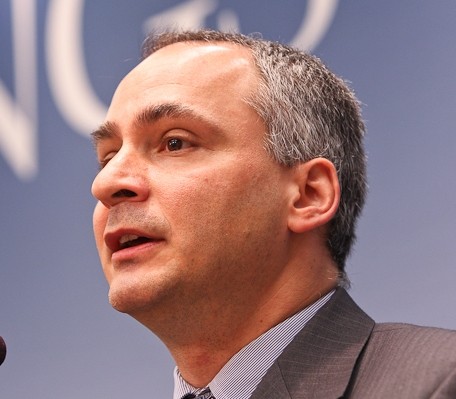
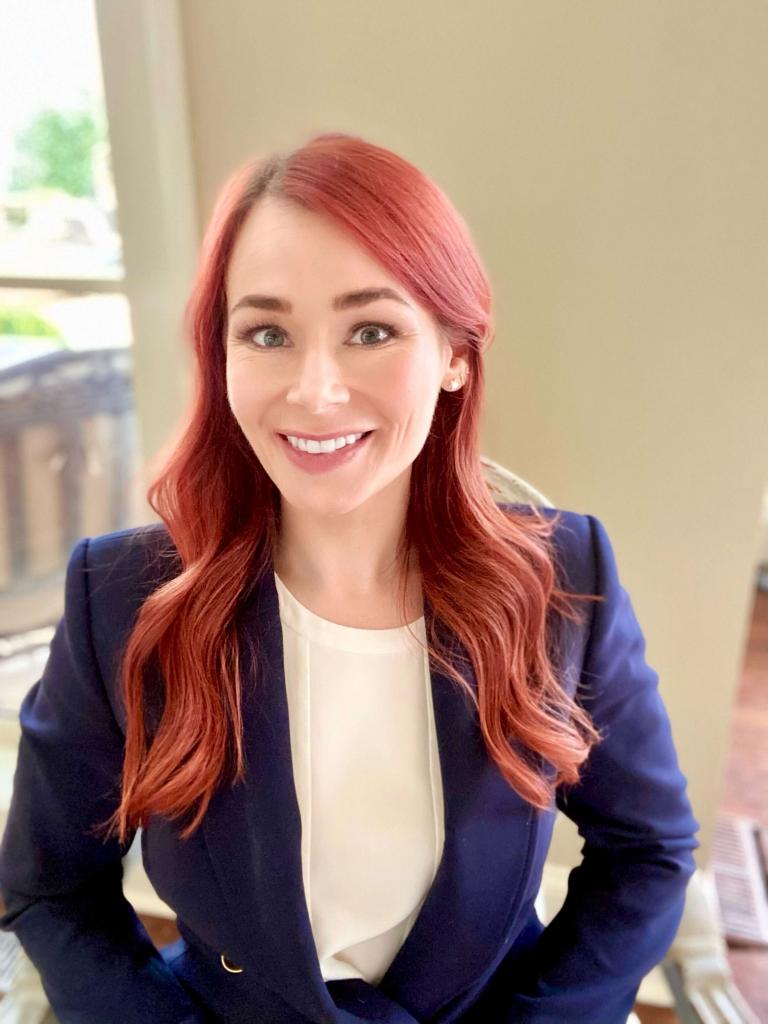


In a live conversation on YouTube, Lawfare Editor in Chief Benjamin Wittes sat down with Lawfare Senior Editors Molly Roberts, Anna Bower, Eric Columbus, Roger Parloff, and Kate Klonick to discuss Judge Boasberg’s opinion quashing subpoenas to Fed Reserve chair Jerome Powell, the government’s response to Anthropic’s suit challenged the Defense Department’s designation of it as a supply chain risk, Judge Lambert reinstating many U.S. Agency for Global Media employees, the video depositions of DOGE employees, and more.
You can find information on legal challenges to Trump administration actions here. And check out Lawfare’s new homepage on the litigation, new Bluesky account, and new WITOAD merch.
To receive ad-free podcasts, become a Lawfare Material Supporter at www.patreon.com/lawfare. You can also support Lawfare by making a one-time donation at https://givebutter.com/lawfare-institute.
Click the button below to view a transcript of this podcast. Please note that the transcript was auto-generated and may contain errors.
Transcript
[Intro]
Benjamin Wittes: It
is Friday, March 20th, 2026. It is 4:00 PM in Washington, D.C. and if you can't
hear it in my voice, I am a bit under the weather. So, be patient. You know, if
I start coughing that's the way life works. I am you are watching Lawfare
Live and I am Benjamin Wittes, editor-in-chief of Lawfare here with Lawfare
Senior Editors Kate Klonick, Anna Bower, Eric Columbus, Roger Parloff, and
Molly Roberts, which I think makes this the first time there have ever been
five Lawfare senior editors on the show at the same time. I'm not sure
about that. Usually we have a public service fellow sprinkled in or something,
but this time it's an all senior editor cast.
[Main Episode]
And we've got a lot to cover. So let's get started. With our
latest example of cases where, you know, the government just kind of spins a
wheel, turns around and points at somebody and says, this is the part where we
destroy your life or business, or, and that is of course the AI industry and
the Anthropic case.
So Kate, we have government responses now to Anthropic’s suits
in both the Northern District of California and the D.C. Circuit. Are there any
surprises and what is the government saying in these responses?
Kate Klonick: Yeah,
so they filed, the government, filed responses to the Anthropic’s suits on
Tuesday before a judge in the Northern District of California.
And there will be a hearing on this what is the 24th? It is
gonna be on the 24th on Tuesday. So, one week from the data filing of the, of
their answers, there was nothing like, hugely surprising, I would say Alan Rozenshtein
a senior editor who covers all this, who no doubt any all listeners are
familiar with, has written a really excellent writeup kind of, summarizing the,
summarizing like the arguments that the government makes.
And I'm sure that we'll link to that in the episode links
today. But essentially it's straightforward. They're not likely to succeed in
the merits and principally they argue that 3252 and FASCSA, like, I don't even
know there's too many S's and C's and they're all like canceling each other out
in terms of like the silence or whatever.
So like, I'm just like, I got good legal advice to just say
whatever I thought the acronym was with confidence and that would be what we
went. So, anyways, that, that's
Benjamin Wittes: Clearly
right, because if you say it authoritatively, then everybody assumes that's,
and probably no one's ever pronounced that acronym before.
Yeah, so there is no standardized pronunciation.
Kate Klonick: I think
we should just call it the Supply Chain Act. The Federal Acquisition Supply
Chain Security Act. So the Supply Chain Act es essentially which was an act
about 15 years ago that was designed—Basically it's an anti-espionage suit. And
so I think that Alan, I'm just gonna speak for Alan here and channel his
excellent kind of writeup of this.
But like, I think that basically what Alan says is correct in
the analysis of like the government's brief is correct here. The government
says like, listen, we can do this through FASCSA, we can do this through the
supply chain. We can also do this through 3252. And we can do this through the,
you know, the APA, like the the, you know, the Acquisition Act.
And so like essentially we can figure all of this out and Alan
basically has two main points, and so does Jessica Tillipman, who does an
excellent, who kind of wrote an excellent kind of writeup about procurement who
basically says that essentially like one, they went around this the entirely
wrong way for procurement purposes.
So essentially there probably isn't a very strong case for
there being a procurement issue. And two, that essentially, like you can't back
channel an espionage act into a contracts dispute. You can't like just
repurpose this for your own purpose. And so I kind of like the way that that
that Tillipman like puts it, which is essentially like you can't just like
basically have the president tweet it and the secretary tweet it and then the
department reverse engineer an administrative record to backfill the justification
for canceling a contract.
And so I think that's kind of right. There's both procedural
issues here that the administration failed to follow. Those are not really
fully addressed by the government's brief.
And I'm sure that the Judge Lin is going to be taking those
into account on Tuesday. To the First Amendment claims. I will just say off the
bat they argue pretty like typically that this is conduct, this is contract,
this is like freedom to contract. This is not First Amendment type stuff.
And, probably for the purpose of the preliminary injunction, I
think that if Judge Lin grants the preliminary injunction on this, it will
probably not be for First Amendment reasons. There are much stronger grounds on
in like the, in the in the Procurement Act and other types of and other types
of issues with the 3252 and Supply Chain Act that are much richer and I think
kind of more sound sounding and kind of constitutional avoidance than deciding
this on First Amendment grounds, which is extremely kind of, would be a very,
will be a very, like, we'll be a very, I don't know, we'll have a lot of debate
around the First Amendment issues when and if we decide to reach those.
Benjamin Wittes: And
just to be clear, that's because it's not. Obviously because of an, anything Anthropic
said that the government did this. It's because it's obviously retaliatory for
a position they took—and the position they took is not necessarily expressive,
right? It's just like the government wanted you to do X and you refuse to do X
and so they retaliated against you.
And retaliation always sounds to some degree in First Amendment
principles, but it's not like, you know, they went and, you know, said, you
know, wrote an op-ed that said we won't do you know, this or that or the other.
And the government retaliated for the op-ed. Is that why it's a little bit
mushy to think about it in First Amendment terms.
Kate Klonick: That's
one reason. Yeah, totally. I mean, one of the reasons is that there is no
nexus, essentially no cause causation, that the retaliation is from speech, right?
Like you could basically argue that the retaliation is from like. If there is
retaliation that is from a lack of, from a failure to like a denial of conduct
or something like that.
But then you get into, I mean, and this is why it's such a kind
of a, kind of out there argument. Even if you're sympathetic towards it, you
get into the idea that code of speech. And so, like at the end of the day, the
conduct that they're demanding from Anthropic is in fact like a, basically kind
of is basically kind of, them compelled speech of a sort.
And that Anthropic’s failure to comply with providing that
compelled speech through code is therefore the act that is being retaliated
against. So that's the nexus. It is like slightly attenuated. And would be a
couple of leaps in terms of what we're talking about and what we think of code
versus conduct and like code as speech.
There's a lot of things implicated there. There's a lot of
downstream effects
Benjamin Wittes: —And
that versus speech, whether code is speech has been one of the great unanswered
questions in the—
Kate Klonick: You
mean—
Benjamin Wittes: Relationship
between First Amendment law and tech law since the mid-nineties, early nineties—
Kate Klonick: A
hundred percent.
And like, you can argue, we could, I mean, we could have like
10 episodes on this, you know, and like, you know, and we would bore everyone.
But essentially Bernstein among other kinds of cases, leaves this
question to some say, resolved and others say not resolved. And of course, it
changes as you change like the facts.
And so like, and how, and like what you see as the slippery
slope of Bernstein. And then there's questions of like, kind of what you
see the legacy of Lochner as and other types of other types of questions
that are in play here. So in, in short, like the First Amendment issues are absolutely
a mess and robust and like this isn't the best place to answer them.
And I don't think that Judge Lin is going to, so I do think
that this is gonna end up being kind of, I mean this could just be dealt with
kind of cleanly on the, as Alan lays out the, like the procedural failures of
the administration. Like to just kind of tweet this stuff and like then kind of
backfill versus like kind of create a record that this was a problem.
And then the idea that like, this is not what the Supply Chain
Act was for. This is not like, this is for, you know, actual espionage, not
procurement issues. So those two things together, I think we'll see Molly's
gonna be cover, Molly's gonna be watching the hearing. I'm gonna be watching
the hearing.
And I think that we will, we'll report back on kind of what
happens with all of that. But it should be interesting. And it seems like, Judge
Lin is kind of running a tight court as far as I can tell, and kind of a tight
briefing schedule.
Benjamin Wittes: So
Molly, will you be at the D.C. Circuit hearing at the Northern District of
California hearing or at both, or at one of them virtually—
How do you cover the bi-coastal nature of this?
Molly Roberts: I do
not know the answer to that question, although it might be with help, I think
I'm not the only one here interested in covering those. So,
Benjamin Wittes:
Gotcha.
Molly Roberts: We
court reporters will sort it out.
Benjamin Wittes: And
for those who are wondering where Alan Rozenshtein is, Alan is in Sweden and
where no district court has jurisdiction over the Anthropic DOD matter.
Alright. Excuse me. Alright.
Let's talk about Molly, your favorite subject, the grand
conspiracy. 'cause I heard a rumor that there are, like 130 new subpoenas that
went out. And so what do we know about the grand jury in the Southern District
of Florida and what it's up to right now?
Molly Roberts: Yeah,
we know less than I would like to know.
So what was reported this week was that there were more
subpoenas out, and in particular that former FBI Director James Comey had been
subpoenaed, which isn't really that big a surprise given that the grand
conspiracy is supposed to be,
Benjamin Wittes: And
when we say subpoenaed, we mean subpoenaed again, right? Because he was
subpoenaed months ago, wasn't he?
Molly Roberts: So I'm
not sure that we knew that he was in the initial batch of subpoenas, but the
very fact that you're asking that question is interesting, right? Because like
why wouldn't he have been that says the subpoena issued last week, the
reporting says relates to his alleged role in the drafting of the 2017 Intelligence
Community Assessment.
We already knew that's what this case was focusing on
originally. And so why would he not have been subpoenaed, particularly when
what kicked this off was this investigation into Brennan. And I believe that in
the referral that John Ratcliffe made of Brennan, there was also referral of
Comey. So to me, the most obvious thing is that James Comey would've been
subpoenaed.
And I was wondering, okay, well was he subpoenaed then for.
Something related to Crossfire Hurricane, is this a new subpoena that had to do
with Crossfire Hurricane, because that would signal an expansion of inquiry and
the reporting by the New York Times last month indicated that the inquiry was
expanding to precisely that.
But the reporting from Axios, which is who broke this story,
says 2017 Intelligence Community Assessment. So that's something I'm gonna be
trying to figure out and look at is, does this subpoena actually cover more
than just that? Because it doesn't feel like huge news if it only covers the
2017 ICA. And then of course, what we also have our eye on is will this expand
even further, not just to these 2017, 2016 investigations into Trump and
Russia, but also into‑
We know that there've been interviews conducted on this
subject, Trump's attempts to get false slates of electors approved and perhaps
also the Mar-a-Lago classified document search, which would provide the
jurisdictional hook. And then you may have been about to ask about this, but
the other thing that I'm gonna be trying to figure out is, did these subpoenas
come out of Fort Pierce, which is where this grand jury is, or did these just
come out of Miami, which is where all the other subpoenas in this case of which
as you said, there are lots and lots, many of them.
My understanding is to people who really haven't been in the
public eye, the, they've been coming outta Miami. So has this worked yet?
Benjamin Wittes:
Yeah. So Axios has mentioned the number 130 subpoenas. Yeah. And there are a
lot of people, everybody keeps mentioning the same five or six names as though
this is an investigation that's focused on a number of very specific people.
I have no reason to believe that's the case. You know, I think
those are just the people that Axios has been able specifically to identify and
whose names it believes readers will know. But alright, I have a really dumb
question. I mean, I guess all questions about this subject are dumb.
Molly Roberts: Either
no questions are dumb on this, or all questions are dumb on this.
Benjamin Wittes:
Yeah, exactly. So, and let the record reflect—given Jim and my relationship, I
have had no contact with Jim on this subject. I have no, had no contact with
anybody representing Jim on this subject. I know absolutely nothing that is not
in the press.
But if I were the government, I would assume that the answers
to almost all of these subpoenas, if these are gonna be about the ICA from
2017, is that there are no documents responsive to this request because most
people don't, in fact, the paranoid fantasies of the grand conspiracists aside,
take home large quantities of documents related to intelligence community
assessments.
And so my question is, do we have any reason to think that
there, that I mean, I don't know if this is a fishing expedition exactly, but
the production of material in response to this might itself be, you know, if
the material is classified, might suggest criminal activity. Like that you were
so, like why does the government think any of these people has like a cache of,
I mean, none of them is John Bolton, or, and I don't mean to cast dispersions
at John Bolton, but you know, usually when you're looking for, like, if you
wanna know what Jim Comey or Lisa Page, or you know, Andy McCabe did in
government, you subpoena the government or you send a document production
request to the FBI.
What's the, what do we know about the theory other than that it
makes for a good Axios story of subpoenaing the individuals, nine years after
the events happened?
Molly Roberts: Yeah,
I think it's a really good question. I totally agree that they're not going to
be able to get much here because these are classified documents and if these
people have those classified documents, then that's a whole other problem.
I think that part of what's going on here is exactly what you
said. It makes for a good Axios story. The other part is that this is, in my
view, at least a revenge mission, a kind of personal revenge mission. And so to
enact your personal revenge against each of the people you wanna get it on,
you're going to subpoena them and make their lives individually difficult and
make it so they each have to hire a lawyer and go through all of this rather
than subpoena the government.
So I think that's one thing too. And I think also part of what
is going on here is they want all these individual people somehow involved in
this case, because if they manage to establish that these people are part of a
conspiracy, they can then encompass many acts that these people have engaged in
and bypass the statute of limitations by saying that those acts were somehow
related to the conspiracy.
So those are kind of all my small answers to it, but it did,
they still face this big problem, right? I mean they need to actually have
something on these people and—Right, if it's in classified documents, they
can't get it.
Benjamin Wittes:
Eventually somebody is gonna file a motion roughly akin to the one the Fed
filed in the Jerome Powell case, which is, wait a minute, I don't think there's
a theory of criminal liability that gives rise to a good faith subpoena on
this.
Molly Roberts: Yeah,
no, exactly. Which I guess is partly why you want it in Aileen Cannon's
courtroom.
Benjamin Wittes:
Alright we will stay on that matter. Roger, speaking of matters that we're
staying on, we have another FBI lawsuit against Mr. Patel over firings of FBI
agents. What's the latest of on this subject?
Roger Parloff: Yeah,
this one just came down.
I don't think it's assigned yet. It's two FBI agents. John Doe
one and John Doe two versus Patel and Bondi. It's in the it's in D.C. federal
court. They were on the Arctic Frost investigation, which is the one that,
between November 22nd and June 23rd, led to the indictment of Trump in the
January 6th case conspiracy to overturn the 2020 election.
And apparently one of their names was publicly leaked last in
October, this recent October by a Republican legislator. I couldn't get through
the whole complaint. It's 41 pages. It may be by Grassley, but one of the
Republican legislators. And then on October 31st, Patel, summarily fired both
of them.
They are you know, there are procedures if you're gonna fire
somebody, and there are even, I think, extraordinary procedures that might
warrant summary. But they're extraordinary. None of those were obviously taken.
And apparently they were perceived as political opponents or the allegation is
simply because they were assigned to that investigation and assigned.
Obviously they weren't, didn't volunteer. It's an unusual suit
in that it is pure First Amendment and Fifth Amendment retaliation for First
Amendment protected speech and fifth Amendment due process and injunctive
relief directly from those. So it's sort of like a Bivens action.
Benjamin Wittes: Kinda
like the Anthropic case actually. I mean, except that they were employees
instead of a federal contractor.
Roger Parloff: Yes.
Benjamin Wittes: You
know, alleging retaliation for you know, for getting assigned to work on and
doing your job.
Roger Parloff: Yeah.
And failure to follow the relevant law. Yeah. Relevant procedures. Yeah. It's
and that's, oh, one of them is a veteran of 21 years.
They go into, without revealing their names, they go into their
rather illustrious careers.
Benjamin Wittes: And
it's pretty easy. We're not gonna reveal who these people are because the court
is protecting their names. They're filed as a John, as John Doe. But if you
line up the facts against publicly reported matters, it is not particularly
subtle who these people are.
Roger Parloff: Yeah.
And we know—Oh. So, you know, you can recognize these two?
Benjamin Wittes: I'm
pretty sure I know who both of them are. But I'm not a hundred percent sure.
Roger Parloff: Okay,
so one is 21, the other is eight years. He was in public corruption, but he had
an unusual job too, which was he was working on a sensitive fraud case and he
was the guy who was supposed to brief Kash Patel himself and Kash praised him
as recently as October 1st before the October 31st summary firing.
It's on a crisis negotiation team, multiple awards and so on.
We know from other FBI cases that one issue is likely to be, can you go to
federal court at all? Is there supposed to be some, you know, are you supposed
to go to the Merit System Protection Board? Some, it's not easy. Some agents
are, some aren't.
It depends on if you're a veteran or you aren't. So, but that's
all. I can really tell people at this point.
Benjamin Wittes: All
right. We will follow this case as it develops along with, you know, a bunch of
other FBI cases.
Meanwhile some judges are getting a little bit prickly. Judge
Boasberg fresh off his spat with Jeanine Pirro last week has issued a
surprising little order about no true bills in his court.
Roger, what does this order require?
Roger Parloff: Yeah,
this is interesting. And it was first reported by Josh Gerstein this week of
Politico. Actually the order was issued March 4th, which might have, which I
think was before the latest tizzy with Pirro.
Benjamin Wittes: And
it seems to be in response to the six members of Congress who a grand jury
didn't want to indict for—
Roger Parloff: I
think so, yeah.
Benjamin Wittes:
Truthfully about military service members obligations in the face of illegal
orders.
Roger Parloff:
There's actually, you know, and he's it's a very, it's a very sober it's not an
angrily worded thing. It's a local rule and it just says based on, several
recent matters have arisen.
It says several recent matters have raised the question of
whether notice should be provided to the duty magistrate when a grand jury
fails to concur in an indictment in a GJO, which is a grand jury original
investigation and what we might—
Benjamin Wittes: Call
this the passive aggressive voice.
Roger Parloff: Yeah.
Yeah.
So, what's going on, and it is sort of unusual, is that there
is a rule in the federal rules of criminal procedure that says if there's a
case alive already because somebody's filed a criminal complaint or an
information, and then the prosecutor tries to elevate it to a felony by getting
an indictment, and the grand jury, no true bills that there has to be a notice
filed to the and given to the magistrate. It's not public necessarily. It's
still sealed typically, but it exists and the magistrate knows about, there's
no such thing if it's an original grand jury matter, meaning there's never been
yet a criminal complaint, which was the situation with the attempted indictment
of Senator Kelly and and the other con congressman.
So, that's what this one says, from now on those situations
will need a formal notification. It will remain the assumption will be the
default setting is sealed and it can't be released without a court order. So
he's gonna try this for a hundred. He did seek the government's thoughts on
this change.
He says he doesn't say,
Benjamin Wittes: And
I was stunned to find that they opposed it.
Roger Parloff: Does
it say that? I missed that.
Benjamin Wittes: I
believe they, they issued a statement, I think to Josh Gerstein saying, oh,
they opposed, but I could be wrong about that.
Roger Parloff: Okay.
The document, I don't think it, it notes that there views were solicited.
It doesn't give any insights into what their views were. And it
says that this will be in effect for 120 days, and then he will consider making
it a local rule. The thing I had not understood is that in these situations
where it's a, it's an original grand jury investigation, there is you don't
even have to tell the magistrate the magistrate might, it's not just even a
document.
There might be. You don't have to tell the magistrate at all.
So there's no real way until now of saying, look how many no true bills. And of
course,
Benjamin Wittes: Which
really does raise the question of how the press is finding out about all these
no true bills. I mean, if the, you know, I, you know, people involved in courts
should of course, talk to the press with propriety or not as a member of the
press that said you know, if prosecutor walks out of the grand jury room and
says to, you know, member of the press, I just got no true bill.
You know, that's a, like a violation of a grand jury secrecy
rule. And the defense lawyers presumably don't know about it except in the
elliptical sense that they may have been informed that the government was gonna
seek an indictment and then one never materializes. So I'm a little curious
where all this information about no true bills is really coming from
Roger Parloff: No,
it's it's very interesting and some, and it's pretty fortunate, it's pretty
fortunate that somebody is going public.
Benjamin Wittes:
Yeah. Don't stop guys. Okay. Keep it coming.
Roger Parloff: I
mean, that Senator Kelly thing is such huge news and the notion that nobody
would've known about it.
Benjamin Wittes:
Well, and that somebody disclosed not merely that it was no true bill, but that
it got zero votes among the grand jury. I mean, that, that was some detailed
information. Yeah. And it's hard to imagine that's Jeanine Pirro’s office, you
know, dishing dirt on itself. I don't know, like it's a very confusing
question, like where that comes from.
Alright. Meanwhile, in New Jersey, another judge is even more
pissed off than Judge Boasberg. Roger, this one kind of took me by surprise.
It, I'm not sure I've ever seen a judge throw prosecutors out of his courtroom
before. What on Earth is going on in New Jersey?
Roger Parloff: Yeah,
this was sort of a perfect storm.
There's a, at least three or four things going on, and maybe a
judge who's a little irascible too. It's Judge Zahid Quraishi of the District
of New Jersey. I think he's in Trenton. And the case is an aggravated one.
Francisco Villafane, charged two years ago with possession receipt and
distribution of child pornography material.
So, offense where there's a five-year minimum up to 20 years.
7,000 emails to a minor over a three-year period, a girl that went from 13 to
16 involved videos like, show me you doing this and so on. In April 2025
there's a plea agreement reached stipulated term of 84 to 108 months, which
sounds like a lot, but it's about a third of what the guidelines recommend for
this sort of offense.
And then twice as the sentencing is approaching, the prosecutor
tells Quraishi, oh, you know what? After the plea agreement was reached, we
noticed that there's more stuff in his computer and we need to notify some
other potentially identifiable victims. And then it develops, in fact, a
potentially 116 additional identifiable victims. And so we now know that he's
steaming, like, how could you make a guilty plea under this?
Meanwhile, other things are happening over there at the
District of New Jersey. On August 21st, Judge Brand says that Habba is, has
been unlawfully appointed. That's appealed. And Habba continues to put her name
on indictments as the appeal is pending.
So then in December the Third Circuit affirms. So all of those
indictments in the interim are now have an appellate issue that they didn't
eat. And then on December 8th, she steps down. But then Bondi and Blanche,
rather than following one of the ways of appointing an interim or an acting U.S.
attorney invent a new theory that doesn't involve anyone's intervention except
Bondi or Trump, which is to appoint a triumvirate to head the office.
And then just on March 9th, Brand strikes that down. And he's
issues a stay order while it's being appealed. But he says, a stay cannot
invalidate, can, cannot validate an unlawful appointment if the government
chooses to leave the triumvirate in place. It does so at its own risk. So the
next day, Quraishi writes the prosecutor and says, look, do you want an
adjournment in this sentencing hearing that's coming up?
Because that way we can sort out what the hell is going on
rather than, 'cause otherwise we're gonna need your client to, to try to waive
this flaw, potential flaw. The AUSA writes back and says, no, I don't need any adjornment
plus, you know this. And he says, among other considerations, this is a victim
case.
Like we need to go forward because there are real victims here.
And this from a guy that entered a guilty plea without finishing the
investigation and, you know, failed to notice 116 other victims. So he's
already pissed. And we know also that last month he had issued another order
threatening the office with contempt because of the way they were hand handling
immigration cases, 1225(b), the mandatory detention stuff.
So, so there's all of this churning and he really just goes and
when the guy shows up, the, he's a fairly young guy. He’s been there since
2023, 2 and a half years in the office. He shows up with the appellate—head of
the appellate division, Mark Coyne. And Coyne hasn't entered a notice of
appearance and there was no reference that he would be showing up.
And here Quraishi loses it and says, no. And frankly, this
part, I don't understand why it would be such a grave. I've seen prosecutors
come in with senior prosecutors without and says it won't let him speak and
says, you must, you know, don't speak. And it, and he does speak.
He tries and he has him removed—or he says he'll have you
removed unless you leave on your own. And eventually he does. But there,
there's one other as yet another thing going on, which is that apparently, Habba
meanwhile, has become a senior advisor in DOJ supposedly supervising U.S.
attorneys, and she's been seen in the district of New Jersey offices.
And so that he's really wondering who is running everything.
And so he's ordering that all of them now come to a hearing and testify about
what the structure really is and whether Alina Habba is playing some role. And
he's, and he says, and what you've told me today, and this is really not you,
here, is really the office, not the young AUSA I think, which I don't believe
you, by the way.
I won't believe it until you testify. That is why that is what
has happened to the credibility of your office. Generations of AUSAs had built
the goodwill of that office for your generation to destroy it within a year.
Dot dot dot. You all need to figure, start figuring out how to proceed going
forward.
And it's not gonna be walking into the courtroom making
representations and us accepting it. We know now way too well not to accept
those. Your folks are gonna start testifying. They're gonna start speaking
under oath when they tell me who's running the office, so I have a proper
factual record. And in fact, he specified that these three leaders of the
office would be sequestered, which is a way of saying he doesn't trust them to
hear.
He, he thinks they'll shade their testimony if they've heard
the others. Anyway, it was a pretty lively hearing.
Benjamin Wittes:
Yeah. You know, that you're in trouble with federal judge when the leadership
of your office is called a triumvirate. That's, I just like, choose a different
name, guys. Alright.
Eric, back in D.C. here we have the U.S. attorney's office. And
remind me, who is the U.S. attorney here?
Eric Columbus: Jeanine
Pirro.
Benjamin Wittes:
Okay. Jeanine Pirro has dropped prosecution of a flag burning suspect, rather
than give him discovery regarding his claim of judicial of vindictiveness or
prosecutorial vindictiveness.
So, what is going on here and what evidence of vindictiveness
is she so afraid of that she will drop the case rather than provide discovery
of?
Eric Columbus: Well,
the backstory here is that in August, Trump, who has been, you know, low level
obsessed with wanting to throw people in jail for burning the flag since his
first term he put out an executive order criticizing flag burning which as I
assume most of our listeners know, is protected speech under the Supreme Court
decisions interpreting the First Amendment.
So he put out an order saying, my administration will prosecute
those who otherwise violate our laws while burning the flag. And the order said
that noted that some content neutral laws might be applicable, such as open
burning restrictions or destruction laws by destruction of property.
Now, you know, it's no longer content neutral if you are
announcing to the world that you will use content neutral laws because to get
at this particular type of speech that you hate. But so, so this guy goes out a
guy named Jan Carey goes out that very same day, grabs an American flag and
heads to Lafayette Park right across from the White House and puts the flag
down on a brick path and his megaphone and one hand the lighter than another,
and he says that he's served in the Army for 20 years.
He said, I've fought for every one of your rights to express
yourself. There's a First Amendment right to burn the American flag. But the
president signed an executive order saying it was illegal to burn the American
flag.
He then proceeded to, as a form of protest burn the American
flag and, very quickly park police on the scene came up to him, eventually
extinguished the flag and arrested him. And they were trying to figure out what
to do. And there was actually body cam video, which they're saying that, you
know, I don't know—
There's the president sent out this executive order today about
flag burning. Maybe we should, there's some charges in there that we could, we
should use against him. Let's see. And they arrested him and he's charged.
Benjamin Wittes: But
just just so that we're clear here, I remember a case called Joey Johnson v.
Texas, where the Supreme Court said that flag burning was constitutionally
protected speech.
Right, it would have to be some crime other than flag burning,
right?
Eric Columbus: Yes.
Okay.
Benjamin Wittes: Just
checking.
Eric Columbus: In
this case, the crimes were, basically lighting a fire on National Park Service
property in a ways that kind of create a hazard and are not permitted and stuff
like that. So these are misdemeanors.
Benjamin Wittes: I
mean, I gotta say, I wouldn't be confident as someone who's had my own run-ins
with the Park Police, I wouldn't be totally confident about setting a fire on
park service or Lafayette Square, even if I were burning, you know, twigs or a
piece of paper, that there's no reg that says you can't like, like, set things
on fire there.
I'm just like, I wouldn't be confident of that.
Eric Columbus: Yeah.
And there are regs as it turned out. And he sues rather, no, he doesn't sue. He
the defendant files a motion to dismiss saying that these, that the app the
general applicable regs, the General National Park Service regs are superseded
by regs that govern D.C. parks specifically. And oh, by the way, they're prosecuting
vindictively.
Judge Boasberg says, no, the regs are fine in due to gain the
motion to dismiss. But he says about whether the, they, the prosecution was
vindictive. He says, well, you know. I can't really tell. He says, on the one
hand, it seems unlikely that the prosecutors would have felt free to defy the
president who had just put out this executive order and had this case basically
nicely teed up for him of someone who would, who burned a flag.
And Trump said, I want you to go after flag burners and here's
one. But on the other hand, Judge Boasberg said there's a good chance that he
was prosecuted for the fire and not for what he said on fire. I mean, he,
there, there are actually photos in the opinion. I mean, this guy just lights
this flag in the middle of Lafayette Park and there's like a—
You know, it's an American flag sized fire and there are people
around, there's no fire extinguisher. The fire damaged the bricks under it. But
he says, okay. He's made a good enough showing that he's entitled to some type
of process on his, on this claim here, and he orders discovery and from he that
the defendant can propound discovery request on the prosecutor's office, which
has to get back to them by March 16th on Friday, March 13th.
DOJ says, nevermind. We're dropping the case. So, and Judge Boasberg
of course grants that, so we don't know and we will never know. We'll probably
never know what exactly it was, but it was something that was pretty bad. I
suppose that Jeanine Pirro, who, you know, claims that she's so willing to take
not guilty verdict as she announced in that press conference I think a week ago
was not eager to have it come to light, right?
Benjamin Wittes: I
just wanna say to anybody who wants to burn a flag. Don't do it. Setting fires
in public places, bad idea. You're gonna get in trouble. You're gonna set
something on fire that you didn't mean to, and be imaginative. Think about
using projectors to project images of burning flags that will get all the
expressive value and it has none of the risk.
Anna Bower, there was another case that the U.S. attorney's
office dropped in federal court this week. And you were there for it. What, very
briefly, 'cause we did a whole show on this. What happened?
Anna Bower: Oh, you
mean your, you the, you mean your case? Is that what we're talking about?
Benjamin Wittes:
Yeah. That's the only one that I know that you were present for.
Anna Bower: Okay. I
was confused for a minute. Yes, I yes. So, our very own, Benjamin Wittes had
his day in court this week in Federal District court at the E. Barrett
Prettyman Courthouse. My first time covering a proceeding of our editor-in-chief
in court.
And it was the strangest hearing that I've ever been to at
Prettyman because it wasn't really a hearing. Ben was summoned over a citation
that he received related to projecting on the Washington Monument. And instead
of having a, an actual judicial proceeding at this initial appearance before a
magistrate judge.
It ended up being a kind of, you know, conference situation
where there's an AUSA and Park Police who are seated at a table and then they
call people up one by one. Many of the people who were there were vendors who
you know, received citations related to things like parking violations or other
types of regulatory violations.
And it seemed to me that most people were not represented by
counsel. It was very difficult to hear what was actually happening during this.
What was called a court proceeding, but kind of wasn't one. But still had a
presumption of, you know, public access because there was no microphones turned
on, that kind of thing.
The AUSA, when I tried to approach listened to in on what
happened with Ben's case got very upset that there was a journalist there to
cover the proceeding. But Ben, do you wanna explain what happened next in terms
of the case getting dropped?
Benjamin Wittes:
Well, for people who are really interested in the details watch yesterday's Dog
Shirt TV where Anna and I went through the details with precision.
But for now no charges were filed. I agreed to pay $100 civil
fine, $30 in court costs. My property, including both Lord and Lady Laser, will
be returned to me, as well as a very treasured camera lens, which I feel very
strongly about. And my co-defendant, who was wrongly accused, he actually did
not project on the Washington Monument had charges against him, dropped
entirely.
So altogether a very satisfying outcome despite the procedural
irregularities, which were extreme. And yeah, I will be back in action doing
projections again soon, although not on the Washington Monument. Now that I
know that there is a specific reg that forbids that.
Anna Bower: Yeah. And
I highly recommend listening to that Dog Shirt Daily episode that we did on
this, because it really was such a strange proceeding.
And we go into the details as to why in that in that episode.
Benjamin Wittes:
Indeed. Alright let's go to Fulton County which is, feels like a blow back to
times past where Judge Boulee has announced that mediation has failed and we
are now going to have a litigation over Tulsi Gabbard’s execution of a search
warrant for the FBI, what's going on down there?
Anna Bower: Yeah, so,
remember this is the ballots case in which Fulton County is trying to seek the
return of the ballots that were seized by the FBI. There was a lot of briefing
in the lead up to what was supposed to be an evidentiary hearing, where we
expected to hear from the affiant in who filed the search warrant affidavit
supporting the search warrant.
And then at the last minute before the, that hearing was
supposed to take place, Judge Boulee ordered the parties into mediation. And as
you've said, Ben, after about, you know, a week and a half, two weeks of
mediation Judge Boulee has now announced on the public docket that the
mediation has failed.
And now the question is will we go forward with this
evidentiary hearing that was supposed to cover essentially whether or not the
search warrant affidavit was sup supported probable cause whether there were
omissions in it that violated the law, that kind of thing. And again, we
expected to hear from that special that FBI agent who filed and swore out the
affidavit.
But of course, there's this pending motion to vacate the
hearing and quashed the subpoena that was filed by DOJ. And so Judge Boulee ordered
the parties to provide further briefing on that issue of whether the hearing
should go forward, and in doing so, ordered the focus to on the arbitrary and
capricious standard under 2e.
Now, for people who don't know what that is, a reference to,
there's something called that are referred to as the IIe regulations. That's
when a third-party subpoena is issued upon an agent of the government. The
agency has regulations that kind of set the guidance for, you know, whether or
not it should allow that person to testify or the evidence to be released in
relation to that subpoena.
But these regulations don't, aren't supposed to like create a
kind of substantive, right, to just unilaterally kind of allow the government
to refuse, to provide someone to testify at an evidentiary hearing. But it does
set up this process. And there's different circuits that look at the refusal or
the denial of a 2e request at under different standards.
So some circuits look at it under the same type of procedure
that you would under the Federal Rules of civil procedure, which allow you to
quash a subpoena for undue burden that is a more favorable standard to the
person who's seeking to the testimony of the federal agent. But then some
circuits look at it under the APA, the arbitrary and capricious standard.
That's a more deferential standard for the agency. And so, so
here there's this question of like, now that the government has refused the 2e request
that Fulton County sent for this agent's testimony should the judge, Judge
Boulee look at it as that, look at that denial as arbitrary and capricious, or
look at it under, you know, a different standard of like, they can only seek
quash based on undue burden.
So that was what is being addressed in the litigation now. We
do have a tentative hearing date for March 27th. Fulton County has filed its
brief in which it argues first that the standard isn't arbitrary and
capricious. It's you know, just look at what can, how you can quash a subpoena
under rule 45 of the federal rules of civil procedure.
And then even if it is arbitrary and capricious that this
denial here is arbitrary and capricious 'cause they're not seeking privilege
information. They've shown that there is a reason for the agent's testimony
under Frank's and under the rule 41g, which does explicitly say that a court
shall you know, hear evidence and testimony on any factual dispute that is to
be resolved.
So all of this is being you know, hashed out in these briefs.
We have not heard from the government yet, that's due. I actually think maybe
it's today, but they haven't filed yet. And so within the next few days, Ben, I
expect to hear from Judge Boulee about whether that the agents will testify.
I suspect that probably, it seems to me that the issue isn't
whether the evidentiary hearing goes forward, it's the question of like,
whether at that evidentiary hearing, we will hear from the special agent,
because there's still witnesses that Fulton County could call like Ryan Macias,
who's their elections expert, who filed a very long declaration.
And I also wonder too, that, you know, if the government
declines to allow this agent to testify, will there be an adverse inference
that the judge will make against the government in respect to deciding the
ultimate issue, which is, you know, whether or not there the Fulton County's
rights have been violated here and that they can therefore get their the return
of the ballots.
Benjamin Wittes:
Anna, who is the administration of DOGE? The administrator of DOGE and do we
have new video evidence that bears on the question?
Anna Bower: We have
lots of new video evidence that bears in the question, but Ben, you will maybe
not be surprised to learn that there's no clear answer in the video evidence.
So in, we have 23 hours’ worth of deposition videos that were published online
by,
Benjamin Wittes: And
just to be clear, how many of them have you watched?
Anna Bower: I have
watched about 20 hours. I still have like three more hours just checking to go
that I'm still trying to get through, but I've watched over the course of about
a week, I've watched a lot of DOGE deposition testimony. And I, I kind of
recommend it, but also kind of don't recommend it.
But we learn a lot about the structure of DOGE. This is all in
the context I should mention, of the a case that was brought against the
National Endowment for the Humanities, by groups of scholars and historians,
people whose grants were canceled by NEH after DOGE came in and was deciding
to, cancel certain grants that, that, that were deemed to be DEI or that were
deemed to be wasteful.
And as a part of this litigation, one of the big questions as
we've discussed before is like, who was really calling the shots here? What was
it actually the agency heads and the people who were in charge at NEH or was DOGE
really kind of, making these calls in a way that they, which they had no
authority, statutory authority to make, and therefore it would be ultra virus
because, you know, they don't have the authority to cancel these grants
themselves.
So that's kind of one of the issues that's lurking in the
background here. And for that reason, in these depositions there's a lot of
questions about the structure of DOGE and who was in charge and who was making
these decisions. Was DOGE just advising or was it actually instructing on the
termination of these grants?
And on the question, the who is the administrator of DOGE?
There's lots of interesting stuff because two of the DOGE guys are deposed and
multiple times, you know, they're asked like, who did you understand to be in
charge of DOGE? And there's kind of a variety of different answers they give.
You know, Elon is described as one person who was understood to be in charge.
Even though the in legal filings and in its legal cases, DOJ
has claimed that no, he was not in charge of DOGE. And then also there's
another name that came up over and over again, which is Steve Davis, who is one
of Elon Musk's known, kind of, you know, right hand guys. And is described in
these deposition videos as kind of, you know, regardless of whatever his title
was the guy who was understood to really be running the day-to-day at DOGE and
ran the meetings and over again when these questions are asked, guess whose
name is not mentioned? Amy Gleason, the purported acting administrator of DOGE.
And at one point, Ben, there's even this moment when someone
asks Nate Cavanaugh, who was the DOGE team lead of you know, killing the small
agencies team or whatever they called it. I believe it was just the DOGE small
agencies team.
He's asked at one point, who was Amy Gleason, and he takes a
moment of like a whole like five second silence and kind of stares off, like,
who, where have I heard that name before? Almost as if he's thinking like, who
is that? And then he goes I believe she was the administrator of DOGE. So it's
just a fascinating insight into DOGE.
There's also a whole other saga that's going on around the
release of these videos that we can talk about if you want to. But there's a
lot in these videos that is very interesting.
Benjamin Wittes:
Alright. Roger, while I wasn't looking this week, the government sued, once
again, that hotbed of antisemitism, Harvard University, and I confess, I
completely missed this until I saw it on the schedule this week.
And I know nothing about it. And so fill me in. What you know,
violent acts or you know, or pogroms, are they responding to this time?
Roger Parloff: It's
the same pogroms and the same violent acts. It's, this is now the third
litigation between the two. This is the first that the Trump administration has
brought.
The way this worked, if you remember, is that they began
terminating all the, all of Harvard's contracts. So, just, you know, in a
letter, right.
Benjamin Wittes: But
the previous pattern had been that the Trump administration cites antisemitism
as a reason to cut off Harvard's money on matters that have nothing to do with
antisemitism, like, you know, biology and—
And then Harvard sues over that to top that.
Roger Parloff: Exactly.
Yeah.
Benjamin Wittes: So
what's the, is this a Title VI litigation? What's the theory exactly?
Roger Parloff: Yeah,
it is, and it's and Title VI of the Civil Rights Act of 1964. Forbids racism, I
mean forbids discrimination on the base of race or national origin by federally
funded entities.
Well, basically they had cited, you know, in their letters
terminating all of Harvard's contracts. They had said you violated Title VI.
And then Harvard went to court and said, well, okay then, but you didn't follow
Title VI. I mean, if you're if there were really a Title VI violation, you need
to, you know, Title VI tells you how to proceed and there's due process.
You don't just write a letter and say, I'm cutting off $9.2
billion in—or I guess 2.2 billion in grants and everything. In the future you
have to follow procedures. And so Judge Burroughs said, that's right and
entered a originally a preliminary and then a summary judgment. And that's now
on appeal.
So now they're bringing. The Title VI. So I, I think that's
what's happening.
Benjamin Wittes:
Alright. So Molly, we talked last week about judge Lamberth's ruling in Widakuswara,
which is the VOA I don't know what to call it, the destruction of VOA case.
There's another one now another ruling, this one somewhat broader in terms of
the relief it granted.
What did Judge Lamberth do this week?
Molly Roberts: Yeah,
so Judge Lamberth vacated the decision, the memorandum by the Voice of America
Parent Company, the U.S. Agency for Global Media that put almost all about a
thousand, I think it was 1,042 of its 1,147 full-time employees on
administrative leave and also ceased most of the broadcasting.
So he vacated that order, and that means that those
thousand-ish full-time journalists and staff will come back to work on Monday,
or are supposed to come back to work on Monday, and broadcasting operations
will or should resume on Monday. Of course, in practice, that's gonna be tricky
because it's been about a year of this organization having been totally gutted,
the exception here is contractors who were terminated for their disputes.
Benjamin Wittes: This
is a very big exception.
Molly Roberts: Yes. A
very big exception. And for their disputes, Judge Lamberth found that his court
didn't have jurisdiction. There's a separate court that deals with that.
Benjamin Wittes:
Yeah. So, so just a word on that. A huge number of VOA employees are actually
contractors. And the reason they did it that way is because it was easier to
get people in the United States on visas that let them work on a contractor
basis than to sponsor them for full-time employment.
These are, remember there's 46 or 48 language services, some of
them, you know, so you need these really specialized skills, you know,
Cambodian speaking, broadcast journalists, right? Like, and so there's a lot of
people who were brought in, including from countries with very repressive
governments, or in the case I'm most familiar with countries that are in war
zones like Ukraine.
But, and then, they're, a lot of them are brought in as
contractors, and they were all basically terminated the same day. And so this
action is great for the people who were full-time employees of DOA, but it
doesn't help—it's still not clear to me how you get back the if the goal is to
have them start broadcasting again at the level that they were, you cannot do
that without the contractors.
And so it'll be interesting to see what this group of people
now freed from the clutches of Kari Lake, although still under the clutches of
the, you know, Kari Lake 2.0, what they're able to do and whether the
administration really tries to go for the jugular again with them.
Molly Roberts: No,
that is all right. And I think that, I mean, it'll be interesting to see
exactly what happens, right? Because the issue here, the judge ruled was that
the U.S. Agency for Global Media had violated the Administrative Procedure Act
in two ways.
One, by not satisfying the reason decision making requirement. And
he was really critical of the complete lack of reasoning in the memorandum
doing this. And two, it engaged in unlawful withholding of required agency
action because there's a statute that says you have to communicate directly
with peoples of the world by radio. And there are also specific regions in
which you have to do this.
And they weren't doing that. So now the idea is, well, they
should resume operations as they were before that. But going forward, they
still need to meet that statutory requirement. And I do kind of wonder, how do
you do that? When you've gotten rid of so many of these contractors who were
responsible for it,
Benjamin Wittes: It's
gonna be such an interesting question, and it's not gonna be one that is
limited to VOA.
So in so many agencies, the administration has taken the
position that it can satisfy what it calls the statutory minimum, which is the
thing that the appropriation statute mandates that it spends X amount of money
to do basically without having a federal agency. Like, you know, USAID mostly
doesn't exist, right?
Like now, but how, and in the short term, the Supreme Court has
been quite deferential to the executive in terms on the shadow docket in terms
of what it lets it get away with in reductions in force and, you know, meeting
the statutory minimum. But I am not, you know, this is the first time that I am
aware of, but it won't be the last.
There are other cases that are percolating up where, you know,
the statutory minimum really does say some things, right? And you're now not in
the, you're not in the emergency order department anymore. You're in the merits
phase and you get a good district judge, somebody like Royce Lamberth, who's
actually gonna read the statute carefully and say, well, you know, it says you
have to reach this number of countries in their languages.
Are you doing that? Well, you know, you're supposed to be
spending $400 million doing that. I think there are going to be a lot of these
cases and I have my eye on a few others that are similar in that regard, where
I just don't, I don't see how you can meet the statutory minimum without and
terminate the existence of the agency entirely, or almost entirely.
Alright, Roger, let's do our weekly immigration roundup, which
is gonna be brief this week because there hasn't been that much going on in the
immigration space this week. And I wanna start with why, what, why has this
been such a quiet immigration week?
Roger Parloff: Well,
two cert grants isn't chopped liver.
Benjamin Wittes: I
mean, okay.
Roger Parloff: Okay.
The, so these TPS cases I've been talking about, the temporary protected
status, the Supreme Court took two of these, and they, it's cert before
judgment, meaning the appellate courts haven't ruled on these cases yet, but
obviously they had to do, they've had to finally face these in a holistic way.
Trump v. Miot involves Haitians 350,000, Dahlia Doe
involves Syrians less than 7,000, maybe around 5,600. Miot came out of Judge
Reyes here in D.C. Doe came out of Catherine Polk Failla in the Southern
District of New York.
And the key question is probably going to be, the statute, the
TPS statute has its own jurisdiction stripping provision that says there is no
judicial review of any determination of the attorney general with respect to
the designation or termination or extension of a designation of a foreign state
under this subsection. And that sounds and the attorney general has delegated
this to the secretary of homeland security.
So that's known. All of these things start with a designation
of a country as under the, as being eligible for TPS status. And then that
makes a category of non-citizens eligible. But they have to. Then apply
individually and prove that they don't have criminal records and so on. Like,
that's how you get TPS status. These are not illegal aliens.
But anyway, that sounds like, oh, so no can designate which,
which countries get it and which don't. And how do you get around that? And so
the way that many judges have gotten around that is to say that, yeah, that's
the designation. I'm not quibbling with whether, you know, you choosing whether
to designate or not. I'm saying you didn't follow the procedural rules you have
to follow, you're supposed to do a country review first and you didn't you
know, and you're supposed to do this in good faith, and you're supposed to make
findings, you know, that they're no longer in danger of their lives. You know,
this sort of thing.
And you didn't, you just, you came into office and you
terminated 12 of these things so far, and so the claim is it's arbitrary and
capricious. It was a preordained decision. The, it was pretextual reasons were
offered. And also in, in some of these, in the Haitian case, racial animus in a
fair number of these cases, not race racial or national origin animus.
And which is either tucked in with a, as a form of the
arbitrary and capricious or as an independent constitutional violation under
the Fifth Amendment Due Process. It's Equal Protection that's smuggled into the
Fifth Amendment for the federal actors. So, it's really important case.
Benjamin Wittes:
Speaking of important cases, in JOP yesterday, the government seems to have
admitted that there are more than a hundred instances in which members of the
class, this is a class action immigration habeas, have been unlawfully removed
from the United States in violation of some kind of settlement agreement.
What happened and what do we know about these a hundred cases?
Roger Parloff: Yeah.
Well this is a hearing that actually continued today in Baltimore in front of
Judge Stephanie Gallagher. She's technically a Trump appointee, but I think she
was first nominated by Obama. And you've heard of her before in the JOP case.
Benjamin Wittes: Yeah,
she's a very good judge. She did a very nice job in earlier in the
administration in this case.
Roger Parloff: Yeah.
If you remember, Cristian, a Venezuelan was this is a case that began in 2019.
It's a class action for unaccompanied alien children, UACs, they're called and
for Venezuelans.
And it basically reached a settlement in November, 2024. All of
these class members were entitled to have adjudication of their asylum claims
before they could be removed. And then it turned out that this guy, Cristian was
removed to CECOT under the Alien Enemies Act. And she issued an order to
facilitate his return.
The government at first sort of jerked her around and then said
no, we're working on it. We're go we're almost there. We're almost there. Then
all of the CECOT prisoners were sent to Venezuela and he hasn't been heard from
since. And then by November it, no by February last month it developed that
there were eight more confirmed cases of class members who had been re removed.
And she set this hearing, and then yesterday, apparently,
according to TPM, and frankly, I haven't seen many other press reports. So, I
have nothing against TPM, but I just would I I'm relying on them solely on
this. A UCIS person was testifying and shocked the room at least the
petitioners and the judge, certainly the judge when he, she he or she said that
there were really in the low hundreds of people.
And so more than a hundred people. So, so we're gonna see
earlier, you know, back in November, she did deny a criminal contempt request partly
'cause Rubio wasn't a party. And it got too complicated blaming DHS for what
state was doing. But we'll have to see what comes out of this.
Benjamin Wittes: All
right. Finally let's talk about some cases involving federal funding, which we
have not been dealing much with recently 'cause they've been percolating along.
Eric, we have a major First Circuit opinion affirming the
preliminary injunction issued by, I believe Judge Burroughs would be wrong
about that against the federal funding freeze from the beginning of the Trump
administration.
How big a deal is this?
Eric Columbus: I,
it's not entirely clear how big it is. I don't think it's huge—this was the
side, this was a, the district court decision was from early 2025 and the first
circuit at the time denied a motion for a stay pending appeal by the
government. And I believe the government then did not seek Supreme Court review.
So it may by this, at this point, be water under the bridge.
But it's not entirely clear to me, I mean, as you said, OMB issued a memo
freezing a wide range of grants in the early days of the Trump administration
and that might grants, that might implicate certain of the executive orders
that were issued.
In the first week, flurry a bunch of states sued OMB rescinded
the memo with apparently kept withholding a lot of the money. And a preliminary
injunction was issued. And this the case was filed in April. The appeal was
filed in April and we are in March now. So the First Circuit really took their
sweet time.
The government argued that these things were committed. These
issues are committed to agency discretion by law, under the Administrative
Procedure Act citing a case, a Supreme Court case called Lincoln v Vigil.
The First Circuit distinguished that case and said, no, that just applies when
there is a, an open-ended statute that requires the distribution of funds
without recipients already being predetermined here.
However, the agency had already obligated, the funds had
already designated who they'd be going to, and they can't withdraw that without
providing a reason to explanation under the APA and the district court had
ruled that it was the decision of the of OMB was both arbitrary and capricious
and not in accordance with law.
Both are two no-nos. Under the APA the First Circuit found it
was arbitrary and capricious, and therefore did not reach the accordance with
law issue. And the First Circuit concluded the government failed to show that
it made any reasoned assessments about the impacts of their actions, and failed
to consider any reliance interests that the states had in receiving the funds
that they had been that had already been obligated to them.
So, however, though there is an intervening decision in April
in the on the Supreme Court shadow docket where, in a different state challenge
to grant terminations. The Supreme Court said that the administrative procedure
acts waiver of sovereign immunity does not extend to orders to enforce a
contractual obligation to pay money.
And so for that, you need to use what's called the Tucker Act
and do that in the court of, in this a separate specialized court called the
Federal Court of Claims in order to get your money back, which is a somewhat
more annoying and because separate process and I don't know, and the opinion
did not really say how, you know, to what extent this money has already gone
out the door.
'cause there was no stay of the District Court's opinion, or
whether there was, there is in fact separate court of claims proceedings going
on. But it definitely had to apply the intervening Supreme Court case law.
Benjamin Wittes:
Alright. Alright, two more cases. We have a district court order blocking the
administration from taking $600 million in public health funds from blue
states.
What's that about?
Eric Columbus: That
gets back to a directive. It's a little bit similar to the other case that
involves OMB telling agencies not to do certain things and the agencies being a
little bit squirrely in terms of what in fact is or is not going out the door.
These states, there is a in various orders by, there was an executive order by
the president in January saying that the federal government would not make any
payments to states having sanctuary cities.
And there was a separate list in earlier 2025 that included
various states as states that have, that are, have sanctuary jurisdictions
within them, including the four plaintiff states here, Illinois, California, Colorado,
and Minnesota. However, it was never matched up and there was never like a
specific order saying these four states are not going to receive money from
certain agencies.
And the agencies at issue this case are HHS and D, Department
of Transportation, and also DHS. But the states put together a record
indicating that they were in fact not getting money from, these agencies and
that there, the judge determined that there is a reasonable inference that OMB
directed HHS to cut the funding because plaintiffs were on these plaintiff
states were on a list of states with sanctuary jurisdictions. The order
basically tells 'em to stop doing it. But it does not grant that give them their
money back.
And because of the aforementioned Supreme Court case that I
mentioned in the in the, regarding the earlier case, so the states to get their
money back, need to go to the court of claims.
Roger Parloff: You're
muted. Ben,
Benjamin Wittes: Sorry,
very quickly as we have to wrap up we have a district court order. Last but not
least, granting a preliminary injunction to Colorado in a challenge to USDA
over a SNAP funding that appears to be a retaliation for Governor Polis not
pardoning Tina Peters the election conspiracy theorist who is serving time in
Colorado. What happened?
Eric Columbus: So on
December 11th, Trump announced that he had pardoned Tina Peters for convictions
of state crimes relating to, effort to breach Colorado voting machines and
election data. Now, that is not a thing.
Trump cannot pardon anyone for state crimes, but it's his way
of, you know, pleasing people in some strange form and attempts put pressure on
Governor Polis, who he later called weak, empathetic for not releasing. Tina
Peters, who was a big call celeb on the right. And then ICTU just a few days
later, a letter shows up to the governor saying that you're being required to
participate in this pilot program.
With regard to SNAP, you've gotta recertify the eligibility of
all SNAP households in five of your most populous counties within 30 days of
the receipt of the letter. And it, this is something that they usually do on a
ruling biannual basis. And the letter basically mandated them to complete
roughly half a year's work in one month.
And the letter said, oh, by the way, if you don't do this, then
you know, there'll be consequences. There'll be financial sanctions and may
also affect your continued participation in SNAP. Colorado sued. The judge said
this is just quoting the plaintiff. The district court judge said that the,
this project is unlawful many times over.
And just came up with I think four different ways in which it
is unlawful. First, it is not authorized by the federal by, I believe it's
called the Food, the FNA, the Food Nutrition Act. It floated various due
process requirements. It was arbitrary and capricious. And finally, it violated
the spending clause by imposing an unconstitutional condition on the receipt of
federal funds.
Benjamin Wittes:
Alright we are going to leave it there, unless Roger has an answer to the one
question in our Q and A queue—
Which reads for Roger: Rodriguez v. Porter, the Idaho
Horse Fair Bulk Apprehension case seems like that has stalled. I don't see any
scheduled next steps probably can't be answered today. So can it be answered
today or are we gonna put this on the list for next week?
Roger Parloff: I
think it can be answered. It was filed last month and it's a damages case. It's
not a preliminary injunction. You're not seeking a TRO or a preliminary
injunction, so the government gets 60 days to respond. I think that's the
number normally.
So, I think it's just the normal pace. I mean, this event
occurred last October, so, and with money you can always, you know, if you win
Benjamin Wittes: You
can always let it sit for a while.
Roger Parloff: Well,
you're supposed to get pre-judgment interest and,
Benjamin Wittes:
Right.
Roger Parloff: And so
it's not irreparable to, so they go sort of slowly. I think it's still on
track.
Benjamin Wittes:
Alright, we are gonna leave it there folks. Thanks this week to Kate Klonick,
Anna Bower, Eric Columbus, Molly Roberts, and Roger Parloff. Thanks as always,
to the most estimable, Anna Bower—Anna Hickey, I, you know, I just say Anna and
Bower comes out after it.
Thanks as always, to the most estimable Anna Hickey, who makes
all this happen as our audio engineer and video engineer, we're gonna be back
next week. The trials will keep trialing, the tribulations will keep
tribulation. And we will be back to talk about it.
Thanks for listening.
This podcast is part of Lawfare’s livestream series, Lawfare Live: The Trials of the Trump Administration. Subscribe to Lawfare’s YouTube channel to receive an alert the next time we go live. The Lawfare Podcast is produced by the Lawfare Institute.
You can get ad-free versions of this and our other Lawfare podcast
by becoming a Lawfare material supporter at our website,
lawfaremedia.org/support. You'll also get access to special events and other
content available only to our supporters.
The podcast is edited by Goat Rodeo and our audio engineer this
episode was Anna Hickey of Lawfare. Our theme music is from ALIBI Music.
As always, thanks for listening.
.jpg?sfvrsn=4a061296_3)