
Lawfare Daily: The Trials of the Trump Administration, November 9
Benjamin Wittes, Molly Roberts, Roger Parloff, Anna Bower, and Eric Columbus discuss the latest litigation over Trump administration policies.
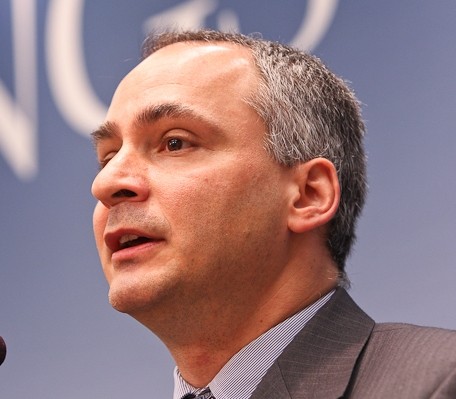


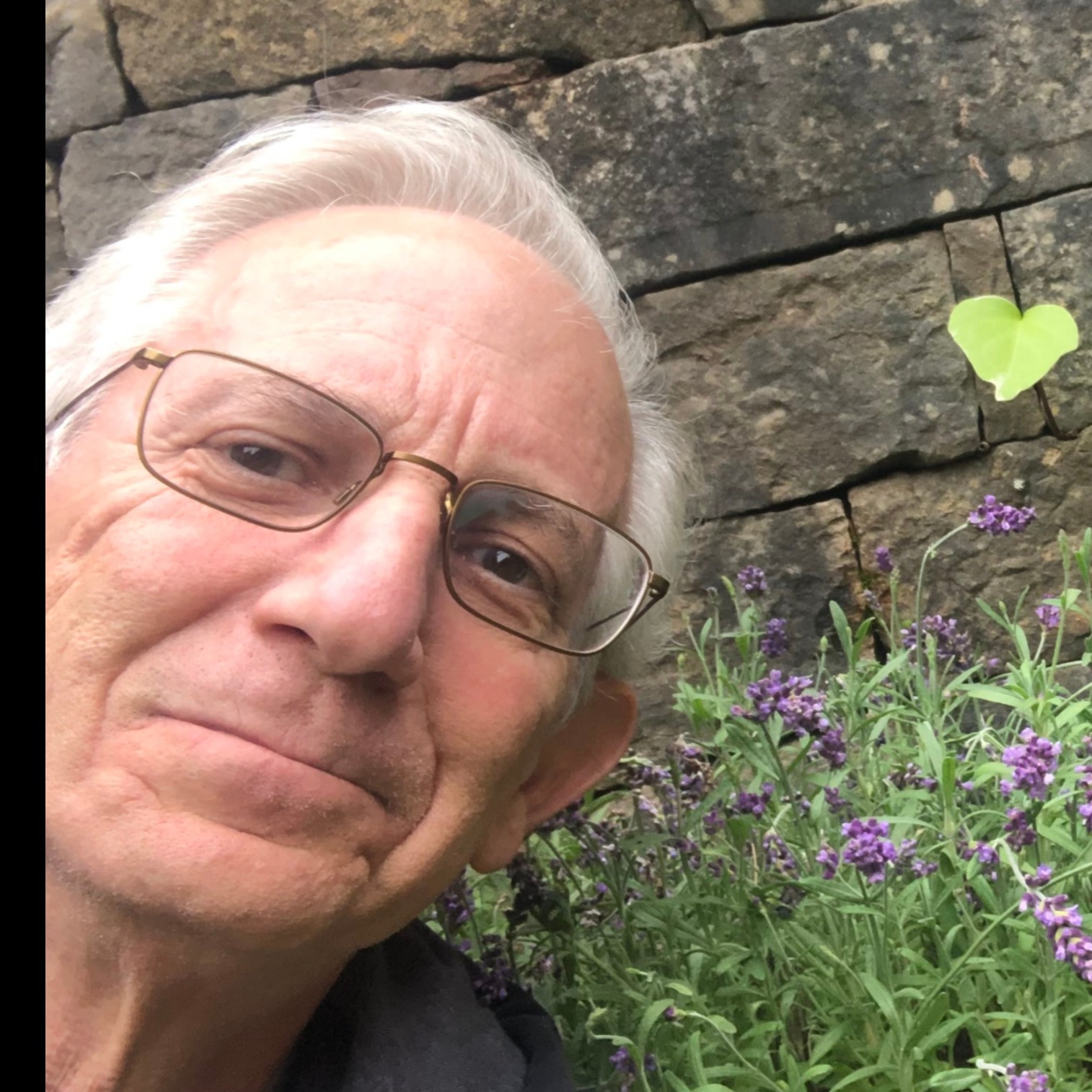
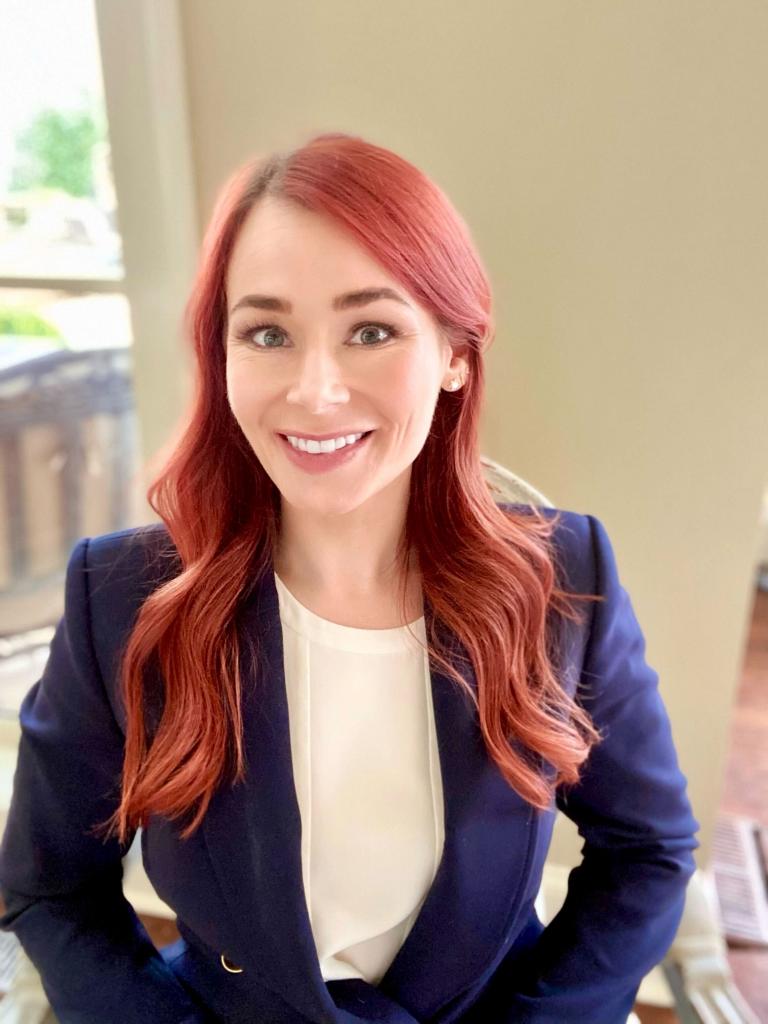
In a conversation on YouTube, Lawfare Editor in Chief Benjamin Wittes will sit down with Senior Editors Molly Roberts, Roger Parloff, Anna Bower, and Eric Columbus to discuss the latest litigation over Trump administration policies. Topics include D.C. and Virginia’s suit to block construction of the triumphal arch, the Ahmed Soliman case, the politicization of the Justice Department, election litigation in California and Alaska, Trump’s defamation suit against the Wall Street Journal, and more.
Find Lawfare’s litigation tracker here.
You can find information on legal challenges to Trump administration actions here. And check out Lawfare’s new homepage on the litigation, new Bluesky account, and new WITOAD merch.
To receive ad-free podcasts, become a Lawfare Material Supporter at www.patreon.com/lawfare. You can also support Lawfare by making a one-time donation at https://givebutter.com/lawfare-institute.To receive ad-free podcasts, become a Lawfare Material Supporter at www.patreon.com/lawfare. You can also support Lawfare by making a one-time donation at https://givebutter.com/lawfare-institute.
Click the button below to view a transcript of this podcast. Please note that the transcript was auto-generated and may contain errors.
Transcript
[Intro]
Julia Curlee: Russia’s greatest gains out of this came after election day. They came in the active efforts of the supported party to dismantle defenses, divide American society, and harm America’s ability to intervene in the world in ways that obviously benefit Russia.
Benjamin Wittes: It’s the Lawfare Podcast. I’m Benjamin Wittes, editor-in-chief of Lawfare, with public service fellow Julia Curlee.
Julia Curlee: I think we should think of it as an ongoing activity spoiler alert because it never quite ended, at least in the sense that Russia’s foreign influence operation, its covert operation to influence U.S. politics, it never ended.
Benjamin Wittes: Today, we are giving grades. We are grading a 10-year-old covert action, the one that Russia ran in 2016 to help Donald Trump.
What kind of grade should it get? Did it help Russia? Did it hurt Russia? Did it do a bit of both? How does it stack up against the great covert actions of all time? Happy 10-year anniversary of the most successful covert operation in history, Julia.
Julia Curlee: Yeah. What do you buy a covert action on its 10 anniversary, I think?
Benjamin Wittes: Yeah, that’s ... should we think of it as a birthday or like... And that it’s still growing and still maturing, and you know, we’re sort of working it to its bar or bat mitzvah? Or should we think of it as a something that happened 10 years ago that we’re commemorating?
Julia Curlee: I think we should think of it as an ongoing activity spoiler alert because it never quite ended, at least in the sense that Russia’s foreign influence operation, its covert operation to influence U.S. politics, it never ended.
And the piece hopefully has ... will make clear that it is what we’re experiencing now in our midterm election is just a continuation of what truly began even back into the Cold War but what came into our consciousness as a country in a very visceral way 10 years ago.
Benjamin Wittes: Yeah. So, you said the piece, and I suppose we should unpack the terms we are using here. Julia, what piece are we talking about?
Julia Curlee: Thank you, Benjamin Wittes. We’re talking about a piece I wrote for Lawfare on the 10th anniversary of the Russian covert interference in our election in 2016, called The Unhidden Hand, which is my way of referring to what we think of as covert action, which is where the hand of… when we talk about the United States or we talk about Russia, should be the one hidden.
As part of the operation, it could be conducted by the CIA, it could be conducted by the Russian GRU or SVR. This is what intelligence agencies do as one of their main functions, covert operations. And America was subjected to one of the most successful ones in history about 10 years ago.
Benjamin Wittes: Beginning about 10 years ago.
Julia Curlee: Beginning about 10 years ago. And I wanted to look at, not just because it was the anniversary but because I wanted to look at it as a CIA officer would who has done measures of effectiveness assessments of other covert action of our own and of foreign countries, and apply very similar metrics that we would in Langley if we were providing an assessment of the Russian operation.
And a couple of key points of that. One is we don’t just assess its success at the moment of when it was launched but we assess it over time. We look at questions of whether it stayed secret, whether it achieved its original objectives, what kind of blowback was there to the originating country, the sponsor, Russia?
Benjamin Wittes: All right, so let’s take those more or less in order. But let’s start by scoping the operation, ‘cause one thing that you do have when you’re a CIA officer assessing a CIA covert action is you have a clear sense of the scope, and purpose, and mission of the operation. Here, we kinda have to construct that, right?
We have to, based on the conduct of the operation itself as well as the way Russians have talked about it as to the extent that they’ve acknowledged that it exists, and also what we know from elsewhere about Russian strategic objectives vis-a-vis the United States and other countries. We can kind of piece a certain amount of it together, but how would you describe what the purpose of the operation was, what it was for, and what the scope and means of it were intended to be?
They weren’t out there, you know, arming Mujahideen, for example, or publishing magazines in the United States. So, what was this operation for, and what did it consist of?
Julia Curlee: Right. So, let’s zoom way out from low Earth orbit all the way down to the ground level. So first, there are three types of covert action classically.
You know, you have political influence operations, propaganda, political action, which is exactly what this, this Russian effort was. The Russians would use the phrase active measures to describe it. The two other types of which this was not, you would have something like sabotage, targeting a defense industrial base of a country, or you would have paramilitary action, which is the, what you cited, the training of insurgents, the, what the U.S. did with the Mujahideen in Afghanistan.
This one fits into the classical first category. It is one that the Soviet Union really pioneered the art around the world, and they have continued into the modern day with their efforts. This campaign was an effort to, at its base, do three primary objectives which we can rely on what the CIA thought at the time.
The 2017 intelligence community assessment laid out the three objectives based on stolen information on the Russians, and the three objectives were clear. One was to hurt the presidency, of presidential candidacy of Hillary Clinton, who the Russians saw as an enemy.
Benjamin Wittes: Success.
Julia Curlee: Success.
Benjamin Wittes: Okay.
Julia Curlee: Election night.
Benjamin Wittes: Yeah.
Julia Curlee: Succeed.
Benjamin Wittes: Check. Next item on the to-do list.
Julia Curlee: Two was to help elect Donald Trump. Donald Trump was elected.
Benjamin Wittes: Okay. Item two, check it off.
Julia Curlee: We should… we should pause and say that one could not decisively, scientifically prove that Russian assistance was the deciding factor.
One might note, though, that three states that Donald Trump won, traditional Democratic states, 78,000 votes total was the difference between Trump and his opponent. Just as we will never know if Russia succeeded in pushing him over the line, we will also not know if he, if they did not. This is one of the-
Benjamin Wittes: Right, but that...
But of course, that’s true whenever you do an active measure designed to influence a political system, and the political system goes in that direction. It’s, just as it’s impossible to tell which advertising campaign used by the Republicans was effective in that setting, it’s very hard to tell what role the external covert components of a campaign may have had.
But still, if you’re-
Julia Curlee: Right ...
Benjamin Wittes: engaged in a covert action and you get… You know, you’ve got your two first items on the list, you can put a check by them, you’re doing pretty well.
Julia Curlee: Certainly the operators in the GRU and at the Internet Research Agency were happy to take credit for this victory on their annual evaluations, I’m sure.
And it undoubtedly had some effect on our election, and it is obviously something that was hotly contested and that the president who received the support found that this would somehow hurt his legitimacy as a president. I just wanted to put down the marker of this is one of the unknowns.
And then the third objective of this was to basically delegitimize democracy in the United States, or to undermine people, the public’s belief in their system, that it was fair, legitimate and working for them. And in this sense as we’ve experienced over the decade since it was also a tremendous success in terms of injecting this question of whether a foreign government elected our president on our behalf.
And the way that part of the operation worked was to ensure that the far left and far right of both sides were supported, magnified by Russian bots and Russian social media networks. Famously, they would convince protesters on both sides to go to the same event and protest against each other.
And so, this effort to promote the extremes of U.S. society against the middle is a classic Russian disinformation active measure and it was one of the main prongs of the effort.
Benjamin Wittes: Okay. And yet all of what you have just described, we didn’t really need 10 years to evaluate. All of that was basically the conclusions of the IAC in 2017 and to the extent that Donald Trump said in the summer of 2016, Russia, if you’re listening, you know, please, you know.
There was no dispute that Russia was doing some stuff in 2016 in an effort… in the election, and so we don’t need 10 years to look back on it and evaluate it if those are the three objectives. You could have... We did it in the fall of 2016. Your contention is a bit broader, which is that the intervention continued. And we have kind of 10 years of effect at this point to evaluate.
I suppose those are more relevant to this third question than the first two. Is that fair?
Julia Curlee: That is fair. So, the, one of the key messages of this piece is that while the Russian intervention occurred and every single investigation, including those that occurred under the president’s FBI and the...
even those that were largely oppositional, like the John Durham investigation, no one disputed the underlying fact of a Russian attempt to interfere in our election. That has been proven time and again. No, what I’m talking about is how Russia’s greater gains occurred over the following 10 years of that.
And those gains, the principal actor the, what is the unhidden hand right in front of us, almost too big to see, is the president of the United States’ effort. So first it begins with covering up the original act, or at least trying to convince his own political base that it never happened because he felt like it was a threat to his presidency’s legitimacy.
Then it was a systematic effort to de-legitimize the investigators and the investigations that included now trying to prosecute the key individuals involved. And then finally, and this act weighted on the president’s re-election where we’re experiencing now, is the dismantling, where he systematically is going through the same institutions that guarded us against the Russian intervention, that announced it as it was happening, and dismantling those institutions even as, in our current midterms ongoing, those same actors on the other side, the Russians, are attempting to influence at the United States’ political process.
And in that way, the president himself played the crucial role in giving Russia the maximalist gains that it has achieved launched on it on its covert action back in 2016.
Benjamin Wittes: So, this goes to the question that you framed at the beginning, which is what are your long tail effects? You know, and are the longer-term effects consistent with your shorter-term objectives?
You know, if you’re thinking about U.S. support for the Mujahideen, yeah, that works really well as long as the Soviet Union is in Afghanistan. But then, you know, kinda later on, some of the Mujahideen factions kind of merge into Taliban factions that become friendly to Al-Qaeda, and boy, that doesn’t, the long tail doesn’t look as good as the short-term effect.
In this case, it seems like it just keeps getting better and better the longer out you go. And I guess the question is there any you know… I mean, first of all, what’s the, what is the evidence that the activity has continued? And secondly, what is the... How should we evaluate the long-term, not just the spot 2016 effects, but the long-term effects of the policy from a Russian covert action point of view?
Julia Curlee: On the first question of its evidence of its continuing. So, we saw the U.S. government continually do assessments into 2020, in the midterms in 18, in the election in ‘20, in ‘22 and every two years within the U.S. government you have these same assessments as was generated in 2017, and they all, to the degree to which they’ve been declassified and publicized, they all show just a continuation of the same Russian influence operations.
Never succeeding in altering a vote in terms of the mechanical counting of an election, but this continuation that does evolve with various technologies that come online over that period as we move from a Facebook, social media to a more, you know, more Twitter under X and Elon Musk and now we have the evolution of AI jumping in to provide deep fake images of democratically aligned celebrities.
Like right now we see videos of Robert De Niro and Cher denouncing Democrats when both of them are lifelong supporters of Democratic candidates, and these are being spread around battleground states. Fake videos of key Democratic candidates for Senate in Texas. There’s a new one today in Maine showing the candidates saying things of a scandalous nature that are doctored deep fake pieces of what have been now traced by private cybersecurity firms, two known Russian cyber actors that are continuing the effort that we trace back to 2016.
Now, there is a real question in the literature, in the academic literature and in the building as one would evaluate a covert action is when do you stop the clock? Because of course, you know, it, what began in ‘16 isn’t a linear line to what continues to today, and you pointed out some of the classic examples of that with support of the Mujahideen.
Do you blame that directly for the rise of Al-Qaeda as some sort of blowback? It’s a good question, but there are obviously other things that happened in the interim, and we should be cautious about that. What I would point though is the continuing role of the same characters in this specific covert action.
Whether it is the same actors in Russia, the GRU and private, allegedly private Russian cyber actors, or it’s the continuing efforts of the same guy the beneficiary of the initial effort, Donald Trump, to take advantage of this, and also his efforts not to target other things. So, I would throw this contrast that we’re currently experiencing.
He is taking active steps to promote a false foreign conspiracy, this idea of Chinese intervention in our elections, while not taking any effort to combat the real foreign effort to influence the elections in his favor by promoting candidates in a, that would support him and his positions and his party, and attacking those that would not.
At the same time, he has taken active steps to dismantle the institutions that called the interference in 2016, and that would be defending us right now against further Russian influence operations targeting his political opponents. And so the... I think in that way, the covert action that started in ‘16 can fairly be an, evaluated through to the present.
Benjamin Wittes: All right. Let me note a point on which I think a reasonable person could be skeptical here. You are conflating the behavior of Donald Trump with the behavior of the covert action itself, with the activity of the covert action itself.
And our skeptic might say, well, okay, Julia Curlee here is either conflating Donald Trump with Russian intelligence, i.e. suggesting he is an asset of some kind, or she’s being mischievous and she’s saying everything Donald Trump does by virtue of the fact that the goal of the covert action was to get him elected should be attributed as an effect of the covert action. And I guess I’m ... I want you to unpack that a little bit and say, are we treating here Donald Trump as a creature of the covert action, as a beneficiary of the covert action, as a partial effect?
And why shouldn’t we just treat him as a American politician who has a certain Venn diagram overlap in, of interests in common with the Russian covert action? For example, getting himself elected, disparaging his political enemies. He hates certain people and entities who the Russians also want to discredit.
And oh, by the way, he likes Vladimir Putin just the way he likes other dictators. And so, you know, it’s what we call with toddlers parallel play. They’re both doing their thing in the same room and, you know, boy, they seem to like some of the same toys.
Julia Curlee: I think a lot of those points are valid. Where I would push back though is that what I was doing here was evaluating this from Russia’s perspective or at least from the sponsor ‘cause that’s how in the covert action measures of effectiveness, we look at the, how the sponsor benefited both at the time and later.
And from that perspective, it’s been a bet, an investment that has kept on paying that has its root in the original action. Now, the thing from the Russian’s perspective is that it doesn’t really matter the details of the case if he is in fact a Russian agent. The joke in the line at the coffee at Langley, and I’m fairly sure this is not classified, was if the president is not the agent of a foreign power, he missed his calling because one could not distinguish between the two because he seemed to be operating in alignment with Russian goals in the world.
Whether this was to run down U.S. allies, divide our friends, and unite our enemies together, whether this was refusing assistance to Ukraine at its times of need in advance of the war and then now during the war in a way that suits Russia, if it is lifting of Russian sanctions right on the eve of an election in which the Russians are actively intervening to influence outcomes on his behalf right now.
So, in some ways it’s actually better for the Russians if he is not in fact objectively an asset that is being somehow controlled from afar. Most of the time when you look at the other examples of individuals in the broader dataset who were supported by an outside intelligence agency, foreign power, they have to be propped up over time.
Generally, they’re weak. They don’t have the kind of support base and organic person like the president has and it’s actually a best practice in intelligence in thinking about effective covert actions to work with what’s already there and magnify it and enable it as a legitimate or organic element in that society and feed it the resources to succeed in a way that just happens to align with your objectives.
And in this sense, I think the Russian investment probably paid vastly more than anyone could possibly have anticipated. And so, I’m not trying to say the Russians were, you know, Svengali could see the future of all the things that the president did, but from their perspective, from the sponsor’s perspective-
Benjamin Wittes: Works out really well.
Julia Curlee: These substantive events worked out incredibly well, and it leads outside assessments such as those from the former director Michael Hayden that this was the most successful covert action in world history.
Benjamin Wittes: Okay. But it also gives rise to a bit of a methodological problem in assessing it in in retrospect because it raises the question, if you hypothesize that number one, we don’t… Well, we don’t know if the action had the effect of help, of meaning providing meaningful help for his election.
Julia Curlee: Decisive assistance or something like that.
Benjamin Wittes: Decisive assistance. We don’t know that he didn’t actually believe all these things anyway and want to do them anyway. Couldn’t it be… just be that all these things that look like positive effects from the sponsor’s point of view are actually just lucky guesses?
And, you know, you bet on the right horse, it doesn’t mean you caused the horse to win the race, right? You get the payout because you put your money on it, but you didn’t cause whatever the horse’s name is to run faster than the other horse. And if you’re thinking about a covert action isn’t a Kalshi bet, right?
It’s an attempt actually to affect the outcome. And so, my question is, is there any way to know when we assess this covert action, the relationship between causation and correlation here? There is no doubt that this set of events, and when you read the piece, it’s really powerful about this, the events that transpired correlated nearly precisely, and we’ll get to a few exceptions in a moment with Russian interests.
But is there any way to know that means the covert action was a success rather than the covert action was a really good bit of futuristic betting?
Julia Curlee: You’re homing in on a pure methodological problem that I think is inescapable for evaluating covert action, this causality question of coincidence versus, like, did it actually cause that?
And you are right. And I could add on top of that, if we’re gonna draw sort of vast conclusions about covert action, we’re talking about a secret activity for which our data set is limited, including the U.S. that we’re saying this is the most, one of the most successful covert actions in history when the data set I was able to use is an unclassified one put together by the CIA historian that ends in 2011.
So, who knows? There might be other key comparators to this.
Benjamin Wittes: Yeah, ‘cause we’ve been doing so well since 2011.
Julia Curlee: We have been doing very well. So, it is a very difficult question. I mean, there... We have from that data set drawn what seem to be some best practices in covert action for which this operation followed.
You know, whether it is the, you know, using what’s there and building upon that, whether it is the finding that for a political action such as this. Almost all of the cases of success come from when the supported party, the beneficiary, welcomes the support and takes that and builds upon it and denies it or tries to cover it up after the fact.
The reason why that is, and why this one in particular has paid so many dividends, is that most covert actions decay in their benefits over time because when they’re revealed, the target country repairs its defenses because they, even a supported actor doesn’t want that permanent stain of illegitimacy that would come from that foreign support.
So, they will often, even if they’re the beneficiary, they will turn on it, they will denounce it, they will say no, this was all me the whole time, and then they will repair the defenses so that the benefits from the foreign country go down, and in fact, it could blow back significantly, especially in a democratic system.
What we have in this case is the opposite, where whether it is coincident or causal, we may never, may, we may never truly know. But what we do know is that Russia’s greatest gains out of this came after election day. They came in the active efforts of the supported party to dismantle defenses, divide American society, and harm America’s ability to intervene in the world in ways that obviously benefit Russia. Whether we wanna draw a direct line to one I, you know, this is one of the central challenges of evaluating covert action.
I’m just saying that as a matter of what the profession does, we would put those coincidences together and, you know, the more coincidences the better, and if it all redounds to the sponsor’s benefit, we would evaluate that as a successful covert action.
Benjamin Wittes: All right. Let’s talk about some of the downsides from the Russian point of view.
The Russian economy is a disaster. They’re… partly in response to U.S. sanctions, which are partly in response to this, although the weight of them are all about Ukraine. So, how do you understand the downside of this? And I suppose more generally there’s another downside, which is that, you know, Russia hasn’t just done this in the United States.
It’s done this all over Europe. It’s done this in, like, everywhere that it can. It seems to think these sorts of influence operations are super fun, and they build up far right and nationalist movements as well as far left. I mean, both Die Linke and the AfD are kind of pro-Russian. Both the far left and the far right in France are pro-Russian and, or at least Russia friendly.
And all of this has created a genuine anger at Russia that is connected to the Ukraine stuff, but not limited to it in just about all Western countries. And so, are they losing by winning here, or is this an example of a covert action that’s sufficiently successful and has a good enough cool long tail that you tolerate the Biden administration in the middle of it?
Julia Curlee: This is again a problem of when you draw the line to do the evaluation. If we were doing this exercise in… midway through the Biden administration, let’s say a few months after the Russian invasion of Ukraine and before Donald Trump returns to the White House and then does all the major damage in dismantling the institutions that would block further Russian intervention, you might evaluate this to be that exact case of massive failure, of blowback, of inspiring a U.S. counter-Russian effort, of even perhaps more support for Ukraine than might have otherwise.
So, in that parallel universe, it would’ve been seen as a failure with significant blowback. And we do see this as a key problem with covert interference in democratic elections and why the US, at least in the modern era, has historically eschewed doing that because of the risk of blowback and reputational risk back on the United States for doing that.
The difference, of course, here is that Russia seemed to, even though it was revealed from day one, suffer no real at home blowback from interfering in someone else’s country, just based on the nature of the Russian regime, they did not. And that they, because of the actions of the supported party, which is the true decisive element in this case, were able to continue to enjoy these benefits and then turn off some of the things that you might have called blowback such as the U.S. support for Ukraine under this administration.
But it is admittedly a difficult matter. If in two years from now we see a Democratic president come back and with a zeal of punishing Russia for its transgressions in the past, we might be in a similar place.
Benjamin Wittes: I mean, you really could imagine this being, creating a 10-year living high on fumes kind of situation in which Russia goes from being in a pretty good place geopolitically 2015, 2016.
It’s got Germany in a very friendly, compliant position. It’s got Ukraine in a, you know, it’s got 10% of Ukrainian territory and a kind of frozen-y conflict sort of thing. And it’s got, you know, not great relations with the West by any means, difficult relations with the Obama administration, but its international position is by no means a disaster.
And now imagine that you’re two years from now and you have an administration in the United States that is... You don’t even have to imagine a Democratic administration, just a more traditional foreign policy consensus administration. And then all of a sudden you kind of have a united West that assuming that, Germany’s not ruled by the AfD and Le Pen isn’t running France, you know, is a very bad geostrategic position for the Russians.
And so, I wonder if this is, the best way to understand this is the first 10 years of this have worked well, save for the fact that the Russians kind of marred it by invading Ukraine and kind of turning a lot of the world against them. And it definitely helped buffet and the bottom that they hit as a result of that.
On the other hand, you know, whether they can keep it up is very much open to question, and it bought them time to right their international position, and they really haven’t done it. And so, I wonder if we should understand it a little bit as showing the limits of what even the best, most successful covert actions can really do for you.
Julia Curlee: I think that’s absolutely right. I mean, if anything, what I’m doing here is I’m providing the performance evaluation on the GRU’s operators here, and they shouldn’t be held responsible for the invasion of Ukraine that occurs later by the, you know, ordered by the president and that just to be, just trying to be humble as possible that this intervention is not the Rosetta Stone for everything.
Benjamin Wittes: It’s not an evaluation of Russian policy more generally.
Julia Curlee: No. And there were plenty of other counteractions that Russia took in the decade afterwards that have done severe damage to the Russian economy and its people, most principally the invasion of Ukraine.
Benjamin Wittes: All right. So, if you were lecturing at Langley on this subject And young recruit raises her hand and says Ms. Curlee, what are the lessons of this for us? Not for us as a recipient covert, you know, but a nation that also does covert actions and what should we learn from this? Should we be actively measuring in lots of countries’ internal affairs? I… should we be running covert campaigns in Greenland?
Should we be... What, you know, what should we be taking from this as a lesson of success for our own covert action?
Julia Curlee: I think in some ways it confirms some of the best practices that we would teach officers, and in other ways it’s probably sui generis. It’s just probably something that’s unique to the circumstance and the Russian regime itself being different than at least for now, a democratic country that would suffer blowback by intervening in the domestic political affairs of a democratic nation, at least traditionally that’s true.
I would say that learning from this, it’s that covert action in this case succeeded partly because it was narrow, had very specific concrete goals. Two out of three were measurable on the night of the election. It was relatively cheap. Some covert action succeeds that is a bit more expensive but most of the successful ones are actually not that expensive, and if they are expensive, then you’re probably using the wrong tool.
You probably should be doing something that is overt, that uses the mass of the other institutions in the United States, like the military, to achieve an objective. It was part of a broader policy, so the covert effort was consistent with the overt effort of the Russians to… Whether it’s diminishing U.S. power, getting the U.S. to turn within, dividing us from our allies, it was all consistent with that.
It wasn’t trying to achieve some underhanded miracle at odds with the public statement of the, the Russians. And that, probably most importantly, it exploited existing weaknesses in the target rather than trying to create new ones from whole cloth. They accurately diagnosed the target, Donald Trump, as being a divisive figure with a real support base in the United States.
Perhaps they anticipated that once he was in office, he could be manipulated, maybe through his common worldview his view of the world as... That, you know, like a mob boss who could divide up the world between the three families and that everything would be transactional, which matches a Russian worldview quite well.
So, pick your targets well and build on the existing success. I would though, I would then step back and talk to the class and maybe I would probably then turn on the best movie about covert action of all time, at least the, the clip of Charlie Wilson’s War, where you have Gust Avrakotos, the, the one of the key minds behind this being asked about the, you know, to toast the success of the operation and he says, we’ll see.
Because he has seen these before and he knows that over time the success can fade and that the blowback can be real. In the movie they talk about the rise of Al-Qaeda, which one can argue about that direct causality. But it is humility in what we can actually achieve using this tool, which is probably best used as a scalpel not a hammer.
And for the United States, I think that we’re not well-suited as a country to use this to interfere in other countries’ political systems. We have a pretty bad track record of it sustaining good results over time. I think at the beginning of the Cold War it was quite successful.
Benjamin Wittes: Yeah, I would include Italy.
Julia Curlee: Once or twice. But you could make a, you could make a sound argument if looking at the U.S. interventions in Iran, that interfering in Iran domestic processes helped lay the groundwork for the rise of the IRGC and the Iranian Revolutionary regime. Obviously, many other things were happening at the time.
But Iranians remember viscerally our interventions in their country and efforts to keep the Shah on the throne. And so, it’s to be extremely careful with the use of this tool.
Benjamin Wittes: And what about in a defensive sense? You end the piece with two lessons for us as a recipient nation of this Russian covert action.
I wanna read them and then have you flesh out both a little bit. 10 years on, Russia’s 2016 operation offers two lessons. First, a foreign intervention pays off most durably when its beneficiary has every incentive to hide the sponsor’s hand. Second, defenses against the next intervention must be built so that no leader who profits from foreign interference can dismantle them.
So, I’m gonna put a coin in and press go, and talk.
Julia Curlee: You know, like a lot of things, as we think about how to Trump-proof the presidency, I will start off with the caveat that there may be no, no proofing the presidency against the president. But there are probably things we could do to increase friction so that as I discussed in this, the winner’s veto problem can be counteracted.
So, if the individual receiving the assistance has this incentive to cover it up and, or perhaps even let additional assistance come in from a foreign actor to help them, we have a real problem. What we do to counteract that is we have strong institutions that can push back on a president, and if they’re within the executive branch, perhaps they can go to Congress through reporting mechanisms that allow the inherent checks and balances of the U.S. system to kick in with sufficient time to do something, assuming there’s political will, which there was not in this case, to intervene.
And so, I talked about in the piece doing more to ingrain in statute rather than executive order, key institutions that would guard against this type of dynamic. And so, if the current president has dismantled the, you know, the FBI’s foreign, you know, influence task force, ensure that is in law and is paid for by Congress and has regular reporting requirements to the relevant committees on the Hill so that it is very clear if a president is moving to dismantle it.
The same could be said for the ODNI’s foreign influence task force. The same could be said for CISA. And enshrining these institutions, which are, which have bases in statute in some cases but not all, I think is a reasonable response by the Hill. Reporting requirements, I think, are critical so that in the advance of an election, it becomes requirements that the intelligence community provide assessments of foreign interference or foreign influence, which is happening, but they’re not currently required to be made public.
We know right now that based on the statements of Senator Warner and Representative Himes of the House and Senate intel committees respectively, that those classified reports have been delivered. And just reading the tea leaves and the press coverage of what they’re saying it is sounding as if they’re saying, yes, influence operations are continuing but no reports that we can rely on of actual ballots being changed.
Having a requirement to make a public assessment before the election and then a retroactive public assessment after the election could be another way to bake in these this friction so that it becomes not as easy for a president who’s in control of the executive branch to silence those voices that the winner’s veto gives him that incentive to do so.
Benjamin Wittes: We are going to leave it there. Julia Curlee, the piece is The Unhidden Hand. It was published in Lawfare several days ago on October 22nd. How Russia’s greatest returns from the 2000, from 2016 came from the president it helped elect. Thank you for joining us today.
Julia Curlee: Thank you, Ben.
[Outro]
Benjamin Wittes: The Lawfare Podcast is produced by the Lawfare Institute. You can get ad-free versions of this and other Lawfare podcasts by becoming a material supporter of Lawfare at our website, lawfaremedia.org/support. You’ll also get access to special events and other content available only to our supporters.
The podcast is edited by Jen Patja, and our theme music is from Alibi Music. As always, thanks for listening.

