
Lawfare Daily: Trump Admin Attacks on Inspectors General with Cristin Dorgelo and Rob Storch

.jpg?sfvrsn=e44f8668_3)
.png?sfvrsn=add2615a_3)
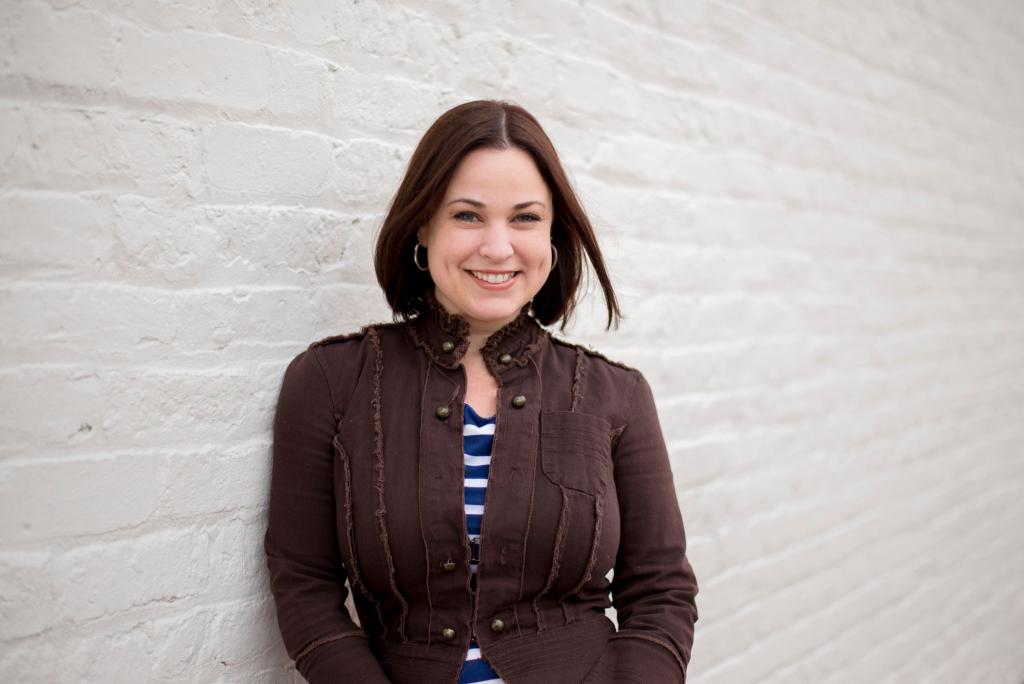
Lawfare Managing Editor Tyler McBrien sits down with Cristin Dorgelo, a former senior adviser for management at the Office of Management and Budget, and Rob Storch, who served as the inspector general of the Defense Department until the Trump administration fired him and many of his colleagues in January of this year. They discuss those firings, other Trump administration attacks on the offices of the inspector general, and various attempts by the administration to undermine oversight and evade accountability, all covered in a new report from the Center on Budget and Policy Priorities called “Trump Administration’s Undercutting of Oversight Hurts Taxpayers and Beneficiaries.”
To receive ad-free podcasts, become a Lawfare Material Supporter at www.patreon.com/lawfare. You can also support Lawfare by making a one-time donation at https://givebutter.com/lawfare-institute.
Click the button below to view a transcript of this podcast. Please note that the transcript was auto-generated and may contain errors.
Transcript
[Intro]
Cristin Dorgelo:
Those employees and those leaders are working in an environment where the
administration is clearly signaling its distrust and its dislike of these
oversight processes. And that, for us, raises significant concerns about
whether offices of inspectors general are going to be able to act assertively
and quickly and with cooperation from the administration.
Tyler McBrien: It’s
the Lawfare Podcast. I'm Tyler McBrien, managing editor of Lawfare,
with Cristin Dorgelo, former senior advisor for management at the Office of
Management and Budget, and Rob Storch, who served as inspector general of the
Defense Department until the Trump administration fired him and many of his
colleagues in January of this year.
Rob Storch: For
oversight to work effectively, it has to be, as I mentioned at the outset,
nonpartisan, and it has to be independent.
Now, how that gets defined may depend upon the nature of the
agency and what's being overseen, but it's critically important that there be
the independence to essentially, as people say, speak truth to power.
Tyler McBrien: Today
we're talking about the Trump administration's attacks on the offices of the inspector
general, as well as other attempts to undermine oversight and evade
accountability covered in a new report from the Center on Budget and Policy Priorities.
So, Cristin, I want to start with you to talk a bit about the
Center on Budget and Policy Priorities’ recent report that was released the
beginning of November called Trump Administration's Undercutting of Oversight Hurts
Taxpayers and Beneficiaries.
So I want to start with a bit of a background question on what
motivated this report. Why did CBPP undertake this project?
Cristin Dorgelo:
Well, with my colleagues, Devin O'Connor and Kathleen Romig, we have been
looking at what has been transpiring in the Trump administration related to
oversight.
We understand that independent oversight is an important
process for understanding the effectiveness of federal programs, and we were
seeing changes happening in terms of the administration taking steps, really
from its first week through more recent months and weeks, about its
relationship with inspectors general and other oversight offices.
Our sense was that many of these changes were happening and
being covered in the press in a piecemeal way. And we, in taking a look at
this, felt like this was really a systemic set of changes, where the
administration was making it harder for independent oversight to conduct its
business, was undermining the offices of inspectors general, the way in which
they collaborate together with agency leadership, and also other offices like
the Government Accountability Office, or GAO.
So we thought it was important to tell the story of these
changes in a systemic way. It was telling the timeline of the changes of the
removal of inspectors general, of the attempts to decrease funding for offices
of inspectors general, of the degrading of IG capacity through staff reductions
and more as a whole picture. Because that's really what is occurring, is a full
change of relationship between, you know, the executive branch and those that
oversee its operations.
Tyler McBrien: Yeah.
Thank you. And I definitely want to dig into each of those findings. It's quite
a fulsome report and there's a lot to talk about there.
But first, Rob, I want to turn to you to set the stage on what
the office of the inspector general does in each department. And feel free to
draw on some personal experience because you have a bit of background here, if
I'm not mistaken.
Rob Storch: Sure, happy
to do so. And thanks very much for the opportunity to join in this important
discussion.
So, offices of inspector general were established—they actually
go back in the military, back to the founding of our country, but the statutory
inspectors general were put in place as one of the reforms following Watergate
and other corruption scandals in the 1970s. And the Inspector General Act of
1978 is the statutory basis.
Initially, they were at a handful of government agencies and
exists now in, I believe it's 74 different statutory IGs, covering virtually
the entire executive branch. And then a number in the legislative branch as
well.
And they're nonpartisan jobs. I can't emphasize that enough. I
used to always tell my folks, so much of what we do is of political interest
that it's critically important that our work be completely nonpartisan and not
even be perceived as being partisan. And that's the only way it could be done,
that it would be authoritative and that it would be credible.
So these offices exist, as I mentioned, there's 74. A little
less than half, 36 of the positions are presidentially appointed, Senate-confirmed
jobs. Those tend to be at the larger departments, all the cabinet departments
and agencies as well as others, where Congress has made a determination that it
wants to have the power to confirm the individual who's going to be leading
those offices.
And then the balance of what is known as DFE or designated
federal entities. And they have the same duties and responsibilities, they just
are appointed by the head of their agencies and they can be dismissed by the
head of their agencies.
So you have this sort of universe of inspectors, generals,
offices, each led by an IG, and what they do essentially is they detect and
deter waste, fraud, abuse, and corruption, and they promote the economy, the
efficiency, and the effectiveness of their agency's operations.
So when I've thought about, you know, how to describe how they
do that, basically there are two broad categories. One is programmatic
oversight and one is investigative oversight.
The programmatic oversight involves audits and evaluations,
which are very much similar products. The audits are done pursuant to GAGYS,
GAO Yellow Book Standards. The evaluations are done under something called the
Blue Book, which is similarly held to high standards, but they're sort of more
flexible for reviews that would benefit from that.
And whether it's an ordinary evaluation, they look at
government programs and operations and assess, as I mentioned, the economy, the
efficiency, and the effectiveness. And where they find issues, they make
recommendations that, if followed up on by the agency, the IG beliefs will help
them to address that issue. And that's an important point.
It's all about improving government on behalf of the American
people, right? And so, we never make a, if you will, negative finding without a
recommendation that will help the agency to address it.
So that's the programmatic oversight. Most of that is, what we
look at is determined by the IG and their team based upon independent risk
assessment within, with input from the agency, from congress, from NGOs, or the
public, from all sorts of places to try to focus our resources in the areas
that will be most impactful and helping to the agency to achieve its mission.
And I’ll ju—we will talk more about it. But I would say that's
one of the ironies of everything that's happened this year is that we do help
the agency to achieve its missions.
We don't, our job is not to promote any particular agenda or
priorities of the administration, but through that independent oversight, we
identify issues and make recommendations that will help whomever is in control
at any particular time to achieve whatever it is they want to achieve. That's
up to them.
So that's the programmatic oversight. The investigative
oversight also divides into two sort of categories, administrative
investigations and criminal investigations. The administrative is looking at
essentially misconduct by department or agency employees. And as with the
programmatic, we don't have the authority to take any action.
Our investigators will investigate allegations of misconduct,
many times provided by whistleblowers or others, and we will make a—if we
substantiate, we'll do a report that goes to the department or agency that we
oversee, and it's then up to that department or agency to decide what action is
appropriate as a result.
The criminal work, not all IGs have them, but the larger do
have units or divisions or components that do criminal investigations. At the DoD,
where I was most recently, we had the Defense Criminal Investigative Service,
which actually predates the DoD OIG by a little bit, but served as the criminal
investigative arm investigating allegations of criminal conduct involving obviously
department employees, but also fraud against the department or crimes
implicating its programs.
And those would be very broad. One of the things I always used
to say is the DoD is so big that it essentially does everything government
does. And so our investigators would investigate all sorts of criminal conduct.
Could be healthcare fraud, procurement fraud, cybersecurity issues, I mean,
just whole range of stuff as well.
The other thing we had at DoD and a couple of other IGs is
responsibility with regard to overseas contingency operations. And during my
time in the chair, there were three of those. There were operations involving
ISIS and Iraq and Syria, an operation involving sort of the aftermath of that,
of Afghanistan, and then Operation Atlantic resolve, including U.S. assistance
to Ukraine.
And initially my office and then me obviously was the lead
inspector general for all of those. Congress was debating whether or not to
create a new inspector general for the Ukraine oversight. Decided instead, on a
bipartisan basis, to have my office and essentially me designated as a special
inspector general overseeing U.S. assistance to Ukraine.
So that involved doing our oversight of the security along the
ways I've just mentioned security assistance and then working with our
colleagues at State OIG, USAID OIG, GAO and others to help, to coordinate and
then to report out transparently on those operations. So that's sort of the DoD
OIG and what IGs do in general.
The only other thing you asked me to address, and I'll just do
it briefly, is a little bit my, about my own background. I was privileged to
serve as the DOD IG beginning in December of 2022. I actually was a federal
prosecutor for two dozen years, and then went to the Department of Justice OIG.
Sounds a little sappy, but basically just trying to give back.
And I think that's why a lot of people enter the IG community, is they care
about the departments and agencies and they want to help to promote positive
change there.
And I was. for several years, honored to be the deputy inspector
general at the Department of Justice, working under Michael Horowitz, a truly
great IG, then had the opportunity to become the inspector general at the NSA. And
that was really an interesting job, and perhaps relevant to our discussion, I
initially was nominated for that job near the end of the Obama administration.
And nothing went anywhere at the end. And so the administration changed and
President Trump came him in the first time.
And I thought, well, I don't know what's going to happen. I
mean, you really, honestly, it didn't matter who appointed the president, and
that's what sort of what came to pass or appointed the IG. I got a call from the
White House under President Trump from the legal counsel's office, and they
asked if I'd still be interested, and I remember saying, yeah, I'd be, I was
honored before, I'd be honored now.
It honestly doesn't make any difference to me who the president
is. They're nonpartisan positions. And I went over, they asked me to come over
and meet with some of the lawyers, I did, we talked about oversight. And a
couple weeks later President Trump renominated me for the NSA job, and I was
confirmed by unanimous consent later that year and served almost five years as
a Trump nominee as the NSA inspector general.
Truly fascinating job. And then an important job, and then had
the opportunity under President Biden to come over and be the DOD IG. So I
think the reason you wanted me to talk about that, and I think it is germane to
our discussion, is, I used to have a, I was privileged and honored to have both
a President Trump and a President Biden appointment certificate on my wall sort
of facing each other.
And I thought it was a nice metaphor. 'Cause we really are—if
the work is to be done effectively, it has to be done in a non-partisan,
independent way.
Tyler McBrien: So
thank you so much for that, Rob. I think that was really useful not only to
convey again this nonpartisan nature of the office, but also that was a really
helpful accounting of all of the broad scope of activities that these offices
undertake.
And you know, in thinking about that, turning back to the
report, I thought the report was really useful to just take stock of—on the
side of the Trump administration, all of the actions that the Trump
administration has taken to either undermine or attack all of these activities
that the inspectors general undertake in, let's say, normal times, or before
this administration.
Cristin, I want to turn back to you to take us through a few of
the key actions that the administration has taken over the past year to
undermine the offices in terms of firings, leaving vacancies.
So I want to start with I think a moment that most of our
listeners will remember. It was just four days into Trump's second term when he
fired the inspectors general of 18 federal agencies.
This was on January 24th. It was, some in the media and in
government dubbed it and condemned it as this Friday Night Purge.
So, Cristin, can you take us back to that moment and what has
happened since then? I think there is a, people will be familiar with that
event, but maybe won't know, won't have followed as closely all of the other
ways in which the administration has undermined these offices since January
24th.
Cristin Dorgelo:
Yeah. I think if we look back to that immediate early removal of those
inspectors general that you mentioned, most of which were presidentially
appointed and Senate-confirmed inspectors general, I want to note how much that
is not business as usual. You know, this is the first time in over four decades
that a president had removed any IGs at the start of a presidential term.
They were violating bipartisan enacted requirements of the Inspector
General Act that Rob already mentioned, because the administration did not
provide 30 days of advance notification and detailed in case specific reasons
for those terminations. We've seen, you know, this being something that follows
a pattern evident in the first Trump administration when in early 2020 during
President Trump's first term, five inspectors general and acting inspectors
general were removed in what appeared to be retaliation over critical reports.
And you know, this is—seems to be grounded in an inaccurate
perception about the motivations of inspectors general, which, to Rob's
comments, is ungrounded in fact.
We had an OMB spokesperson accusing inspectors general of
having become corrupt and partisan, and having lied to the public without
providing evidence or support for this claim.
So I just want to note how unusual and how extraordinary that
removal early in the administration was. You know, it was, has been followed by
additional actions since, which really to us show evidence of retaliation, in
that we have seen two weeks after that mass removal of inspectors general at
the start of the term, we also saw the administration remove USAID's Inspector
General after his office released a report warning that the administration's
actions at USAID were having some significant impacts on the ability to deliver
humanitarian assistance programming.
We have seen retaliation continue and lack of cooperation
continue, and I'm happy to dig into more of what we've seen since that first
extraordinary set of removals.
Tyler McBrien: Yeah.
Rob, I want to give you an opportunity to respond here as well.
As a former IG, what was going through your head when you heard
news about the Friday Night Purge? If you wanted to add anything to what Cristin
just laid out in terms of the attacks that she mentioned, or if anything that
you wanted to add in addition to those.
Rob Storch: Yeah.I
was one of the inspectors general who received one of those emails on Friday
evening.
We'd been working hard all week, doing our work, and in
addition working on all making sure we were in compliance with the different
executive orders that were coming out with the new administration and got that
email.
And just to amplify a little on that, it was—from the very
beginning, I was struck by the notice. First of all, the email, it did not give
any notice—and to be clear for your listeners, the notice isn't to me
that's required by the law or to any other inspector general. It's notice to Congress
at least 30 days in advance.
And as Cristin says, it requires that the president communicate
in writing the substantive rationale, including detailed and case-specific
reasons for the removal of an IG. And it's up to the president what those are.
But the idea is, and this was beefed up in 2022, following the events Chris
mentioned, the idea was to give Congress an opportunity to engage with the
White House regarding the dismissal before it became effective.
So by sending us emails on that Friday night without notifying
Congress in advance, much less giving any reasons the administration, it was
really depriving Congress of the opportunity to exercise any role or any say
regarding inspectors general
And that's pivotally important for a number of reasons, one of
which is the work I described before, our obligation under the law as
inspectors general is to keep the department or the agency and Congress fully
and timely informed regarding the findings of our work. We're located within
the departments and agencies under their general supervision, which is
essentially a nominal sort of administrative thing.
But we're independent and I would argue for, to do effective
oversight, we have to be independent in order to, in our oversight work. And we
report to both of them.
And so the way in which it was done really divested Congress of
the opportunity to engage with the administration. And that's why, in addition
to firing 17 or 18 of us in one fell swoop, that was very troubling.
And obviously the concern is—and I know we'll talk about this,
and Cristin's report talks about it—that creates a really significant risk of a
chilling effect.
And if folks had any doubt about that, the example Cristin
cited is really telling, where Paul Martin—a great inspector general, then at
USAID, previously at NASA, and before that the deputy IG of Justice before I
was there, great IG—issues a report that says sort of essentially if you leave
food on the docks, it may get stolen or it may go bad. Not particularly
controversial.
And he gets dismissed the next day. And so you really do worry
about what sort of message that sends to the people who are still there. And I
suppose that's the final thing I'd add, is I think it's important for listeners
to know that while many of these offices were essentially decapitated of their
leaders, which obviously a very sort of traumatic thing for the offices, there
still are many good women and men across the inspector general community who
joined these offices because they wanted to make a difference.
I could tell you at DoD about a third of my team—and it was a
large team, over 1,850 people when I was there—you know, about a third of them
were veterans, and I know from talking with many of them joined the OIG because
they cared deeply about the Department of Defense and they wanted to do
whatever they could after serving in uniform to help the service members, to
help to make the DoD stronger and there thereby make our nation safer.
And many of those people are still there trying to do that work.
And the question is whether the conditions, whether the leadership, whether the
agencies, whether the Congress will create conditions that enable that to
happen.
Tyler McBrien: Yeah.
Since you brought it up, I wanted to stay on this point just another beat.
Listeners will likely have, like I said, followed the headlines
of the firings and seen these continued attacks and attempts to undermine the
work of the inspectors general. And yet also have seen the headline, for
example, earlier this month of the DoD Inspector General Report on Secretary Hegseth's
Signal usage, for example.
So, what is the current state of many of these offices? And I
realize we're talking about a number of offices right now, not only the DoD,
hobbled as they may be. What kind of work still is getting done and under what
conditions?
Rob, I'll stay with you for this one. And then Cristin, I would
love to hear your thoughts as well.
Rob Storch: Yeah, so
when the inspectors general were dismissed in this purge. And then the ones
that have happened since, and there have been a couple more following IG
Martin, you know, we all have succession plans and so typically, and this was
the case at my former office, our deputies, or in my case principal deputy, you
know, stepped in and was responsible for leading the office.
And as I say, you know, I honestly couldn't be prouder of the
people across the oversight community who continue to do that difficult work.
It's difficult in the best of times, much less with sort of the very traumatic
sort of events of this year in the oversight community and all the upheaval, right.
There have been a handful of folks who've been nominated by the
administration and one of—to replace those who were dismissed. One of them has
been confirmed, and that's at the VA IG. Several others are going through that
process right now and a number actually on the floor.
So that is, you know, moving along. And you know the question—for
those systems to work effectively, it will require that IGs be folks who are
willing to do this independent work.
It doesn't make you popular, I can tell you. I used to tell
people, my, my family and other people at work that I've got my wife and kids
to love me. I want the department and the Congress to respect our work.
So you don't make friends doing this, but it can have a really
positive impact on government. And so there were still people there trying to
do that job during this very sort of fraught period this year. And that's where
we are right now.
Tyler McBrien: Yeah. Cristin,
I wanted to give you an opportunity to add to that if you want.
I also want to hear from you, I mean, the report does a great
job of taking stock, as I said, of all of these actions in the past year, but
this is also still an ongoing crisis in terms of proposed budget cuts. So could
you also speak to the ongoing nature of these attacks as well?
Cristin Dorgelo:
Yeah, and appreciate, you know, Rob's comments about the good work and
continued service of many across offices of inspectors general.
You know, those employees and those leaders are working in an
environment where the administration is clearly signaling its distrust and its
dislike of these oversight processes. And that for us raises significant
concerns about whether offices of inspectors general are going to be able to
act assertively and quickly and with cooperation from the administration.
You know, whether we are seeing here a less informed public
because of some of the delays in getting some of these offices filled, we in
addition are aware that offices of inspectors general have the ability to be
quick in moments like this, where a lot of change is happening across federal
agencies, where federal and government systems are being adjusted.
We'd love to be seeing more agile oversight practices being
brought to play, and instead what we have is a chilling effect. We, rather than
seeing increased activity, are seen at agencies like the Social Security
Administration where the acting IG instituted an informal policy not to
contradict or criticize the Department of Government Efficiency.
That's hard on independence. We have seen massive changes
across that agency with DOGE accessing sensitive data, with changes in the
largest staffing reduction in that agency's history, and yet a silent office of
the inspector general.
And so we want those offices to be able to proceed with their
independent investigations with cooperation from federal agencies.
There was a reported refusal by the Department of Education to
release information to its Office of Inspector General regarding its reductions
in force and the administration's attempts to shutter the agency.
This is, you know, directly counter to the public's interest of
learning what is working and what is not, where are these changes leading to
benefits for the public and where are they leading to harms.
I'd also note, Tyler, that I'm really concerned about where we
are with the environment for whistleblowers. In order for inspectors general
and Congress to do their jobs, for other offices like the Office of Special
Counsel and the GAO to do their jobs, we do want to create an environment where
whistleblowers are able to come forward and report concerns about misconduct.
And, you know, we saw, as we headed into the shutdown, the
Trump administration defunding the Council of Inspectors General on Integrity
and Efficiency.
This is a cross-government effort. They help to train and
support offices of inspector general and their staff. They host important
oversight resources. You know, just a huge amount of past reports, but
importantly, also whistleblower portals.
Those portals were shuttered. The administration did not have
to make that change in the context of the shutdown. These, this was an
administrative and potentially illegal decision to make that shift.
And, you know, we saw offices of inspector general having to
set up temporary places for whistleblowers to find information about how to
report harm.
We've also seen the Secretary of Defense Hegseth directing changes
to due process for how inspectors general process whistleblower reports, and
placing increased scrutiny on those that make multiple complaints.
While I'm all for efficiency and effectiveness of processes, I want
to make sure we're getting the information from people who are concerned about
misconduct. So these are, you know, real chilling factors at play, and
something I hope Congress is concerned about and that the public is concerned
about.
Tyler McBrien: Yeah, Rob,
Cristin just laid out a few things that she's worried about in terms of the
chilling effects, this hostile environment for whistleblowers.
What worries you the most, as a former inspector general, about
this coordinated campaign, should it continue unabated?
Rob Storch: Yeah, so
first of all, let me say I really appreciate Cristin's and her, you know, her
organization’s putting a spotlight on some of these concerns and others doing
so as well.
It's really important. You know, I think people sometimes
wonder whether the independence with which inspectors general are at least
supposed to operate and need to operate to do their work, whether that sort of
operational independence, if you will, in doing oversight means that we're not
accountable.
And nobody is not accountable, and nobody should be not
accountable. And so, you know, we're paid by the American taxpayer and all the
return on investment numbers and everything else show that's a good investment.
But we should be held to standards. We should be transparent. And
if people have concerns about whether offices, whether under-actings
or under-confirmed inspectors general are
doing what they should be doing to address concerns, it's really important that
people bring those concerns to light.
So I think that's, you know, that's really an important thing. Congress
obviously has responsibility there as well. HSGAC on the Senate side and HOGR
house oversight on the house side have responsibility over the IG community. But
it's really important that NGOs in public be engaged as well, so I appreciate
it.
You know, Cristin mentioned the need for agency head support,
and I think that's really important, right? Obviously you need inspectors
general, who, as I mentioned before, are willing to do what is a tough job.
You're not going to win any popularity contests as an inspector
general, right? You're not trying to ding people unnecessarily. I always used
to tell my folks, we just want to hit it down the fairway. I can't do it in
golf, but we know how to do it in oversight.
And so, sometimes people aren't gonna like that. Although I
think, in my experience anyway, leaders of whatever party was in control appreciated
hearing from inspectors general about the problems. Because so often bad news
doesn't travel up in organizations and we were the only ones telling them about
a particular problem.
And I can't count the number of times at all three places where
I've worked, where we brought things to light that the agency or department
wasn't otherwise aware of. And that enabled them to address it in order to
achieve whatever policy goal they want to achieve. And that's up to them.
But in order to do that, you really need the support of the
agency leadership. OMB previously issued a memo back in 2021, encouraging
agency leaders to put out memos in their departments and agencies affirming
that support for independent oversight.
And it's really important, I can tell you, having been involved
in a lot of complex investigations and reviews at all three of the offices,
these are big, complicated places.
And you know, sometimes you don't know what you don't know. And
so you need people to behave in good faith and to support oversight and the
idea of oversight and to set that tone from the top so people know that's the
case.
You know, conversely, Cristin mentioned education and if it's—I
think it's the same situation, it was really troubling that not only was there—at
least reportedly, and obviously I'm not in the room anymore—but reportedly a
failure to provide information to the IG.
And to be clear, the inspector general is statutorily entitled
to all information documents or otherwise. There's a long list, all information
that's available to the agency or department, we oversee and we have to decide
what we need in order to do credible oversight.
The agency can't say, nah, you don't need that. Right? So we
have to get all that information. So not only in that situation was it reported
that the education acting OIG—'cause the IG had been fired along with the rest
of us—that the acting. Did not get the information.
But when she reported to Congress that fact, which is required
by the law that she do such a report, she was replaced as the acting inspector general.
And again, when you worry about the chilling effect, you've got
somebody who is going to Congress, which throughout the Inspector General Act,
the conceit, whether it's appointment, whether it's these sort of problems,
whether it's dismissal, Congress is supposed to service the check so that these
IGs are not, basically, they don't become captive within the departments and
agencies they oversee.
So the acting IG reports that concern, and at least I believe
the reports were that after reporting those concerns, she was dismissed. So
that's extraordinarily troubling. The last two things. I'll comment on.
One, whistleblowers, it's incredibly important. I couldn't be
more passionate about this.
Whistleblowers play a critically important role in coming
forward when they see something that they think is wrong. That enables IGs or
GAO or OSC or whomever it is, enables them to look into the situation and for
appropriate corrective action to be taken.
And these are big, complicated agencies and departments. You
look at the Department of Defense, it's in the neighborhood of 3 million people
have a budget of something like $850 billion, half the discretionary spending
of the United States approximately.
And obviously all over the world, effective oversight requires
that people come forward. And as I used to tell my folks that from the front
lines, and in the case of DoD, they might be on the front lines, come forward
to let the IG know when they see something they think is wrong.
People should never, ever, ever suffer reprisal for doing that.
And so it's critically important—again, tone from the top—that leaders, people
for whom these individuals work, encourage them to come forward when they see
those problems.
And then the final thing I'll mention, Cristin mentioned CIGIE,
and I do worry a lot about that.
CIGIE is extraordinarily important. It's not like a voluntary
thing, by the way. It's not like a club of IGs.
The law, the Inspector General Act, requires that there be a
council composed of all the inspectors general. And that council has important
statutory functions, including providing training for thousands of auditors and
investigators and others that enable us to do credible authoritative work.
Also, it's responsible for the standards that we follow, as I
mentioned at the very beginning, and for the peer review process, where we
review one another's work to make sure that we're adhering to those standards.
There also is, as was mentioned, a very important website, oversight.gov.
We, by the way, followed that example and did Ukraine oversight.gov
for those who were interested. Then there's a pandemic oversight.gov for the
pandemic relief effort. That's a committee of CIGIE as well, and does
incredibly important work.
CIGIE’s responsible for oversight.gov, which aggregates all the
reports across the IG community and has other really important information. And
then it also hosts I believe it was up to 18 different inspector generals’
websites.
And as we saw when OMB decided to withhold the apportionment—those
funds were already appropriated and already available, but OMB decided not to
allow the apportionment of those funds at the end of September,—totally
unrelated to the shutdown, by the way—OMB decided to do that. That made all of
those sites go dark.
And now fortunately, OMB relented. There was a letter from the
Hill. And they have allowed CIGIE to have some of its apportionment, but only
through January 30th. And it's critically important for all the reasons I
mentioned and also the robust committee structure that CIGIE has. I was
privileged to lead the technology committee where we explored all sorts of
issues related to agency use of technology, how we do oversight over that, how
we use it ourself.
Artificial intelligence, all sorts of stuff, critically
important issues in our government. And so CIGIE plays a really key role in
supporting the IG community across a whole range of areas. And it's really
critically important that those functions continue.
Tyler McBrien: Now
the Center on Budget and Policy Priorities report has been our jumping off
point for this conversation, but I would say fortunately this is not the only
organization to sound the alarm.
I'll reference one in particular, and on May 21st Senator Gary
Peters of Michigan, who's the ranking member of the Senate Homeland Security
and Government Affairs Committee also released a report. This one was called “Undermining
the Watchdogs: The 19 Independent Inspectors General Fired by President Trump Uncovered
Billions in Fraud, Waste, and Abuse.”
People have been sounding the alarm throughout the year, and
yet this has continued. So Cristin, I'm curious first to go to you. What can be
done here? And by whom? You know, is this a public education initiative to just
have the public better understand the value and the role of inspectors general?
Is this something where Congress really needs to step in? Is
this something that we can handle through litigation and in the courts, to
maybe reinstate some of these inspectors general? What are the options here?
And I'll say to complicate this even further, the options to not only push back
against this current campaign to undermine, but also to then hopefully
strengthen these offices in the future?
I think as Rob said earlier, even under the best of
circumstances, budgets are stretched. Staff is overextended. So how can we
really come out of this crisis with even stronger and more independent
inspectors general?
Cristin Dorgelo:
Tyler, I think it's really important to have a vision of what the relationship
between those leading the executive branch and those overseeing it might be in
the future.
You know, it's easy to assume that independence equals
opposition. And in fact, the leadership of executive agencies and the
leadership of offices of Inspectors general and other offices like GAO, like
the Office of Special Counsel, like the Office of Government Ethics, share a
goal in government effectiveness in making sure we are operating with
accountability, in making sure we're being efficient.
In the Biden administration, we saw close cooperation and
sharing of information between agency leadership as they started new programs
under major initiatives and legislation like the American Rescue Plan, like the
bipartisan infrastructure law. This proactive spirit of engagement with those
who oversee the programs that you are going to run, to ask questions in advance
about program design, about opportunities and risks, about goals for those
programs, and how we can measure what success is.
I hope that we are, collectively across Congress, across the
public, across a future administration, looking to restore that spirit of
cooperation in operating the federal government with the public's interest in
mind. Not in a spirit of opposition, and attempting to hold back information
that helps us understand how we're performing for the public.
And so to your question about what we do now, one, we have to
be clear about what success is, what that vision is for effective oversight.
And I think that, while our colleagues should absolutely be restored to their
seats, it is also of interest to me that we are exchanging ideas for what comes
next in the future.
The courts, unfortunately, will have an important role to play
here absent congressional action. We argue that Congress should be stepping
forward to take a stronger role in insisting on strong independent oversight
given the many decades of shared bipartisan interest. But absent that, the
courts will have an important role to play.
And we across the public and across organizations that care
about government effectiveness have a huge role to play in setting this vision
for what it should look like in the future. Being clear on our expectations for
that productive relationship between agency leadership and those who oversee
them.
I'm curious for Rob's views, but that's my hopes for where we
go from here.
Tyler McBrien: Yeah.
Rob, I can turn to you for the last word. Same question here. What can be done,
and then what does this robust well-functioning office—offices of the inspector
general look like to you?
What could that vision be? What could it achieve?
Rob Storch: Yeah.
Thank you for the opportunity and thank you for the great remarks. Cristin. I
couldn't agree more strongly, having served in the leadership of three
different inspectors general offices and as the IG at two of them, that
independence does not equal opposition, right.
And it has been my uniform experience, and I think that of my
colleagues. That agency leadership, again, regardless of whether R'S or D's are
in control, they appreciate hearing about the problems and concerns that we
identify. And again, it's always constructive. They're always our recommendations
as how to improve the situation.
And with regard to individuals who engage in misconduct, I
happen to believe most people enter public service because they want to make a
difference. They want to do something for their country and for their society. Certainly,
why I've been privileged to do it, essentially my whole life, is I get paid by
the American people to do the right thing.
And you know, I think that they, leadership, have appreciated
that people come forward. But when there are problems and when people don't
adhere to that standard, we let them know about that. If they're bad apples,
they, we identify that so they can then, can take appropriate action, which
again, helps 'em to achieve their mission.
So independence very much does not equal opposition. Cristin
was referring, I think to the, what it sometimes known as best practice
meetings. And it really was a great thing.
There was nothing good about the pandemic. A lot of people lost
their lives and it was such a traumatic thing. But one thing that came out of
that that OMB led was a requirement that departments and agencies consult with
their inspectors general whenever they take on new programs that have
significant risks or modified programs in ways that significantly enhance the
risks, ’cause IGs many times will have experience in those areas based on their
prior work that can be valuable to the department or agency. And that's
something that we did when I was up at Fort Meade with NSA and also at DoD.
And I found that at both places the departments and agencies
appreciated our constructive input. I can think of one instance where they
actually asked for three follow up meetings to talk about different things with
my folks, who really did have significant experience and expertise in the area.
So I think those are wonderful suggestions. In terms of the
future, as I've thought about this, I think there are two—there's a lot that's
required, but there's sort of two seminal sort of principles. One is that, for
oversight to work effectively, it has to be, as I mentioned at the outset,
nonpartisan. And it has to be independent.
Now, how that gets defined may depend upon the nature of the
agency and what's being overseen, but it's critically important that there be
the independence to essentially, as people say, speak truth to power. And if
oversight is turned into something that simply sort of slavishly advances the
priorities of any particular administration will never work.
One, one final quick example I'll give you is I mentioned that
we and my office were responsible for coordinating and leading U.S. assistance,
our oversight of U.S. assistances to Ukraine. We did a lot of work in that
space and some of it very hard-hitting work.
And if people thought, or if I thought that my job was to
advance the Biden administration's policies regarding assistance to Ukraine, we
either wouldn't have done that work. Or if we did it, it wouldn't have been
credible or it wouldn't have been authoritative.
And there are any number of examples like that, but it's
critically important that there be that, that nonpartisan independence in
carrying out the work. And then the other thing is that the agencies support
that, and give access to the information that's necessary, both documentary and
individuals, necessary to conduct it.
And if that doesn't happen, the final leg of the stool is that
Congress needs to be there. Congress has skin in the game. They depend upon
inspectors general on a bipartisan basis to inform their constitutional,
legislative, and oversight responsibilities. And Congress has an important
interest in ensuring that inspectors general are able to carry out this work,
all of which is done for the American people.
So that's, those are my thoughts.
Tyler McBrien: Well,
if there's any silver lining to be found here, it's that I hope, at least this
situation in which these offices are being thrust into the spotlight will
hopefully lead to just a better understanding among the American public of
their value and their vital role in our democracy.
So with that, Rob and Cristin, thank you so much for taking the
time to join me today.
Cristin Dorgelo:
Thank you, Tyler.
Rob Storch: It was a
pleasure. Thank you.
Tyler McBrien: The Lawfare
Podcast is produced in cooperation with the Brookings Institution. You can
get ad-free versions of this another Lawfare podcast by becoming a Lawfare
material supporter at our website, lawfaremedia.org/support. You'll also get
access to special events and other content available only to our supporters.
Please rate and review us where we get your podcasts. Look out
for other shows including Rational Security, Allies, The Aftermath,
and Escalation, our latest Lawfare Presents podcast series about
the war in Ukraine. Check out our written work at lawfaremedia.org.
The podcast is edited by Jen Patja. Our theme song is from ALIBI
Music. As always, thanks for listening.
.jpg?sfvrsn=4a061296_3)
