Misunderstanding 9/11
The analytic mistakes made in the aftermath of the attacks still have lessons today.
Twenty-five years after 9/11, the United States has succeeded in preventing another mass-casualty jihadist attack on the homeland. The al-Qaeda core has not conducted an attack in the United States or Europe for over a decade. Terrorists have not obtained chemical, biological, radiological, or nuclear (CBRN) weapons, despite fears of even deadlier violence. This track record—the most important measure of counterterrorism success for U.S. policymakers—is impressive. Yet the U.S. response to terrorism after 9/11 was often marked by mistakes and excesses, while the jihadist threat has not disappeared. With the benefit of hindsight, U.S. officials and much of the analytic community made five major mistakes after 9/11.
9/11 as an Outlier
First, analysts treated 9/11 as a harbinger of more dangerous attacks rather than an exceptional event. Many experts instead warned of terrorism’s growing lethality and possible CBRN attacks. The Bush administration also embraced the view that al-Qaeda posed an existential threat, shaping aggressive counterterrorism policies.
More attacks did follow: Madrid in 2004, London in 2005, Paris in 2015, Brussels and Nice in 2016, Manchester and London Bridge in 2017, and others. But none came close to 9/11. From a U.S. perspective, the problem increasingly became inspired lone-actor attacks rather than attacks directly orchestrated by leaders operating from overseas havens. The 2016 Pulse nightclub shooting, the worst jihadist attack on U.S. soil since 9/11, which killed 49 people, was inspired rather than directed.
Plots also showed counterterrorism success as well as continuing terrorist intentions. Al-Qaeda’s 2006 plan to bomb seven transatlantic flights might have produced casualties on the scale of 9/11, but it was disrupted. Officials understandably focused on what terrorists might do without sufficiently recognizing their own effectiveness in stopping them.
In 2002, political scientist John Mueller offered what he called “a provocation,” arguing that 9/11 might be an outlier in terms of casualties rather than a sign of things to come. Mueller’s provocation proved correct—attacks continued, but nothing approached the scope and scale of 9/11.
The Power of Counterterrorism
Second, analysts underestimated how much sustained counterterrorism pressure could diminish the threat. After 9/11, the United States stepped up intelligence cooperation against al-Qaeda, while security services around the world increased collection and operations against the group. The result was a tremendous disruption of jihadist travel, fundraising, and planning—activities that before 9/11 often faced little interference. Ayman al-Zawahiri lamented that “the entire world became a CIA office.”
The United States also overthrew the Taliban government, ending al-Qaeda’s unprecedented safe haven, and over time used drones to target terrorist leaders and key operators. Such attacks removed experienced personnel and forced surviving leaders to hide and avoid communication, making it harder to run a global terrorist organization.
Homeland defense improved as well. The FBI and the newly created Department of Homeland Security made jihadist terrorism a priority, making it far more difficult for terrorists to enter and operate in the United States.
The Unusual Afghanistan Haven
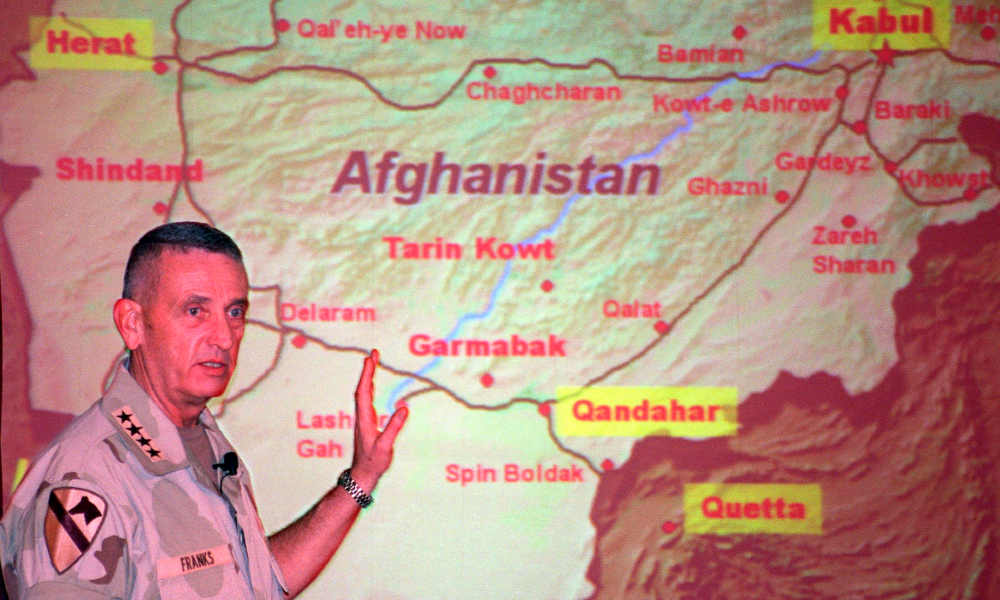
Third, analysts failed to recognize how unusual pre-9/11 Afghanistan was as a terrorist safe haven. The Taliban alliance gave al-Qaeda a sanctuary in which to train and indoctrinate fighters, import weapons, forge ties with other jihadist groups, and plot attacks. More than 10,000 volunteers trained in Afghanistan, learning not only small-arms use but also counterintelligence, bomb-making, and other advanced skills. The camps also built networks and provided a setting for indoctrination.
Later civil-war havens in Iraq, Syria, Libya, Yemen, Somalia, and the Sahel raised similar concerns, but Afghanistan proved unusually favorable. The Taliban controlled roughly 90 percent of the country on the eve of 9/11, allowing camps to operate far from fighting. Al-Qaeda itself ran some camps and had global aspirations. Most important, counterterrorism changed after 9/11: havens were no longer no-go zones. The United States bombed them, targeted leaders, supported local forces, and monitored travel to and from them.
The results matter. Most major jihadist plots in the years that followed 9/11 were linked to Afghanistan and Pakistan. The Iraqi civil war produced no comparable wave of attacks against the United States or Europe. Syria did generate directed attacks, notably in Paris and Brussels, but most Islamic State attacks in the West were homegrown.
Jihadist Rivalries
Fourth, U.S. officials underestimated divisions within the jihadist camp. Jihadists have long been prone to feuds over enemies, tactics, leadership, and doctrine. After 9/11, strategist Abu Musab al-Suri bitterly complained that the attacks cast jihadists into “a fiery furnace” that consumed leaders, fighters, and bases. In Iraq, disputes over whether to prioritize fighting the United States or Iraqi Shias, and over violence against civilians, proved difficult for al-Qaeda’s leadership to manage.
This infighting peaked with the rise of the Islamic State. In 2013, al-Qaeda’s Syrian branch imploded as members chose between loyalty to al-Qaeda and the self-proclaimed Islamic State. In subsequent years, jihadists loyal to the two camps fought or competed across the Muslim world.
The United States often lumped these strains together, assuming groups with local ambitions also sought to attack America. That encouraged Washington to respond to every perceived threat, increase military efforts abroad, and work with authoritarian governments confronting local rather than global jihadists.
The Difficulty of Changing Societies
Finally, the United States overestimated its ability to change societies and politics in the greater Middle East. After 9/11, Washington increasingly embraced the idea that ending terrorism required reshaping the region. In Afghanistan and Iraq, the United States removed hostile regimes and tried to build new political systems, eventually deploying massive numbers of troops and spending enormous sums.
The record was poor. The Taliban returned to power in Afghanistan after a grinding insurgency. Iraq retained regular elections, but its political system remained deeply flawed. The human and financial costs were enormous, and the invasion of Iraq worsened the terrorism problem: The collapse of governance and anger at the United States and the Shia-dominated government helped produce al-Qaeda in Iraq, which eventually became the Islamic State. The United States learned that it is easier to destroy than create.
Lessons for Counterterrorism Today
These mistakes point toward a more sustainable strategy. Policymakers should avoid hyping the threat: Terrorism is real, but not all terrorists pose the same threat. Some are unskilled, and most are focused on local enemies, not the United States. To address the threat as it exists, counterterrorism capabilities should be consistently resourced because expertise, intelligence relationships, and community trust cannot be surged quickly when danger rises.
The United States should also exploit terrorist weaknesses, especially jihadist infighting, and keep pressure on genuine havens through intelligence, cooperation with local governments, support for local forces, and limited strikes when necessary. But not every haven is another 1990s Afghanistan; that was the exception, not the rule.
Above all, U.S. policy requires humility. The shock of 9/11 created an understandable desire to end terrorism once and for all. Such a complete solution is unrealistic. Instead, combining sustained intelligence and law-enforcement pressure, limited military tools against genuine havens, and a clear-eyed appreciation of terrorist weaknesses offers the best prospect for keeping terrorism manageable rather than allowing it again to become America’s defining security challenge.
NOTE: This article draws on a longer analysis published in 25 Years after 9/11: The Future of the Global Jihadi Movement, edited by Colin P. Clarke and Clara Broekaert (The Soufan Center, 2026). The author used artificial intelligence to produce a shorter version and further modified and revised the results.