Pulling Reports, Playing Politics

Editor’s Note: The Trump administration’s decision to retract several pieces of intelligence analysis is another sign of its effort to politicize the intelligence process. American University’s Joey Stabile examines one redacted assessment on the role of women in white supremacist violence, arguing that its analysis was strong and that the decision to withdraw it is linked to the administration’s political agenda.
Daniel Byman
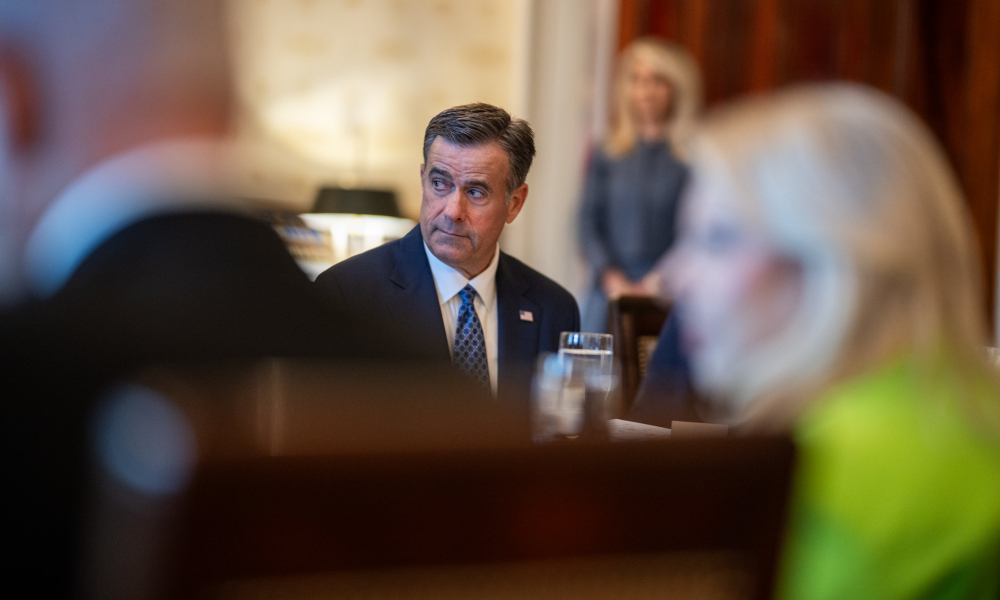
On Feb. 20, CIA Director John Ratcliffe publicly ordered the retraction or substantial revision of intelligence products that he alleged did not meet CIA and intelligence community analytic tradecraft standards and “failed to be independent of political consideration.” Among the 19 products in question, the CIA released three redacted assessments that it said “exhibit substantial deviations from the President’s expectations that CIA’s workforce remains independent from a particular audience, agenda, or policy viewpoint.”
This move warrants close scrutiny, particularly given the focus of the three redacted assessments. Though a senior CIA official dismissed the assessments as “related to diversity, equity or inclusion” (DEI), the products cover human rights crackdowns, threats to economic development, and violent extremist recruitment patterns. In singling out these reports as examples of DEI—a catch-all scapegoat for the Trump administration—CIA leadership appears to be prioritizing scoring political points over nonpartisan analysis of pressing global trends.
Among these assessments, the retraction of one product in particular, “Women Advancing White Racially and Ethnically Motivated Violent Extremist [REMVE] Radicalization and Recruitment,” carries several concerning implications. The withdrawal of the report belies observable evidence about transnational extremist threats, contributes to the politicization of the intelligence community, and raises alarm in light of the administration’s ongoing spread of white supremacist rhetoric.
Assessing the Assessment
Reports indicate that former officials who reviewed the redacted assessments found no indication of bias or shoddy tradecraft. Instead, former officials suggest that the documents “simply reflected the policy priorities of past administrations.” Upon closer examination, however, the REMVE-focused product actually appears to align with the investigative and strategic priorities of both the Biden administration and the first Trump administration. The decision to retract an assessment about a legitimate threat to public safety thus suggests an ulterior motive.
The product, published on Oct. 6, 2021, draws primarily on open-source reporting to examine broad trends and recent developments regarding the role of women in the REMVE movement. It notably focuses on the supporters and sympathizers of “groups such as National Action and Nordic Resistance Movement,” two organizations explicitly identified in the first Trump administration’s National Strategy for Counterterrorism. The contrast between this October 2018 strategy document and the 2026 retraction underscores the dramatic shifts occurring within the U.S. counterterrorism bureaucracy, including recent efforts to reassign intelligence analysts, cut terrorism prevention grants, and rescind the first-ever National Strategy for Countering Domestic Terrorism. More recently, the administration has used the language of domestic terrorism to target political opponents, all while spreading increasingly extreme anti-immigrant rhetoric.
In fact, the CIA’s bottom-line intelligence assessment has aged remarkably well. It suggests that women “have been emerging as key players of the transnational white racially and ethnically motivated violent extremist (REMVE) movement,” and highlights women’s participation in “newer roles in propaganda and recruitment.”
Though experts such as Kathleen Blee have chronicled the role of women in white supremacist networks for decades, this trend has only grown clearer in the several years since the assessment’s publication. Research from the European Commission, for example, highlights the various functions that women fulfill in an increasingly decentralized threat landscape, ranging from ideological innovation to movement facilitation. More specifically, analysts note that white supremacist “Active Clubs” have depicted women as “brand ambassadors,” armed fighters, and idealized romantic partners in their online propaganda.
Most notably, the assessment foreshadowed the rise of Dallas Humber, who was sentenced in 2025 to 30 years in prison for soliciting hate crimes, soliciting the murder of federal officials, and conspiring to provide material support to terrorists. In a pattern of behavior that closely mirrors the assessment’s warnings, Humber played a key role in recruitment and propaganda production for the Terrorgram Collective, a designated terrorist entity in the United States, Australia, Canada, New Zealand, and the United Kingdom. As ProPublica notes in an investigation into Terrorgram, Humber served as a “mentor and coach” to a Slovakian teenager who would go on to carry out a deadly attack at an LGBTQ establishment in Bratislava in 2022. She also helped to develop Terrorgram’s influential multimedia publications, including by narrating “a quasi-documentary glorifying more than 100 white murderers and terrorists.”
As recently as December 2025, President Trump’s own assistant attorney general for national security noted that Humber “used online platforms to celebrate violence and solicit attacks that took the lives of innocent people and injured others around the world.” The Department of Justice rightly lauded the years-long investigation into Humber and the Terrogram Collective, making the same administration’s decision to retract the 2021 CIA assessment all the more questionable.
Increasing Politicization
If white supremacist women like Humber helped to inspire and guide violent plots in the United States, Slovakia, Turkey, Brazil, and Australia, why retract the analysis? The broader context surrounding the retraction suggests that Trump administration officials may prefer to override the work of nonpartisan analysts in order to shape their own narrative about the threats facing the United States.
Even in a vacuum, the public retraction of apparently sound intelligence analysis would raise concerns. The CIA’s announcement, however, comes in the context of two disturbing trends: the politicization of the intelligence community and the Trump administration’s glaring embrace of white supremacist messaging.
These trends stand out as all the more relevant when considering that the retractions came in response to a review from the President’s Intelligence Advisory Board (PIAB), an independent body of the Executive Office of the President. Trump’s PIAB appointees include former Rep. Devin Nunes (R-Calif.), who rose to prominence refuting intelligence community analysis about foreign interference in the 2016 election, and Katie Miller, the former Department of Government Efficiency (DOGE) official whose husband, Stephen Miller, has promoted white supremacist literature.
Dating back to the first Trump administration, scholars and former intelligence officials have warned about the politicization of U.S. security institutions. These concerns have been validated by the administration’s actions, which have included staffing purges and public attempts to discredit intelligence community analysis that is inconvenient to their political ends. The negative trend has only accelerated over the past year, particularly as President Trump openly repudiated his director of national intelligence’s assessment of Iran’s nuclear program.
In May 2025, Director of National Intelligence Tulsi Gabbard also fired the two highest-ranking officials on the National Intelligence Council (NIC) after a NIC assessment reportedly contradicted the Trump administration’s narrative related to the Venezuelan government’s relationship to Tren de Aragua. More recently, Gabbard drew criticism after meeting with FBI agents in advance of the bureau’s search of an election center in Fulton County, Georgia. Sen. Mark Warner (D-Va.), vice chairman of the Senate Select Committee on Intelligence, warned that the incident amounted to a “serious breach of trust.”
Occurring in the shadow of these incidents, the retraction of intelligence assessments with no clear analytic flaws further undermines the ability of nonpartisan intelligence professionals to deliver objective analysis to policymakers.
Embrace of White Supremacist Messaging
CIA Director Ratcliffe’s decision to retract an assessment on white supremacist extremism also occurs as the Trump administration has increasingly used government platforms to disseminate blatantly racist content.
Perhaps most prominently, the Department of Homeland Security has spent the past year spreading hateful memes, symbols, and references. For example, one ICE recruitment post alluded to “cultural decline” and “invasion” while referencing “Which Way Western Man?” As analysis from the Global Project Against Hate and Extremism makes clear, these messages have been widely received and celebrated by extremists, including multiple Proud Boys chapters. The Labor Department has also posted Nazi tropes, and Trump himself recently posted an unquestionably racist video featuring former President Barack Obama and former First Lady Michelle Obama. This dehumanizing content, experts warn, emboldens extremists and legitimizes violence against members of perceived out-groups.
The Department of State, meanwhile, has given credence to the false “white genocide” conspiracy theory through its Afrikaner refugee initiative and given voice to the extremist concept of “remigration,” a proposal to forcibly remove non-white populations that was popularized by the Austrian extremist Martin Sellner. It has also reportedly developed a portal that will allow European internet users to circumvent bans on hate speech and terrorist content. Beyond its public-facing communications, the administration has also appointed numerous officials with ties to outright white supremacists and unapologetic track records of extremist rhetoric.
Taken together, this activity leaves little doubt about the current administration’s ideological commitments. The decision to retract an intelligence assessment about white supremacist radicalization is consistent with this pattern of support for extremist messaging.
The retraction should call attention to three simultaneous trends: the Trump administration’s continued retreat from efforts to counter white supremacist violence, its ongoing politicization of U.S. intelligence, and its alarming use of the bully pulpit to spew extremist rhetoric. As the federal government continues to turn away from real national security concerns, it is even more important to invest in research and prevention at the state, local, and nongovernmental levels to address both the capability gaps and the active harm caused by the current administration.