Reviving Article 109: A Legal Path Out of Security Council Paralysis
Eighty-one years after Hiroshima, a look at the legal contradiction embedded in the UN’s founding—and the dormant charter provision that could still resolve it.
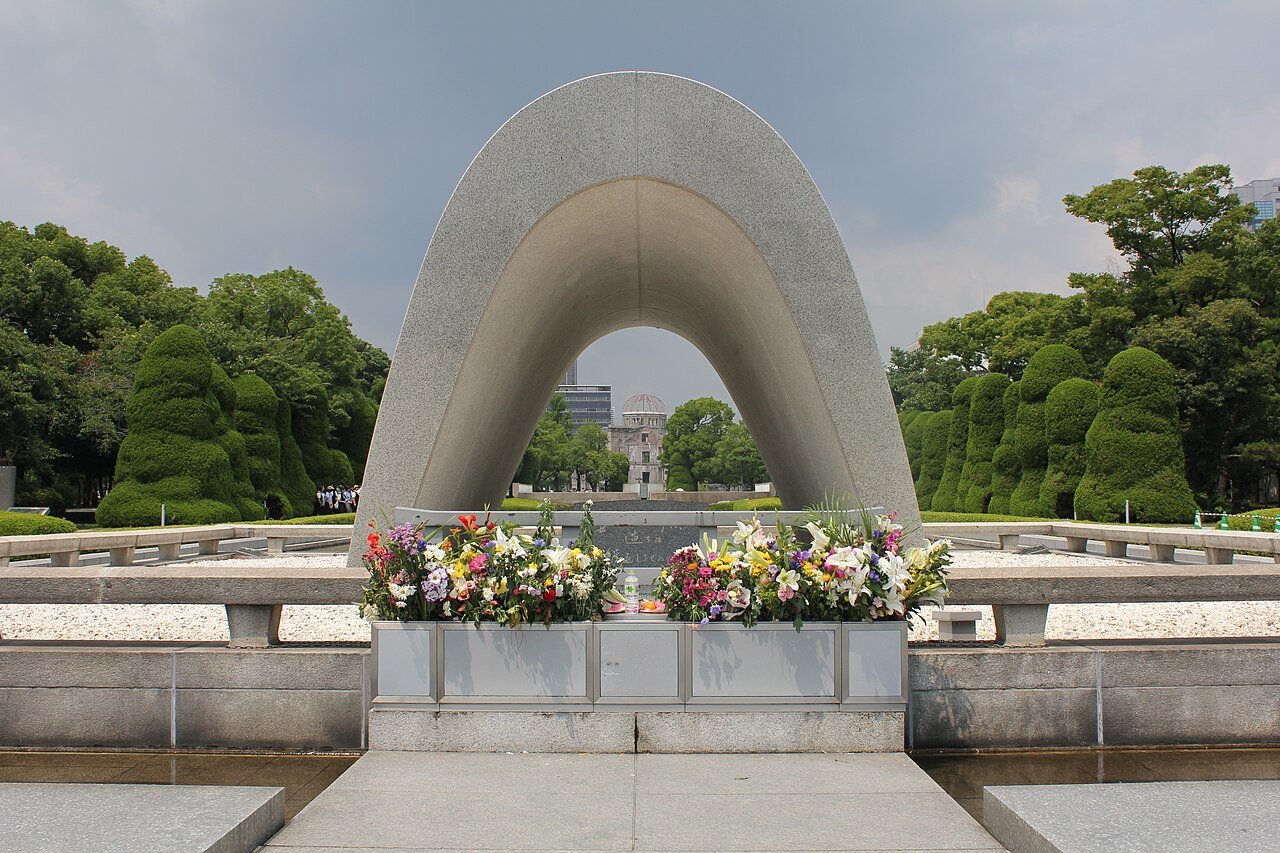

Six weeks after the signing of the United Nations Charter in San Francisco on June 26, 1945, the United States dropped the first atomic bomb on Hiroshima on Aug. 6; a second bombing on Nagasaki followed on Aug. 9. The two atomic blasts killed roughly 70,000 in Hiroshima and 40,000 in Nagasaki instantly. The numbers rose to a total of 214,000 dead in a matter of months, and radiation-related cancer, particularly leukemia, caused further suffering and deaths for years to come.
According to international treaty law, as outlined in the Vienna Convention on the Law of Treaties (VCLT), a state that has signed a treaty must not act to “defeat the object and purpose” of that treaty before it enters into force (Article 18). This obligation takes two related but distinct forms. Under Article 18(a), a state that has signed but not yet ratified is bound until it makes clear its intention not to become a party. Under Article 18(b), a state that has ratified is bound pending the treaty’s entry into force. Although the VCLT was adopted in 1969, this principle reflected customary international law already in effect in 1945.
The UN Charter was signed on June 26, 1945, and entered into force on Oct. 24 of that year, once the required number of ratifications had been deposited. The United States signed in June, submitted its instrument of ratification on Aug. 8—becoming the first state to do so. This produces a precise, previously unexamined legal sequence: The bombing of Hiroshima on Aug. 6 falls within the Article 18(a) obligation binding a signatory state, while the bombing of Nagasaki on Aug. 9—one day after U.S. ratification—falls within the arguably stronger Article 18(b) obligation binding a state that has already ratified. Far from softening with time, the U.S. obligation not to defeat the charter’s object and purpose had, if anything, intensified by the time of the second bombing.
The more urgent question, 81 years later, is what that founding paradox has become. The UN Security Council was created in that same coercive, unequal moment—five states granted a permanent veto as the price of their participation—and is now the visible symptom of a charter that has not been meaningfully revisited since 1945. The dysfunction is no longer theoretical. With hundreds of wars and tens of millions dead or injured since the UN’s founding, that dysfunction is now the defining feature of the council’s record—and the clearest measure of its growing irrelevance.
A Council Built for a World That No Longer Exists
In 2024, permanent members cast eight vetoes across seven draft resolutions—the highest number in a single year since 1986. The following year brought no relief: The U.S. vetoed two Gaza ceasefire resolutions, and Russia twice blocked amendments meant to protect Ukraine. The council’s overall output fell with it—just 44 resolutions adopted in 2025, the lowest count since 1991, with barely three in five carrying unanimous support. Deep divisions left the council largely unable to act on pressing crises in Gaza, Ukraine, Sudan, or Myanmar simultaneously.
The structural problem underneath these numbers is one of representation, not just process: The council’s five permanent members (China, France, Russia, the United Kingdom, and the United States, together known as the P5) represent just 26 percent of the world’s population—down from over 50 percent in 1945, and just 3 percent of UN member states. Total Security Council vetoes cast since the UN’s founding reached 320 by the end of 2025 alone, with the Soviet Union/Russia casting 155 of them and the United States 94—a combined 249, or more than three-quarters of the total—and the tally continues to grow into 2026. Further, the absolute sovereignty privilege granted to the victors of World War II sits in direct contradiction with the charter’s own foundational principles of sovereign equality and collective security.
This is not a partisan critique of any one government’s use of the veto—both Washington and Moscow have wielded it in the disputes above, as have Beijing, London, and Paris at other moments. It is a structural critique of a mechanism that UN member states themselves have begun openly describing as unfit for purpose: More than half the UN’s membership—118 of 193 states, as of a May 2026 summit that brought 11 more African countries on board—now formally back a French-Mexican proposal to voluntarily restrain the veto in mass-atrocity situations, a proposal that, notably, still requires the P5’s own consent to take effect, and which only France has actually committed to honor.
Alternatives Are Already Emerging—Outside the Charter
The gap in peace and security left by Security Council paralysis is being filled outside the UN Charter’s own framework. China has advanced a Global Governance Initiative explicitly framed as a corrective to P5-dominated decision-making, built around a return to sovereign equality among all states rather than a privileged five. Separately, proposals have circulated in Washington for a parallel “Board of Peace” structure operating alongside, rather than through, the Security Council.
Neither initiative is inconsistent with the charter’s own contemplation of parallel security arrangements—Articles 52 through 54 anticipate exactly this—and, as the examples of NATO, the Arab League, and the recent defense pact among Turkey, Saudi Arabia, and Pakistan all show, “regional” has never been read narrowly. Turkey and Bulgaria, for instance, are both members of the North Atlantic Treaty Organization despite lying well outside the North Atlantic. What distinguishes a Chapter VIII arrangement from these newer proposals is not geography; it is subordination. A regional body acting under Chapter VIII still needs Security Council authorization before taking enforcement action, and still owes the council a duty to report what it is doing. Neither the Global Governance Initiative nor the Board of Peace, on their current description, purports to accept either constraint.
Whatever one thinks of either proposal, their emergence is itself the point: When the charter’s own institutions cannot act, states and blocs will construct substitutes that owe nothing to the charter’s legal framework, its universality, or its accountability mechanisms. A UN that cannot reform itself from within risks being reformed around, by actors with no obligation to preserve what the charter got right.
Time for the Charter-Prescribed Way Out
This is where the UN Charter’s own text matters, and where the record is more encouraging than the usual “the P5 will never allow it” assumption suggests, specifically Article 109. Article 109 sets two distinct thresholds. Under Article 109(1), a General Conference to review the charter may be convened at any time by a two-thirds vote of the General Assembly and a vote of any nine of the Security Council’s members—a vote that, unlike Article 27(3)’s language for substantive council decisions, does not require “the concurring votes of the permanent members.” The higher threshold comes afterward: Any amendment the conference recommends still requires ratification, exactly as under Article 108, by two-thirds of member states including all five permanent members.
This happened many years ago. In 1955, Article 109(3) added a one-time forcing mechanism: If a review conference had not been held by the UN’s 10th annual General Assembly session, the proposal to call one would automatically appear on that session’s agenda. It did, and on Nov. 21, 1955, the General Assembly adopted Resolution 992(X), deciding that a General Conference to review the charter “shall be held at an appropriate time.” The Security Council then adopted the same decision on Dec. 16, 1955. Despite the fact that the Soviet Union voted “no” and France abstained, neither vote blocked the outcome. This is the mechanism working exactly as designed. Article 109 conference-calling votes are procedural, and the veto simply does not reach them.
The meaningful use of this mechanism, however, faded over time. The General Assembly created a committee, open to every member state, to fix a date and place for the review conference, and kept renewing its mandate—in 1957, 1959, 1961, 1962, 1963, and 1965—without ever agreeing to a start date. But in 1967, the assembly stopped even pretending a date was imminent: Resolution 2285(XXII) simply decided to “keep in being” the committee, with no further reporting deadline attached. Twelve years after the assembly voted yes to a review conference, the file was not closed. It was left in suspension—legally alive, politically shelved. (This full history, from the 1955 vote through the 1967 lapse, is traced in the author’s own “The Future in the Past: Reconstructing Article 109(3) Towards the San Francisco Promise for Constitutionalization of the UN and International Law.”)
That history undercuts the assumption that charter reform is permanently off the table. Fast-forward to the council’s own composition, and the clearest proof appears. In 1963, the General Assembly voted to expand the Security Council from 11 to 15 members and the Economic and Social Council from 18 to 27. France and the Soviet Union voted against the Security Council expansion outright; the United States and United Kingdom abstained; only China voted in favor. That is four of five permanent members declining to endorse the change. Yet within 20 months, every member ratified the expansion, and the amendment entered into force on Aug. 31, 1965. The same pattern held for the Economic and Social Council expansion, adopted the same day as Resolution 1991 B (XVIII), which received the General Assembly support of not a single permanent member—France and the Soviet Union voted no, the U.S. and the U.K. abstained, and China did not even take part in that vote—and was ratified regardless.
The lesson is not that the P5 readily gave up power. It is that initial opposition in a General Assembly vote has never been the same thing as a permanent block on ratification. UN membership had more than doubled by the mid-1960s, and with it came sustained political pressure for a more representative, more democratic UN. The move from tabled resolutions in New York to binding ratification also shifted the decision into national capitals and legislatures—in the U.S. case, President Lyndon B. Johnson’s own message asking the Senate’s advice and consent invoked that same membership growth as its central justification, and the Senate then ratified unanimously, 71 to 0, a sharp reversal from Washington's abstention at the UN. For Moscow, the calculus centered less on the council seats themselves than on broader standing—both superpowers had by then come to rely on the UN to manage Cold War crises and proxy conflicts, and an isolated holdout against a near-unanimous membership carried costs that a reluctant ratification did not.
What moved the reluctant permanent members from opposition or abstention to ratification in under two years was not a change in the charter’s text—it was diplomatic and political pressure applied during the ratification window itself. The same window exists for a charter review conference today. What has been missing since 1967 is not a legal path. It is the political effort to use one that has been sitting, dormant but valid, for almost 60 years.
* * *
The anniversary of the Hiroshima bombing falls at a moment when the Security Council born alongside the UN Charter is failing by its own numbers—fewer resolutions, more vetoes, and a growing list of alternative frameworks assembling themselves outside the UN system entirely. Tearing up the charter—as Israel’s UN ambassador literally did on the General Assembly floor in 2024, and as Libya’s Moammar Gaddafi did in 2009—is not the answer; it remains the only truly universal legal framework the world has. But treating Article 109(3) as inoperative, 81 years after it was written into the charter for precisely this purpose, is no longer a defensible position either. This is the promise San Francisco actually made. States that had no seat at the table in 1945—and many that did not yet exist as states at all—were asked to accept a council built around five permanent vetoes, in exchange for one commitment: that the charter itself would come up for review within a decade, open to remaking by the states bound by it. That compromise was not abstract or aspirational. The General Assembly voted to honor it in 1955. What has lapsed in the seven decades since is not the promise itself, which no subsequent vote has ever withdrawn—only the willingness of the charter’s own membership to collect on it.
The mechanism for renewal was built into the UN Charter from the start. Upholding the San Francisco promise, 81 years later, is no longer optional. It is time to use it.