Scaling Laws: How AI Can Transform Local Criminal Justice, with Francis Shen
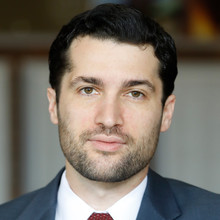
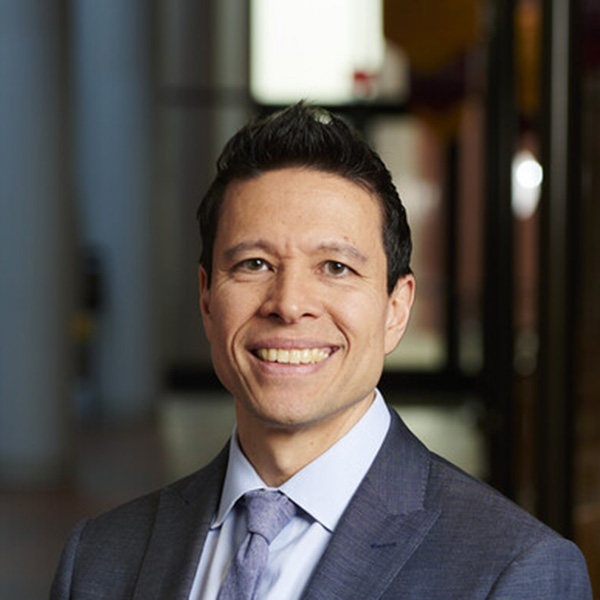
Alan Rozenshtein, research director at Lawfare, spoke with Francis Shen, Professor of Law at the University of Minnesota, director of the Shen Neurolaw Lab, and candidate for Hennepin County Attorney.
The conversation covered the intersection of neuroscience, AI, and criminal justice; how AI tools can improve criminal investigations and clearance rates; the role of AI in adjudication and plea negotiations; precision sentencing and individualized justice; the ethical concerns around AI bias, fairness, and surveillance; the practical challenges of implementing AI systems in local government; building institutional capacity and public trust; and the future of the prosecutor's office in an AI-augmented justice system.
This Scaling Laws episode ran as the Jan. 16 Lawfare Daily episode.
To receive ad-free podcasts, become a Lawfare Material Supporter at www.patreon.com/lawfare. You can also support Lawfare by making a one-time donation at https://givebutter.com/
Click the button below to view a transcript of this podcast. Please note that the transcript was auto-generated and may contain errors.
Transcript
[Intro]
Alan Rozenshtein:
When the AI overlords takeover, what are you most excited about?
Kevin Frazier: It's
not crazy, it's just smart.
Alan Rozenshtein: And
just this year, in the first six months, there have been something like a
thousand laws,
Kevin Frazier: Who's
actually building the scaffolding around how it's gonna work, how everyday
folks are gonna use it?
Alan Rozenshtein: AI
only works if society lets it work.
Kevin Frazier: There
are so many questions, have to be figured out and—nobody came to my bonus class!
Let's enforce the rules of the road.
Alan Rozenshtein: Welcome
to Scaling Laws, a podcast from Lawfare and the University of Texas
School of Law that explores the intersection of AI law and policy. I'm Alan Rozenshtein,
associate professor of law at the University of Minnesota and research director
at Lawfare.
Today I'm talking to my University of Minnesota colleague,
Francis Shen, professor of law and director of the Shen Neurolaw Lab and who is
also running to be the next county attorney for Hennepin County, which includes
the city of Minneapolis. We discuss how AI can transform local criminal justice
from investigation clearance rates to precision sentencing, to mental health
interventions, and what it's like to run for public office with AI as a central
plank of one's campaign.
You can reach us at scaling laws@lawfaremedia.org and we hope
you enjoy the show.
[Intro]
Francis Shen, welcome to Scaling Laws.
Francis Shen: Great
to be here. Nice to see you, Alan.
Alan Rozenshtein: So,
Francis, so you and I have been colleagues at the University of Minnesota Law
School for nearly a decade. And you're an expert on law and technology and the
criminal justice system, including AI. But you're also running for office for
the Hennepin County attorney kind of on this AI platform, and that's part of
the reason I wanted to talk to you.
But before we talk about, sort of, the political and policy
angles of this. I just wanna start by getting a little bit of your background
and starting with neurolaw, because that's really your—how you started as a
legal academic, and still a lot of what you work on.
Your lab has the motto: every story is a brain story, which I
love. And the American Law Institute recognized you as a pioneer in
establishing this interdisciplinary field. And you've been working in this for
a long time, including in the criminal justice context, I think at least, you
know, all the way back to sort of 2010 and things you've written about.
So, what were you seeing 15 years ago that others missed? And
how does approaching criminal justice through the lens of brain science and
what does that even mean, inform your thinking about AI in the legal system.
Francis Shen: Oh,
great set of questions. So let me give you the short answer and we can pick up
on any of it.
I went into graduate school, I did a JD-PhD, and of course the
JD was in law. The PhD was in the social sciences, government and social policy
focus, economics, political science, a lot of sociology, so all your
traditional social sciences; the fields of study that look at human behavior.
But one of the things that I found was I really didn't understand the “why” of
people were doing things. That took me to psychology.
And that took me to neuroscience. And in particular, I was
looking at legal and policy responses to survivors of trauma. Both those, that
was at the time 2001, returning soldiers from then the wars in Iraq and
Afghanistan that followed soon after, and also survivors of rape and sexual
assault. And in both cases there were a number of people who put it in quotes,
for a reason, physically okay, but really weren't.
They were dealing with a lot of mental stress, a lot of PTSD, a
lot of mental trauma. And the social sciences talked a lot about how to respond,
but they really didn't give me any sense, and others of, again, like why is it
so difficult if the arms are working and the legs are working and why is it
that some who experience the same thing are able to kinda move past it and
others are not?
That took me to psychology and then that was a little bit
better, but still left me understanding—I was like, there must be some reason,
right? That mean it—why? And that took me to neuroscience. And I got to
neuroscience. I owe everything actually to a cognitive neuroscientist,
cognitive psychologist named Steven Pinker, who became my mentor, joined my
dissertation committee.
And by the end of graduate school, I was realizing that I
really wanted to go into this zone of neuroscience and law. And just lo and
behold, there was a MacArthur Law neuroscience project that had just opened up.
They needed a postdoc. I was a pretty good fit, and off I went to Santa
Barbara, California drove cross-country and the rest is sort of history.
But that's the origin story that I was really looking at
survivors, victims of trauma. But once I got into brain science, this kind of
answers your question, I began to see that all the things I cared about: why
did a criminal do the things that they did? Why does anyone do anything? How is
it that I am feeling? Whatever I'm feeling inside? How is it that I'm talking
to you and responding?
All of those things are brain related and in fact really deeply
brain-related, and I've spent the rest of my career trying to think about law,
which is in the business of governing human behavior and understanding and
improving human mental states, how can neuroscience, which tells us a lot about
those mental states and a lot about how we make decisions, how can it improve
law?
And in a nutshell, that's neuroscience and law with one very
important asterisk. And this will get us to AI as well, and that is law works
with lots of other disciplines to understand human behavior.
Law and economics would be the classic example, ‘Hey, you want
to change tax policy? Let's talk with the economist to understand how a change
in tax policy might change behavior.’ You don't need an FDA to regulate
economists because they're not creating tools to directly modify mental
function.
They're changing things outside in the environment that will
change human behavior, but not things inside the body. Neuroscience offers not
only new knowledge, but also new tools, new neurotechnology that can directly
and indirectly change brain function and therefore behavior. One of the major
challenges in brain science is that the brain is horribly complex.
One of the two caveats that I give about our motto, “every
story is a brain story,” the first one is that every story is not just a brain
story. So, we should still think about economics and sociology and religion,
all these other things that should matter.
But the second is that every story is a not fully understood
and sometimes poorly understood brain story. There's one brain scientist who
says, if understanding the brain is like running a mile, we've come three
inches. I mean, it's so, so complex. 86 billion neurons, hundreds of trillions
of connections, the most complicated thing in the universe.
Now let's see, what if there were tools to take tons and tons
of data and make sense of it?
That's how I got into AI, you know, well over a decade, 15
years ago it was really through brain science. There's another connection as
well, which is there are lots of different types of AI and we may talk about
some of them, you know, factory robots—very important, fascinating. But the
subset of AI that fascinates me the most and gets me most excited is the AI
that is in one way or another, trying to either augment or replace or modify
our human information processing.
And a neuroscience view on behavior and on the law starts with
this foundation, the way that we produce anything is through information
processing and that includes emotions. We've got sensory organs, we take in the
world, we process that and the brain, in communication with the rest of the
body, and then we do something or think something or feel something.
That's everything. That's the moment somebody says, I love you
too. That's the moment says, I hate you. That's the moment said, great, I did
great on this calculus exam. That's what our law students do. That's
everything. And artificial intelligence is another way of processing
information non-biologically. And it can be integrated with humans, it can be
separate from humans.
But those are the origin stories, both how I came to
neuroscience and law, and then how I came to AI a number of years ago.
Alan Rozenshtein: So when
you were talking about AI, back when you were focusing on neurolaw, you know,
back when you were writing about this in 2010, what did you mean by AI then?
And contrast that to the extent things have changed with what
you mean by AI today, when you think of the applications of AI in particular to
criminal justice.
Francis Shen: So back
then we have—so we have a thousand-page law and neuroscience casebook, and we
first published it in 2014. We first drafted it in 2010, and that's when we had
our first draft chapter, the AI chapter.
And I would always tell the students when I taught it, this is
probably the most important chapter in the book, even though we put it last and
we put it last 'cause it's so future looking. Then we were thinking a lot about
the following: brain machine interface, which by the way has taken off, there
was no Neuralink then, Elon Musk, I don't even know if you had thought of the
idea yet, but there were lots of others.
So brain machine interface, robotics—all kinds of robotics, so
we would show, I, you know, I was showing factory robots, things. And then
cognitive enhancement, super intelligence, merging—and that's kind of brain
machine interface, but in, in other ways, and as well as super intelligence you
know, generalized AI, what is AI.
All those questions are still really pertinent. The number one
type of AI that did not exist then and was not in our purview then, but is now,
AI large language models. Now versions of it were, I taught the first law and
AI class here in Minnesota, and even then you know, we had folks coming in from
Westlaw talking about the AI systems they were developing to improve search.
And the early law and AI work, as you know, I mean, goes back
decades and folks were trying, were always trying to figure out can we have
basically a robo-judge? Is there a way that this system will be able to
delineate legal principles and apply them? And so that stuff's been in the
ether for a while.
But I'd say, those large language models are sort of the thing
that really, I mean, machine learning was there. It was already a factor. The
ease and the access of these new LLMs is, I think, has really changed the
field. I know you agree. You're right on it. You're already at the cutting edge
also, but that was not something we were writing about back in 2014.
Alan Rozenshtein: And
so today when you talk about AI, right? When you go on the campaign trail,
you're talking to the students or you're writing and you're thinking, we should
use AI to improve criminal justice. You know, are you talking about ChatGPT, or
are you still talking about more sort of lower-level statistical machines?
I mean, obviously there's no bright line between all of these
different tools. But I'm just curious because AI can mean so many different
things. You know, what are the things that you're sort of focusing on the most?
And we can sort of also get to that in our conversation.
Francis Shen: Yeah, I
think about a whole bunch of things because I have a definition of AI that’s really
broad. In fact, the first session of law and AI when I teach it is “What is AI?”
And we read some essays where basically say, you cannot define law and AI, so
you just have to pick the ‘we fake it, we describe it.’ We kind of have
different categories, but we don't—
Alan Rozenshtein: My
favorite definition has always been ‘AI is anything a machine can't do.’ And
then once a machine can do it, we just stop calling it AI. Then it's just, you
know, well, obviously, which obviously a machine can do that.
Francis Shen: Which
is fair.
And I also cheat by just going up on the board and saying, all
right, is the spell check on your Microsoft Suite of things AI or not? And
then, you know about half the students say yes, and others say no. And we go
through the calculator and other things.
And the reason I start there is that, I don't view—we'll come
to you know, hard AI it may be a little bit later. But let's set that aside for
the moment.
I think everything else is variations on a theme. And that
theme is, this is information processing that humans could do, but that, for
either efficiency reasons or we just don't wanna do it reasons, we should have
the machine either do it entirely or help us do it. And that would include to
me calculators, you know, I don't need to know 379 times 2,022 'cause I have a
calculator that can do it for me.
And can do it much better than I can, as well. So with that in
mind, the sort of more advanced AI that are on everyone's mind would include
yes, use of large language models. But more than that, actually, I think the
real goal here is to develop algorithms and predictive models that will, and
you know, those may actually may not include AI, but AI perhaps infused
predictive models that will help the system make very difficult predictions,
and in particular predictions about, okay, almost everyone who comes through
criminal justice system in the United States is going back out into community.
Almost everyone, life sentences are super, super rare. They're
the ones that get in the headlines, so we may think they're more, but they're
pretty rare. Even longer sentences, although we have a lot of them, are
relatively rare. Most folks who come through are going back out. So what
intervention should happen while they are in the system?
You've got a whole range of interventions. Well, this is a mass
scale production system. Just in Hennepin County, for example, you know, over
10,000 cases a year and other larger cities have, even counties, have even
more.
And the way we do it right now is basically based on precedent,
right? We have a system we in place. We have a set of guidelines in place that
are using like 1980s math. And we do that, and we never check the outcome, meaning
did this person succeed in the world? Did they—were they better off or worse
off after being in our, in the criminal justice system?
And that to me is a really excellent place to think about using
AI. Now to do that, we have to rethink the system because we don't have good
data. The old adage applies, garbage in, garbage out, and I think even worse
than that, bad data in, biased outcomes out, really problematic outcomes out.
And we can get to that too, like what data would you need, but
that would be to me like the overall most important way to use AI, which is, ‘boy,
this is a really large number of people coming with complex backgrounds, and
how do we at scale, try and optimize what's best for each individual?’
And the answer has been, right now, we don't. Because it's too
tough. So we don't individualize. We just kind of put people in buckets. I
think the processing speed of AI, the ability to give it a lot, would, and then
checking it, would allow us to really help these humans in the system.
Now there are a lot of other ways just in legal practice that
are not unique to, you know, criminal justice, but that are already happening.
So, both defense attorneys and prosecutors are utilizing tools to help write
their briefs. That's already happening. I mean, judges years ago I that I know
were using WestAI to help check their opinions. That's already happening.
And I'm sure you know, your research are sort of already
covered some of the challenges there, hallucinating citations. You know, what
is the balance between ensuring that lawyers can still do some of that work on
their own versus what can be outsourced? I consider that actually a fairly non-controversial,
but important use of AI in all of law. I mean, if we're not doing it, it's
legal malpractice, but if we're doing it wrong, it's also legal malpractice.
You need new ethics training. But that first thing I mentioned
is really new.
Alan Rozenshtein: So
that, that's great and I wanna dig into a lot of these, sort of in turn. But
before I do that, I wanna ground this a little bit in the specific context that
you're operating in, which is this election for the Hennepin County attorney.
And the reason I was particularly excited to talk to you was
because, you know, often we talk about AI policy issues at a very high level of
abstraction or at the national level, or even at sort of the state level. But
at least in criminal justice, the vast, vast, vast majority of criminal justice
happens not even at the state level, but at the local level.
And so, I think really grounding this in the context of a
specific local county is really helpful. But for those of our listeners who do
not have the fortune of living in the great state of Minnesota, maybe you can
just say a few words to kind of contextualize what is the Hennepin County
attorney and what are the criminal justice responsibilities of a position like
that.
And then once we've established that, we can talk about how you
think AI should plug in to the specific functionings of this part of the
criminal justice system.
Francis Shen: Good
question. So, broad strokes, we have federal criminal laws and state criminal
laws. And if you're violating either of them, you could be prosecuted, but the
vast majority of prosecutions come under state laws.
So, Hennepin County is one of the counties in Minnesota. It
includes 45 different cities. The city if you're not from the area that you'd
know most would be Minneapolis, but it stretches out to include places like Saint
Bonifacius, which is more rural. And it includes the most expensive homes ever
sold in this state, are in this county as well, 'cause it has a number of
wealthy suburbs.
So, it has a range of communities, people living in here. And
each city also enforces both their ordinances, and the way we divide the work
is city attorney offices also handle crimes that do not rise to the level of
felony. But if there is a felony level of crime in the county, then it comes
through the county attorney's office.
And the county attorney is charged with prosecuting that crime.
The county attorney also has a number of civil duties as well. So, for
instance, they defend the county hospital if there issues, and do labor law if
there's a whole civil side. But on the criminal side, that is that's the role.
And it's a big county. Over a million residents, over 10,000
cases a year are coming through that county. And relevant to the conversation, I'll
just add one more note, which is that I think those outside the criminal
justice system, if you've just seen TV and the movies, you think, oh, every
case has a trial and there's a judge and a jury.
No, 97% of cases have what's called a plea deal. They're not
going to a jury. The prosecutor and defense attorney are getting together,
negotiating an agreement about what will happen to the offender, and then a
judge approves it. So that's kind of the machinery of what happens. That's the
geography and that's the task of the county attorney.
Alan Rozenshtein:
Okay, that's great.
So, now let's, and you've mentioned a little this already, but
I kinda wanna go piece by piece. Maybe one way to think about this is the sort
of life cycle of a criminal justice event. And we can sort of think about,
let's get your thoughts on sort of what role you think AI can play in that.
So the first thing that happens is a crime. And then it has to
be investigated. And so, you know, you, I know you've talked about how
unacceptable it is that at least for certain categories of crimes, the
clearance rates are so low. And I'm curious how you think that AI, or what role
AI can play, in getting those clearance rates up.
Francis Shen: Yeah,
so for those who don't know, a clearance rate is sort of—a clearance rate is
sort of, did we get the bad guy statistic? And nationally, those rates have
really gone down. They were for homicide about 90% in the 50s. They're about
60% now, nationally. In Hennepin County, 68% for homicide and robbery, rape
hovering around 20%. Auto theft 1%. So if your car's stolen, good luck. You can
get the car back, but you're not gonna find the individual.
Alan Rozenshtein: But
just for homicide, just 'cause I do think it's useful to sort of flip that
statistic around. So 68% clearance rate means that 32%, a full third of murders,
are never solved. I mean, is that, I mean, that's a horrifying statistic, putting
aside AI.
Francis Shen: Yeah, I
mean, it's 80% of rapists aren't being brought to justice in this county, and
that's not unique to this county, unfortunately. One of the reasons for that is
the changing nature of some of these crimes. It's also the case that it's a
scale issue. So it's not that those auto thefts, you know, at 1% are master
thieves and master criminals that could never be caught.
It's that we're not gonna exert very limited resources on an
auto thief when you've got violent crimes and everything else down the line.
But let me give you some concrete examples of things that can
be done. At the investigation stage though, I would then—we can go back
actually even before that, because ‘prevention through prediction is better
than conviction’ is one of my mantras.
And I'll talk about that. But once something happens, the way
we typically do is it has to be observed. Observation can come through
different ways, depending on the crime. But one of the typical ways is through
eyes of a human, right, that's with maybe aided by a radar gun if it's speeding
or by witnesses. And especially increasingly by video.
So there is already one of the cities in Hennepin County that
uses an AI intelligent camera called Acusensus. And it's on one of these big
highways where people are driving like 50 miles per hour. And what they're
doing is they're taking their cell phones and they're both hands are off the
wheel and they're looking like this, okay, at 50 miles per hour.
If you've got a little group of just six officers, you can only
get so many of those folks. But this system is able to identify, like, take
these pictures and identify those, who are basically doing this in clear
violation, get that information immediately to an officer who can pull over
within, you know, 20 seconds, I think the statistic is and then determine if a
violation has occurred.
I think that's a really effective, and most of that's, it's a
citation. It's a warning. We're not talking about, you know, incarceration. And
that wouldn't rise to the felony level, but it's an example of the type of, I
think, really useful, important, and productive AI uses. What's it doing? It's
augmenting our information processing.
It's seeing things that we can't see. It's processing it faster
than we can process it, and it's doing it at scale. It's keeping a human in the
loop. And it's not I think, you know, draconian, that's one of the concerns.
Another example, actually, I'll use the example of what happens
if the car is stolen. So somebody parks eight o'clock at night, they park the
car in the street, they go to sleep, they wake up, the car's gone.
Well, right now to investigate that thing, we've got very
limited investigative resources. You're taking a human who has to sit through
13 hours of video, right from the security cameras or the Ring to find out, you
know, when did it happen and see if we can identify who it is. It is a perfect
place to utilize AI. So, and there are others as well.
So these are places, I think just at the investigation stage,
at the early stage where we could really make useful use of AI. Now, I'll say
right here, because it happens here and throughout. Yes, there are all sorts of
ethical concerns.
This, you know, that when I talk about it just out in the
community or in class, it's like the first hand that goes up “Isn't This Big
Brother?” And the answer is—
Alan Rozenshtein: That
was indeed gonna be my question.
Francis Shen: It
depends what you mean by ‘Big Brother,’ and the answer is no, this is not
George Orwell, 1984.
It could be, it certainly could be. But I think of it more as
just trying to be in touch with our neighbors. We don't think it's ‘Big Brother’
when someone, if they were in the seat next to you, looked over and said, ‘Hey,
put your hands back on the wheel,’ right? That's not Big Brother. That is a
helping hand that's paying attention to someone.
And in fact, for many who can afford it, there is an increasing
interest in sharing information for better health outcomes. These are smart
rings and smart watches and all kinds of devices that are communicating,
gathering data, AI is being used to analyze that data and then it's being sent
back with the idea that, wow, better information, better observation and
understanding of my data can help me live a healthier life.
And so I think this data can be used for the good but it could
certainly be used for the bad. And that's why you've gotta have, you know, the
right ethical guidelines in place.
And that's a lot of the work of our lab and others, you know,
many others doing this now across many disciplines, whether it's AI and health,
AI in the law, AI in business, to think about, how do you take advantage of the
fact that this little unit that I mentioned out in south Lake Minnetonka,
they're able, they were able to detect 10,000 violations in, you know, one
month alone.
And there's no way they could have done that without this
technology. And I think that's a good thing. I think it's reduced distracted
driving, increased in lives saved, and decreased in harm done.
Alan Rozenshtein: So
that's the prevention, and obviously we could talk a lot about all of these
issues but you know, time is limited, so I wanna sort of keep marching on,
that's the prevention slash investigation side.
Then you have what we call the adjudication side, so the
actual, you know, bail to jail, right? As we say in, in law schools. And I'm
curious what role AI can play or should play for the line prosecutor, right, especially
at the local level who is often given, you know, a stack that's bigger than she
is, of file folders to get through.
I'm curious if you think there's a role for AI to play, and in
particular just to kind of front load the, I'm not sure it's an objection, but
a consideration, what role there is for the human in the loop, because you
already mentioned this and so maybe it's an opportunity for me to ask the
question.
You know, I feel like in a lot of AI conversations, generally,
you often have this kind of incantation, but of course we need a human in the
loop, and sometimes people really mean that. Sometimes people are just saying
that because it makes people feel better. But the question of when should you,
in fact, have a human in the loop?
When is the human doing good versus causing problems? Or when
is the human there to actually intervene in the loop versus the human,
essentially rubber stamping, we need someone to blame. We need a carbon-based
life form to blame, not a silicon-based life form to blame.
And I think, you know, we could talk about that in, in many
different contexts, but I think the line prosecutor negotiating the plea deal
or occasionally going to trial, it sort of was a good opportunity.
So just riff on that set of questions, if you will.
Francis Shen: Yeah. A
great set of questions. At a high level, I don't think we, you know, across all
areas of use of AI, I don't think we always want a human in the loop. I think
it's an empirical question. But it's also a procedural question as well. It's a
combination of two.
To me, the bottom line is what outcomes do you care about most?
And does utilizing the AI improve your outcomes? The outcome I happen to care
about most is community safety. And that includes feeling safe and that
includes being very responsive, actually, to victim and community views.
So here's how I think about the, you know, the basic decision,
and you're absolutely right to describe what is a mass production process.
Prosecutors have very limited—judges and prosecutors and defense attorneys—all
have pretty limited information.
When this process starts there's a police report, might not be
that extensive. If there are prior charges, you might have something there. You
know, you would know if there was interaction with the system beyond that, not
a ton. So, you've got all the complexities of this individual there, and yet
you've boiled it down into, you know, what is a few paragraphs, a few pages, a
little bit of information.
Yeah, that first decision about, you know, a bail decision is
an important one, but so are the charging decisions that sort of set things out
and I see there the ability, eventually, for a more efficient information
ecosystem. There's just a lot more information for the prosecutor.
And here's to me the reason that it could work. When you're
seeing 10,000 plus cases a year and even more are referred, very few of those
individuals are, ‘oh, I've never seen anything like this before.’ And in fact,
most of them are questions that lead to how do we handle these cases? What's
our policy on these, right?
Because they're repeat, not the individuals necessary though
sometimes with recidivism, the actual individuals there, but it's the repeat
type of player, right? And so, what makes the system work now, is everyone has
a roughly agreed upon idea of how we treat cases like these.
We, oh, first time DUI, this is what we do. Everybody knows the
standard. Everybody knows what this office does. The judge approves it. We're
done. Right. It's a, it's an efficiency.
And then, you know, we've got different tweaks. Oh, this was a
little, we're gonna go a little lighter here, a little harder there.
It takes the individual out of the system and the sentencing
guidelines, which are important to mention, because they really are the
backdrop against which that, at least in Minnesota, which is a guideline state
and many states are happens. So, for those who don't know, sentencing
guidelines were instituted to take the individual out because of concerns about
disparities, racial disparities, in particular, in sentencing.
Prior to guidelines, there's discretionary sentencing. Judges
are sentencing every which way. And it turns out that in the aggregate there
were racial disparities. How do you handle that?
Well, let's take that discretion away and sentencing, and
instead we're gonna ask two questions, and there's a grid. We, one line of that
grid is how bad is the crime? Like how much harm? Murder at the end, different
types of homicide and can go down the get less from there. And how many prior
offenses, how many bad things have you done before? And add those two, and
here's the box.
And you can depart from it, but that's basically the box. It's
simple, it's information, but I think it's not nearly rich enough and it's not
individualized.
So what I see is a world in which you would be gathering
individualized information again and again and again. And then we begin to ask,
the analogous case is not just, oh yes, this is a person who has two prior
convictions, and here's the thing—that's what we do now. Instead, we'd be able
to say, ‘boy, the system is suggesting this is a person a lot like this, and
what worked for that other person was this. What didn't work was this. Let's go
with what did work.’
It's the equation. I've called it precision sentencing before,
and it's kinda like precision medicine and that's where medicine is heading as
well. My brother's an oncologist and his whole work as a physician scientist is
rather than just say, all right, we're gonna treat everyone the same, sling
chemo at you; we're gonna try and figure out what your particular biology is
and come up with a treatment regimen that's more likely to work. That's the
basic idea.
There's no way you can do that without big data and a sort of,
I'd say AI-infused, though how much AI actually, I think is unclear, AI-infused
system to try and help. Again, still decisions need to be made in this case for
humans because there are other factors that matter that the system may not pick
up.
But that's a very, very different system than the one we have
right now.
Alan Rozenshtein: So
that actually nicely leads then to what we might think of as the end state of
the criminal justice system, which is once people are, let's say incarcerated
or once they're convicted and they're incarcerated, they're now in the system.
And then a whole set of issues comes out, especially at the
state level around, well there's bail on the front end, but then really parole,
early release, that sort of thing on the back end. And I think this is where AI
systems or algorithmic systems have had their most work already and have been,
I think, quite controversial in a lot of sort of interesting ways.
There's the, probably the standard example people cite to is,
the COMPAS system for, I think it was a pretrial release system from several
years ago, and concerns about whether that system was accurate or whether it
was racially biased, or whether it was both accurate and racially biased.
And so I wanna actually ask you a version of that question,
especially given that you said that your priority is around community safety.
One of the concerns around AI systems, I mean obviously there
are some AI systems that are bad systems. You have crap data, they're poorly
designed. Fair enough. That's really bad. But in principle, those are fixable
problems.
But it strikes me that the deeper concern about AI systems, and
I don't know how one fixes this, is that some AI systems work very well, in the
sense that they accurately predict the thing you are asking them to predict,
but they are doing so based against a background social reality that we might
object to on sort of other normative terms.
Right? So, I mean, very abstract here, but the general idea
might be: If you have a society that's, let's say unjust and unequal in some
respect, and it causes some particular group to have worse outcomes, well that
group's gonna have worse outcomes. It may in fact even engage in worse
behavior, which is downstream from those worse outcomes.
So then, when you ask the AI system, ‘Hey, I need you to
predict whether this defendant is gonna do this bad thing, I should, whether I
should release them, whether I should give them parole.’ The AI system might
give you an accurate answer, right? It actually might be accurate. And it also
might be, on a particular view of the idea of bias, biased.
And so, I'm curious how you think about that sort of as a
conceptual question, you know, should we even think of that as bias? Is that
really the right word for it? And then maybe more importantly as a normative
question, you know, which you might think of as sort of a safety versus
fairness thing.
Because that to me is where the sort of this rubber hits the
road. You know, what if AI actually works? That's its own set of concerns, or
one might be concerned about that.
Francis Shen: Yeah,
it's a great set of questions. So I think it depends what you ask the AI to do.
The COMPAS, which didn't use AI, but is one of these, is an algorithm, an
equation, right?
And it, like other risk assessment tools, of which there are
many, and there's been a lot written by our, you know, law professor colleagues
on the various risk assessment tools, they typically focus on recidivism. How
likely is it that this person is gonna do another bad thing?
There's no reason that you couldn't instead have a system that
was asking, how likely is it that this person is going to thrive, that this
person is, which is related to safety, I actually think very much so.
And you also could have a system—instead you ask, I've got
three treatment options. I've got three real rehabilitative options. What's
most likely to work? What's the best to pair here? So I think it takes more
creative imagination about how these tools are used.
And the majority of the risk assessment tools are, I think,
focused on the, you know, again, the likelihood of committing a bad thing
again. And that's an important thing to consider. So that's one thing.
Secondly, I do think it is possible that, and we already have
this actually, whether it's AI or just you know, an algorithm, that fairness
may not mean that everyone gets the same the same outcome.
And that's a normative, you know, position that I take. It's
something that's the reason I don't like the guidelines. A benefit of
guidelines is that, hey, no matter who you are, you get the same, you get the
same outcome.
I really like the idea of individualizing because I think it's
better if you have enough information for everyone. I'll give you a concrete
example, which doesn't require AI, but does involve screening and a little bit
of neuroscience, and that's first time DUI.
The first time DUI, in most jurisdictions, there's just a
standard thing that happens and it's usually pretty lenient. Lose your license
for a bit, you know, no incarceration, some fines, you've gotta go to some
classes about—to tell you to don't drive drunk.
But we don't ask: Why were you driving drunk last week? Is it
because you just made a dumb decision? Okay. Or is it because you are an
alcoholic or you have some sort of other addiction, and this is just the first
time you've been caught?
Those are two really different people that we should treat
those very differently. And the kicker is we have tools that can separate
roughly those two kinds of folks out, but there's no incentive to do it.
So the reason I mention that is that any AI system, any
algorithm in the system is gonna be reliant on the data it has available. And I
think the reason that COMPAS and those other recidivism tools have be, you
know, are used is because that's the one point of data we have.
The one thing the criminal justice system knows is if you come
back in, right? That is what fuels those data, if you're arrested, again, we
don't track your wellbeing in the community. We don't know, ‘Hey, you spent two
years incarcerated, you're back out, did you then finish the schooling? Did you
do this? You do that?’ We don't know.
And because we don't have that type of data, we haven't built
these other types of models. And so I think it's in part a lack of imagination,
a lack of will.
But that's a real, it's a real issue. And one that, you know,
if I'm building the architecture of a AI-informed justice system, the key to
unlock it has gotta be measurement of real-world outcomes that aren't just,
‘Did you come back into the system?’ That's one of them, but that's probably
not even the most important one.
Alan Rozenshtein: So
let's assume, for the rest of the conversation that AI has a really important
role to play in the criminal justice system across these different areas. So
the next question becomes, okay, well how do you implement that at the local
level? And I'm actually very curious about this kind of institutional
bureaucratic question.
I think that frankly, the government's, you know, incompetence
at technology is frankly quite overstated. I think the government often does a
great job with technology and there are a lot of really smart and committed
technologists, you know, not just at the federal level, but at the state and
local levels.
At the same time to do this, I think at the level of scale and
sophistication that you seem interested in doing it at is a big lift, right? It
requires a lot of systems. It requires a ton of data. It requires a lot of
buy-in from, you know, a lot of cops and lawyers who may not be that interested
in technology, right? Like they, they did not you know, you and I are nerds,
but not everyone shares our particular affliction and interest.
And so I'm curious how you would imagine going about doing
this. And what are the challenges that you might that you might for foresee,
and lemme just give you maybe a concrete concern just to start with and then
you should sort of, riff more generally.
How much of these systems can be developed in-house by the
government, you know, especially by local government versus how much of this is
gonna be proprietary and from the private sector?
Not that there's anything in particularly wrong with
proprietary software, right? I mean, no one expects local governments to come
up with their own Microsoft world alternative, but especially when you're
dealing with somewhat inscrutable AI systems and algorithms, one might be
especially concerned, right, if they're being developed and sold by profit-seeking
companies.
There are a bunch of other issues we could think about, but I'm
just sort of curious to start with that one and more generally get your take on,
how does it actually do this? You know, if you get in office on this platform.
Francis Shen: You've
gotta build trust.
That is the number one thing, because the cultural resistance is
already growing. It's been one of the interesting things, talking in community.
There are a lot of misconceptions, a lot of misunderstandings
and a lot of various, you've raised some good questions and others do as well,
some really well-grounded fears about how different types of AI could be
misused.
So there has to be a trust, including a trust with community. A
lot of the work that we've been doing around AI in the medical space has been
about involving those who are most affected in that case, it'd be patients. In
this case it would be justice involved folks in the conversation.
Alan Rozenshtein: Well,
well, let me, so, but the converse—lemme pause for a second.
'Cause I wanna get to that question, but I wanna ask a prior
one first, which is before you go and try to convince, let's say the voters,
right, which is gonna be my next question. How do you build this capacity
inside the government apparatus itself? So that's the thing I wanna sort of
start with.
'cause that seems like a thing people often gloss over. Not
saying you're glossing over it, but in these discussions, I don't hear enough
conversation about that institutional capacity building.
Francis Shen: Yeah.
So let me rule out the Silicon Valley model of “move fast and break things and
just do it all at once.” Show up Monday morning and here's how we're just
gonna, we're gonna change.
I understand how that might work. In some sectors it will not
work, and I don't think it should work in government. Certainly not in criminal
justice. Second thing is there has to be transparency. So you asked a specific
question about would it be developed in-house or with outside partners.
It's gotta be with outside partners, but only partners who are
willing to be fully transparent about their work. One of the problems with COMPAS
is that it was sort proprietary and it was never entirely clear, and that just had
to be litigated, actually sort of what exactly are you doing? So it's gotta be
really transparent.
I do think that with pilot—and so if you're not gonna move fast
and break things and change everything all at once, what are you gonna do?
You're gonna pick one, maybe two particular pilot programs as proof of concept.
It's gonna, eventually when we get to trust, it's gonna build
trust. And it's also gonna just work out the very, like, practical challenges
of doing this because it's not something that's been done before.
Now I will say that it does build on all sorts of other
innovations in the justice system. I mean, it, you know, there's e-filing,
there's this or that, people can come along. This, I think is different because
it's not just another tool to sort of help you, human, do your job. There are
potentially here some places in which it will say your job is actually shifting
a little bit.
And we've talked about that in the pedagogy as well. I think
the role of lawyers, the skills are still needed, but those skills are gonna
need to be adapted. So you pick one or two—the practical answer is you start
small, you pick one or two pilot projects that are really narrowly tailored, and
where you think you have some decent data.
And so, for example there are some subsets of the justice
system, some of our diversion courts and others, which have a much higher touch
already with justice-involved individuals. Those might be places where you'd
look and say, oh, you know what? We’re kind of already collecting this data. This
is really, it's a really good place to, to kind of start and see if we can
improve.
One of the challenges that is a real one is the lack of data
sharing platforms across agencies and units where you would want to be able to
do this quickly and sort of with as few transaction costs as possible. You
can't change that.
You also can't change resource constraints, so this all has to
happen within the budget, basically, like you don't get to add an extra 10
million for the AI budget. Of course not. And you've gotta prove some
efficiencies, it’s gonna be more efficient in the longer run, even in the short
run.
So that's the practical, that's the practical answer. And, I
think that what will happen is, slowly but surely, through those pilot
projects, you're building trust and you're proving that it can actually work.
And that's been the case with law and neuroscience as well, is that it's not,
you know, you suddenly don't show up everywhere, but you take a couple places
where, like addiction's a pretty good example.
It's like, okay, hey, we have new treatments for addiction that
we just didn't have two decades ago. And a lot of counties, including ours, are
doing this now. You know, but at first it was met with like, what, like what
are you talking about? Medical-assisted treatment for addiction. Why would you
give someone with drug addiction more drugs?
I was like, here's why. And here, and more importantly, here
are the outcomes. And I think the same thing has to happen here.
And I'll give it an example. Just like that example I gave
about, you know, highway use of these sensors. That's, to me, a really good
pilot example, right? It's contained, it's there. We’re not talking about
implementing everywhere. It's like, okay, so what's the next step? Expand it.
What's the next, you know, that, that sort of thing.
I think that would build trust, both in the community and
crucially in the office.
Alan Rozenshtein: So
I wanna end by letting you respond to the question about what it's like to try
to convince the community of this.
Because again, you know, we're not just having this
conversation in the abstract. You're running for office, you're out in the
community, you're talking to people. It's a fairly crowded field. My sense is
that, the AI lane is somewhat lonely in this field, and you've really, you
really staked it out. And the other candidates are somewhat more sort of
traditional in their how they talk about these issues.
And so I'm just curious, as you've gone to the community, are
people interested in this? Are people skeptical of this? You know, I tend to
be, you know, one, one of my frequent frustrations as a sort of soft AI
optimist is that people either don't know about this technology or if they know
about it, they're terrified of it.
And look, that's fair. People can think what they think, right?
It's not their job to love this stuff. But you know, as someone who I think
shares that sort of, at least soft AI optimism, I'm curious what your
experience has been, again, not just as an academic, but as a politician trying
to convince the democratic process that there's a role for this.
How's it been going?
Francis Shen: Thanks
for the question. It's been going well. But I will say that first of all,
you're right, I'm the only person talking about AI and criminal justice not
just in this race, but I think in most races. As much as it's being talked
about in some other sectors and business and in many other places, it's just
not a thing that's being talked about.
And so that means that the first thing I do a lot of is just
listening to concerns because people have heard of AI. Most of what they've
heard is not great.
And in particular, I think that there are concerns around labor
market, ‘Hey, is this AI gonna take all the jobs?’ There are concerns around
environment, ‘Hey, is this AI gonna take all the energy?’ And there are
concerns about bias, ‘Hey, is this AI gonna be, not just Big Brother, but Big Brother
with a racial bias?’
And that's a three strikes and you're out count against the
technology. But then I begin to give examples, and I talk about the ways in
which some of these tools may really speak to the things that people do care
about, which are, you know, better mental health in the community.
And there's a lot, we won't get to it today, but a lot of AI
tools that are aimed to improve mental health. AI that can sort of improve the
efficiency of a system that is so resource-constrained that it can't do all the
things that it wants. So, I'd say it's, describe it as an exercise in both
listening and communication, and also getting beyond the headline version or
the, you know, social media post version of some sort of scary AI robot thing
doing all this stuff.
I also would say this, and I say this all over the place, to
not be deeply engaged in AI and the law, for lawyers, for this position, or
really any kind of cohort of lawyers, at this point is legal malpractice.
We are not gonna look up in five years, in two years, in 20
years and say, ‘oh yeah, I'm glad that AI wave passed. We're done with that.’
Absolutely not.
What we are potentially gonna do is look in the same way we're
doing with social media right now and saying, ‘I wish we would have done X, Y,
and Z with social media. I wish we would have understood both its amazing
potential, but also its potential harms and address them.’
So, you know, I was talking just last night with a group and,
or two nights ago with a group, and said, the county attorney’s race, this is
the first time ever, really first kind of cohort of elected officials across
the board who have to have some knowledge of, an experience with AI.
Because it's not a question of “if,” it's just a question of “when”
and “how,” and if we don't get it right it'll be really hard to put that genie
back in the box and correct it.
So that line of thinking, I think really strikes people. And
that's kind of where, you know, I'm framing it because I think it's the right
framing. I'm not going in, like I said, it's not break things and just like, do
it all tomorrow.
It's happening.
Are we gonna make it happen the right way? Are we gonna make it
work for people in the community and for everyone, or not? And I think that
that's one of the questions in this and a lot of other races this year.
Alan Rozenshtein: I
think that's a good place to leave it. Francis Shen, thanks so much for coming
on the show.
Francis Shen: Thanks,
Alan. This was great.
Kevin Frazier:
Scaling Laws is a joint production of Lawfare and the University of
Texas School of Law. You can get an ad-free version of this and other Lawfare
podcasts by becoming a material subscriber at our website, lawfaremedia.org/support. You'll
also get access to special events and other content available only to our
supporters.
Please rate and review us wherever you get your podcasts. Check
out our written work lawfaremedia.org.
You can also follow us on X and Bluesky. This podcast was edited by Noam Ozband
of Goat Rodeo. Our music is from Alibi.
As always, thanks for listening.