
Shutdown Reform’s Constitutional Blind Spot: The Two-Year Clause
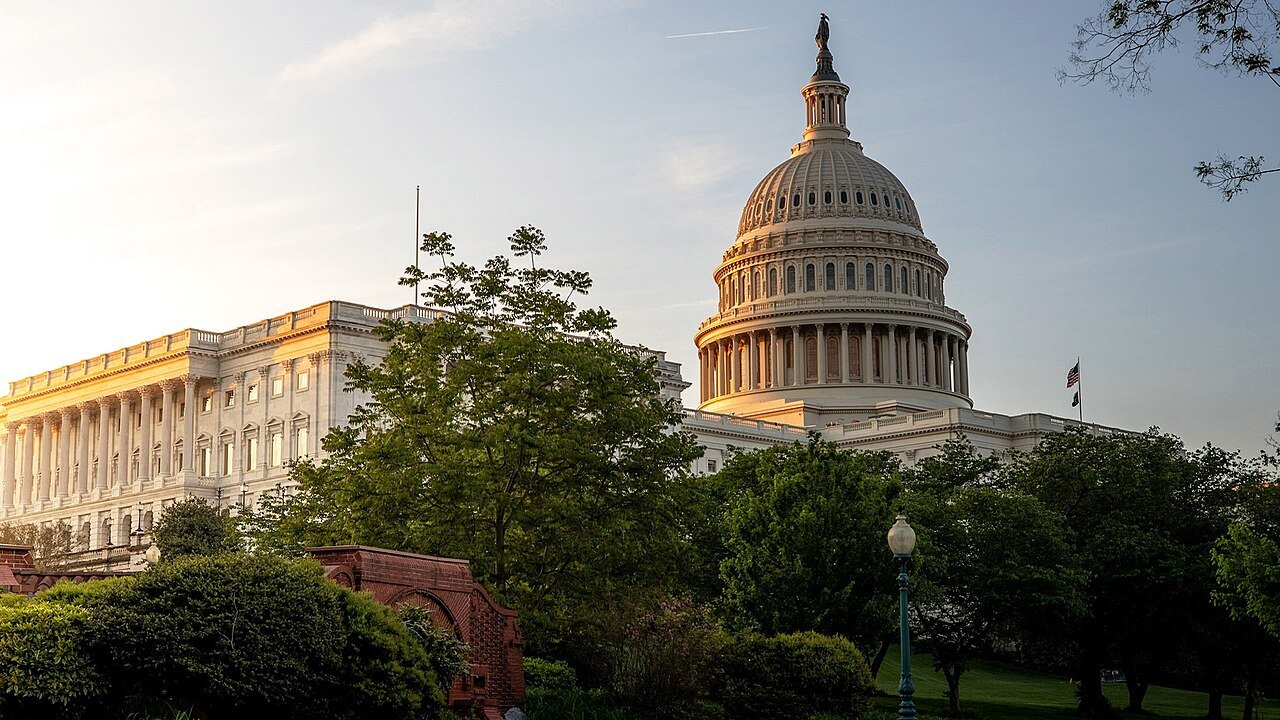



Congress and the president are once again signaling a possible government shutdown as early as this September. In an effort to forestall a shutdown—now and forever—Congress is considering legislation that would automatically fund the government in the event of a lapse in appropriations. In this article, we highlight an overlooked constitutional problem with this legislation: It relies on an automatic funding provision that violates Article I, Section 8, Clause 12, which provides that Congress may “raise and support Armies, but no Appropriation of Money to that Use shall be for a longer Term than two Years.” Let us explain.
The Proposal: An Automatic Funding Provision to End Shutdowns Forever
Congress and the president have failed to fund the government by passing necessary annual legislation with increasing frequency in recent years, leading to employee furloughs, payment lapses for contracts, and market uncertainty. This dysfunction has prompted many on both sides of the aisle in Congress to think about shutdown reform. One possibility, considered at a hearing before the House Committee on Appropriations on July 22, would put an end to shutdowns altogether by automatically funding the government during a funding lapse.
Introduced by Sens. James Lankford (R-Okla.) and Maggie Hassan (D-N.H.), the Prevent Government Shutdowns Act of 2026, a bipartisan bill with broad support, provides that if funding for a federal agency’s existing programs lapses, then “there are appropriated such sums as may be necessary” to continue the agency’s programs (with certain conditions and limitations). Each funding period lasts 14 days, renewing automatically if Congress has not acted. This automatic funding structure is an important part of the act, but there are other important parts as well; the act forbids members of Congress from going on recess, considering other legislation, or traveling until a full funding measure is passed.
This is a cleverly designed bill, and it creates a lot of questions about the separation of powers, fairness, fiscal implications, and possibilities for abuse. Many of these questions were discussed at length at the recent hearing on the bill. We want to focus, however, on a constitutional problem flying under the radar.
The Constitutional Problem: The Army’s Two-Year Clause
Whatever its fiscal, separation of powers, or fairness merits, the proposal for automatic funding still has to comply with the Constitution. To be specific: The automatic funding provision in the Prevent Government Shutdowns Act is difficult to reconcile with the Constitution’s Two-Year Clause because it prevents shutdowns for the Army and the Air Force. By providing that “no appropriation of Money” to “raise and support Armies” could “be for a longer Term than two Years,” the framers intended to ensure that federal armies (more on what those are below) would always be subject to the possibility of a shutdown, able to continue only with both the House and Senate’s approval at least every two years.
As Justice Clarence Thomas summarized the provision (quoting Alexander Hamilton) in his 2024 opinion for the majority in Consumer Financial Protection Bureau (CFPB) v. Community Financial Services Assoc. of America, the Two-Year Clause means that “for the army, Congress cannot ‘vest in the Executive department ... permanent funds’ and must instead ‘once at least in every two years ... deliberate upon the propriety of keeping a military force on foot,’ ‘come to a new resolution on the point,” and ‘declare their sense of the matter, by a formal vote in the face of their constituents.’” Thus, while Congress can ordinarily appropriate funds for any length of time or even permanently, appropriations for “armies” are different.
Fears of Standing Armies: A Long-Standing Concern at the Founding
You may not have heard of the Two-Year Clause, but it was central to the Constitution’s ratification because the people of the founding era saw standing armies as a harbinger of tyranny. Consider Federalist #24 and Federalist #26, in which Hamilton expounded on the clause and its purposes. Those concerned that the Constitution could give the executive branch standing armies through which to impose tyranny were mistaken, Hamilton argued, because the Two-Year Clause’s prohibition on long-term appropriations for federal armies would ensure that decisions about the use of the nation’s armed forces would remain within Congress’s control.
Importantly, Hamilton insisted that this would hold even if some future Congress wanted to relinquish that control, because the clause is a restriction “even of the legislative discretion” such that Congress is “not AT LIBERTY to vest in the executive department permanent funds for the support of an army, if they were even incautious enough to be willing to repose in it so improper a confidence.”
Two-Year Clause Problem Surfaced in the 1980s Automatic Funding Debate
Neither the idea of using an automatic funding provision to end shutdowns nor the constitutional questions we raise here are novel. Back in the mid-1980s, after the Reagan administration saw the first four government shutdowns in U.S. history, which caused furloughs and economic instability, Congress looked for answers.
The House Rules Committee requested a report from the Government Accountability Office (GAO) evaluating whether legislation could provide for automatic continuing resolutions—resolutions that don’t require new legislation—in the event of a funding lapse. President Reagan’s Office of Management and Budget told the GAO that “we are concerned that the [automatic funding] proposal may raise constitutional questions in its application to appropriations for the defense department,” because of the Two-Year Clause. The GAO, for its part, dismissed this concern in its ultimate report endorsing automatic continuing resolutions, writing that “an ACR [Automatic Continuing Resolution] covering the Defense Department would not violate [the Two-Year Clause] provision because an ACR, like the current continuing resolutions, would create a new appropriation, when activated.”
It does not appear that the GAO’s response persuaded Congress. While the GAO prepared its report, Congress passed the Balanced Budget and Emergency Deficit Control Act, which declined to provide automatic funding in the event of a lapse but instead provided automatic spending cuts to certain programs in the event of a budget deficit. (The Supreme Court ultimately declared that automatic provision unconstitutional in Bowsher v. Synar for reasons not directly related to the Two-Year Clause.)
In the decades since those debates, Supreme Court cases have made the claim that automatic funding is consistent with the Two-Year Clause untenable. Whatever the merits 40 years ago of the GAO’s theory that automatic funding legislation did not violate the Two-Year Clause because each period of funding it authorizes is a “new” appropriation, that theory is foreclosed by two intervening opinions.
First, Justice Thomas explained in his majority CFPB opinion that an “appropriation” in constitutional terms refers to an act of Congress making funds available and designating a source of funds—all things the Prevent Government Shutdowns Act itself does. If triggered, it would be the act itself, and not particular installments of funding it authorized, that would “appropriate” funds in the constitutional sense. So, the Two-Year Clause applies not to the disbursements during a lapse that the act authorizes, but to the act itself.
Second, the Supreme Court held in Clinton v. City of New York that legislative action must go through bicameralism and presentment—it must pass the House and the Senate, and be presented to the president. In 1986, the GAO compared automatic funding to continuing resolutions, the new pieces of legislation through which each chamber of Congress votes to carry forward prior funding levels as a stopgap when it runs out of time while working on new appropriations packages. But Clinton rejects the view that automatic funding can nonetheless claim to be “new” legislation, because Clinton insists that legislative action be subject to bicameralism (votes in both houses) and presentment (to the president for signature or veto). Rather, the act itself is the appropriation that, when triggered, provides for a further (and unconstitutionally extended) period of availability.
Why the Framers Tolerated the Threat of Shutdowns
Watching the harm and disruption of shutdowns, readers may be inclined to see the Two-Year Clause’s prohibition of automatic funding as an inconvenience or an obstacle to common-sense fixes. But that’s not how the framers saw it; they expected the threat of shutdowns for federal armies to preserve popular—rather than presidential—influence over the use of the nation’s armed forces. That expectation has been borne out in practice.
Since the Constitution’s ratification, Congress has for the most part done what the framers intended when it comes to funding the armed forces by annually debating funding levels and passing appropriations (often with riders or limits). This adherence to the framers’ intent also extends at times to Congress’s nonaction, such as refusing to appropriate funds when military actions lack popular support. Famously, for example, Congress helped end and limit the Vietnam War by refusing appropriations, and it was the Boland Amendment (prohibiting use of appropriations to support the contras) that gave rise to the Iran-contra scandal. (For a great survey of these and other funding restrictions, see Zachary Price’s article.)
Observers including Rebecca Ingber and Harold Koh have described Congress’s appropriations power—the power of each chamber (House and Senate) to unilaterally deny the president necessary annual or supplemental funding for military campaigns—as one of its key remaining tools when it comes to foreign affairs. Even recently, Congress has refused to pass military appropriations in an effort to influence President Trump’s military actions in Iran.
Well-intentioned though it may be, the appropriation created by the Prevent Government Shutdowns Act could fund agency functions through 2027, 2037, or 2276. It creates the possibility of a permanently funded standing army and, thereby, gives away a key remaining tool of popular influence on national warmaking. For that reason, the Constitution forbids it.
Threading the Needle on Military Funding
So how should shutdown reform proceed in light of this problem?
First, recall that the Two-Year Clause applies only to appropriations “rais[ing]” or “support[ing]” “Armies.” Those words do not apply to most federal functions—automatic funding for functions such as education or health and human services would be perfectly constitutional. So, Congress could simply carve funding for raising or supporting armies out of any automatic funding provisions. Carving certain defense functions out of shutdown reform legislation would have advantages, including respecting and preserving the role of the National Defense Authorization Act in defense appropriations.
The precise boundaries of such a carve-out raise unresolved constitutional questions. Does the Two-Year Clause forbid long-term funding for all Army functions or just some? What about funding for the Air Force, or the Space Force, or the Department of Defense, or Immigration and Customs Enforcement (ICE)? It is clear in the text of the Constitution that the two-year funding limit does not apply to the Navy, and even lawyers within the executive branch agree that “armies” include the Air Force. Beyond that, precisely answering questions about the scope of the Two-Year Clause gets much harder.
But the long-term funding measures in the One Big Beautiful Bill Act (OBBA)—which arguably violate the Two-Year Clause—have drawn attention to those scoping questions. Scott Levy and Kevin McNellis argue that long-term funding for ICE under the OBBA violates the clause—on that view, ICE would also need to be carved out of any automatic funding legislation. Two of this piece’s authors, Lawrence and Nevitt, argue in a forthcoming article that the clause applies to more functions than the executive branch claims, including procurement contracts and many other items that Congress currently funds on a multiyear basis, a point they expanded on in a blog post. And Bobby Kogan argues that Trump violated the Two-Year Clause by accepting donations to fund military salaries during the 2025 shutdown.
Alternatively, if Congress chooses to pass legislation that automatically funds the Army and Air Force in the event of a lapse despite the concerns we have described, Congress should at least consider including a severability clause in that legislation. With a severability clause, Congress could insulate the statute from total invalidation, even as applied to nondefense funding, if a court struck it down for violating the Two-Year Clause. Congress included a severability clause in 1986 with the Balanced Budget and Emergency Deficit Control Act, and it came in handy when that statute ran into constitutional concerns of its own.
* * *
In sum, regardless of whether Congress thinks automatic funding is a good idea from a fiscal, separation of powers, or fairness perspective, it is bound by the U.S. Constitution. Article I requires that appropriations for the nation’s armies continue only if expressly reaffirmed at least every two years by both the House and the Senate. The framers deliberately created a constitution that makes it harder to finance standing armies. There is a path forward to ending shutdowns, should Congress choose to do so. Federal armies just can’t be part of it.
_transits_the_caribbean_sea_(36534339183).jpg?sfvrsn=ac022da4_5)
