Slavery and Birthright Citizenship
The administration’s position in the birthright citizenship case contradicts the central purpose of the 14th Amendment’s Citizenship Clause.

Editor's Note: This piece was adapted from an article in The Volokh Conspiracy. You can read the original article here.
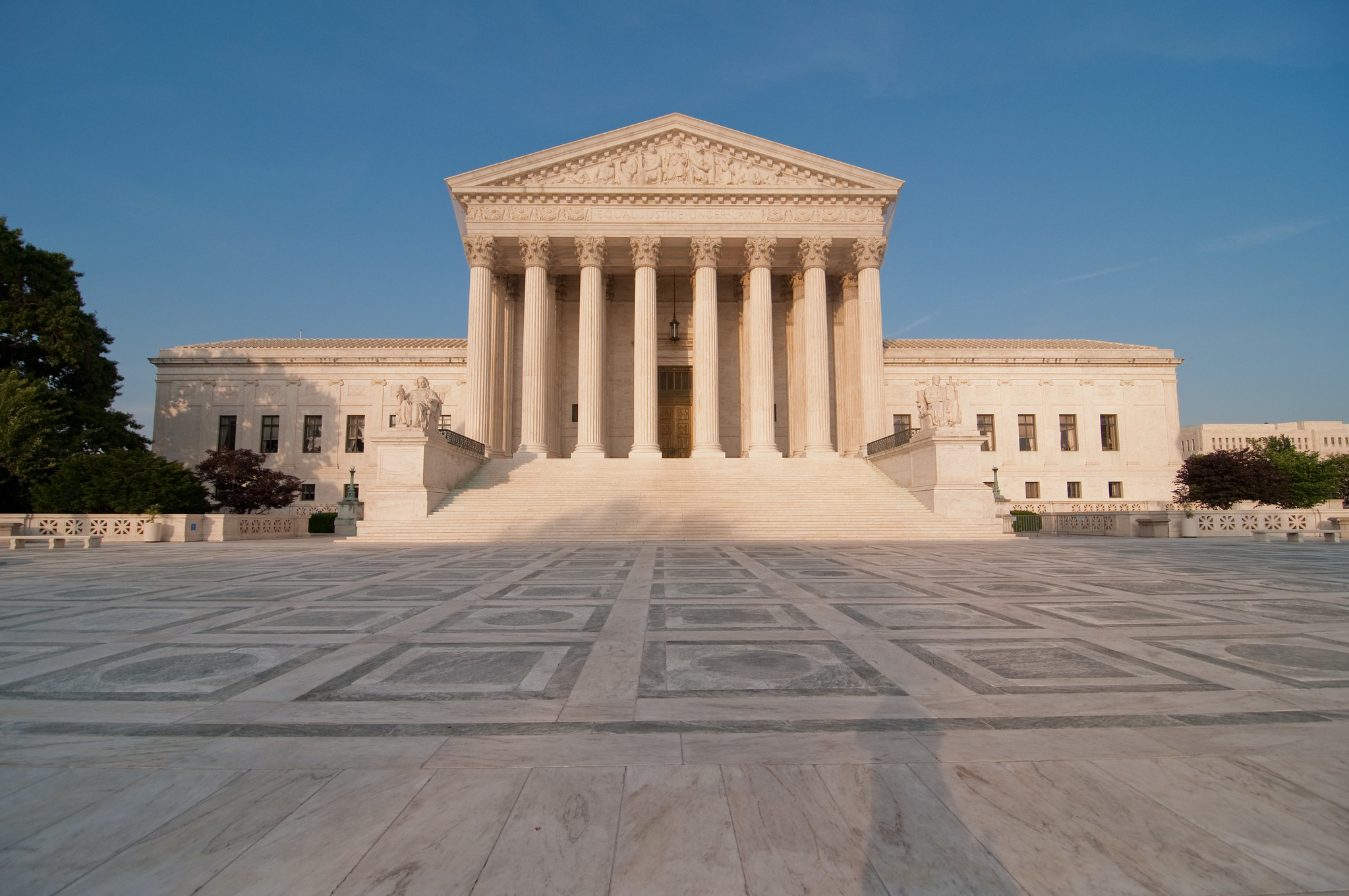
Trump v. Barbara, the birthright citizenship case, is currently before the Supreme Court. At the heart of the case is a Jan. 20, 2025, executive order that sought to deny birthright citizenship to children born in the U.S. whose parents are in the country either illegally or on temporary visas. The case has produced a vast array of amicus briefs as well as the briefs of the parties. But one key issue has not received the attention it deserves.
Accepting the government's position would undermine the central purpose of the Citizenship Clause of the 14th Amendment. For that reason alone, the Trump administration should lose the case, especially from the standpoint of originalism.
Virtually all informed observers agree that the main purpose of the Citizenship Clause was to grant citizenship to newly freed slaves and their descendants, reversing the holding of the Supreme Court's infamous 1857 Dred Scott decision, which ruled that Black people could never be citizens of the United States. Indeed, the Trump administration's Supreme Court brief in Trump v. Barbara says exactly that: “The Clause was adopted to confer citizenship on the newly freed slaves and their children.” But all of the administration's arguments for denying birthright citizenship to children of undocumented immigrants and noncitizens present in the U.S. on temporary visas would, if applied consistently, also have denied citizenship to numerous freed slaves and children thereof.
This reality puts the government’s arguments at odds with the original meaning of the Citizenship Clause. Since contemporaries almost universally understood that clause as granting citizenship to freed slaves, their children, and other Black people born in the United States, any interpretation of “subject to the jurisdiction” that requires denying birthright citizenship to large numbers of slaves and children thereof must be rejected. That is particularly true from an originalist standpoint, which requires adherence to the understanding of the words prevalent at the time of ratification. The granting of citizenship to freed slaves and their children was not merely an “original expected application” of the Citizenship Clause. Such expectations about the impact of a constitutional provision potentially go awry based on mistaken understandings of facts on the ground. Rather, this particular precept was central to the original understanding of the words in the text themselves. Freed slaves and their children were, by definition, understood to be eligible for birthright citizenship.
The Citizenship Clause states that “All persons born or naturalized in the United States, and subject to the jurisdiction thereof, are citizens of the United States and of the State wherein they reside.” The government's position in Barbara depends on the claim that children of undocumented migrants and temporary visa holders are not “subject to the jurisdiction” of the U.S. But any interpretation of that phrase that excludes these groups would also have excluded large numbers of slaves, their children, and in some cases even free Black people.
Illegal Entry
The simplest argument for the government's position is the idea that illegal entry somehow prevents undocumented migrants and their American-born children from being subject to U.S. jurisdiction. This is extremely dubious, because undocumented migrants are undeniably subject to U.S. law. But, if the argument is valid, it would also have excluded large numbers of freed slaves and their descendants. As legal scholars Gabriel Chin and Paul Finkelman highlighted in an important 2021 article, between the time Congress banned the international slave trade in 1808 and the abolition of slavery in 1865, many thousands of slaves were illegally brought into the U.S. These illegally imported slaves, in turn, likely had a substantial number of U.S.-born children and grandchildren. Any interpretation of “subject to the jurisdiction” that bars children of illegal migrants from birthright citizenship would also have barred this large group of freed slaves.
Moreover, as Chin and Finkelman show in their article, the existence of this illegal slave trade was well known to Congress, President Lincoln, and the framers of the 14th Amendment. Congress repeatedly enacted legislation to try to curb it, and Lincoln raised the issue in multiple messages to Congress. Thus, it is highly unlikely that the drafters of the Citizenship Clause overlooked this issue and mistakenly adopted language that excluded a large number of slaves and their children from birthright citizenship. At the very least, such an exclusion would have been noticed and debated.
If the original meaning of the Citizenship Clause was intended to exclude illegal entrants and their children, it also must have excluded large numbers of slaves and their children. Chin and Finkelman briefly discuss this point in their amicus brief before the Supreme Court. But that brief, like others filed in the case, does not go into this issue in detail or explain how the relevant history undercuts all of the government’s arguments.
“Allegiance” to the United States
Another standard argument for the administration's position is that illegal migrants, noncitizens on temporary visas, and their children lack the requisite exclusive “allegiance” to the United States, because they still owe allegiance to their countries of origin. If, as this theory assumes, people owe allegiance to the government of the country they are born in, it obviously applies to virtually all freed slaves as well, even those brought into the U.S. legally.
Africans captured and sold to slave traders owed “allegiance” to the rulers of their homelands just as much as illegal migrants or temporary visa-holders do. Indeed, the former likely had stronger ties of allegiance than the latter, since captured slaves—unlike migrants—had no desire to leave their homelands and live under the rule of the U.S. government instead.
Contrary to racist stereotypes, many West African rulers of the 18th and 19th centuries had considerably developed states. For example, throughout that period, until it was conquered by the French in 1894, Dahomey was a “monarchy with a highly organized central government.” And even more primitive tribal rulers could still claim allegiance from their subjects, as the U.S. government recognized in the case of Native American tribal governments.
This is part of the reason why children born on Native American reservations run by such governments are among the few categories of people born in the United States who were not historically understood to be given birthright citizenship by the Citizenship Clause. Such people were exempt from the jurisdiction of U.S. law on many issues, by virtue of the primacy of tribal sovereignty on reservation land. The Trump administration and some of its amici, such as Ilan Wurman, combine the “allegiance” argument with the idea that illegal migrants are not under U.S. jurisdiction because they are not under the “protection” of the U.S. government. Randy Barnett and Wurman have argued that birthright citizenship applies only to the children of people who have entered into a “social compact” and an “allegiance-for-protection” exchange with the U.S. government.
But, as I pointed out in an earlier critique of the Barnett-Wurman argument, slaves obviously were not part of any social compact under which they traded allegiance for protection. Far from protecting them, state and federal governments facilitated their brutal oppression at the hands of their masters. Indeed, illegal migrants and temporary visa holders actually get far more protection from the U.S. government than slaves did. While undocumented immigrants are subject to deportation, U.S. authorities still, at least to some extent, protect them against enslavement, forced labor, and assault. Temporary visa holders get still more protection, as they can seek protection from law enforcement without fear of getting deported.
When it came to slaves, by contrast, the federal government enacted policies like the Fugitive Slave Acts, intended to keep them from escaping bondage. And that bondage often included beatings, rape, and other horrific violence. This situation changed, to an extent, with the abolition of slavery through the 13th Amendment. But the “subject to the jurisdiction” language of the Citizenship Clause refers to people subject to that jurisdiction at the time they were born. (Thus, the child of a foreign diplomat cannot retroactively acquire birthright citizenship if her parents later lose their diplomatic immunity after she is born.) If children of undocumented immigrants or temporary visa holders don't qualify for birthright citizenship because their parents were not under the “protection” of the U.S. government, that argument is even more applicable to the children of slaves.
“Complete” Political Jurisdiction
Some defenders of the administration argue that undocumented immigrants and temporary visa holders are not “subject to the jurisdiction” of the U.S. because they are not subject to its “complete political jurisdiction,” meaning they do not have the same rights and duties as citizens. This argument appears to have first been advanced by later-disgraced law professor John Eastman. (Eastman is notorious for his involvement in Trump's scheme to overturn the results of the 2020 presidential election.)
If the Citizenship Clause covers only children of people who have the full rights of citizens, that would undermine the central purpose of the clause, which was to reverse Dred Scott's notorious holding that Black people—even those who were not slaves—could not be citizens of the United States. In his infamous opinion in Dred Scott, Chief Justice Roger Taney concluded that Black Americans could not be citizens in part precisely because they were denied various legal rights linked to citizenship. Even most antebellum free Black people did not qualify for birthright citizenship under the “complete political jurisdiction theory,” since many states denied them the right to vote, the right to serve on juries, and other rights and duties traditionally associated with full citizenship. If children of people who lacked such rights are denied birthright citizenship, that would deny it to virtually all slaves and most antebellum free Black people.
The Domicile Argument
Next, we have the so-called domicile argument, which claims that children of undocumented immigrants are not subject to U.S. jurisdiction because their parents are not properly domiciled in the U.S. If “domicile” simply means living in the United States, then both slaves and illegal migrants obviously qualify. If it means living in the U.S. legally, then undocumented migrants can be excluded. But the same goes for slaves brought in illegally. And, as noted above, there were many such illegally transported slaves.
Moreover, to the extent that the Supreme Court has held that “domicile” matters for jurisdiction, it also requires that any legal change of domicile must be voluntary. For example, in a 1989 case involving a conflict between state and tribal jurisdiction over the adoption of Native American children, the Court ruled that “[o]ne acquires a 'domicile of origin' at birth, and that domicile continues until a new one (a 'domicile of choice') is acquired.” Nineteenth century jurists held similar views. For example, in the 1890 case of Penfield v. Chesapeake O. & S.W. R. Co., the Supreme Court held that "No length of residence, without the intention of remaining, constitutes domicile" in a case where state jurisdiction over a case turned on residency (emphasis added). Most, if not all, slaves forcibly brought to the U.S. obviously had no “intention of remaining” but would have preferred to be returned to their original homes. On this theory, undocumented migrants actually have a stronger claim to domicile than slaves did, since the former come voluntarily and generally have every intention of remaining indefinitely.
In sum, either children of undocumented migrants and temporary visa holders satisfy any relevant domicile requirement, or that requirement would exclude all or most slaves and their descendants, and therefore must be rejected. Either way, the government should not prevail based on the domicile theory.
* * *
By contrast with children of undocumented immigrants and temporary visa holders, the categories of people traditionally understood to be denied birthright citizenship are readily distinguishable from freed slaves and their children. As the Supreme Court noted in United States v. Wong Kim Ark (1898), the case in which it held that birthright citizenship applies to children of noncitizens born in the United States, exemptions included children of foreign diplomats, those born on foreign “public ships” in U.S. territorial waters (which remain under the sovereign authority of their home governments), Native Americans born under the rule of tribal governments, and children of soldiers in invading armies occupying U.S. territory in time of war. Unlike illegal migrants and temporary visa holders, the parents of all these categories of children were largely exempt from having to obey most U.S. laws. For example, diplomats enjoy diplomatic immunity.
There are many other reasons why the Trump administration deserves to lose the birthright citizenship case, some of them outlined in an amicus brief by a cross-ideological group of constitutional law and immigration scholars, which I joined. But the link to slavery provides a powerful additional rationale for ruling against the administration's position, one that negates every one of its arguments. All those theories are at odds with the main purpose of the Citizenship Clause and must be rejected for that reason alone.