The Justice Department Erases History; Lawfare Restores It
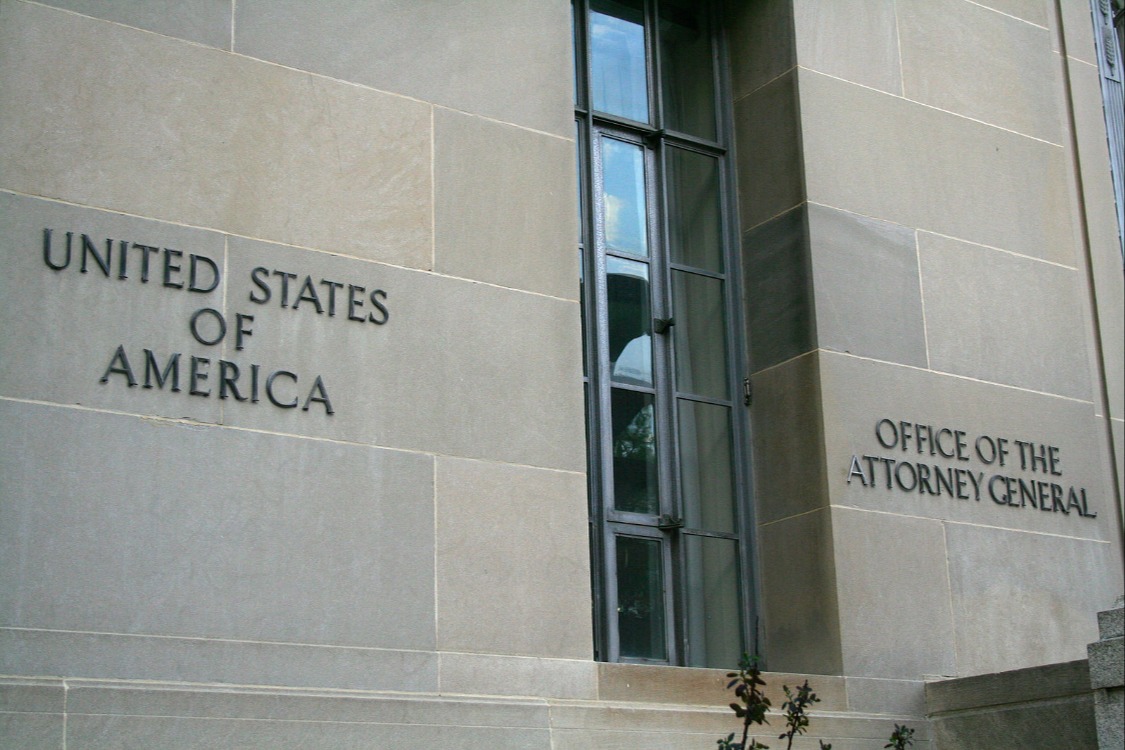



Last week, the Justice Department began systematically removing material from its web sites regarding the many indictments and convictions related to the Jan. 6 attack on the U.S. Capitol.
The operation started without fanfare or formal announcement and proceeded largely unnoticed. Until, that is, journalists such as the Washington Post’s Meryl Kornfield took notice of certain press releases and other materials that had conspicuously disappeared from www.justice.gov.
“The Trump admin is quietly deleting info about the Capitol attack from the DOJ website as it prepares to give funds to J6ers,” Kornfield posted. “This week, DOJ deleted a press release about one man with an ongoing child solicitation case who came to the Capitol with bear spray.”
Then, with typical bombast, the Justice Department responded by taking issue with one particular aspect of Kornfield’s characterization. “Nothing ‘quiet’ about it,” the DOJ Rapid Response account replied. “We are proud to reverse the DOJ’s weaponization under the Biden administration. We will do everything in our power to make whole those who were persecuted for political purposes. This includes stripping DOJ’s website of partisan propaganda.”
We are not erasing history quietly, the Justice Department seemed to suggest. We are erasing history loudly and proudly.
At Lawfare, we have restored the vast bulk of what was deleted. We have also started to preemptively archive a raft of material that has not yet been deleted but probably will be, given its thematic relationship to the material that was 86ed.

The Jan. 6 investigation was one of the largest investigations and collections of prosecutions in Justice Department history. In the FBI’s Washington Field Office alone, agents and analysts worked shifts to maintain a 24/7 posture identifying perpetrators. For more than a month after Jan. 6, there was never a time during day or night when roughly a third of the office was not investigating the insurrection or analyzing evidence.
All other FBI field offices, while not dealing with the same volume as the Washington Field Office, also surged agents to help identify, investigate, and apprehend any participants who had traveled to Washington, taken part in the insurrection, and then left town. Record numbers of leads and tips were provided to the FBI, and every single one of them was examined—and if merited—used to predicate a case.
For its part, the Justice Department stood up an entire new branch of prosecutors tasked specifically with these events. Assistant United States attorneys were also brought in from around the country to augment efforts.
This is the record the Justice Department is now trying to delete.
Any effort to erase history and replace it with lies warrants concerted pushback. In this case, the department has deleted a large repository of accessible public information about the storming of the Capitol and the individuals who did it. That data, unlike the court documents that lay beneath them, are in lay language. They are easily digestible by anyone interested. And they contain fair-minded summaries of evidence that—in the overwhelming majority of cases—was either proven in court beyond a reasonable doubt or pleaded to by defendants who ultimately conceded their truth.
There’s a broad principle here, and we want to state it very clearly: If the administration purges rule-of-law-sensitive materials from government websites, we will do everything in our power to restore them on Lawfare. The principle, as we instructed Anthropic’s Claude in building the programs that recovered these statements, is that “net loss of information to the public should be zero.”
Visit the archive in a new browser window here.
We want to be very candid about how we did this: As mentioned, we used artificial intelligence—Claude, to be precise—and given the volume of material in question, we have not hand-checked every single public statement recovered, though we have spot-checked cases and found the work to be accurate. This project is a work in progress, and mistakes and omissions are both possible. Please bring any such matters to our attention at press@lawfaremedia.org.
The recovery involved two programs. The first conducted a systematic inventory of the deleted materials and which of them did and did not have mirrored copies on the Internet Archive's Wayback Machine—a service that takes regular snapshots of web sites as a kind of archive of the internet designed to make historical erasures difficult.
Second, we had Claude build a program to ingest all of the recoverable material. Here is how Claude describes its methodology with respect to this project:
The deletions used two different patterns: some pages were straightforwardly removed (the URL now returns a "not found" error), but a large number were soft-deleted — the URL still loads successfully, but the page is now an empty 2.6-kilobyte shell with no content and no title. A naive crawler that only checked for error codes would have missed the soft-deletes entirely and reported the pages "fine." We had to detect both.
The recovery worked by reconstructing what should exist from the Internet Archive's Wayback Machine. We queried the Archive's index (its "CDX" interface) for every URL that had ever been captured under the relevant DOJ and FBI URL patterns, filtered to January-6-related content by keyword, and ended up with an inventory of 6,055 unique pages. For each one, we asked the Wayback Machine for its best pre-deletion snapshot — biasing toward the largest version captured before the May 25 scrub, so that the empty post-deletion shells the Archive had also captured wouldn't contaminate the recovery — pulled the raw page bytes, extracted the text, and walked the page for every linked document, image, video, and audio file, retrieving each of those from the Wayback Machine as well. Two retry passes mopped up transient failures. The final archive recovered 5,769 of 6,055 pages (95.3%), broken down as 4,163 FBI "Wanted" suspect pages, 1,144 USAO-DC defendant case press releases, 387 Capitol Breach case-database pages, 38 Main Justice (OPA) press releases, 31 FBI Washington Field Office press releases, and 6 FBI headquarters press releases, plus 4,759 linked images (predominantly the FBI Wanted suspect photographs, ~464 MB) and 1 linked PDF (the D.C. Metropolitan Police Department's January 15, 2021 "Persons of Interest" list, the wanted-faces document linked from the USAO-DC investigation hub). The total archive is 539 MB. The 286 unrecovered pages are URLs the Internet Archive simply never crawled between 2021 and 2025 — they are listed transparently, with the reason, in an “unrecoverable.csv” file in the archive. Every recovered page carries a link back to the exact Wayback Machine snapshot it was derived from, so any reader can independently verify that the recovered content matches the original government capture, byte for byte.
(Editor's note: The initial finding of 286 unrecovered pages was an error. The Internet Archive's Wayback Machine did, in fact, crawl and archive all URLs. The archive has been updated to reflect this correction.)
If you know of other rule-of-law-sensitive materials being purged, let us know at press@lawfaremedia.org.
In the spirit of similar data rescue and data refuge projects like the “End of Term Archive,” we will do our best to recover everything worth saving.