The Military and Elections, Part I: The Legal Wall
Multiple statutes prohibit military involvement in elections. But what do they actually say?



Editor's note: Listen to a discussion with the authors on the Lawfare Daily podcast here. Find Part II here.
***
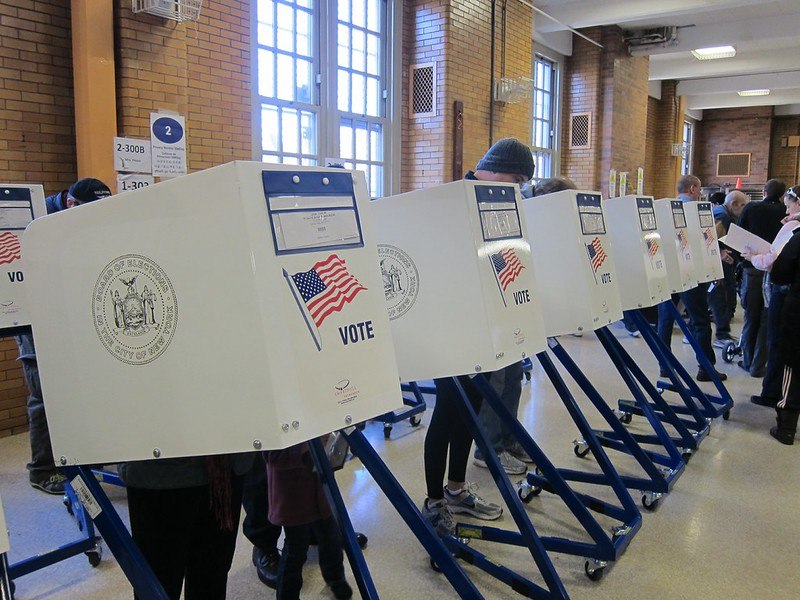
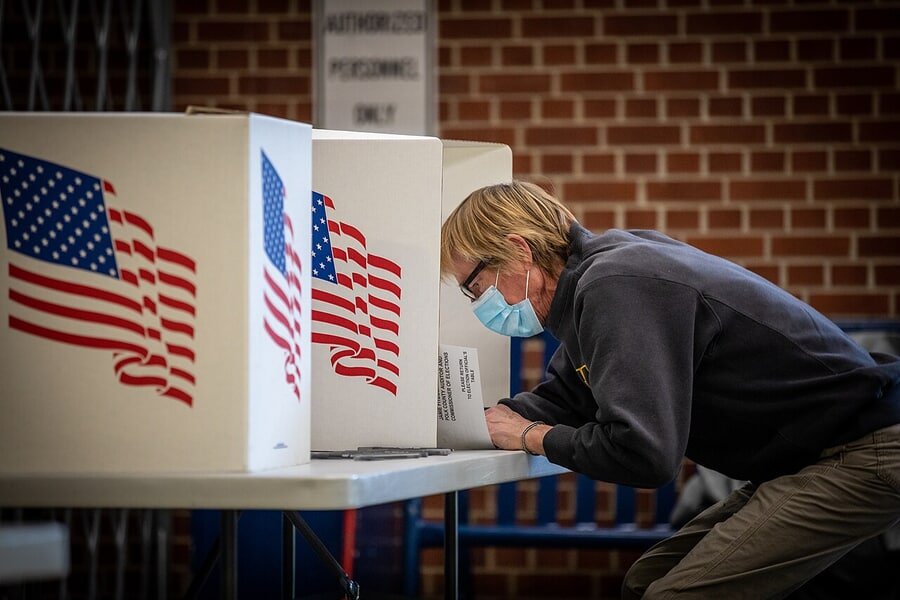
Just this year, President Trump said he regrets that he did not order the National Guard to seize voting machines after the 2020 elections. Steve Bannon urged Trump to “call up the 82nd and 101st Airborne” in 2026 to “get around every poll” and make sure that only citizens are voting. Secretary of Defense Pete Hegseth, when asked whether he would refuse an order to deploy troops to polling places during the midterms, avoided answering—and falsely claimed that troops were deployed to polling places in 15 states under Joe Biden.
Critics are alarmed. They see these statements as harbingers of attempts to interfere with the midterm elections in November. “He’ll just claim that there’s some problem with an election—and then he’s got troops on the ground that can take control,” said Illinois Gov. J.B. Pritzker. “Let’s be clear,” said Sen. Tammy Duckworth (D-Ill.), “we know Trump is laying the groundwork and planning to send troops to polling places to intimidate Americans and interfere in our elections.”
Whether these fears are justified is not just a question of politics—it’s also a question of law. Does the president actually have the legal authority to use the military in connection with the elections?
Yes, there are limitations on using the military for elections, both because there are specific laws protecting elections from military interference and because there are broader (but still uncomfortably vague) legal restrictions on domestic deployments of the military. But the laws have exceptions, and the president’s Article II powers can serve as the basis for claims of inherent authority. That means that evaluating the threat of military interference in elections requires analyzing an intricate patchwork of statutes and constitutional powers—whose interaction is mostly untested.
This article describes the relevant limitations on the president’s use of the military for elections. In a companion article, we discuss the authorities the president may cite in support of his efforts to deploy troops notwithstanding those limitations. The pull and push between these restrictions and the powers the administration may insist it has to overcome them is where the uncertainty lies.
Domestic Deployment Law and What It Means for Elections
The Constitution mostly reserves to the states the authority to administer elections, with a role for Congress. But the text of the Elections Clause is less informative than it may seem: It defines only states’ power to “prescribe” the “Times, Places and Manner of holding Elections” and Congress’s power to “make or alter such Regulations.” It says nothing about other actions that might affect elections—ensuring security, for example. However, neither the Constitution nor any founding-era law affirmatively authorizes the president to involve the military in U.S. elections, and the few statutes that address the question at all prohibit it in most circumstances.
Legislation originally passed during the Civil War and still on the books today sets some clear limits: Members of the armed forces shall not be present or direct armed men to be present at polling locations; shall not determine voter eligibility; shall not prevent qualified voters from voting; shall not direct or interfere with election officers; and shall not set regulations for administering elections. In their modern form, these rules appear both as criminal offenses (18 U.S.C. §§ 592-593) and as a civil provision (52 U.S.C. § 10102).
These statutory limits sit in obvious tension with the president’s broader constitutional authorities under Article II and statutory power to use the military. The question is whether the military can lawfully be used to interfere in elections so long as it doesn’t run afoul of these individual limiting pieces of legislation.
The short answer: maybe not, maybe so. Because no other law directly addresses the military’s role in elections, the analysis turns, at least in part, on the more basic question of whether—and under what circumstances—the military may be used domestically at all. Contrary to popular belief, the answer is not “it can’t be”—or even “it can’t be, unless the president declares an insurrection.”
Constitutional Law and Founding-Era Context
The Constitution doesn’t expressly prevent the domestic deployment of the military—far from it. Article I, Section 8, explicitly empowers Congress to provide for “calling forth” the militia for the three purposes of executing the laws of the union, suppressing insurrections, and repelling invasions. Article IV, Section 4, also vests the federal government with the responsibility to protect the states against not only invasion but also, at the states’ application, domestic violence. These authorizations, together with Article II’s Commander-in-Chief Clause and Take Care Clause, create a system in which Congress generally decides in advance the situations in which domestic deployments may occur, while the president determines two things: whether the facts trigger his statutorily-granted authority or constitutional authority to command the troops, and the operational specifics of any deployments.
Understanding this area of law requires looking beyond the constitutional text to the historical context. There is little doubt that the founders envisioned that the government could enforce the laws of the union using troops if necessary; it was not unusual for military personnel to handle certain law enforcement tasks. But Congress built civilian federal law enforcement capacities as distinct from the military almost concurrently with the Constitution’s drafting. The Judiciary Act of 1789 created federal marshals, and the Militia Act of 1792 further clarified constitutional limitations on when the president could use troops domestically.
Legal Evolution Distinguishing Military and Civilian Powers
Over time, civilian law enforcement—at both the state and federal levels—emerged as the plenary authority for enforcing the law. The military retained a circumscribed role inside the United States, but that role stayed effectively limited to emergency situations.
Early policing in America consisted of volunteer “night watches” as well as informal, privately funded efforts. Boston founded the first public police force with full-time officers in 1838, driven in part by business owners who had previously hired guards directly to protect their property and goods in transit, and wanted to shift the cost to the wider citizenry. The South relied on slave patrols for early policing. Around the Civil War, the military became the primary policing institution in the region for a circumscribed period of time, particularly during Reconstruction. But that period was short-lived: The Posse Comitatus Act (18 U.S.C. § 1385), enacted in 1878, ensured that the military could be used for law enforcement only in a set of drastic situations explicitly defined in law. By the late 1880s, all major cities had civilian police forces.
Today, the Posse Comitatus Act is widely regarded as the critical limitation on domestic military deployment. The current version of the statute bars the use of any part of the Army, Navy, Marine Corps, Air Force, or Space Force “as a posse comitatus or otherwise to execute the laws.” Posse comitatus literally means “power of the county”; legally, it refers to a group of people mobilized by officials such as a sheriff to enforce the law or keep the peace. The Posse Comitatus Act exists to keep troops—as opposed to civilians—from filling that role. But the rule isn’t ironclad: As described in our companion piece, the act itself carves out explicit exceptions, such as the Insurrection Act.
Other laws also restrict the military’s use for law enforcement. Counterintuitively, some appear in an act designed to authorize military support of law enforcement, located at 10 U.S.C. §§ 271-284, which permits certain military support of civilian law enforcement. (This series of statutes is commonly referred to as defense support of civil authorities, or DSCA.) Originally passed in 1981 during the so-called war on drugs, DSCA is now a collection of specific, narrow ways in which the military can assist domestic law enforcement, including logistical support (such as lending equipment or facilities and providing training) and information-sharing.
A few provisions authorize active operational involvement beyond logistical support, but they are tightly defined: § 282 covers emergencies involving weapons of mass destruction, § 283 covers bombings in public places, and § 284 covers combating drugs and transnational organized crime. The act is narrowed further by a directive requiring the defense secretary to issue regulations ensuring that “any activity ... under this chapter does not include or permit direct participation by a member of the Army, Navy, Air Force, or Marine Corps in a search, seizure, arrest, or similar activity” unless authorized by other statutes.
These laws form the basis of the current legal regime, which emphatically disfavors domestic use of the military, much as the framers did. With this in mind, the elections-related statutes—§§ 592-593 and 10102—take on more significance: They’re intended to make it unmistakably clear that the military’s already limited domestic role is even more restricted when it comes to U.S. elections.
Limiting the Military’s Role in U.S. Elections
The history of elections-related domestic deployment law only reinforces the view that Congress wanted to keep the military out of the voting process. The Civil War and Reconstruction were essential to the evolution of these statutes. The period was highly anomalous: For many of those years, Congress made more room for military involvement in elections. But the way this disruption was resolved actually helps explain some of the restrictions still in place today.
The Origin Story: Extra Protection for Elections
The period following the Civil War was crucial for the development of domestic deployment law generally, and of elections specifically. In 1864, Senator Lazarus Powell of Kentucky introduced a bill in reaction to alarming reports of military interference in the 1862-1863 elections in Delaware, Maryland, Missouri, and Kentucky, slave-holding states that fought for the Union. The Senate Committee on Military Affairs and the Militia, to which the bill was referred, issued a report detailing examples of military intervention in elections under martial law—for instance, military orders declaring that election judges could be charged with military offenses if they excluded qualified voters or admitted rebels to vote, military orders directing commanders to position troops where guerillas might intimidate voters, and military orders to remove a disloyal candidate from lists at certain polling sites.
Contrary to Powell’s argument, the report concluded the use of the military was justified given the United States was engaged in an ongoing war against enemies (that is, the Civil War) and those enemies should be stopped from voting or running for office.
Reports of military interference continued through the 1864 presidential election, including efforts by Union Army officials to grant Republican soldiers furlough to vote while denying it to Democrats. But in 1865, near the end of the Civil War, Congress enacted a criminal statute restricting the use of the military in elections as Powell had proposed. This rejection of the committee’s recommendation represented Congress’s considered judgment that the military should not be involved in elections going forward, even during war. (Unsurprisingly, the legislation also reflected a political compromise between Northern Republicans, who tended to favor using the military to enforce federal law, including Black men’s voting rights, if local officials refused, and Southern Democrats, who were outraged by the continued presence of Union troops.)
The law had three components, all establishing criminal offenses punishable by fines and/or imprisonment and mandatory disqualification from future office. First, the statute forbade the presence of troops (and armed men) at the polls in almost all circumstances:
[I]t shall not be lawful for any military or naval officer of the United States, or other person engaged in the civil, military, or naval service of the United States, to order, bring, keep, or have under his authority or control, any troops or armed men at the place where any general or special election is held in any state of the United States of America, unless it shall be necessary to repel the armed enemies of the United States, or to keep the peace at the polls.
Second, it prohibited members of the military from regulating or interfering with elections:
[I]t shall not be lawful for any officer of the army or navy of the United States to prescribe or fix, or attempt to prescribe or fix, by proclamation, order, or otherwise, the qualifications of voters in any state of the United States of America, or in any manner to interfere with the freedom of any election in any state, or with the exercise of the free right of suffrage in any state of the United States.
Third, it prohibited members of the military from impeding individuals’ voting rights and the free administration of elections:
[A]ny officer or person in the military or naval service of the United States, who shall order or advise, or who shall directly or indirectly, by force, threat, menace, intimidation, or otherwise, prevent or attempt to prevent any qualified voter of any state of the United States of America from freely exercising the right of suffrage at any general or special election in any state of the United States, or who shall in like manner compel, or attempt to compel, any officer of an election in any such state to receive a vote from a person not legally qualified to vote, or who shall impose or attempt to impose any rules or regulations for conducting such election different from those prescribed by law, or interfere in any manner with any officer of said election in the discharge of his duties, shall for any such offence be liable to indictment[.]
These provisions were never repealed. In fact, they were strengthened over time—after a very rocky start.
The realities of Reconstruction significantly limited the impact of the 1865 law for a simple reason: Some states were under military occupation. In 1867 and 1868, after the Civil War ended, Congress passed the Reconstruction Acts, establishing military districts in Confederate states that had not yet ratified the 14th Amendment (ratification was required to rejoin the Union). The legislation specifically provided that the military would “superintend” elections, to ensure that only officers loyal to the Union—rather than former Confederates—held office, as well as to protect the voting rights of newly freed slaves. For several years, the military was charged with overseeing voter registration and supervising elections.
By 1870, all of the southern states had rejoined the Union, ending the military districts established by the Reconstruction Acts. But Congress then passed a trio of statutes known as the Enforcement Acts to effectuate the 14th Amendment and safeguard Black Americans’ newly established right to vote.
The first of these enforcement laws, known as the Enforcement Act of 1870, gave federal marshals “posse comitatus” authority to mobilize military force against interference with voting rights on the basis of race and to enforce judicial process issued under the act. The Second Enforcement Act, passed in 1871, put certain aspects of national elections under federal supervision. The Third Enforcement Act, also known as the KKK Act, passed later in 1871 and permitted the president to suppress by military force insurrections or unlawful combinations or conspiracies that deprived persons of a constitutional right (part of today’s Insurrection Act) and to suspend the writ of habeas corpus in some circumstances.
In short, these laws served as a kind of bridge between the immediate postwar full military occupation and self-governance for the southern states. They recognized that state officials held control of state government—but they also accounted for the possibility that the federal government might need to intervene to ensure that federal laws, particularly voting rights laws, were enforced. For instance, President Ulysses S. Grant deployed troops to South Carolina in 1871 on the basis of the Third Enforcement Act after he determined that Ku Klux Klan violence was depriving individuals of their constitutional and statutory “rights, privileges, immunities, and protection.”
There was an undeniable tension between the Enforcement Acts, which expressly permitted some military intervention to protect voters’ rights, and the 1865 statute, which criminalized the presence of troops at polling locations unless necessary to “repel the armed enemies of the United States, or to keep the peace at the polls.” For instance, the Second Enforcement Act, in Section 8, directed deputy marshals to attend “the polls of the election” in certain districts and upon request; elsewhere in the act, those marshals were also authorized to call in military reinforcements to assist in performing their duties. (Specifically, Section 10 authorized marshals and deputy marshals to “summon and call to their aid ... such portion of the land or naval forces of the United States ... as shall be necessary” to ensure “faithful observance” of the 15th Amendment, among other things.)
The 1865 law was formally codified in 1874 at §§ 5528–5531 and was never repealed. The tension between these laws gradually dissolved as civilian control was reestablished and the southern states were readmitted to the Union.
The newly reconstituted Congress—which now included representatives of states that had just emerged from military occupation—soon reconsidered the propriety of using the military domestically in a nation no longer at war with itself. Recognizing that prohibitions on military interference in elections were paramount, Congress even found need for additional restrictions on domestic military usage. The 1878 Posse Comitatus Act was one of these new limitations.
Congress spent much of 1879 attempting to pass additional restrictions on military interference in elections. In April, President Rutherford B. Hayes vetoed an Army appropriations bill because of a rider that modified the 1865 law to remove the exception “to keep the peace at the polls.” He surveyed the existing landscape of other statutes that criminalized military interference in elections (for example, prescribing qualifications of voters or exercise of suffrage; intimidating, threatening, or preventing any qualified voter from voting; threatening election officers; and so on) and concluded that not only were those restrictions sufficient but Congress had also passed the 1878 Posse Comitatus Act “to remove all apprehension of such interference with elections.”
Hayes also vetoed a standalone bill weeks later that would have limited exceptions to military employment at polls to only two circumstances: first, when “such force be necessary to repel the armed enemies of the United States” and, second, “to enforce section 4, Article IV, of the Constitution of the United States and the laws made in pursuance thereof, on application of the legislature or executive of the State where such force is to be used.” Notably, Hayes said that he opposed this bill because it would have allowed the Insurrection Act to “abrogate” the predecessor statutes “on certain days and at certain places,” by restricting domestic military usage to a more limited set of situations than those predecessor statutes allowed. Though Hayes’s legal analysis is debatable, the fact that he vetoed two bills on these grounds is a clear indication that he was jealously guarding his power to use the military against a perceived threat.
Congress was unable to overcome the president’s veto. But in 1909, amid a broader effort to codify the penal code, legislators further privileged elections by removing the exception for “keep the peace” from the 1865 statute. The revised version provided that troops could be present in only one circumstance: to “repel the armed enemies of the United States.” The conference report explained why the language was dropped: The “provision for keeping peace at the polls is inoperative, as there is no provision anywhere in the law authorizing the keeping of troops for that purpose. The omission of these words therefore does not in any sense diminish the force of existing law.” The 1865 law, as amended, remains on the books today in the form of two criminal statutes, 18 U.S.C. §§ 592 and 593, and one civil statute, 52 U.S.C. § 10102. The key change from 1909—clarifying that the military’s only permissible presence at election sites was when “necessary to repel the armed enemies of the United States”—has remained.
Congress also passed legislation around the same time reinforcing that elections were to be under civilian control: The Second Enforcement Act charged federal marshals and federal judges with supervising certain aspects of elections, and an amendment the following year extended judges’ role. As southern states reasserted control after Reconstruction, they succeeded in pushing back against federal oversight of elections—notwithstanding multiple Supreme Court decisions that had upheld key provisions of that regime. By the 1890s, the controversial scheme had collapsed both for political reasons and due to three major decisions from the Supreme Court that dismantled large portions of the acts. Proposed legislation to extend the Enforcement Acts failed in 1891, and many Republicans who had supported the statutes were defeated in the 1890 and 1892 elections. In 1894, the Enforcement Act’s federal election supervision provisions were formally repealed. The legal framework for an affirmative role for the federal government in overseeing elections was dismantled, and power reverted to the states.
But even as the pendulum swung from federal back to state authorities one principle remained constant: Civilians—not the military—were responsible for elections.
Modern Law Protecting Elections
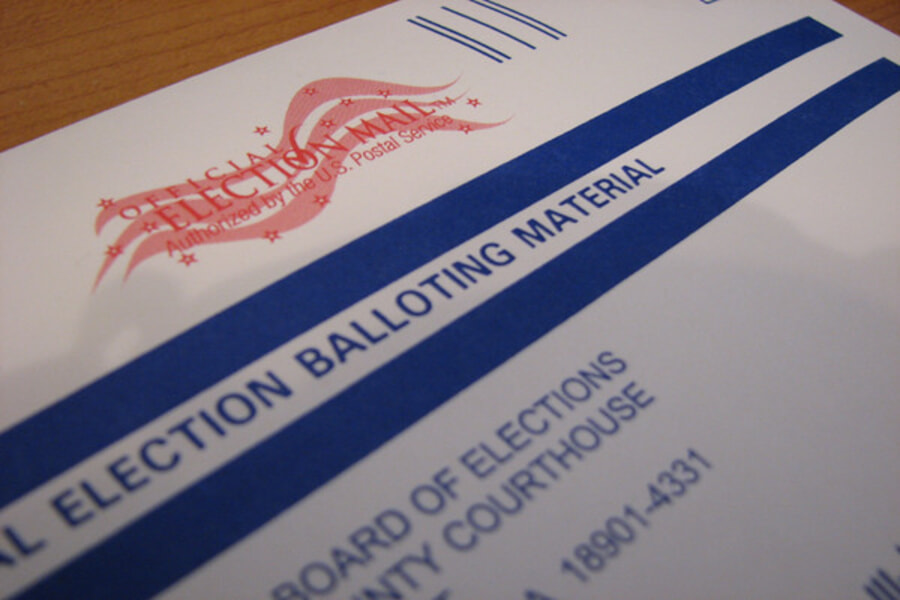
The modern-day versions of the 1865 law were codified in 1948. Section 592 bars any member of the armed forces from ordering, keeping, or having “under his authority or control any troops or armed men at any place where a general or special election is held.” It contains a narrow exception for cases in which “such force [is] necessary to repel armed enemies of the United States.” Section 593 bars any member of the armed forces from interfering in any manner with an election officer’s discharge of his duties, interfering with elections by altering voter qualifications, blocking qualified voters from casting a vote, or compelling election officers to accept votes that are not cast by qualified voters. At first blush, the penalties for both § 592 and § 593 look relatively standard: Violators can be fined and/or imprisoned for up to five years. But there’s more: Violators will “be disqualified from holding any office of honor, profit, or trust under the United States.”
Also traceable to the 1865 Act, 52 U.S.C. § 10102 similarly mandates that no officer of the armed forces “shall prescribe or fix, or attempt to prescribe or fix … the qualifications of voters in any State, or in any manner interfere with the freedom of any election in any State, or with the exercise of the free right of suffrage in any State.” Although the statute does not provide for a specific cause of action, it serves as an affirmative statement of the law—and as further proof that Congress gives elections a special status. The standard limitations on domestic use of the military were apparently insufficient to safeguard elections; Congress deemed it necessary to pass three separate statutes to confer additional protections.
These laws have survived more than 160 years, across roughly 80 or so election cycles. And they haven’t gone unnoticed. The Justice Manual sets forth specific procedures for enforcing § 592. The Defense Department Directive on Defense Support of Civil Authorities, last updated in 2018, forbids “DoD personnel and National Guard in Title 32 status” from “conduct[ing] operations at polling places and strictly refrain from activities similar to those prohibited by” 18 U.S.C. §§ 592-594.
Unfortunately, that’s not the end of the story. These statutes, however well-established and however specific, must be weighed against the authorities that a president might assert to justify violating them—in which context, as we discuss at length in our companion piece, the protections may provide colder comfort.