The Next Anti-democratic Threat From the Supreme Court

Few things concerned the drafters of the U.S. Constitution more than the concentration of political power in any one governmental institution. Rather than trust people to prevent this gateway to despotism, though, they put their faith in impersonal institutions. The founders designed a system of government that divided power in various ways and then arrayed them in opposition to one another through the structural redundancies of checks and balances. Self-executing and with mechanical elegance, these institutions would keep different components of governing power in their respective orbital paths.
But democracy does not take place in a vacuum. The troubling rise of concentrated political power now taking place in the office of the presidency owes much to the cumulative effect that decades of political friction has had in wearing down these institutional borders. This result is most apparent in the erosion of the Constitution’s horizontal separation of powers among the coordinate branches, with both the presidency and the current activist Supreme Court each encroaching on the authorities of a Congress too mired in dysfunction to fight back.
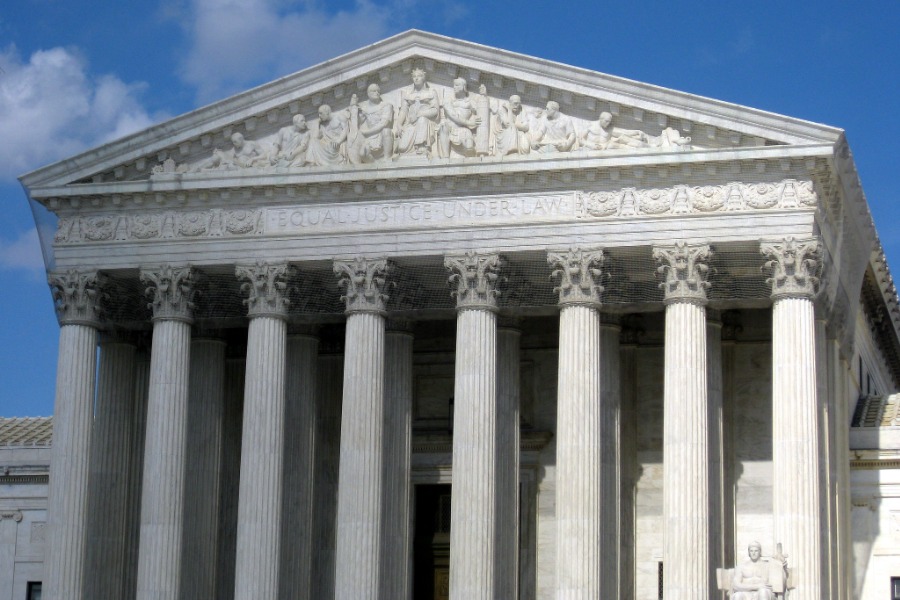
But the other major division of power within the U.S. constitutional architecture—the vertical layering of authorities through federalism—is also starting to buckle in the face of sustained attack. The Supreme Court’s likely majority could make this problem worse in one of the blockbuster cases to be argued this fall: Suncor v. Boulder County. (The surprise last-minute recusal by Justice Samuel Alito does increase the uncertainty about how the case may ultimately be resolved, however.) While Suncor—a case over whether federal law preempts local and state-law tort claims brought against fossil fuel companies—has generated considerable controversy, the more specific risk it poses in accelerating the country’s slide toward an imperial presidency by weakening the safeguards that federalism provides on this concentration of power has received little attention so far.
As important, Suncor illustrates how powerful corporate entities themselves benefit from this political arrangement, incentivizing their actions to help bring it about. From a political economy perspective, it is far cheaper and easier to “capture” just the presidency, rather than the presidency, a majority of members in both chambers of Congress, a majority of justices on the Supreme Court, and the relevant state- and local-level counterparts of the federal government across all 50 states. Indeed, that is why the founders sought to quash “the mischiefs of faction”—well illustrated by today’s powerful oil industry lobby—through the dispersal of power over myriad independent governing institutions.
Suncor arises from a 2018 lawsuit brought by local governments in Colorado against a group of oil companies. The governments allege that the companies deceptively marketed and sold their products by misleading customers about the risks they pose in contributing to climate change. By intentionally concealing these risks, the companies continued raking in billions of dollars in annual profits over decades. The governments thus seek compensation for specific, local climate-change-related harms their communities have and will suffer, including more frequent and more intense storms, forest fires, droughts, and heat waves.
In the years since the case was filed, the oil company defendants have pursued various legal maneuvers to prevent the suit from going to trial. The Suncor case stems from their latest argument that state-based climate deception lawsuits should be preempted—or blocked—because federal law already governs the conduct at issue in those cases.
The oil companies embrace two different theories to support their preemption argument. One holds that the structure of the Constitution demands that only federal law can govern air pollution issues that are interstate in nature. The other points to the federal government’s unique interest in addressing climate change as a matter of foreign affairs. The Colorado Supreme Court ultimately rejected these arguments, keeping the local governments’ lawsuit on track.
If the Supreme Court were to accept either of these theories, it would represent a sea change in federal preemption legal doctrine. Federal preemption serves an important function in promoting a national economy and preventing disputes among the states. Nevertheless, the courts have historically been very skeptical of preemption claims out of concern for preserving constitutional federalism and the checks and balances the founders so carefully designed into the constitutional architecture. In practical terms, this means the courts have rarely found federal preemption to apply absent a clear textual basis—either in the Constitution or in a federal statute—or under extraordinary circumstances such as when the simultaneous operation of federal and state laws would be practically impossible.
If the Supreme Court abandons this narrow preemption test in Suncor and adopts instead a more “know it when you see it” approach, the implications of this ruling will extend well beyond the deceptive marketing and sales of fossil fuels. It is easy, for instance, to imagine how an amorphous approach to preemption could be used to insulate Big Tech or the chemical manufacturing industry against state lawsuits. This is no doubt why a broad swath of conservative and business groups have lined up to support the oil companies through amicus briefs.
The office of the presidency would be the most direct beneficiary of this industry-driven expansion of federal preemption. That is because the president exercises authority over the federal agencies through the chief executive role and plays a primary role in foreign affairs. Expanding federal preemption on either ground therefore threatens to place a growing body of policy within the president’s domain. Such a shift in power away from state and local governments is especially significant because the policy issues involved—for instance, pollution and consumer protection—have traditionally fallen within the state’s police powers, their traditional authority to promote the general welfare of their inhabitants.
Beyond overriding the ability of state and local governments to protect the health and safety of their residents, a broad preemption ruling would make the public increasingly dependent on a federal regulatory system that is already struggling to deliver the protections Congress has promised. Years of underinvestment and the ongoing failure by Congress to refresh statutory authorities have left most agencies increasingly hollowed out and unable to fulfill their basic statutory mandates. The result is a growing gap between the protections promised by federal law and those actually delivered, with needed standards still lacking for well-known chemical and pesticide risks, pollution, and workplace hazards.
To make matters worse, when the government creates a single point through which consequential decisions must pass, history and a mountain of research indicate that political resources will reorganize around that point. Indeed, this is precisely why many industrial sectors have long pursued federal regulatory preemption claims like that in Suncor.
Since regulated firms face profit losses through compliance with new regulatory requirements, they will invest large sums (recouped as future profits) into all forms of political and legal advocacy to delay, dilute, or even block those requirements altogether. In addition to these resources and organizing advantages, industry is often able to leverage its sophistication and insider knowledge regarding operating practices or products—particularly relative to regulatory and public stakeholders—which further entrenches industry influence over the policy development process.
Even without receptive political officials, a centralized design presents predictable risks of badly lopsided governance. Vast resource disparities prevent the scantily financed public interest advocates from keeping up with the industries’ substantial investments in lobbying and litigation to protect their interests. Research shows that more than 50 percent of the protective rules that agencies pass involve only regulated industry as participants. And, when public interest advocates do participate, they are seldom able to match the ability of regulated industries to pack the record with lengthy comments. Nor are they likely to have the political connections necessary to send “fire alarms” to highly placed officials in the White House and Congress to intervene in a rulemaking on their behalf.
The problem of industry dominance is even more pronounced during administrations that are actively hostile to promoting the public interest through regulatory safeguards. Since the president’s first day in office, the Trump administration has engaged in a comprehensive campaign to dismantle the institutional apparatus upon which an effective regulatory system depends. These efforts include firing large swaths of the career civil service, artificially limiting the kinds of science agencies can consider when engaging in decision-making, and manipulating the cost-benefit analyses used to justify regulations.
The Trump administration has even gone so far as to engage in what one legal scholar calls “statutory abnegation”—or deliberately interpreting laws in an artificially constrained manner to justify repealing regulations on the basis that they lack the requisite legal authority. Notably, the Environmental Protection Agency (EPA) has pursued this strategy to disclaim its ability to regulate sources of carbon emissions. Yet that has not stopped the administration from submitting briefs in support of the oil company defendants in Suncor or arranging to participate in oral arguments on their behalf.
In other words, the administration is taking the convenient position that only the federal regulatory system has constitutional authority to address climate change but has no actual statutory powers to act on that authority. Under this view, the local government plaintiffs in Suncor would have far more limited remedies for their injuries, and the oil industry would be free of virtually all legal responsibilities for the harms their products create, including responsibility for deceptive marketing practices.
However, these centralized risks are mitigated, at least in part, if there is another legally sanctioned venue for decision. Here, that venue is private litigation in state courts.
For starters, private litigation relieves the public of having to persuade federal officials to take action against a harmful activity that those same officials may have already declined to address. Instead, state courts offer these individuals the opportunity to ask an independent decision-maker to determine whether the conduct that harmed them violated accepted social norms by applying an independent body of law. This role is especially important because state and local governments, such as the plaintiffs in Suncor, can themselves come to court as victims, seeking relief on behalf of their constituents.
Next, state courts offer a critical pathway for accessing corporate information. More than 50 years of regulatory history indicates that a private lawsuit like the one in Suncor is not just a way of deciding who pays; it is also an information-producing institution that is likely to expose deeply buried information in company files that the government either was not able to or did not try to extract. To take one notable example, it took private litigation to finally dislodge closely held corporate secrets about the tobacco industry’s long-standing deception about the health risk of cigarettes. If Suncor is dismissed before discovery, that avenue for obtaining internal corporate information disappears.
In contrast, when it comes to obtaining corporate information, agencies have only the powers granted by Congress, and, even then, they are generally allowed to use these powers only under the watchful eye of presidential appointees and the White House. If the stakes are high and the politics become too hot, administration appointees might take steps to prevent agencies from seeking damaging information about corporate-caused harms or force them to keep such information secret after they find it.
The Trump administration has brazenly deployed this strategy as part of its overall campaign to exert comprehensive control over the information ecosystem on which the federal regulatory system depends. For example, the EPA is working to dismantle the Greenhouse Gas Reporting Program, which requires certain facilities to report on their annual greenhouse gas emissions, while the Equal Employment Opportunity Commission is on the cusp of terminating a decades-old program that required many employers to report demographic data on their workforce so that patterns of race- and gender-based discrimination could be readily identified and addressed.
Because private litigation is driven by independent parties with strong incentives to force the disclosure of information, it is able to serve as a necessary institutional check against these kinds of abuses. This role of the state courts is especially important when the corporate entities involved—such as the oil and gas industry in Suncor—have the political clout to reach the president.
Moreover, while far from perfect, state courts offer a democratically accessible and reasonably fair forum in which to hold politically powerful companies responsible for their unacceptably dangerous actions or products. State courts are particularly important in providing the public—and especially state and local governments working on their behalf—an opportunity to secure accountability and appropriate remedies in instances where the president has refused to do so. And while this alternative forum for securing accountability has always been important, it is especially so now with the Trump administration wielding its enforcement authorities in an arbitrary or political fashion.
The preemption that the oil company defendants seek in Suncor would effectively neutralize this check that state courts provide, enabling powerful industries to harm the public with virtual impunity. (In a related move, the Trump administration is working to shut down another important vehicle of public accountability—citizen suits that enable the public to independently enforce certain regulatory requirements in federal court—by arguing that such suits are unconstitutional intrusions on the president’s authority.) Such preemption not only leaves the public on the hook for bearing the costs of those harms; it also extinguishes the crucial deterrent effect that the threat of liability has in pushing corporations to act more responsibly in the future. After all, why would corporations assume the costs of making their products safer or being more honest with their customers if they knew they would face no punishment for not doing so?
With Suncor, the Supreme Court has a valuable opportunity to begin putting U.S. democracy back on safe footing. (Even if the conservative members—now short-handed due to Justice Alito’s recusal—do not want to reach the question of whether preemption applies, they can very easily leave federalism principles safely intact by dismissing the case altogether for lack of jurisdiction, which would allow the local governments’ case to proceed. The Court seemed to recognize that it lacked jurisdiction when it directed the parties to brief this question.)
Understandably, many Americans have grown tired of governing institutions that seem ineffectual and unresponsive to their concerns. But the inefficiencies that the structural redundancies designed into our constitutional system are a comparatively small price to pay to prevent the failure of one institution from cascading into a failure of the entire system. And when power becomes dangerously concentrated at the federal level, those redundancies—including independent state authority—become more important, not less.
If the United States does ever emerge from beneath the looming cloud of authoritarianism, it will be due in no small part to the democratic bulwark afforded by constitutional federalism.