
The Politically Motivated Indictment of Southern Poverty Law Center
The political motivations, allegations, and gaping legal holes in the Justice Department’s cynical indictment of the Southern Poverty Law Center.
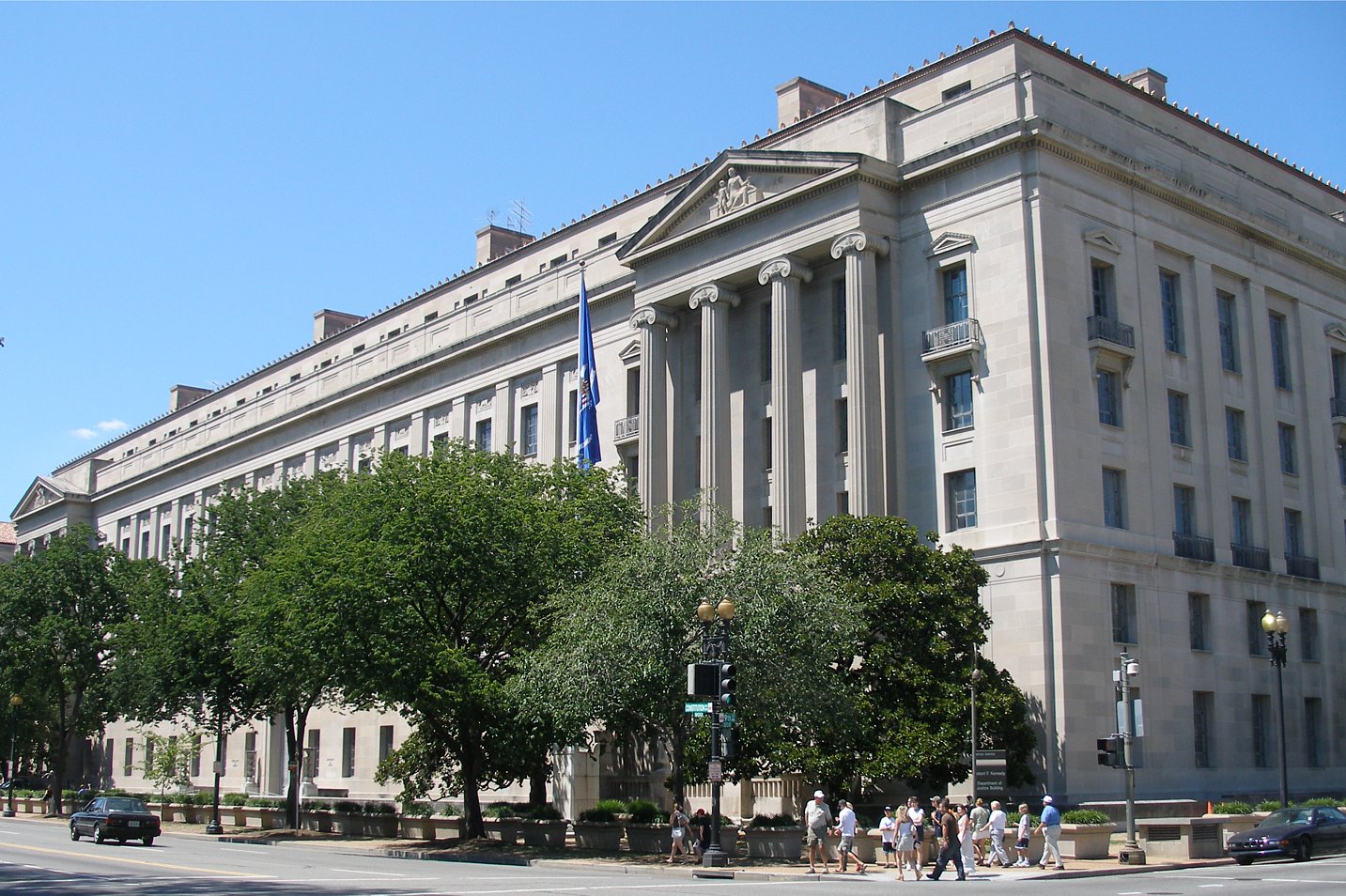
On April 21, the Justice Department announced a wire and bank fraud indictment of the Southern Poverty Law Center (SPLC), a prominent civil rights organization. In the 1980s, the SPLC helped dismantle the Ku Klux Klan through civil litigation. After that success, the SPLC aggressively tracked the KKK and other violent hate groups, informing the public of how the groups operate and serving as a trusted resource for law enforcement. When the SPLC expanded its public lists of hate groups in the 1990s to include conservative organizations that the SPLC concluded advocate intolerance, even if they do not advocate violence, some conservative groups began to criticize it. The SPLC has also listed a few groups that are not on the right but that the SPLC says advocate hate, such as the New Black Panther Party.
The Justice Department is attacking a leading adversary of violent hate groups by accusing it of secretly supporting the very groups the organization has opposed for decades. Prosecuting a group that the far right opposes by accusing the group of supporting the far right makes this one of the most cynical criminal cases ever brought by the Department of Justice. Whatever one’s view about the SPLC labeling nonviolent conservative organizations as hate groups, that is not a crime.
The Justice Department alleges that the SPLC fraudulently misled donors by not disclosing that the organization used donor funds to pay informants within the KKK and neo-Nazi groups. The SPLC, however, had no legal duty to inform donors about these activities, which advanced the organization’s mission, any more than the SPLC needed donor approval to engage in any other initiative to advance its mission. Using informants was consistent with the SPLC’s historic work of disrupting and monitoring the KKK and neo-Nazi groups.
The indictment also alleges that the SPLC opened bank accounts under assumed business names without disclosing the SPLC’s connection. Yet the indictment fails to allege that the SPLC sought to influence bank decisions, an essential element of the bank fraud offense. The SPLC used assumed names to protect its informants, not to influence the banks.
Perhaps sensing the indictment’s weakness, Acting Attorney General Todd Blanche and FBI Director Kash Patel inappropriately added dramatic accusations in statements to the press that the indictment fails to support. Blanche said that the SPLC is “manufacturing racism to justify its existence. Using donor money to allegedly profit off Klansmen cannot go unchecked.” Blanche continued, “This Department of Justice will hold the SPLC and every other fraudulent organization operating with the same deceptive playbook accountable. No entity is above the law.” He accused the SPLC of intentionally supporting the hate groups that the organization has confronted for over 40 years. Patel repeated the accusations, including in an appearance on Sean Hannity’s program on Fox News. And White House Press Secretary Karoline Levitt called the SPLC a “criminal organization.”
No accusations in the indictment, even if true, remotely support these politically motivated attacks. The SPLC has moved to unseal the grand jury transcripts in the case, arguing that, because the indictment is so flawed, the government may have misled the grand jury about the requirements of the alleged crimes. The SPLC has also called on Blanche to retract statements he made on Fox News denying that the SPLC provided information to law enforcement, which contradicts information provided to the government, including to the U.S. Attorney’s Office in Alabama, the same office that secured the indictment.
The Indictment’s Meager Allegations
At the press conference announcing the indictment, Blanche accused the SPLC of covertly supporting the KKK to somehow “profit off klansmen.” But the indictment only alleges that the SPLC paid informants in the KKK and neo-Nazi groups. The indictment focuses on payments of around $3 million in total to eight informants over nine years, between 2014 and 2023. The informants received the payments from bank accounts the SPLC opened in the names of five fictitious entities. Among the alleged informants was an imperial wizard of the United Klans of America, an individual affiliated with the neo-Nazi National Alliance, and an individual who was an alleged “member of the online leadership chat group that planned the 2017 ‘Unite the Right’ rally in Charlottesville, Virginia, and who attended the event at the direction of the SPLC.” He allegedly “made racist postings under the supervision of the SPLC and helped coordinate transportation to the event for several attendees.” The SPLC’s practice of paying confidential informants in violent extremist organizations allegedly ran from the 1980s through 2023.
The indictment alleges that the SPLC’s “paid informants engaged in the active promotion of racist groups at the same time that the SPLC was denouncing the same groups on its website.” That states the obvious, given that informants work within the organizations they inform about. No allegation supports Blanche’s characterization that the SPLC was “manufacturing the extremism it purports to oppose by paying sources to stoke racial hatred.” The closest the indictment comes is vague allegations that the SPLC “directed” an informant to attend the Unite the Right rally in Charlottesville, Virginia, and that he posted racist comments under the “supervision” of the SPLC. The cryptic allegations shed no light on how the SPLC used the informant or why it instructed him to do these things, even accepting the allegations as true. Nor do the allegations support the contention that these activities were inconsistent with the SPLC’s long-standing, well-known work of monitoring violent extremist groups.
Indeed, the indictment contains numerous allegations regarding the SPLC’s efforts to track these violent extremist groups. The indictment lists several publications of the SPLC’s “Intelligence Project” that monitor violent hate groups, such as the ones where the SPLC established informants. The publications include its “Intelligence Report” and “Intelligence Project Dispatch.” The indictment also includes the SPLC’s statements on its website that the SPLC provided the information free of charge to law enforcement, academics, and the public. And as alleged in the indictment, the SPLC stated to the public, including donors, that its Intelligence Project Dispatch “monitors and exposes white supremacy in public forums and online, exposes hate and anti-democracy extremism, and counters disinformation and conspiracy theories with research and community resources.” That mission is consistent with establishing informants within the white supremacist movement.
The Indictment Falls Egregiously Short of Alleging a Crime
The indictment falls far short of what is required under the Principles of Federal Prosecution, the Department of Justice’s standard guidelines to determine whether a federal prosecution is justified. The principles require an attorney for the government to conclude, before pursuing a prosecution, that “the person’s conduct constitutes a federal offense, and that the admissible evidence will probably be sufficient to obtain and sustain a conviction.” The wire fraud allegations fail to establish that the SPLC misled anyone, much less defrauded its donors. And the bank fraud allegations fail to establish the basic elements of the crime.
Wire Fraud
The wire fraud statute, 18 U.S.C. § 1343, requires a “scheme to defraud,” meaning proof of a material falsehood “calculated to deceive persons of ordinary prudence and comprehension.” The falsehood must be “material,” in the sense that it “has ‘a natural tendency to influence, or is capable of influencing, the decision of the [person] to which it was addressed.’” To support a fraud charge predicated on nondisclosure, the government must identify an independent legal duty to disclose information. The duty to disclose may arise from a statute, regulation, contract, fiduciary relationship, or similar source.
The indictment identifies no such duty. Contrary to Blanche’s suggestion at his press conference, the indictment points to no statute requiring nonprofit organizations to provide detailed disclosures of their expenditures. Nor does the indictment point to any regulation that would require such disclosures. It alleges no contract between the SPLC and any donor requiring detailed disclosures about how the SPLC uses its funds. And it fails to allege a fiduciary relationship between the charity and its donors, requiring disclosure, because no such duty exists.
The implications of determining that it is criminal fraud for a nonprofit such as the SPLC to fail to disclose all possible uses of donor funds would be dramatic. It would expose nonprofits to broad criminal (and civil) liability, which could be weaponized as with this indictment. Their fundraising solicitations and mission statements would need to resemble an SEC filing. Such a broad disclosure obligation—compelled speech—could violate the First Amendment rights of nonprofits. The Supreme Court has long held that charities enjoy robust protection in how they communicate with donors, and that the government cannot dictate what a nonprofit must disclose. The Supreme Court has also held that it is unconstitutional, for example, to force charities to disclose the percentage of donor funds they use for operational activities versus fundraising: “[T]he First Amendment guarantees ‘freedom of speech,’ a term necessarily comprising the decision of both what to say and what not to say.” Creating a novel duty of disclosure, with uncertain scope, would impinge on nonprofits’ First Amendment rights to a far greater degree than the mandatory disclosure laws the Court has invalidated. The requirement to provide comprehensive disclosures about the full range of the nonprofit’s contemplated activities would chill their work. For good reason, the SPLC would not want the KKK and neo-Nazis to know that it sought to pay informants in their organizations as part of its mission.
The SPLC did not mislead donors about its use of informants. The indictment relies exclusively on the SPLC’s mission statements, including to “dismantle” hate groups. But the SPLC was free to decide that establishing sources within the secretive, extremist groups the SPLC monitored advances that mission. The SPLC’s actions must be evaluated based on an objective standard—what a hypothetical reasonable donor would conclude. The legal standard for fraud is whether a “reasonable” donor would be misled. It seems impossible, as a matter of law, for the government to establish that a reasonable donor would think that the mission to “dismantle” hate groups rules out using funds to establish informants within them. To conclude otherwise would present the same First Amendment problems identified above.
Bank Fraud
The bank fraud theory under 18 U.S.C. § 1014 is even weaker. The statute criminalizes “knowingly mak[ing] any false statement or report ... for the purpose of influencing in any way the action” of a bank “upon any application, advance, ... commitment, or loan.” Though materiality is not a formal element, “a statement made ‘for the purpose of influencing’ a bank will not usually be about something a banker would regard as trivial,” and therefore “the literal reading of the statute will not normally take the scope of § 1014 beyond the limit that a materiality requirement would impose.” Moreover, it is not enough for a statement to be misleading; it must be literally false. The indictment satisfies none of these requirements.
The indictment alleges that SPLC employees signed bank documents with fictitious trade names to open accounts. But the indictment contradicts the Justice Department’s claim that the SPLC’s representatives made false statements to the banks. The same SPLC employees who opened the accounts maintained uninterrupted signatory authority throughout. In other words, the banks dealt with the actual controllers of the funds, whose identities were disclosed. Most importantly, the indictment fails to allege that the SPLC employees provided the fictitious trade names “for the purpose of influencing” the banks—a key element of the crime. Rather, the indictment alleges that the SPLC used the trade names to conceal the source of payments to the SPLC’s informants for operational security.
The Politics Behind the Indictment
Why would the Department of Justice pursue such a flawed case against a prominent civil rights organization? The answer is that the SPLC has long been a target of the right. In comments edited out of a CBS interview, President Trump falsely claimed that the SPLC funds the KKK to stoke division as part of a “scam run by the Democrats,” that the Unite the Right rally in Charlottesville “was all funded” by the SPLC to “make me look bad,” and it was “a total fake,” “part of the rigging of the election.” Many Republican members of Congress and conservative activists hailed the indictment. The indictment is also consistent with the Trump administration’s purposeful shift of enforcement away from the violent groups that the SPLC tracked and toward groups on the left.
Conservatives have long complained that the SPLC’s online “Hate Map” demonizes nonviolent conservative organizations. They point to the SPLC’s designation of the Family Research Council (FRC) as an “anti-LGBTQ hate group.” In 2012, the FRC accused the SPLC of creating the climate that inspired a gunman to enter its headquarters. More recently, SPLC publications have labeled many nonviolent conservative organizations as hate groups, including the Alliance Defending Freedom, the Heritage Foundation, Turning Point USA, Moms for Liberty, the Center for Security Policy, and the Center for Immigration Studies. SPLC publications have also singled out prominent individuals as purveyors of hate, including Stephen Miller, Charlie Kirk, and Ayaan Hirsi Ali. Kirk was assassinated on Sept. 10, 2025, a few months after the SPLC named Kirk and Turning Point USA dangerous extremists.
A few weeks after the Kirk assassination, Patel severed the FBI’s ties with the SPLC. For years, the FBI had used the SPLC as a resource on extremist groups such as the KKK. But Patel posted on X that the SPLC “long ago abandoned civil rights work and turned into a partisan smear machine,” and “[t]heir so-called ‘hate map’ has been used to defame mainstream Americans and even inspired violence. That disgraceful record makes them unfit for any FBI partnership.” In December 2025, the House Judiciary Subcommittee on the Constitution and Limited Government convened a hearing titled “Partisan and Profitable: The SPLC’s Influence on Federal Civil Rights Policy.” Rep. Chip Roy (R-Texas), who chairs the subcommittee, declared during the hearing that the SPLC had “reinvented itself as a political fundraising machine built on an ever-expanding ideologically-defined hate mission” that sought to disparage nonviolent conservative groups.
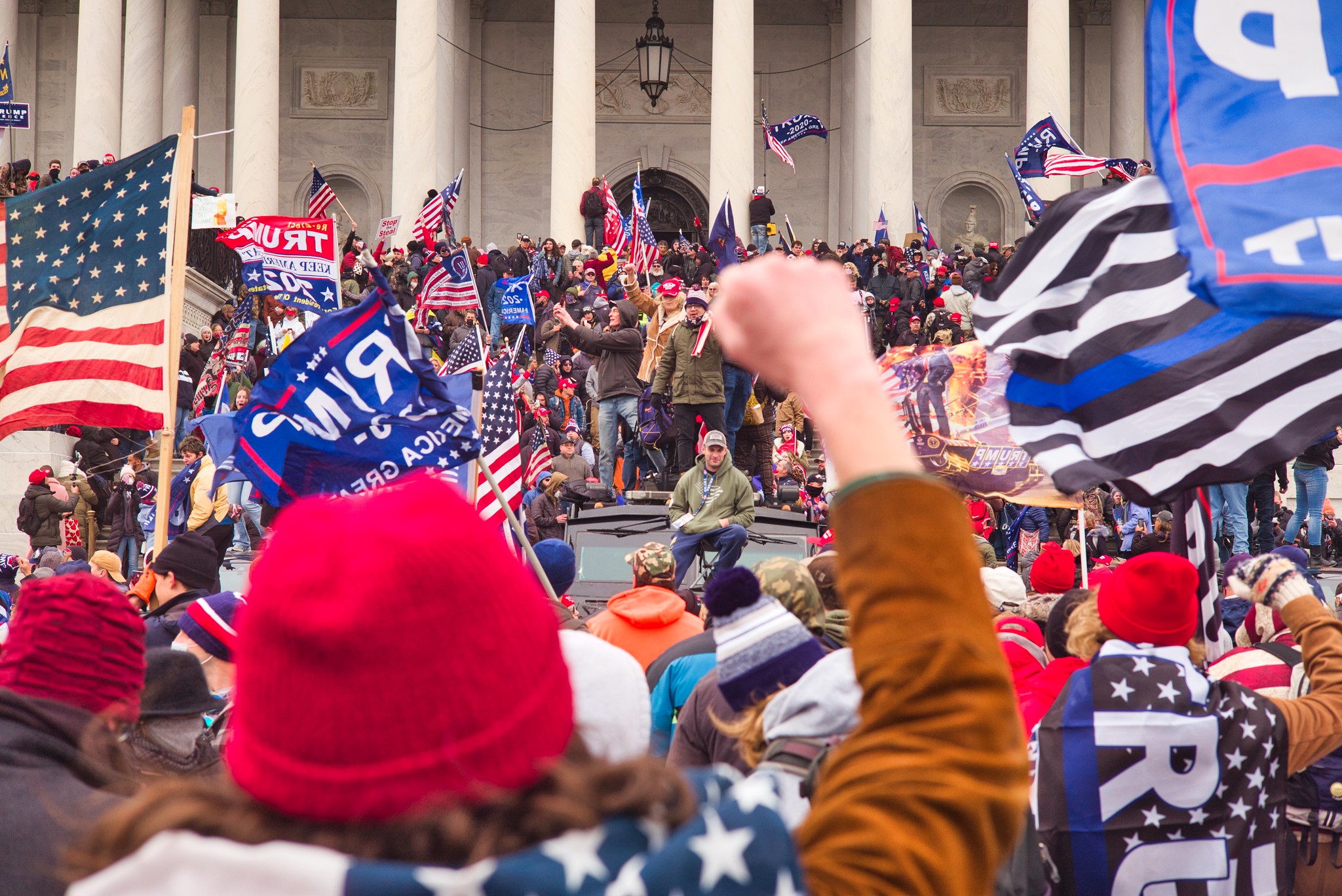
The indictment is also consistent with the Trump administration’s broader targeting of the left. Through a presidential memorandum and other actions, the administration has redirected domestic terrorism policies against groups on the left. The 2026 Counterterrorism Strategy does not mention violent far-right groups as a domestic terrorism threat. To the contrary, in reference to those prosecuted for the assault on the Capitol, it says that “confidence can only be won back when counterterrorism is executed uninfected by politics, and if those who used their counterterrorism powers as a weapon against the innocent pay the full judicial cost for their crimes against the civil rights of innocent Americans.” It designates “Violent Left-Wing Extremists, including Anarchists and Anti-Fascists” as one of “three major types of terror groups,” alongside “Narcoterrorists and Transnational Gangs” and “Legacy Islamist Terrorists.” Indeed, the Trump administration has largely dismantled federal efforts to combat far-right domestic terrorism, including within the Department of Justice. These actions are on top of the pardons of the Jan. 6 defendants. On April 14, seven days before the SPLC indictment, the Justice Department announced that it was seeking to dismiss all remaining Jan. 6 convictions, including convictions of the extremist groups the Proud Boys and the Oath Keepers. It is no coincidence that the leadership of these far-right groups, conservative media, and the Justice Department itself all consistently framed the dismissals as a vindication of the Jan. 6 rioters, the Proud Boys, and the Oath Keepers. Acting Attorney General Blanche characterized the dismissals as one of the administration’s greatest achievements.
The Chilling Implications for Social Justice Groups
The SPLC pioneered using forfeiture to hold organizations such as the KKK responsible for the violent acts of their members. The strategy to target the extremists’ finances took apart some of the most violent and racist groups in the United States. Now the Department of Justice seeks to turn this playbook against the SPLC, seeking fines and forfeiture of any property derived from the SPLC’s alleged fraud. As numerous civil rights organizations warned, condemning the indictment, the government can use this weaponization of the criminal law to attack any other group the right opposes. Activist plaintiffs on the right could do the same. Independent Sector, the national membership organization for nonprofits and philanthropies, described the indictment as “an instance of federal overreach attempting to impose a chilling effect on advocacy-based and charitable organizations,” warning that “allowing political leaders to target perceived opponents for investigation does nothing but undermine trust” in the charitable sector.
Conservative organizations that criticize the SPLC should be careful what they wish for. Their criticisms contend that the SPLC seeks to demonize conservative speech. Now the federal government is using the criminal law to attack an organization based on its speech. No good can come from corrupting the criminal justice system with this kind of politically motivated abuse. This is the weaponization of the criminal law that conservatives say they fear. It is inappropriate to weaponize the criminal law against nonviolent advocacy on the left, just as it would be inappropriate to weaponize the criminal law against nonviolent groups on the right.
-(1)-(1).png?sfvrsn=ebd4ed39_5)
