The Russia-Iran Partnership

Editor’s Note: When the United States and Israel bombed Iran in 2025, Russia did nothing to help its erstwhile ally in Tehran. This time is different. The Center for a New American Security’s Delaney Soliday details Russia’s assistance to Iran and explains Moscow’s motives.
Daniel Byman
***
The war in Ukraine was a turning point for the Russia-Iran partnership, spurred by Russia’s need to purchase and mass-produce thousands of uncrewed aerial vehicles (UAVs). Now, it’s Tehran’s turn to ask for help, and the dangerous effects of this partnership are threatening American lives directly. Almost as soon as Operation Epic Fury began on Feb. 28, Russia began sharing intelligence with Iranian troops—including the location of U.S. personnel and satellite photos of U.S. military assets positioned in the region. More recent reporting revealed that Moscow is also helping Tehran improve its drone operations based on lessons learned from the aerial battlefields over Ukraine and organizing shipments of one-way attack drones to boost Iran’s offensive capabilities. One of Washington’s main adversaries—armed with several thousand nuclear warheads—is now aiding its ally in a major war against the United States. If policymakers had any doubts in the past about the importance of disrupting the Russia-Iran partnership, this should be their wake-up call.
At its core, the relationship between these two U.S. adversaries is about mutual self-interest. In Moscow, Tehran has a reliable supplier of advanced weapons systems to the Islamic Revolutionary Guard Corps (IRGC) and Iranian proxies across the Middle East. From Iran, Russia receives proprietary military technology and a partner in international sanctions evasion schemes. Unless the Trump administration is willing to take aim at Russian weapons facilities like Yelabuga, the Iranian shadow fleet that ferries shipments across the Caspian Sea, and the Kremlin’s arms export agency, it will not be able to prevent Russia from resupplying Iran. It also will not be able to stop the Russians from helping Iran rebuild its weapons production capabilities after the end of Epic Fury.
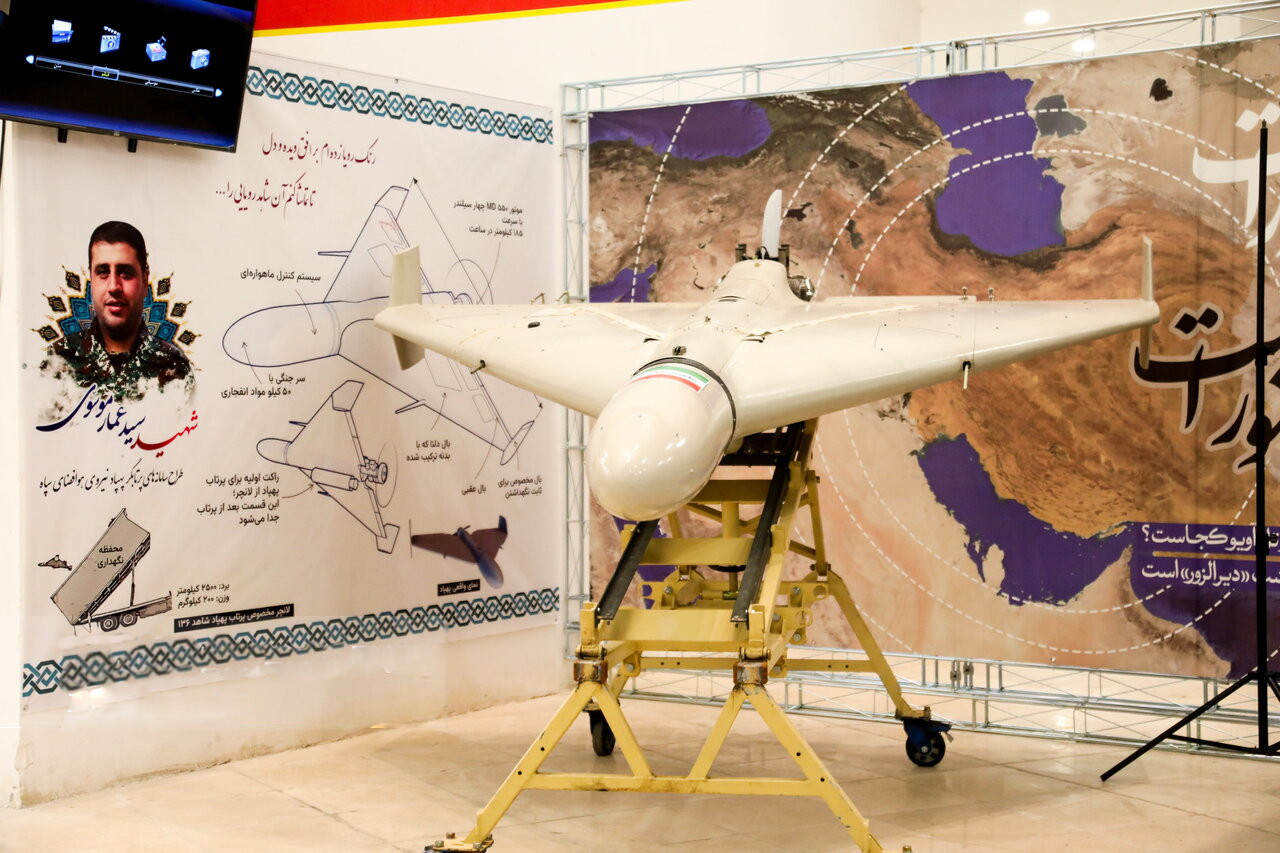
Reports by a Ukrainian think tank indicate that Iran and its proxies are firing Geran-2 UAVs (the Russian model of the Iranian Shahed-136) at U.S. forces and their allies in the region. Several recently landed in Dubai, prompting closures at Dubai International Airport. Footage of the wreckage near the city’s largest port shows Cyrillic writing on the airframe of one UAV, indicating that it was likely produced at Russia’s primary drone factory in Yelabuga and then shipped to Tehran or one of Iran’s regional partners. Evidence from crash sites like these indicates that many Russian “Shahed” models remain reliant on Western dual-use parts despite sanctions designed to prevent Moscow and Tehran from acquiring this technology. This means that Russia is now sending domestically produced, Iranian-designed weapons systems powered partially by U.S. tech back to Iran for use against the United States and its allies.
Israel recently began addressing this problem directly. On March 18, it conducted its first military strike on an Iranian naval port on the Caspian Sea. Bandar-e Anzali is a hotspot for smuggling operations, as its location on the Caspian allows Russia and Iran to easily transport sanctioned oil, military technology, civilian goods, and dual-use items without entering international waters. While Washington is unlikely to adopt such a direct strategy unless the conflict continues to escalate and the U.S. military runs out of conventional targets, the issue remains critically important.
Tehran has also struck NATO countries and military facilities, causing Europe to fear that recent attacks on Turkey and a British base in Cyprus could drag even more countries into the conflict. The Hezbollah drone strike that hit a British air base on Cyprus was found to contain a Russian-built navigation system, lending further evidence to a statement made by the Russian ambassador to the United Kingdom, Andrei Kelin, in a Sky News interview, that Moscow is “not neutral” in the current war. While Kelin claimed that Moscow has not sent any munitions or tactical support to Iran—and that Tehran has not requested it—it is clear that Russian technology and military know-how is playing at least a partial role in supporting Iran’s air strategy.
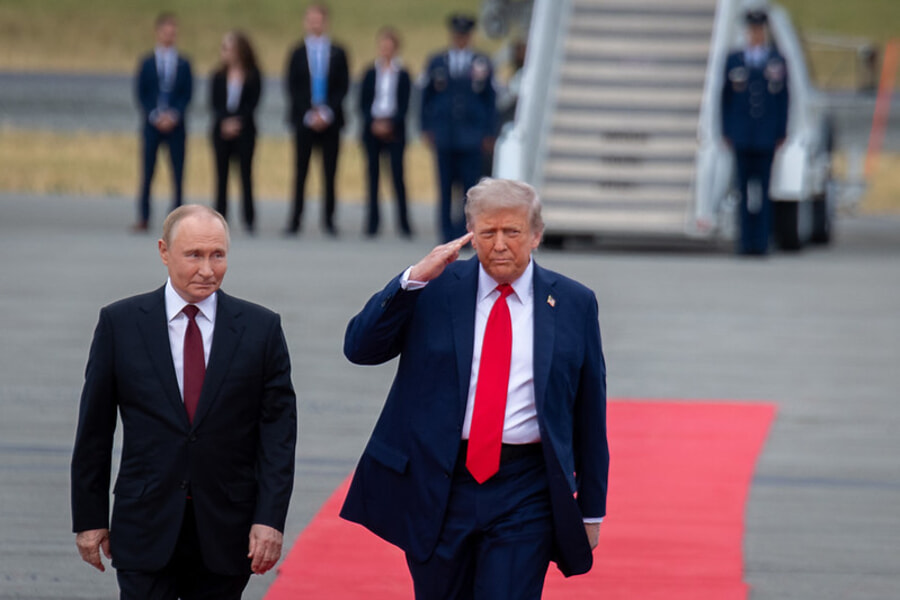
Policymakers should also keep in mind that the last time an Iranian ally—Syrian dictator Bashar al-Assad—was in serious trouble in 2015, Russia put boots on the ground to answer Tehran’s call for help. This time around, the Iranian state itself is threatened both internally by massive popular protests and externally by a war with the United States and Israel. The Iran-Russia relationship has grown significantly stronger since Moscow’s first bombing runs over Homs and Hama in September 2015. While Russian President Vladimir Putin was not willing to commit resources to saving Assad a second time in December 2024, he may decide that Iran—and its technology, oil, weapons, and strategic expertise—is too valuable a resource to lose.
While it did nothing to back up Tehran during the 12-Day War in June 2025, Russia likely recognizes that the ongoing conflict poses an existential threat to Iranian leadership and the stability of the Islamic Republic. Moscow is not treaty-bound to come to Iran’s defense when it comes under attack, but it recognizes that if Iran’s leadership collapses like a house of cards, it loses a key partner of convenience and an ally in its stand against the West. Its recent decision to start sending drones to Iran supports this theory: Moscow sees Tehran struggling and wants to ensure that it has the ammunition to continue striking back against the United States and simultaneously deplete vital U.S. weapons stocks. The war also has the added advantage of distracting the international community from the war in Ukraine and increases the odds that resources will be diverted from Kyiv to the Middle East.
The United States needs to prioritize increasing the cost of Russia’s support for Iran; sanctions alone are not sufficient and often encourage U.S. adversaries to get more inventive in their evasion measures. One effective way to check Russia’s involvement could be to insert friction into the relationship between Moscow and Tehran through public messaging—for example, by publicizing more of the information Western intelligence agencies are learning about this covert smuggling and sanctions evasion activity. Doing so could prompt doubt among Russian and Iranian security officials about the reliability of trusted smuggling routes. A coalition-style approach to this problem is likely to be most effective, working with the Caspian Sea littoral states and other Central Asian allies to make it more difficult for malign actors to move weapons systems and dual-use tech without fear of attracting unwanted public attention and exposing their cargo to physical risks, like one-way drone attacks or jamming signals.
Washington needs to be thinking about Russia when it plans for what happens after the conclusion of Operation Epic Fury. The conflict cannot be called a success if one of the United States’ adversaries immediately begins rearming the Islamic Republic—and Moscow has both the military-industrial infrastructure and the incentive to do so. In the past several years, Russia has benefited as much or more from this relationship as Iran has, thanks to the Shahed revolution that transformed its fight in Ukraine. The Russia-Iran partnership is having a significant impact on the region as these two malign actors work together to share expertise and deadly weapons technology that is killing Americans, destroying critical infrastructure in Gulf countries, and targeting civilians in Israel. These states will continue to work together to adversely impact Western interests in future conflicts if they can continue to cooperate without facing consequences.
Correction: This article has been updated to correct the spelling of the city of Bandar-e Azali. A sentence about strikes on Turkey and Cyprus has also been rephrased for clarity.