The Situation: Extortion as Governance
How criminal investigation becomes an instrument of monetary policy.

The Situation on Sunday catalogued my many areas of agreement with the White House’s grotesque characterization of Jan. 6.
And then it came to pass that the administration discovered a new instrument of monetary policy: criminal investigation.
Criminal law, to be sure, has historically played only the most minor of roles in the setting of interest rates. As a general matter, it just isn’t among the levers that the Fed—much less anyone else—pulls to influence an agency that is supposedly and designedly not subject to outside influence. We just don’t think of law enforcement, either by or against Federal Reserve governors, as one of the means by which they nudge the economy this way or that by adjusting rates a quarter of a percentage point every few months.
But the thing about thinking like a gangster is that it becomes a matter of habit. It doesn’t start with Fed governors.
It starts with garden variety obstruction of justice.
You have something you don’t want to become public—like, say, the details of your campaign’s relationship with Russian operatives or your own personal history of engaging with the leadership of the Russian Federation. And there are these witnesses who know things inconvenient to that objective and who are in trouble with the law. So you send them messages to stay loyal, reassuring them that they’ll be taken care of. You pardon the ones who do so. You threaten the ones who don’t.
And it works. There’s a damaging report, but that’s all.
And so the gangster tactics migrate to the conduct of governance itself. And you find that these tactics work in other situations too—like international diplomacy, for example. A new president in an emerging democracy shows up wanting military aid to deal with an ongoing foreign war by an invading power. You want him to announce he’s investigating your political opponent. So you tell him the two are linked. He knows he’s being shaken down, but what’s he going to do about it?
These gangster tactics are old. In Book I of Plato’s Republic, one of Socrates’s interlocutors even defines justice as “doing good to your friends and harm to your enemies.” And they work.
So when you return to power, you make them the centerpiece of your governance. You pardon 1,500 of your friends, and they’re really your friends now. And you pardon a lot more people, some of them very rich. And they are grateful. And you indict your enemies, whether they’re guilty or not. It’s almost better if they’re not guilty, because then they really feel your power. They know it’s not because of anything they did wrong. They know it’s just because they incurred your wrath.
And you put your own people in the halls of power, and mostly—mostly—that’s the way you work your will.
But there are still a few of these other people, people you don’t or can’t control for one reason or another. There are some you didn’t appoint, though that doesn’t include Mr. Powell. There are some—particularly in Congress or in state government—who have electoral bases separate from you and who don’t report to you at all. There are others who find they have this thing called a soul, or integrity, or whatever, or who mysteriously take seriously that oath they swore to the Constitution. And there are others, including at the Fed, whom you can’t so easily fire, because of combinations of law and politics and anticipated market reactions.
And so the gangster tactics migrate into the Fed.
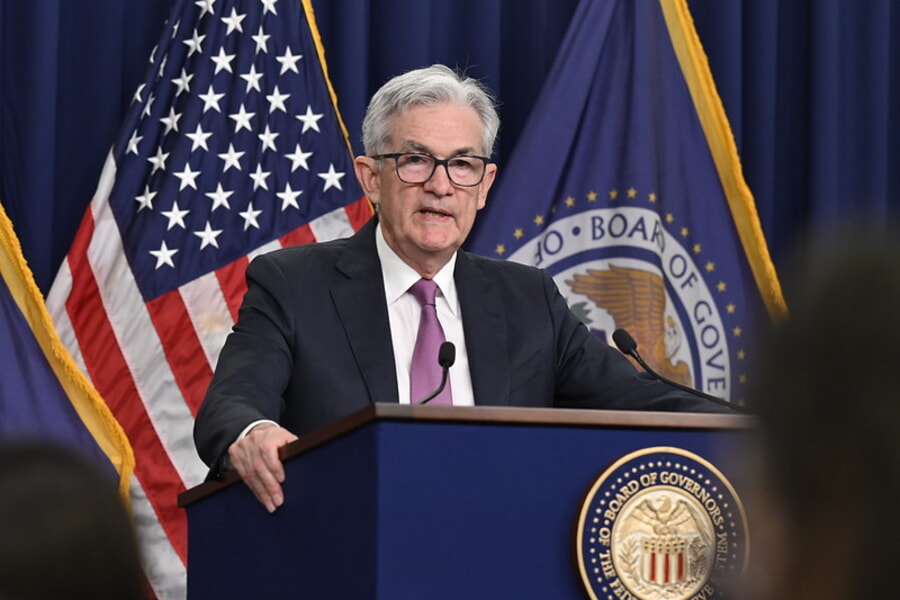
Expensive renovation you got going on there, Chairman Powell. A lot of taxpayer money at issue. And you made that building pretty fancy, didn’t you? You gave some congressional testimony about it too. And spoken words in a congressional hearing—there are so many ways to slip up and get a fact wrong. And you know, even if you don’t slip up, words can be interpreted as erroneous, anyway. And you never know what an investigation is going to find about your intent, do you? And juries just don’t love people who build themselves fancy offices with taxpayer money, do they? And even if you never face charges, an investigation is a long and ugly process. The kind of thing that ruins an economist’s reputation. Kind of thing that sucks up a lot of time and ends up high up in a man’s obituary. That would be a shame.
And you know, Mr. Powell, that all you have to do to make this go away is lower interest rates.
Extortion is a matter of habit. Like lying. Do it a few times, and it becomes easier. Do it a few more times, and it becomes a way of life.
And thus does criminal investigation become an instrument of monetary policy.
Or perhaps we should say thus does criminal investigation become also an instrument of monetary policy.
The Situation continues tomorrow.