The United States Without Europe
How a shattered NATO would undermine U.S. security.
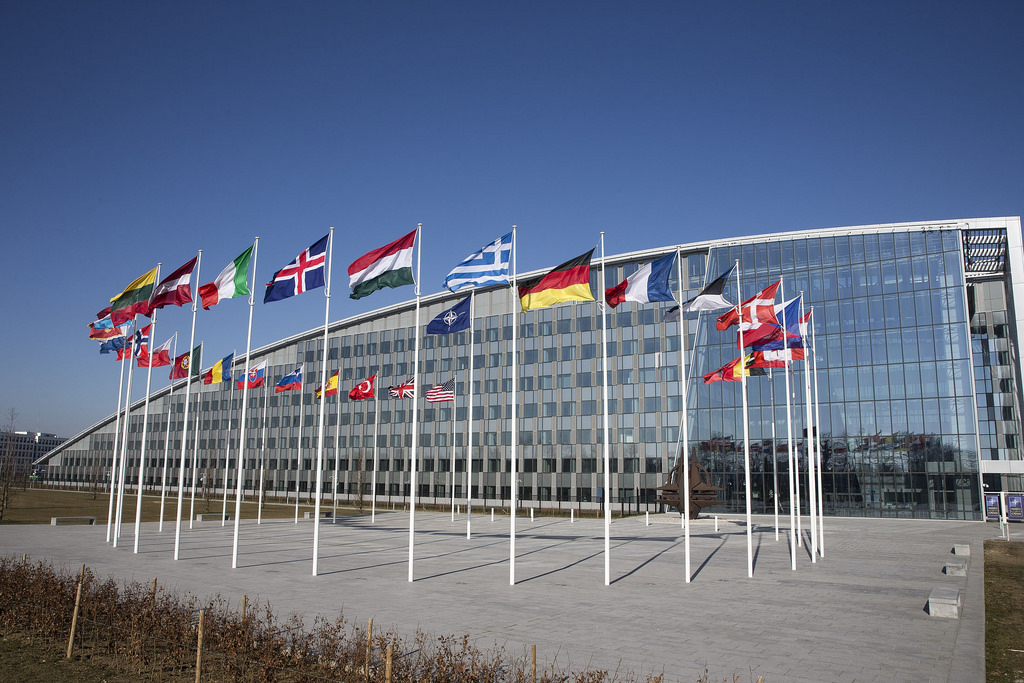


The Trump administration has become a direct threat to the sovereignty and territorial integrity of its NATO allies. Trump has stated repeatedly that he wants to take over Denmark’s semi-autonomous territory of Greenland, promising tariffs against European governments that stand in his way, and to make Canada the U.S.’s 51st state. Even if the crisis over Greenland appears averted for now and the United States does not ultimately annex the territory, the administration’s threats have placed the alliance at risk by significantly undermining trust. The problem is not whether force is used, but what the threat itself reveals to allies about the U.S.’s willingness to use coercion as a tool of alliance management. As a result, the Trump administration’s approach is weakening NATO and damaging the close U.S. relationships across Europe that underpin it, with direct consequences for U.S. national security.
NATO’s importance to U.S. national security transcends emergency and highly visible situations. While it is true that its allies have stepped up to support the United States in war, most notably in the aftermath of the Sept. 11, 2001, terrorist attacks, NATO’s Article 5 is the exception. Meanwhile, in peacetime, the United States receives numerous other benefits from the alliance that bolster U.S. security. Its presence within NATO shapes U.S. security and its ability to project power, advancing its interests every day in ways that are not always apparent to Americans.
The Trump administration has often characterized NATO as a “burden,” focusing almost exclusively on pressuring the allies to increase their defense budgets. Larger defense budgets would undoubtedly allow allies to enhance their military capabilities and do more to meet their defense needs and NATO’s. But the emphasis on defense spending to 5 percent is an end, rather than a means. The focus on defense spending ignores some of the fundamental reasons NATO has benefited the United States since its formation. As an asymmetric alliance where the United States is the dominant power, Washington’s security guarantees have protected its relatively weaker allies. But this arrangement requires U.S. allies to provide a variety of benefits beyond budget allocations, including hosting U.S. military bases and sharing intelligence in exchange for U.S. protection. In other words, the alliance is not a U.S. favor but rather offers the United States tangible benefits to its national security.
If the Trump administration continues along this path unchecked, it will cause long-term damage to U.S. security. NATO allies may take steps to downgrade their cooperation with the United States—and make a potentially irreversible pivot from the alliance. In some ways, the damage is already done. What remains to be seen is whether the fallout from this crisis can be limited or whether the cumulative erosion from the threats over Greenland and potential future quandaries will prove fatal for the alliance. NATO’s governments and the citizens they represent increasingly view the United States under Trump as less of an ally and more as a threat. Although European allies may not be able to drastically reduce their dependence on the United States in the short term, the European Union and capitals across Europe are considering economic, political, and military tools to curb U.S. ambitions. At the height of the Greenland crisis, the EU, supported by some of the bloc’s largest countries, such as France and Germany, publicly considered enacting $108 billion in tariffs to counter Trump’s demands prior to his withdrawing his threats of armed conflict over Greenland. Should the allies take stronger action in response to future threats by the administration, critical shared capabilities and lines of effort that the U.S. relies on for its national security are likely to suffer, dealing practical blows to U.S. security and geopolitical standing.
The following provides an overview of the operational, intelligence, defense industry, political, and capacity-building benefits that NATO allies provide that would significantly harm U.S. security if lost.
Access Rescinded
U.S. access, basing, and overflight agreements with European countries are legally binding mechanisms that were negotiated within the NATO treaty’s framework and supplemented via status of force agreements and other bilateral treaties, enabling a range of U.S. operations from deterrence to counterterrorism in key theaters. To quote the former head of U.S. European Command Gen. Christopher Cavoli, these “agreements give us the ability to intercept threats before they approach the United States, to project U.S. combat power globally, and to deter Russian aggression against NATO.” For example, radars in Europe provide crucial early-warning detection and tracking of ballistic missiles. Bases in Europe also critically support the U.S. military in other ways, such as allowing for the speedy evacuation of U.S. service members, civilian personnel, and their families. During the wars in Afghanistan and Iraq, one facility in Germany was a critical center for urgent medical care, saving service members. Forward bases also help cut costs.
Losing these agreements would impair the U.S.’s ability to project power and move assets in other regions vital to U.S. interests. For example, in 2024, assets in Europe helped the U.S. defend Israel against attacks from Iran and Hamas, via both deployments of sea-based ballistic missile defense capabilities and data sharing with the U.S. Central Command. Critically, as Cavoli testified to the House Armed Services Committee in August 2025, the agreements that facilitate this access are ultimately political, requiring “the host nations in Europe to know that we will honor and respect their interests and that we will not violate their hospitality.” In exchange for “unparalleled responsiveness in [a] crisis,” the United States and its European allies must maintain “trust and confidence.” By attempting to coerce its allies, the United States now undermines the trust that led Europe to have faith in these agreements. European responses could range from all countries that currently have a U.S. base deciding to evict U.S. forces completely from their territory to a much smaller number of those countries maintaining such agreements. The result either way hurts U.S. security and diplomatic reach.
Exceptionally Grave Damage
Some of the most fragile, trust-based arrangements that Trump’s actions could undermine include intelligence-sharing mechanisms, which provide several unique benefits that would be difficult, if not impossible, to achieve unilaterally. The U.S. intelligence community benefits tremendously from its relationships with allied intelligence apparatuses in both peacetime and war, including by supplementing its own collection capabilities, acquiring information that policymakers and uniformed personnel use to develop sanctions or military targets, and gaining insights into adversaries’ thinking and capabilities. As Daniel Byman has written in these pages, an ally’s presence in countries where the United States has a more limited reach, as is the case in Iran, can be very helpful to the U.S. government by sharing opportunities for intelligence collection. During wars, this exchange is even more crucial for U.S. force protection and military operations.
But if the Trump administration continues to threaten its closest allies, they may go further than just increasing intelligence cooperation with one another, as France decided to do with Ukraine following the U.S.’s unpredictable intelligence support under Trump. This could include the United Kingdom, with whom the United States has a “special relationship,” and which serves as an essential member of the Five Eyes intelligence-sharing cooperative. Instead, allies may gradually but permanently downgrade their intelligence sharing with the United States. This is not a hypothetical: The Netherlands has already reportedly reduced its information sharing.
After all, these mechanisms were established to help combat common adversaries and threats, but when the threats emanate from a member of that arrangement, their value proposition diminishes. Moreover, concerns about the politicization of U.S. intelligence, Washington’s erratic foreign policy, and potential leaks add to the growing list of reasons why allies may not want to share information with the United States. While the United States has also used intelligence “cutoffs” (or threats thereof) to shape allied behavior on specific policy issues, this situation is different. Cutoffs in the past were mostly targeted, purposeful attempts to change discrete behavior, not the product of a fundamental shift in U.S. behavior toward its allies. Ultimately, using leverage instrumentally is radically different from degrading or destroying the trust on which these types of arrangements depend.
Closing the Coffers
Europe’s defense market offers numerous benefits to the U.S. defense industrial base and economy more broadly. European countries’ armed forces rely heavily on U.S. defense firms, and growing defense budgets could lead to even more investment in the U.S. economy. For decades, the U.S. defense industry has been the major supplier of weapons, platforms, and equipment to European militaries. And in recent years, Europeans have increased their procurement of American materiel and supplies: From February 2022 to June 2023, for example, U.S.-provided defense equipment accounted for approximately $150 billion, or 63 percent, of Europe’s imports. The United States has long benefited from European defense spending by fueling its defense industry and from the interoperability these procurements created and enhanced.
Even as NATO allies increase their defense spending to reach the 5 percent that the Trump administration pushed, European capitals have already sought to diversify their defense acquisitions. By continuing down the path of coercion, the Trump administration may force allies to reconsider where to spend their money, which would outlast the current administration, as defense investments are long term and can’t be switched on and off every four years to adjust to a new U.S. administration.
Although a decoupling would be gradual, it would have painful effects on the U.S. economy if fully realized. For example, following Russia’s full-scale invasion of Ukraine, more than a dozen European nations sought to add to or build their fleets of F-35 fighter jets. Then Trump returned to office and enacted tariffs on key sectors of many of those same nations’ economies before threatening their territorial integrity and sovereignty. Several countries, including Canada, which had planned to purchase 88 F-35 fighter jets, have been publicly reconsidering whether to move forward with the sales, due in part to concerns that the U.S. would switch off the maintenance, software updates, and training required if it decides to hold allies’ territories at risk.
Losing a critical market such as Europe’s would cause significant damage, as European allies buy some of the most expensive pieces of U.S. equipment at scale. While most allies won’t find immediate alternatives—and many European jets use U.S. components—these shifts are nonetheless important to watch. Given that each F-35 costs approximately $100 million, the allies’ pivot to Eurofighter, Gripen, or the future Global Combat Air Programme will be significant. In practical terms, this shift will be felt throughout the United States. While the F-35s are assembled in Texas, there are suppliers across most U.S. states, supporting an estimated 290,000 jobs, with an annual economic impact of over $70 billion.
European countries are also searching for partnerships to diversify their materiel dependencies. For instance, Poland has deepened its defense relationship with South Korea, including through technology transfer and co-production agreements. This partnership has led to billions of dollars’ worth of arms sales to support Polish priorities such as air force modernization, artillery systems, and tanks. While closer cooperation and integration between allies is good for U.S. national security, the administration’s actions increase the risks of the United States being excluded and not having its interests accounted for as these relationships expand.
Finally, allies could stop sourcing equipment from the United States to provide to third-party countries. For instance, the Trump administration decided to shift from directly providing munitions to Ukraine to defend against Russia’s invasion to selling them to allies that would then donate them to Ukraine, all coordinated by NATO. To date, 24 countries have purchased more than $4 billion worth of weapons and ammunition from the United States for onward transfer—creating jobs and investing in communities throughout the country.
Losing even part of the European market will hurt the U.S. defense industrial base, whose rejuvenation has been a priority for both Democrats and Republicans in recent years and plays an important role to the broader U.S. economy and national security. In turn, a significant decrease in orders would have second-order effects, including job losses in the districts that house factories producing the components and systems that were once purchased by Europeans.
Fighting Alone
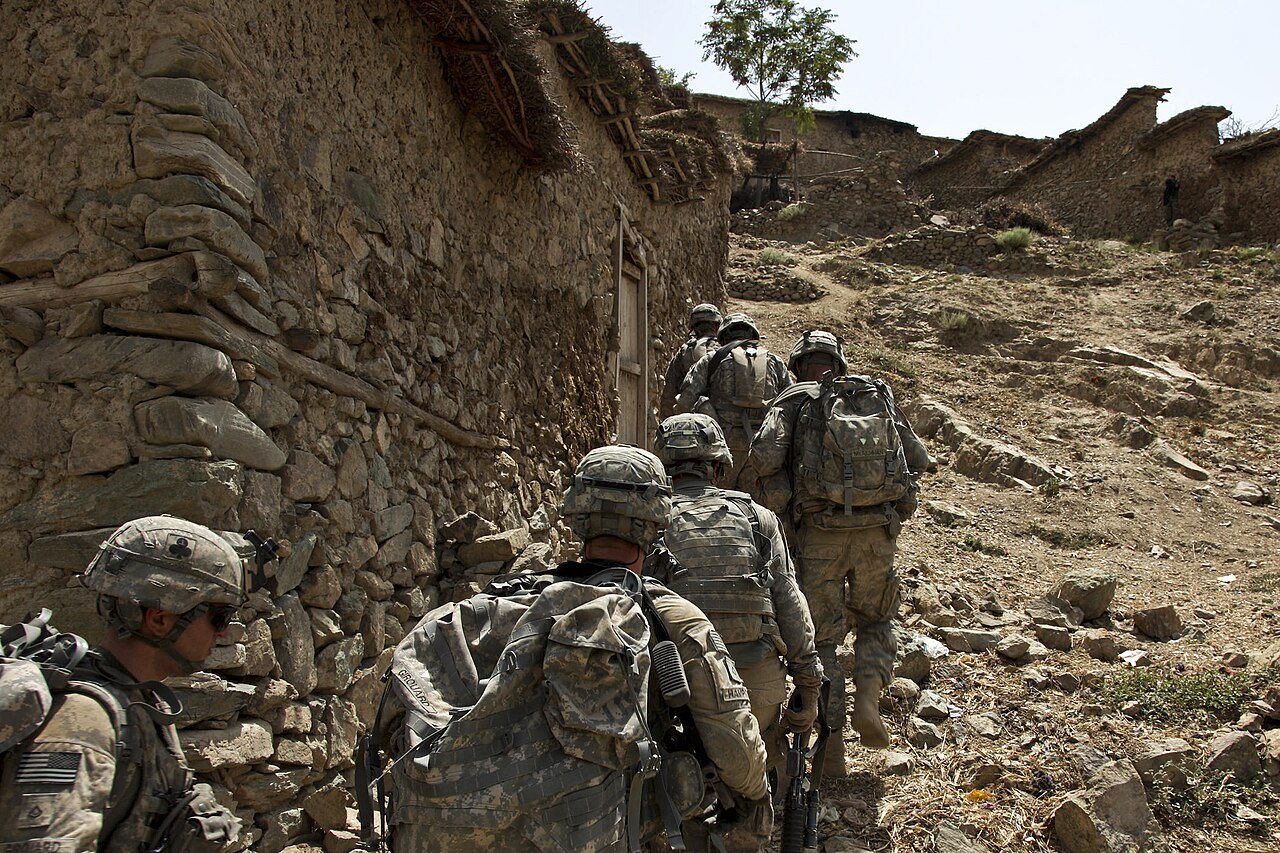
Despite Trump’s denigration of allied contributions to the U.S. war in Afghanistan, the U.S. approach to warfighting often requires the support of a broader coalition. As a RAND Corporation study found, states with closer ties to the United States, particularly those within NATO’s umbrella alliance structure, were more likely to join U.S. coalitions. The same study noted that the threats the United States is likely to face over the next two decades are more likely to require a coalition response. In recent decades, allies have supported U.S. coalitions from its 20-year war in Afghanistan, which fell within NATO’s treaty requirements, to its counter-Islamic State efforts, which occurred outside the alliance’s formal commitments. NATO allies have also supported the United States in everything from humanitarian assistance and disaster relief in the continental United States to freedom of navigation operations in the Middle East. Allies fighting alongside the United States have provided more than just a personnel advantage and capability augmentation in war and support to various operations in peacetime; they lend legitimacy to U.S. war efforts globally, a key difference from U.S. adversaries’ decisions to use force.
U.S. actions under Trump also carry significant second- and third-order risks that could end allies’ willingness to fight alongside the United States outside of the North Atlantic area. To be sure, the United States and its allies will continue to share a number of objectives, some of which may require coalitions or joint task forces even as tensions persist. However, should the transatlantic relationship degrade further, U.S. allies may be more reluctant to sign on to U.S. initiatives or coalitions. And if the United States were to go to war with a near-peer adversary such as China, it may find itself fighting alone, particularly if allies in other theaters rethink their relationship with the United States in light of its behavior toward Europe. This would hurt the U.S.’s ability to legitimize its actions, especially in situations where international support is key to its success. Additionally, the United States would lose its ability to offset some of the inherent risks of military interventions and rely on its allies to help it overcome its logistical and operational shortcomings.
Capacity Razing
Some of the least visible but high-impact areas of cooperation between the United States and its partners reside in academic exchanges and joint training and exercises. These efforts equip U.S. forces and civilians to learn from their counterparts around the world, gaining experiences and skills they would not obtain otherwise. For their part, allies learn U.S. operational art, further reinforcing interoperability and preparing them with concepts and experience to fight alongside the United States, if necessary. Foreign area officers—who are instrumental in the U.S. military’s ability to learn about different regions—illustrate this. By working closely with partner nations, they develop their language, cultural, and regional expertise, allowing the United States to operate more effectively in those regions.
There are also military-to-military channels that provide U.S. forces, the intelligence community, and policymakers with valuable insights into what happens around the world. Liaisons from allied nations—both military and civilians—are often based with their American counterparts and vice versa. U.S. military leaders have recognized the importance of doing more with allies and doing so in a more integrated manner since the wars in Afghanistan and Iraq. For example, British uniformed personnel are often located with their American counterparts in various geographic commands and support U.S. and combined operations. And when U.S. forces operate in an integrated manner with allies whose forces are more familiar with the climate, terrain, and culture of the areas in which they operate, they gain valuable insights that they may not have.
The U.S. military gains core capabilities when U.S. forces train and operate side by side with U.S. allies. For example, U.S. forces benefit tremendously from working alongside Nordic partners in the Arctic, where they can learn from and rely on those nations’ familiarity with operating in extreme cold conditions. President Trump’s advisers have pointed to growing Russian and Chinese presence in the Arctic as a justification for his desire to acquire Greenland and as a reason behind his frustration with Canada. Although the underlying strategic logic—that the Arctic is becoming an area for greater competition—may be correct, the administration’s approach to alliance management is self-defeating. If the priority is really to have allies do more, then it is logical to have them take on more of the burden in areas where they already are deeply competent.
Coercion Carries a Price
The Trump administration’s attempts to coerce U.S. allies in Europe have undermined U.S. security. Some damage may be undone by a future administration that values allies, although trust—the core throughline of any alliance—will be difficult to rebuild. While there are some indications that Congress is seeking to check the administration’s actions, these steps are so far too slow and inadequate—and Congress will be unable to repair allies’ trust if it’s already destroyed. The allies themselves may be able to mitigate—but not entirely eliminate—the damage. Some damage will be irreversible, fundamentally leaving the United States worse off in the process. This is why responses by Congress, courts, and allies matter today, before the worst outcomes occur.
A common feature of alliances is that their member states renegotiate their commitments as the threat environment changes, a necessary process that maintains any alliance’s long-term viability. Today, however, a new threat is emanating from within NATO for several allies—and all are feeling its consequences. The allies are taking Trump’s threats of annexation seriously. Even after backtracking on these threats (at least for now), the implications of the Trump administration’s attempts at coercion are here to stay. The allies may ultimately decide to end some of the arrangements that have for decades underpinned American power projection abroad and security at home. Premised on making America safer, Trump’s attempts to coerce NATO allies are achieving the opposite by seriously, if not permanently, undermining U.S. national security.
-1.jpg?sfvrsn=dd1c6b99_5)