What They Want to Hear: The Politicization of U.S. Intelligence

Intelligence is useful only if it tells policymakers what they need to know, not what they want to hear. That distinction—between informing power and flattering it—is the oldest problem in the craft, and the U.S. built an apparatus of analytic standards, layered review, and ombudsmen to protect it. I served as a President’s Daily Brief (PDB) briefer to the vice president, in analytic leadership at the CIA, and as a National Security Council (NSC) director in both the Biden and second Trump administrations.
In 2025, I watched from inside the White House and at the CIA as the intelligence community came under assault: senior officers fired in public, clearances revoked for dissent, decade-old assessments denounced by the CIA director in the press. Earlier this month, the campaign reached the raw intelligence itself, as the White House declassified selected reporting to sustain election interference claims that the intelligence community’s own finished analysis would not support.

This article separates the legitimate friction between intelligence collection and policy from the political pressure now corroding the intelligence community, maps how politicization works and how it has led to ongoing policy disasters, and proposes reforms to restore the community’s integrity.
Case Study: Two Analysts, 20 Years Apart
BAGHDAD — MARCH 2005
“Curlee,” the general pointed. “Out of your seat.”
I’d spent the night before in a bunker, hoping to survive it, in a war started after our intelligence community failed to challenge what the White House wanted to hear. Now it was my turn.
I stood as the general sat at my laptop, finger tapping delete. In seconds, minimal progress became progress. The graph showing attacks rising—gone. The general stood and shot me a glance. “I’m on with POTUS in an hour. Print it.”
I did.
* * *
THE WHITE HOUSE — JANUARY 2025
Twenty years later, days after taking office, the second Trump administration tasked the National Intelligence Council (NIC) to assess whether the Venezuelan regime had directed Tren de Aragua—a criminal gang—to invade the United States. The question, from Homeland Security Adviser Stephen Miller, matched nearly word for word the predicate for the Alien Enemies Act of 1798, last invoked in World War II to intern Japanese, German, and Italian nationals.
I know—because I tasked it.
I was the NSC’s acting senior director for intelligence programs across the transition—Biden’s last week, Trump’s first. I knew the NIC, the intelligence community’s most senior, most deliberate analytic body, would carefully weigh the evidence and reach a consensus position. How much rode on that judgment became clear when the administration carried out lethal strikes on alleged drug boats off Venezuela and, in January 2026, sent U.S. forces into Caracas to seize Nicolás Maduro himself.
The NIC did not give the answer the White House wanted, concluding that Tren de Aragua had not entered the country at Maduro’s direction, undercutting the administration’s case in court. Director of National Intelligence (DNI) Tulsi Gabbard denounced the finding, and her chief of staff, Joe Kent, pressed the acting NIC chair to “rethink” it. When he held firm, Gabbard had him walked out of the building, ending the career of one of the country’s most accomplished analysts.
Two analysts, 20 years apart: a junior one—me—who rolled over before a four-star general, and a senior one who held the line and lost his career for it, show the pressure analysts face from their superiors. We are taught to speak truth to power knowing that if we stay silent, the country bears the cost of the failure—but that if we do, the cost may be ours alone.
The Assault on Analysis
What happened to the NIC chair was not an aberration—it was the plan.
From its first days, the second Trump administration treated the intelligence community not as an instrument of the state but as an enemy within: a “deep state” that had allegedly lain in wait for the president during his first term. The aim was explicit: Put career civil servants “in trauma” to make them not want to come to work. At the CIA, that program arrived on schedule.
First they came for the people. On day one, the president revoked the clearances of 51 former officers who had spoken on Russian election interference. A month later, amid the purge of trans service members, the DNI fired 100 trans intelligence officers from 15 agencies. In May 2025, she fired two senior analysts over the Tren de Aragua assessment. And in August 2025, Gabbard publicly revoked 37 more clearances—including that of one of the intelligence community’s most respected experts on Russia—seemingly without irony, for the “politicization or weaponization of intelligence.”
Then they came for the product. Director John Ratcliffe’s CIA reopened a decade-old assessment that Russia had interfered to help Trump in the 2016 election, and denounced it in the press as a corrupt and politicized act. Months later, the CIA retracted 19 finished intelligence products on “woke” topics such as white-nationalist terrorism, violence against LGBT people, and women’s reproductive health, which, the director claimed with no evidence, had failed to meet objectivity standards.
And the threat did not stop at termination: Former CIA Director John Brennan was referred for criminal investigation and interviewed by the FBI over the same analysis the administration had set out to discredit. The lesson reached every desk—a clearance, and with it a livelihood, could be revoked with a phone call; a career could end in front of a grand jury. By mid-2026, the president was describing intelligence that contradicted his preferred reality as “treason.”
This was not the ordinary friction between intelligence and policy—the healthy tension between officers who report what they see and leaders who would prefer otherwise. The administration sent a clear signal: No analyst is ever safe, even for work done years ago. It was retaliation that did more than bend a single conclusion; it taught everyone what happens to those who reach the wrong one.
What Intelligence Analysis Is For
Most people imagine intelligence as the collection of secrets—the intercepted call, the spy stealing documents, the satellite photograph—but a secret is just data until someone explains what it means. Analysts take everything the U.S. collects, fuse it with everything already known, explain what is happening and what is likely to happen next, and hand it to someone with the power to act. It all funnels up into the PDB, the apex product, where we distill the most consequential judgments for the reader whose decisions carry the highest stakes.
Objectivity matters most where the temptation to flatter is greatest.
That work is governed by what we call “tradecraft”—practices meant to keep analysis useful enough to be read, but independent enough that no policymaker can dictate what it says. Mark Lowenthal calls the boundary between the two a semipermeable membrane: questions and information cross freely. Politicization punctures it when the analyst advocates policy or the policymaker reaches back to bend the conclusion. Having served on both sides, I know the line is easier to maintain in theory than in practice.
Some friction across that line is not only normal but necessary. The intelligence profession has argued for more than 70 years about how close analysts should sit to the policymakers they serve. Sherman Kent, the founder of modern U.S. analysis, held that analysts must keep their distance to protect their objectivity. Robert Gates, decades later, warned of the opposite failure: that analysis detached from the questions policymakers face will go unread. Good analysis lives in the tension between those poles: close enough to matter, far enough to stay honest. As Richard Betts observed, analysts and policymakers often hurl charges of “politicization” at each other when they disagree with the other side’s conclusions.
After Sept. 11 and the Iraq weapons of mass destruction (WMD) fiasco—the defining modern intelligence failures—Congress passed the Intelligence Reform and Terrorism Prevention Act of 2004, which expanded the machinery to ensure analysis is objective, timely, and based on all available sources. The latest version of these standards, Intelligence Community Directive 203, enhances protections for disagreement: dissent channels, footnoted alternative views, and competitive analysis so that minority judgments are recorded rather than buried. The same reforms created an analytic ombudsman to field charges of bias or politicization—a channel to flag concerns without going through a chain of command that may be the source of the pressure.
None of this should depend on courage alone. When people think of “speaking truth to power,” they imagine the lone analyst staring down a Cabinet secretary, but candor at that level is a structural achievement. Analysts deliver unwelcome judgments because the standards require them to, the ombudsman protects them, and their careers do not hang in the balance. Strip those protections, and you don’t merely test their bravery—you undermine confidence in the analysis on which sound decisions depend.
A Typology of Politicization
Politicization is not one thing, and treating it as a single sin obscures more than it clarifies. In “Fixing the Facts,” Joshua Rovner argues that politicization usually begins outside the intelligence community: A leader oversells a policy, stakes their credibility on a threat, and needs the analysis to match the sales pitch. That “oversell” dynamic is the common engine, and it drives several distinct types of politicization, each with its own signature and canonical case.
Direct Manipulation
A demand to change a conclusion or the installation of leaders who will deliver the desired answer. The classic case is the 1967 Vietnam order-of-battle dispute, when Gen. William Westmoreland reduced estimates of enemy strength to show progress over the objection of CIA analyst Samuel Adams. The scale of the Tet Offensive months later exposed the suppressed numbers, and because it leaves fingerprints, direct manipulation is the easiest form to recognize—and perhaps the rarest.
Indirect Politicization
No order is given, but the desired answer is telegraphed through repeated taskings, the questions chosen, who gets access, and who does not. The Nixon and Ford administrations’ estimates of the Soviet strategic arsenal in the 1970s worked this way: sustained pressure to harden judgments about Soviet capabilities without an explicit directive. The indirect form is probably the hardest to prove because it works by suggestion, and those who bend can tell themselves they were merely persuaded.
Cherry-Picking
Leaving the analytic process intact but routing around it, elevating fringe reporting that fits a predetermined conclusion while dissent stays buried, or selectively declassifying information to support a specific view. The Iraq WMD episode of 2002-2003 is the textbook case, as the Pentagon’s Office of Special Plans pushed raw intelligence to senior officials outside normal channels, and the fabricated “Curveball” reporting and the disputed aluminum-tubes assessment reached the public while dissents stayed classified.
Retaliation
In addition to altering individual estimates, this form targets the workforce itself. The Trump administration has pioneered holding security clearances hostage to punish and deter dissent, and publicly denouncing individuals to damage their outside employment prospects. The broader impact can be measured in warnings never delivered, options never provided, and decisions made while uninformed.
The Trump administration insists it is doing the opposite—restoring objectivity, ending the weaponization of intelligence—and those arguments deserve to be judged on their merits. Ratcliffe’s review of the 2016 Russian interference assessment identified problems: a compressed timeline, excessive compartmentalization, and the decision to include the Steele dossier over senior analysts’ objections. However, the original assessment had stood up to scrutiny and earned conclusive, positive judgments from the bipartisan Senate Intelligence Committee, including from future Secretary of State Marco Rubio, and a legitimate review did not require a grand jury investigation of the former director, a press tour, or officers stripped of their clearances and livelihoods. The result was not better analysis. It was an example made and dissent punished.
Politicizing the Raw Take
Every form in that typology aims at the finished assessment and the analysts who produce it. In July, the pressure moved upstream to collection and the raw reporting itself—the unevaluated take, straight from the collectors.
On July 16, the president delivered a primetime address alleging that China had interfered in the 2020 election, built on a mass declassification of election-related intelligence assembled by the White House’s Government Transparency Task Force—a body created to comb the classified archives for material to amplify the president’s election claims. The release put raw reporting before the public to overrule the intelligence community’s coordinated conclusion that Beijing “did not intend to try to affect the election.”
Raw reporting is dangerous in public precisely because it is raw. A dissemination from the field carries source descriptors and reliability caveats so that the reader knows how much weight it can bear; it has not yet been weighed against the rest of the collection, evaluated for source quality, or reconciled with what the community already knows. That is what analysis is for. Strip away the caveats, and it stops being intelligence and becomes ammunition.
The starkest overstep is a three-page CIA note titled “Sensitive PRC Reporting from 2018–2020,” which, matching the president’s primetime claim of interference, asserts that in mid-2018 the Chinese Communist Party resolved to defeat the president. The note carries none of the markings that make an intelligence product accountable: no date, no serial number, no authoring office, no source descriptors, and none of the estimative language the community’s own tradecraft standards require. By contrast, the release’s more equivocal CIA note on Venezuela, produced by the agency’s Directorate of Analysis, contained all these things.
The CIA’s Directorate of Operations is not immune to the incentives now bending analysts: Collection can be politicized—tasked against politically convenient targets, inconvenient streams buried, and its output weaponized in public. Case officers will learn which reporting is safe to disseminate and which may resurface years later as a political exhibit. Foreign partners will recalibrate what they share, and sources will learn that what they risk their lives to provide can end up on a White House website.
Politicizing Intelligence Courts Disaster
The vow to speak truth to power is drilled into every young CIA officer from the day they raise their hand on the marble seal. Its price is not hypothetical: the Iraq war, a decade-long war begun after our intelligence community failed to challenge what the White House wanted to hear.
The pattern is now repeating.
In the run-up to the war with Iran, the administration fired the director of the Defense Intelligence Agency for battle damage assessments that contradicted the president. With analysis shut out, punished, or ignored—the White House seemed blindsided by Tehran’s willingness to close the Strait of Hormuz, or the regime’s ability to survive the death of its supreme leader.
That is the price of politicized intelligence: The U.S. blunders into foreseeable crises that no one was willing to forecast. When officers watch their colleagues fired and stripped of their livelihoods for reaching unwelcome conclusions, the institution does not need to be ordered into silence. It has been taught.
Restoring the Intelligence Community’s Integrity
The damage inflicted by the Trump administration will take decades to repair. A generation of officers with irreplaceable skills and expertise has walked out the door, and the barriers to return—a fresh background investigation and polygraph, and a hiring system built for entry-level recruits rather than returning senior officers—make them far harder to bring back than they were to lose. Skepticism is also justified about whether any reform could restrain an administration willing to bend the law. However, a new Congress should review potential statutory reforms that could increase the friction an administration would face to attack its own spies.
Make Analytic Standards Enforceable
Intelligence Community Directive 203’s tradecraft rules bind the analyst, but not the leadership that buries the work. The DNI can rewrite the directive, or simply invoke it as a pretext, as when the CIA director retracted 19 finished products in the name of “objectivity.” Congress could codify the standards in statute and require any recall or “substantive revision” to carry a written rationale, reach the intelligence committees, and preserve dissents—so that directors may overrule their analysts, but not in the dark.
Insulate the Ombudsman
The intelligence community’s ombudsman sits inside the Office of the DNI and reports up the chain that may be the source of the politicization—a complaint box held by the perpetrator. Congress could give the ombudsman the protections of an inspector general, a reporting line that runs directly to the oversight committees, and removal only with advance written notice—so that a complaint can no longer be buried by the people it names.
Guard the Analysis-Policy Firewall
The firing of the NIC chair over the Tren de Aragua assessment is among the most blatant modern examples of an analyst being purged because their assessment conflicted with policymaker preferences. Congress could require written notification of the removal of the NIC chair or a national intelligence officer, and require the ombudsman to provide the oversight committees with an independent review of the administrative action.
Make Declassification Accountable
The July release showed that a White House can publish material styled as finished intelligence with no date, no authoring office, and no visible agency review. Declassification is a presidential power, but anonymity need not be. Congress could require that an intelligence document released to the public at minimum identify its originating office and date of production.
Disarm the Clearance
A clearance is a livelihood, revocable almost at will, and the system rests on an executive order making the DNI the government-wide Security Executive Agent. The current whistleblower statute (50 U.S.C. § 3341(j)) allows an appeal to an advisory panel, which the agency head can ignore. Congress could make the panel’s findings binding, and bar revocations based on protected activity or imposed in bulk on former officials.
Rebuild the Willingness to Serve
No act of Congress can fix this, as potential recruits have seen what happens to officers who hold the line. Trust will return only by demonstration—apolitical leadership and a public accounting on the model of the Church Committee, whose 1975 inquiry left a settled record that abuses happened and carried consequences. Without that reckoning, every reform here is unlikely to earn back the trust of the workforce.
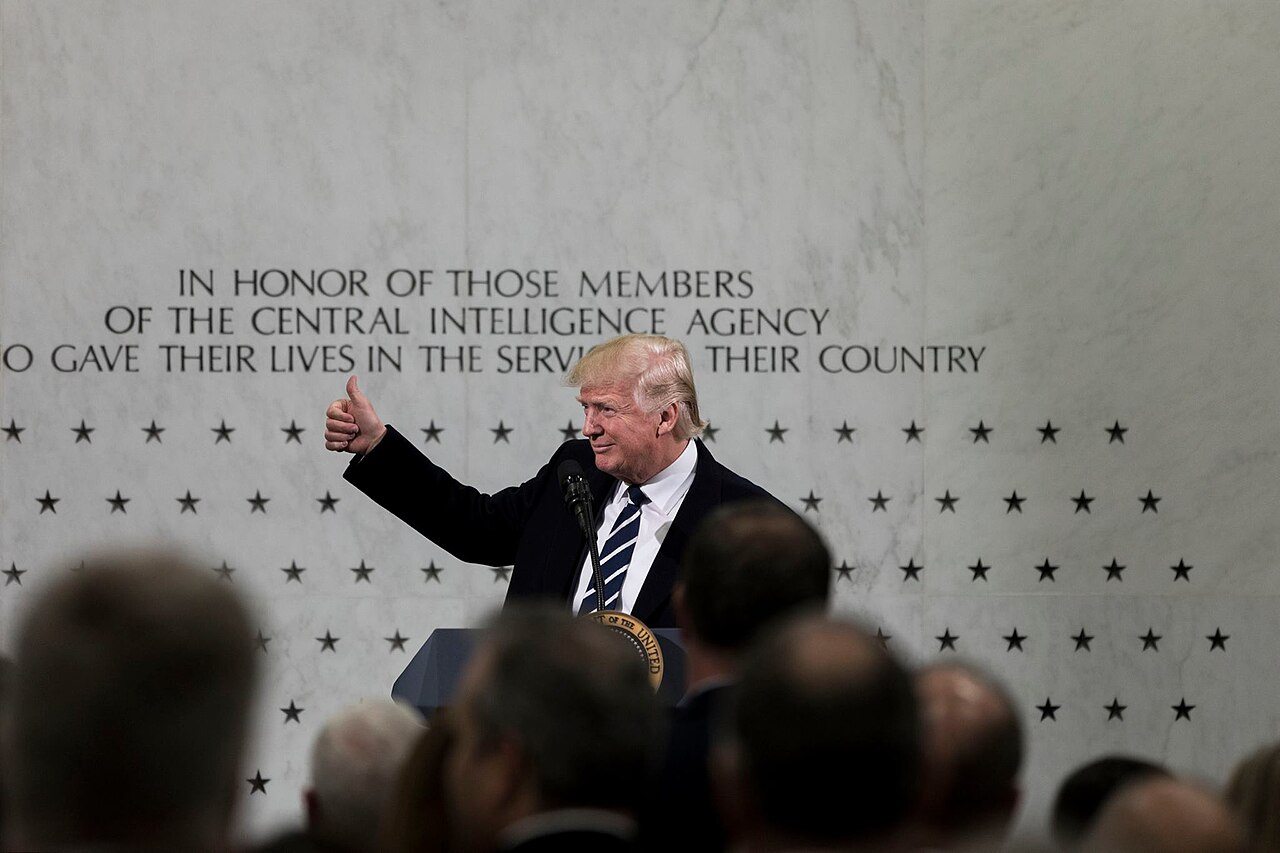
In the Headquarters atrium, across from the stars for officers killed in the line of duty, a verse is carved in marble: “And ye shall know the truth, and the truth shall make you free.”
That is what the intelligence community was built to deliver, and it can only be restored if we face the truth about what has occurred.