
Whiskey Rebellion as Precedent for Recent National Guard Deployments?
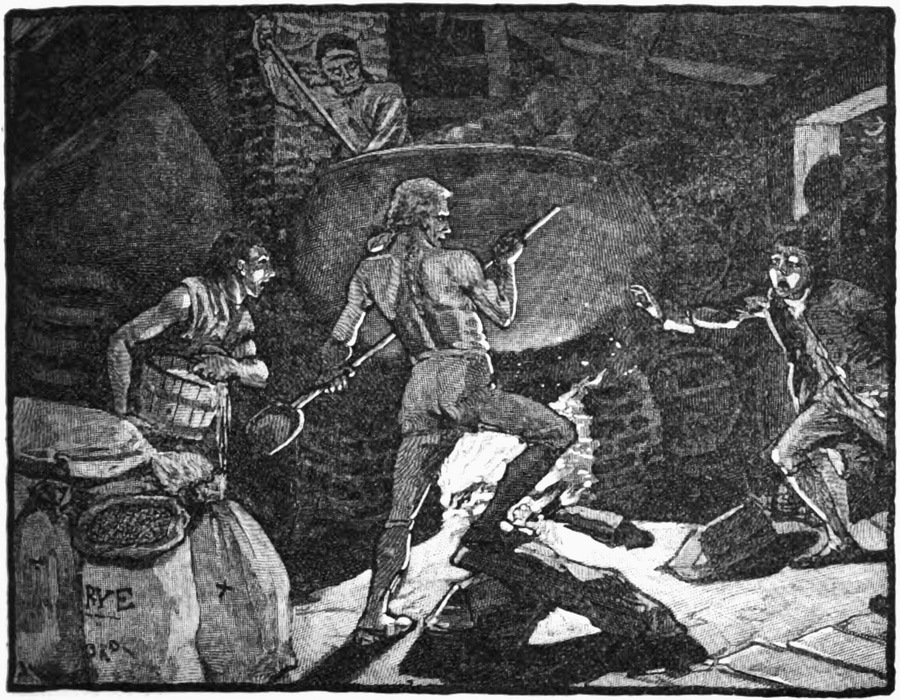

Is the Whiskey Rebellion good precedent from the founding for President Trump’s attempt to deploy the National Guard in Los Angeles, Portland, and Chicago? In this slew of cases, the most detailed judicial discussion of this late 18th century history appears in Judge Ryan Nelson’s concurrence in the U.S. Court of Appeals for the Ninth Circuit’s Oregon v. Trump, which upheld Trump’s federalization of the Oregon National Guard. The concurrence argues that deference by the Ninth Circuit to the president’s decision to federalize the national guard in Portland is “bolstered by the history and tradition of the early Militia Acts.” Nelson says modern statute § 12406 “carr[ies] the old soil with it” of the militia acts and its use in the Whiskey and Fries’s Rebellions. And in a more recent decision on the Portland deployment, the district court judge also invoked the Whiskey Rebellion.
In the three pending domestic-deployment cases—including the appeal on the Supreme Court’s emergency docket and the en banc appeal of Oregon v. Trump, in which Judge Nelson concurred—the courts should not repeat Nelson’s historical inaccuracies. The Whiskey Rebellion, as carried out under the 1792 Militia Act, is poor precedent for broad, unreviewable presidential power over domestic deployments for four reasons: (a) The Whiskey Rebellion adhered to a norm of deploying the militia only as a last resort; (b) the original law was hedged with multiple guardrails missing from the statute at issue today; (c) the protective power doctrine played no role in the militia’s deployment, nor was it even invoked as a possible legal authority; and (d) the 1792 Militia Act is not the parent statute for 10 U.S.C. § 12406, which descends from the Dick Act. Nelson grounds his opinion in the “old soil” of the 1792 Militia Act, but he fails to contend with the rocks and roots that once constrained unilateral presidential deployments.
The Whiskey Rebellion in the Portland Court Decisions
Judge Nelson asserts that the Whiskey Rebellion supports deference to the president’s determinations under the statute. To federalize the National Guard, the president has invoked 10 U.S.C. § 12406, specifically the provisions that permit federalization if “there is a rebellion or danger of rebellion” or the “President is unable with the regular forces to execute the laws of the United States.” In a separate case, also about the Oregon deployment, District Court Judge Karin J. Immergut also reaches back to the first Militia Act passed in 1792 to interpret terms such as “unable” and “rebellion.” She argues that when “employing a term of art obviously translated from another source,” the old meaning carries over to the new statute. Since § 12406 is a modern iteration or continuation of the 1792 statute, Immergut quotes from precedent that the current statute “brings the old soil with it.” Whether Immergut’s interpretation accurately captures the relationship between the two statutes is questionable, but understanding her logic is necessary to distinguish it from Nelson’s broader claim.
Judge Nelson also invokes the 1792 Militia Act and the idea of “bringing the old soil with it,” not to interpret the statute’s triggers such as “rebellion” but, rather, to support the idea of deference. In Newsom v. Trump, about the deployment of the military to Los Angeles, the Ninth Circuit’s majority opinion asserted and set the precedent that it must grant “a great level of deference to the President.” Nelson’s concurrence goes further. He argues that “when the President acts within the bounds of this historical tradition, it provides near irrefutable evidence of good faith lawful action. Indeed, it would satisfy an even less deferential standard to the President than the standard adopted in Newsom.” He then cites the Whiskey Rebellion as confirmation that such deference is warranted.
The Whiskey Rebellion
The Whiskey Rebellion was “the single largest example of armed resistance to a law of the United States between the ratification of the Constitution and the Civil War,” according to one of the leading historians of the event. In 1791, under then-Secretary of the Treasury Alexander Hamilton’s guidance, Congress enacted the new republic’s first broad federal tax on the production of a consumer good, specifically on distilled spirits like whiskey, to help finance the national debt. Resistance quickly coalesced in the backcountry of southwestern Pennsylvania (today’s Allegheny, Washington, Fayette, and Westmoreland counties). Violence began almost immediately: Mobs tarred and feathered federal excise collectors in 1791. Protesters also burned the inns in which excise officers were housed.
In the summer of 1794, the crisis escalated dramatically when the county’s district attorney obtained scores of writs summoning unregistered distillers to appear in federal court at Philadelphia. The service of warrants to unregistered distillers touched off armed attacks on the chief inspector’s mansion, culminating in a two-day shootout with multiple fatalities and the burning of the house. Insurgents then stopped the U.S. mail to identify opponents, mustered thousands in militia formation, and marched into Pittsburgh while threatening to burn down this “Sodom” unless leading officials of the whiskey tax were banished. They hoisted a new flag, invoked Robespierre, and even aired schemes for an independent western commonwealth.
Last-Resort Norm
Judge Nelson argues that the court must defer “when the President acts within the bounds of this historical tradition” of the Whiskey Rebellion. A key part of that tradition was that the militia should be used only as a last resort. Since President Trump is not adhering to that norm, the judiciary has no obligation to give him the benefit of the doubt.
Upon learning of a meeting in which a town had pledged to oppose the law through legal means, Hamilton, then serving as secretary of the treasury, advised the attorney general to press charges and then perhaps deploy the militia. Among the president’s advisers, Hamilton was the one most supportive of deploying the militia to enforce the tax he had designed. Yet even Hamilton paid at least lip service to the last-resort norm. In his letter to the attorney general, Hamilton wrote that “if the processes of the Courts are resisted, as is rather to be expected,” the government should “employ those means, which in the last resort are put in the power of the Executive.” According to Hamilton, this militia deployment, then, must occur only if the courts have failed and, even then, only as a “last resort.”
Rather than prosecute, Washington issued an informal proclamation in which he “most earnestly admonish[ed] and exhort[ed]” the protesters to “desist” from obstructing the operation of the laws. Hamilton had written the initial draft of the proclamation and had included a passage threatening to deploy the militia, but, on the advice of the attorney general that such a “charge to the military would inflame the country,” Washington removed any mention of the militia. At this stage, even the mere threat of military force was premature for Washington. Two days after issuing the proclamation, Washington wrote to Hamilton and reiterated the last-resort standard: “the employing of the regular troops [should be] avoided, if it be possible to effect order without their aid …. [I]f no other means will effectually answer, [the militia] must be used, in the dernier resort.”
Washington’s proclamation failed to dissuade the insurgents and the conflict intensified. On Aug. 4, 1794, Justice James Wilson certified that the president had the right to deploy the militia. But even with the permission of a Supreme Court justice, debate within the Cabinet focused on whether they had exhausted all other options. Letter after letter to Washington recounts, sometimes in exhaustive detail, the multiple efforts by law enforcement to quell the conflict. Meanwhile, Hamilton continued to push for deployment—and this time he was not alone. In the attorney general’s letter to Washington, he concluded that the executive was “reduced to the melancholy necessity of having recourse to the more efficient means ... by calling forth the militia. He seems to have no alternative left.” But at the same time, the attorney general warned that many militiamen might refuse to serve and instead pay the penalty “unless the public mind be satisfied that all other means in the power of the Executive have failed and that military coercion is absolutely necessary to support the laws.” He concluded that, therefore, Washington should issue another proclamation first, “defering the time of Assembling the Militia to a distant day.”
Because the last-resort threshold had still not been met, Washington again declined to send in the militia. He would try one last time to negotiate, but this time he prepared for the worst. He sent three “peace commissioners” to negotiate with the rebels. In the meantime, Washington issued the proclamation to disperse required under the 1792 statute, which remains part of the Insurrection Act today. He then readied the militia. In a private letter, the attorney general, serving as one of the peace commissioners, wrote that if their offer of a “full amnesty and oblivion of all that is past” should be refused, “the weight of the public opinion will give energy to the dernier resort.” Keeping to this approach, only once the commissioners’ negotiations had failed did Washington at last decide to send in the militia. Approximately three years elapsed between the first attack on an excise collector and Washington’s decision to deploy the militia
In present day, just three days after protests first broke out against immigration enforcement in Los Angeles did President Trump order the deployment of the National Guard, accompanied by the warning: “IF THEY SPIT, WE WILL HIT, and I promise you they will be hit harder than they have ever been hit before.” While court depositions indicate that the disturbances in Los Angeles were serious—with burning cars, pinned officers, and Molotov cocktails—their scale, violence, and intensity pale in comparison to the Whiskey Rebellion. The same disparity is true for Trump’s subsequent deployment attempts in Portland and Chicago. And Trump’s rhetoric has not invoked any last-resort constraint. Quite the opposite; Trump has celebrated the excessive use of force, most notably in his Truth Social post proclaiming that “Chicago [is] about to find out why it’s called the Department of WAR,” posted alongside a meme from “Apocalypse Now.”
The 1792 Militia Act
Given how radically different the 1792 Militia Act is from today’s analog statute, Judge Nelson’s claim that there is historical continuity between the Whiskey Rebellion and today’s deployment is difficult to sustain. As described below, the two statutes differ so substantially that it is unclear whether the 1792 statute can meaningfully serve as precedent for the statute at issue in today’s litigation. Especially important differences are the guardrails the 18th-century statute imposed on the president through Congress and the courts. Insofar as the 1792 Act is precedent, it cuts against the lawfulness of today’s deployments.
The 1792 Militia Act—also known as the “calling forth” statute—was the first statute that operationalized the constitutional power to deploy the militia domestically. It was the legal basis for George Washington’s leading of the militia to put down the Whiskey Rebellion. Under the statute, the president could call forth the militia when one of three triggers was present: (a) invasion or imminent danger of invasion, (b) an insurrection against a state government, or (c) an obstruction of the execution of the law “too powerful to be suppressed by the ordinary course of judicial proceedings, or by the powers vested by the marshals in this Act.” Note that obstruction of the laws in itself was not sufficient; only when the efforts of either the courts or the marshals to suppress the obstruction failed could the president send in the militia.
The statute’s guardrails for each trigger varied, with the most extensive applying to the third trigger of obstruction of the laws. For invasion, there were no special guardrails in the statute. For an insurrection, the president could not act without state permission. Notably, the statute reserved its most extensive guardrails for the obstruction of law trigger. One of the Anti-Federalists’ common charges against the Constitution was that it would turn the militia and the standing army into enforcers of the laws, creating a “government of force” and opening the door to military dictatorship. Furthermore, resistance to the laws is an easier trigger to invoke because it is an everyday phenomenon, far more common than invasion and insurrection.
The obstruction-of-the-laws provision had three guardrails absent from the statute recently invoked by the Trump administration. The first was judicial certification: An associate justice or the district judge had to “notif]y]” the president that the obstruction had become too powerful for the judiciary or the marshals to handle. The second was about use of the in-state militia: The president’s default choice should be the use of the militia of the state in which the obstruction was occurring. Only if the in-state militia, “where such combination may happen, shall refuse or be insufficient to suppress the same” shall it “be lawful for the President ... to call for the militia of any other state.” Third, the use of the out-of-state militia required congressional permission. If Congress was out of session, the president could call forth the militia, but such a call would expire 30 days after Congress entered back into session. Each of these three guardrails played a role in the Whiskey Rebellion, and each may pose a potential obstacle to the Trump administration’s current deployment efforts.
Guardrail 1: Judicial Notification
The first guardrail is judicial notification. Although scholars have highlighted this 1792 provision, the mechanics of how this step operated in practice have not been detailed.
Most importantly, what evidentiary burden does notification entail? Notification may sound like a purely administrative act with little discretion for the judge. Notification could have been, for instance, merely a heads-up or an alert to the judge. The text therefore raises a basic question: Did “notification” carry any evidentiary burden at all?
While the record is inconclusive about the exact standard, it’s clear that at least some showing was required. The Washington administration submitted five documents to satisfy the notification requirement:
- The report of federal excise inspector John Neville describing the July 16-17 attacks and burning of his home near Pittsburgh.
- The report of Maj. Thomas Butler (Army, Fort Fayette) on the armed, lawless climate and intimidation of federal officers.
- The report of Maj. Isaac Craig (Army, Pittsburgh) recounting the attack on U.S. Marshal David Lenox.
- A sworn deposition of Col. Francis Mentges discussing four different incidents to conclude that it was “entirely impracticable” to enforce the laws by ordinary civil or judicial means.
- A sworn deposition (now lost) of Post rider Thomas Gould on the July 26, 1794, robbery of the Pittsburgh-to-Philadelphia mail showing organized obstruction.
After receiving the documents, Justice James Wilson asked for evidence that the reports were authentic and received it shortly afterwards. Wilson issued the certification on Aug. 4, 1794, based on the “evidence, which has been laid before me.” His certificate was short, merely repeating the language of the 1792 statute.
In addition to what was submitted, the correspondence of key actors within the Washington administration makes clear that a substantive showing was required. Henry Knox, the secretary of war at the time, told Washington that whether the “evidence” submitted “is as such as the law contemplates ... will depend upon the opinion of Judge Wilson.” Edmund Randolph, the former attorney general and then-secretary of state, wrote to President Washington that a judge “ought not a priori to decide,” and he cautioned the attorney general “not to express to” Wilson “the most distant wish in the President, that the certificate should be granted.” Randolph also worried that the submitted “testimony is not, in my judgement, yet in sufficient legal form.” Lastly, Washington asked the governor of Pennsylvania to begin deploying the state militia under state law because certification by Wilson was uncertain and might take time. Washington told the governor that “the measures of the Gen’l Gov’t would be slow and depended on the certificate of Judge Wilson, to whom the document had been delivered for his consideration.” Note the language here of “certificate.” Whereas the statute’s language of notification sounds merely administrative, certification suggests an evidentiary burden and was used repeatedly by administration officials, more often than the statute’s own term of notification.
How much of an evidentiary burden was it? This record undermines the claim that the requirement was a mere “rubber stamp.” And it certainly rebuts the government’s assertion that judicial review of domestic deployments is constitutionally and categorically precluded. This account of the administration’s use of the 1792 statute supports Steve Vladeck’s conclusion, also drawing from the statute’s certification requirement that “there was no Founding-era aversion to a robust judicial role in these cases.”
But how robust? And how much of a check is the requirement for the judicial certification? One might be skeptical that it amounts to much. The evidence submitted of three reports and two depositions is not a lot. And the proceeding was ex parte; there was no chance for those who were against the military deployment to rebut the evidence. What’s more, the proceedings appear to consist solely of the submission of documents. One might analogize this to other ex parte proceedings such as obtaining a search warrant or a grand jury indictment where the standard is the low one of probable cause.
If the standard was this low, the Trump administration might well have satisfied it with sworn depositions from Immigration and Customs Enforcement (ICE) and other officials on the ground. By contrast, the Whiskey Rebellion was so large and notorious that its context likely informed Wilson’s judgment. In closer cases, the requirement might have made the evidentiary burden clearer—and revealed it to be more demanding than it first appeared.
Beyond establishing that judicial involvement is not categorically precluded, the 1792 notification requirement offers limited guidance for modern cases. It no longer exists—the 1795 statute eliminated it, and it never reappeared in later iterations of the “calling forth” laws. The difficulty of extracting lessons from this one-off 1792 requirement for modern doctrine, in the absence of an analogous provision in present law, only underscores how misguided Judge Nelson’s framework is. Examining how the 1792 statute operated remains useful in some respects, but it yields few concrete lessons about judicial deference.
Guardrail 2: In-State Militia
The second guardrail was that out-of-state militia could be used only if the in-state militia “shall refuse or be insufficient to suppress” the insurrection. The problem in 1794 was not refusal. Although the Pennsylvania governor called for greater moderation, expressed reluctance, and at times exasperated Hamilton, the governor repeatedly reassured Washington—sometimes apologetically—that he would comply with whatever the president decided. And indeed, the governor issued a proclamation calling for a “prompt and faithful compliance with the orders of the government,” and in the initial deployment Pennsylvania supplied the bulk of the militia forces: 5,200 of roughly 13,000. The remaining troops came from New Jersey, Maryland, and Virginia.
How, then, was the statutory requirement of in-state exhaustion formally satisfied? For Hamilton, as he explained in a letter to Washington, it was enough that the Pennsylvania governor had privately but “explicitly” told the president at a conference with key state and Cabinet officials that the militia of Pennsylvania alone would be “incompetent to the suppression of the insurrection.” For Hamilton, “this opinion of the Chief magistrate of the State is presumed to be a sufficient foundation for calling in ... the aid of the Militia of the Neighbouring States.” Hamilton’s embrace of such a low threshold is unsurprising: He was consistently the most eager to employ military force and prodded Washington in that direction.
Secretary of War Knox, by contrast, preferred a more formal and public declaration from the governor. He acknowledged that the governor had made a “verbal declaration that the Militia of Pennsylvania would be insufficient,” but he wanted that judgment in writing. Knox thought the process should begin with Washington, who would inform the governor “of the necessity of enforcing the laws” and then “request” the governor’s “opinion whether the ... Militia of Pennsylvania are sufficient [for the] purpose.” In that request, Washington was to indicate the number of troops he believed necessary, so that the Pennsylvania governor would have a concrete baseline for assessing whether Pennsylvania alone could supply an adequate force. Ultimately, it seems that Hamilton’s standard won out. There is no record of the governor publicly declaring an inability to quell the rebellion; in Washington’s annual message to Congress, Washington instead cited his conversation with the governor of Pennsylvania as proof and submitted to Congress executive papers, including Edmund Randolph’s testy letter to Mifflin (secretly likely written by Hamilton) documented the exchange.
A modern-day analog to this in-state exhaustion requirement would pose a substantial obstacle to the Trump administration’s attempts to deploy the Texas National Guard into Portland and Chicago. After Judge Immergut blocked the federalization and deployment of Oregon’s National Guard into Portland on Oct. 4, the administration attempted to circumvent the temporary restraining order by sending over 100 troops from California and Texas, prompting a second order from Immergut barring any federalized National Guard units from any state from deploying into Oregon. The purpose of sending the California and Texas forces was thus not, in the spirit of the 1792 statute, to secure additional firepower to quell an overwhelming disturbance but, rather, to exploit a perceived loophole in a judicial ruling. The administration also sought to deploy the Texas National Guard into Chicago, but of the three cities the case for the National Guard was weakest there: While in Los Angeles cars were set on fire and in Portland protesters shut down an ICE detention facility for three weeks, none of the protests in Chicago rose to a comparable level.
Guardrail 3: Congressional Permission
The third guardrail required congressional permission to use out-of-state militia. If Congress was out of session, the president could deploy the militia. Once Congress reconvened, however, any federalization of the militia would automatically expire 30 days later unless Congress affirmatively extended it. The Third Congress adjourned on June 9, 1794, and did not reconvene until Nov. 3 of that year. In the interim, on Sept. 25, 1794, Washington formally called into federal service the militias of New Jersey, Pennsylvania, Maryland, and Virginia—meaning congressional approval would be needed by Dec. 3. Four days before the deadline, Congress supplied that approval, authorizing the president to call out and station a corps of militia not exceeding 2,500 men in the four western counties of Pennsylvania.
Unlike the Whiskey Rebellion, the current deployments have occurred while Congress is in session. Would the present Congress approve President Trump’s deployment of the National Guard? Any answer is necessarily speculative, but the deployments are broadly unpopular, and it is plausible that moderate and retiring members of the Republican Party—in addition to almost all Democrats—would object.
The Protective Power
While President Trump’s attempt to federalize the National Guard is rooted in 10 U.S.C. § 12406, the Guard’s missions into cities themselves, however, appear to rest on the president’s claimed “protective power”—an asserted inherent authority to safeguard federal personnel, property, and functions (here, ICE officers, facilities, and operations). Proponents justify the protective power with the Take Care Clause of the Constitution, which states that the president must “take care that the laws be faithfully executed.” The main legal authorization for the deployment—a June 7 Presidential Memorandum—relies heavily on the protective power. The word “protection” is in the title and calls into service the National Guard to “under 10 U.S.C. 12406 to temporarily protect ICE and other United States government personnel who are performing Federal functions … and to protect Federal property[.]”
As Chris Mirasola notes, there is little evidence that the founders recognized such a freestanding authority. My in-depth review of the Whiskey Rebellion record supports that conclusion. In the official materials—Washington’s proclamation to call out the militia, his address to Congress, and Justice Wilson’s certificate—the primary legal basis invoked for initial deployment and its extension was the 1792 militia statute. More strikingly, in Cabinet debates and correspondence, no one even floated a protective-power theory as independent legal ground for deployment. To be sure, participants referenced that the president had a duty to execute the laws, but it served as a rhetorical flourish. Its most formal role was supporting Washington’s early proclamation urging compliance. Because the Trump administration grounds its actions in the protective power, it departs from Washington’s approach that Judge Nelson claims if followed would warrant special judicial deference.
10 U.S.C. § 12406, the Militia Acts, and the Insurrection Act
What’s more, the 1792 Militia Act is a weak—or irrelevant—precedent because it is not the parent statute for 10 U.S.C. § 12406. The parent statute is the 1903 Dick Act, as amended in 1908. The Dick Act was an effort to modernize the National Guard, as discussed in Martin Lederman’s amicus brief in the pending Supreme Court case of Illinois v. Trump. And while there has been a long history of domestic deployments, including the Whiskey Rebellion, there has been only one plausible case of federalization under § 12406 with the great postal strike of 1970. Thus, it is the Dick Act’s history and implementation—not the 1792 Militia Act—that should be the immediate focus of any historical inquiry into § 12406.
Both 10 U.S.C. § 12406 and the 1792 Militia Act operationalize Congress’s power under the Constitution to legislate the conditions for deploying the militia or National Guard. Yet the logic of those conditions varies dramatically. While I have already noted the differences in safeguards, a second key difference concerns the scope of law enforcement authority.
The true descendant of the 1792 Militia Act is the collection of statutes known as the Insurrection Act. When invoked, the Insurrection Act authorizes the president to deploy either the National Guard or active-duty troops on American streets. And while the Posse Comitatus Act normally forbids law enforcement by active-duty troops, the Insurrection Act is an exception. Under it, the president may direct members of the military to engage in law enforcement, including seizures, detentions, and arrests. That is effectively what Washington used the militia to do during the Whiskey Rebellion: not only to put down the uprising but also to capture participants and bring them into the criminal process.
By contrast, that is not the function of 10 U.S.C. § 12406, because its lineage is different. Although § 12406 gives the president the power to federalize the National Guard—and those federalized units may be used for protective or security duties—few would likely contend that it authorizes them to perform general law-enforcement functions.
***
The Whiskey Rebellion is an awkward precedent for the broad deference Judge Nelson envisions, but it is also too simple to claim that Washington’s actions established a single, coherent tradition of restraint. For one, the statutory frameworks are dramatically different. And if the Whiskey episode reflects a last-resort model, Fries’s Rebellion, just five years later, points the other way. Like Whiskey, Fries arose from resistance to the enforcement of a federal tax, a tax on houses that required collectors to enter and count the windows of each house. But this time the resistance was small scale, and the 1795 “calling forth” act had fewer guardrails. The federal response was hasty and disproportionate: Within five days of an armed crowd forcing a U.S. marshal to release arrested tax resisters, President John Adams invoked the 1795 act and issued a proclamation ordering the insurgents to disperse. Even after they promptly complied by the dispersal deadline, Adams still sent troops and militia into eastern Pennsylvania; the force met little resistance but supplied treason prosecutions that produced multiple death sentences before he ultimately issued pardons. This rapid troop deployments under a more permissive statute and a readiness to treat relatively mild defiance as a national security threat resemble the Trump administration’s recent National Guard activations far more than Washington’s slow, lawyerly march to the frontier in 1794.
Fries thus complicates, rather than clarifies, the historical picture. Nor do Whiskey and Fries exhaust the field. In the republic’s first 25 years, federal officials also deployed the militia against embargo resisters, a slave uprising, and even Aaron Burr’s conspiracy. Mapping a true historical practice would require far more sustained research than a concurrence on the emergency docket (or a brief article) can provide. But insofar as one cites Whiskey, the better reading points in the opposite direction of the current administration: away from deference and toward restraint on the president’s actions.
-(2)-(2)-(1).jpg?sfvrsn=21cee67a_7)

.svg)