Why ‘Yalta 2’ Is Exactly the Right Analogy for a Trump-Putin-Xi Summit
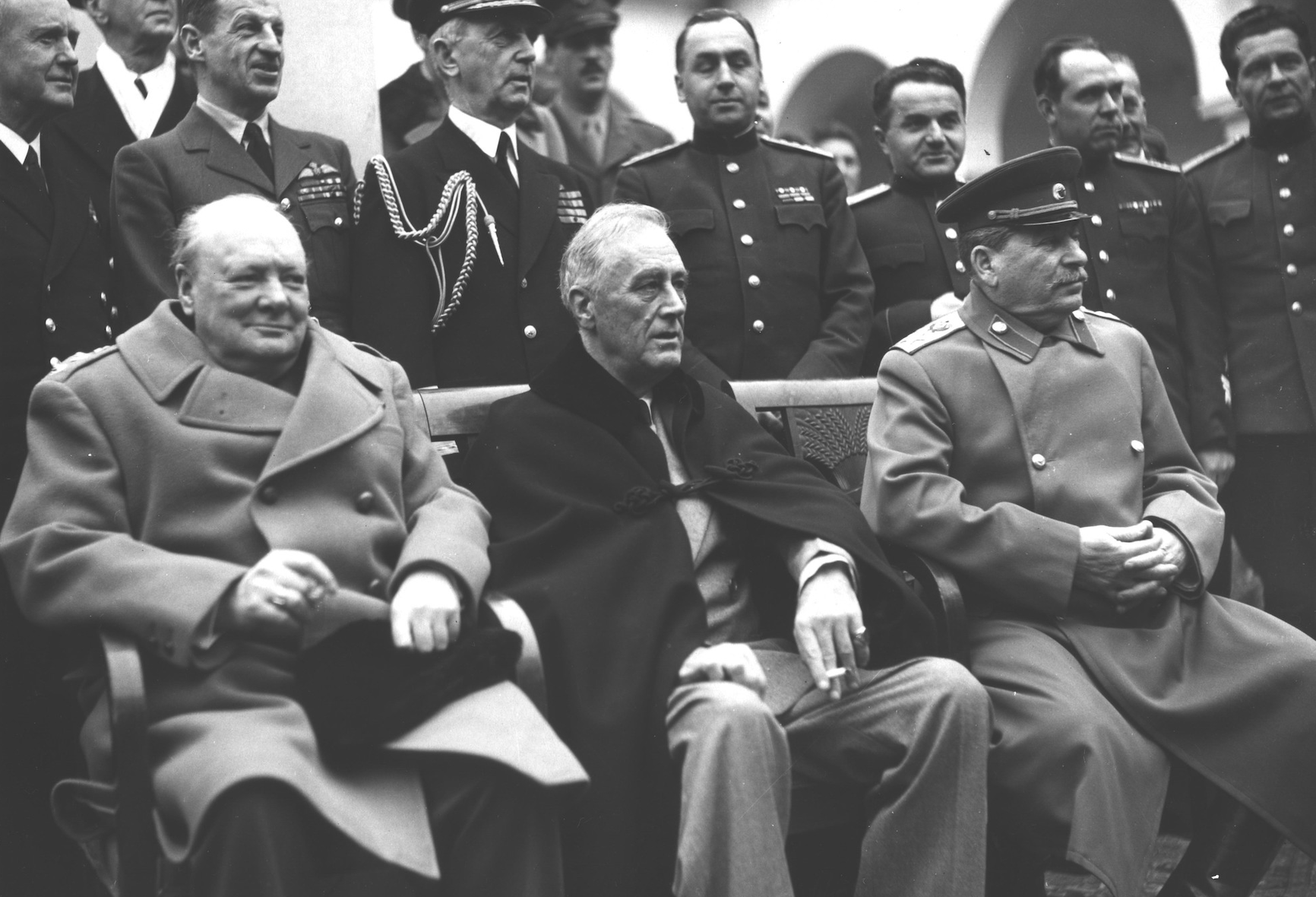
Since news outlets began reporting on Russian President Vladimir Putin’s proposed trilateral meeting with Presidents Donald Trump and Xi Jinping on the sidelines of the November Asia-Pacific Economic Cooperation Summit in Shenzhen, commentators have dubbed it “Yalta 2.” It is unclear how familiar Trump is with the substance of the original Yalta conference, but the image of three of history’s most powerful leaders meeting to shape the world order may well hold some appeal. Whether Putin dubbed the proposed trilateral discussion “Yalta 2” himself is ambiguous from the original reporting, but wherever the term originated, it is a name he, too, will no doubt want to stick, as Yalta 1 turned out pretty well for his predecessor, Joseph Stalin.
On its face, declaring Shenzhen “Yalta 2” is an awkward analogy. Yalta was a meeting of World War II allies, not adversaries—though the Soviets would soon become such. As the Wall Street Journal Editorial Board recalls, Yalta is also colloquially understood as the moment the three Allied leaders carved up the world into spheres of influence, though that is not exactly the case. This idea originates in the “Percentages Agreement” drawn up between British Prime Minister Winston Churchill and Stalin while scribbling on a scrap of paper in Moscow in 1944, not at Yalta.
And yet, at a deeper, far more concerning level, Yalta may accidentally turn out to be exactly the right analogy for a summit among Trump, Putin, and Xi in November, particularly amid lapses in intelligence sharing between the U.S. and Ukraine and Trump’s decision to lift some sanctions on Russia, clear signals that the White House’s well of support for Ukraine may soon be running dry.
For those who have not thought about wartime summits since their high school history class, the Yalta Conference, held in the Romanovs’ former summer palace on the Black Sea in Crimea (territory Russia annexed in its 2014 invasion of Ukraine), was the final meeting of President Franklin Delano Roosevelt, Churchill, and Stalin in February 1945. The three men met to discuss four pressing objectives: the future of Germany following its impending defeat, the Soviet Union entering the war against Japan, the establishment of the United Nations, and, crucially, free elections and self-determination in Poland. France was not invited to Yalta despite being the continental European counterweight to and key neighbor of Germany, nor were representatives of the Polish government-in-exile.
To many, “Yalta” is synonymous with the “sellout” of Eastern Europe—specifically Poland—to Stalin. However, it was not a sellout as commonly understood. The reality on the ground was more complicated. Months before the three leaders laid plans to meet in Yalta, the Red Army had taken firm control of Poland following the failed Warsaw Uprising in the summer of 1944. The Soviets had sat comfortably on the other side of the Vistula River as the Nazis crushed Polish resistance fighters, patiently waiting to swoop in and pick up the pieces after a grueling clash between exhausted enemies. By February 1945, removing the Soviets from Poland would have required expulsion by force, and Britain did not have the strength, and the United States did not have the desire to force them out. But the “sellout” aspect of Yalta has far more to do with the overall attitude of the United States toward Eastern Europe in the future postwar world.
For centuries, Russia has been paranoid about vulnerability on its western flank. The flatlands of Poland and Ukraine once served as the pathway of invasion for Napoleon and Hitler, as there are no mountains, deserts, or oceans to offer Russia natural protection. Lining the western border with a buffer of vassal states was an existential strategy for security-obsessed Russian leaders from the tsars to Stalin throughout the 19th and 20th centuries, but it is a pretext for 21st-century empire building for Putin today.
Though comparisons between the revered President Roosevelt and lambasted President Trump may be uncomfortable, some do exist and are crucial to understanding this analogy of Yalta 2. Roosevelt is rightly admired for many aspects of his presidency, but his understanding and handling of Stalin and the Soviet Union, especially at Yalta, should serve as a warning as Trump contemplates a summit with Putin and Xi.
Roosevelt’s clearest failure at Yalta was in the direct signal he gave Stalin for his overall disregard for Eastern Europe, and especially Poland. Though Roosevelt was extremely ill at Yalta and would die just two months later, his lack of understanding and concern for the strategic position of Poland was well formed long before. When the subject of the beleaguered country arose during the Tehran Conference in 1943, Roosevelt callously quipped that he did not “care two hoots about Poland,” and instructed his adviser, “Wake me up when we talk about Germany,” before pretending to fall asleep. In May 1944, he told his ambassador to the Soviet Union, W. Averell Harriman, that he “didn’t care whether the countries bordering Russia became communized,” as the issue made little impact on American public opinion, a key consideration during an election year. On the way to Yalta, Roosevelt barely touched his briefing materials prepared on the subject. Nor did he bring Soviet experts to this vital summit. As he previously told Churchill in 1942, “[B]eing brutally frank … I think I can personally handle Stalin better than either your Foreign Office or my State Department. … He thinks he likes me better.” (Among the very small handful of State Department personnel Roosevelt brought to Yalta, whom he generally believed would “ball it all up” in his negotiations with Stalin, he did inadvisably include Alger Hiss, later revealed to be a Soviet spy.)
At Yalta, Roosevelt went even further. For example, during an intense debate between Churchill and Stalin over Poland’s right to self-determination and its future government, Roosevelt undercut Churchill’s advocacy for a democratically elected Polish government, dismissing the prime minister’s argument and stating aloud to all three delegations that Poland “has been a source of trouble for over five hundred years,” essentially ending the conversation. Roosevelt could not have been clearer that Polish sovereignty was of little consequence compared to the conference’s other priorities, apparently more immediately relevant to President Roosevelt and the United States. As Britain tried to advocate for the right to self-determination in Eastern Europe in the brewing clash between communism and democracy that hung just over the horizon, Roosevelt and the United States completely missed the impending global realignment and hung their closest ally out to dry.
Vladimir Putin is a keen student of history, particularly of a revisionist variety. He knows his nation’s history deeply and has, for the past 20 years, appealed to history and the “genuine tragedy” of the collapse of the Soviet Union, which he has long called the “greatest geopolitical catastrophe of the century.” A Yalta 2 is his opportunity to restore at least a piece of the Russian-Soviet empire that Yalta 1 helped to usher into existence thanks to American acquiescence to Russian authority over territory in which its soldiers had their boots firmly on the ground: In February 1945, it was the beginning of American acquiescence to Soviet-installed leadership in Poland in a reversal of its long-standing commitment to the democratically elected Polish government that had been in exile since 1939. And in November 2026, it is likely, at minimum, acquiescence to Russia’s asserted authority over the Donbas region and formal recognition of Russia’s 2014 annexation of Crimea.
If history is to repeat itself, or even faintly rhyme at a Yalta 2, it will no doubt come in the form of the president of the United States once again making it clear, perhaps this time unequivocally, that the sovereignty of Eastern European nations that share the United States’ fundamental belief in the right to self-determination and democratic governance is of no interest or real concern to the supposed leader of the free world. This is exactly what Putin wants and, like Stalin before him, may very well extract from an American president choosing to be callously blind to Russia’s historic agenda.