
Lawfare Daily: Corruption, Coverups, and Crisis in Domestic Ukrainian Politics
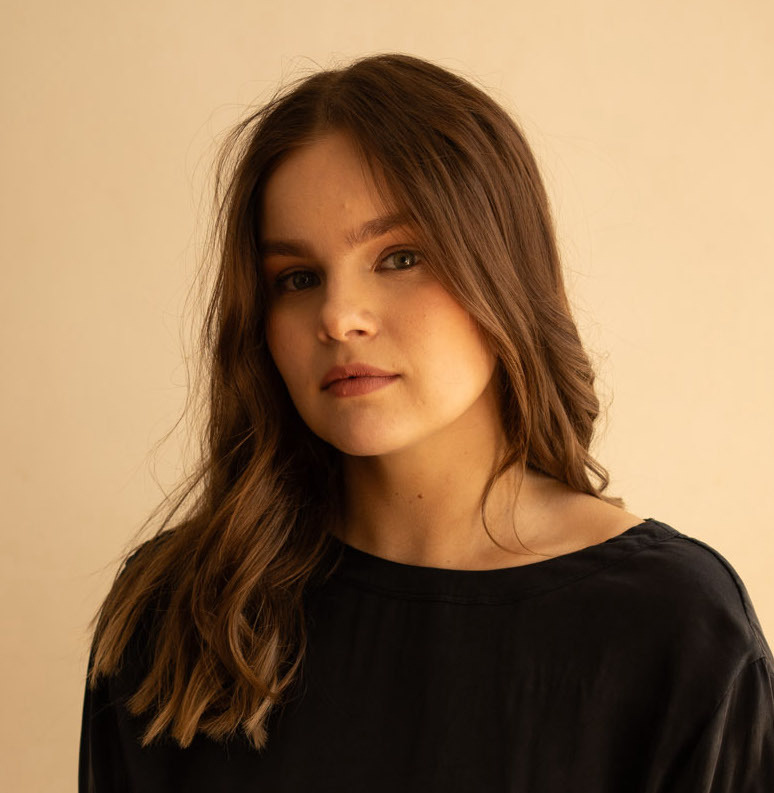
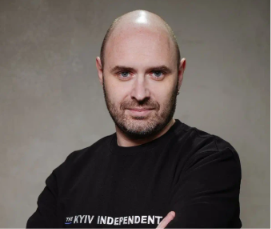
Ukraine Fellow Anastasiia Lapatina sits down with Danylo Mokryk, a war crimes investigator at the Kyiv Independent and the author of a YouTube blog about domestic Ukrainian Politics, to talk about the latest corruption saga engulfing the Ukrainian government—and why, despite so many arrows pointing toward Zelensky personally, no one is calling for his removal.
To receive ad-free podcasts, become a Lawfare Material Supporter at www.patreon.com/lawfare. You can also support Lawfare by making a one-time donation at https://givebutter.com/
Click the button below to view a transcript of this podcast. Please note that the transcript was auto-generated and may contain errors.
Transcript
[Intro]
Daniel Byman: Hi, I'm
Daniel Byman, the foreign policy editor of Lawfare. I'm the guy on the Lawfare
team who knows nothing about law, but still gets to call himself an editor.
What makes me proud to work at Lawfare is the way we provide nuanced,
and I hope provocative, coverage of complex national security issues and go
deep in ways that other news sources do not.
From wars overseas to pressures within the United States, the
stakes for national security and the rule of law are immense, and understanding
these issues is essential. Lawfare is a nonprofit. We always keep our
content free and don't have paywalls, and we rely on people like you to keep
this work going.
I urge you to join our growing Lawfare community, a
network of smart, informed people who care about national security, just like
you. Please go to lawfaremedia.org/support and become a material supporter.
Just ten dollars a month, or more if you're able, really makes a big
difference. If Lawfare is something you rely on, we hope you'll be part
of sustaining it.
Danylo Mokryk: She
apparently knows about him and about his role in this whole process, and this
leads strongly to believe that while President Zelensky was, was at least
through his bodyguard implicated in, in all of this.
Anastasiia Lapatina:
It's the Lawfare Podcast. My name is Anastasiia Lapatina, Ukraine fellow at Lawfare,
with Danylo Mokryk, a war crimes investigator at The Kyiv Independent and the
author of a blog about domestic Ukrainian politics, Mokryk.
Danylo Mokryk: You
know, when, when, when it comes to Ukraine, Ukraine's interests in the state of
war as a country, he is doing a decent job about it, and we don't know that
someone would do it better if he was removed. Okay? We know that there would be
instability, but when it comes to internal Ukrainian politics, well, Zelensky
is very problematic.
Anastasiia Lapatina:
We spoke about the latest corruption saga engulfing the Ukrainian government
and why despite so many arrows pointing towards Zelensky personally, no one is
calling for his removal. We are recording this conversation on Thursday, May
14th, and something quite extraordinary happened today. The former chief of
staff to President Volodymyr Zelensky, the once notoriously powerful Andriy
Yermak, was taken into custody after being charged with money laundering, and
those charges come almost six months after Ukraine's Anticorruption Bureau
first searched Yermak's home back in November.
And back then, the bureau, which we in Ukraine call NABU,
announced that it uncovered a large corruption scheme, mainly in Ukraine's
energy sector, and those revelations became an enormous scandal in Ukraine
because the scheme implicated senior government officials, including associates
of the president, and Yermak was actually forced to resign as a result of that
scandal.
And so we're gonna talk about all of this today about the
corruption scandal, its recent developments, and also about the overall
political environment in Ukraine. But I wanna start us off with the beginning
of all of this saga back in November. So Danylo, could you just remind us what
was the substance of that initial Anticorruption Bureau's case, and why was it
such a huge deal in Ukraine?
So much so that, you know, this case is being called the
biggest in Ukraine really in decades.
Danylo Mokryk: Well,
let me start by saying still that all of this is unprecedented for Ukraine. We
are talking about the three people, the closest people to, to the President
Zelensky. He's not only his political allies, but his friends, his close
friends that are being charged with corruption.
We are talking about Andriy Yermak that you mentioned, about
Timur Mindich, and about Oleksiy Chernyshov. This is important because this
means that it is possible in Ukraine for the closest people, the most powerful
people in Ukraine, to be charged with corruption, and they are not protected
from spending time in jail as, as Andriy Yermak is set to spend at least this
night in jail 'cause no bail has been provided yet for him.
It all definitely started last year, last November. Well,
officially it started last November when the National Anticorruption Bureau,
they announced that they uncovered a large scale corruption in Ukrainian energy
sector. And this scheme large scale scheme was apparently led by Timur Mindich,
one of the president's closest friends, the person that provided...
They celebrated their birthdays together, okay okay. In 2021,
President Zelensky celebrated his birthday at Timur Mindich's, Mindich's
apartment. He was his business associate in Kvartal 95 which is the, the, the,
the comedy production enterprise that Zelensky headed before before becoming
president.
Already this was a shock, and it did send shock waves through
the whole Ukraine, Ukrainian political sphere. And it ultimately led, and quite
quickly to dismissal from office of Andriy Yermak who for six years seemed all
powerful, almighty, and actually was dubbed vice president by all Ukrainian
political journalists.
So this is when it all started, but we started hearing rumors
about Timur Mindich's apartment being wired and listened to by the National
Anticorruption Bureau way before like in summer I guess, or even in spring. We
started getting rumors, well, that he was listened to, and that there were a
lot of tapes proving that President Zelensky's closest people were implicated
in large scale corruption.
Anastasiia Lapatina:
And the corruption we're talking about, it's not extremely relevant to our
conversation today, but I'll just mention it for the listeners who maybe
haven't followed it super closely. It's about this scheme related to a
state-owned company that controls all of Ukraine's nuclear energy plants. And
according to NABU, this criminal group of which Mindich, Zelenskyy's business
partner, was sort of the ringleader, the, the leader of this group.
They instituted this system of kickbacks where any company that
was providing any, right, services to Energoatom, to the state-owned company,
had to pay, like, an extra 10 or 15 or 20%, right. Or risk losing the supplier
status, which, correct me if I'm wrong, Danylo, but it's kind of a very common
sort of type of corruption system, scheme.
Danylo Mokryk: Yes. It's, it's a very common system at
state-owned companies in Ukraine. Yes.
Anastasiia Lapatina: So that was the nature of the case,
right?
Danylo Mokryk: I am
not very familiar with how corruption in different sectors work let's say in
the EU countries or in the U.S. You know, I get some some investigations here
and there, but I, I don't know what's really typical in other countries.
But in Ukraine, this, what you described and what, what thr National
Anticorruption Bureau uncovered in this case, is really really typical. Like,
those kickbacks from from, from state companies, from state-owned companies, is
something that you... I- it's maybe it's the main type of corruption that you,
that you get in Ukraine.
Anastasiia Lapatina:
And Mindich is not, he doesn't hold any sort of political office, right? He's
just a private citizen who has all of this access allegedly through his
friendship with Zelenskyy, right?
Danylo Mokryk:
Exactly. And that is one of the most striking things about this whole scheme,
that Timur Mindich he, he, he, he certainly does not hold any official
position.
All the influence he has is actually provided by his close
relationship with President Zelenskyy. Like, officially, he's more or less no
one.
Anastasiia Lapatina:
And he wasn't even very well known before all of this, right? Like, I- Like,
no, no, I've heard of him for the first time maybe a few months before NABU's
investigation. Like, he wasn't a very popular figure, right?
Danylo Mokryk: He
wasn't. One of the, the, the key investigative reporters in, in, in this story
Mykhailo Tkach started talking about Mindich exactly in 2021 when this whole
story about Zelenskyy celebrating his birthday at Timur Mindich's was
published. But before that, I do not believe that I heard about him either.
And, I think that when this name appeared for the first time in
2021, I did not even, like, you know, pay a lot of attention to it. Okay, it's
his business friend. Okay, it's his business associate. Okay, it's his close
friend. So what? You know. It's only, well, now that we learn about the
influences, the different influences of this person because his, his in- he
talked, he met with ministers.
It's not that he gave orders to those ministers, but he gave
them advice. He helped them to resolve different issues also related to some
degree to this scheme with President Zelensky. On one of the tapes he actually
messages Zelensky during his conversation with then minister of energy sector
Herman Halushchenko, and reads his response, Volodymyr Zelensky's response.
So, yeah, this is how it worked. And at one point, he also says
that president's chief bodyguard, Maxim Donets, a figure quite popular on
TikTok, was about to, to, to come to meet him. So obviously this leads us to
think that the bodyguard was running some errands for President Zelensky too.
He was meeting with Medvedchuk on behalf of President Zelensky.
Anastasiia Lapatina:
We're gonna get to that, definitely. I have several questions. Mm-hmm. I think
that may be the most important part of our podcast episode today. But I wanted
to ask about Yermak. You mentioned, of course, that he was let go as the, as,
as a result of, of these revelations back in November. But why was he forced
out if legally back in November he wasn't yet implicated, right?
So NABU searched his home, and he was let go, you, you know,
almost immediately after the searches. But why was there this pressure on
Zelensky to let go of Yermak if his name didn't, if he himself wasn't charged
with any crime yet?
Danylo Mokryk: Well,
because the way the Ukrainian politics work, for, for the whole of of, of, of
Zelensky's term in general such a large scale scheme would not be possible
without at least sanctions from the president's office and from the head of the
president's office.
Andriy Yermak was Zelensky's main manager. He was charged
actually with appointing all of the main officials in Ukraine, including the
heads of state companies, state-owned companies. He was controlling the, the,
the Basically the whole state sector. So it was not possible for such a scheme
logically, naturally to exist without Yermak at least knowing about it and
allowing it.
And it was so, so obvious that even a lot of members of
parliament from Zelensky's own party were privately calling for Yermak's
dismissal. And the pressure, the political pressure started to, to, to, to grow
so quickly and became so intense that it was impossible for Zelensky to, to
hold on to Yermak.
Although it is very typical of Zelensky to try to protect his
own, his pack, as long as he can. Okay? This is something that he does, that he
always did. And I think that he just did that because he could not try to
protect Yermak any longer. It is very common in Ukraine to fire officials, top
officials before they get charged with a crime.
Okay? This is something that we, that, that we see all the
time. For some reason, they think, the government thinks, Zelensky thinks that
if an ex-minister is being charged, it is not as grave as an acting minister
being charged. In his mind, in their minds, an ex-head of presidential office
being charged is somehow less shocking than an actual acting head of
president's office being charged.
Anastasiia Lapatina:
So let's talk about Yermak's charges. He was charged with money laundering, and
basically the charges as, are, that he was laundering millions of dollars, I
think it's, it's nearly $4 million, to build-
Danylo Mokryk: Yeah
Anastasiia Lapatina: -this luxury compound kind of thing
near Kyiv. So can you just explain the nature of the charges?
Danylo Mokryk: So the
story is, the main story here is about four houses a comp- a compound of four
houses being built near Kyiv. And it is assumed that those houses should belong
to President Zelenskyy, Andriy Yermak, Oleksiy Chernyshov, and Timur Mindich.
They should, the four of them are supposed to be neighbors in, in, in that
sense.
Anastasiia Lapatina: And
you say assumed because there was, there
was a number of media investigations by your colleagues.
Danylo Mokryk: Yes,
there was that, alleging that And, well, it, it, it kind of, it kind of
transpires from all those tapes that we heard from, from the official tapes
published by the National Anti-Corruption Bureau, but also by some parts of
those tapes leaked to to investigative journalists that seem to be, like, true
and real tapes.
Okay? They, they are, they, they do check out with with the
rest of them. So, Yermak is not being charged with being part of the corruption
scheme himself. So he's not being charged with let's say, stealing money or
getting bribes. He is charged with being one of the facilitators that allowed
laundering of that corrupt money in the process of building of those four
houses, of his house.
This is, this is basically the story. He's charged with m- m-
money laundering not with you know, with the original crime, but with the
follow-up crime, let's say.
Anastasiia Lapatina:
Right. But the, the, the money that he is allegedly, he was allegedly helping
to launder, at least a portion of that has probably come from state-owned-
Danylo Mokryk: Most
of that
Anastasiia Lapatina:
companies. Right. Yeah. Yeah. Okay. So it's, you know, stealing, basically
stealing taxpayers' money.
Danylo Mokryk: Yeah,
but the he is not being charged with that. He's not being charged with
stealing. He's charged- You're right. You're right ... with money laundering.
Yeah. This is important because, you know, there is, there are things that the
National Anti-Corruption Bureau and the, the, the Special Anti-Corruption
Prosecutor's Office believe that they can prove, and they lead with that So,
they are not- Right
charging them with something that they think may fall apart in
a court of law. They think that this part of their investigation is solid, so
they lead with that. They focus on that.
Anastasiia Lapatina:
Right. So it's not that they're saying he wasn't stealing the money. Yeah,
yeah. They're saying, "Right now we can't prove that he was-" Yeah "and
this is what we can prove." They say, they are saying, "We can prove
this."
Danylo Mokryk: Right.
"And this is enough." Okay.
Anastasiia Lapatina:
Yeah. So the four houses that you mentioned, they're known in Ukraine as the
Dynasty Cooperative. Right. And th- that's also the official name, allegedly,
according to, you know, the information released by NABU.
So these four friends, Timur Mindich, President Zelensky,
Oleksiy Chernyshov, who is a close family friend of Zelensky's, and also
Ukraine's former deputy prime minister, one of the highest ranking officials in
the country, and Andriy Yermak. So those four people, allegedly, according to
NABU and according to the investigations, were building these four homes.
Danylo Mokryk: Let me
point out that they, they do not say that President Zelensky is implicated.
Anastasiia Lapatina: Right. You're right. They actually
can't say that. Actually, they say, they, yeah, they, they actually say that he
is not being investigated, and this is, like, legally right.
Danylo Mokryk: Yes. Because in Ukraine, the president
has immunity from criminal investigations, so he cannot-
Anastasiia Lapatina: Which is standard practice
Danylo Mokryk: be investigated. Yeah. He cannot-
Anastasiia Lapatina: Yeah
Danylo Mokryk: be investigated.
Anastasiia Lapatina: So
NABU doesn't actually have jurisdiction over a sitting president, yeah.
Danylo Mokryk: Right.
So they are not saying that he is not part of the scheme. They are saying,
"We are not investigating him," and this is, like, very important to
understand the dis- distinction between the two
Anastasiia Lapatina:
Right. So this leads into my next question, which is, you know, the obvious
question coming out of this, you know, all these recent developments is, well,
was President Zelensky aware of all of this, or also is he, is he taking part
in all of this? And I think, as you already alluded to, you know, there are
kind of several ways of answering that.
Right. So on one, you know, from one side you can say legally,
you know, Zelensky has not and cannot be implicated because he has presidential
immunity and because NABU doesn't have jurisdiction over him. So, you know,
they just cannot investigate any of his actions right now. But there is another
way of looking at that, which is that there has been reporting, pretty strong
reporting, suggesting that Zelensky was in fact involved in these schemes.
Right. And I'm talking about this kind of astonishing leak that
happened several weeks ago where a bunch of previously undisclosed case files,
files from this exact investigation-
Danylo Mokryk: Right
Anastasiia Lapatina: -were leaked to a, a top Ukrainian
media outlet, Ukrayinska Pravda, and also several opposition lawmakers. And so
the files were the transcripts of the conversations that NABU wiretapped
between Mindich and a bunch of his associates.
So basically journalists got hold of, like, hundreds of pages
of these transcribed conversations and started publishing them. And so there is
a part of those conversations that mentions somebody named Vova, which is a
diminutive- Which is short for, for Volodymyr for Volodymyr which is basically
what, what President Zelensky goes by among friends and family.
And so can you just explain the context in which this
mysterious Vova is, is evoked in the conversations? So, yeah. And what do you
make of it?
Danylo Mokryk: So
Vova is mentioned a few time as one of the owners. Or as the owner of one of
the houses in this dynasty compound on those tapes. And there is another
episode that, well, leads us to strongly suspect that he was well implicated,
that the president was implicated in in that scheme.
At one point, Timur Mindich meets a a woman named Natalia. She
was mentioned and her identity was uncovered in the recent court proceedings
against Andrii Yermak already. So she was charged with you know, the
construction and design of those houses. And when Mindich meets her and starts
talking to her about freezing actually the construction because of some
problems that they encounter, he says, "Well, at 1:00 PM, Maksym Donets
will come."
Maksym Donets is the chief bodyguard of Volodymyr Zelensky. And
what is important here is that he does not explain to this woman charged,
again, with the, with the, the construction and design of those houses. He does
not explain who that is, and he does not explain why he'd come, and she does
not ask those questions either.
So she apparently knows about him and about his role in this
whole process, and this leads strongly to believe that, well, President
Zelensky was, was at least through his bodyguard implicated in, in all of this.
Maksym Donets is, is the same famous bodyguard that you can see near Zelensky
almost every time that he, you know, goes to to any public place.
So it is someone who is very close to Zelensky as well. And
it's hard to imagine, you know, him having free time at 1:00 PM during a
workday just to meet for his own personal reason with Timur Mindich or the, the
aforementioned Natalia. So this is, this is something that, that, you know,
makes me conclude that, well, they. President Zelensky was at, at least, at
least it was all coordinated with him.
Anastasiia Lapatina:
It's worth mentioning that when NABU charged Yermak just a few days ago, they
released a video in their kind of typical, as of recently, NABU Netflix type
fashion, ma- making their case and presenting some of their evidence about the
charges against Yermak.
And so they released some of those wiretapped conversations
that perfectly match the leaked transcripts suggesting that they are in fact
authentic. Yes. And so that means that at this point we have, you know, several
investigations done by credible Ukrainian investigative journalists alleging
that the four houses are for these four men, including Zelensky.
We have these recent leaks where a certain Vova is evoked. I
mean, we should probably say there is not really another top senior official in
that circle also named Volodymyr. I cannot think of one. There is not some
other obvious Vova that you could point to. Right. And so at that point, what I
find really striking is that Zelensky actually hasn't said a word about any of
this.
Danylo Mokryk: Yeah.
Anastasiia Lapatina:
He hasn't, he hasn't actually denied any of it. He hasn't scapegoated some
other Vova. He hasn't said that the leaks are, you know, are fake. Like, he's
just pretending like this isn't happening. Why do you think that is?
Danylo Mokryk: That's
also very typical of, of Ukrainian presidents in general.
Anastasiia Lapatina:
Okay.
Danylo Mokryk: Like, every
time, every time something really, really bad happens that could affect them,
they just try to play dead, you know?
That, that happened to, that was the very characteristic, very
characteristic of Petro Poroshenko before, of Volodymyr Zelensky. It was very
much characteristic of Viktor Yanukovych, and well, to, to the predecessors
too. So this is, this is some kind of, you know, usual tactic, a usual PR
tactic adopted by by Ukrainian presidents.
Just say nothing. This seems to be very, very misguided
actually because they, they do not control the narrative. They do not try to
control the narrative. They hope that it would just all, you know, pass And it
never does. It almost never does. So they inst- instead of trying to have a
word in the narrative, they just let it all flow as it does and well, it never
leads to good results for them.
But they keep repeating the same mistake. But then again
President Zelensky tried last year to, to influence the investigation by
initiating actually the, the, the, the law weakening the National
Anti-Corruption Bureau and the special and Special Anti-Corruption Prosecutor's
Office. The people of Ukraine gathered to protest against that, and those were
the, the, the, the most massive protests that we had in Ukraine since the
beginning of the full-scale invasion.
Anastasiia Lapatina:
And I mean, also the first, right? The, the, the... Also, those were also the
first protests that, that we've had since 2022. The first big protests that we
had.
Danylo Mokryk: Yeah,
the first, he first big.
Anastasiia Lapatina: Countrywide
protests. Is it your understanding that that was in reaction to him getting
wind of this investigation?
Danylo Mokryk: Well,
obviously. Like, there's no wa- there's no way it could be caused by anything
else. Already at that time, rumors about his closest friends being investigated
were leaking to the Ukrainian media, and it was quite widely talked about. So,
the reason for this attempt was quite obvious. But he did back down after after
those protests.
It wa- it was basically a slap on the wrist for him, and he
retreated which is a good thing. It means that he still, you know, has this
instinct of, of sensing the danger, of knowing where, where the limits are self-preservation,
in a way. You know? Yeah, yeah. So that's what, that, that's, that's what he
did.
But the director of the National Anti-Corruption Bureau and the
head of the Special Anti-Corruption Prosecutor's Office, when they presented
the case against Andriy Yermak, they started their briefing by thanking the
Ukrainian people for what they did last summer, saying that this would all be
impossible if those protests didn't happen.
I think that this is something that we have to, to, to keep in
mind, that the Ukrainian people, even in the circumstances that we are in now,
they keep fighting for democracy, they keep fighting for justice, and they keep
fighting for checks and balances in, in the system of, of Ukrainian government.
And this is something that I think has to be like, always pointed out and
always applauded, actually.
Anastasiia Lapatina:
I agree with you, but I do wanna ask about the public's reaction to these most
recent revelations. About not even Yermak's charging, but, but about the
mention of this mysterious Volva. So I found it a bit surprising that, you
know, it seemed to me like neither the civil society's reaction nor, let's say,
the Parliament's reaction has been particularly strong.
Like, the phrase that comes to mind is, like, shocking but not
surprising. Like, n- you know, for example, nobody has called for, you know,
any sort of removal of Zelensky or, you know, an impeachment, which is what you
would expect in normal times.
Danylo Mokryk: Yeah,
but we are not in normal times, so expecting something like that right now is-.
Anastasiia Lapatina: Well,
how, how would you see it? My question is, how do you see it? Because let's
say, you know, if I'm a random American looking at this whole situation, I'm
guessing that I would see a president in a massive corruption scandal basically
getting away with no accountability.
And, you know, there, there are no countrywide protests right
now. You know, people are making various comments about how this is a really
bad thing, but there is no actual mechanism for doing anything about it at this
moment. And so, like how do you think through that? But what, what would you
wanna do about it?
Danylo Mokryk: I mean, if you try in any way to remove
Zelensky from office right now, the danger for, for, for the Ukrainian state is
existential. I mean, we are we are still fighting for this country's survival,
and it is crucial to have at least basic government stability. Well, Zelensky's
removal would be maybe just but it also, it also would weaken Ukrainian state
to a degree that would make it very vulnerable to attacks, to Russian attacks
against it, both military and political.
So, you know, Zelensky, we are now, we are, we are now about to
celebrate seven years of, of Zelensky in office, and I remember his debate his
presidential debate with Petro Poroshenko in 2019 when he actually said that we
have two Poroshenkos. One of them being patriotic, defending Ukraine on
international stage, and another one being corrupt.
And this is something we can easily say about Zelenskyy right
now. So he, he, he is, he is a double-faced president right now. When it comes
to defending Ukraine on the international level, he does that quite well. So,
you know, when, when, when it comes to Ukraine, Ukraine's interests in the
state of war as a country, he is doing a decent job about it, and we don't know
that someone would do it better if he was removed.
Okay? We know that there would be instability. But when it
comes to internal Ukrainian politics, well, Zelenskyy is very problematic, and
we have to always find a middle way between punishing Zelenskyy between
responding to to the different, well, problematic decision, bad things that he
does. But also, on the other hand, between, you know, like supporting him when
it comes to Ukrainian national interests.
So it's, it's, it's a, it's a tough game to play for, for
Ukrainian people right now. But all in all, I think, well, they do a decent job
about it.
Anastasiia Lapatina: Yeah,
I should also probably mention that and I've, I've written about this for Lawfare,
but Ukraine cannot hold elections during wartime, even though there has been,
you know, some discussions about this in the American media and, you know,
journalists asking Trump his thoughts about it.
The, the reality is that the, you know, because of safety
concerns and, you know, a variety of other issues, including legal issues,
Ukraine cannot hold elections during wartime. It's explicitly prohibited under
martial law, which is what's in effect right now. And so that's of course why
the most obvious accountability mechanism of voting the president out of office
isn't available.
Danylo Mokryk: Well,
yeah. And there is, you know, this discussion about President Zelenskyy
legitimacy, and I've talked about it to, to, like, a dozen of constitutional
lawyers and former judges of the Constitutional Court of Ukraine and actual
serving judges of the Constitutional Court. And almost all of them, except two,
said that, well, he is legitimate.
I mean, if there's no way to hold elections right now he is
legitimate, and he will be until the martial law is, is, is, is over. Those two
others that had a different opinion on it they do have their arguments but they
also have their own personal reasons to dislike Zelenskyy, so, I have to put a
bit of that a bit of their opinion on that account.
But the, the legal argument of those others who say that
Zelenskyy is legitimate, they are quite compelling and I will not enter into
details, but it, it, it does seem solid. So, I don't think we should have any
discussion about that. None of Ukrainians will generally are happy with
Zelenskyy being, you know, a president with an unlimited term.
But then again no Ukrainian is happy with this war being
unlimited and have an unlimited term. This is the problem. We are, in a way,
stuck with what we have, both for the Ukrainian legal system and, and, and
justice system and, and for the civil society. The, the, the main goal is
actually to minimize the damage, you know, and trying to, to, to limit any
corruption as much as it can be done in this situation.
Anastasiia Lapatina:
Right, which is, which is why I think it's worth explicitly mentioning that no
one of any significance has called, as I've said, for Zelensky's removal. Even
he, you know, his biggest critics, like people in the opposition in, in
parliament. No, it's not, it's not, like, there is no appetite for his removal.
Danylo Mokryk:
Because we understand the dang- the danger that comes with it, you know?
Anastasiia Lapatina:
Right. And the polls show that the vast majority of the country doesn't support
holding elections during war. Mm-hmm. And also, despite all of the scandals
that we've discussed, he's actually surprisingly popular. Like, his rating
right now is, he is around 60%, which is kind of crazy if you compare it to,
you know, the ratings of the American or leader or a bunch of other European
leaders. And it, it stayed actually surprisingly high at around 60% on average
since 2022. Yeah.
Danylo Mokryk: But
the level of unpopularity is also quite high, and higher than, than, than any
other Ukrainian political figure has.
So, it is-
Anastasiia Lapatina: What do you mean?
Danylo Mokryk: Unpopularity, like I do not trust him.
The answer I do not trust Zelen- Zelensky is around 40%, and it's higher than,
than, than any other Ukrainian political figure has. I mean, acting important
political figure. So, you also have to keep that in mind, that if we are
talking about that, if you are thinking about that in electoral terms, this is
an obstacle that would be quite hard for him to overcome when it comes to when
it comes to elections.
So his popularity is, well, limited too. But yeah, the choice
here is basically we understand, well, we the Ukrainian people, we understand
that the destiny of the country is more important than the political destiny of
Zelensky. So as long as he does his job as the defender of the country on the
international level decently, there would be no calls for him to, to, to step
down.
If, if we see that, if Ukrainians see that, well, he becomes
problematic in that way too, they would maybe call for, for him to step down.
Yeah, it's, it's, as I said, it's a very complicated game for, for the people,
for the nation to play.
Anastasiia Lapatina:
Especially for a nation that has had so many revolutions, and where the civil
society in general is very active. You've mentioned that Zelenskyy is kind of a
double-faced president that, you know, he... I, I think he's kind of a man of
contrasts, right? Like, on the other on the, on one hand, he's this, you know,
Churchill of our times, the defender of Ukraine, you know, this very popular
abroad narrative.
But then when it comes to his actual governing at home, the
situation is very different. Could you talk a bit more about what kind of
president is he? Like, what is his relationship with the cabinet, with the
parliament? How would you describe the Ukrainian government as a whole to
someone who doesn't really understand the domestic political situation?
Danylo Mokryk: Well,
Zelenskyy doesn't care too much about what is written in the Ukrainian
Constitution. Like, he thinks that he can do as he likes and pleases. For
example, last year when the prime minister of Ukraine that we have now, Denys
Shmyhal, was appointed, she should... The, the, the candidate for the prime
minister should actually be chosen and suggested by the Ukrainian parliament,
and the Ukrainian parliament should actually come to the person and say,
"Well, we want you to be the prime minister."
This is how it's written in the Ukrainian Constitution. But it
was President Zelenskyy who publicly announced that he suggested for Denys
Shmyhal to become prime minister without any decision by the Ukrainian
parliament. So this is, like, grossly unconstitutional, but he doesn't care.
And, and not only he doesn't care, he wants to publicly He wants to be seen as
the main decision maker in Ukraine, so that's why he doesn't, you know, shy
away from announcing such a thing publicly.
He actually wants it to be announced publicly. He, he couldn't
care less about what, you know, parliament wants, about what the, the, the
ministers want. He, he is the one in charge. This is the kind of a leader that
he is domestically. He also dislikes independent journalists quite strongly.
Like, you can, you can sense it every time that he, he, he, he faces a critical
question during a press conference.
He becomes aggressive. He sees it as a personal attack. He
snaps. He starts being rude to the journalist et cetera. And there have been
attempts by the predi- presidential office to attack independent journalists
personally or independent media outlets as institutions. Still today in twenty
twenty-six I would say that the Ukrainian independent media are quite vibrant.
You can see a lot of independent investigations, including the
investigations of corruption in the Ukrainian government and in President
Zelenskyy's entourage. So he wants to be authoritarian. He strives to be
authoritarian, but I would say that, you know, he lacks the systematic approach
for that to be successful.
So he, he, he, he has all the urges of an authoritarian leader,
but he lacks the vision, you know, to, to, to make it a s- a real system. Or,
but also, a- and it's also important, he always gets, you know, a pushback
from, from Ukrainian public, from Ukrainian civil society, and, and from
Ukrainian media. So Ukrainians never actually just let that happen.
To digress a bit, I, I had a discussion with a colleague of
mine in 20- 2012. It was during the, the, the, it, it was the best times of
President Yanukovych, who was really very pro-Russian l- president and really
trying to, to limit any kind of freedom that Ukrainians had. And we had, with,
with, with this colleague of mine, we had this discussion if there could be
another, another Belarus in Ukraine established by Yanukovych.
And we talked about that a bit, and he thought for a while and
he said, "Well, you know, no, I don't think that a second Belarus is
possible in Ukraine because Ukrainians are just too crazy for that." And I
think it, this is how it works. You mentioned the revolutions that we had.
Like, Ukrainians never allow authoritarian dreams of presidents to go too far,
you know?
And that's why we never had, we all, all, only once we had a
president that served two terms. We had six presidents, and only one of them
served two terms, and two of them actually never even finished their legal term
of five years. So, yeah, that's the kind of people Ukrainians are.
Anastasiia Lapatina:
So what do you think could happen after the war ends and if, you know, when
there is the next presidential election? Do you have your gut feelings about
what that could look like and the future of Zelenskyy?
Danylo Mokryk: No.
Well, it's, it's hard for me to say. Like, when it comes to setting a d- a
date, a deadline you know, it is said that it was said in, in those court
proceedings against Andriy Yermak that he consulted all those clairvoyants and,
and you know-
Anastasiia Lapatina: The,
the astrologists, yeah
Danylo Mokryk: magic
people. I do not do that. Fortune tellers. And I cannot... Yeah, fortune
tellers. And I, I do not do that, so, I couldn't tell you. But as of right now,
it seems like there is no choice for the National Anti-Corruption Bureau not to
ultimately implicate President Zelenskyy or Volodymyr Zelenskyy in the
investigation.
And once he stops being president and loses his immunity,
logically he could be charged too. Like, it, it, it, it could happen exactly at
the time of inauguration of the next president. But then again, this is, this
is something I'm thinking about right now. We don't know how much time will
pass before any of this becomes possible.
So we just have to see how the situation develops. We, we have
to see how the case against Andriy Yermak holds in a court of law because,
again, the Ukrainian high anti-corruption court is not, like, somewhere you
enter and you lose all hope. You can win, and there's been several several not
guilty verdicts, and it can happen to to Andriy Yermak.
So let's see how that develops. But most importantly, let's see
how the war develops. I mean, s- the, the Ukrainian statehood is still at
stake. If Ukraine loses that, like, no political fate of no political figure
will matter.
Anastasiia Lapatina:
On that note, Danylo, thank you so much for coming on. It was a pleasure
speaking with you.
Danylo Mokryk: Thank you for having me.
Anastasiia Lapatina:
The Lawfare Podcast is produced by the Lawfare Institute. If you
want to support the show and listen ad-free, you can become a Lawfare material
supporter at lawfaremedia.org/support. Supporters also get access to special
events and other bonus content we don't share anywhere else.
If you enjoy the podcast, please rate and review us wherever
you listen. It really does help. And be sure to check out our new other shows,
including Rational Security, Scaling Laws, Allies, The
Aftermath, and Escalation, our latest Lawfare Presents podcast
series about the war in Ukraine. You can also find all of our written work at
lawfaremedia.org.
The podcast is edited by Jen Patia. Our theme song is from ALIBI
Music. As always, thanks for listening.