
Lawfare Daily: How the World Sees Trump’s America with Eve Fairbanks and Madeleine Schwartz
Eve Fairbanks and Madeleine Schwartz discuss The Dial's forthcoming book, “How We See it: The World Looks at America in the Age of Trump” (The New Press).
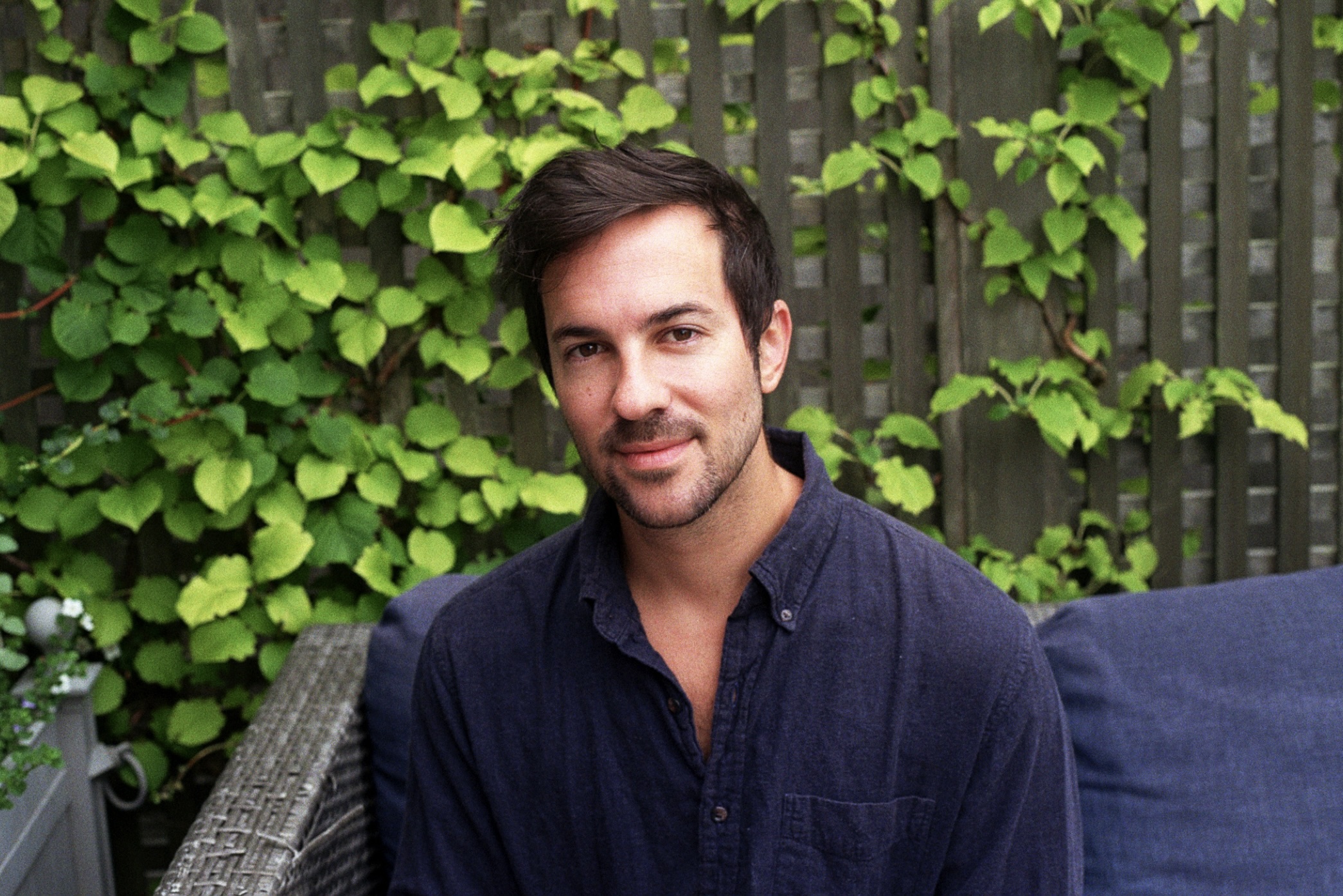

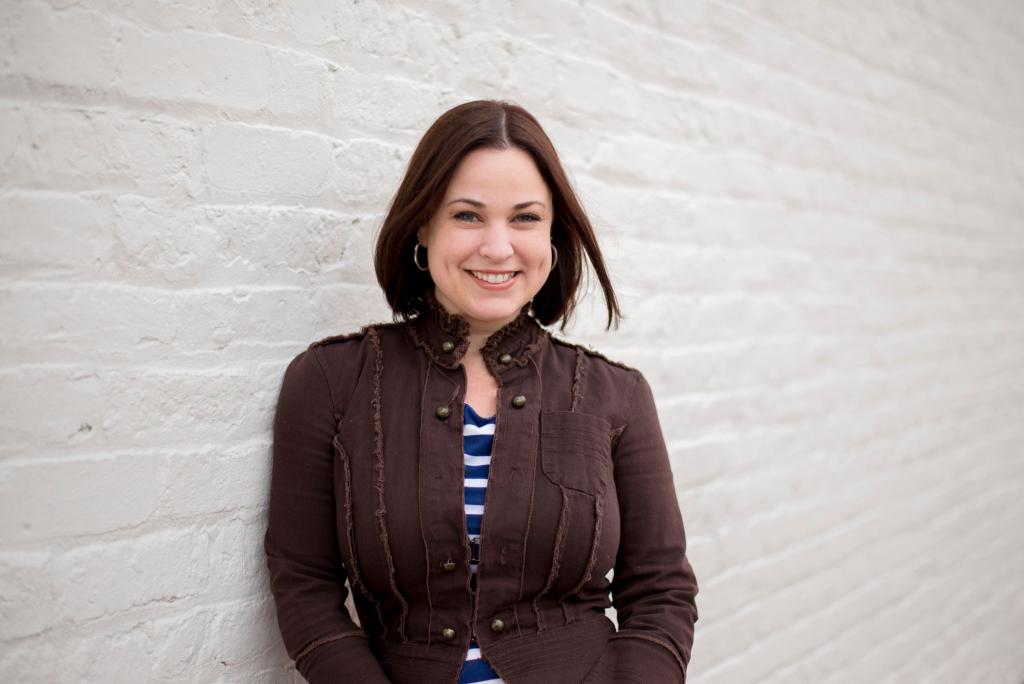
On today’s episode, Lawfare Managing Editor Tyler McBrien sits down with Eve Fairbanks, a writer and journalist based in Johannesburg, South Africa, and Madeleine Schwartz, founder and editor-in-chief of The Dial, a magazine of international writing, to discuss The Dial’s forthcoming book, “How We See it: The World Looks at America in the Age of Trump” (out June 9 from The New Press). They speak about several essays in the collection, which is made up of contributions by journalists from around the world who probe their home countries’ complex relationships with the United States—relationships made even more complex under the current administration. They also dive deep on Fairbanks’s essay on the South African perspective.
To receive ad-free podcasts, become a Lawfare Material Supporter at www.patreon.com/lawfare. You can also support Lawfare by making a one-time donation at https://givebutter.com/lawfare-institute.
Click the button below to view a transcript of this podcast. Please note that the transcript was auto-generated and may contain errors.
Transcript
[Intro]
Tyler McBrien: Hi, I’m Tyler McBrien, managing editor here at Lawfare. You might recognize my voice from our coverage of Donald Trump’s New York criminal trial, a podcast series called Escalation that I co-hosted with Lawfare’s Ukraine fellow Anastasiya Lapatina, or the occasional episode of Rational Security and the Lawfare Podcast.
Here at Lawfare, we have many unofficial mantras, but I wanna talk about one of them, which is, “We’ll tell you when to panic.” Look, I get it. The pace of news these days can feel relentless. We hear over and over that we live in unprecedented times, and in many ways we do. But if everything is an emergency, nothing is an emergency, and that’s why I’m so grateful for Lawfare to help me parse whether something in the headlines is awful but lawful, whether it’s a novel legal interpretation, or whether it’s just a blatant violation of the law.
When it comes to understanding our world today and what to do about, well, everything, that distinction can make all the difference. Unfortunately, our unprecedented times come as an independent and fact-based media is under threat. Fortunately, though, that’s where you come in. None of our work happens without support from people like you.
Lawfare is a nonprofit. We always keep our content free and out from behind a paywall, so we rely on our readers and listeners to keep this work going. If you found yourself nodding your head in agreement to any of this or shaking it in despair, I hope you’ll head to lawfaremedia.org/support and become a material supporter.
Just ten dollars a month or more if you’re able really makes a difference. Plus, you’ll help us continue to offer all of our content for free to everyone. Thanks for considering.
Eve Fairbanks: Just from the very fact that our currency doesn’t depend as much on the shift of another currency. I mean, South Africa has to know. South Africans have to know about American politics and ways of life and votes and ways of thought because their whole economy is swayed by the movement of the United States.
More recently, their politics has been very affected by the antipathy of the current administration. And so they have to know, and we don’t have to know.
Tyler McBrien: It’s the Lawfare Podcast. I’m Tyler McBrien, managing editor of Lawfare, with Eve Fairbanks, a writer and journalist based in Johannesburg, South Africa, and Madeleine Schwartz, founder and editor-in-chief of The Dial, a magazine of international writing.
Madeleine Schwartz: How can Americans now look abroad and look at analogies of what has happened abroad for their own understanding of th- their country?
Tyler McBrien: Today, we’re talking about a forthcoming book, “How We See It: The World Looks at America in the Age of Trump,” a collection of essays from The Dial published by journalists from around the world who probe their home country’s complex relationship with the U.S.—relationships made even more complex under the new administration.
[Main Podcast]
So Madeleine, I want to start with you to just give us a bit of the backstory of the book itself as a whole. The Dial, for me, offers such a window into the rest of the world, so it was really interesting to me to see this book come about because it really inverted that relationship, at least for me, with The Dial.
But Madeleine, I’d love to go to you first. Explain a bit about what the idea i- is behind the book and where it came from.
Madeleine Schwartz: Yeah, of course. So for those who are not familiar with The Dial, we’ve been around for a few years now, and we started it really in large part to combat a certain kind of American exceptionalism, which is to say that we’re living through such big historic changes around, around the world, and there’s no real way to understand that without looking internationally and without, in my view, having a place where writers and reporters can really share what they’re seeing on the ground for each other and for for readers.
The origin of the book c- comes from an issue that we published in 2024 during Trump’s reelection campaign that was of writers from around the world looking at the United States, which which as you say, Tyler, is unusual for us. We publish almost exclusively work from outside of the United States, often in translation.
We’ve published writing from 85 or 90 countries at this point. And so it’s rare for us to look at the United States. And yet, in the history of the United States, it’s often been people outside of the country who see our country best. You know, de Tocqueville being a prime example of that.
And that issue was really interesting and we were interested in continuing and thinking about what Americans could learn from how they were being seen, what trends, what patterns people outside of the country were really noticing in the United States that were in some ways invisible to those inside the country.
And luckily, we were contacted by the New Press which is a great publishing house, who said that they had wanted to do this kind of book for a long time, and would we put it together? We had about six months to put it together, which even from the experience of crashing magazine pieces and being on deadline felt like a very short period of time to put together a book, but a really exciting- An opportunity for us because we got to ask so many of the writers who we’ve worked with for many years right now to put together longer reflections and think about pieces that would not only be important in the moment that they were being published, but might stand the test of time in some way.
Tyler McBrien: Yeah. It’s such a rich collection of essays, and Eve, we’ll dig into yours more in depth in just a bit. But first I wanna ask you how your relationship with The Dial started and what your view of it was at first and how it changed. You’re not quite a Tocquevillian observer of the United States.
You sort of straddle two countries in a way. So yeah just talk a bit about how you first came to write for The Dial.
Madeleine Schwartz: Yeah. Well, The Dial is—I’m the founder of The Dial. It’s my project, and I’ve worked for many years on different projects that are really about this idea of trying to bring you know, the world to Americans and thinking about different ways that journalists and reporters can create their own kind of—can exchange ideas outside of the given pathways.
I have my own international background. I’m—M-My father is French, my mother is American, and they split when I was three months old, and I’ve lived my whole life between different cultures and different countries and have found that way of that sort of double lens to be incredibly useful in my own work as a journalist, and spent most of my career outside of the United States working as a foreign correspondent.
One of the things that happens when you work as a foreign correspondent is that you realize two things. One is the enormous shadow that the United States casts over other countries in terms of people watching it and being aware of what’s happening and in some ways taking their cues from that, and also just how impoverished even the most educated Americans are in their knowledge about what’s happening outside of the country.
That seems to me especially difficult right now or problematic right now when democracy in the United States is in such a perilous state, and yet so many Americans still treat the United States as a quite exceptional democratic experiment that might withstand whatever it’s, is thrown in it when in fact the kinds of changes we’re seeing in the United States have really occurred in all parts of, many parts of the world, and those institutions in general do not fare as well as one might hope.
And so that’s where the idea of The Dial came from. And since then, as I say, you know, we’ve been just extremely lucky to work with amazing contributors around the world, and I think feel that we are less of the exception in the way that we see the world than we were when we started, which is to say I think that our media landscape has in many ways become more international.
I see that there are lots of new publications that are starting up in, in a similar vein to The Dial, bringing together international reporting and bringing it in a way that’s different from the old model, which is to say, you know, these are no longer foreign bureaus of American or U.K. journalists traveling and giving their impressions.
But in a quite novel way, you know, writers from those places, writing in those countries, and then having their work translated for an English-speaking audience.
Tyler McBrien: Yeah. Thank you for that. And Eve, I wanna turn to you. Before we get into your—the meat of your essay in the collection, I wanna hear more a bit about how you describe your positionality in terms of you know, someone who has lived in South Africa for several years, observing the U.S. from afar, but also you know, having a relationship with it yourself.
So, yeah, tell us a bit about yourself, you know, what you bring to your essay, and then I’m also curious how you first started a relationship with The Dial as well.
Eve Fairbanks: Yeah. So I moved to South Africa, oh, s- 16, even 17 years ago now. I was in my mid-20s. I had been writing for The New Republic, and I got a writing fellowship to come down here for two years and consider the aftermath of apartheid.
The situation here was that I think the statistic is correct. But between 1994 and 1996, so this long system of racial segregation in South Africa, which really had a lot of very conscious overlaps by design with Jim Crow and kind of taken to the extreme, obviously ended in 1994 with the election of Nelson Mandela as the country’s first Black president, first Democratic president.
And in the next two years, something like 70% or maybe 75% of the foreign reporters who were stationed here left out of a feeling that the story had been wrapped up, it was over, when in fact, I think a lot of the people who stayed, and certainly South Africans, and as I found when I got here, it had kind of just begun in, or a new story had begun, which was one that certainly a lot of European countries that are becoming much more diverse, the United States is kind of seeing around the bend and grappling with a little bit, but not in the sudden immediate way that South Africa did, which is you have a category of people that were really margina- marginalized, second-class citizens, even almost considered migrants.
There was a sense in apartheid that the cities were white and Black people of color who came to them were like immigrants. And then suddenly you were thrust into this situation where that group of people was starting to tell the country’s story, run its newspapers, dominate its parliament, dominate university campuses.
So a sudden kind of demographic cultural flip of the kind that, that many other Western countries are going through slowly. And so for me, the opportunity to meet people here and see that and learn about it and watch and understand from people, Black and white and of other racial makeups and different classes and so on, like, how they experienced that was really I really wanted to see that and to witness it just as a person as well as a reporter.
And then I began writing stories about that and doing pretty deep interview processes where I would spend months or a year or more years with people, traveling back home, meeting their elders, meeting different generations, and really witnessing a lot of things that, that surprised me in terms of how Black South Africans thought about their power, what power they had gained, and what they expected to gain but hadn’t gained in terms of economic power.
The ways their feelings had changed and white South Africans also after the political situation had changed. So the wish for revenge and certain kinds of restitutions altered after that political shift happened. So I began to report a lot on that. I was working on a book, and then I knew the co- the original co-founder also m- of The Dial, Linda Kinstler, before I knew Madeleine, and she told me about this new publication, which I was so excited about because I also found, and this is gonna make me sound maybe naive, but I think many of us kind of pe- you, me, you know, people who will be listening to this are afflicted more than we think by just really not hearing a lot about countries that we imagine we know about broadly.
And we kind of know the governance there, how the population feels from reading newspapers. I don’t wanna ding any particular newspaper’s coverage. But I thought I knew a lot about South Africa before I got here and was just blown away by the extent to which... Because Americans don’t have to know so much about other countries, or they don’t think they do, just from the very fact that our currency doesn’t depend as much on the shift of another currency.
I mean, South Africa has to know. South Africans have to know about American politics, and ways of life, and votes, and ways of thought because their whole economy is swayed by the movement of the United States. More recently, their politics has been very affected by the antipathy of the current administration, and so they have to know, and we don’t have to know.
And so I was really excited about this project, and then I ended up writing... I loved working with this magazine and its incredible editors and contributors so much that I wrote a few stories for them an is- before this one, one on Elon Musk and ho- his fabrications that he peddles in the United States about his upbringing in South Africa, which he’s able to do, again, because people even who don’t like Musk don’t really know how to question the aspects of how he’s portraying his own childhood—
Tyler McBrien: And we’ll dig into your essay which begins with Irani in just a moment.
But first, Madeleine, I wanna get to some of the lessons that you see come from this collection of essays, especially at the moment at which they were written. And I- one of the things that really struck me reading the essays together was they had a sort of as an American reading them, they had a sort of the emperor has no clothes, I think, quality to them.
At one point you write in the introduction, quote, “One point that almost all of our contributors noted was that the United States presently seems a threadbare society.” So I wanna just hear from you a bit about the benefit of this sort of comparative analysis and you know, poking holes in the myth of American exceptionalism and what as the main lessons from the collection as a whole.
And feel free to bring in some of the other contributors and their perspectives other than Eve’s from South Africa.
Madeleine Schwartz: Yeah. Well, the book is a really varied collection. We have 12 essays from as many places around the world, and when we were putting it together, we really wanted to make sure that each essay brought its own perspective, and also to make sure that, you know, that it would stand the test of time and not feel completely outdated be- as soon as it was published, because we’re obviously in a period when things seem to be moving very fast.
And so one of the questions that we kept returning to was essentially how did we get here, and how did—how can these different perspectives help shine a light on that and help us better understand what, as Americans, we may not be seeing about our own society? And I think, you know, as you say, the first of them is that the United States is a country like any other with its own flaws and its own flawed history, even as Even the most liberal and critical Americans, I think, like to hold onto a certain image of American exceptionalism, and especially American democracy as exceptional.
But one of the great essays in the book, for example, is an essay by a Ukrainian journalist named Nataliya Vinyuk, who is the only Ukrainian journalist to have covered every election in the United States from Obama to Trump. And she talks at great length about how shocked she is by the completely dissonant visions that the people who she talks to have of the United States that, you know, it’s sort of beyond the idea of fake news, but here we are in completely different realities.
And she, she talks about how do you actually have a state that holds together when people just cannot agree on what’s happening, not only in the United States writ large or in the world, but in their own town among their own neighbors. And that gets to this the second idea that you mentioned as well, which is that again and again in the book our contributors really point to how broken the United States is and how broken it seems as a society.
Another one of our essays and they’re all amazing, so, you know, please, listeners, go out and buy the book immediately. But another one of the amazing essays comes from Saumya Roy, who’s a wonderful writer from Mumbai, India, who wrote a book about slums in Mumbai, and she moved to San Francisco for various reasons and began a project studying homeless people in San Francisco, and she is shocked by what she sees compared to Mumbai because as she writes in her essay, you know, she, she was used to seeing poverty and reporting on poverty.
But in Mumbai, the people living in the slums had a sense of community and helped each other, and the homeless people who she talks to in San Francisco feel such a sense of shame about, you know, their situations that they’re actually just very alone with their problems to an extent that it’s even difficult for them in many cases to look for help or to share their experiences with their own families.
And then the third point, and I think this is one that might be an interesting rejoinder to what Eve will talk about in her own essay, is really the changing idea of American soft power. You know, American soft power has been such a force over the course of the 20th century and has shaped so much of culture worldwide, of what we see, what we listen to the books that we read.
And again, when I was looking over the collection, you know, in preparation of this conversation, I was struck by the very negative image that people have of the United States. We have a really hilarious essay from Rome by an author named Francesco Pacifico, where he just complains about, you know, American tourists in Rome, and he compares them to an invading army.
And I see this too you know, in Paris where I live, where I—where there’s graffiti not in my neighborhood, that says, “Americans go home.” And I think that many Americans are not yet—have trouble coming to face with the fact that for a lot of the world, the United States is synonymous to—with you know, politics and a way of being that much of the world really dislikes And that the place of the United States has really changed.
Tyler McBrien: By way of segue to the South Africa portion of the conversation, I’m reminded of—I lived and worked in South Africa in the Eastern Cape for a year. And one of the first conversations I had was with a colleague who I mentioned I had moved from New York and the colleague shook their head and said, “Oh, it’s f- I would, I could never go there.
It’s far too dangerous. It’s, you know, too many guns.” Which really struck me as, you know, someone, as an Amer- as a young American coming to South Africa with certain p- you know, priors about the country from what I had read and heard. But that is all to say that I wanna turn to you, Eve. So I’m very excited to speak to you about this essay a bit selfishly, as I mentioned.
You know, having lived and worked there briefly. But also because a- as you know, as you point out in the connections to Jim Crow, that the, there are so many similarities between the U.S. and South Africa. And I wanna start where you start, which is the all-white enclave of Orania. With a bit of irony because you know, as you said it was this, it’s this strange fascination that, that foreign reporters have with Orania for sometimes very different reasons.
So Eve, well, first of all, what is Orania? And second of all, am I pronouncing it correctly? And third of all, why did you start there?
Eve Fairbanks: So my essay is a little bit of inversion of some of the other essays in the book that do what we really need now, I think, which is to have journalists from elsewhere, writers from elsewhere, people from elsewhere come take a look at the United States.
We do so much of that in, in contrast. My essay is a complement to that maybe, which is considering how Americans have typically looked at South Africa and used it, and then also South Africans’ bafflement in a way with how their country is being used as a symbol to prove things that certain people wanna prove in the context of American domestic politics.
Somebody said to me recently, “I think one thing that we have to understand here in South Africa is that the United States has no foreign policy. It really only has domestic policy, and then the rest of the world is refracted through that and put, you know, different countries and populations are drafted into playing a role in this domestic diorama to represent some kind of possible future or some potential problem or something that we want them to represent.”
That was a pretty blunt way of putting it. I’m not sure. I’ve been thinking about it. Is it totally true? But certainly in this case, my essay begins with Orania, which you did pronounce right, which is a small and very static all-white town. It is formally all white. South Africa, the government permits this town, technically speaking, to continue to practice extreme segregation and exclude people of color.
And probably other than Mandela himself and maybe a few other South African stories, it’s heroic struggle with HIV. But it is, it to me, has felt like the biggest story in the American press, this town, the existence of this town, the potential growth of this all-white town. For decades and decades, I write that there’s every journalist, every f- every foreign, even European, Australian, but American journalist makes a pilgrimage there, writes about what it means.
And despite the fact that South Africa has 4.5 million white residents, which is virtually the same number, it’s not the same percentage of the population which has grown, but it’s virtually the same number as it had in 1994. And 3 to 5,000 people live in this all-white town. So a vanishingly small number of people, and that number hasn’t really grown either, have chosen to live in this town.
But it, it has this outsized place in the American gaze, and this includes publications like, I think The Nation. I don’t wanna speak wrong but, you know, publications that we would consider left of center. Going to this town and scrutinizing why white South Africans can’t accept sharing power, sharing their world, coming second in, in government resourcing, adapting to affirmative action for government contracts and some college programs which exist here, and can’t get over the loss of their superiority.
This is a concept that Americans have, that white South Africans just can’t do it. It can’t—They can’t manage it. They can’t abide it. So they will retreat to this very not picturesque, abandoned mining town where nothing’s happening in the middle of nowhere rather than accept having bosses of color, et cetera.
And this is just not true. It’s not how the South A- South African story has gone after apartheid. And I really wanted to ask myself, as I think about it in the piece, and South Africans why does the United States fixate on a very gloomy story of what happened after the end of apartheid, and one that insists A, that white South Africans can’t adapt, they can’t manage, they won’t, they ultimately won’t be able to give up their privileges, even if we morally think they should.
And B, a story that’s gotten a lot more traction in the right-wing press and has affected the actual policies of the U.S. administration right now, that Black South Africans are still bent on vengeance and bent on making white South Africans pay for past sins. Neither of these things... I mean, if you read the essay, you’ll get a fuller sense of this, but white and Black South Africans are just so perplexed by this story that I write that in a way their reactions to it and their countering of it doesn’t get as much traction as it ought to in the U.S. ‘cause they don’t even know what to say.
It’s so far from the reality of the current country. A real focus, finally, of this essay is so many white South Africans. There’s not as much polling here. Writing here doesn’t rely as much on opinion polling, but there have been some polls. Such a huge number of South Africans, ones I know, white South Africans, people that I interviewed who are Afrikaner in rural areas, farmers, et cetera, the kind of people who are portrayed by the right-wing press in the U.S. now as extremely endangered and unhappy, very often say, “You know, I didn’t necessarily support a change in government.
I didn’t know what it would mean to fully enfranchise. You know, I maybe felt that there was something wrong with the apartheid government because it was so discriminatory. But I really worried about what would happen to me and my family by sort of unleashing, undoing a police state and unleashing potential vengeance, antipathy, desire for reparations, restitution.”
And people will say, “I have to say it is so much better despite high crime that exists,” although it’s much lower than it was in the early 1990s. Despite difficulties with infrastructural decay and problems of a developing country, it is so much better to have this whole country be free. I much, much, much prefer living in the current South Africa where I have much less privilege economically on paper, politically even, much less representation, than living under apartheid, which was very scary in retrospect
Tyler McBrien: Eve, as you mentioned, this story of Orania not only misrepresents the present in terms of portraying this or misappropriating this, misrepresenting this gloomy story of South Africa, but also a fantastical one of this myth of white genocide and these- attacks, roving bands of Black South Africans attacking white farmers which is just fabricated. You do a great job in your essay of taking it down point by point, so I won’t make you rehash that, but suffice to say it’s a complete fabrication. But I thought, what I thought was really poignant as well is that it also mi- misrepresents South Africa’s past as well.
You sort of describe Orania as representing a loss of faith, and you write, “This loss of faith is sad because the real South African story has a different lesson. What is often overlooked is, in the American fascination with South Africa, is the violence the apartheid regime wrought on white people.”
Could you speak a bit about that of how it represents a loss of faith and this idea that this discriminatory, totalitarian apartheid regime actually inflicted quite a lot of pain on the privileged class the, you know, the people it was supposed to protect and raise up?
Eve Fairbanks: There’s a lot of back and forth in the press to some degree about, in the U.S. press about South Africa, and on the right, you get this depiction of either a genocide or a, an imminent one or a very labile situation that could blow at any minute with race tensions and a backlash, a violent backlash against white, the white minority.
And then you also get depictions of the country that are much less sort of sympathetic to the white minority, but that also rely on an underlying premise that I find more similar than we might think, which is a story that the white minority was protected, coddled, comfortable, and extremely privileged under apartheid.
Now, in terms of the whole legal structure of the country, they did have enormous privileges, and ostensibly, it was a society that was set up to defend white South Africans. And I say that there are some depictions in some places in the U.S. media now or streams of thought that In a less extreme way, but that almost s- say we have to start setting up certain kinds of protections on how campuses can be run, on the resourcing of different types of projects and media outlets and types of censorship in order to defend an otherwise embattled white contingent of the population.
That was the entire idea under apartheid, was to set up a legal structure, set up censorship programs, et cetera, to defend this population. What I don’t find expressed that you hear in kaleidoscopic ways expressed here is that many white South Africans didn’t feel protected. They felt very endangered by a segregationist society taken to the extreme that claimed that it stood to protect them.
I’ll give you an example. At a certain point, because of the demographics of the country, the white apartheid government leaned very hard on the idea rhetorically and legally that Black South Africans were terrorists, that their goal was to annihilate white people. And so many of the white South Africans that I’ve spoken to for this piece and even otherwise remember so viscerally how terrified this made them in their childhoods because it was also true that they lived with Black South Africans.
Black South Africans worked in their homes. Black South Africans sometimes drove their vehicles. They were a presence that these young people, kids, were taught actually behind their eyes, behind their smiles, your ma- your nanny may want to kill you and there’s this terroristic force that endangers you.
And this idea was propagated so that white South Africans would continue to vote for apartheid and would serve in the military. There was a draft for all white South Africans. So it had a sort of a purpose, but it also created and it’s easy to think that this is kind of, like a soft effect that’s just psychological, but a, an, a sense of fear that pervaded every aspect of life.
One man told me that he was in school in his early teens and a gust of wind shattered a window, and everyone dove under their desks and were petrified and screaming because they thought the terror- terrorists are here. It’s—And you lived on edge like that all the time. And then in order to maintain, as the African continent transitioned to out of colonialism and toward Black rule, in order to maintain this white minority government, the country went to war.
The apartheid government got involved in wars with neighboring Black-led countries th- that were often housing exiles from the South African freedom movement. And there was a draft for every young white man, and you had to serve in a, an army that was exceptionally abusive, really infected you with this idea that you are under existential attack all the time and made you petrified and turned you against other fellow white South Africans, neighbors who had maybe a slightly different view.
The society became extremely paranoid and internally torn, and people weren’t allowed to learn anything really about their Black neighbors. They weren’t encouraged, and they were explicitly censored. All kinds of books, you know, that Bob Dylan songs about sort of general resistance or, you know, being a bit against the man, you didn’t know about them.
You couldn’t hear them. You couldn’t join any sense of kind of global culture because of how the government purportedly was trying to protect you. My partner, my, my s- husband, who’s white South African, fled the country in 1988 to avoid being drafted to basically go get put in a tank and terrorize his own countrymen in this white military.
He just didn’t feel he could do that. He didn’t wanna be in the army anyway, so he escaped the country as many white South Africans fled. And he ended up in Berlin. He couldn’t come back. He would’ve been arrested and really many aspects of the fall of the Berlin Wall sort of surprised him.
He felt very disoriented because the, his own public schooling had inhibited students from learning about any kind of resistance movement or anti-government movement anywhere. It b- it became this very dry, vacant, tight, narrow history that they were taught. And by the 1980s in South Africa, majorities of people in polls said that if they could get out of the country, this is white South Africans, if they could leave, they would.
There was a joke going around Johannesburg, what is a white South African patriot? Someone who can’t sell their house. And this was partly out of a sense of uncertainty about future politics, but people were very explicit that they had come to fear their own government, the one that ostensibly was protecting them against an onslaught of terrorists of color and migrants from the margins of the country.
And they just didn’t feel like they could bear it anymore. They didn’t wanna send their children to the military. They didn’t wanna send their children to universities where they would end up getting educations that would make it hard for them to get jobs anywhere else because they were so circumscribed and censored, and they had to get out.
And there was years during which the U.S. Consulate in Johannesburg, which is not even the main point of contact, was getting 50 inquiries a day from South Africans, white South Africans desperate to flee apartheid. And in the end, in 1992, there was a referendum about changing the constitution and effectively annihilating this country.
This country meant to protect white South Africans. It was a white-only referendum, and I ultimately wrote in the piece that 62% of white South Africans abandoned the country. They fled the country insofar as they voted to end this system and adopt a system that they knew would give them far less privileges because...
And again, I wanna stress that in no way were white South Africans the main victims of apartheid. They weren’t its intended victims, and they weren’t its principal real victims, but they were also really victimized. And many Black South Africans that I spoke to for the piece, and just in general, they also understand that.
They know that well. They saw that. And the reason I wrote in the essay that white South Africans ultimately fled their country is that there’s this narrative now that, that white South Africans are desperate to flee. I believe the United States last year accepted 6,000 white refugees, quote, unquote and hopes to adjust that so it can, I think, up to 20 or 25,000 this year accept And certainly there are people living in this country, white and Black, who are very unhappy with its trajectory, with its struggles, with its economic insecurity, with its governance, which has had a lot of struggles with corruption after the end of apartheid.
But the magnitude of white flight from apartheid South Africa was infinitely greater than white flight now. And I just think if we really reflect on that, it says something I mean, it’s really striking and I think really not understood. And when I say loss of faith, I mean that so many of the people who write about South Africa or who even think about the future of diverse societies like the United States, I think that there’s a little bit of a lo- a giving up on the sense that this could ever really work that well.
And particularly that a white population that had an oppressive government, that voted for that government at a time, that enjoyed extraordinary privileges could ever really loosen its grip on those privileges. And we just, we have trouble believing that the trajectory that we thought we were on can continue, that people will ever really be able to give up power.
And if you look at South Africa, this just isn’t true. You can look at a place if you want to. The question is, what do you wanna believe, in part? You can see a place where that happened and many white South Africans feel far more welcomed than they expected, and many Black South Africans feel that their white fellow countrymen, I don’t wanna speak for everyone but many feel that those people are making a real contribution to the post-apartheid country in a way that they also hadn’t necessarily anticipated from knowing how this community had behaved before.
Tyler McBrien: Madeleine, I wanna turn to you about this essay. What to you are the biggest lessons or takeaways from the South Africa essay? What do you see as its role in the book among the other essays in the collection?
Madeleine Schwartz: Well, I think it’s just a great and powerful essay, and I’ve now read it, you know, so many times as one does when editing, and each time a new point or insight stands out to me, which is just such a wonderful experience.
To me, there are really two points that I think I—that, that stay with me the most. The first is I would disagree, Eve, with you know, the people who you were talking with in, in the course of your own reporting career who say that the United States doesn’t have a foreign policy. And, you know, I think we can debate the intents of that foreign policy and its coherence.
But it’s certainly clear that especially under this presidency, you know, the United States does have a very aggressive foreign policy that is often Based on very ideological assumptions, and I think that nowhere is that clearer than in the way that, that this administration has talked about South Africa, that people on the right have pointed to South Africa as this kind of cautionary tale as Eve discusses.
And so the first question for me is essentially, like How is it that that these myths or mis- misunderstandings or perhaps willful misunderstandings of what has happened abroad become such cornerstones of the thought process of the American right? And you go into that a little bit in, in your piece, Eve, as well.
But I think it’s really worth thinking about, especially as the United States has such an interventionist and aggressive stance at this moment, because so much of it we have seen all over the course of the past year and a half is based off of very particular ideas about what’s happening in other countries.
The second for me is maybe like a more, almost more theoretical or larger question, which is, you know, how can Americans now look abroad and look at analogies of what has happened abroad for their own understanding of the- their country? I think when we think about things like authoritarian governments and police state there are often in the public discourse only a very narrow set of reference points that people tend to point to, and most of them take place between, you know, 1937 and 1945.
And yet often looking at more recent history and more recent history outside of the United States is to me a more powerful indicator of how quickly societies can change bo- both for the bad and, as Eve says for the good. And yet often those are not the reference points that that come into the general public conversation.
And so I think that, you know, I came to editing this essay with very little knowledge of South Africa, but what Eve talks about has really stuck with me because it goes so against so much of the often demoralized discourse that I hear about the future of diverse societies and how much people are willing to give up to, to continue them.
Tyler McBrien: Before we close here, Eve, I wanna ask you another selfish question of whether you have any recommendations of South African writers who you’re following who are particularly good at ex- explaining the current moment, but especially vis-a-vis the United States. I don’t know if there are any keen observers of the United States who you follow in, in South Africa.
Eve Fairbanks: Yeah. South African Twitter or X comically enough because it’s obviously owned by a man who was born in South Africa and has- peddled a certain version of South Africa that’s, I think is very warped. But it’s very lively. This, the kind of sense that X is done as a platform doesn’t exist as much down here, in part because social media platforms in South Africa are very expensive to access if they include video or images.
In other words, TikTok, WhatsApp, it’s very expensive for a person to download those. And so text-only platforms like, in some degree Facebook, but really X, have retained, like, a very intelligent and interesting and vibrant debate about South Africa. And one person I would really recommend, so maybe even if you’re not accustomed to going to X much for, like, solid nuanced discourse anymore, you sh- you should if you’re interested in South Africa.
There’s a woman named Redi Thlabi, R-E-D-I T-H-L-A-B-I, who is a journalist, and she has intermittently lived in the United States and in South Africa. She’s South African. And she both writes longer essays, but also provides a running commentary of her impressions of the United States and the ways in which...
I think when South Africans say they feel s- the United States doesn’t have a foreign policy, they mean, yes, it has very aggressive inter- foreign interventions, but at least from their perspective, from the South African perspective South Africa is being related to and being sort of held up as like a mirror to the United States as by certain people saying, “If we let certain trends continue, if we pass certain laws, if we don’t undo certain kinds of laws or trajectories, then we will end up like this, and we must be very careful about that.”
In other words, it has a domestic function ultimately. You’re saying, “Look at this. We don’t wanna be like this. We need to change our politics.” But the problem is that mirror really has nothing to do with South Africa. It’s a story that’s just created to serve a domestic function. The problem is that policy’s being built on it that has a real impact on South Africa in terms of punitive tariffs on the country, impacts on tourism, et cetera.
But if you go and look up Redi’s writing, you’ll also find her engaging with many American writers as well as in conversation with other South African writers who you can then follow the threads of them, and very lively, funny, incisive takes on the United States, again, from people who come from a society that’s had its own very long experience wrestling with race, with class, with the long-term impacts of settlement, et cetera.
And so I, I would recommend starting there. That it’s an odd recommendation to say go to X for your deepest reading. But it’s a very lively discourse, South African Twitter.
Tyler McBrien: Yes. No I second your endorsement of South African Twitter. And Madeleine, I wanna turn to you for the last word.
What’s next for The Dial now that this book is completed? What’s on the agenda? What’s on the horizon for The Dial?
Madeleine Schwartz: We are gonna be continuing great work from around the world. One of the things that I’m really hoping to do this year is to continue to strengthen our partnerships with publications whose work we translate into English for the first time.
We work with publications in Ukraine, Brazil, France really all over, and I’d like to add to that list. I think that, you know, as America’s power in the world wanes, it behooves English speakers, and Americans in particular to read more about what people are saying outside of it.
Tyler McBrien: And once again, the book is called “How We See It: The World Looks at America in the Age of Trump.”
Madeleine and Eve, thank you so much for joining me.
Madeleine Schwartz: Thank you. Thank you.
[Outro]
Tyler McBrien: The Lawfare Podcast is produced by the Lawfare Institute. If you want to support the show and listen ad-free, you can become a Lawfare material supporter at lawfaremedia.org/support. Supporters also get access to special events and other bonus content we don’t share anywhere else. If you enjoy the podcast, please rate and review us wherever you listen.
It really does help. And be sure to check out our other shows, including Rational Security, Allies, The Aftermath, and Escalation, our latest Lawfare Presents podcast series about the war in Ukraine. You can also find all of our written work at lawfaremedia.org.
The podcast is edited by Jen Patja, with audio engineering by Goat Rodeo. Our theme music is from ALIBI Music. As always, thanks for listening.