
Lawfare Daily: Ancient China and Modern Politics
Unpacking ancient Chinese political theory's influence on modern China


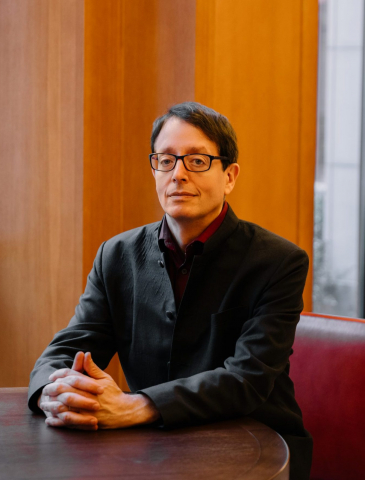

Senior Editor Michael Feinberg sits down with Daniel Bell, a professor at the University of Hong Kong, who recently wrote, “Why Ancient Chinese Political Thought Matters: Four Dialogues on China’s Past, Present, and Future.” They discuss the ongoing influence of ancient Chinese political theory on the contemporary policies of the PRC and its domestic debates.
To receive ad-free podcasts, become a Lawfare Material Supporter at www.patreon.com/lawfare. You can also support Lawfare by making a one-time donation at https://givebutter.com/lawfare-institute.
Click the button below to view a transcript of this podcast. Please note that the transcript was auto-generated and may contain errors.
Transcript
[Intro]
Roger Parloff: Hi, I’m Roger Parloff, senior editor at Lawfare. If you know me, it’s most likely from our weekly Trials of the Trump Administration podcasts or periodic Lawfare Lives. I also live blog important court hearings and sometimes even whole trials for Lawfare. What we try to do here is break down complex issues in a way everyone can understand.
We try to drill down a notch or two deeper than most media can, while not using jargon or expecting readers to be specialists. All our readers have to be is smart and curious. We try to create a space for thoughtful, nuanced debate in a world that often seems to have no time for that. But none of our work happens without support from people like you.
We’re a nonprofit. Our content is free. No paywalls. We rely on our readers and listeners to keep this project going. If you’ve learned something from any of our podcasts or from our website, or if you just like knowing that there are other people out there grappling with these hard questions you’re concerned about, please support us.
It’s simple. Just go to lawfaremedia.org/support. Just $10 a month, or more if you’re able to, really makes a difference. Join us as a member of our growing Lawfare community. If Lawfare is something you appreciate, we hope you’ll be a part of sustaining it. Thanks for listening, and now back to the show.
Daniel Bell: So along came legalist thinkers, and I think Shang Yang is as negative you know, as like pessimistic about human nature as Han Feizi is. Shang Yang came first. He’s the one who first who developed this view that we need to rely on harsh laws to govern society.
Michael Feinberg: It’s the Lawfare Podcast. I’m Michael Feinberg, senior editor at Lawfare, sitting down today with Daniel Bell, a professor at the University of Hong Kong who recently wrote “Why Ancient Chinese Political Thought Matters.”
Daniel Bell: We’re in a current time where if China feels encircled by other powers and if it feels that its security is under a great deal of danger, frankly, the legalist school, even if it’s not labeled as such, will become more influential.
Michael Feinberg: We’re gonna talk about the antecedents and early days of Chinese philosophy and what those various schools of thought can tell us about Chinese public policy and international relations in our own time.
[Main Episode]
I will confess I was very much looking forward to reading this book when I saw the sort of preview of it in Princeton University Press’s catalog. Because despite having studied Chinese culture and the Chinese language myself, my knowledge of Chinese political theory and Chinese philosophy, particularly in the pre-unification period, really represented a lacuna in my education.
And as a result, I approached this book in a very particular way, and I’m gonna start with a question that is both a confession and an invitation for you to critique me about how I read it, which I realize is a bit unusual, but I think it would be a good way for us to sort of dive into things. And because United States audiences are not really taught at any point in any mandatory curriculum about Eastern political philosophy, I kept in my head comparing the figures you wrote about to Western philosophers with whom I was familiar.
It was very hard for me to read about the legalist scholars without instinctively thinking of people from Machiavelli to Carl Schmitt and everything in between, and you have one dialogue in the book where one of the proxies for the philosophers argues against the sort of indulgence in music that is so much a part of Western culture.
And I’m almost positive you did not intend this, but I instantly thought back to Allan Bloom’s “Closing of the American Mind,” where he has a chapter that has very much not aged well, where he blames much of 1980s society’s ills on rock and roll. Is this a fair way to approach learning about Chinese political theory, or am I guilty of sort of othering it or engaging in what, you know, Edward Said would have called Orientalism?
Daniel Bell: No, I, no, I think it’s very useful to—It’s a good question, actually. It’s very useful to draw parallels with thinkers and ideas that one is already familiar with because there are commonalities. And part of... I selected the political traditions that argued about issues that are timeless and that don’t just apply in one particular society or at one particular time.
So, so I would expect the reader to draw comparisons with ideas that they’re already familiar with. That said, I mean, it’s worth keeping in mind key differences as well, right? I mean, I think the legalists, you know, in Chinese it’s fajia sometimes it’s translated as realism. I think they’re more like hardcore Machiavellian than anything Machiavelli ever said.
I mean, on issues like, you know, for Han Feizi, for example who’s the sc- great—the thinker who systematized the different strands of the legalist tradition he was pretty the idea that you’re born bad and you stay bad, I mean, there’s no compromise there. And he didn’t foresee the possibility of a kind of society that relies more on what we’d call today soft power to achieve social order.
Whereas Machiavelli in “The Prince,” it was a particular text directed at a ruler, and he was hoping to get into power. But when he was a—he—That didn’t, wasn’t that successful, and when he was a pure political theorist, he defended something that’s much closer to republican ideals. In the case of Han Feizi, you know, and I think Shang Yang, the other legalist thinker that I deal with, I mean, they were really hardcore realpolitik thinkers who thought the only way to secure social order, especially in the chaotic times that they were writing in, is to have a kind of ruthless commitment to laws that generate fear and punishment with no mercy and they l- and also to have a kind of objective military meritocracy as a way of increasing state power.
You know, and as you’ll recall, in the Shang Yang, it’s literally measurable by the number of decapitated heads of enemy soldiers. They really don’t care what goes through people’s minds. You know, it’s a purely, you know... They thought there’s purely objective and behavioral way of securing social order, and that’s—and we need to rely on those harsh means to do it, and they didn’t force...
So it’s more consistently, let’s say, Machiavellian than anything Machiavelli ever wrote.
Michael Feinberg: I would totally agree with that. And you talked about the chaotic time in which these thinkers lived I want to go through three questions, and we’ll take them one by one, but I think they’re a good background before we get into the substance of the book.
The first question is gonna be, you have a very firm temporal cutoff in terms of the period which you are examining. There are a number of political theorists who came after the Qin dynasty, but you stop before unification. So I want to talk about why you chose that period. Then I’d like to talk about why you chose the eight thinkers that you did in particular, and then I want to talk about an intuition I had in reading the book as a whole before we get to the individual dialogues.
But let’s start with the time question. Even the Am- the American public that is most familiar with Chinese history probably doesn’t know a lot about the era you’re writing. If you look at Jonathan Spence’s “Search for Modern China,” which is probably the best-selling soup to nuts history of the mainland in the United States, the ratio of, like, 20th century to everything beforehand is something like 10 or 15 to one, just in terms of raw page numbers.
So what was the advantage or the decision process that led you to focusing entirely on the pre-Qin era?
Daniel Bell: So I’m a political theorist, and I’m interested first and foremost in great political theorizing, and I think that the greatest political theorists in China’s history were in, in that period. It was the Spring and Autumn and later Warring States period before China was unified in 221 BCE.
And there was, especially in the Warring States period, as the name suggests, constant warfare between states struggling for supremacy. But what’s interesting is that there’s tremendous amount of intellectual freedom. I mean, these thinkers could literally roam from state to state, try to persuade rulers to adopt their ideas, and if they succeeded, fine.
If they didn’t, they would go to another state. And it’s—and this sort of atmosphere, I think, allowed for this tremendous flourishing o- of great ideas. And the four major political traditions that were most influential throughout Chinese history, I mean, the great founding thinkers emerged from this period.
So you had the Confucian tradition, you know, with Confucius and Mencius and Xunzi as the three great thinkers. You had the Taoist tradition with... And I think Zhuangzi is the greatest thinker in the Taoist tradition. And then you have the Legalist tradition, as we already discussed.
You had thinkers like Shang Yang and Han Feizi, and then the Mohists as well, who were arguably the, after the unification of China, the least influential, but they still argued about issues that are timeless and fascinating and these, what’s also interesting is that these thinkers were arguing with each other.
I mean, they were literally sometimes they were written in dialogue. I mean, and it’s not—It’s real dialogue. Not like, I mean, I learned Plato like, like many of us and a lot of the Platonic texts are like, “Yes, Socrates. I agree, Socrates. Please go on, Socrates.” These guys were really at each other’s throats, you know?
And in literally in some cases, like, you know, when Xunzi, this to my mind, the greatest political thinker in the Chinese tradition, who systematized the different strands of the Confucian tradition, and then he had a student, Han Feizi, who systematized the strands of legal issues, who was literally arguing for policies that would justify the physical se- elimination of his teacher.
You know, like can you imagine that level of difference, right? So you had these really great thinkers in these times who literally set the intellectual agenda for much of Chinese history, and they were arguing about issues that are still highly relevant today, like just an unjust war, you know, whether we should use law to or morality to reduce corruption in government whether states should fund musical arts and culture and also what is a appropriate kind of family law.
So I gu- I don’t know if that’s a good enough justification.
Michael Feinberg: No, it is. I think what you’re describing is a very real intellectual flowering That is not limited to one school of thought. The thing that came to mind is sort of the great debates in, you know, 19th and 20th century between analytic schools of philosophy in Great Britain and the continental schools.
Only even that seems narrow compared to what was going on- That’s right ... during the Warring States period. And part of that capaciousness of those dialogues that were happening in China is that there were dozens of thinkers and writers in any given school. You mentioned the four main schools, and you mentioned some of the thinkers, but you ultimately go with eight thinkers in particular.
And there was one that I was sort of curious you did not go with, and you actually address that in your afterwords, which you frame almost as a mea culpa. So, you know, ‘cause I kept thinking like, “Why is not, why is Laozi not mentioned at any point?” And you actually provide a very good answer at the end.
But I was wondering if you could sort of speak just as to how you selected the eight thinkers in specific to represent or serve as metonyms for their general schools of thought.
Daniel Bell: Well, I think they’re the thinkers that had the deepest ideas and also the greatest political influence. Laozi, of course, you know, the author of the “Tao Te Ching,” this classic of way and virtue.
I mean, he, of cou- it’s a hugely influential text, but it’s little lines and very kind of m- obscure and almost impossible to interpret in a way that sounds persuasive and definitive. So I prefer Zhuangzi to, as a th- representative of the Daoist tradition. First of all, he wrote in dialogue form, right?
In- including dialogues with Confucius, Kong Zi, and some of his students. And it, and I w- and as you know, this book is written in dialogue form, so it’s easier to draw on, on, on Zhuangzi for that purpose. I... Yeah, so I really... I mean, it, I had to make some choices, and I think Zhuangzi is a ultimately more deeper, a deeper and more original thinker than Laozi, who may have been more more widely cited.
I’m not sure. Yeah.
Michael Feinberg: Well, the proverbs-like nature of Laozi makes him easier to cite, particularly for people who have not done a deep dive into this. So I was gonna make a very unflattering comparison that I will refrain from, but it’s sort of like I don’t know. To me, reading Zhuangzi is like reading an actual Zen master, even though he’s not Zen, while reading Laozi is kind of like trying to learn about Zen from reading Zen and the Art of Motorcycle Maintenance.
It’s, it—There, there’s a level of depth and probity present in one that I don’t think is as present in the other.
Daniel Bell: Yeah, agreed.
Michael Feinberg: But just for the benefit of our audience who has not read your book yet, can you just give a quick introduction, we needn’t take more than a few minutes, on who the eight speakers are and what they represent?
And then we’ll get into the specifics of the dialogues you posit.
Daniel Bell: Okay, thanks. So it’s four chapters, and each chapter has two thinkers in dialogue with each other And they represent quite radically different perspectives. And I try to present each thinker in as persuasive a way as possible, drawing on their original words to the extent possible.
And often those thinkers were in dialogue with each other in their times. So the first dialogue is between Confucius and Zhuangzi on to what extent the state should enforce family virtues, or for example, divorce law, or whether state should promote filial piety, caring for and reverence for the elderly and for ancestors.
I think both thinkers have very different views on that. So I selected Confucius, of course, because he’s, as the name suggests, the most influential thinker in the Confucian tradition. But actually, the name in English, Confucian tradition, is a bit misleading ‘cause we think of Buddhism, we think of Buddha and Buddhism as like the founding father and the rest is pretty much all details or Christ and Christianity.
But Confucius himself, in Chinese it’s Ru Jia, it’s the tradition is Ru. It’s so, it’s a tradition without the name of Confucius being part of the tradition, and he himself viewed himself as an interpreter of an older tradition, and he even claimed that he didn’t have any original ideas. I’m not sure that’s true.
So he’s an influential thinker in this tradition, but not like, you know, the founding father by any means. And then Zhuangzi, as as we were saying I think is the most, is the deepest thinker in the in the Taoist tradition. These schools became a- labeled as such only after the China was unified in the Han dynasty.
In those days, they weren’t kind of formal schools. They were great thinkers who were arguing from certain perspectives, and subsequently, their views became la- labeled as schools and traditions. So that’s the first dialogue. The second one is between Han Feizi, who as mentioned, he’s the great thinker who systematized the legalist tradition, with Xunzi.
Xunzi was his teacher in actual history and Xunzi had a view he, that we... He was right. They were both operating in the worst time of the Warring States period, when it was absolute- it was very difficult to be optimistic about hu- human nature. Constant warfare, incredible cruelty on an almost daily basis.
And Xunzi, he thought, “Well, we have a tendency to badness, but we can overcome that.” Through education, through reading great books, through having great teachers, and especially through participating in rituals that generate a sense of community among participants. Whereas his student Han Feizi said, “No, we’re born bad and we stay bad, and the only way to establish order is through these harsh laws.”
So we—So that dialogue is about how should we use law or ritual to reduce corruption in government? And that’s an ongoing theme still today. I mean, frankly, in—I don’t know many people in the Chinese government, but when I do speak to them about this current anti-corruption campaign, you know, the language they’ll use, it’s sometimes they’ll criticize, it’s too legalist and we need more Confucianism.
That—There’s—They’ll never invoke Marxism or the liberal tradition, which has very little to say on these issues. It’s quite fascinating to what extent these thinkers are still so influential today in the discourse, sometimes private discourse, sometimes public. So a third dialogue is between Mozi, who’s the founding, well, we could call him the founding father of the Mohist tradition.
And these were thinkers that like today, we would use the word populist to describe them. They’re from kind of the lower class, and they were—they viewed themselves as representatives of lower-class people, and they thought the main task of the state is to secure the material well-being of the people.
Not waste money on these elaborate ceremonies that Confucians like, whether it’s funerals, and certainly not waste money on musical arts and culture, which appeal only to an elite. On the other hand, so I have a debate. I have a combination of two people here. One is Xunzi, who’s mentioned earlier, but the other is it, there’s this text called Yue Ji, which means the record of music.
So I imagine that thinker as Yue, it says Xi in this text, represents that tr- the Confucian tradition of why music is important in our life and why the government has an important role in promoting music. And the last one is a dialogue between Mencius, Mengzi in Chinese, who arguably was the most influential Confucian after Confucius himself, and he had a very elaborate theory, what we’d, would call today just war.
Under what conditions it is morally appropriate to launch a war, whether it’s a defensive war or what he called punitive expedition, which is what today we’d call humanitarian intervention, as opposed to Shang Yang. He was a thinker before Han Feizi, who was hugely influential in Chinese history because he had great he was an advisor to the state of Qin, which relied to a certain extent on his means to strengthen the state and ultimately to unify China and have them debate about just war.
And the case study here is whether mainland China can use military force to reincorporate Taiwan, however you wanna describe that.
Michael Feinberg: And we’ll certainly get to that debate in particular before the end of this podcast. But I wanna sort of, I wanna do two things at once. I wanna go through the dialogues one by one But I also want us to sort of fast-forward 2,000 years and contextualize these with contemporary Chinese debates.
And your book does this to a certain extent, but I wanna draw it out a little bit more. Your first debate is about the merits fundamentally of Kong’s teaching, Confucianism. And the way Confucius has been either praised or criticized by the government of China from pretty much the Mao era going forward.
I’m thinking in particular the way that Confucius was used in criticisms of Zhou Enlai when he fell out of favor. There’s no real analog in American politics or really anywhere in the Anglosphere for using a thinker of antiquity as frequently or as pointedly as Confucius has been used in contemporary China.
And I was wondering if you could speak to that phenomena a little bit, explain to people perhaps better than I am what I’m talking about exactly, and maybe posit a reason or two for why Confucius’ thoughts have lasted so much longer in the PRC than any political thinker in the West has ever really lasted in his or her own country.
Daniel Bell: Yeah. Okay. That’s—I think maybe we need to go back a little bit further. So after—So Confucius wasn’t so influential in his own day, right? He only became hugely influential starting the Han dynasty when Confucianism was made into the official value system of the state, and then it was promoted throughout most of Chinese imperial history as such.
And so in the last two great dynasties, the Ming and the Qing, all public officials had to enter public office through these examinations and centered first and foremost on learning the great Confucian texts. So by the time of the early twentieth century, first the examination system ended, and then the whole imperial system collapsed, as you know, in nineteen eleven, nineteen twelve.
And then many of the students and intellectuals and political thinkers, they began to blame Confucianism for what they considered to be China’s backwardness and poverty. They said, “Look, these Western states are so powerful and we need to learn from them, and we need to shed the ideas that they consider to be feudal and patriarchal and backwards-looking and anti-militaristic, frankly, in order for China to develop into a strong state that would allow us to compete with these Western powers and to prevent us from being carved up by Western powers and by Japan.”
So it started in 1919 especially, and it went all the way to the Cultural Revolution, as you’re saying, between 1966 and ‘76. So the dominant tradition in the 20th century, if I can oversimplify, this tradition of anti-traditionalism, where Chinese intellectuals and eventually the Chinese government blamed China’s traditions for its backwardness.
And there was an all-out effort to stamp out the influence of those traditions, and it took an extreme form in the Cultural Revolution. But what happened after that, after 1976, is, well, all of a sudden If several things happened. First, there was a recognition that we went way too far in and this, in this anti-intellectual kind of way, and that actually there’s a lot of great ideas in these thinkers, including the Confucian thinkers that ought to be revived, and including that are useful for China’s economic development and modernization.
Like Confucianism is a very much a this worldly tradition. I mean, it’s very diverse, but it has hardly anything to say about the afterlife. It has certain commitments about working hard, about education, about saving for a few generations, and that all those kind of traits are actually useful for economic development.
And also what happened after the late 1970s is that Marxism lost its hold as a kind of motivating ideology for reformers and for young people. And there was a need to achieve some sort of values-based legitimacy that drawn much m- a, a much longer tradition with the Confucian political tradition at its core.
So that also helps to explain its revival. So by the time we get to the 2008 Olympics in Beijing, you might remember one character was select... There was nothing about Marxism, nothing about socialism. One character was selected to represent Chinese tradition, and it was this character of He, which is usually translated as harmony, but I think a better translation is diversity and harmony.
And so this Confucian tradition was very much brought to the fore for this mixture of economic, I think intellectual and political reasons. And it’s made a huge comeback over the past 40 years, which is very much an ongoing comeback. And it literally received its stamp of approval in 2014 when President Xi went to Qufu, which is like ground zero for the Confucian tradition, and he was handed two books about the Confucian tradition, and he said, “I will study this diligently.”
So now the Confucian tradition is taught in schools and universities and it’s very much central to the educational system and also to the, let’s call it the values-based legitimacy of the government. And there’s also this huge intellectual flourishing of int- of Confucian thought. I mean, as we know, there’s been increasing censorship in China and most intellectuals are obviously are against that.
But that said, the actual—the Confucian tradition is much more open than, for example, works on the liberal tradition. So you go to bookstores in China, there’s so many books from diverse perspectives on the Confucian tradition. In a way, it’s good that the government hasn’t said, “This is what we mean by an official interpretation of the Confucian tradition,” ‘cause that might be the kiss of death, ‘cause that means everything else might be proscribed.
Actually, that’s a bit what happened to the Marxist tradition. As an intellectual tradition, frankly, it’s not very vibrant in China because there’s one interpretation and others are not discouraged or sometimes not encouraged, sometimes actively discouraged. So, so that—I think that helps to explain the flourishing of the Confucian tradition.
But let me just say, even in the worst days of the 20th century, meaning the worst days of this tradition of anti-traditionalism, Confucianism is always there under the surface. Like when it comes to family relations, it w- you know, this commitment to feel piety, you know, it’s so central to the kind of ethical system o- of ordinary Chinese.
It never went away. And... Or for—Let’s give you another example of how some of this is driven by the bottom up There’s this tradition, there’s this h- national holiday called the Qingming Festival, which is usually translated as a grave sweeping festival. How did that come about? Well, tens of millions of Chinese took the day off to go sweep the graves of their ancestors, and finally the government just, you know, literally caved in and said, “Let’s just make it into a national holiday so that people...
To make it easier for people to do that.” And another interesting part is that, you know, Hong Kong is still very different than mainland China, and, you know, as you know, one country, two systems. Okay, fine. There’s not as strong a legal protection as there used to be. But still, on issues like family law, it’s a very different system.
But in Hong Kong, you’ve always had this strong commitment to filial piety. You know, f- half the people live in public housing, and they can get a subsidy if they live with their elderly parents, you know? I’m from Canada, and it would be hard to imagine that sort of policy in Canada, right? You have similar policies in Singapore, you know, in Vietnam, in, in all the Confucian heritage countries, re- regardless of the huge differences in their economic and political systems.
It’s quite fascinating to me. The last... So that’s it. There’s also a lot of empirical research by social psychologists who work on these issues, and they measure it, how these values influence people’s outlooks. And again, there’s huge and very measurable differences be- between. There’s a great book by Lijin, family name is Li, where she...
It’s called “Cultural Foundations of Learning” by Cambridge University Press. She also has a new book, and she demonstrates empirically how there are very significant differences in between East Asians’ and Americans’ approaches to learning, and some, and the Asian Americans somehow are somewhere in the middle.
You know, and she demonstrates this empirically. It’s quite fascinating.
Michael Feinberg: Now, when I hear you describe Confucianism in the way you just did, I think of it very much as almost a virtue-based system. But the next dialogue focuses on legalism Which although these ideas are promulgated, if not simultaneously contemporaneously, legalism is not something I would associate with virtue, at least in the sense that it does not rely on the personalities or intentions of citizens.
Quite the opposite. I think it’s fair to say that Feizi might—Han Feizi might have the most negative view of humanity of any thinker ever. I mean, this is somebody who makes John Calvin look like Mary Poppins in terms of optimism about the human condition. So how does legalism spring up roughly at the same time as Confucianists’ thoughts make their way through society?
And how has it been adopted by latter-day China?
Daniel Bell: So the legalist tradition, it’s somewhat later than the Confucian tradition, and it really reached its apogee in the Warring States period, especially towards the end, the most violent and chaotic part of the Warring States period. And this was a time when literally you, as a state, you had to—it was extreme form of like social Darwinism.
You had to kill o- others or else die yourself. I mean, that was the dominant perception And in that context, not surprisingly, these Confucian ideas for political rule, which rely more on what we call today soft power, like persuasion and education and rule by moral example and informal rituals that generate a sense of community and love among participants, were not very effective in, in that context.
So, so along came legalist thinkers, and I think Shang Yang is as negative you know, as like pessimistic about human nature as Han Feizi is. Shang Yang came first. He’s the one who first—who, who developed this view that we need to rely on harsh laws to govern society, and in terms of foreign policy, we need to have this, as mentioned, this military meritocracy that relies strictly on observable criteria to promote soldiers, number of decapitated heads of enemy soldiers.
And the whole military bureaucracy, so to speak, bureaucracy by the Qin state was reformed along those lines, and the Qin eventually succeeded in unifying China. And the first dynasty, right, by the self-styled emperor Qin Shi Huang ruled China largely according to these legalist ideas, but it only lasted fifteen years.
And why is that? Well, Xunzi, who was Han Feizi’s teacher, he predicted, he says, “Yes, the Qin is the most powerful state, and you might succeed in the short term by relying on these harsh means, but eventually people will rebel. They don’t like to be r- ruled by these cruel means, and once they get an opportunity to rebel, they’ll find it and they’ll do so.”
Plus, laws can’t cover everything. There’s always these gray areas and people will find ways around these gray areas. So even this kind of legalist aspiration to govern society by these laws that con- it’s literally a totalitarian aspiration to govern people by means of these laws that, that govern almost every, our everyday actions regardless of what people think.
As you say, it’s not a virtue-based society. Quite the opposite. It’s strict. You just look at people’s behavior. Who cares what goes in people’s minds? Xunzi said that’s not gonna work. Eventually people will rebel. And he was right. He actually predicted it would take three or four generations. It only took only fifteen years.
And after that, the legalist tradition largely died out as part of the official discourse because the c- the Confucians won the fight, so to speak. That said, as an informal kind of a way of governing, legalism continued to have huge influence, and arguably even the Confucian tradition took on board some of these legalist ideas.
Like, for example, this emphasis on impartiality rule by impartial means. Of course, everyone, the ruler hims- himself, and it’s usually him, was exempt from the rules, but the ruler should s- implement this rule of law that applies to everybody equally, regardless of whether it’s a, it’s the ruler’s kind of friends or family.
They should be subject to the same rules that everyone else is subject to. This commitment to impartiality, that actually influenced the Confucian tradition later. Even the examination system, which I think is China’s great invention, you know, the, there’s ar- arguably the-
Michael Feinberg: Now let me interrupt you for a second ‘cause I fear, you know The civil service examination system that China had is something that is very much gonna be unfamiliar to most of our listenership.
So can you sort of just—Not just explain what it is, but I think the important thing about the examination system is also how much importance was placed on it. It had a sort of totemic significance that no application process in American government, for example, could ever reach.
Daniel Bell: Yeah. So that’s right.
So fir-first of all, there are some ideals, right? A political meritocracy that were argued for by the Confucians and even and certain extent by other traditions too. And they argue that everybody should have an equal opportunity to participate in government, but then there should be mechanism in place to select and promote public officials with superior ability and virtue.
And different means were tried to institutionalize this idea, none of which were very successful. But eventually, in the Sui dynasty, they came up with this wonderful idea, this about 1,300 years ago, that, well, let’s try written examinations that would be open to all men, of course, not—women were not eligible.
And then whoever succeeds at the examinations, they could be give them posts at lower levels of government, and we could promote them, see if they’re successful, and they could rise to power that way. Now, that examination system became very refined and made more systematic. So by the time we get to the Song dynasty, they developed this idea the examinations would be graded blind, meaning that you—they would be copied out by somebody else so that the examiner wouldn’t recognize the handwriting of the person who wrote the exams.
And in some cases, in the Song dynasty, if you did well on the exams, you’d be given directly post at the highest levels of government. I don’t like the translation civil service because it... we think of, we—in, you know, in the West, we tend to think, well, we have civil servants who are select- they can be selected by examinations in a meritocratic way, but then we have ele-elected politicians, and in principle, the civil servants serve the politicians.
But in the case of the examinations, all public officials, except for the emperor himself, would need to go through the examinations as a first step, and maybe sometimes final step, to having political power. So I prefer the translation examinations for public officials. And that has been part of the revival of tradition, is starting in the late 1970s, two forms of examinations were used to select public officials.
The first is the gaokao, which is the examination to get into universities. Again, now, of course, it’s gender blind. All p- all people have equal opportunity to get into university. And after that, you have these other examinations called a gongyuan kaoshi, which means, I think a good translation is examination for pub-public officials.
They have to go through those two examinations in order to be put on the road to political power. So it’s quite fascinating. You have the same kind of method in form that you had throughout imperial history, meaning first examinations and then performance evaluations at lower levels of government That has been reestablished more or less in the same way that you had it throughout Imperial China.
The content is different, of course, but the form is more or less the same. It’s quite fascinating, this continuity.
Michael Feinberg: Now, I want to move on to your third dialogue, and I’ll confess I was a little taken aback by it, and that is probably simply because I personally have always focused much more on China’s external relations than on how the CCP views its obligations to its own citizenry.
And your third dialogue is fundamentally, and I’m vastly oversimplifying things here, so feel free to push back, but it’s fundamentally about state subsidization of the arts. Can you sort of talk about why you felt that was an important topic to place within the context of all these other dialogues?
Just ‘cause I’ll be honest, it’s not something I’m really familiar with as a major debate within the PRC.
Daniel Bell: Well, so I served as dean at Shandong University, and Shandong University it’s the home of the Confucian culture, right? And part of my mission was to promote Confucianism, and the Confucians place heavy emphasis on the promotion of rituals and music as a way of generating a sense of community, care, and harmony among participants.
And that is a very ancient view that was constantly invoked when I was dean. But then we also faced a kind of counter-reaction against... Now it’s less framed as Mohist, but as sometimes it’s they’re, they label themselves as Marxists who would say, “This is all kind of eli- stuff for the elites.” No, look at Shandong.
It’s 100 million people. We still have so many people living in poverty. We should first and foremost deal with poverty, with providing for people’s basic material well-being. This was a ver- very much a live debate. And these ideas of who argued against these Confucian emphasis on music it, they were the Mohists who were literally were going right after the Confucians precisely for that reason.
And then Xunzi, towards the end of the Warring States period, was arguing very forcefully against the Mohists for being, having a v- a kind of very vulgar view of human flourishing. You know, they didn’t ca- they didn’t seem to be very... I mean, they didn’t deny that music is beautiful and joyful, but they just said that it’s not the task of the state to promote music.
And so these same issues were very much live when I was in, in Shandong province. That’s why I set this dialogue in a r- in a kind of poor part of Shandong province, where you can imagine people arguing about these issues. And actually, one of the interesting parts about China is that it’s, of course, it’s not a democracy, but you have some democratic mechanisms, including the experiments with deliberative polling.
And so I, I imagined one, and some of them were in parts of China, not in Shandong as far as I know, so I had to... It was a bit of creative license. I imagined deliberative poll in this poor part of Shandong province with farmers, largely farmers selected at random one person arguing from a Mohist perspective against funding a s- a, a community center for culture and music, and another who’s more Mohist inspiration arguing, “No, we should focus first and foremost on poverty.”
So again, this, my, my book has two aims, right? One is to present these debates, make them accessible, easy to understand in a fairly entertaining way, but the other’s to show they’re still highly relevant today, and I thought it made sense to set it in Shandong province, where these debates are very familiar to me when I served as dean of a school of public policy.
Michael Feinberg: Makes sense. I do wanna move on to your fourth dialogue, largely because we are recording this podcast as a major summit between President Trump and Xi Jinping is concluding. And based on the early reports I’ve digested so far, it doesn’t really look like much of substance was decided. We’ll see what pronouncements come out from the respective governments in the days ahead.
But there was a lot of anticipation and a lot of consternation about what was the PRC going to demand with respect towards U.S.-Taiwan policy, and how was the United States going to react and either reaffirm its defense commitment to Taiwan or sort of pull back in the hopes of gaining concessions in other areas from the PRC And your fourth dialogue is very much a debate about whether the PRC should, you know, promote unification through peaceful, conciliatory, persuasive means, or whether it should resort to, and I don’t mean this in a denigrating way, sort of a brute force militaristic approach.
There is a lot of speculation that Xi Jinping ultimately is more inclined or at least willing to consider the brute force approach if the conciliatory approach appears to be taking, frankly, not much longer. A-and I guess I’m curious, how much do you think the debate you created in your dialogue mirrors the debates that are going on within the corridors of power of the CCP as we speak?
Daniel Bell: Well, it’s hard to know exactly, right? But what I do know is that at least until recently, the Ministry of Foreign Affairs would sometimes host debates between thinkers who represented different perspectives and have them argue about those issues, literally in, in Zhongnanhai sometimes. So I tried to imagine thinkers who represent these two major traditions that are clo—I mean, if we wanna use kind of Western analogies, one is closest to the more idealistic view, this Confucian view that we should rely if it comes to war, we should rely, we should—war should be the last resort, and there should be very strict conditions before we could morally launch a war.
Whereas the legalists were saying no, whatever works is fine. If we can use force in an effective way, we should, and who cares about the morality?” And they explicitly say, you know, in fact, this is where they are more Machiavellian than Machiavelli himself. Like Shang would say, “We need to be more cruel than our enemies.”
That’s the only thing that works. So Taiwan is a red line, and in this debate, I imagine that it would be triggered by more events in Taiwan and maybe U.S., where we can imagine if Taiwan moves closer towards declaring formal independence and if there seems to be some sort of support in the U.S. for that move, it’s very...
We can predict with, like, high level of certainty that mainland China will face a lot of pressure to use military power against Taiwan. So in that context, I imagine a debate between these kind of ultra realists and these more soft-hearted Confucians and to what extent it’s realistic. I mean, of course there, I’m sure there’ll be other factors involved, but I just thought to make these debates very accessible and show how they’re still timeless, this would be one effective way of doing so.
I’m not sure it was effective.
Michael Feinberg: I found it effective. I thought, I mean, I quite enjoyed it. We did another podcast, an episode of a podcast called Rational Security, where we were talking about cross-strait issues itself. So when I got to that chapter shortly after recording that podcast, the timing was very fortuitous, and I think I got more out of it than you maybe even may have intended, because it forced me to question a lot of my own assumptions about what I perceive as the uniformity of thought within the Chinese government with respect to Taiwan.
But you sort of disabuse readers of the notion that there is a uniformity of thought.
Daniel Bell: Yeah.
Michael Feinberg: So I guess that leads to my final question for today, which is of the various schools that you explicate and who provide the thoughts behind the statements and the dialogues Do you think that there’s one which, at least in this moment i-in, in contemporary times, is really prevalent in China?
Or are we better off understanding political theory in the PRC? And I’m emphatically not using this word in a Marxist concept, but should we consider political theory in China more of a dialectic, where the various schools of thoughts are still very much in dialogue, still very much contending with each other, and creating syntheses that maybe their original progenitors would not have considered?
I-in other words, is this a dynamic process, or has one school of thought, at least in our contemporary moment, gained supremacy?
Daniel Bell: Oh, s- I think it’s m- it’s more dynamic. And one of the reasons, to go back to an earlier point that you raised, why the Confucian tradition has been so influential, is that it’s constantly engaged with other traditions and taken on board its insights.
So now the, those who are defend Confucian today, you have this school called progressive Confucians, and they want to reinterpret the tradition so that it’s more compatible with, for example, modern ideas of gender equality, and also giving a greater role for common people i-in the political system. And all these schools now are b- are—have a lot of scholarly, current scholarly reinterpretations.
Which one is dominant? I mean, I would s-think it’s still the Confucian tradition because it’s much richer a-and diverse than other traditions. That said, we’re in a current time where if China feels encircled by other powers, and if it’s feels that its security is under s-a great deal of danger, frankly, the legalist school, even if it’s not labeled as such, will become more influential.
So it depends a bit on, on China’s future. In times of chaos and warfare I’m afraid that the soft-hearted Confucians won’t have much impact. But to be a bit optimistic, I mean, I think these are as we know, there’s increasing repression in China and increasing constraints on freedom of speech.
So yeah, no doubt about that. I wrote a book about my experience serving as dean, and the longest chapter was on constraints on academic freedom. But I’m still a little bit optimistic about the future, meaning that there’ll be more o-open society in China, and in which case, the Confucian tradition will become more dominant again.
And that’s for, I guess, a few reasons. One is that The current generation they, of leaders, they went through the Cultural R-Revolution, which really gave them a very pessimistic and paranoid mindset. But the next generation of leaders won’t have gone through that, and they might be I think they might be more open to let’s call it a more open form of society.
If the U.S... I think Donald Trump arguably is the m-most kind of pro-engagement person in the Trump administration. If that sort of view prevails and China feels less threatened by the U.S., and I think people from outside, they can’t change China, but what it can do is certain people in the Ch- the kind of pro-security people in the Chinese government, they can latch on to these threats, you know, to increase their own power.
You know, like when... Or to put it a different way, when Chiang Kai-shek joined the W-WTO, you know, then those who are pro-economic reform, they could say, “Look, we have to go this way. It’s not our fault. We joined this and we have to go proceed in this way.” So if there’s less external pressure on China, I think these forces within the government that are more pro-reform and pro-open society will have more power.
And it also relates to the anti-corruption campaign, which in my humble opinion has gone on much too long and it’s relied more on legalist means, which has created so many enemies in the political system, which makes the leaders more paranoid. If that transitions towards a more kind of Confucian way of dealing with corruption, then I think also there’ll be fewer enemies in the political system and the leaders will feel a bit more relaxed.
But ultimately, what really gives me a little bit of hope is that the younger generation, again, whether it’s liberals or... You have very lively debates in Chinese academia and in the government too. Whether it’s liberals or Confucians or Marxists, like nobody I met literally, like under like 50 favors increased censorship, right?
Once those people get in power, I think we’re, we can be a bit more optimistic. That said, I’ve been often wrong in the past, and so please you know, take whatever I say with a great thought, yeah.
Michael Feinberg: Well, right or wrong, it is very rare that in any of our podcasts that touch up on Chinese policy or Chinese politics that a speaker expresses much optimism.
Mm-hmm. So perhaps that is a good place for us to leave it on a fleeting and rare moment of hope for this podcast. So Daniel Bell, I very much enjoyed your book, “Why Ancient Chinese Political Thought Matters.” For our listenership who is not familiar with the antecedents of Chinese policy and Chinese culture, this is an excellent place to start, and thank you again for joining us today.
Daniel Bell: Thanks. You’re very kind, and I enjoyed the conversation.
[Outro]
Michael Feinberg: The Lawfare Podcast is produced by the Lawfare Institute. If you wanna support the show and listen ad-free, you can become a Lawfare material supporter at lawfaremedia.org/support. Supporters also get access to special events and other bonus content we don’t share anywhere else. If you enjoy the podcast, please rate and review us wherever you listen.
It really does help. And be sure to check out our other shows, including Rational Security, Allies, The Aftermath, and Escalation, our latest Lawfare Presents podcast series about the war in Ukraine. You can also find all of our written work at lawfaremedia.org.
The podcast is edited by Jen Patja with audio engineering by Goat Rodeo. Our theme song is from ALIBI Music. And as always, thanks for listening