

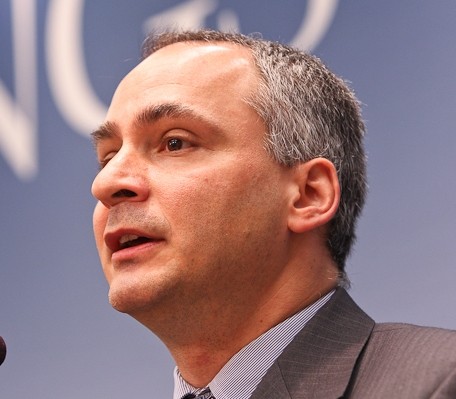
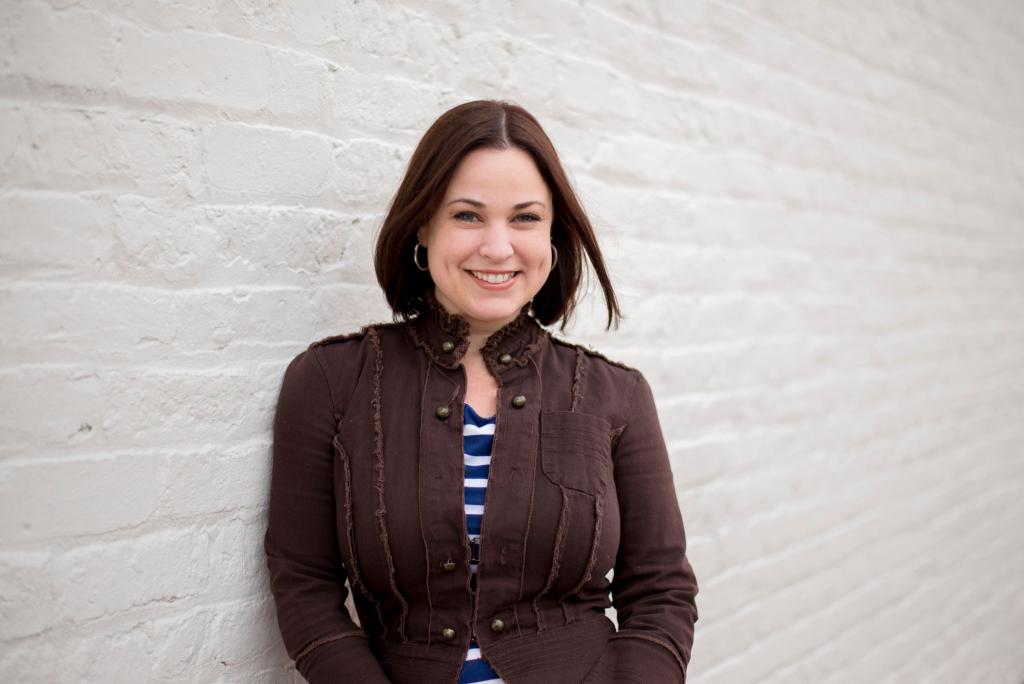
Lawfare Editor in Chief Benjamin Wittes and Senior Editor Michael Feinberg discuss the methods and techniques the FBI used to investigate Donald Trump as part of the Arctic Frost investigation, and whether critiques of the FBI’s steps hold up.
To receive ad-free podcasts, become a Lawfare Material Supporter at www.patreon.com/lawfare. You can also support Lawfare by making a one-time donation at https://givebutter.com/
Click the button below to view a transcript of this podcast. Please note that the transcript was auto-generated and may contain errors.
Transcript
[Intro]
Michael Feinberg:
They've picked out things that they know are gonna upset other senators and
other representatives in the hopes of creating this groundswell of criticism
that allows them to overwhelm the actual narrative.
Benjamin Wittes: It's
The Lawfare Podcast. I'm Benjamin Wittes, editor-in-chief of Lawfare,
with Lawfare senior editor Mike Feinberg.
Michael Feinberg: At
the time they were seized, they did not belong to Donald Trump. They did not
belong to Mike Pence. Under government executive branch rules, as
government-issued phones, the two individuals had no reasonable expectation of
privacy in what they used the phones for.
Benjamin Wittes:
We're going back to Arctic Frost today. There's been a giant trove of documents
released over the last several years by Chuck Grassley, the chairman of the
Senate Judiciary Committee, in an effort to discredit the Arctic Frost
investigation of Donald Trump. Mike Feinberg read it all, and you'll be
surprised to know he found that it didn't quite say what Chuck Grassley thinks
it says.
[Main Podcast]
So Mike, you have written parts one and part two of “The
Paranoid Style in American Oversight.” How many parts are there gonna be?
Michael Feinberg:
Just three. The investigation of Arctic Frost, which the pieces are about, as
everybody knows, was curtailed with the election of Donald Trump to the
president. Per OLC policy, Jack Smith had to dismiss the case and discontinue
the prosecution, so there's only so much to do with what's in the public
record.
It didn't get nearly as far, I think, as the prosecutors hoped,
even if it did get farther than I think Donald Trump and his defense team would
have liked. So the only really remaining question for me to look at is, what is
this oversight trying to do? Because as the first two pieces argue, the
oversight, largely by Senator Chuck Grassley, to a lesser extent by Congressman
Jim Jordan, is not really revealing anything untoward or inappropriate.
They're selectively releasing documents and in achronological
order, which tends to gin up controversy because they're choosing things that
in a vacuum, to people who don't understand law enforcement or prosecutions,
might seem overly aggressive. But when you actually look at what they've
released in the context of the investigation and compare it to extant DOJ and
FBI policy, there were zero missteps in terms of the agencies overstepping
norms or bounds or laws or policies, and I think the investigating agents
actually behaved with an admirable amount of restraint.
Benjamin Wittes: All
right. So, we've just skipped ahead of a huge amount of stuff by having me
start kind of in media res, but let's tack back and talk about what this series
was about. How did you come to be writing a three-part paean to Richard
Hofstetter and Chuck Grassley?
Michael Feinberg:
Well, starting toward the end of the Biden administration, a number of
purported whistleblowers, although I don't think that term should actually
apply here, began funneling documents to Chuck Grassley, and they were released
in a very odd order. Th- there was no chronological rhyme or reason to why
certain documents came out at certain dates. There was no context provided
whatsoever. Names were not redacted. It's not normally how these things are
done. Later on, Kash Patel would release documents directly to Jim Jordan, and
it's really not done to not redact those.
And it seemed to me that Trump's allies in Congress, with the
assistant of the FBI's highest executives, were not trying to actually conduct
oversight because the things they were complaining about or bringing to light
were not actually any form of wrongdoing or, you know, waste, fraud, or abuse
or violation of any sort of policy.
What they appear to have been doing, among other things, is
just undermining the whole investigative process in public for the purposes of
supporting Donald Trump's contention that the election was stolen.
Benjamin Wittes: All
right. So, let's talk about the two parts that you've written, and then I will
have you preview a little bit what's gonna be going on in the third part.
Part one is really about, it's kind of an introduction to the
project, but it is also a kind of announces the idea that Chuck Grassley has
told a story with the release of these materials, but that they don't support
the story that he's told. So I want you to, at the highest level of altitude, give
me an account of what the story Chuck Grassley thinks he's telling looks like. If
you're a MAGA follower of this information ecosystem, what have you learned
that a whole bunch of declassified and released FBI documents through the good
offices of Chuck Grassley, what is the story you think you've been told?
Michael Feinberg: So
the story Chuck Grassley is trying to tell is essentially that a rogue FBI
senior leader, an assistant special agent in charge at the Washington field
office, forced through the opening of an unjustifiable investigation into
Donald Trump's efforts to contest the 2020 election. And in doing this, he
violated a host of FBI policies. He sought out individuals who were like-minded
to him, had them staff the case, and the agents who staffed the case then ran
haphazard over civil liberties and wasted taxpayer money doing something that
they had no predication or justification for doing.
Benjamin Wittes: And
does he name that person?
Michael Feinberg: He
does. He does.
Benjamin Wittes: So I
don't wanna pick on somebody who's in fact innocent of these horrible deep
state conspiracy charges, but I, and I wanna make clear that the person he's
going after here, part of the argument is that there's no merit to any of this.
But who are we talking about here?
Michael Feinberg:
We're talking about an individual named Tim Thibault, who actually, after the
attention brought to him by Grassley, which in my view was largely unmerited
with one exception, which we can get into, he ended up resigning. But Grassley
has still continued to criticize him to this very day. If you go to his website
and do a search for his name, I think you come up with something like 42
separate press releases or speeches criticizing this individual and claiming
that he was really at the forefront of a conspiracy to halt Donald Trump's
political fortunes.
Benjamin Wittes: And
just to be clear, we're not here talking about the 2016 conspiracy in the
language of the grand conspiracy. We're talking about a second phase of it,
right? Where, where Jack Smith and some rogue FBI agents extend the ni- 2016
conspiracy to prevent Trump from coming back, right? That's the, that's the
theory here?
Michael Feinberg: Yes
and no. So, so first of all, and I'm gonna be a little nitpicky 'cause I know
people listening to this and criticizing what I'm arguing are gonna be
nitpicky. The investigation that I'm writing about, the sole investigation I am
writing about, is an investigation that the FBI code-named Arctic Frost.
And it was an investigation into what is widely known as the
false elector plot, which is where, according to the allegations in an
indictment put forward ultimately by Jack Smith, even though at the beginning
this was just a regular FBI and DOJ investigation, Donald Trump basically
conspired with a number of other individuals to get a number of swing state
surrogates to put forward an alternate slate of electors when it came time to
certify the 2020 election. And they used, ac- if you read Jack Smith's report
and you read the indictment, they functionally used these individuals to cast
doubt on the real results in the hopes of forestalling the certification of the
election.
Now, Chuck Grassley has actually been relatively good about
keeping his aperture relatively narrow on this specific series of events. Once
Jim Jordan starts chiming in, things go a little bit, and I say this as
somebody who had a home in the Republican Party much longer than as an
independent, things go off the rail. Jordan, at one of the hearings where he is
essentially grilling Jack Smith, constructs this wide-ranging conspiracy going
back really to 2015 when there are allegations about connectivity between the
Trump campaign and Russia. He loops in the FBI's Crossfire Hurricane efforts,
the Mueller special counsel, the Jack Smith investigations, both into the
mishandling of classified documents and an attempt to overturn the election. He
brings in Hollywood actors and the West Coast cultural establishment.
I refer to it in my second piece as a paranoid fantasia, and I
really encourage everybody to click on the link provided there and actually
read what he has to say because it's the sort of thing that would come out of a
'70s paranoid thriller, something like The Parallax View or Winter Kills. It is
a series of connections that bear zero scrutiny.
Benjamin Wittes: So
it's fair to say then, I, I mean, most people who listen to this will really
never have heard of this conspiracy theory, but it's a piece of the kind of
grand conspiracy, and it's the reason, fair- it's fair to say it's sort of the
reason that Jim Jordan held these hearings with respect to Jack Smith.
And the principal public effect of it so far, other than the
destruction of careers of individuals like Tim Thibault and the attempt with
respect to Jack Smith, has been to cause the release of a very large body of
documents, right? Which is actually a real thing that's happened. It's all
sitting on Chuck Grassley's website. The, a large body of material that now
Kash Patel has been cooperating w- with and just providing to the Judiciary
Committee. Is that a fair summary?
Michael Feinberg: I
would add in one word to your description of the documents, and that word is
selective. They have not taken a case file and dumped it en masse for the
public to review. I actually wouldn't, you know, there, there are arguments
against releasing investigative findings, findings without a conviction that
apply to every case and would apply here.
But in terms of transparency, had they just released the entire
Arctic Frost case file, we would not be sitting here. Because what they have
done instead is picked out not just what will seem the most controversial to
the public, but they've picked out things that they know are gonna upset other
senators and other representatives in the hopes of creating this groundswell of
criticism that allows them to overwhelm the actual narrative.
And the actual narrative is laid out very clearly in Jack
Smith's report, and at least the half that has been released to the public, and
it is laid out very clearly in a grand jury indictment. An indictment, I would
add, that went through many of the judicial safeguards in terms of DOJ
approvals and ratification by the citizenry that I think lends it a certain
amount of legitimacy.
Benjamin Wittes:
Okay, so, you know, in any one of these developing a conspiracy theory out of
real material, you have, inevitably, a set of distortions. And so I wanna tick
through what the major historical distortions is. And, and the oddity of this
is that Grassley provides you the information that you need in order to rebut
the very things that he's saying. Is that-
Michael Feinberg:
Yeah, not entirely
Benjamin Wittes: But
mostly you're citing material, these articles are made up of materials that in
fact he released.
Michael Feinberg: Yes
and no. I, I am taking the materials he released, then going back to DOJ and
FBI policy manuals and guidelines that are available publicly other places, and
sort of doing a comparison of what he says happened that was wrong to what the
actual policy is.
Benjamin Wittes: Give
us an example of that. What is, you know, if you read the, the Chuck Grassley oeuvre,
what's the biggest building block of the conspiracy that he reveals in these
documents that you look at and say, "Ah, that's perfectly consistent with
DOJ policy”?
Michael Feinberg:
There's a lot we can go through, and I'm happy to go through it all. It might
be more beneficial to just walk through the ex- the investigation as Chuck
Grassley has laid it out, and sort of rebut things one by one.
Benjamin Wittes:
Let's do it.
Michael Feinberg:
Okay. So the investigation begins, per Grassley's documents, with a series of
discussions between DOJ officials, FBI officials, some lower-ranking FBI agents
on how to respond to a referral from the National Archivist of the United
States that there appear to have been massive irregularities with the number of
electoral certificates submitted in a number of swing states.
Now, this is not actually news to anybody. The media had
reported on the false elector plot extensively before this investigation was
opened. It was one of the main bones of contention between different factions
in Congress on January 6th.
But the FBI doesn't just open an investigation based on an AP
News report. You need a little bit more than that. So the referral from the
national archivist sort of gives them that hook, and they start to examine how,
how and if this investigation should be run. And they debate a lot of things.
They talk about who should be the subjects. They talk about should it be
centralized, should these be individual cases.
And Grassley really hangs his hat on a few points. The first is
he publishes different drafts of the opening EC, an EC being short for
electronic communication, and it's the standard document when opening an FBI
investigation. I wrote God knows how many of them when I was an agent. And
Grassley has a number of the different drafts that have gone back and forth
before they were finalized. And in some of these drafts, Donald Trump is named
as a subject. In some of the drafts, there are just what we would refer to as
unsubs, unknown subjects, and it, and it ping-pongs back and forth in the
various drafts. And he takes this to
mean that originally Donald Trump was not a subject of the investigation, and
then somehow, as Tim Thibault is involved in the emails back and forth about
how to run this thing, Donald Trump becomes a subject.
Now, that is something that happened, but there's a whole bunch
of intermediate steps that Grassley ignores, namely the furnishing of the false
elector certificates, which you can still find on the National Archives
website, to the FBI investigators. And in the course of writing this EC,
they're learning more, they're getting more information, and something else is
going on.
Donald Trump, as people know, is a significant political figure
who is widely assumed to be running for re-election in 2024. That implicates a
process at DOJ that requires certain officials to sign off on the investigation
before Donald Trump can be named as a subject. So it's only natural that, you
know, Donald Trump is not an initial subject, but then if you go and actually
look at a lot of the documents that are publicly available, at a certain point
DOJ signs off on it, Chris Wray and the FBI signs off on it, Lisa Monaco and
Merrick Garland sign off on it, and then immediately thereafter Donald Trump
becomes a subject of the investigation.
Benjamin Wittes:
Which is exactly the way the process normally works, right?
Michael Feinberg:
Correct. So yes, if you did not know this was the process and that you needed
those approvals before you could name Donald Trump as a subject, it would look
to you like he was shoehorned in there at the last minute. But what was
actually happening is that the FBI was just following the processes for getting
the necessary approvals before naming him for a subject.
And then, once that document is signed, I think within a day or
two he's added as a subject. There's nothing nefarious about it. They just
couldn't take that step until they had gotten the relevant approvals. They
weren't being sneaky. They were assiduously following policy.
Benjamin Wittes: So
what's another example of this where there's sort of a major component of the
conspiracy theory that you look through the documents and you hold them up
against policy, and I assume the main policy document you're looking at here is
the so-called DIOG?
Michael Feinberg:
Correct, which stands for the Domestic Intelligence and Operations Guidelines.
It's sort of, to the extent the FBI has scripture governing what people can and
cannot do, that is it. It is ridiculously voluminous. It is incredibly
detailed.
Benjamin Wittes: Right,
it's like thousands of pages, right?
Michael Feinberg:
Yeah, yeah. So let me, let me take one thing that Chuck Grassley continually
brings up, and he claims that there is something called the no self-approval
rule in the DIOG, and he is right. What that rule states is that if you are the
author, the stated author of a document in an FBI file, you cannot be the final
approver of it. Now, in order to get entered into an FBI file, depending on the
type of documents, somebody needs to write it and sign it, and then any number
of officials need to... I mean, we also just call it signing. Let's say they
certify it, right?
So your run-of-the-mill stuff, the summary of an interview that
is of somebody who's not a sensitive figure, your supervisor just signs off on
it. So the case agent does the interview, writes up the summary, gives it to
his or her supervisor, the supervisor signs off on it, and it goes into the
file. The more sensitive and high profile you're getting, the more people who
need to certify it.
And one of the individuals who certifies on the opening EC is
Tim Thibault. Tim Thibault also, in earlier emails, massages the language of
the EC. So Chuck Grassley takes this to mean Thibault violated the no
self-approvals rule. He had a part in writing the document, therefore he should
not have been allowed to approve it.
There are a number of words I could use to describe this
contention. I'll go with balderdash given that this is a family show. If
somebody who is involved in the writing of a document cannot be a signatory on
it, then I'd say 50% of the FBI's files are invalid. The rule is to prevent the
final signatory from being somebody who was involved in the promulgation of the
document.
Benjamin Wittes: So
break that apart for me, 'cause you're getting into an area of FBI
bureaucratese that I'm not sure a lot of listeners will understand. What, what
is, what is the problem that the, that the rule is meant to address?
Michael Feinberg: All
right, so the problem is, let's say I'm an FBI agent, and I write up an
interview. That interview needs to be vetted as a sort of measure of quality
control and institutional integrity by somebody other than me. That person is
usually my supervisor.
Benjamin Wittes: But
if the supervisor wasn't there, how would they know?
Michael Feinberg:
What do you mean?
Benjamin Wittes: I
mean, if they read your 302-
Michael Feinberg: Uh-huh
Benjamin Wittes: And
you went and interviewed Ben Wittes and they weren't there for the interview-
Michael Feinberg: Mm-hmm
Benjamin Wittes: how
would they be in a position to evaluate the quality of the write-up?
Michael Feinberg:
What they're evaluating, like look, a certain amount is taken on faith, and
that is a testam- like, almost everything the FBI does has testamentary value.
The check on the truthfulness of the matters asserted in the document is
cross-examination and jury presentations and trials.
What the supervisor is looking for is that- You in the drafting
of that document and in the things you're relating and admitting to having done
have not violated any FBI policy. It's, it's less of a substantive check on the
content than it is a, a check on the document itself comporting with policy.
Let's sort of break down the opening EC that we're talking
about here in, in order to better illustrate this. So a number of agents are
writing an EC to open an investigation on the false elector plot. Because the
false elector plot involves somebody who is widely assumed to be running for
re-election in a few years, it needs to be approved by a lot of people.
The language needs to be tight, and what I mean by the language
needs to be tight is if you show this document to a jury or an inspector
general or Congress, it needs to be clear that the facts you are asserting in
there meet a certain legal standard that allow you to open the investigation.
You cannot have a situation where the agents write up the opening and sign it
themselves, 'cause then there's no check. There's nobody looking at whether
they met the legal standard they need to open the investigation.
In the case of Arctic Frost, what you have is the supervisor,
the assistant special agent in charge, who is Tim Thibault, and the
investigating agents engaging in a dialogue about, how do we articulate this to
make sure that we're meeting the standard?
All of them sign off on the document, and because of those
conversations, if they were the only ones who signed off on the document, we'd
have reason to be a little bit suspicious. But because this is such a high
priority sensitive investigation, there's about a half dozen other people who
sign off after Tim Thibault, ultimately the deputy director of the FBI.
So to claim that because Tim Thibault is a signatory, it
violates the FBI's policy on a document being uploaded when the author is also
the signatory ignores the fact that there were many people above Thibault who
also had to review it and authorize it before it was approved.
Benjamin Wittes: So
let's talk a little bit about how you've broken this subject up. This is- it's
an enormous subject. It's a fairly large body of material. What did you do in
part one following th-this introductory section where you kind of bring up the,
the large subject, talk about what the series is gonna do? What's the, what,
what bounds part one of the, of the series?
Michael Feinberg:
Part one is about how the investigation gets opened. So, I do my best to rebut
the allegation we've just been discussing, but there's also a whole bunch of
other accusations lobbed at Thibault and the Washington field office that don't
make sense to me as somebody who was in the organization and frankly as an
American citizen who now wants the organization held to the highest standard.
You know, one of the things that Thibault really gets raked
through the coals by Grassley is that he handpicked the agents who would be the
investigators. Where Grassley sees a bug, I see a feature because if you
actually look at the backgrounds of the investigators, and there's enough in
the public view to do this, you see that they were uniquely suited to handle an
investigation of this magnitude.
Both of them were public corruption agents, which is where this
investigation would naturally fall. One of them was the only public corruption
agent in Washington field office who had also been an assistant U.S. attorney
in her prior life. The notion that that would be a bad thing, having a lawyer
who's actually prosecuted cases on a sensitive investigation where everything
needs to be done by the book, is incredibly strange to me. The other individual
who was picked to be one of the case agents was the primary investigator of the
Maria Butina scandal, which was largely a national security counterintelligence
investigation, but it's one that dealt with a plethora of elected officials.
Benjamin Wittes: So
for those who don't remember, we have a number of episodes of this show about
Maria Butina who is a Russian gun rights activist who came to the United States
as a graduate student and ended up pleading guilty to a number of crimes or-
related to operating as a Russian agent in the United States in interaction
with a number of prominent people. Is that a fair description of her?
Michael Feinberg:
Yeah, it's a, it's a totally fair description. So the two agents that Thibault
picks: One has extensive experience having to interact with senior elected
officials because of her work on that case, and the other is a former federal
prosecutor who is going to know the law inside and out better than almost
anybody else in that office, I'd imagine.
And, and to be clear, supervisors and ASACs pick what agents
are gonna work what cases every single day. The majority of investigations that
an agent works on are not ones he or she chooses. They're ones he or she is
assigned, and the SSA, or in really important cases the ASAC, and, like, I've
served in both of those roles, I know what I'm talking about here, invariably
tries to pick the people who are best suited to carry out the investigation.
It has nothing to do with political views, which we never
actually know about each other. It has nothing to do with trying to secure a
guilty conviction. It has everything to do with whose experiences are going to
help us get at the truth at issue in this specific case. And I can't fault
Thibault with the people he chose for this one based on their backgrounds.
Benjamin Wittes: So
let's talk about part two, which came out last week and covers a different
subject.
Michael Feinberg:
Yeah, so part two is where I sort of dispense with the opening intrigues that
get us to the point where the investigation is up and running, and look at the
actual techniques that Grassley has really claimed were objectionable.
And as somebody who is an investigator, as somebody with a law
degree, as somebody who is not shy about criticizing his own former
organization when necessary, like, I don't think they did anything out of the
ordinary. I don't think they did anything out of policy. In fact, I think what
they did was actually quite cautious.
And we're talking about two investigative techniques mainly,
which are rarely a cause for controversy. The first is interviews, and the
second is obtaining toll records. Now, there's different ways, as I talk about
in the piece, to examine how intrusive an investigative technique is on the
rights of the accused.
And FBI agents are mandated, it's, it's like the closest thing
that the DIOG has to a foundational law, to always use the least intrusive
method. And the DIOG is clear, like it doesn't provide a ranking of what
methods are the most intrusive and which are the least, but it does a number of
things like almost in a Talmudic way, which I realize is probably not a metric
which has been used for the DIOG before. But there's clues within the text that
tell us what is intrusive and what is not.
The first is how many levels of approval does it take to use
the technique? You know, an interview generally requires no appro- usually it
requires supervisor approval. Looking at open-source research or other
government agency documents usually requires no approval. Doing an NSL, doing a
wiretap, that requires usually, you know, SAC approval, who is the highest
individual in the field office.
Benjamin Wittes: An
NSL, for those who don't know, is, is a national security letter. It's
basically a letter that demands production of communications metadata from a
service provider.
Michael Feinberg: So
I think, you know, we can intuit that the techniques which require fewer
approvals are gonna be less intrusive than the techniques which require many.
Similarly, the FBI has three different types of investigations
and levels of increasing severity. You have assessments, preliminary
investigations, and full investigations. You are not allowed to do the same
things in all of those. You have a relatively l- few number of tools in an
assessment, and you have everything under the sun in a full investigation, and
something in between in a preliminary investigation. So, if a technique is
allowed under an assessment, it's generally gonna be less intrusive than a technique
for which you need a full investigation.
Now, the interviews that Grassley is upset about are, aside
from going online and reading a newspaper, one of the least intrusive things
that FBI agents do. First of all, they're voluntary. You know, you, you are
under no requirement, absent a subpoena, to respond to an FBI request to sit
for an interview.
And when we look at the planning documents for the first round
of interviews that Grassley provides, we see agents actually being hyper
cautious in terms of who they're gonna approach, how they're gonna approach
them, and when they're gonna approach them. They sort of filter the list for
people who might be political candidates, and they just take them out of the
pool entirely. We're not gonna go interview these people. You look at people
who have counsel. If they have counsel, we're gonna work through their lawyers,
as is legally required. We're not gonna try and find a way to do an end run
around that. And in many cases, the people who are represented and may be under
investigation in other jurisdictions also don't get interviewed.
Then there's the people who they attempt to interview who say
they want counsel Okay hands off. Get counsel, get back to us if you like, and
we'll talk later. Then there are individuals who initially agree to do an
interview, and then on site get violent or have second thoughts. Those
interviews are curtailed immediately. And even after, in one case, threats of
physical violence, the FBI agents don't respond in the way they would be
legally entitled to. Even after a minor physical altercation, they just sort of
exit as quietly as they can and live to fight another day. So, the notion that
these interviews are overly aggressive just doesn't stand up to scrutiny.
The second thing about the interviews that Grassley really
hammers home on is the amount they cost, and this is really ludicrous. I forget
the actual number, but I did the math comparing to what the cost of doing all
these interviews was, because agents had to travel to other jurisdictions to do
them, and it's something like .000000001% of the FBI's budget. I've spent more
myself on a single operation that lasted two hours than these agents spent on
dozens of interviews. So there's no there there in terms of the criticism.
And then we get to the second investigative technique that
really does cause a political firestorm, and it's one, in my judgment, that is
entirely undeserved, and that was the request for toll records of a number of
senators and one member of the House of Representatives.
It's important to remember what toll records are. Toll records
are metadata. They are a record of what phone number called what phone number
on what date and for how long. And it's important to note, when you get toll
records, you don't even get the identities of the individuals to whom those
numbers belong to if you don't already know them.
So if I'm investigating Benjamin Wittes and I request toll
records, either through an NSL or through other legal processes that do not
involve classified materials, I know your number. So when I get the returns
back, I'm gonna know that five-five-five-one-two-one-two belongs to you.
Benjamin Wittes: But
you don't know that every single number on my toll list is a, is a famed
mobster. You just see numbers.
Michael Feinberg:
Right. I would have to do a whole ‘nother set of legal processes and come up
with predication that would again have to go through numerous approvals just to
figure out who those numbers belong to. And this caused a firestorm. There is
an attempt to get financial remuneration for the senators that failed
miserably. Natalie Orpett and I wrote an article on that feature alone.
But there's something that really gets lost in the discussion
here, and that is a grand jury did find a criminal conspiracy to overturn the
results of a United States presidential election. The senators and
representative who had their toll records seized by the investigators, to a
person either gave incredible rhetorical support to that conspiracy and/or
refused to certify the results of the election on the basis of what the
conspirators were saying. So it is a little difficult for me, as somebody who
used to be a criminal investigator, to understand why that would not be fair
game.
I do wanna talk about
one more investigative technique, 'cause Grassley makes a lot out of the fact
that two phones were seized from the White House, one of which used to belong
to Donald Trump, and one of which used to belong to Mike Pence, and a phone was
seized from Representative Scott Perry. And in those cases, depending on what
was still on the phone and what had been deleted previously, there may have
been content in the form of text messages, voicemails, potentially call records
in the recent calls, and potentially some emails, depending on what types of
phones they were.
With respect to the phones that were being used by Donald Trump
and Mike Pence, Grassley elides a very important fact: Those phones did not
belong to Donald Trump and Mike Pence any more than the computer I used at the
FBI belonged to me. They were property of the executive branch as a corporate
entity which outlasts any single administration. At the time they were seized,
they did not belong to Donald Trump. They did not belong to Mike Pence. Under
government executive branch rules, as government-issued phones, the two
individuals had no reasonable expectation of privacy in what they used the
phones for.
So, there is zero problem with the White House giving those
phones to the investigators. And with respect to Scott Perry's phone, that was
done pursuant to a search warrant, which went through all the legal protections
and multi-branch processes that it would need to go through to abide by our
traditions of civil liberties. So I really don't see any controversy in the
seizure of those devices.
Benjamin Wittes: Alright.
So, before we turn to the biggest picture in the, you know, most macro sense,
give us a little preview of what you're planning to do in part three.
Michael Feinberg: So
I titled the piece “The Paranoid Style in American Oversight” because I was
trying to use Richard Hofstadter's original essay about paranoia and conspiracy
mongering in far right politics as a means of almost jokingly saying that,
like, all Grassley's doing is feeding a conspiracy here.
But I was a little bit disingenuous because I think there
actually is a conspiracy going on here, it's just the one Grassley is taking
part in, not the one he is claiming to expose. And I think it's really twofold,
and I don't want to get too into it, because I think, and I will in the piece,
but I think there are two things happening here, and I don't think they are
accidental at all.
I think there is a concerted effort to lay the groundwork for
popular support among the MAGA population to fire very specific FBI personnel.
There is an actual trend where something gets leaked to Chuck Grassley with an
individual's name in it. Chuck Grassley makes a request to the FBI for more
information about it. Kash Patel or his surrogates give unredacted information
back to Grassley or Jordan. And when I say, I want to focus on the unredacted
part for a second because the FBI, as a matter of policy, has never before
revealed the names of investigators below the SES level. This is totally out of
the norm.
So, somebody leaks something to Grassley, Grassley makes a
formal request based on the leak, Kash Patel turns over the documents and does
not black out the line-level agents' names. Certain segments of the media start
writing stories about these people, demanding that they be fired, and then a
couple of weeks later, they are in fact fired without any sort of due process.
So, what I think we're actually seeing here on the one hand is a priming of the
pump to just ruin the lives of anybody who investigated Donald Trump.
There's something else that is even more nefarious from a
societal viewpoint that I think is happening here, which is they are actually
trying to undermine faith in a completely legitimate investigation for the
purpose of rewriting history. If they can claim that this was an illegitimate
investigation, all of a sudden, a lot of Donald Trump's grievances go from
being off the wall, unhinged, and unfounded to legitimate.
And in doing so, they are also helping the narrative that
Donald Trump has some sort of prophetic insight into what elections are
fraudulent and which ones are not. And I do not think that this is entirely
disentangle-able from the allegations we see going on in California and what I
fear we are going to see after the midterms.
Benjamin Wittes: All
right, let's zoom out. You've been a line agent, you've been a supervisory
agent, you've been a special- assistant special agent in charge, you've been a
special agent in charge on an acting basis. You've seen a lot of
investigations, including a lot of complex investigations. When you look at
this pile of material, where does this rank in the aggressiveness scale? You've
seen the FBI hold off on things. You've seen the FBI presumably do things you’d-
you would have been more cautious about. How much pause does the most
aggressive stuff in this investigation give you? And do you think there is any
point, even a small one, on which Grassley has a point that, you know, a
certain step should have been avoided or, you know-
Michael Feinberg:
Yeah, let, let me answer the f- the last part of that question first. Tim
Thibault made a number of, well, he reposted a number of things on LinkedIn
that were critical of Donald Trump. The Office of Special Counsel did reprimand
him for it, but I don't think you can impute bad intentions or any violations
of policy from that, simply because there do not appear to be any. FBI agents
always have their own opinions. It is not a good idea to post them publicly I
think, but there is nothing in the case file, in the docu-
Benjamin Wittes: Did you
ever post any of your, you know, private opinions about horror movies while you
were in government?
Michael Feinberg: I
never had any form of social media until maybe my last four months in the FBI.
I joined Li- I joined LinkedIn, but I was never on anything else while I was in
the FBI.
Benjamin Wittes: So
you never included, like, in social media sort of your known controversial
views about animatronics and, and-
Michael Feinberg: No,
not in a while.
Benjamin Wittes:
Okay, just checking, 'cause I wouldn't want you to be hypocritical about it and
turn out to have a history of expressing, you know, controversial opinions
about the French New Wave or something.
Michael Feinberg: No,
no, look, Thibault erred by doing that, but there is nothing in the documents
provided by Grassley that indicates his personal beliefs played the slightest
part in the opening of this investigation.
And I'm gonna now answer the first part of your question, which
is part of the reason I'm not particularly worried about that is because this
wasn't a particularly aggressive investigation. They did not do anything
horribly out of the ordinary. They didn't do anything out of the ordinary.
Every technique that Grassley has talked about so far is a very run-of-the-mill
technique.
Did they move a little quicker than some other investigations?
Yeah, of course, but that's something that happens in every special counsel
investigation with maybe the exception of Ken Starr. You're on a limited time,
a limited budget. There are a lot of forces battering you to wrap it up sooner
than later, so they moved a little faster. But even moving with that sort of
alacrity did not translate to any violations of policy or overly aggressive
actions.
Benjamin Wittes: So
what are the practical effects of this? You know, I, it's been going on for a
while now. It produces every now and then an eruption of noise, particularly
when they drag Jack Smith in front of committees. But mostly it produces
document releases that make certain waves in a certain corner of a right-wing
ecosystem, and nobody else even notices except you. What does this matter
outside of the 30 people who are obsessed with it?
Michael Feinberg: It
matters quite a bit, and in ways that the public may not be fully cognizant of.
The first is it obviously matters immensely to the agents who've been fired.
They did nothing wrong. They did not choose to work on this case, and they have
had their names dragged through the mud, and their reputations destroyed, and
their livelihoods eviscerated.
In one particularly tragic case, Kash Patel personally fired
somebody within days of his wife passing away. And it's worth noting that some
of the other lawsuits against FBI firings are by two division heads who refused
to carry Kash Patel's orders out to go after these individuals. So, when the
two assistant directors I'm talking about were told, "You will fire Agent
X and Agent Y," they said no. Kash Patel not only fired Agent X and Agent
Y but also fired the assistant directors who refused to carry out his dirty
work.
So it matters to those people, but it matters almost more in,
in the sense of what's important to the American citizen, it matters more to
the agents who are not involved. There are always gonna be sensitive cases in
the FBI, and there are always gonna be times where people in power abuse that
power and engage in criminal schemes for their own enrichment or for their own
aggrandizement. And the FBI is really the only game in town for investigating
those offenses. But if you are an agent and you see what is happening to the
Arctic Frost investigators now, you are going to do everything you can to avoid
being assigned to a sensitive or high-profile investigation. And even if you
get assigned, there is gonna be a powerful incentive for you to avoid doing
your job.
And that's upsetting for those of us who love the institution,
but it's more upsetting for any citizen who thinks that politicians should be
held to the same standards and expected to follow the same criminal laws as the
rest of the country.
Benjamin Wittes:
Mike, we're gonna leave it there. Thank you for joining us today. The series is
The Paranoid Style in American Oversight. Part one was back in February, part
two was last week, and part three will be sometime in the indeterminate future.
Thanks for joining us.
Michael Feinberg:
Thanks for having me.
[Outro]
Benjamin Wittes: The
Lawfare Podcast is produced by the Lawfare Institute. You can get
ad-free versions of this and other Lawfare podcasts by becoming a
material supporter of Lawfare at our website, lawfaremedia.org/support.
You'll also get access to special events and other content available only to
our supporters. The podcast is edited by Jen Patja, and our theme music is from
Alibi Music. As always, thanks for listening.