
Lawfare Daily: Far-Right Gains and a Political Reckoning in Germany
Discussing what’s going on in the German political scene.


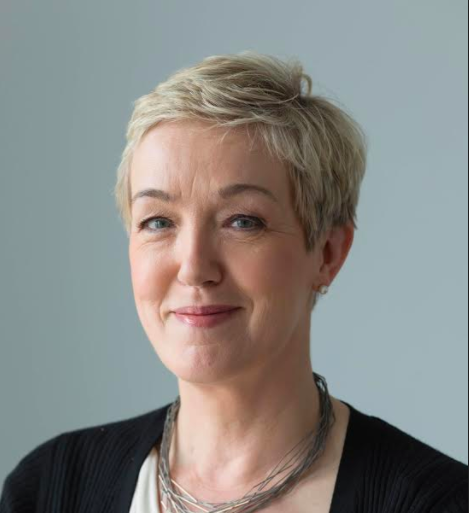
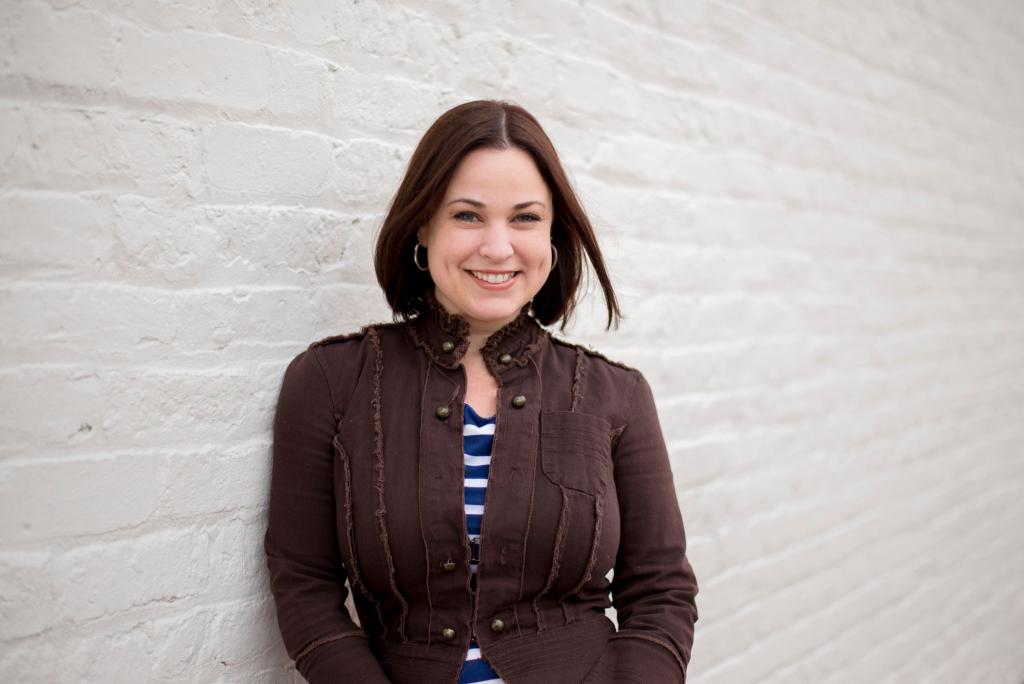
On today's podcast, Executive Editor Natalie Orpett sits down with Constanze Stelzenmüller, Director and Fritz Stern Chair of the Center on the United States and Europe at the Brookings Institution, to discuss what’s going on in the German political scene, where a far-right party, the AfD, is making a strong showing in state elections. They talk about what the party stands for, why its emergence is alarming the pro-democracy community, and what it all means for Germany, for Europe, for the United States, and for the future of Western democracies.
To receive ad-free podcasts, become a Lawfare Material Supporter at www.patreon.com/lawfare. You can also support Lawfare by making a one-time donation at https://givebutter.com/lawfare-institute.
Click the button below to view a transcript of this podcast. Please note that the transcript was auto-generated and may contain errors.
Transcript
[Intro]
Constanze Stelzenmüller: That the AfD would prefer to have a, a national security policy based on nationalism and dominance, I think is, is perfectly clear. Right? And, and again, close ties with Russia and China.
Natalie Orpett: It's the Lawfare Podcast. I'm Natalie Orpett, executive editor of Lawfare, with Constanze Stelzenmüller, director of the Center of the United States in Europe at the Brookings Institution.
Constanze Stelzenmüller: The future of a stable, prosperous, and secure Europe rides on the ability of centrist forces to persuade their voters, not just in Germany, but across Europe, that they are the most capable and the most legitimate source of governance.
Natalie Orpett: Today we're talking about what's going on in the German political scene, where a far-right party, the AfD, is making a strong showing in state elections. We talk about what this party stands for, why its emergence is alarming the pro-democracy community, and what it all means for Germany, for Europe, for the United States, and for the future of Western democracies.
[Main Podcast]
So Constanze, I've invited you on to talk about this fall's elections in Germany, and that may seem a bit unusual to some of our listeners because we don't typically cover domestic politics in European countries. But one of the key features of these elections, and following on the federal elections in February, is the emergence of one particular far-right political party known as AfD, which just won a few days ago, almost 44 percent of the vote. So to get us started, can you just tell us what is AfD and what do they believe?
Constanze Stelzenmüller: So AfD stands for Alternative für Deutschlandhland, which is easily understood. It means alternative for Germany. And it originated in 2013 as a, an anti-European currency party. It was founded by a bunch of libertarian German professors who thought that the common European currency was destroying the German economy, the euro.
And the name is actually a reference to one of Angela Merkel's favorite sayings. Angela Merkel was then the chancellor of Germany in her third of four terms, and she would often say, "There is no alternative." And she said it so often that people started using the acronym “TINA” for the Merkel government's approach to politics, which was very much one based on sort of centralizing, triangulating, squeezing out other parties to the middle and saying, "We're the ones doing rational politics and policymaking based on expertise, and there is no alternative.”
And this party really never quite took off the ground for the first years of its founding. For the first five years, it never sort of got more than four or, or, you know, barely five percent in in elections. It, it didn't have a lot of personnel. And then comes the migration crisis in 2018 with an enormous outflow of Syrian refugees based on the violence in Syria, in a civil war, and persecution by the then ruler of, of Syria, Assad, who was notoriously cruel. And this migration stream from Syria was joined by a lot of other refugees from Northern Africa and the Middle East many of whom were looking for employment and, but also just a, a chance of surviving outside of their own terribly difficult environments.
These streams sort of got to Europe more or less unobstructed, and there was a blockade at the German border in Austria that reached back through southern Eastern Europe all the way to the Balkans. And Angela Merkel made the historic decision to open the borders to these refugees. The argument being that if, if Germany did not do this, it would create a public order crisis in a whole swath of European neighbors that were likely, that were less prosperous and likely had less capable civil societies and government institutions to deal with such a crisis. And the other thing I think to remember is that German society at the time applauded her for this. She was internationally applauded for it. I, I remember vividly that friends of mine, you know, got together to house refugees, to give language lessons, and so on.
But over time, it became very clear that local governments especially And civil society were not capable of dealing with the s- the sheer size and complexity of this inflow. And it created not just resentment, but a sense that somehow government institutions in a state that is, or in a country that is n- notoriously anxious about stability for all the obvious reasons, were somehow not functioning. And, and that is what gave the AfD its, its drive.
That, that's the historical origin. It has since morphed into, I think, the most clearly radical and extremist right-wing party in Europe, so much so that other right-wing parties have refused to associate it, themselves with it including the Rassemblement Nacional led by Marine Le Pen in France, and Italy's government led by Giorgia Meloni have all kept their distance. As has have the, the new right-wing parties or semi-new right-wing parties in the, in, in Great Britain Reform and Restore UK.
Natalie Orpett: So given that the party has this similar origin, as you say, to the right-wing parties in both Italy and France, but they are now distancing themselves, I'm curious what, what happened along the way that this common thread of resistance to migration and concern about all of its societal impacts went even further? Was it, was the party sort of co-opted by other political forces? Did it just develop specifically because of any other contexts unique to Germany? Or, or what exactly happened that created this drift?
Constanze Stelzenmüller: Well, as with many of the, the right-wing parties in the West, there have been a lot of indicators that external influence was involved in some way or another, either party funding, indirect political support. There have been staffers of Russian or Chinese origin who have since been arrested for spying, that kind of thing.
But I do want to say very clearly that the German extreme right in the form of the AfD is absolutely homegrown in origin. And it has always had an internal sort of tension between moderate elements who thought, or quote-unquote, “moderate” elements, who felt that Angela Merkel's triangulation of the, her Christian Democratic Party, center-right party, had unduly liberalized it and thought that there could be a, a new home for a very conservative party.
And then there was the other element that was truly hard right and whose roots lie in the French Nouvelle Droite that was established in the post-war period in the late '50s, late '50s and, and 1960s. And to be quite frank, in a continuation of fascist and national socialist ideas that for decades in West Germany and in East Germany were not just fringe, but taboo, so- socially and politically proscribed, and that have just been fueled by a variety of political, economic, and social developments.
And over time, between this the, the, the migration crisis in 2018 and today, what we've seen is that again and again, the extremist wing won out over the, quote unquote, "moderates," who were still very, very conservative, and that in fact, those, quote unquote, "moderates" have been pushed out of the party or have left out of their own, of their own accord. Then the right wing, which had been riven by all sorts of factions over ideology, over alliances, over financial sources, over instances of corruption, and links to well-known neo-Nazi organizations, that hard right wing developed more and more discipline while at the same time making absolutely no attempt to hide the, the, the degree to which its ideas and proposals for changing the German constitutional orders are, in fact, radical.
Natalie Orpett: So I did wanna ask about the German constitution because it is, of course, quite distinct from the United States in the sense that there is a provision there to actually allow for the dismantling, I believe, correct me if I'm wrong, of political parties in the event that they are deemed sufficiently undemocratic. I'll ask you to, to explain a little bit more what the precise terms are. I know you're, you're an attorney as well.
Constanze Stelzenmüller: I'm a, I'm a lawyer by training. I never practiced. I don't have the German equivalent of the bar, but I am, yes, you're in dangerous territory because I am a constitutional lawyer
Natalie Orpett: I still have deemed you qualified.
Constanze Stelzenmüller: Perfect.
Natalie Orpett: So, so I do wanna hear about that provision, but it does seem just in and of itself to be an interesting dynamic that this party is emerging and becoming ever more disciplined and prominent and really developing its strength internally and correspondingly on more of the national stage, notwithstanding this sort of counterbalance that seems to exist in the German constitution. Can you talk a little about that?
Constanze Stelzenmüller: Happy to. Just a reminder to those of our readers born after German reunification in 1990 and listeners, Germany was divided into West and East Germany between 1945 and 1990 when the Berlin Wall came down and Germany was reunified. And in fact, the West German Basic Law was extended to cover the entirety of the new unified Germany.
But when I talk about the Basic Law, that Basic Law was promulgated in 1945 and with extensive midwifing from the occupying powers France, Britain, and especially the United States. And on the U.S. side, there were a lot of German Jewish constitutional lawyers who had fled the Nazis after nineteen thirty-three, gone on to work and teach in the United States, and who came back with the occupying forces and in fact helped the, the nascent West German government draft its new constitution.
So there was a great deal of American influence and a great deal of knowledge of German constitutional history. And the key point was to avoid a repetition of the situation of the Weimar Republic between World War I and 1933 when the Nazis took power, which essentially permitted the, the Nazis to take power w- using legal means, with elections and, and, and, and laws and, and constitutional revisions.
And the, the term coined at the time for the provisions that were supposed to prevent this kind of thing ever happening again was coined by a German Jewish constitutional lawyer called Carl Löwenstein, who taught in the United States and who called this Wehrhafte Demokratie or militant democracy. The translation isn't that great, but it is his own translation. I would say that it's democracy capable of protecting itself, and basically it allows for a variety of protective measures, including the Bill of Rights not being susceptible to constitutional amendment, the structure of Germany as a parliamentary representative, democratic federalist constitution also not being susceptible to constitutional amendment, and most importantly, it allows for the ban of unconstitutional parties But that has de facto only happened twice in, in the, in the 1950s, and it hasn't happened since then.
There have been subsequent constitutional court cases where the constitutional court laid the barriers very high, and as you can imagine, with the surge of the AfD since 2018, a renewed national conversation about whether the AfD should not fall under this provision. And there is a whole swath of literature and, and documentation of the many, many ways in which the AfD and its leaders have said things, written things published party programs, most notab- notably the 258 governing program of the AfD for Saxony-Anhalt, which I think we should talk about, and which plainly, beyond any reasonable doubt, established that the AfD wants to change the German constitutional order in ways that would not be permitted by the German constitution.
But the problem here, if I may, one last point here, is, is that the German constitutional culture is, in a sort of very classically liberal way, very reluctant to take that decision away from the voter, because a party ban would have to be initiated by, by the parliament and would have to be decided on by the Constitutional Court. And paradoxically, if you will, the stronger the AfD has become, the more and more its support has spread beyond the east to western Germany as well, the more plausible and, in fact, compelling the democratic argument is that if, if a, at this point, a fifth of the voters nationwide in polling, and a near majority of voters in this East German state of Saxony-Anhalt want to be governed by this party, to ban it seems like an abuse of, of the party ban provision. And, and that's, that, that is the trap of, of this particular provision. And, and I personally am also, I think in this sense, a classical liberal. I had much rather see this fought out in the political arena than adjudicated, than initiated by, by the legislature and adjudicated by the Supreme Court.
Natalie Orpett: Yeah, I wanted to drill down on that mechanism a little bit because the tension, as you say, between being a pro-democracy intended provision, but sort of permitting what could be very easily seen, especially in the event that a party has a lot of popular support as an anti-democratic mechanism for banning a party that has democratic popular will is, is quite a difficult tension to navigate.
But in terms of the, the procedure itself, so you said that the, the parliament will initiate the process, and it needs to be adjudicated by the Constitutional Court. But can you talk a little bit about what the, what the factors are to determine that a party has met the sort of requirements for a, quote-unquote, "unconstitutional party" such that it is eligible for a ban? I mean, what sorts of factors are we looking for in a party?
Constanze Stelzenmüller: I think you just have to make a, a compelling case that the intentions of the par- the political program of the party is to overturn the constitutional order of the Federal Republic of Germany Right? And again, there is a, at this point, a huge body of, of debate in, in Germany, and I think the evidence is, is simply compelling.
And again, you could, b- you, we don't even need to, need to go to the, you know, thousand-page sort of documentations that have been assembled by commissions, academic commissions studying this. You really only have to go to the 258-page program of Sac- of the Saxony-Anhalt AfD to understand what this party wants. You could also frankly go to the older national party programs of the AfD to understand that much of what is being proposed here is not in line with the foundational principles of the German Basic Law.
But if I, if I had to boil it down to one sentence, and it is a sentence that has been repeatedly used in the assessments of the German domestic intelligence services, both the national and the state-level intelligence services, who have come to the conclusion that the AfD is, is to be classified as an overtly extremist right-wing party, and who say the AfD has an ethno-nationalist view of German identity and German citizenship. That is against the foundational principles of the German Constitution's Bill of Rights, right? Ethno-nationalism was what Nazism was based on, and the Basic Law is supposed to stand against that forever.
Now, b- very quickly perhaps, because it's relevant for this, for this discussion, on, on these domestic intelligence assessments, Germany has 16 states. If I recall correctly, the state chapters of the AfD have been assessed as, have been finally assessed as right-wing extremist in five of German, Germany's 16 states. The National Intelligence Service, the Bundesamt für Verfassungsschutz, the Federal Office for the Protection of the Constitution has done the same for the nationwide AfD, but that has been challenged in court, so that assessment is currently suspended. Which is why I, I am careful to say that the Saxony-Anhalt AfD, where the- we just had the state election, is clearly right-wing extremist. On the national level, that's currently under judicial investigation. Do I think that the court is going to have any trouble coming to this conclusion? No, I don't.
Natalie Orpett: Interesting. Okay, so let's, yes, let's talk about the September 6th election that is really the instigating f- idea for this podcast because I think notwithstanding many predictions that the AfD would do quite well in Saxony-Anhalt in the state elections there, it was still a bit of a shock to people. So tell us a bit about the context for that election and what happened in the days since, and how it's been received.
Constanze Stelzenmüller: Sure. So Germany's state elections are spread out through the, the four-year term of the national government. And so this one was the first one in an Eastern German state for a while, where the AfD tends to have particularly high support.
Natalie Orpett: So actually, on that point, can you tell us a little bit about why AfD's support started and, and remains stronger in East Germany, despite the fact that it's transitioning more so to West Germany now?
Constanze Stelzenmüller: Actually, it didn't start in East Germany. It was founded in West Germany by a bunch of West German professors, libertarian economists. And in fact, a number of the current leaders of the AfD at the national level are also West Germans, right?
The reason why it took on so much in Eastern Germany, again, have been dissected far and wide by academic sociologists, economists, state politicians. It sometimes feels, frankly, as though we Germans were discussing nothing else, and had been discussing nothing else for, for decades. But the truth is that despite the fact that reunification is now more than 35 years ago, there is still a distinct socioeconomic and political divide between the former West Germany and the former East Germany. The former East Germany was turned into five separate states based on old historical regional divisions.
We could talk for hours about this, but, but very simply, there is a tendency by outside commentators to suggest that the genuine socioeconomic cleavages that still exist are solely responsible for support for the AfD, or that immigration is solely responsible for the AfD. The truth is that East Germany, and indeed Saxony-Anhalt, has some of the lowest levels of immigration of all of Germany. The concentration of immigrants are far higher in Western Germany. And the truth is also that social services, including hospitals and clinics and, and old people's homes, could not exist without swaths of European and non-European immigrants, doctors, nurses, and others.
There is also a, a culture war explanation that the German notion of a civic identity based on a rejection of Nazism, the Holocaust in World War II, atonement, and the making of peace with our neighbors and, and rooting ourselves in the Western alliance, that that narrative has regained support and is responsible for people's political decisions. That follows Steve Bannon's famous famous saying "Culture is upstream of politics." I personally think that that is tempting but, but not compelling.
I think what we're really seeing, that's my personal theory, but, but I, I can substantiate it and I think it is the most, it's the most complex and the most persuasive, is that we are seeing in all Western societies a form of systems overload, right? We're seeing sophisticated, mature democracies with actually quite significant economic and societal advantages and, and quite solid, successful institutions suddenly struggling with the disruptions created by globalization, by, by economic interdependence, and increasingly in Europe and in Germany, by the out, aggressive outside interference from, from other global powers, Russia, China, and to some degree now the Trump administration. And that is, in a country as anxious about itself as Germany and as keen to feel that stability and prosperity remain the basis of, of, of its future, right? That, that is deeply unsettling for people.
And, and so I, I tend to think that Germans who remember also in, in 1990 after reunification were suddenly moved from being a frontline state in the bilateral, in the, in the Cold War standoff between the West and, and, and the, and the Soviet Union-led communist world, suddenly were surrounded by friends. And through the expansion of NATO and the European Union, and became immensely prosperous because they suddenly started trading with all these countries in the East. I, I think Germans sort of assumed that, that, that, that, A) that situation was somehow a reward for having been a frontline state and atoned for everything that they'd done between '33 and '45, which, in parentheses, took them a very long time, and was incomplete for a very long time as well. I, I could go on for about this, but you get my drift.
And, and Germans sort of assumed that this, that there was now going to be a linear progressive path towards global market economic and dem- and democratic en-entropy. And it took them longer than many of our Central and Eastern European neighbors to understand that in fact the disruptions were coming closer and were com- becoming more and more aggressive. And, and I feel like for a very long time, Germany's political elites refused to, to admit, right, that this was going to become a problem for Germany. It was going to become a problem, or it was already a problem for the stability of democratic institutions and processes and for our relationships with our neighbors and the rest of the world. And that, that is where we are.
There, there is an additional element for Eastern Germany, though, that does, that, that does mark a historic and cultural difference, and that is that the West Germans lived under Nazism for 12 years, between '33 and '45. The East Germans had an additional 44 years of Russian occupation, communist rule, and an infiltration of civil society, right, by government spies where, where, where neighbors and, and even married couples were spying on each other. I have German friends who marched with candles in their hands in 1989 before the wall came down, knowing full well that the troops of the, of the GDR Interior Ministry were waiting in side streets with loaded weapons, right? And who are deeply, deeply concerned about the unwillingness of, of their fellow East Germans to come to terms with what the, the toxic effect of the combination of 12 years of Nazism and 44 years of communism, right? So there, there is that.
We had, we West Germans, I'm a West German, had under American, British, and French occupation the opportunity to, to let representative democracy take root in ways that, that the East Germans didn't have, right? And if you combine that with, with socioeconomic differences cultural affinities with, with Russia, oddly enough, despite a Russian occupation that wasn't very friendly, there is a, I think, a mixture of vulnerability and an affinity that, that the AfD is able to take advantage of.
And again, that is not to blame the East Germans. I, I think, in fact, that the West Germans who sort of blithely assumed that the East Germans would be delighted to take on the entirety of the West German constitutional order, including the statutory laws, the court systems democratic processes, took their cultural superiority somewhat for granted, right?
And they, one, one of the things that they didn't see, and I, I was a young, I was a young journalism intern in the early '90s at a West Berlin paper. And I took every opportunity that I could to run out to cover stories happening in the old eastern part of Berlin or in the surrounding Brandenburg, which was former East Germany or farther afield. And I rem-remember covering neo-Nazi cases against neo-Nazi gangs which had started marauding in the countryside around Berlin and Brandenburg and elsewhere. And thinking that there had clearly been an abdication of public order by the authorities, that to leave these gangs unchecked was untenable, right? And was clearly had to be a source for the, for the then very visible emigration of qualified younger and female East Germans to Western Germany. And we also had some very s- some, some cases of these, these gangs, and sometimes even ordinary people, torching refugee homes in the early 1990s. And the government in Berlin treating this as reprehensible but completely isolated cases of social violence which would go away soon.
And the truth is, I think that the roots of the resentment, anger, and fear that we're seeing now, that motivate a great deal of the vote for the AfD, go back 35 years. And it, and we're only now coming to understand how deep those roots are of 35 years or more, if what I've said earlier is true about life under communist rule. And I think that is why the AfD can succeed politically with promises that it clearly is not going to be able to keep, that are clearly radical, but that play on deep-seated, deeply rooted fears and anger and resentments. In much the same way, frankly, that right-wing movements, including in this country, have operated. And again, it's about systems overload.
Natalie Orpett: Yeah, I was actually going to remark on that because it's, it does seem to me that, of course, there are very specific historical contexts as you were describing, that are specific to Germany, but many of the phenomena you describe really are being echoed in democracies in, in Europe and certainly here in the United States.
And I wanted to actually circle back to, you mentioned Steve Bannon talking specifically about AfD, and he is of course not the only prominent right-wing figure in the United States who has had something to say specifically about AfD, which is, you know, fairly unusual for American, particularly politicians, particularly in this case the Vice President of the United States interjecting an opinion and an endorsement into another nation's domestic political sphere. So can you talk about what all of this means, the, the interaction of right-wing figures in the United States and the AfD and, and also in Europe, which of course we are as Americans a little less familiar with. But is certainly happening as well with far-right parties elsewhere in Europe.
Constanze Stelzenmüller: Yeah. So the connection between the MAGA right and the AfD is genuinely notable. But it does have some quite odd elements, which is that when the Trump administration came into power, you had the Vice President of the United States laying out this vision of a civilizational alliance, basically of white right-wing parties, white ethnonationalist parties across the Atlantic at the Munich Security Conference, and he did also meet with the co-chair of the AfD, Alice Weidel, in Munich. And since then, a number of AfD parliamentarians have worked quite hard to establish a sort of a foothold in Washington.
But the truth is, it's been kind of a backbencher to backbencher thing for much of the time. There is a MAGA-affiliated representative in, in, in the House, Anna Paulina Luna, who has met with AfD representatives. The Young Republicans of New York, whom I think have been excluded by the GOP, have invited a, the foreign policy speaker of the AfD to give a speech at a gala earlier in the year. And Anna Paulina Luna also invited Alice Weidel to come to Washington, and Alice Weidel accepted on social media, but never came. And I'm going to assume that that happened because she wasn't assured of a reception at a level that she would have considered high enough. So, there, there have been a couple of visits from AFD legislators to the State Department, but that, as far as I can see, is it. Of course, they've shown up at CPAC conferences, this kind of thing, but the actual gov- you know, official contacts that have been visible to people like me have been quite limited.
But after the election on September, September 6th, the AfD in Saxony-Anhalt, a tiny East German state of 2.1 million inhabitants in a country of 83 million, got a, a post of congratulations from the President of the United States, from Elon Musk, and from the former ambassador to Berlin, Richard Grenell. The person who didn't say anything so far was the vice president. So go figure.
I, I, I have a feeling really of both sides not being quite sure how to engage. One, one thing to keep in mind is that despite the fact that there are segments of the AfD that are profoundly anxious to be recognized and feted by, by MAGA and by the U.S. administration, there are also large swaths of the AfD that are profoundly, deeply anti-American. And this is especially true of its East German base where the, the emotional connection to Russia is very real, and there is a very, I think, sincere acceptance of, of connections with China.
So, I suspect that what happened after the initial very high-level endorsements and meetings is that maybe both sides decided it was time to, you know, to tone things down a little. And then, of course, the attack on Iran, right? Was profoundly unpopular in Europe, and not just amongst interest voter bases, but also in the hard right, and that also meant that the, that the AfD leadership had to, had to walk things back a little or, you know, to use the famous Simpsons image, retreat into the hedge a bit.
Natalie Orpett: I mean, it's an incredibly complicated dynamic there, it seems to me, because it's really within the AfD itself, it seems there are two polar opposite instincts in terms of alignment. And then of course a lot of, as you were describing earlier, aspects of the party identity and the voter base, it seems, that are really quite specific to German history and, and have a little bit more of an inward-looking.
Constanze Stelzenmüller: Yeah.
Natalie Orpett: You know, being focused, I mean, as all domestic politics are, on, you know, what is the right vision for Germany? Is this constitutional order working for us?
Constanze Stelzenmüller: Yeah.
Natalie Orpett: And all of these things. But the difference in affiliations or cultural ties, some being particularly in, in the East German areas being more affinity for Russia and in other areas more affinity for the MAGA right, not necessarily, I assume, not necessarily a sort of NATO forward, European-oriented, traditional North Atlantic alliance sort of look.
But it does seem like a lot of quite dueling opposite perspectives, and I'm curious also bringing into the picture what you were describing about the difference between the AfD at state levels versus national levels. You know, how, how is this party either at the state level or nationally or both holding itself together given the dueling internal dynamics?
Constanze Stelzenmüller: Yeah, that's a, that's a very good question. Those internal dynamics are very, very real, and they used to be greatly in evidence at party conventions, right? There was screaming, flare-ups, m- people marching out, people marching back in. Journalists would have a feast day describing all this, and there's by now a whole cottage industry in German media and, in fact, among German constitutional lawyers in tracking and describing all this. And I think all of them would agree that the AfD has developed an absolutely astounding internal discipline.
Everybody knows that those tensions are there, but it has imposed on itself a rigid political discipline, which, if anything, tells you that they are very serious about gaining national power, and that they will stop at very little to get there, because again, because of the reality of those tensions. And just to be, just to explain that a little more, the AfD is anti-European Union, anti-euro, the, the European currency in which case it happens to agree violently with the MAGA right, and the Trump administration. I think it's also quite clear that it's anti-NATO. It pretends otherwise, but, but it's, it's not.
Natalie Orpett: Why does it pretend otherwise?
Constanze Stelzenmüller: Because the national leadership is still eyeing American, American support and is not quite sure, and I think that might have something to do with the, shall we say, ambivalent signaling of the Trump administration on the matter of the Western alliance. And it's not quite sure where exactly its landing page is for that particular set of questions. But that the AfD would prefer to have a, a national security policy based on nationalism and dominance, I think is, is perfectly clear, right? And, and again, close ties with Russia and China.
I think we should talk a little bit about the question of the path to national power and, and the strategic intent of the AfD. I think it's worth reminding listeners that the AfD polls at around 20, 21 percent nationally, right? There are still three-fourths to four-fifths of Germans who are horrified by this party, by its obvious radicalism, its obvious connections to neo-Nazi gangs and thugs, and who would do anything to, or, you know, who would rather be, who would rather emigrate, right, than live in a country governed by the AfD, right?
The conundrum for them, a-apart from the, the, the paradox that, that a party ban, you know, is, seems a democratically less legitimate option than, than for this to work its way through the political process. The conundrum is that the AfD's radicalism, its extraordinary ruthlessness, and its shameless lies are not met with greater firmness by the centrist established political parties, and in fact, are showing up the political weaknesses, the self-doubt, the lack of cohesion of Germany's centrist political forces.
And I think that that, that, that experience, that insight is so shocking for many Germans, including me, frankly, right? That, that there's as almost a sense of quiet self-paralysis, right, watching this. How can a party that is so obviously pr- promising things it could never keep, right? That is so obviously, that has leaders saying Germany could exist with 60 million people, meaning 23 million would need to go, of German citizens, right? Again, Germany has 83 million people. AFD legislator Lena Cotré said this about two weeks ago at, at a, at a party rally. "All we need is 60 million." That would suggest expelling, deporting every German with foreign roots.
I, I don't even know how they would make up that number, except that there is a, that sort of official statistics will tell you that at this point, about 25 percent have roots outside of Germany somewhere, but that includes the Soviet Jews who fled the Soviet Union after the dissolution of the USSR in 1991. That would include the deportees who fled the expansion of communist Europe after 1945, and it would incl- it, it would include all the many, many EU Europeans or the many, many non-EU Germans who, you know, came to Germany as refugees, as, as migrants, who settled here in, in Germany. Sorry, not here, I live in Washington. Who settled in Germany 30, 40, 50 years ago and now have German children and grandchildren.
The truth is that the, that the lily-white Protestant or Catholic Germany that I grew up in, right, no longer exists in the same way that, that white America no longer exists, right? In my family alone, we have, you know, Taiwanese, Africans, Catholics even, Jewish relatives, the, the whole shebang, right? And, and that's true for most Germans. And so to, to talk about forcibly deporting 23 million Germans is astounding, right? And yet, and yet this party gets 40 percent of the vote in Saxony-Anhalt. That is, that, and that is what is, what, what is paralyzing people and the rest of the country.
Natalie Orpett: Yeah, I mean, it's, it's quite staggering. I, I wanted to come back to one thing that you mentioned which was the idea that this is exposing the weakness or the self-doubt of the centrist parties. And, and come back also to the idea of this firewall, which I know has a, a German term that I'm not gonna-
Constanze Stelzenmüller: Brandmauer, yep.
Natalie Orpett: Try to pronounce badly. If I understand correctly, the idea there was that other parties in Germany, which is of course a parliamentary system that has to form coalitions in order to form governing parties or governing coalitions, that is, other parties had agreed effectively to not form coalitions with AfD in order to try to marginalize them or keep them marginalized, as, as the case used to be.
But I'm wondering, it seems you're describing a tension where, you know, is it the case that some of those parties are rethinking, if not the firewall itself, that they're rethinking sort of the popular base? And do we, you know, for example, need to go after some of the people who are voting for AfD to try to expand our own party's umbrella for democratic electoral success? Is it that they're rethinking the idea of a coalition altogether with, with AfD to ensure their own power? I mean, what is, what is happening in the party alignment and thinking with other parties vis-a-vis the AfD?
Constanze Stelzenmüller: So I think the, one of the problems that we're looking at is that the, the center right, Friedrich Merz, the chancellor is, is the leader of the center right party, the Christian Democrats. And his coalition partner, the Social Democrats, are center left. Those two parties, for the, the longest time during the existence of two Germanys, and even for a decade after reunification, together mustered between 80 and 90 percent of the popular vote in federal elections, right? They were all-encompassing, big tent, so-called people's parties. And it seems to me that the, these parties and their leaderships have not yet understood that German politics have become as diverse and as fragmented and as polarized as everybody else's. So they're still thinking as though they, you know, could have, if, if only they tried hard enough, they could have 40-plus percent of the national vote, right?
And no, no party in Germany, with one exception to which I'll come, is willing to form a coalition with the AfD because of its, the obviously unconstitutional, anti-constitutional nature of its, of its goals. That said, at the s- at the local level and at the regional level, in, in small and, and sort of less populated rural swaths of Germany, that firewall just simply doesn't work. People have to, they, people tolerate each other, they cooperate across party lines, and there, there has been cooperation of all parties with the AfD in these sort of small communities. But at the national level, this is hard and fast, and, and frankly, despite the fact that there is now a huge debate about this, I, I don't see how a party like the Christian Democrats, right, premised on atonement, the alliance with Israel, the alliance with the United States, on overcoming, you know, historical enmities with France and Poland and everybody else in Europe, right? How, how such a party, right, could, could say, "Let's pull down this firewall," right? Sorry, that was an echo of Ronald Reagan. That is just unthinkable. And so, I'm, I'm on the side of those who say, "We can't do that." It would be, we would be basically committing harakiri, right, in the middle of Berlin, right? This would be a stab in the heart of our identity as, as a political party.
I also don't think that if the CDU abandoned the firewall and coalitioned or let itself be tolerated by the AfD, that somehow the AfD would moderate or normalize. That's not going to happen, right? It has happened with other right-wing parties, but, in Europe, but those right-wing parties are not as right-wing as the AfD, right? That's the difference, and, and American listeners need to understand that. And finally, there are some people who say, "Well, if they were in government, if they, if they had to, we, why don't we experiment with that in Saxony-Anhalt? You know, small, small state, you know, not much can happen. Why don't we give it a try?" The AfD has been very, very good in the past at deflecting responsibility, as has the MAGA right for that matter, for its failures, its obvious lies, right, onto others, and there is absolutely nothing to say that they wouldn't continue to do that, right? So I, I don't think that the, the, the German centrist parties or the CDU can save themselves by, by dismantling the firewall.
I think the only way they can save themselves is by, is basically by making, by making good policy, right? And policy that, that is seen as democratic and legitimate by, by voters. And there are plenty of, there's plenty of evidence to suggest that, that they have not been very good at that, and that in fact everybody's sort of staring at the AfD like the rabbit in the proverbial headlights, right? Has in fact been a massive distraction from that task of gov- of decent governance, which is what governance, what, what governments and parties are there for.
But unfortunately, there's going to be a test of all this fairly soon, and maybe that's what we should sort of close this out on, in, which is that there is gonna be two more state elections next weekend on September 20th and on the Sunday, one in the city-state of Berlin and another in an East German state in Mecklenburg Pomerania on the, on the Baltic Coast. And the, the risk here is that Merz's, Chancellor Merz's CDU slides even further in its popular support, and that that then puts even more tension into the governing coalition in Berlin. And there has been a great deal of speculation as t- on, on whether Merz should then be forced to resign by his own party and replaced by another Christian democratic leader. That is constitutionally possible in a parliamentary democracy and has in fact happened four times in, in, in German history.
I tend to think, while I think they're gonna get hammered again they are fated to stick together and, and to probably, you know, work out the, the term. I, I don- I don't think changing out the, the chancellor is going to work that well. And I've, I've, I s- I said, I've said something else only a day or two ago, but I'm beginning to think that, that a changing horses in midstream is, is not gonna work, and in fact will only strengthen the AfD. But it's, it is an astonishing moment in, in European politics and in German politics.
And a great deal hangs on this because the, the size of the German economy, right, and the fact that it's surrounded by, by, by quite small neighbors who are economically and socially, you know, through the labor economy, deeply inter-integrated with the German economy. As Germany goes, so goes the stability of Europe, socially, economically, and politically, sadly. And especially at a time when the French are, apparently think Marine Le Pen might make a good president in 2027 and, and when the, when the Brits have elected seven prime ministers in, in a decade, right? And, and the, the British hard right is also surging in the polls. It matters what the Germans do, and that is not to say, you know, that we're more important than anybody else. It's just that unfortunately, this responsibility is thrust on Germany by the external circumstances of the moment.
Natalie Orpett: Yeah, I mean, you anticipated my last question, which was to, to give exactly that context to, you know, should we understand these upcoming elections in only a couple of days from now? You know, how, how much should we understand that as a feature of domestic politics versus something that is truly an earthquake in a national sense and a regional sense and, and a global sense? I mean, you have this contrast, particularly with Merz having campaigned and really begun his, his term with an emphasis on building up European security and declaring independence from the United States. And I just wonder, I guess, to, to end, how you think about what we should be looking for, both in the elections on the 20th, but also in the coming months from then to understand how all of these dynamics are going to have ripple effects through regional and international relationships.
Constanze Stelzenmüller: So just to be clear, the co-chair of the AfD, Alice Weidel, recently, a few days ago, said in an interview that a, an AfD-led national government would not just end all support for Ukraine, but would ask for repayment of all the support it's received in the past nearly five years. I think it tells you what you need to know. Much rides on this, and I think centrist political forces in Germany are deeply aware of this, right? The, it is literally, I think it's not reaching too far or, or being overly dramatic to say that the future of a stable, prosperous, and secure Europe rides on the ability of centrist forces to persuade their voters, not just in Germany but across Europe, that they are the most capable and the most legitimate source of governance to take them into a future at a time where stability, prosperity, and security are going to be in very short supply.
And just to perhaps remind listeners who may not be tracking European politics as obsessively as I am from here, there are now instances of shadow warfare against Europe and Russia every day. Just today, there was sabotage on the entire Dutch railway network. There was another one or two weaponized drones in Lithuania. They had to shut down Vilnius Airport. And there was a Russian ship shot flares at a Danish helicopter, narrowly missing it in international waters. Not all of this is attributable to Russia, clearly, but much of it is. And there is a sense of a Europe under siege from Russia, also from Chinese economic coercion, and a very, very ambivalent and instable transatlantic alliance whose cultural and political premises are being questioned on a weekly basis by the Trump administration. And so a great deal is at stake, more than I think at any time in my, in my lifetime as an adult citizen of Europe and Germany.
Natalie Orpett: It really does feel like the nexus of so many national security, foreign policy, political phenomena that we've been tracking. So definitely a lot to watch, but I think we'll have to leave it there. And I wanna thank you for all of this deep context and explanation. I think it's given me a lot to think about.
Constanze Stelzenmüller: Thank you very much for having me on. It's been a, it's been a pleasure.
[Outro]
Natalie Orpett: The Lawfare Podcast is produced by the Lawfare Institute. If you want to support the show and listen ad-free, you can become a Lawfare material supporter at lawfaremedia.org/support. Supporters also get access to special events and other bonus content we don't share anywhere else. If you enjoy the podcast, please rate and review us wherever you listen. It really does help.
And be sure to check out our other shows, including Rational Security, Allies, The Aftermath, and Escalation, our latest Lawfare Presents podcast series about the war in Ukraine. You can also find all of our written work at lawfaremedia.org. The podcast is edited by Jen Patja with audio engineering by Cara Shillin of Goat Rodeo. Our theme song is from Alibi Music. As always, thank you for listening