
Lawfare Daily: How To Make a Patriot, with Fabian Hoffman



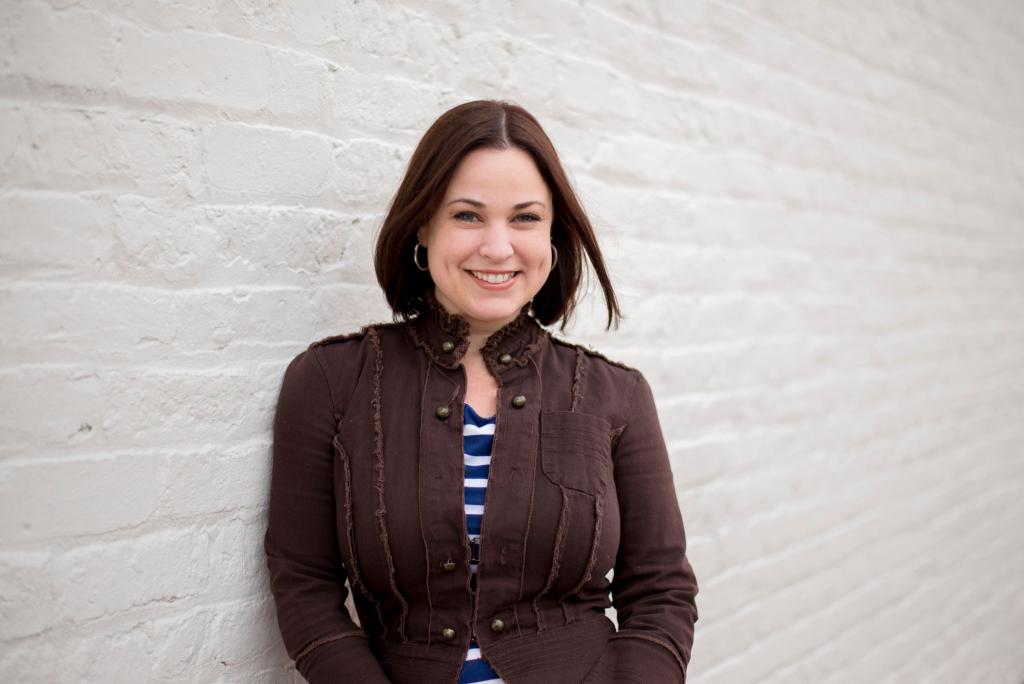
On today’s episode, Lawfare’s Ukraine Fellow Anastasiia Lapatina talks to Fabian Hoffman, a senior research fellow at the Programme for Ukraine and Full-Spectrum Threats at the Norwegian Institute for Defence Studies, about what it would take for Ukraine to produce Patriot interceptor missiles, if the United States had given it the license to do so.
To receive ad-free podcasts, become a Lawfare Material Supporter at www.patreon.com/lawfare. You can also support Lawfare by making a one-time donation at https://givebutter.com/lawfare-institute.
Click the button below to view a transcript of this podcast. Please note that the transcript was auto-generated and may contain errors.
Transcript
[Intro]
Fabian Hoffman: You know, license production agreements, they are and they should be seen as much more than just a, a business deal, and, and very often in the past they have been used actually to, you know, deepen political relations to enhance alliance cohesion because they signal trust.
Anastasiia Lapatina: It's the Lawfare Podcast. I'm Anastasia Lapatina, Ukraine fellow at Lawfare, with Fabian Hoffmann, a senior research fellow at the program for Ukraine and full spectrum threats at the Norwegian Institute for Defense Studies.
Fabian Hoffman: So many reasons why you would want to localize as much as possible of that supply chain, but if it's, if it's just about capability right now, right, then, well, in the short term there's nothing really you can do anyways, but then it might be better to say, "Look, we go softer on the localization," and instead prioritize, you know, moving some of it at least outside to speed up the, the whole process.
Anastasiia Lapatina: Fabian and I discuss whether the U.S. will give a license for the production of Patriot interceptors to Ukraine and what it actually takes to make them.
[Main Podcast]
So Fabian we invited you back on the podcast to discuss some of the recent news that came out of the NATO summit in Ankara in Turkey which happened in the first week of July. And at that time, the U.S. President Donald Trump said that the U.S. will be giving a license to Ukraine to produce Patriot interceptors, and he just kind of dropped that in the middle of a, of a, you know, press appearance.
And as far as I understand, we don't really have any details of, you know, what that will look like yet. The, the, the deal, the license hasn't yet been finalized, so we don't know all that much, but of course it spurred, you know, a whole lot of coverage of the issue, especially considering that the air war between Ukraine and Russia is getting worse by the day, very much literally by the day. I'm based in Kyiv, and it's an unprecedented level of attacks by ballistic missiles. We Ukrainians in Kyiv would, would get ballistic strikes, you know, two, three, four days in a row which has never happened before. And at the same time, Ukraine and Ukrainian authorities are saying that we've run out of interceptors completely.
So in the context of all of this, of course we wanted to bring you on to discuss all of this and discuss the Patriots and the air war. I wanna start with asking you a very basic question to just sort of set the, set the rules here. Can you explain how does licensing actually work, a- as in who grants the license to whom, and what does a license allow you to do?
Fabian Hoffman: Yeah. So basically you have two actors here. One is the licensor, the, the manufacturer that grants the license, and then have you the, you have the licensee, the actor that receives the license. And typically the licensor is a foreign manufacturer granting a license to a domestic manufacturer, depending of course- which country you're living in. But in this case, Raytheon, for example, for the PAC-2 GEM-T interceptor would grant a Ukrainian manufacturer the, the license to produce Patriot interceptors inside Ukraine.
Now, this involves technology transfers. This involves military technology transfers, so governments are also always involved. In the U.S. case, it is the U.S. government that needs to allow, right, the manufacturer to grant the license for these interceptors to be produced outside the United States. So this means it's not just a, a business-to-business deal. You always have the official side involved, which is why this hinges on a political agreement to work
Anastasiia Lapatina: Okay, so this would need to involve not just the Ukrainian government, you know, the president, whatever, you know, relevant institution we have, but also a specific company. So hypothetically, for example, FirePoint, which is, you know, trying to make ballistic missiles in Ukraine.
Fabian Hoffman: Could be, but this is already, you know, a bit where the issue starts that very often or, or, you know, let's take a step back. For example, when Raytheon granted a license to MBDA Germany to produce PAC-2 GEM-T interceptors, that was a very logical choice because MBDA Germany has been heavily involved in missile defense production in the past, and basically was already part of this defense industrial base involved in, in production of these types of weapon systems, right? Not exactly the same, but broadly speaking, there were component manufacturers that could fairly easily be, be diverted for, for this program.
Now, if you look at Ukraine, this is where the first issue starts. I would say there is not, you know, an immediate Ukrainian manufacturer that comes to mind where you would say, "Okay, look, this is the logical partner to be the prime contractor under a license production agreement between the United States and, and Ukraine." So it could be FirePoint, it could be someone else, but you know, there is not your one most logical choice, I would say.
Anastasiia Lapatina: We'll get to talking more about this, but before we get specifically into the Ukraine context, can you just explain a little bit more the logic behind the licensing agreements? Like, what do both parties get out of, you know, granting these licenses?
Fabian Hoffman: Yeah. I mean, in the end it's a, it's a business deal. A- again, it, it involves governments, but it is, I would say, you know, economically beneficial for, for both sides outside any military political context. The licenser increases, right, the production base of its missile system in this case, right? An interceptor could, of course, be any other military product by moving production outside existing facilities. So you increase the number of components that are being produced, you increase the number of entire units that are being produced, so in the end you can sell more.
Of course, then license agreements, they also allow you to gain market share, so very often they are used as a tool to, to make acquiring a system more attractive for the, for the side receiving it. So instead of, you know, just saying, "Hey, look, we're gonna export the weapon system to you, we're gonna integrate you in the supply, into the supply chain," making this whole deal a lot more attractive from the side of the seller.
And then of course for the licensor it's also just you know, fees that come with it. So let's say you have established a licensed production manufacturing facility somewhere abroad, every time that facility builds an interceptor, a missile, or whatever product and sells it to another customer, you get a licensing, licensing fee, right? Because it is your intellectual property that is being sold, hence you get a share of whatever profit is generated. So in that sense, it can also be economically very, very beneficial for the licensor.
For the licensee, well, they get access to an established product, to established IP. That means you can save a lot of the development costs behind, you know, some of these ballistic missile defense systems, for example, or again, for any other military product. And of course the technology transfers, while immediately they are restricted to the product that you're licensed producing, of course receiving that technology and, and bringing it into your own defense industrial base, well, this creates competencies beyond the very product that you are building in that instance, right?
So in the context of Ukraine, again, if they were to produce Patriot interceptors themselves, yes, that technology first is restricted to that interceptor system, but the training, the facilities, the broader logistics, competencies, knowledges that come with it, they can of course be useful beyond that specific program.
Anastasiia Lapatina: And it is also very much a sensitive political decision on the part of the licensor, right? Especially when it comes to systems like Patriot, which is one of the most valued, one of the most important, you know, weapons in the American arsenal. Correct me if I'm wrong.
Fabian Hoffman: No, 100% correct. This is very, very sensitive, and this is why, you know, license production agreements, they are and they should be seen as much more than just a, a business deal.
And, and very often in the past they have been used actually to, you know, deepen political relations, to enhance alliance cohesion because they signal trust, right? If I am, if I as the government, if I'm willing to transfer some sensitive technologies to a country abroad, well, that means I must trust the country.
Because if I, if I don't trust the country, they can easily divert that technology, right? They can, they, they can say, look you know, they can take that, they can build their own product based on that. They can make all sorts of shady things with it if they want to. They can sell it further, right? This is also a huge concern. They can let competitors into their facilities and take a look at, you know, what, what the product looks like, the specifications and whatnot. So this is not something you, you would simply do without thinking very, very hard about it.
Anastasiia Lapatina: Okay. Now let's talk a little bit more in depth about the Patriot itself. The Patriot system is, is very complicated and has many parts to it. Can you describe the various parts of this air defense system and which companies produce what?
Fabian Hoffman: Yeah. So, I would say three main components. The one is the, the interceptor that is most often talked about right now, right? This is the missile system that is used to intercept the incoming projectile. But of course, for that interceptor to work and be useful, you need a launcher system and a platform from which you can fire that interceptor against the incoming target.
Then you need a radar to, to locate and track the target. And there's a fourth component, so there are actually four main components which is, you know, a battle management system which, which integrates all these different components that they all work together. And Raytheon is overall the main contractor for the overall Patriot system, so they produce most of the components.
I, I would have to look up the details as well, but to my knowledge, the, the launcher is built by Raytheon. The radar definitely comes from Raytheon. The battle management system, I'm not sure. I think the Northrop, Northrop Grumman might also be involved at least for the new generation one.
And then with the interceptors, you have two main interceptors right now for, for Patriot. The one is the PAC-2 GEM-T, slightly older, slightly less advanced, which is built by Raytheon. And then you have the more modern, more advanced PAC-3 MSE interceptor, which is built by Lockheed Martin.
Anastasiia Lapatina: And can you describe a little bit more the difference between these two interceptors, the PAC-2 and the PAC-3?
Fabian Hoffman: Yeah. So the, the PAC-3 MS- MSE interceptor, so the most advanced interceptor for Patriot, it uses what we call “hit to kill” technology. So you have a kinetic kill vehicle, which literally, right, is a, a part of the interceptor that is going to fly directly into the incoming projectile. So you destroy, you intercept the, the projectile, a ballistic missile by flying directly into it.
And that is of course pretty difficult, right? People have described it as shooting down a bullet with a bullet, just that in reality, ballistic missile defense is, is more difficult because the projectiles, they approach each other with higher velocities sometimes as, as bullets from a gun do and of course both maneuver, right?
So this is really, really tricky requires really advanced technology and, and this is something that Lockheed Martin have, have more or less mastered, right? Or at least they're the most advanced company in this space. And if you can master it, if you can build these types of interceptors, they are very effective, which is why PAC-3 MSE is widely regarded as the most effective ballistic missile interceptor, at least for short-range ballistic missiles like the Iskander.
And the PAC-2 GEM-T, so this is the other interceptor, the other main interceptor used for, for Patriot, doesn't work via hit to kill technology. Instead, it uses a fragmentation warhead which, you know, when it gets close to the target detonates, and through the shockwave, through the fragments that are dispersed outward, destroys the incoming projectile ideally. There are also some differences with the guidance mechanisms, but, you know, those are, those are the main, main differences.
Anastasiia Lapatina: So am I right in understanding that the U.S. is the only country in the world that produces and, and, you know, has the right to produce the Patriot launchers and the system, and everything that is not the interceptor? So the radar, the, you know, the control station, the launchers, that can only be made in the U.S., right?
Fabian Hoffman: As far as I know, yes. I, I would have to confirm with, with Japan, but I think they also only are allowed to build the, the interceptor. Germany for sure, right? Germany has been granted a license by Raytheon to build the interceptor, but nothing else surrounding it. So, yes, with, with the exception of Japan, which I would have to confirm as well, they are the only producers of those other components other than the, the interceptor.
Anastasiia Lapatina: So you've already mentioned briefly that Japan and Germany have been given licenses years ago to make interceptors for the Patriot air defense system. Can you talk about those deals a little bit? Because I think they're very illustrative for, you know, the, the, the future of Ukrainian production.
Fabian Hoffman: Yeah. Yeah, of course. So, so Japan has a long history in building Patriot interceptors. So that already started, you know, before the turn of the, the millennia that Japan was building first PAC-2 Baseline interceptors, then they transitioned to PAC-3 Baseline interceptors, and now in 2025 they have received the first production contract for PAC-3 MSE interceptors in Japan.
And so Japan is the only country outside the United States which is allowed to, to license produce the, the most advanced Patriot interceptor. And production numbers a few years ago, they were at around 30 interceptors per year, so really not a lot at all, and it was entirely for the Japanese market, so there was no role at all in exporting these systems.
Although there have been then talks about using Japanese production to backfill American arsenal stockpiles that have been sent to Ukraine but that's it. There has been talk to expand that production capacity potentially to around 100 a year, but from the open sources it's not entirely clear where, where this stands.
The other country that is allowed to produce Patriot interceptors and license is Germany, but not the PAC-3 MSE interceptor, instead the PAC-2 GEM-T interceptor. So basically, Germany received a license from Raytheon for their interceptor, whereas Japan received a license from Lockheed Martin for their interceptor.
And Germany, they have built up a new facility in, in southern Germany with MBDA Germany for the license production of PAC-2 GEM-T interceptors. And they're going to produce potentially around 150, 180 interceptors once the facility is, is fully up and running, and it will start production later this year.
Anastasiia Lapatina: So in Germany's case, it, it was granted the license in 2022, right?
Fabian Hoffman: No, so the, the announcement was made in 2024, so this is when the formal process started. We don't know, you know, how, how long they've been talking about this behind the curtain, but 2024 is when we received the, the confirmation that this will take place.
Anastasiia Lapatina: Okay. But Germany ne- is gonna need at least two years or it, you know, by the time it starts actually making them, it, the, it's gonna take them at least two years to get this up and running, right?
Fabian Hoffman: Yeah, so the, the first announcement came in January 2024. They started building the facility in November that year, so end of 2024. They will start production somewhere towards the end of, of this year, so around fall, winter 2026. And according to reports, the first full units of interceptors will be shipped sometime in 2027 and transferred to the first customer, which is the, the Bundeswehr, the German army.
Anastasiia Lapatina: Okay. So now let's talk about the Ukrainian context. First of all I'm wondering if Ukraine is actually granted a license to build these interceptors. Do we know if this is gonna be a license for PAC-3 or PAC-2?
Fabian Hoffman: No, we don't have any details yet. I mean, we, y- y- you know, right now this is a, a political commitment more or less because it's Trump who made the announcement.
Anastasiia Lapatina: Not even a commitment anyway.
Fabian Hoffman: Yeah.
Anastasiia Lapatina: Yeah, it's just a comment that Trump made.
Fabian Hoffman: Right. It's a, it's an announcement. We know how much of a, how, how useful commitments by Trump sometimes are, so we, we don't actually know yet-
Anastasiia Lapatina: Right.
Fabian Hoffman: If this will take place, right? So this is now-
Anastasiia Lapatina: Right.
Fabian Hoffman: Where probably behind the scenes they're trying to figure out what was meant by that. I'm pretty sure there was, you know, some preparatory work done by the manufacturer because, you know, they, they thought, you know, something like this might be coming, and again, they might be also interested. It might be an economic interest to, to do this. So I could imagine that there is some, some work that was done in the past on this behind the curtains.
But yeah, now we have to figure out what this looks like. We don't know right? There was no indication whether it would be PAC-3 MSE or PAC-2 GEM-T. However, I am very, very certain that if this license production agreement comes about, it will concern the PAC-2 GEM-T and not the PAC-3 MSE. So Ukraine would get a license to build a somewhat less advanced interceptor.
Anastasiia Lapatina: Why?
Fabian Hoffman: Well, several reasons. I mean, y- you know, if you, if you look at it, in 2024, Rheinmetall, they, they indicated very clearly that they want to build PAC-3 MSE interceptors with Lockheed Martin in, in Germany in their new missile facility in Unterlüß. And apparently, and we, we don't know, but initially there might have been an interest from the, from the manufacturer to pursue this, but this never really went anywhere. And one likely explanation is that either the, the manufacturer, they, you know, they lost interest in this and they decided to concentrate their efforts on their, their home market, the United States, or that the U.S. government was just, like, never in favor of this type of technology transfer, which again might be a very reasonable assumption given how advanced and critical this technology is.
But in the end, you know, whatever the reason was, I, I cannot imagine that this calculation will fundamentally shift with the context changing. I mean, if you think about, you know, Ukraine, a country in wartime, a country that United States probably does not trust as much as Germany, why would they receive this technology if Germany wasn't good enough for it? So I would be very, very surprised if, if, if there was a change in, in that policy.
And the other factor, of course, is just also technological. Again, we briefly touched up on it. Building ballistic missile defense interceptors, Champions League of missile technology, that's really difficult to do. Ukraine does not have a strong defense industrial base for it, so it might also just be more feasible, much better to just pursue the less advanced option than immediately go for the, the high tech option.
Anastasiia Lapatina: Right. Okay. The next question I have is, if Ukraine was to get this license, does Ukraine have to actually build these interceptors inside Ukraine, or can it be outside of Ukraine for security reasons?
Fabian Hoffman: No, it could of course be outside, outside of Ukraine for, for security reasons and others. In, in the end, right, license production, it only makes sense, especially now in the case of, of Ukraine in, in peacetime context it might be a bit different. But in the context of Ukraine, license producing these missile systems really only makes sense if you can expand the defense industrial base building these systems, right?
If, if license production just means we are putting a final assembly facility in Ukraine, then you have gained nothing because all the different components that you need to build the interceptor, the seeker, the warhead, the propulsion system, the board computer, the battery, right, all of these systems, well, they're still produced in the same number, and then it doesn't really matter if I do the final assembly in Ukraine or in the United States
Anastasiia Lapatina: Okay
Fabian Hoffman: Or elsewhere because the overall number will stay the same. So-
Anastasiia Lapatina: Okay, so explain this. What's, what is the right way to do this then?
Fabian Hoffman: So the right way to do this, if you seriously want to pursue licensed production in a way that makes sense, you have to grow the, the component production base, right? So instead of just building another final assembly facility, that's, you know, not easy, but that's, I would say maybe a less hard step.
I have to make sure that I find new suppliers that can build, you know, the, the guidance suite, that can build the warhead, that can build the propulsion unit so that I can increase the overall supply base for the system that I'm, I'm license producing, because only that way I can actually expand the overall production numbers.
And, you know, that's, that's again why it's so important or why it's so beneficial that if I'm doing a license production agreement, that there is a suitable defense industrial base already in the country because if I have to build it up from scratch, well, then things will take very, very long.
Anastasiia Lapatina: So is Ukraine gonna have to look for all of these suppliers within its borders?
Fabian Hoffman: No need that, that they have to, right? They, they could, and, you know, it really depends then also on how that license production agreement is negotiated. And, you know, then you really get into the, the intricacies of the, the contractual work that will be done.
I mean, it could, it could also be more of a pan-European license production agreement where we're saying that, you know, Ukraine is building maybe, or contributing, the warhead technology, right? So they are trying to build up a supply chain for the warhead, whereas we try to source the, the seeker technology from outside, might be from Diehl Defense, might be from Thales or, y- you know, a- another European supplier.
Anastasiia Lapatina: What are all of these names you're, you're saying?
Fabian Hoffman: So those are other European manufacturers, right? So Diehl Defense would be a, a German missile manufacturer. Thales, a big French manufacturer. BAE Systems, big British manufacturer. So they could all be integrated into the supply chain. It just, you know, then it also gets more complicated again because you have more borders involved, more legislation, more governments with their own interests.
Anastasiia Lapatina: Right.
Fabian Hoffman: So, but yeah, this is all speculative, right? But this is certainly something you could do theoretically. If you want to speed up things, this might be the, the only feasible way.
Anastasiia Lapatina: Okay. So, a lot is gonna depend on what the actual deal looks like, right?
Fabian Hoffman: Yeah. And, and you know, you could then even make the argument, okay, so what's the point in building up, you know, a, a production line, a supply chain now in, in, in Ukraine or pan-European? You know, then you could also just say, "Let's invest some money and expand the production facility in Germany that already exists," right?
Maybe that's the easier way, and then you just say, "Look everything that is coming out of this expanded production facility just goes straight to Ukraine."
Anastasiia Lapatina: Okay
Fabian Hoffman: By the way a lot of the, the production that's going to come out of, of the southern Germany facility is already destined for, for Ukraine, at least indirectly.
Anastasiia Lapatina: So I guess f- I mean, for Ukraine, of course, this is about trying to be as self-sufficient as possible, but as you've, as you've described, that relies on the supply chain, and if Ukraine can't localize as much of that as possible, then, you know, th- this is a little counterproductive, right?
Fabian Hoffman: Yeah, so they're, again, they're competing interests, right? So I would say politically, economically, it of course makes a lot of sense for Ukraine to localize as much as possible, not least, you know, because-
Anastasiia Lapatina: All of this is extremely lucrative.
Fabian Hoffman: This is lucrative, yeah, for, for several reasons, right? If I, if I have a lot of the added value being produced in Ukraine that's, you know, tax money flowing back to the government when they place orders for these systems. That's, that's one benefit.
Again, the defense industrial base that you're gonna grow in advance, that's another benefit. Perhaps after the war, right, even if this is a longer term project, let's say it takes three to four years to build up that supply chain, if you have it in your country, this could be very lucrative in the future because, you know, Patriot demand is probably not gonna decrease very suddenly, so this could be, you know, useful for export contracts later on.
So many reasons why you would want to localize as much as possible of that supply chain, but if it's, if it's just about capability right now, right, then, well, in the short term, there's nothing really you can do anyways, but then it might be better to say, "Look, we go softer on the localization," and instead prioritize, you know, moving some of it at least outside to speed up the, the whole process
Anastasiia Lapatina: And what about the actual engineers working on this? I mean, i- is there some massive gap in just training and qualifications when it comes to this? Like, i- is, does Ukraine even have enough brains and people to do this work?
Fabian Hoffman: I, I don't think that's the main bottleneck. I think that's, that's-
Anastasiia Lapatina: Okay
Fabian Hoffman: Pretty okay, you know? Ukraine has very talented engineers, as in the, the rest of Europe, so that's, that's totally fine. You know, you can train them, you can teach the processes, you can ship the, the machines that you need. That's all fine.
The, the bigger issue is what we call certification. Let's say I've ex- I wanna expand the production base of these interceptors, and I wanna integrate a new component supplier. I have to certify that supplier to, for it to become part of the supply chain.
Anastasiia Lapatina: Certify through whom?
Fabian Hoffman: So certification through the a- again, that could involve different actors, but I mean, through the manufacturer at home, right? That is a big role. The U.S. government probably wants also some type of certification, some type of reassurance. I mean, you know, this is detailed knowledge which I don't have. I haven't been involved myself with these, these agreements, but that's how I imagine it would go, right? Because, for example, the U.S. government, again, they want reassurance that their technology is not diverted.
So part of the certification procedure is, for example, has nothing to do with building up the technology it's also just about reassuring the, the licensing government that, you know, the technology is safe. So they wanna know, "Hey, what are your protocols for making sure that that technology is not stolen? Who do you let into the facility? How do you make sure that Russian spies or, or French spies," right? Who might be interested in some American ballistic missile defense technology, “how, that they don't get into the facility,” right? These are fine questions that you are allowed to ask as the licensor and that the licensee has to answer.
Anastasiia Lapatina: Okay. When you get a license to produce a certain type of technology, a- am I right in understanding that you're only allowed to replicate that exact technology, you know, sort of word by word as the original model, and you're not allowed to sort of put a spin on it, adjust it to your battlefield needs? Like, you know, you know what I mean? Like, you're not allowed-
Fabian Hoffman: Yeah.
Anastasiia Lapatina: Tou're not allowed to develop it in any way, which is probably what some Ukrainian companies would wanna do, because as far as I understand, Ukraine has been using Patriots a little bit more creatively and a little bit differently than the Americans and, and their allies have traditionally used them.
Fabian Hoffman: Yeah. I mean, they have used them operationally different, right? They, as far as we know, they haven't changed any of the, the underlying technology. I mean, you know, if the Ukraine, and I would say if you use them domestically.
And if I, y- y- yeah. I mean, first of all, the, the missiles would be built to standard of the manufacturer. Because again, you, you certify the supply chain to produce this specific type of product. If you change processes in the supply chain, that certification lapses, and suddenly, you're not allowed to produce them anymore. Once the, the product is final and assembled and, you know, shipped to, to the end user, I, theoretically, they can use that for whatever purpose, and they can do whatever they want to with it. So if they would want to make modifications, that might not be very well liked by, by the ni- United States, but they could do it theoretically.
I, I mean, it gets, it gets more tricky when exports are involved. So let's say a Ukrainian supply chain manufactures something, a, a Patriot interceptor, and ships it to an export customer, then, well, the export customer and the United States would expect that this is a system specifically built to the standards of what's coming out of the United States, right? So then I would say you're, you probably can't do it.
Anastasiia Lapatina: Okay. So considering everything we've just discussed, what could be the prospective timeline for this? What are your expectations? Like, when is Ukraine gonna be able to actually produce its own Patriot interceptors? You probably hate this question, I know, but I gotta ask it.
Fabian Hoffman: No, that's fine. I mean, optimistically, 12 to 24 months. Realistically, more than 24 months. Two to three, two to four years, and y- you know, again, if you, if you would probably, if you want, would want to localize everything, things take, take longer. If you're willing to move some component production abroad, involve, you know, for example, German component suppliers and scale them, maybe things can go, go faster. But it's, in, in any case, it's not a short-term fix, right? This is something that will have effect over the medium to long term.
Anastasiia Lapatina: Okay. Well, Fabian, as always, it was a pleasure speaking with you. Thank you for coming on.
Fabian Hoffman: Yeah, thanks so much for having me.
[Outro]
Anastasiia Lapatina: The Lawfare Podcast is produced by the Lawfare Institute. If you want to support the show and listen ad-free, you can become a Lawfare material supporter at lawfaremedia.org/support. Supporters also get access to special events and other bonus content we don't share anywhere else. If you enjoy the podcast, please rate and review us wherever you listen. It really does help.
And be sure to check out our new other shows, including Rational Security, Scaling Laws, Allies, The Aftermath, and Escalation, our latest Lawfare Presents podcast series about the war in Ukraine. You can also find all of our written work at lawfaremedia.org. The podcast is edited by Jen Patja. Our theme song is from Alibi Music. As always, thanks for listening.