
Lawfare Daily: Investigating Atrocities in Post-Assad Syria
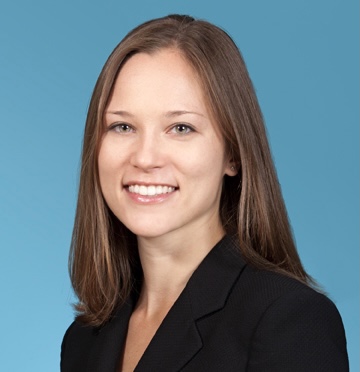

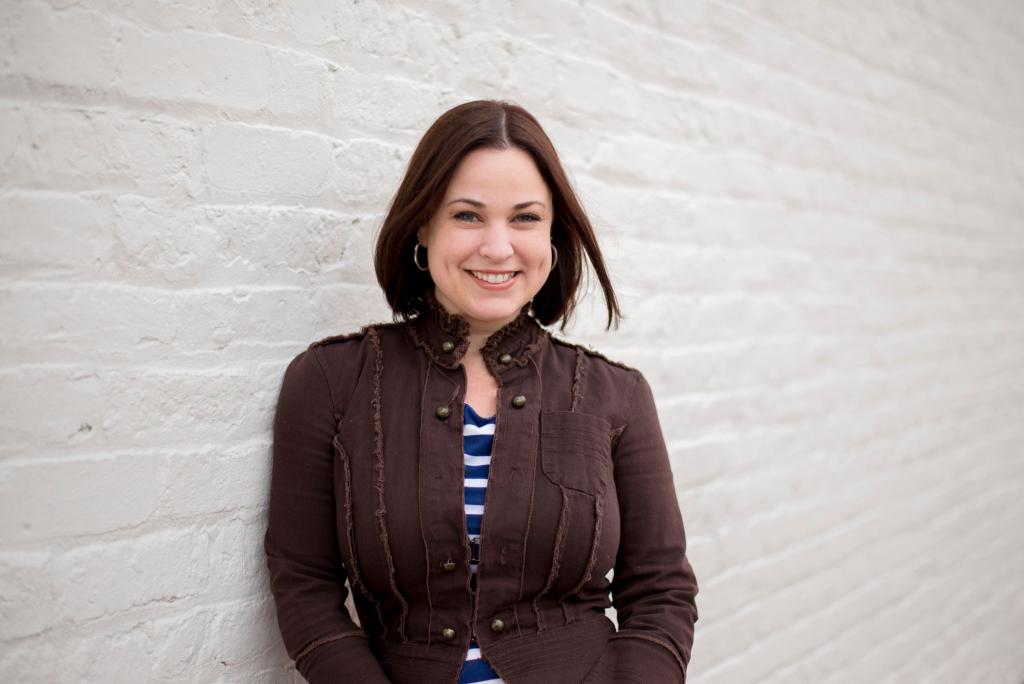
On today's podcast, Executive Editor Natalie Orpett speaks with Fionnuala Ní Aoláin, a professor at University of Minnesota Law School and a Commissioner on the United Nations Independent International Commission of Inquiry on Syria. They talk about the Commission's work investigating atrocities that occurred after the fall of the Assad regime, how to think about Syria's new government and the international community's response to it, and what it all says about global counterterrorism strategies.
To receive ad-free podcasts, become a Lawfare Material Supporter at www.patreon.com/lawfare. You can also support Lawfare by making a one-time donation at https://givebutter.com/lawfare-institute.
Click the button below to view a transcript of this podcast. Please note that the transcript was auto-generated and may contain errors.
Transcript
[Intro]
Fionnuala Ní Aoláin: And I think what's unusual about UN fact-finding bodies is in the absence of domestic legal processes that can make legal determinations, we are in fact establishing facts that would otherwise be, you know, hugely contested by both state and non-state actors, and potentially victims too.
Natalie Orpett: It's the Lawfare Podcast. I'm Natalie Orpurt, executive editor of Lawfare, with Fionnuala Ní Aoláin, a professor at the University of Minnesota Law School, who has also worked in several capacities for the United Nations, focusing on human rights and counterterrorism.
Fionnuala Ní Aoláin: By moving things into the box of counterterrorism, we move things into boxes of exceptional legal and policy regimes. And exceptionality has always, I think, across legal systems and across time, in effect insulated itself from the kind of regular business of good governance assessments that we find in most other policy arenas.
Natalie Orpett: Today we're talking about the UN's Commission of Inquiry on Syria, which has been investigating instances of mass violence and atrocities, even as the political situation in Syria underwent a seismic change with the end of the Assad regime. We talked about the commission's findings, the effect of Syria's transition to a new government, the international community's response, and what it all says about global counterterrorism strategies today.
[Main Podcast]
So Fionnuala, I've invited you on because you are a true expert in counterterrorism, and you have a unique perspective, I think, based on your role as an academic, but also as a commissioner and a special rapporteur for the UN and many other things. But if I restate your whole resume, it will take much too long.
So, I want to talk today about your recent work in Syria, and then I want to use that as a lens through which we can talk about the current state of counterterrorism more broadly. So starting with Syria, you're part of the UN's Independent Commission of Inquiry on Syria. Can you just tell us about the commission? Why was it created? What is it charged with doing?
Fionnuala Ní Aoláin: Sure, and, so yeah, I joined or was appointed to the Commission of Inquiry in December 2025. It's an appointment from the president of the Human Rights Council, so it's a political appointment, and the commission is… Been in place since 2011, so it dates right back to the sort of post-Arab Spring moment and the moment of repression in Syria actually, where that attempt by the Syrian people to engage with the then Assad regime about a better, fairer, more rights-bearing representative Syria was responded to with extremity and a systematic kind of extreme violence that sort of made the international community feel like investigation was required.
So, a Commission of Inquiry is a fact-finding investigative mechanism. It's made up of at its height, we had almost 30 investigators and forensic experts. We're now a much smaller commission, just under 10 investigators and military and political and legal experts on the team, and three appointed commissioners who are geographically diverse. So our chair was from Brazil. We have a commissioner who is from Tunisia, a former judge, and we have me, who is an academic and former special rapporteur.
Natalie Orpett: Okay, and can you talk a little bit about what the investigations look like? Because you are, of course, also a lawyer and a law professor, but it seems to me that the project of a commission of inquiry is somewhat different than the sort of evidence-gathering and case building that you might see in other contexts. Is that fair to say?
Fionnuala Ní Aoláin: That is fair, and I think one of the things that really, I suppose, personally and professionally attracted me to being a commissioner on the Commission of Inquiry was that I, I recognized that there was a skill set about investigating large-scale atrocity crime that I've taught about, and I've prob- I've written about large-scale atrocity crime, and I've participated in legal proceedings. But from the ground up, investigating being part of a mechanism whose job it is to identify the evidence, we have a system of gathering evidence, of verifying evidence, and of building patterns and identifying patterns of systemic violence and then categorizing them in a, it's not a judicial body, but categorizing them as war crimes, crimes against humanity or genocide and serious violations of international law. That's not something I've done before.
So, you know, the, it really starts, the investigation is to the standard of e- effectively a civil standard. It's not a criminal standard, and but nonetheless requires a verification that happens in multiple ways. We, of course, interview survivors and victims of violence. We use open-source data. We use satellite imagery. We work with governments who sometimes share data with us, and the goal is to build a picture.
So I'll, I'll give an example that last year, just after I joined the commission, we were issuing a report on the upsurge of violence in Suwayda, Syria. This was a violent eruption of, that took place last summer involving the state, new state of Syria using its course of power against the Druze minority in, in a part of Syria which is inhabited by a, a Druze majority, and the Druze then turning violence against a much, another minority, the Bedouin minority in Syria. And our goal was literally we were tasked to go in and investigate on the ground what happened right after that eruption. We identified over 1,000 killings many of which we classified as war crimes. We identified disappearances. We identified torture. We identified looting and other forms of pillage that took place.
So it's that kind of micro identification of both violations and crimes that's new and different of a fact-finding body, and I think what's unusual about UN fact-finding bodies is in the absence of domestic legal processes that can make legal determinations, we are in fact establishing facts that would otherwise be, you know, hugely contested by both state and non-state actors and potentially victims too.
Natalie Orpett: Yeah, so I'd, I'd actually love to hear a little bit more about that particularly because you do have experience with the more case-building legal infrastructure way of doing this, and as you say, the, the purpose here is more to document and tell a story and gather information, and it's unrestricted by the types of considerations that one might need to have if planning to bring this evidence into a courtroom, particularly in service of a criminal prosecution where there are just so many evidentiary rules and you have to expect cross-examinations and things like that.
Can you just talk about the process of, for example, conducting these interviews, gathering the data from other governments, et cetera, and how it looks and how it would compare to more of a legal framework?
Fionnuala Ní Aoláin: I mean, I think I would probably say it is within a legal framework, right? Meaning that of course these are not, we are not doing the prosecution of these crimes once established. But the Commission of Inquiry has data sharing and evidence sharing agreements with many governments and legal systems, as well as with individual prosecutors who are in fact building cases.
So since 2011, our data, we have over 15,000, for example, testimonies on our, on our database, have been used actually as the basis for building cases in, in particularly in countries like Germany and European states where there were large Syrian diaspora and where those legal systems were interested in and charged with the responsibility under particularly universal jurisdiction statutes to build cases against other individuals on their territory who may have committed offenses.
But to take it back, so it, it, you know, the, the, the product often results in the use of our, our evidence and our reports as a basis for, for prosecution, for proceeding to do further investigation towards prosecution of crimes. But you're right, it serves as somewhat, overall, the purpose is, is not just that. That's a, that's a, if you want, one of the downstream consequences. But the purpose is to establish a factual record of the commission of serious violations of international law.
So to give an example, Suwayda is probably a really good example, and it's the one I'm most familiar with because I, I was a commissioner when we issued the report and helped, of course, write, draft, and agree that report. So the lead up is of cour- is sending in teams of investigators. And in the Syrian context, what's unusual about the Commission of Inquiry is that we have currently, after 2024, when the Assad regime fell, the revolution was successful as it were. Assad is now in a suburb of Moscow, not able to return to Syria or leave. We have had the cooperation of the Syrian, the new Syrian government, which has given us access to Syrian territory. Up until 2024, we didn't have that access. All of our work was done in the diaspora, and then working on these open source and other materials that were coming out of Syria, but we weren't physically on the territory of Syria.
So in Suwayda, with agreement by the government, which was complicated because remember, we're investigating them and their security forces' action in Suwayda. They gave us access to Suwayda, but we also had to negotiate access to the physical, like, geography of Suwayda through the Druze leadership. So it's not just that we were negotiating with the state. The state gave us access, but then in order to let us in, we, and to get access to bodies, to morgues, to places where there had been active hostilities so we could assess the nature of those hostilities, and we had to negotiate with the authorities on the ground, and that's complicated. We could probably say more about that.
And then once we're physically on the ground, we have teams of investigators. And, and again, you know, the starting point is witness evidence and testimony, and you have to get people to agree to give their evidence and their testimony to you. And that's always complicated. There's fear of reprisals, right, if they're giving information that informs on either the government or the non-state actor.
And also, to be honest, and this is my own ex- people are often too traumatized to give evidence, and the evidence they give can sometimes not be good evidence in the sense that people's memory and this kind of fracture of memory that occurs when someone's been subject to a really extreme human rights violation can often make that really core exercise of gathering information about what happened when your son was taken from your house, or when your house was destroyed, or whether when something happened to you, can you give a linear fact-based account of that? That's actually at the heart of the work that we do, but is often really difficult to do when you have either ongoing hostilities, insecurity, and a traumatized population. And all of those things are true and were true in Suwayda and remain true in other parts of Syria today.
Natalie Orpett: Yeah. It, it sounds like an incredibly difficult task, and I'm curious how you are able to encourage people to speak, particularly being there in your capacity as a representative of the UN. Do, do you talk to them about justice? Do you talk to them about accountability, about truth-telling? I mean, what sorts of messages are you bringing with you when, when trying to encourage people to, to speak and work with you?
Fionnuala Ní Aoláin: I mean, I'd say several things. One is we have an inq- the Commission of Inquiry has a long track record in Syria. We have been there since 2011 through every step of this brutal civil war. We have reported on all actors. That's the government of Syria, the former regime, Assad, and, and those, military intelligence, but also civilian parts of that regime that were engaged in systemic violence and brutality. But we've also reported without fear or favor on all the non-state armed groups. ISIL, of course, but including others including, for example, the non-state armed groups that now make up the government of Syria.
So, I think one of the things that really surprised me as a new commissioner when I first, I'd been to Syria before, during the Assad regime, but what surprised me when I first went as a commissioner was the level of trust across different groups, Alawites, Druze, Sunni Muslims, Christians. All of them had a certain faith in the work of the COI, partly 'cause we built that faith over years of neutral, independent reporting, which is generally accepted as the gold star reporting on what happened during this conflict. Not just what happened, but who did what and to whom.
And I think that's not true for all of the UN. You know, the UN has had a complex reality in Syria. We had political negotiations that failed over and over again. We had, for example, the current constellation of political representation was not, which is the government of Syria, wasn't included in Geneva track negotiations, wasn't part of various attempts to quote, “solve” the conflict.
And so the UN is having to rebuild trust with this new government and also with the Syrian people. I mean, in, in reality, the international community meddled in this conflict. We had different states backing different parties. The U.S. was a part of that, and has been a part of that from the very beginning, arming different groups, washing the country with different kinds of weapons and capacities. Often much of that weaponry ending up in the arms of either the repressive government or the non-state armed groups. So there's, there's a trust deficit. I, I feel we've been extraordinarily lucky that we, just because we reported without fear or favor, have an enormous amount of trust. So you walk in with that trust.
But, you know, it's, it's often not enough, right? Because I mean, if anyone who's ever interviewed the victim of a traumatic human rights or humanitarian law violation will know that, you know, people have very limited faith, as they should in Syria, that there will be justice. I mean, what do we mean by justice when Bashar, Bashar al-Assad sits in Moscow with, having taken a sizable amount of the country's fortune with him, and has the protection of a P5 member state in so doing?
Why should people believe that countries that armed non-state armed groups are bona fide actors who have the best intentions of the Syrian people at the heart of what they do, even in the new Syria? So, you know, I, I think people want a record of what happened to them and their families. I think this is at the core of what we offer. But I think many people simply do not believe that justice in its pure sense will be delivered to them.
Natalie Orpett: It's really extraordinary work, particularly, as you say, in this broader context of the many different ways that the UN and the international community has engaged with Syria. And I want to sort of turn to that now. While still talking about the commission's work and what you found a- and the process of finding it, you know, this is all in the context, as, as you've mentioned, of these incredibly dramatic changes in Syria.
And I think for people who were not very close Syria watchers, it felt like one day Assad was never going to leave, and the next day there was a new government.And people were scrambling to figure out who this guy was. He has some sorts of problematic origins. What is this new government going to look like? And all of this is happening as your investigation is going on and as you are looking into an incident that happened sort of in the context of this broader picture. Can you just talk about the findings and, and this broader context a bit?
Fionnuala Ní Aoláin: Yeah. So I mean, I think it's fair to say, and I, I, I, if we go back to November 2024, and I actually remembered I was teaching an international law class at the end of November, and I was talking about my work in Syria. It's about a week before we start to see the military advances by the HTS that ultimately lead to the sort of overthrow of the Assad regime.
And one of my students, like, like many observers, I just said, I, like, I think the Assad regime is gonna stay. I, I, I had, I had seen it firsthand when I visited Syria in 2023. One of my observations at the time in 2023 was that even though, and we took a truck, we took a UN vehicle from Beirut to Damascus because we couldn't fly into Damascus, but then we took an internal flight from Damascus to Qamishli to northeast Syria. And I remember fronting up at Damascus Airport in July of 2023 and seeing a, a list of flights going to Doha, Tehran, Moscow, and having this epiphany where I thought, "Oh, we, the West, think that Syria is cut off from the world," but actually it's just cut off from us, right? We had this notion that we were isolating them. Well, we were certainly isolating them from the West, but they weren't isolated from many, many other parts of the globe and many other centers of power. And so that made me feel like they w- that Assad, despite the tenuous hold on some territory, that he was pretty firmly entrenched and wasn't going anywhere.
So many of us, as you rightly say, Natalie, were really surprised. And then we have this, this e- effectively, largely non- it's, it's not that it was a non-violent overthrow of the Assad regime, but it went out with a whisper and not with a bang, right? And the scale of violence which brought about the overthrow of the regime was, relatively speaking, given the bloodlust of the years before, quite small.
And I think there was this sort of breath drawing in Syria, and people I know and, and, and civil society actors and human rights advocates I've talked to talk about wandering around Damascus in those days after the fall of the Assad regime, and, like, wondering with enormous trepidation what this group, this group that had been a designated terrorist group, and its leader equally so, would bring to Syria. And this sense of both relief and trepidation and coexistence as we had a relatively smooth political transition. We had the declaration, a constitutional declaration, and fairly quickly we saw the, a, an exercise of security control that almost instantly lowered the temperature of violence across the country.
Now, that doesn't mean Syria has no violence. There's been, and we'll talk about the eruptions. But relatively speaking, and I have square brackets around that, we saw a relatively unexpectedly managed transition to this new government. And we also have seen this new government negotiate a set of relationships with very diverse external actors, many of whom have been meddling in the conflict from the very beginning. The Russian Federation, the United States, Iran, Turkey, the European Union. I could go on, right? And we've seen this sort of balancing act of moving through to again, a degree of political stability, and,
I mean, not to say as I was leaving Damascus just 10 days ago the day that Manuel- Emmanuel Macron was visiting, there was a significant terrorist attack and loss of life in Damascus. But, you know, I walk around Damascus and have coffee in coffee shops when I'm in Damascus. Like, there, we do things that we wouldn't believed imaginable two years before, and that has been done through this exceptional kind of set of political moves and balances that this new government has unexpectedly delivered us.
And I was also in Syria during the outbreak of war between when Israel and the United States attacked Iran. And it was quite extraordinary to be in Damascus and for Damascus to be the safest place in the Middle East, like quite literally so. So, there is this profound change and, you know, there's lots of uncertainty, but the, the series of moves that we've seen in the last year and a half have just been quite extraordinary, and I think we're all still processing what they mean.
Natalie Orpett: Yeah. And then can you situate the violence that you all negotiated in the commission and, and wrote your report, which I believe was released last month, about in that timeline?
Fionnuala Ní Aoláin: Yes.
Natalie Orpett: Because I think that piece of it is, is particularly interesting given this bigger picture you just described.
Fionnuala Ní Aoláin: Yes. And I think we saw, you know, this shift, which was unexpected from the former regime to a new government.But we also had two, I would say three if we include the hostilities against the SDF in Northeast Syria last January, we had two major disruptions, deeply violent. “Eruptions” does not do justice to what happened.
We had what the Commission of Inquiry described as massacres, the massacres that took place in Suwayda last summer, and those massacres were significant. We were able to verify in Suwayda this significant loss of life, over 1,400 deaths. A significant number of persons disappeared, and the commission of what we, the Commission, described as war crimes, which may amount to crimes against humanity.
The other major eruption of violence had occurred before that, which was the violence that took place in the coast, largely directed at the Alawite community.
And the Alawites, as some of the listeners will recall, were the community with which the ousted political leadership of the Assad family belonged. They were a, they are a minority community which had ruled Syria before Ba- Bashar al-Assad, his father, Hafez al-Assad for almost 50 years.
And so these two huge violent eruptions, I think, shook the, and continue to shake this transition, meaning I think many Syrians wondered whether this was, in fact, a repetition of the pattern of sectarian violence that defined the conflict itself, and more particularly were concerned that it spoke to an inability of the new state to properly control its military forces and the new military power, coercive power under its control. Because bear in mind, you have a government which is made up of different kinds of factions and groups that were all essentially, many of them, designated non-state terrorist groups for the decade and a half before that. And now that set of actors and groups are the military and police and intelligence power of Syria. And many, I think, observers, but also Just ordinary Syrians wondered what will life look like under these people?
Now, to say positively, in doing these investigations in that context was really complicated. But I do wanna give credit to the new Syrian government in two ways. One was that they allowed the Commission of Inquiry access to both the coast and Suwayda to undertake investigations that were clearly going to find that there was both responsibility and violations committed by the Syrian government. And in both cases they gave us access, and in both cases they didn't argue with our findings. And I find that, not- notwithstanding we are still pressing them to implement our recommendations, I find the fact of accepting the full recommendations, including the commission of war crimes by their own forces, as a marked shift in a conflict that up to that point was simply, like, non-accepting of responsibility and non-engagement with accountability in any way.
Natalie Orpett: It's really amazing, and I just wanna clarify the timeline for people. So the Assad regime fell in about December of 2024.
Fionnuala Ní Aoláin: Yes.
Natalie Orpett: And the incidents that you studied in Suwayda, the violence in particular, happened in July 2025. Is that right? Yes.
Fionnuala Ní Aoláin: Suwayda was July 2025, and then before that we had the vi- the first eruption of violence was in the coast, which was several months prior to that. And then I should say the third, we have just completed a set of investigations in northeast Syria because this January, January 2026, the state forces moved against the control of territory exercised by the Syrian democratic forces over large swathes of northeast Syria. So we've really had three major military campaigns or eruptions of violence in the post-Assad era.
Natalie Orpett: So it's really interesting because if you're imagining this, this new government has just come into being in what I think we've pretty clearly established was a pretty unimaginable way even shortly before it happened, and the country is reeling from trying to figure out what a new government even looks, looks like, who's going to be involved, all of this. It's only a couple of months until that first outbreak of violence.
Fionnuala Ní Aoláin: Yes.
Natalie Orpett: I believe that was in-
Fionnuala Ní Aoláin: Yes.
Natalie Orpett: March or so of 2025.
Fionnuala Ní Aoláin: The March coastal violence, yeah, it's like literally within three months of the transition to the government of President Al-Sharaa.
Natalie Orpett: Right. And then then we have July, and then we have again in January 2026, only about a year. So we have these three outbreaks in a year during the same period that the, the government is sort of sorting itself out, and meanwhile things are totally shifting on the world stage as governments of other states are trying to decide how to acknowledge the change in regime and how to reestablish relations.
But before we talk more about other countries' responses, I'm, I'm curious for your take on why the new government chose to, or, and is choosing to cooperate with the investigation, investigations and grant access, and knowing that the government itself would be found accountable for some of the atrocities that are happening.
Fionnuala Ní Aoláin: Yeah. I mean, I think there are several. There's both a highly utilitarian answer to that question and maybe a more optimistic kind of transformative answer wrapped into that. I mean, in Suwayda, I just checked my numbers, we found 1,700 people were killed and over 200,000 were forced from their homes, right? So this is scalar violence. When we looked at the coastal violence of March 2025, again, we were looking at the dis- murder, torture, inhumane acts, the displacement of hundreds of people. These are pretty big violations for a new government to stomach.
I actually think that one of the reasons, I, I sort of think that there's a, a moment of sort of self-recognition in the decision to allow the Commission of Inquiry to undertake its investigations, which is that they needed us, right? In some sense, this is a government determined to prove its legitimacy, determined in some ways, if we listen closely to the statements of President al-Sharaa, we hear a real emphasis on a break and a rupture from the prior regime.
And that language, I think, leads to, if you have a system in place in Syria that, you know, unlike, for example, what the United States did in Iraq after it toppled Saddam Hussein, the government of President al-Sharaa didn't fire everybody, it didn't decide that everyone who had previously worked for the Assad regime could no longer serve in any capacity, right? So you have a legal system, you have a court system, you have a, a, a government structure that is dominated by people who were affiliated to the former regime. So you don't actually have the capacity to do that kind of investigation yourself, at least not in a way that will be viewed as credible, independent, and authoritative by the people of Syria.
So in some sense, the decision to allow the Commission of Inquiry in is a legitimizing decision for the government. It's like affirming that it is not the same as the prior regime, and it's also a recognition of a very sort of reality that there isn't confidence nor capacity in the domestic legal system.
And I suppose the third, third thing I would say is I think the Commission of Inquiry and UN, despite all of the criticism we hear of UN bodies and UN human rights, many states, and I mean, the Commission of Inquiry was pulled into the roadmap for Suwayda by the U.S. government in the establishment of a roadmap precisely because, when domestic legal systems don't work, the international community wants an insurance policy on what's happening inside a country that it is deciding whether it will or it won't support economically, politically, and diplomatically.
And so we also play, I think, this role for the international community. I mean, we had this role for the Syrian government in this transitional period, but we also play a really important role for the international community in telling, if you want the truth of what's happening on the ground, and in a way that's consistent and verified over so many years that there's no doubt, and nobody disagreed with our findings on the coast or on Suwayda.
And I think everyone who's betting on Syria needs us right now, actually. They need that legitimation, but they also need the process of the rule of law as it applies through the work of a commission of inquiry applying international law and these verified fact-finding sort of standards. It's a kind of a mutually reinforcing dynamic to ensure that the direction of travel on the rule of law in Syria remains positive.
Natalie Orpett: It's such an interesting phenomenon, and it strikes me as really what the UN has always aimed to achieve, which was just to, to be there, to be, you know, however problematic and criticized it might be, to just continue to be a presence that is legitimate by virtue of its work, and as you say, is, is legitimate to different observers maybe for different reasons. But it is an interesting position to be in.
And it strikes me that the existence of the commission on the ground, having done inquiries for many years, giving credibility to the Syrian people and allowing for the investigations to happen and for the government to lend their support or at least their accommodation, and then the willingness of the broader international community to take the data and information and sort of oversight role that the commission is playing as an important data point as, as each of these international community members, whether organizations or individual states, are rethinking their relationship with Syria.
And let's talk a little bit about that second point which you raised. As you have said, as we have talked about, the UN is unfortunately mu- much maligned in certain circles, particularly in the U.S. I tend to think for what it is worth, that a lot of that is rhetoric, and there is a lot of reliance on the UN and on its functions, including things like this, just the ability to know things, achieve results in gathering information and facts. And I'm curious what your view is on the extent to which other states, whether the United States or others, are really relying on that work.
As you said, the, the, the world is sort of trying to figure out how different is this new government. Is this a moment when we can really change? Can we take down all these sanctions? Can we start looking to invest? Can we, you know, look into security agreements? Is, is this a whole new, are we starting from scratch in thinking about our relations with Syria? And how much do you think your work is factoring into that calculus?
Fionnuala Ní Aoláin: Yeah, I mean, I do. I think there are many dimensions. One is the recognition that the meddling of many states, Western and other, in the civil war in Syria actually produced a zero sum outcome. They canceled each other out, right? That in fact, the continued bet on different parties, including a bet that Assad would survive and didn't, actually was a fundamental failure of international a- and kind of multilateral behavior by states. I, I think if we could, states would sit back and recognize the folly of these overlapping and self-canceling out actions over the course of the 14-year civil war in Syria, and the moving targets of support by different states there would be a lesson learned in the kind of folly of this kind of intervention, which we are seeing in other countries, Sudan being a, a prime example.
I think the second lesson is the folly of counterterrorism, which I know we're gonna talk about, which is that, in fact, when we talk about these sanctions, what we're talking about are counterterrorism sanctions aimed at individuals and groups who were designated as terrorists under our, both national and international legal regimes. And here we are, funnily enough, 2026, and those people are now running Syria. And I think that requires a moment of sober reckoning on both the value of and the, the cost of sanctions, and whether, and I think that's a, that's a longer conversation.
I think the third thing is, is just a recognition that Syria matters. I mean, s- stability in, instability in Syria produced the largest refugee flows that we've seen, and particularly refugee flows, not just into the neighboring countries of Lebanon and Jordan, which absorbed extraordinary numbers, and enormous generosity to the Syrian people by accepting them. And some generosity, particularly in Germany, significant ger- generosity in Germany and other European states. But, like, the cost of this war was wrought in civilian displacement of a massive scale that had all of these other consequences in Europe. So it's a lesson that when you don't actually engage to address the causes of conflict, you absorb the cost of that conflict domestically.
So we're seeing this tentativeness, but also, like, embrace of Syria, and the Commission of Inquiry and I have said, you know, you have to bet on Syria, but bet on the rule of law in Syria. Bet on building not just the security guarantees, like joining the global coalition on Daesh that matters so much. That bet will be for nothing if you don't bet on the rule of law and good governance in Syria. Because what we have learned over the last, I don't know, 20-odd years post 9/11, but certainly since the collapse of the regime in Iraq and its, its re- a- and the war and again, initiated by the U.S., is counterterrorism without effective investment in the things that produce violence in society undoes all of your counterterrorism work. It's just, it's just, I think Not, not a good, not a good bet and not a good spend.
And for the COI, like I, I agree with you, Natalie. I, I think this language of, you know, people, it's sort of a really easy and lazy move intellectually and in policy terms to criticize the UN. I mean, it's not by accident, for example, that we see even as that's happening simultaneously reliance on the UN to both establish facts, to deliver the food, to put up the tents, to ensure that things do not fall apart on the ground.
And I think the robustness of that withstands this kind of U.S. hyperbole. It's not that it doesn't strain it. Of course that kind of U.S. unilateralism strains it. But my experience of working with member states day in and day out across multiple mandates over several years is that actually the core, if the UN didn't exist, you'd be inventing it. You'd be trying to create, if the Commission of Inquiry didn't exist in the aftermath of these eruptions of violence, you would be trying to create something that reproduced the same kind of information and legitimacy. So I, I think the criticism is both overblown and somewhat lazy because it fails to recognize the work that's actually done and the reliance of states on it.
Natalie Orpett: I, I will editorially say that I totally agree. And I, I think you're right to say that it is intellectually lazy. There's plenty to criticize, but a lot of the work that the UN does is deeply unglamorous, and no one is going to celebrate it, but everyone is going to rely on it.
I, I wanna come back to something that you mentioned, which is about the way in which counterterrorism has anything to do with this. And I think one piece that is, that I'm finding really interesting right now as there is all this discussion about how we should understand Syria, this new government, the ways in which the international community is going to realign in response and all of that, is that there's sort of a revisionist history going on here with respect to the structures that have been set up that are now being dismantled. And you touched on this some, but I'd love for you to talk about it a bit more directly.
For example, I, I think a prominent example is there's this multi-tiered sanctions regime designation as terrorist individuals, as terrorist organizations that the United States at least, and, and this is happening in Europe as well, is taking apart now in response to the existence of this new government. But they were built as counter-terrorism tools, not as mechanisms to try to, for example, encourage the Assad regime to change tack in a governance sort of sense or to impose the rule of law more effectively or any of that. It, it sort of feels to me like the conversation is treating this, these structures as foreign relations tools rather than counterterrorism tools, and I'm just curious how you think about that.
Fionnuala Ní Aoláin: I mean, you know, in my prior role as UN special rapporteur, and I think we have discussed this previously, the use of counterterrorism sanctions, which were built into the Al-Qaeda sanctions of the 1990s, then augmented and extended through UN Security Council resolutions after 2001, and resulted in the committee of the creation at the global level of these global sanctions regimes running out of the UN Security Council. I think they've been an utter failure.
And more than the fact that they haven't either solved conflict or prevented terrorism, what they have done, I think, is disabled our capacity to, and I go back to this, to address the causes of conflict, to address what is producing violence in these geographies and spaces, and actually more particularly, has prevented us from engaging with. So the consequence, for example, of many of these sanctions regimes is you can't even negotiate or engage with the actors that you're targeting or designating as terrorists because the fact that they're terrorists means that you can't talk to them.
It has also meant humanitarian catastrophe at certain points in many places where for UN or other multilateral or even civil society actors to provide aid and support to communities who live in geographies controlled by non-state armed groups who are designated terrorist groups, that you can't supply those communities in ways with basic human, human needs, whether that's food, housing, shelter, and so on.
And that, I think, has profoundly disabled our capacity to solve conflicts, to address the fact that you are gonna have actors. I mean, I acutely know this from the place I grew up in and live in, which is Belfast, Northern Ireland, that you can't actually solve conflicts unless you engage with the actors who are the violent actors. These are often unpalatable actors. They are actors who have committed serious violations of international law.
And, but we've seen, again, what I think is both a, a lazy intellectual and policy move, which is to treat many, in many complex conflict situations to treat individuals who are engaged in hostility, the lazy move is just to designate them all as terrorists or use the language of counterterrorism to box the violence rather than addressing the thornier questions of whether or not we are in effectively situations of non-international armed conflict where we have a range of actors, many of whom do commit Acts of terrorism, which is covered of course by international humanitarian law, and that within that framework we have a possibility of engaging with de-escalation, ceasefires, end of conflict sequences.
So I, I, I think that's a big box to put the sanctions measures in, but that's the box they rightly belong in, which are tools that have been both ineffective and actually disabled our capacity, including in Syria, to engage with a range of actors that we should've been engaging with far earlier to address the causalities and ending sequences of the conflict.
And you're right. What we now see states doing is sort of pretending the origin story doesn't exist, right? Pretending that the roots of these kinds of tools are not in fact, and, and ultimately are counter-terrorism tools, which we actually don't spend enough time assessing their competence or adequacy for the task to which we assign them to.
Natalie Orpett: Yeah, and I'm, I'm curious about that piece of it in particular because it seems to me that when thinking from a counter-terrorism lens and, for example, using sanctions as a tool of counter-terrorism, the theory is that that will help to deter or disable terrorism. And it seems to me you're saying that that is too narrow of a view and that the main problem is that the very mechanism, namely this tool of sanctions in an attempt to deter or disable terrorism, is also serving a purpose of disabling the possibility of treating the causation for the terrorism. Is that a fair description?
Fionnuala Ní Aoláin: Yes, but also more than that, which is I would say if we did monitoring and evaluation of sanctions tools in the same way we do with most, with government policies in lots of ways, we would ask the fundamental question and measure, in fact, whether they have contributed to the ending of violence, and if that's their stated goal, or the marginalization of particular kinds of groups, or the lessening of, you know, the Global Counterterrorism Index in a particular site where they're applied.
And if you use those sort of simple M&E tools in so many of these sites, Syria is a classic example, what you would find is no, on, on these, on these monitoring and evaluation assessments, they would literally fail the test. So it's, it's both the sort of political cost, but it's also the simple, like, could we measure these policies in ways that would actually, which I think we can but don't do, counterterrorism is a unique area where we tend not to apply the same kinds of good public policy assessment tools that we apply in most other areas of public policy, and ask, "Does this thing actually work on its own stated terms?"
Natalie Orpett: And why do you think that is?
Fionnuala Ní Aoláin: Because I think what, it's the, again, I think this has, has been long been my scholarly arguments in a book I first wrote in 2005 called “Law in Times of Crisis,” which is that by moving things into the box of counterterrorism, we move things into boxes of exceptional legal and policy regimes.
And exceptionality has always, I think, across legal systems and across time, in effect insulated itself from the kind of regular business of good governance assessments that we find in most other policy arenas. The result of which is that we don't apply those tools. We simply, we use the exceptionality itself as the rationale for continued justification of the use of the tool, not the kind of classic public policy tools of effectiveness, value for money, delivery on the things that it says it's gonna do.
And that's a fundam- I mean, for people who care not just about security, but, like, are their tax dollars being well spent? That is a question we should be asking consistently in counterterrorism, domestic and international, that we simply don't consistently ask or demand.
Natalie Orpett: I think it's such a good point. With the little bit of time we have left, I do want to ask you about another thing that happened recently that I think, though I would like to know your thoughts, has something to say about broader strategies of counterterrorism. And I don't think unfortunately that it speaks to the issue that you just raised, but does seem to be speaking to perhaps a change in how people or how states are thinking about the wisdom of counterterrorism strategies in the past.
So the incident I'm referring to is the recent adoption at the United Nations, I believe last month as well, of the, I believe, ninth Counterterrorism Strategy, and an interesting vote that happened. Can you tell us what happened?
Fionnuala Ní Aoláin: Sure. So, you know, one of the kind of fixtures on the global counterterrorism calendar is this thing called the United Nations Global Counterterrorism Strategy. It was first adopted in 2006 by a General Assembly vote, and the idea was in the aftermath of 9/11 in a kind of a consensus moment among states that there needed to be global policy on counterterrorism, that all states could agree by consensus that they would have a common strategy and op- operational approach to countering terrorism.
Now, that strategy has long been criticized by many, including myself, as being weak on rule of law, strong on kinetic, weak on rule of law and human rights, but nonetheless, it's been the global framework m- in many ways driven by the United States security imperatives after 9/11 to adopt consensus-based approaches to countering terrorism.
And that strategy gets renewed every two years it more recently has changed to a three-year cycle, and every year without fail since 2006, it's been a consensus resolution, and this year it was not. And the outliers to the consensus were the United States, Israel, and Argentina. They voted against the strategy.
And I think that tells us a couple of really interesting things. One is they voted against the strategy, the U.S. had offered an alternative, I would say half-thought through, late night written on the back of a handkerchief kind of alternative to the global counterterrorism strategy that states had spent years and, and, and months prior negotiating. And states rejected that. The vast majority of states said, "No, we're not gonna accept this U.S. alternative vision of counterterrorism," which in fact was stripping out a lot of the work that had been done on pulling in human rights and rule of law standards over the past 20 years into the global strategy.
But more particularly, it speaks to a self-imposed isolation by the United States on counterterrorism, and it speaks, I think, to the kind of folly. I mean, I, I have lots to criticize about a global counterterrorism strategy over the past 20 years, but it is one of the few areas we, where we've had consistent consensus between the P5, between all kinds of big and small states.
And here the U.S. is simply saying, "We don't wanna do this with you anymore. We are gonna disagree, and not only are we gonna disagree, but we're gonna vote against this global strategy." So it's both an important moment in global counterterrorism discourse, but it tells us something profound about the isolation of the United States on global security issues.
Natalie Orpett: And is your sense that was the crux of the disagreement, the, the notion that the counterterrorism strategy in all previous years had envisioned and, and set forth some specifics with respect to how states should work together and coordinate their efforts on counterterrorism, and that the divergence now that is being represented in this vote is, is just more of the same trend we've seen in other aspects of U.S. foreign policy, which is the sort of isolationist-
Fionnuala Ní Aoláin: Yes
Natalie Orpett: Vein, or is there more to the disagreement than that?
Fionnuala Ní Aoláin: I mean, it feels, and again, this is an observer's stance, but I'd say two things, Natalie. One is that it feels like unthought through, right? A reactionary kind of politics around if you have common kind of consensus documents at the UN, and the value of consensus in the international order in those very, very few places we have it, we simply as a matter of principle don't like consensus anymore, right? Because consensus is always about compromise, right? The consensus in the UN or multilateral system is that everybody has to give up a little bit of the thing they want.
Russia may not like certain parts of the strategy. China certainly doesn't like parts of the strategy. We've known that historically. But they've ultimately compromised on a document that everybody gets a little bit of what they want. And the U.S. is, I think, firmly saying, "No, no, we don't accept compromise as a kind of a defining sort of virtue of global action in spaces where there's long been compromise and it's been useful to us." I, so that I think is really important.
The second is just the kind of, I think it's also an example of spoiler politics that you've also described, which is there's a kind of a pleasure in spoiler politics. Now, I think that, of course, there's always momentary pleasure in being the spoiler, right? That, that's, that, one can imagine how the dynamics of that play out in a, in a government. But, you know, most states and our strategic both allies, but as well as our strategic adversaries, they play the really long game. They understand that playing the spoiler means that you both outcast yourself, to use Oona Hathaway's term, but you're also limiting the range of options and partners you have in the moment.
So, I also see this as sort of the short-termism that has defined the Trump administration's approach to international law and international relations is playing out in the global counterterrorism strategy. Yeah, it's this sort of the, the sort of momentary pleasure of being the spoiler and watching other states march off together as they have done. They, they agreed this consensus, and the Europeans, the Russians, and the Chinese all stayed in, and they have lots of things they're gonna do together in the space, and the U.S. is gonna sit on the outside of that. And the dangers of that to the long-term security of the United States are infinite and, of course, under-calibrated by this administration.
Natalie Orpett: It does strike me as, as you say, another very sobering example of the United States choosing to be isolationist, and the rest of the global community seeing what they're going to do in response and so far seeming to stick together quite a bit more than the underlying U.S. strategy might have it. I think we will have to leave it there on that somewhat dire note.
But Fionnuala, I want to thank you so much for joining us and for your insights and for your good work.
Fionnuala Ní Aoláin: Thank you. I'm really delighted to have the conversation. Much appreciated.
[Outro]
Natalie Orpett: The Lawfare Podcast is produced by the Lawfare Institute. If you want to support the show and listen ad-free, you can become a Lawfare material supporter at lawfaremedia.org/support. Supporters also get access to special events and other bonus content we don't share anywhere else. If you enjoy the podcast, please rate and review us wherever you listen. It really does help.
And be sure to check out our other shows, including Rational Security, Allies, The Aftermath, and Escalation, our latest Lawfare Presents podcast series about the war in Ukraine. You can also find all of our written work at lawfaremedia.org. The podcast is edited by Jen Patja with audio engineering by Cara Shillenn of Goat Rodeo. Our theme song is from Alibi Music. As always, thank you for listening