

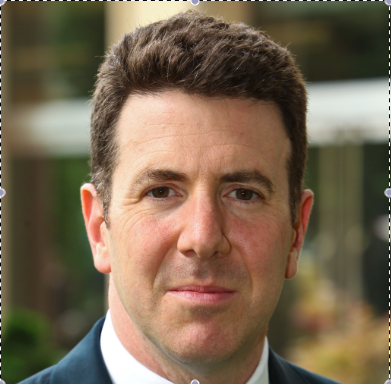

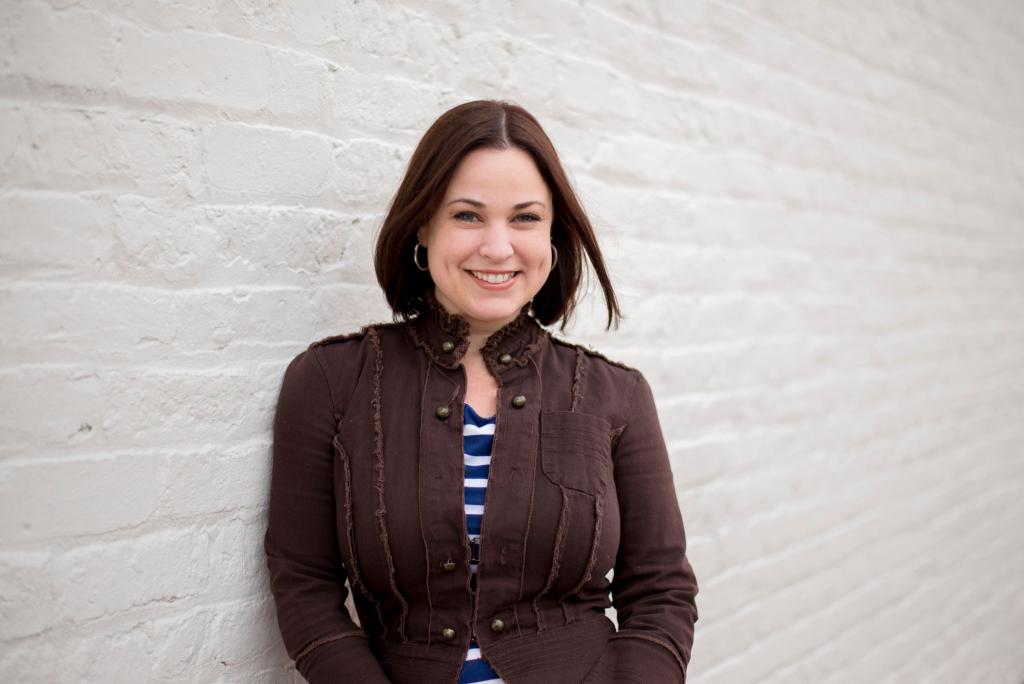
Lawfare Foreign Policy Editor Daniel Byman sits down with Natan Sachs, a senior fellow at the Middle East Institute, to discuss who is likely to win the October 27 Israeli elections and what the consequences might be for wars in Gaza and Iran, as well as Israeli domestic politics. They also talk about the role of small parties and how Trump might sway the vote.
To receive ad-free podcasts, become a Lawfare Material Supporter at www.patreon.com/lawfare. You can also support Lawfare by making a one-time donation at https://givebutter.com/lawfare-institute.
Click the button below to view a transcript of this podcast. Please note that the transcript was auto-generated and may contain errors.
Transcript
[Intro]
Natan Sachs: If it were Bennett and not Eisenkot, you may see a much more hardline approach on some of the aspects in Gaza, for example, and less of a willingness, especially in the West Bank, to entertain pressure from abroad.
Daniel Byman: It's the Lawfare Podcast. I'm Dan Byman, the foreign policy editor of Lawfare, and I'm here with Natan Sachs, a senior fellow at the Middle East Institute.
Natan Sachs: So if you think of three blocks in a sense, the Netanyahu block, the Eisenkot block, and then the Arab party block, the bigger the Arab party block is, the smaller the other two would be by simple math. And so in a sense, if they were tiny, both other blocks grow. And since Eisenkot's block is slightly bigger than, or is actually bigger than Netanyahu's block in the polls, you'd expect him to then cross the 61 threshold.
Daniel Byman: Today, we're talking about Israel's coming elections. Israel's election is scheduled for October 27th, and it is the first national election in Israel since the October 7th, 2023 terrorist attacks.
Mmain Podcast]
This election is, at least if current polls are accurate, quite close with a lot of competing parties. Let's start with just a very basic question. What is this election about? Is it a referendum on Prime Minister Netanyahu? Is it about October 7th and its legacy? What are voters thinking about as they go to the polls?
Natan Sachs: Yeah, so we've, as you said, we've done a few podcasts on Lawfare over the years, including on Israeli elections. So I'm trying to think what has changed since the last few elections that we've covered on Lawfare even. And you've done a lot of great work also besides my participations.
In some ways, same old. So this is still a referendum around Netanyahu. And I say that because when we talk about the blocs, these are not right and left as Israelis usually define right and left. Right and left in Israel are defined mostly around the conflict with the Arab states, with the Palestinians, especially with the Palestinians. And that is simply not the dividing line today in the blocs that everyone is counting and waiting eagerly to see who wins on October 27th.
These blocs are fundamentally pro-Netanyahu and anti-Netanyahu. It's not just personally about him. It's about the whole package that he represents. And I'll talk about that in a second. But in some ways, he's defining the fissure here. So it's not right and left. It's certainly not economic right and left where there are differences that cross both blocs that really almost don't track the blocs. So it's Netanyahu.
But Netanyahu encapsulates a lot. Netanyahu has been Israel's longest prime minister by far now. He passed David Ben-Gurion several years ago. And he has been a dominant force in Israeli politics certainly since coming back to power in 2009, but really all the way back to 1996 when he was first elected. But he's changed over the years. And so the last I'd say seven years, since 2019, Netanyahu has included in it a dramatic destabilization of what were Israeli norms and institutions. His supporters would, of course, say that was justified and, and it was a needed shakeup. His detractors would say that especially since 2022, but already before that, this has been a reckless assault on the balance of power between institutions in Israel, even before October 7th. What he was calling the judicial reform, a dramatic overhaul of checks and balances in Israel That can sound better in English than they actually are because they are working within a system that is very different from the American one. And since October 7th, it's about October 7th and his response to that. So you asked, is it about all of these things? It's all of the above, but encapsulated in Netanyahu.
One last point on this. Since October 7th, there is both unanimity in Israel and consensus around the need to fight, the need to respond to Hamas, the need to incur into Gaza, but also fundamental differences on how that was conducted, and especially the length of the breadth of this war, the relentless three years of essentially nonstop war. I was just hearing someone comment in a completely different context, and they were saying, "You know, it was just before, just as the war started, I was called into reserve duty." And then they said, "I, I don't actually remember what round it was." And this is it. People talk about Iran one, Iran two. What round in Gaza with reservists doing hundreds of days? Not to mention, of course, the devastation around Israel and especially in Gaza.
So this is all of the above, but very much a referendum on that. And that makes these elections, as the cliché would go, and this time it is true, the most consequential elections probably in Israel's history, certainly in many decades, and that is felt not, it's not just a theoretical point. It's very much felt by Israeli voters who are, who are very much attuned to this election.
Daniel Byman: Let's pick up on that and talk about the consequences. I realize it's hard to predict, but let's say Gadi Eisenkot takes power, or Naftali Bennett, some of the main rivals. What would change on Gaza? What would change on Iran? What would change in other important issues? You know, so it's clearly consequential, but what might be we expect to be different if there is a leadership change?
Natan Sachs: So this is a very important question, and I think the answer is a decidedly mixed one, which is that it's a lot less than some people hope and a lot more than some people claim. It's a lot less than people who hope that simply Netanyahu leaving will be a wholesale change in everything Israel has done in the last few years, with many people, of course, not liking it. Israel is deeply traumatized from October 7th, and not just in a way, not just in the sense of anger or s- sense of vengeance, but, but a very different understanding of what fundamental security for Israeli civilians would, would necessitate.
And that is not about to change. That's not about Netanyahu. It's much, much broader than him. An impatience with containing threats is prevalent in Israel today and is very widely discussed. The idea of containment, “containment” itself has become a dirty word as almost the, the sort of fundamental axiomatic lesson of October 7th And this permeates way, way beyond Netanyahu and his coalition. So that's not gonna change. And we don't see in the opposition much appetite at all for ideas of a Palestinian state or two-state solution, very far from that in most of the opposition, excluding the Democrats on the left and perhaps privately quite a few people on the center. But there are very central forces in the opposition. You mentioned Naftali Bennett, Avigdor Lieberman. Some of the figures in Gadi Eisenkot's party w- still to, still to emerge, the party's not yet clear would be very much against it in real time. So we're very far from that.
However, a change from Netanyahu to Eisenkot would be, I think, a profound change nonetheless. It would be a profound change first in this attitude of endless open war, a “seven-front war,” as Netanyahu has deemed it, and many Israelis understand it to be. A seven-front war with really one core, which is Tehran. So if we look at all the fronts where Israel has been fighting, be it of course in Gaza and in Lebanon, but also militia in Syria previously, now still in Iraq, the Houthis, Iranian activity in the West Bank, and of course Iran itself, they're all actually part of the Iranian ring of fire. It's not been a random firing in all directions. We have not seen fighting on Israel's probably two most important borders, the most consequential one, the border with Egypt, and the longest one, the one with Jordan. There has been no fighting with Egypt and Jordan on the Israeli side, because Iran is not present there. So this very, very broad war against an Iran kind of backed ring as, as the Israelis understand it, but an endless one and a deep change in the Israeli doctrine of security. The security doctrine, which has always favored short wars and has changed dramatically under Netanyahu.
This, I think, would be very different under Eisenkot. Eisenkot is someone who was, of course, chief of staff of the military and was not hesitant at all to use force and overwhelming force in some cases, devastating force, but was also usually very cautious about its use. He's known, and I think with very good reason, as very level-headed. He's a cool kind of creature, very smart. His party is known as “straight,” but it's really honest is what it means. “Honest!” with an exclamation mark, yashar. And that's kind of the image he's portraying, but it, one that, one that resonates with his character, which is calm, stubborn, honest, sort of professional military, and also recognizing the limits of the use of force.
So I'd expect a very different approach in that, in the use of force, the number of fronts Israel wants to open, and therefore, the willingness to move towards diplomatic, not resolution of conflicts, but diplomatic arrangements that would allow de-escalation, allow rebuilding, and that would include Gaza. I think Israel would be probably much more willing to work with the Trump Board of Peace Mladenov effort in an earnest way, not in an alternative vision that many people perhaps hope for abroad. In that context, they would be much more forthcoming, and perhaps in others, perhaps in Syria and Lebanon, and in winding down the war in Iran. But not because they have a fundamentally different view of the threat from Iran or would be less willing to use force if they thought it was absolutely necessary, but less, a much less, much less liberal use of force, I would expect.
That's very much sort of stemming from Eisenkot. There are actually big differences between Eisenkot and Bennett and Lieberman in this regard, especially Bennett, I think, who is a much more, he's very pragmatic in some senses. He's very, very right wing on, in the Palestinian issue, but, so his goals are very hard line. But in terms of what he would do and how he would deal with the world, he likes to portray himself as pragmatic, and he is actually. But he is also someone who is known to be more of a risk-taker. Whereas Eisenkot is a very steady kind of hand, Bennett is entrepreneurial, a high-tech kind of person, and a risk-taker in many respects.
Daniel Byman: Is there an example you can think of where that difference between Eisenkot and Bennett might show up? I mean, I realize a lot of that is about future contingencies that are hard to predict. But is there something you're thinking of in particular where, you know, boy, this really might go in a different direction depending on if which one of these wins, if, if either does?
Natan Sachs: Yes, absolutely. So, I, it, right now, right now it does not look likely that Bennett will be prime minister. It looks likely that it's either Eisenkot or Netanyahu but never say never. We're, we're getting close, but still never say never. Could be even Lieberman if he manages to play these politic- political cards right, and he's a master politician, so who knows?
If it were Bennett and not Eisenkot, you may see a much more hard-line approach on some of the aspects in Gaza, for example, and less of a willingness, especially in the West Bank, to entertain pressure from abroad. Pressure from abroad, given that there's a Trump administration, might be quite limited. And on some important issues such as terrorism against Palestinian civilians in the West Bank, which has been rampant in recent years, that is one on which Bennett and Eisenkot I think would be of one mind, which is that that has to end quickly, and they'd be very eager to prove that, perhaps for different reasons.
Bennett, who is very much pro-settlement, would like to show that that is not the essence of settlements. Whereas Eisenkot believes in law and order and, and the military as the sovereign there would be able to, should be, be ordered to end this. But you could see quite important differences, and you might see Bennett more open to You might call it adventurism or more, more risk-taking in terms of use of force, be it in Iran or, to a lesser degree, in Syria or Lebanon or elsewhere. Not that Eisenkot would not use force and dead- very deadly force. He would, but I would expect it would be m- it would be less liberal and in that ca- in that regard, very important.
And, you know, some of this is, again, as you said, it's hard to predict what, what contingencies will emerge. But on the Palestinian issue in particular, there are profound differences between them. Eisenkot is no big lefty, but he is certainly far to the left of Bennett. He does, is not an advocate of the whole state of Isr- whole state, whole land of Israel that, that Bennett very much subscribes to. Bennett was a settler leader in the distant past. He's probably changed somewhat, but he fundamentally has not changed his views. Eisenkot was never there, and if anything, he comes to the center from the left, not from the right.
Daniel Byman: Let's go back to Netanyahu, who, as you said, you know, still has a, a good chance of winning this election. He's survived crisis after crisis that might have ended another lesser politician's career. That said the polls at least suggest that right now he's behind. What might change or have to change for him to emerge triumphant in October?
Natan Sachs: So, we should distinguish between two so-called victories for Netanyahu. Right now, if the polls are vaguely correct, it seems very unlikely that he would win outright. So it seems unlikely that he'd be able to form a coalition the day after within the current camps, at least, and then be sworn in as a prime minister for another time.
But Netanyahu would be counting on other possibilities. The, the most obvious one would be to, to draw, in a sense, with the opposition. He, not him alone, but he has certainly been a force behind it, has convinced Israelis and many in the opposition that it would be illegitimate politically to base a, an alternative coalition on votes of Arab parties, and in particular, in this case, Ra'am, which was a party, sorry for the pun, but it was a party to the change coalition that Bennett and Lapid led. They formed that coalition with support from Ra'am. Of course, it was ironically Netanyahu himself who had first negotiated with Ra'am to maybe support his side. But now after October 7th and after the experience of the change coalition falling apart, there is pretty widespread belief in Israel that that cannot repeat itself. Mansour Abbas, the leader of Ra'am, has even said he doesn't really want it. In the context of war, it would be complicated. I wouldn't rule it out nonetheless, in some form or another, that Ra'am supports a coalition in some scenarios.
But that is what Netanyahu is counting on, that the opposition without the Arab parties. So not really Jewish opposition, because there are many Arab voters who would vote for the Jewish parties and some vice versa. But the, the quote unquote “Jewish parties,” that they would not reach 50% plus one. And at the moment, they are just on the cusp of that, perhaps just below. So they are, at the moment, on between 58, 59, sometimes 60 seats out of 120, and they need 61 without the Arab parties to clearly have a different coalition. And then they could get support from Ra'am or others after they're sworn in.
So that's Netanyahu's first hope. If that happens and no one manages to form a coalition, neither Eisenkot or Netanyahu nor no one else, then in theory, Israel would go to new elections in a matter of a few months, and in the meantime, the caretaker government would be the same government. The caretaker prime minister would be Netanyahu, and all the ministers remain in place. This happened more than once, of course, between 2019 and 2022 with a, the series of five elections in Israel. So not losing, and then throwing the dice again and again and again until they come out the way he wants, as they did in 2022. So that's, that's sort of the, the number one hope for Netanyahu.
The other is that the polls could be wrong. There's a limit to how wrong they can be, but there is certainly an effort to portray other polls. Channel 14, which is sort of the Newsmax of Israel, has consistently shown other polls where Netanyahu wins. They're alone in this, but we've seen polls get, be wrong in many places before. I think we in America know something about it. This would be bigger than simply a small mistake, but it could happen.
Polling also ends three days before elections, and there's always some movement in those last days when people make up their minds. It seems unlikely because people have very clear positions already in terms of what they think of Netanyahu, but nonetheless, there are big question marks here. There are many right-wingers who are polling as voting for Bennett, for Lieberman, who are very right-wing themselves and may in the last minute feel, you know, I can't vote for the left, the, the, the terrible left and I don't want Eisenkot. We, we've got to “go home” to the Likud, for example. This has happened before. 1980 is famous in Israel. '84 to a degree, where Likud voters sort of said, "I'll vote something else," but then they came home as quote-unquote.
You could also see party, small parties not pass the threshold. There's a minimum threshold of about four seats. It's 3.25%, so almost four seats to pass. If there's a surprise party that doesn't pass that could change things. At the moment in the opposition camp, there isn't any party that's close to that except one that is not quite passing, or one and a half. I'd expect that until, but by the time the final lists, the final parties are presented for elections for the ballots, which is coming up very soon they probably will no longer be running. So I think the opposition may be safe in this regard, but you never know.
Or defections. I'm, I'm always reminded, apropos Lawfare. I remember running into Ben Wittes in the hallway many years ago. This would've been probably 2019. This was a crisis where Netanyahu was not able to form a coalition for two reasons. One, Naftali Bennett had not passed the threshold. Naftali Bennett was very much part of Netanyahu's camp, did not pass the threshold. His party stayed out, which was a big surprise on election day. And then Avigdor Lieberman, for some odd reason, was not doing what we all thought would happen, which is join Netanyahu's coalition as he always had been.
And Ben asked me, "Is this is this serious?" And I said, "Come on. Lieberman's been with Netanyahu forever." This, by the way, this is a tradition of mine telling every time on, on Lawfare, I explain how I was wrong on a different occasion. So, you know, he was Netanyahu's aide in the '90s. “This is all show. He's, it…” And I was completely wrong. Lieberman has a personal, more than grudge, vendetta now against Netanyahu. It's personal. It's about his trials. He also now has political and other reasons. It's very deep by now. But could Lieberman do something surprising? Who knows? He's, he's unpredictable. I d- I don't think it's likely, but could something like that happen? Anything is possible.
Still, the, in the main, it looks like either Eisenkot wins or there's some kind of a draw, and then there's a very difficult question for the opposition. Can they form either coalition or a minority government with some kind of support or abstention from the Arab parties? Could they keep together themselves, Lieberman, Bennett, Eisenkot, while doing so? Or could Netanyahu lead to new elections while he's caretaker prime minister?
Daniel Byman: Natan, I'll, I'll first say, like the rest of us, you are certainly wrong from time to time. You're just less wrong than the rest of us when it comes to all things Israel. So, you're certainly the first person we listen to.
I wanted to go a little farther on some of the smaller parties. In fact, we're recording, and it was just in, on August 26th, and it was recently announced that Ofer Winter just formed a new party. Talk to us about kind of why these parties are emerging, and how much do they matter? Are they really just kind of background noise, or is this the sort of thing that, you know, in this election could tip things one way or another?
Natan Sachs: Yeah, so th- they may be the deciding factor, these sort of small parties. We're still seeing a whole bunch of parties floating around because we have not arrived at judgment day, where they have to actually submit their lists and their official parties to the ballots to the Central Election Committee. That's coming up very soon, as I said, but, but at the moment this is where we are.
And so we have a few parties. One is led by Benny Gantz, who is a former defense minister and very prominent, but now is polling consistently below the threshold. He's, he's sort of considered a political disaster and with good cause. There are a couple of other important parties. You mentioned Ofir Gantz from the right, very much from the right. But then two, another party from the right but softer right he- led by Gilad Erdan, former ambassador to the UN and minister, and another party led by Hili Tropper and, and, and Yoaz Hendel. Doesn't matter exactly, but they're more center but leaning very much toward Eisenkot. And they are at the moment polling below the threshold, and I expect they would join, the last party would join Eisenkot before the actual submission of lists.
Why are they there? So they're there, all of them are trying to capture either what you might call the “soft right” which I'm not sure exists. I think the soft right is already, already with Bennett and Lieberman and others. Or, and this is interesting, national religious voters, so modern Orthodox voters in Israel, which is not a huge community but is a significant one and, and, and very powerful these days, who are disaffected by the traditional party that would represent them, which is currently led by Bezalel Smotrich. He is very far to the right of some of them, and he is also much more conservative religiously, and that's important. So he is, he's on the verge of ultra-Orthodox. It's known as Haredi in Israel, so between national religious and ultra-Orthodox. Whereas the majority of them are quite far from ultra-Orthodoxy, very much modern Orthodox and sometimes liberal.
And so those voters, again, they're not huge in numbers, but they are significant and, and any seat here could decide the elections. There is some floating around there. They are looking for a place to go. Bennett is an obvious choice for them. He was the leader of their traditional party before he jo- he joined the opposition and formed his own government, the change government. That “betrayal,” quote-unquote, for many of them disqualifies him, but maybe not for all of them.
And so various parties are trying to capture them, those who don't wanna vote for Smotrich, both because he himself is extreme in, in the ways I mentioned but also, and this is, this is a very central point, because of the non-conscription to the military of the ultra-Orthodox. So modern Orthodox serve in very high percentages in the military, and certainly in the last three years, this has been an enormous toll on reservists with a lot of bereavement, loss of businesses, loss of families. Whereas the ultra-Orthodox, who in some ways are close to the modern Orthodox they do not serve in the Israeli military, and this coalition sustained that and is trying to push that even forward. This is a major issue in Israel and one that the opposition, of course, is trying to, to hammer on, and one that is, has become very important for the modern Orthodox, simply because there's a natural wedge here in the Netanyahu coalition between modern and ultra-Orthodox.
So a lot of these parties are trying to capture soft right, modern Orthodox, people who are uncomfortable with either side, middle of the road, third way, classic kind of independent candidates. They are having very limited success so far, probably because most people have an opinion if they want Eisenkot or they want Netanyahu, and it's a bit like Trump/not Trump in the United States. Most people have a rather strong opinion on this one way or the other. And so middle of the road is difficult.
But if they run, then a major question will be which ones will not pass. If they do not pass the threshold, their votes go to the waste. And if Winter, for example, runs but does not pass, or if he runs and therefore Smotrich does not pass the threshold, which is quite possible, they could lose a lot of seats and give the victory to Eisenkot. If that seemed to be the scenario, I would not be surprised if Smotrich was in fact incorporated into the Likud in a technical kind of arrangement just for the election, with Netanyahu feeling responsible for his bloc, and he's kept some slots open in the Likud list to do just those kinds of things if he needs that. But these are crucial. Both their weakness, I think, says quite a bit about the mood in Israel but we will, we will be waiting until the day after ele- the election, in fact, several days after, to see the final tally of any party that did not pass a threshold which could easily decide the fate of the elections.
And last point on this, the last elections in 2022, they were not decided by this, but the strength of the Netanyahu coalition was very much bolstered by the non-passing of the Meretz Party from the left, so the most leftist of the quote-unquote “Jewish parties.” Of course, it had an Arab representative as well. They did not pass then, and that gave Netanyahu, instead of a 61 out of 120 majority, it gave him a 64 majority, more or less, 61, 62 to 64, which was very consequential, especially after October 7th. What used to be Meretz is now part of the Democrats Party, along with Labor, so that's no longer the case, but it would be very consequential.
Daniel Byman: So we've been talking about a range of the major parties and the smaller Jewish parties. Let's switch over to the Arab side. Arab turnout was relatively low as a percentage of population in 2022. If there were high Arab turnout this time, what would it mean? Are Arab parties able to take advantage of it? Would this matter in the overall coalition politics in a significant way, or are they really just to the side of the broader political system?
Natan Sachs: So it's one of the in some ways tragedies of the Israeli political system that, that they are so much to the side. But it, but they should not be discarded. So first on the Arab parties, you know, they, these are m- essentially four very different parties from one another. They span from what used to be a communist party and is still very much a leftist, secular, liberal, and very left-wing economic party, almost on the verge of communist. Some of them are communist. That's Hadash, that's sort of the old traditional party. All the way through a nationalist party, and then a very nationalist party, Balad, and finally to an Isl- Islamic-based party, a party that just separated officially from the Israeli from the Islamic movement of Israel. That's the Ra'am party that I mentioned before with Mansour Abbas.
So three of the parties are now running together, Hadash, Ta'al and Balad, and that is something that's very popular among Arab Israelis, Palestinian citizens of Israel. Some of them define themselves either way. They are running together in one list, the joint list, and then Ra'am, which ironically is, is named the “United Arab List,” and it will run separately.
The joint list is a popular thing. This is a, a popular demand among many Arab voters, and they seem to be gaining some from this union, in part because Balad was still running and would not have passed the threshold on its own, and so they're getting in. This could help their power, and that can be meaningful. Certainly, if there's a change government, potentially even if not, but I think in this environment, if there's a change government having more seats in the Knesset can lead to tangible benefits to your population if you know how to use it.
The former leader of Hadash, who's now not gonna be in the Knesset, Ayman Odeh was very good at using that kind of leverage, and as is Mansour Abbas, who was really the master of it and did so much as to join a coalition officially and get, of course, very meaningful and very important policy changes that, for example, helped to fight lawlessness a real breakdown of law and order in many Arab communities in Israel something that the Arab community itself has been demanding, that, that law and order be restored there. And it, there were, there were some real successes, limited, of course within its short timeframe and a real breakdown since the fall of the change government and the return of a Netanyahu coalition.
So their gain would be important in that regard. One of the, I think, a very lamentable reality is that because they are shunned effectively, there's this taboo on joining them, which not all have subscribed to. And I'll note that Eisenkot himself has avoided promising he would not lean on Arab parties, Ra'am in particular, but Bennett and, and Lieberman have. Because of this, this almost boycott of them, their gain, ironically, could hurt the opposition.
So if you think of three blocks in a sense, the Netanyahu block, the Eisenkot block, and then the Arab party block, the bigger the Arab party block is, the smaller the other two would be by simple math. And so in a sense, if, if they were tiny, both other blocks grow. And since Eisenkot's block is slightly bigger than or is, is actually bigger than Netanyahu's block in the polls, you'd expect him to then cross the 61 threshold. So there's a real irony here, almost a tragedy, that if an Arab party didn't pass the threshold, which does not seem likely, although Ra'am is not far from the threshold, it could ironically help Eisenkot.
Conversely but just to be s- just to be clear, I'm not hoping for that. Just to be clear, you know, I, I think in a scenario where, where the Ra'am party in particular is able to gain real support and with a leader who is extremely pragmatic, especially politically, Mansour Abbas, you could see them nonetheless helping Eisenkot in very important moments, and it's not only in forming the government. If, if let's say Eisenkot gets 61 in his block and manages to form a government, a government coalition that relies on 61 out of 120 is a very weak coalition unless it has the support, either official or unofficial, from other parties, and the Arab parties can serve this. They can serve as the strategic buffer for an Isaac government, and they would which mean- means that a government of 61 could be actually be much more secure and long lasting than you'd expect from a 61.
And the last very important point here, I, I've spoken of Mansour Abbas as very pragmatic, very smart, very attuned to the Israeli population in Israel, and what he needs to do to try to better his constituency within the reality in which he lives, which is a Jewish majority state, a dominant Jewish majority state. He speaks Hebrew very well, of course. He is now in advanced conversations, they're already public but they've been going on for many months, with someone named Yoav Segalovich, who was a, a very senior police officer, so one of the heads of the Israeli police, and then a deputy minister from Yair Lapid's party, Yesh Atid, as deputy minister of national secur- of the police, essentially, and was in charge of law and order in the Arab sector and was very successful in this. And therefore, ironically, for someone who comes from the, the core of the Israeli national security sort of establishment, is popular in the Arab-Israeli street. He is in advanced conversations, and it, it looks like it's gonna happen to be number two in Ra'am, which is, you know, the Twilight Zone. If we weren't, if we were not in the Twilight Zone in so many other ways I would, I would be shocked, but I'm not shocked by anything anymore.
So you could have in the Arab, in this Arab party that, that until a few weeks ago was officially associated with the Islamist movement, Islam-Islamic movement of Israel. You will have number two, a, you know, equivalent of a general, Yoav Segalovich. Yoav Segalovich is someone, if he supported Eisenkot, I think Eisenkot could say, you know, "This guy's a general." And he would be a candidate from Ra'am to be minister of the police and try to undo what I think is horrific damage done by Itamar Ben-Gvir to the, the police. It would take a lot for all that to happen and for him to be a minister for Ra'am. All this would be hard, but it's a very interesting move, a very brave move. This is not just a Jewish candidate, which exists in other parties. Hadash has a Jewish candidate. But he's considered completely out of the Israeli consensus. Yoav Segalovich comes from the center of Israeli consensus, Israeli politics deputy minister from Yesh Atid, and now might be number two in Ra'am. This is very significant, very interesting.
Daniel Byman: Let's talk about, you mentioned Ben-Gvir. I always talk about Smotrich. These two individuals have gotten a lot of attention, not only in Israel, of course, but in the United States, and as a sign that many look at the current Netanyahu government and think of it as, as extreme, you know, by even critics of Israel would say by Israeli standards, that you have these individuals who are, you know, prominent in the government. How important are they to Netanyahu? What are their chances in the coming election?
Natan Sachs: So first of all, they, they deserve every portion of their reputation. They are extremely extreme. They are very different from one another, which is, I think, lost sometimes in the conversation. Smotrich is a very smart, able bureaucratic operator who comes, as I said, from the very conservative ideological settler movement that sees itself as elitist. Again, very conservative religiously and, and ultra-conservative in other regards, or ultra not conservative, ultra-hawkish in other regards. He's been called by many racist, and he has said many things that would justify that 100%. And as minister, he's Minister of Finance, which is an extremely powerful position. It's not just Treasury, it's OMB plus Treasury, and OMB is maybe more important in the Israeli context. So a very important position.
But on top of that, he has a second hat, which is in the Ministry of Defense. He's a m- second minister in the Ministry of Defense, and he got civilian affairs in the West Bank, meaning settlements. And he has overseen a, revolution may be the wrong word because it didn't change course, but it dramatically accelerated the course that we saw before, with hundreds of new outposts and also a change to the bureaucracy that'll be very hard to undo. And he has been extremely, extremely influential to Israel's long-term trajectory in that regard, in terms of, of policy, of actual policy.
He, as I said, is weak politically at the moment. He's weak both because he is seen as extreme even by his natural constituency, but also because of this association with the ultra-Orthodox and their exemption from conscription to the military, and the two, the two sort of fit because he is very conservative religiously also. The fact that he is in, al- aligned with the ultra-Orthodox is suspect to quite a few of the more liberal modern Orthodox.
Itamar Ben-Gvir is of a very different elk. The, Ben-Gvir has been convicted many times and, and accused I think over 30 times of criminal offenses. I guess with him I can use, he sort of was seen as a low-life criminal n- not criminal, low-life provocateur for many, many years. I, I grew up in Jerusalem. You would see him. So whenever there was some demonstration of some kind, he'd be with, like, the dozen people. If there was a left-wing demonstration, he'd be with a dozen people on the other side of the road spitting and yelling. And that's sort of the type he was. Shortly before Yitzhak Rabin was assassinated in 1995, in November Ben-Gvir was famously caught on camera or, or speaking to the camera with the emblem or the logo, the sort of emblem of the car, the Prime Minister's vehicle, and saying, "We got to the car, we'll get to Rabin eventually."
And, he's now closing four years as minister in charge of police. So, so w- it's a very, very different reality if, if you think of Israel of the '90s and all the way to here. So they, they deserve the extremist labels and then some. And what he's done in the police also, again, very ably actually, is to really corrupt it dramatically, become extremely involved in, in all appointments make the police really his own almost, kind of, body. It'd be very, it will take a lot of effort to, to fix by someone who had a more law and law and order approach to things.
They matter. Now, Ben-Gvir is stronger politically. He's stronger than he was, and he's much stronger than Smotrich. He captures those who are looking for the most right-wing thing I can find in the context of war and of the trauma of October 7th. There are young people from all walks of l- so from all communities. So ul- ultra-Orthodox sometimes are voting for him, something that scares the ultra-Orthodox leaders and parties who, who view him, Ben-Gvir, who is n- who is religious, but, but very laxly so, and as a rabble-rouser, as, as, as unserious. He constantly goes up to Temple Mount, for example, to try and pray there. That is something that ultra-Orthodox, most of them see as an absolute sin against the very explicit orders of the big rabbis for religious reasons we can get into. And so they're very afraid of him.
Politically, Netanyahu feels since about 2019 that since the center will now not cooperate with him, if you don't count Gantz, then he must secure his far right. This is also a lesson he learned all the way back from 1999 when he lost the elections there, and he felt that he lost the far right. So he always felt that he has to hold his flank close. But if traditionally he always preferred to have a center party come into his coalition so that he could govern from the middle of his coalition, now he's relied very much on the far right and has been beholden to them, and even just these appointments of these two individuals to very, very influential roles, especially Smotrich, was a shocking thing in 2022, and I think is a sign of just how beholden, beholden he is to them. And moreover, the Likud party today is not that far from even the Kahanist views of Ben-Gvir and others. We've really seen an, a movement to the extreme, certainly by the Likud.
So they are very powerful, very important. Their power, though, comes not from their size. They are in abs- in numbers not huge at all. Their power comes from the weakness of Netanyahu and his, his need for every last vote in his coalition. In normal times, even Netanyahu's predecessor at the head of the Likud, Yitzhak Shamir, they would be shunned. Yitzhak Shamir, when Meir Kahane, the ideological godfather of Itamar Ben-Gvir spoke in the Knesset, he was elected once, and then he was barred from, from being elected again. When he was elected, Prime Minister Yitzhak Shamir of the Likud, Netanyahu's own predecessor, would stand up and leave the plenary so as not to give any room, any legitimacy to the vile, racist words of someone like Meir Kahane. And here we have his predecessor appointing Ben-Gvir to, to this kind of ministry for four years. It's a very different reality.
Daniel Byman: It wouldn't be a Lawfare podcast if we didn't talk about Donald Trump. And I can imagine two radically different scenarios. Well, let's say three. One is Trump publicly endorses Netanyahu, right? And, you know, to the point of, you know, calling on Israelis to vote for him and criticizing Netanyahu's opponents. The other would be a break with Netanyahu, criticism of him, talking about how he's a bad ally and he's messed up the Israel-U.S. relationship. In my view, in a way, the least likely might be doing nothing. But how much does, would Trump matter either way in an Israeli election?
Natan Sachs: So again, I have a sort of decidedly mixed answer. A lot but I think it's already baked in to a certain degree. So I agree with you that it seems hard to believe that Trump would, would avoid the temptation of, of stepping into this, right? Here's an election in a country he thinks he should be, you know, president and prime minister of Israel as well, and how could he stay out of it?
Trump is, remains popular in Israel, much more popular than he is in the United States or in almost any other country, for many reasons, some of them stemming from his first term recognizing Jerusalem as the capital of Israel, Israeli sovereignty in the Golan Heights. But also for many in the opposition, a Trump-led ceasefire that allowed the freeing of all remaining hostages, living and dead, which was very, very important, emotionally resonant among the anti-Netanyahu camp, as well as the Netanyahu camp. So he remains popular in Israel. And of course, the, the war in Iran is, as extremely unpopular as it is in the United States, was widely popular in Israel, at least in the beginning. But Trump has also, of course, taken a very different tack in recent weeks, few months now, with the consequences of the Iran war being as they are so far, and a very different attitude than most Israelis or Netanyahu to what should happen there.
That means that for the Israeli voter, it's a mixed bag. On the one hand, he is influential, but it's not some blind following of Trump. We saw after Trump signed the MOU with Iran, for example, even the Newsmax, Channel 14 that I mentioned before, which very much speaks Netanyahu's line. I mean, sort of in a not surprising, surprising way, it's the same words that Netan- Netanyahu's people speak. You will also hear in the, in, in Channel 14. They came out guns a-blazing even at Trump himself, but especially against J.D. Vance, which is part of why you saw J.D. Vance responding the way he did.
So there's a real, there's a real difference there, and it's not just personal. It's also there's a fundamental difference of priorities. Maybe not of, a difference of interest, certainly, but also a difference in priorities. The Iran question itself versus, for example, the Straits of Hormuz, global economy. These are things the Israelis care about, but they do not care about to the degree that American, the American president does. They care about other things much more.
All this to say, it would affect things. It could help Netanyahu, certainly, if there was a public endorsement but it may already be baked in. I don't know if there are many opposition voters or, or even middle of the road last few people who have not decided would say, "You know what? Trump said so I'll, I'll do this."
However, we saw Netanyahu visit the White House just a few weeks ago and did not, he did not get a photo op. He did not get what he really wanted. That was very telling. I don't know who decided that in the White House. I'd be surprised if J.D. Vance did not have a strong opinion in one direction on that. And I think it's very telling for Netanyahu, and we do, we do not know at the moment, at least, of an, the next planned visit before October 27th. I would be very surprised if Netanyahu and his people are not very much hoping to have a White House meeting before October 27th.
Because despite what I said, Netanyahu does have one argument that is not completely facile, which is, like me or dislike me, do you really think someone else like Gadi Eizenkot has my experience to play in the big leagues? You know, in these, the five elections that preceded 2022, one of the slogans was “a league of his own.” And you saw Netanyahu in big campaign ads shaking hands with Trump and with Putin and with Modi, not because Putin is popular in Israel, he's not, but because here was the leader who can play in that league with the top leaders of the world, good and bad, of any kind. Who else could do it? Could Gantz really do it? Was kind of the, the subtext, and that's the subtext now too. Gadi Eizenkot's English is, is mediocre compared to Netanyahu's, certainly. Could he charm Trump the way Netanyahu obviously does? And, and that is sort of a subtext and sometimes the text of what Netanyahu is sort of selling.
If Trump broke with Netanyahu, that would be another, that would be a real blow because that would go against the assumption, against the grain. So if he actually broke very clearly, I think that could be significant. That I think would be surprising. For him to actually endorse Eizenkot, it seems a lot. And if he says things subtly, he has already said things subtly, and they can be discounted easily because of who Trump is, and also because Israeli politics don't work on subtleties. They work on sledgehammers to the head.
Daniel Byman: You've said this is an incredibly consequential election. We've talked that this is a close election. Americans wake up on October 28th. What would be a surprising result, right? Something that, you know, kind of goes beyond what we've discussed today and, you know, w- what sort of factors might bring that about?
Natan Sachs: So small surprise, but nonetheless surprise, is a clear resounding victory for Eizenkot. It's possible and I, resounding, I'm, I'm using too freely. But if we saw 62, 63, 64 as a clear, there's no question that Gan- that Eizenkot can form a coalition without the support of Ra'am and then bring Ra'am or anyone else in officially or unofficially, that would be a minor surprise. I think it's certainly in the cards. I think people may be overestimating the chances of that. I think Polymarket and Kalshi sometimes do. But that is a possibility. It's nonetheless a surprise.
A much bigger surprise is, is a Netanyahu victory. That, that would be a genuine shock given the polls. Not impossible, as I said. You could see all sorts of scenarios, and that may not be on the 28th. It might be a little bit later when you see the mac- machinations of different parties. But if the polls were very wrong, and there's a sense on October 28th, and Netanyahu did it again and outperformed the polls dramatically that would be a surprise.
A slightly different kind of surprise, I think, is there, there is another scenario, which is that no one wins, but instead of Eisenkot allowing Netanyahu to go to new elections as caretaker prime minister, he manages to convince the opposition, if not to form a minority government with the abstention of Ra'am and the Joint Arab List, at least to form a minority government that then goes to elections, but it itself is the caretaker government. So you can imagine they form a coalition and say, "Look, we can't govern without a majority. We're calling elections, but guess who's the prime minister in the meantime, and who's the minister of everything else?" It would be from the opposition. That would take a lot of political maneuvering but I think in a logical sense, it makes a lot of sense, and I think that would be a surprise but, but not impossible.
You could al- you could also see other last-minute surprises. You could see Bennett surging instead of Eisenkot. If something happens last minute, I don't think it's impossible. Or you could see in the days after the election some other configuration, especially in the, the opposition camp, say, Lieberman insisting that he needs to be prime minister in rotation or in another form and threatening to break with the opposition if he doesn't. I would not completely rule that one out, actually. It would be a surprise, but not a complete shock again, given what I said before about Lieberman.
Daniel Byman: Natan, thank you very much.
Natan Sachs: Dan, thank you very much. It's always a pleasure to talk to you and to Lawfare, of course.
[Outro]
Daniel Byman: You can get ad-free versions of this and other Lawfare podcasts by becoming a Lawfare material supporter at our website, lawfaremedia.org/support. You'll also get access to special events and other content available only to our supporters. Please rate and review us wherever you get your podcasts.
Look out for our other podcasts, including Rational Security, Allies, The Aftermath, and Escalation, our latest Lawfare Presents podcast series about the war in Ukraine. Check out our written work as well at lawfaremedia.org. The podcast is edited by Jen Patja and our audio engineer this episode was Goat Rodeo. Our theme song is from Alibi Music. As always, thank you for listening.