
Lawfare Daily: Lies, Laws, and Campaigns
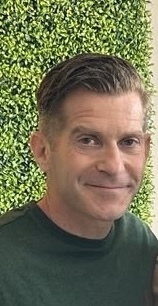
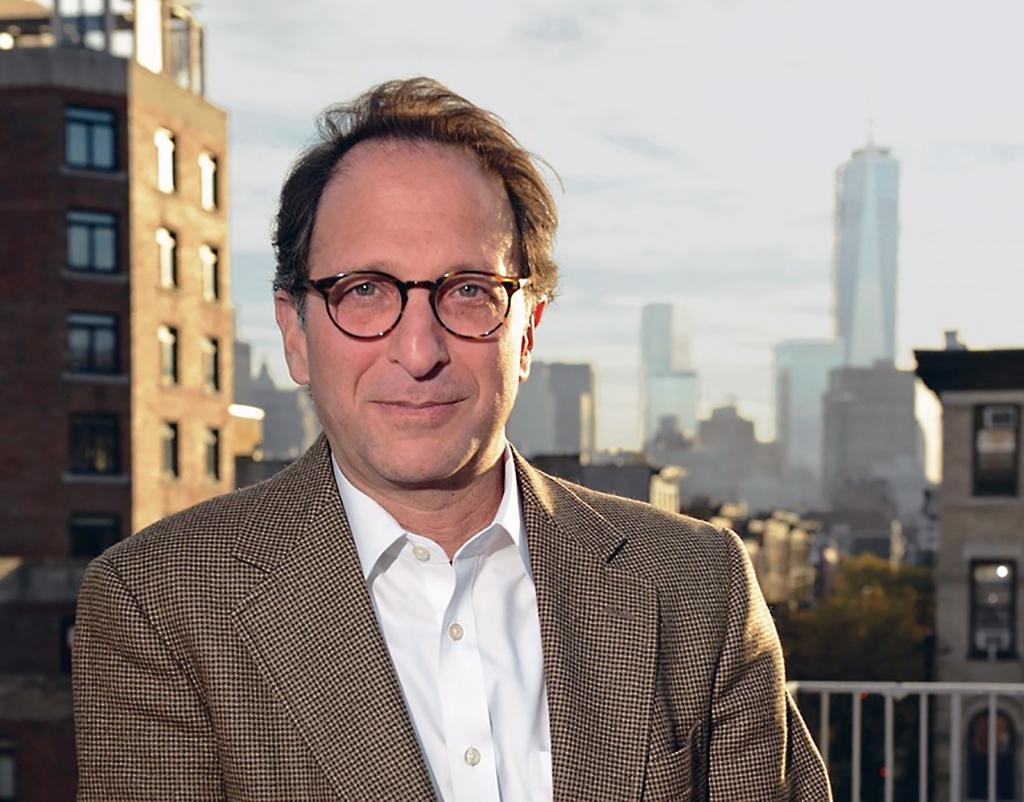
Senior Editor Michael Feinberg sits down with Andrew Weissmann to discuss Weissmann’s new book, “Liar's Kingdom: How to Stop Trump's Deceit and Save America,” falsehoods in political discourse, and how to possibly disincentivize lies on the campaign trail.
To receive ad-free podcasts, become a Lawfare Material Supporter at www.patreon.com/lawfare. You can also support Lawfare by making a one-time donation at https://givebutter.com/lawfare-institute.
Click the button below to view a transcript of this podcast. Please note that the transcript was auto-generated and may contain errors.
Transcript
[Intro]
Andrew Weissmann: If
you are called to testify before Congress and you lie, that is criminalized.
Roger Stone was convicted of that, charged, had a trial, had due process,
convicted. But if Congress lies to us, there are no legal ramifications. And,
you know, there may, there may be political ramifications, but there's
certainly no legal ramifications for that.
Michael Feinberg:
It's the Lawfare Podcast. I'm Michael Feinberg, senior editor at Lawfare,
here today with Andrew Weissmann, a professor of law at New York University and
an individual who held a number of positions in the Department of Justice, both
within its headquarters and in the Eastern District of New York.
Andrew Weissmann: The
idea is that if you keep your head down and don't do anything, or don't do
anything controversial, that's the way to have a long career. I think that, to
me, is the challenge for institutions that rely on and need, and just to be
clear, the public needs long-term expertise.
[Main Podcast]
Michael Feinberg:
Today we're talking about the current state of political discourse in the
United States, how our legal ecosystem may inadvertently be promoting
falsehoods, and what changes we can make to remedy the problem.
We are here today with Andrew Weissmann, who is an accomplished
professor of law at New York University and a well-known commentator on MSNOW
for legal and prosecutorial matters. But more important for the purposes of
this podcast, has also occupied a wide slate of positions at both the main
Justice Department and the FBI.
He worked in the U.S. Attorney's Office for the Eastern
District of New York. He worked at Main Justice in the fraud section, and he
was also the general counsel of the FBI. So he brings a wide variety of
experience to the topics we are going to discuss today. I want to open our
conversation with a sort of inquiry about why this book is coming out now, and
the answer is a little bit self-evident from the title.
But the problem of politicians lying to the public is really
quite evergreen. I think if we go back to Homer, we would find examples of it
there, and it's certainly something that any historian of the latter-day United
States would be familiar with. So why is this moment of deceit in politics
different from those that have occurred in the past?
Andrew Weissmann:
Well, one, thank you for having me. You know, when I was at the Bureau and was
the general counsel, I used to religiously read Lawfare just, like,
every single day, 'cause they just had such a great compilation of people and
issues, and it was really smart. And I think it's done a great job of speaking
to multiple audiences, both people sort of in the field and then also
laypeople.
And if anything, it's gotten better and wider in terms of what
it does. So any- that's a long way of saying thank you so much for having me.
And it's great having this conversation with you given our FBI overlap in terms
of our, our work experience. So the, the book is “Liar's Kingdom,” and so as
you're, you're correct and I point out in the book that this is not a unique
time.
It's not like we don't have substantial historical examples
that we can point to. And, you know, there's obviously Mark Twain, you know,
who commented, you know, very famously and quipped about political lies. And so
on the one hand, I do think it is a perennial problem, and it's one that I
think other times in our history and other countries and civilizations have had
to deal with.
Having said that, I don't think in my lifetime that we've had
such brazenness about lies and ones that are so readily accepted by an
inordinate number of people. So let me just explain really quickly what I mean
by that, which is, so one example of, you know, a lie that, that I sort of take
throughout this book is the big lie about the 2020 election, that there was
material fraud.
I obviously can't cover every lie told by Donald Trump or every
politician. The Washington Post cataloged just in the first term that there
were 30,000 false or misleading statements. So I didn't want to write a
encyclopedia. I wanted to write something that people could read. So I took
that as the core lie.
Polling on that, which has been incredibly consistent, are that
two-thirds of Republicans believe that, and a third of the electorate believes
that lie. And I think part of that is because we are in a substantially
different media environment than we have been certainly since Oliver Wendell
Holmes talked about sort of the marketplace of ideas.
I mean, he didn't actually use that exact phrase, but that was
sort of his, his concept. And because of this balkanization of the media, I
think that lies can be much more pernicious and prevalent because the whole
concept that they would rub up against the truth and be combated by the truth,
and justice is saying you know, the remedy for false speech is true speech,
that presupposes that they're going to be heard.
And with our current media environment, which I don't see
getting any better, that precondition for a marketplace of ideas is no longer
there in the way that it used to be.
Michael Feinberg:
Okay, so you mentioned Wendell Holmes' famous, well, his statements, which
later got turned into the phrase the marketplace of ideas, and that was in the
context of First Amendment jurisprudence.
And your book is very much a dialogue, at least I felt, with
traditional conceptions, by which I mean ones that have gained currency in
modern court decisions of the First Amendment. And you lay out a proposal that,
by your own admission is gonna get some pushback from people who are really
wedded to the marketplace of ideas theory.
Can you sort of just give us a brief overview of what your
proposed solutions to this problem are? I think by the end of the book, you lay
out sort of three variations on a similar theme.
Andrew Weissmann:
Yeah. So maybe just turning to sort of the possible solutions at either the
federal or state or both level, because this could all happen in either one.
And, you know, to be candid, it's much more likely if it's
gonna happen at a state level first, certainly right now, where, you know, we
have a, a Congress that doesn't seem to be able to, to, you know, do, do much
of anything. So I, I think you can bifurcate sort of the proposals into t- sort
of two camps. One is simply criminalizing an intentionally false statement.
You know, I can talk about that ad nauseam. And the other is a
disqualification model. And for both of those, I go through sort of what the
pros and cons are, what the various precedents that you might have. But those
are sort of the two ideas that, one is if you tell an intentional lie of some,
in some material way, you could be prosecuted or you could be disqualified as a
candidate.
So an example of the latter would be England. England has a law
that if you lie about a political opponent, you can be disqualified. To be
fair, they don't enforce it all that often, and it may be that they don't have
to do it that much, and they're much more judicious about when they do it. And
then you have the other, which is to criminalize an intentionally false speech.
And one easy way to think about that in terms of the sort of w-
why it would make sense is right now in this country, if you are called to
testify before Congress and you lie, that is criminalized. Roger Stone was
convicted of that, charged, had a trial, had due process, convicted. But if
Congress lies to us, there are no legal ramifications and, you know, there may,
there may be political ramifications, but there's certainly no legal
ramifications for that.
And that's sort of the main theme of the book, which is why is
that and looking at that particular issue
Michael Feinberg: So
there's a lot to unpack here 'cause this has a lot of both immediate
consequences, but also those of the third and second order category. And we can
do it through a largely theoretical model or through sort of pragmatic
questions that naturally follow.
I'd like to do both, but let, let's start with the practical
ones. You are no stranger by any means to going after politicians and their
immediate circle for a wide variety of criminal acts. And your background is
primarily as a prosecutor, mine's primarily as an investigator. But we both
know, I think, that lies rarely occur by themselves.
They are often attempts to obfuscate other crimes. Or even when
they're not, they're usually occurring from the same sorta nexus of facts that
lead to other criminal behavior. So I su- I suspect the answer to this is gonna
be pretty obvious, but I wanna hear it from you since you have the first-hand
experience.
Why is our existing prosecutorial and judicial system not
enough to cover the waterfront on these issues? Because if we go after somebody
primarily for fraud, primarily for white collar crimes, primarily for process
or substantive crimes, like we don't have to implicate First Amendment concerns
in a way that your proposals might. So, and I realize this is just sort of me
rephrasing our first question, but why do we need to change now?
Andrew Weissmann: So,
you know, I think that when it comes to politicians that lie, I'm not sure I
agree that, that the lie is one that goes with other prosecutable crimes. I
also feel like the reason that we have both civil and criminal laws with
respect to false, intentionally false statements, whether it's defamation law,
whether it's lying to Congress, whether it's lying to banks, whether it's lying
to shareholders, whether it's lying to an FBI agent or a prosecutor, is to have
an effect on people's conduct so they think long and hard.
As you know, before an interview, if you, if you and I were
doing an interview together, I would start by saying to the person who is being
interviewed, usually their lawyer would be there, and I'd introduce all of us,
and I'd say, "Before we begin, I wanna make sure you understand both your
rights and your obligations."
And when it got to obligations, I would go through, I used to
say exactly the same thing to everyone about what is required about telling the
truth and what the consequences could be if you do not tell the truth. Now, it
could be a little scary for people to hear that, but that wasn't really the
point.
It was to make sure they understood what they were getting
into. And ideally, for the, the ... there's like a bell curve of people. There
are those people who are gonna tell the truth no matter what, and there
probably are those people who are gonna lie no matter what. But you wa- the
whole point of having some either criminal or civil strictures is to, for those
people who will change their behavior based on knowing what the law is.
Think of speeding in a car and seeing a, you know, seeing a
police car as you're driving by, you slow down. And so I think there's an
important effect of having a law where people think twice before they say
something to make sure that it is accurate. This is something that, you know,
you and I are sort of still relatively new to sort of the public speaking,
quasi-journalist role that we Take in that, you know, b- you and I both now
comment and give, give our analysis on things and, and are very much exposed to
people who are real journalists on a day in and day out basis.
And as you know, there's standards departments in, for journal-
for any reputable journalism organization to make sure that what is being said
is accurate and sourced, but also they are concerned about making sure there
isn't a, a defamation lawsuit. And to me, if you do not have that, the, the,
you know, for the, the bad actor and the people who could be persuaded, you are
saying, "Well, you know what? There really isn't... There, there may be a,
a political deterrent, and that may be less and less. And by the way, it may
come after you've already won the election. And so, you know, you, you, you may
get the benefits of your lie. But you wanna have that deterrent at the time so
that they are that squashed because we're owed, we're owed that as the people
who these people are gonna represent."
Michael Feinberg:
Yeah. What you're actually talking about is very similar to the change in
footing the FBI took while we were both there, where it went from investigating
things almost entirely after the fact to where it really became an organization
that was based on preventing harm in the first place. And I think what you're
getting at is that in today's sort of what you described as a skewed
marketplace because of the balkanization of media and the myriad voices
proliferating, our legal regime has to be more focused on preventing the lies
from circulating in the first place because once they're in the ether, they're
out of control, versus going after somebody after the fact.
Andrew Weissmann:
Much better said than, than, a much, much better and much faster. So...
Michael Feinberg:
Well, it's something we've both been thinking about since roughly 2016, I
suspect. Yes. So all right. So there's, I- I'm curious about this though,
because what you are talking about is, it's an imposition, I, I, I think it's
a, a pretty modest one, but it does require a reconceptualization of the First
Amendment.
And we live in a world, and this speaks to your comments about
balkanization, we live in a world where an airhead who happens to have a
"We the People" tattoo is given as much credibility as John Hart Ely
or Erwin Chemerinsky when it comes to expounding on the Constitution. So I'm
gonna give you a softball and just ask you to defend why is this imposition,
which some people will no doubt view as very extreme, actually not that out of
the main discourse of American history?
Andrew Weissmann: So
I don't think that it's a reconceptualization of the First Amendment. So the
marketplace of ideas, the, the entire way it sort of came into being and was
used came up in the context of opinion and not something that was a hard fact.
So there is no such thing as a false opinion. In other words, I think that
there should be more focus on immigration.
I think there should be less focus on immigration. I think
there should be more focus on fentanyl. I think there should be less focus on
fentanyl. Those are all opinions. Or I think that the Constitution validly can
be viewed as including a woman's right to choose. I disagree. I think that
it's, doesn't include that.
All of those are opinions, and those are ones where you can
ima- that you can completely imagine, and I think correctly, that there is a
marketplace of ideas and, and people have that discussion, and we have a
problem in terms of how that marketplace is functioning. But nothing about what
I am saying is in, is restricting that in any way, shape, or form.
I'm talking about something that's a cold, hard fact. So one of
the examples I give is if there is gravity in the world, that is not something
that is subject to a marketplace of ideas. Or my father was a scientist, and
there are certain things that are cures. There ob- there's objective data for
that, and you're not gonna subject to, to the, a marketplace of ideas something
that is actually objectively verifiable.
And the Supreme Court has said that, the Supreme Court has said
that false statements in and of themselves are not protected. Now, there's
there's various justices who have various embroideries on that, but the idea
that false statements themselves are protected is something that is now a truism.
That's why, Michael, that you can have false statements to
Congress are criminalized. False statements about election workers in Georgia
are subject to civil laws. If you defame E. Jean Carroll, you can be sued
successfully and be required to pay tens of millions of dollars. If you lie to
Congress and if you lie to banks, et cetera, et cetera.
All of that, no one says, "Wait a second, the First
Amendment protects it." And so my extension is about the question, why are
we exempting politicians from that? As opposed to saying, "Wait a second,
isn't that a total reconceptualizing of the First Amendment?" I would
argue it's not. It's a question of what are the upsides and downsides of
applying it in this other context?
Michael Feinberg:
Okay, so let me ask– for the record, I agree with everything you're saying. But
I wouldn't be doing my job if I didn't throw some provocations out there.
Andrew Weissmann: Oh,
great. Totally, totally love it. By the way, I should tell you, I went to, I
did a bit of a book tour in L- in London, and some of the best, smartest, most
provocative questions I got were from various British interlocutors. And it's,
you know, as y- as you, as I know you appreciate, it makes it more fun and more
interesting.
Michael Feinberg:
100%. All right. So my first question is Are we at a point where we as a
society agree enough on what a fact is, full stop, for this to be workable? And
I, I'm gonna be a little bit unfair and pull a somewhat obscure example.
You mentioned gravity as being a fact, but we live in a world
where less than a few decades ago, a professor was able to write an article in
a journal called Social Text where he argued that gravity was a social
construct. This was widely known as the Sokal affair after the author Alan
Sokal, and his point was that even in a peer-reviewed system, there were ways
to get through the gatekeepers and make something patently insane sound true.
Andrew Weissmann: So,
you know, the answer to that, this is where I would say the practical side of
me comes in having, you know, just practiced law for so long. I think the
answer to that is If the government couldn't prove that what the, the statement
is both false and intentionally so, this doesn't apply. And what you're saying
is there may be issues, factual issues, where the person can say, "That's
not even a false statement."
So opinions, of course, are never gonna be covered because
they're not a false statement. And even if you could show that it's false,
you'd have to show it's intentionally false. So in your example, you may be
able to show and convince a jury, let's say, beyond a reasonable doubt that
it's false because there is gravity, but they then would have to assess whether
it was intentionally so.
And by the way, that's what we do now. Th- just think about
defamation law, where if you defame a public figure, it's, it's not enough for
the plaintiff to say that what they said about me is wrong. You have to show
that it was said with actual malice, which is a, a mental state that's
required. And so that's all that would happen here.
And so the more that the, the fact is not a is not actually,
you know, universally agreed on and the, the easier it would be. Having been a
defense lawyer I would know this, but you know this too just as having been an
FBI agent, 'cause you think about what are the defenses gonna be. And so I think
that's the answer to, to that issue.
Michael Feinberg:
Okay. Now, I'm guessing you started writing this book some time ago, if, if not
an incredibly long time. Like, books gestate, the ideas come. You mention a
conversation with your parents that sort of forms the seed for this one. And in
the interim between what I assume was the beginning of this project and now its
publication, we've seen a real uptick at least in the federal level, of what I
think most people would not have a problem saying are selective and vindictive
prosecutions.
Do you have any concerns that promulgating this sort of regime
now would give more easily reachable ammunition to those who do wanna weaponize
federal prosecutions?
Andrew Weissmann: So
I address that towards the end as sort of one of the key downsides is, is this
gonna lie around like a Chekhov gun that somebody can use-
Michael Feinberg:
Which just for those in the audience who do not love Russian literature
apparently the way we do, Chekhov's law is if you show a gun in act one, it has
to go off in act three.
Andrew Weissmann:
And, and it creates tension because it's like there and, you know, you're sort
of, you know, as an audience member you're like, you- you're sort of waiting
for it. So I'm not gonna get, I, I actually address that in detail, but let me
just give you sort of the high level of where I am on that. There's so many
weapons that are, exist right now.
It is true that this could be a potential new one, but I think
that, that when I'm assessing the pluses and minuses I think it depends on
where you think we are in this country and how much of a crisis you think we're
in. And even for people who are not sold on this i- on my idea or I, I just
wrote something for the Times about these, a, a way to quell vindictive
prosecutions, which by the way, I think you would like because it's, it, I
think it appe- it should actually appeal to everyone.
But in any event, I think that if you think that we're in a, a
sort of fundamental crisis as opposed to just a pendulum swing and don't worry,
people will learn and we won't get back here anytime soon, I, I think that that
will dictate how you view this. But I do think no matter where you are in my
idea, I think it's really important that we think about structures, and you
will like this phrase 'cause I think it sort of goes to our, our upbringing at
the FBI, which is how do you harden the target?
That's a phrase that is used in the intelligence community very
much to say how do you make a target you wanna protect harder to infiltrate,
whether you're talking about cyber attacks, whether you're talking about spying
by foreign adversaries, whether you're talking about terrorism, you know,
physical terrorism. How do you harden the target? Here, that being our
democracy against authoritarian tactics and tendencies in people.
Michael Feinberg:
Yeah, I think that makes sense, and I don't want to belabor the point because I
think you and I are on the same page about where we are on that spectrum now
and what level of alarm people, if not emoting about, should at least be
considering in their own mind.
But it's important to note, I think, while the problem may have
reached an inflection point in the United States, this is, as we've said
before, not a new concern and you are not the first thinker to write about it.
What you're talking about is the first argument I'm aware of to justify
politicians or rulers lying to their people is the allegory of the cave in
Plato, which for those who don't know, essentially imagine The polity is living
in a cave with limited light, and all they can see on the wall of the cave are
shadows of the real world.
It is the job of the ruler to be an intermediary and interpret
those signs for the citizenry. They should not be allowed to have first-hand
access to the actual truth outside of that sort of moderating force. To really
reach for an analogy, you know, it's sort of the difference between the early
church and the justification by faith alone of Protestantism.
Like, should you be allowed to know the divine truth without
intercession from an appointed body?
Andrew Weissmann: You
know, this is great. Do you know, this is really... I, I studied in a college,
on a fellowship after college 17th century theology. Mm-hmm. And very focused
on sort of Puritanism, Catholicism, a version of Protestantism that was aligned
with Cartesianism.
People are probably, like, going, "What the hell is going
on?" But I, I think just to bring it back to this issue of the role of
political leaders, and it goes to something we were just briefly chatting about
before we started, which is there is the Plato model, and one of the thinkers
that I reference in my introduction, which is, you know-
Michael Feinberg: And
this is what I wanna get to, yeah
Andrew Weissmann: Yeah,
is, my introduction, by the way, is extremely personal. Like, it is, for people
who, like, you know, people who don't like me Don't read the introduction.
Yeah. But it's a very personal story, which, it's funny, when I was on with
Nicole Wallace, I knew she would go right to th- those issues, 'cause I never
talk about that stuff on air.
And so I knew she would be, like, really fascinated by it. But
I talk about Karl Popper, who was not a fan of Plato, or at least in th- in the
sense, in the area where, which you have raised and in terms of the role of the
citizen and the individual and what's owed to them and the role that they
should play vis-a-vis sort of the, sort of political leaders.
Michael Feinberg:
Yeah, and I mean, that's sort of what I wanna get to, because- I don't think
it's a coincidence that Popper came of intellectual age during the '30s and
'40s and was part of that intelligentsia generation that really grew up, if I'm
getting my f- if I'm not misremembering things, like he was somebody who was
very much part of the intellectual ferment that begins with the decline and
fall of the Austria-Hungarian Empire, the Habsburgs, and leads to this just
absolute flowering of, you know, social sciences and humanities and literature
and art that comes to a crashing halt with the rise of fascism in Europe in the
'30s.
And that's the background against which he's writing. And I'm
wondering if in alluding to him in your book, you are making an implicit
comparison to a precipice we may be standing on now
Andrew Weissmann:
Absolutely. That, that is, that is 100% what I was thinking about, and I, I
think I make that fairly clear when I talk about my father's history.
He was born in 1930 in Vienna, and h- my grandparents, his
parents, were part of that intelligentsia. My grandfather, his father, was a
doctor at the university there and was very much in denial about what was going
on and thinking, It w- it's a little bit like the way I think about New York
now, which is, you know, couldn't happen here because, you know, look how
sophisticated people are, and cultured, and also relatively tolerant as a
community at the time.
And as a result of that, my grandparents did not leave Austria
when they should have, and instead they managed to leave in 1938, which for
some people listening to this are gonna go, "That's, that's late,"
because it was after the borders closed. And so, you know, my, I start the book
with a conversation with my parents where my father directly alludes to that
period in history when we are having this conversation about McCarthyism, about
Trump's first term, and he is relating what he, h- his experience.
Michael Feinberg: So
y- I just wanna interject with one thing, which is there are inevitably gonna
be people who hear this, having not been familiar with Karl Popper beforehand,
that are gonna jump to the assumption he's some sort of creature of the left.
So I'm, I'm going to point out that Karl Popper has three targets in his work, the
open Society and his enemies and its enemies.
And the latter two are Hegel and Marx. This is not, this is not
somebody who is an ideologue for any side, but rather genuinely interested in
freedom of thought and what allows for a flourishing society. I k- I kinda
wanna pursue this Karl Popper thought by bringing in another thinker who you
don't extensively talk about, but you do quote, and that's Hannah Arendt. And
Hannah Arendt and Karl Popper both come out of the same sort of intellectual
environment.
But after the war, Hannah Arendt has a very different approach
to those who enable totalitarianism than a lot of other thinkers of her ilk.
She writes extensively on it. Her book “The Origins of Totalitarianism” is sort
of a gold standard of sociology for authoritarianism and, and its creation and
ascension.
I think a lot of people disagree with some of its assumptions
and conclusions now, but it's, it's not a polemic. It's an actual academic work
that attempts to figure out how do these things happen. But at the same time,
she's remarkably forgiving of many of the people who enable it I'm thinking in
particular she had an on-again, off-again love affair with Martin Heidegger.
I was gonna make some pun about wearing his fascism on his
sleeve, except he very much actually does. I mean, he's a member of the Nazi
Party who helps, right, jettison Jewish intellectuals from the various
universities, I think Heidelberg or Gottingen, where he's working throughout
the war. And, and I wanna ask you as a veteran of the FBI and a veteran of the
DOJ, there are certainly explicit bad actors who are enabling the weaponization
of the legal system.
There are the opposite. There are people who left or got fired
out of a refusal to do so. Right. But there's also a wide swath in between of
careerists who maybe are trying to keep their head do- heads down, maybe are
working on things that in and of themselves are unobjectionable, or maybe just
think that their work is apolitical and not connected.
And I just wanna get your point of view, 'cause it's something
I've been puzzling over a lot with many of my friends and former colleagues
about if you believe that the Justice Department has been corrupted, what do we
do once this is done? The, the explicitly bad actors are an easy question.
Right. What do we do or how do we approach careerists who allowed the machine
to continue running but they themselves were not malefactors?
Andrew Weissmann: So
let me give you my take. And obviously, again, there's, there's different
categories. The people who are being, actually being asked to do things that
are illegal or unethical, viol, you
know, we've seen so many. Illegal's an easy category. Unethical is the category
of not obeying your duty to the court in terms of candor.
And, you know, we've seen examples of, of that that judges of
all stripes have called out. And, and so that group fall into the sort of
complicity group. And I, maybe unlike Hannah Arendt, I view those people as
particularly problematic because there are always going to be truly bad actors.
You will have l- political leaders who are corrupt.
Donald Trump, in my view, is not the first, and he is not the
last. I've worked on the Enron case. The leaders of Enron were convicted, but
the story of Enron is not about them. The r- if you want, the lesson of Enron
is the complicity of those people who knew what was going on or closed their
eyes to what was, what was going on.
And so within DOJ, those people may not have criminal
liability, but I think that they, they do need to be removed. And obviously, I
think there should be due process, and I think they should be, have a chance to
be heard. And if they, you know, if you can't show they did anything wrong,
then that's so be it.
But I think for people who, let's just take my, my office in
the Eastern District of New York, where I grew up. You know, let's say you're
dealing with somebody who's been there for a year or two. They're doing their
narcotics cases, which is sort of a typical sort of training ground, and it's
all business as usual in terms of what is in front of them.
And those people are thinking, "Well, I wanted to be a
prosecutor. I don't-- I'm not in any way doing anything wrong. I'm not a- being
asked to do anything wrong. I wouldn't, if asked, do something wrong. And these
people are, I think, are who I'm prosecuting. Or these are righteous cases, and
y- and, and I am modeling good behavior."
So, I don't have a view that those people should leave now
because they can't be part of that system. I think it's better for them to be
there for a whole variety of reasons, and I don't think anything should happen
to them later. And also, they're, in many ways they're victims having to even
think about this.
It's like not sort of part of the job. In the same way I want
the same thing to be true with FBI agents and analysts and staff, and there may
be even more so because of its, the national security mission. I wanna make
sure that we have the very, very best people there now to keep people safe.
It's, that's sort of a paramount importance.
It's funny, I don't think the issue of like rebuilding DOJ,
rebuilding the FBI, I don't see That is being the hardest issue. I think the
FBI is going to be harder than DOJ, and I'd be really interested in your view
on this. And the, but I think DOJ is going to be relatively easy to build its
reputation back and to model it, and I think there's various things they can
do.
The FBI, I think, is harder because people go there for their
career. And if you now have to think every four years, you know, we could have
another Donald Trump, we could have no protection the old saying of, which is I
think not just unique to the FBI, which is you know, big cases, big problems,
little cases, little problems, no cases, no problems.
The idea is that if you keep your head down and don't do
anything or don't do anything controversial, that's the way to have a long
career. I think that, to me, is the challenge for institutions that rely on and
need, and just to be clear, the public needs long-term expertise.
Michael Feinberg:
Yeah, I think I've got two things in response to that.
I remember after the 2016 election, right around the time of
the Muslim ban I've always considered myself somebody on the center right, if
not explicitly right, and a number of my friends very much on the left asked me
how I could stay in a government that was promulgating a policy like that, and
my response was pretty simple, which is just because we have domestic
disagreements right now does not mean that the Ministry of State Security from
China or the Russian SVR are not doing everything they can to undermine U.S.
national security.
And that's ultimately gonna bounce back on the citizens,
including the ones who voted against Trump, and I have a moral obligation to
stay and try and stop them. But I, but I think you hit on another point which a
lot of people on the outside don't understand, which is one can very easily and
very frequently, as I believe you yourself have done, leave and come back, and
leave and come back to the Department of Justice.
It's- Right ... not only easy, it's something that's almost
expected. There are very few people who start as a line AUSA and spend their
entire career at DOJ steadily rising the ranks. What is far more common, you do
a couple years as an AUSA, maybe you become chief or deputy chief of a section
within your US attorney's office.
You go to the white shoe firm world for a couple years. Maybe
you come back as a higher position at the U.S. attorney's office or Main Justice.
Maybe you leave again, and then maybe you come back as a political appointee.
When I was in law school, I suspect it was the same as when you were in law
school, that was actually sort of the dream progression of 75%, if not more, of
the people who wanted to go into some sort of public service The FBI is
emphatically not like that by design, people do not leave, get other
experiences, and come back.
And, you know, I've been asked, "If there's a change of an
administration, would you go back to the FBI?" And my answer is maybe,
maybe not, but I can't. Because the fact is, under FBI policy, if you leave for
more than two years and you wanna come back, you have to go through the FBI
Academy again in its entirety, and you have to start again as a line level
investigator.
I'm quite sure my wife and child would not allow me to
disappear for 21 weeks. I'm quite sure that my body-
Andrew Weissmann: I think that Kash Patel, didn't Kash
Patel cut it down to?
Michael Feinberg: For primary law enforcement
supposedly. I also don't think my body pushing 50 could take three days a week
of hand-to-hand combat. But as a result of that sort of non-permeable border
with the private sector, the FBI has a culture which is incredibly difficult to
change.
And my biggest worry is that we are gonna have a core of agents
who came in starting in January of 2025 up to, you know, four years from now,
and they're gonna be accultured to an FBI that they have never known as
apolitical And extirpating that kind of thought, I think is gonna be infinitely
harder than people realize
Andrew Weissmann:
Yeah. I, I, and I think, I think that's true. I think what I said is true in
terms of recruiting. I just think, you know, that's where going back to my
theme of thinking about systemic issues, civil service rules are, you know,
gravely, gravely under attack. They don't even apply to the Bureau, and the,
the n- need for us to think our way out of this problem and for people to
understand...
Like, I, I know it doesn't sound very sexy to be like, you
know, politicians need to run on the civil service, but it's true. I mean,
there's a reason for the civil service, is that we lived in a system of the
spoils system for an incredibly long time, and that is not healthy. This is one
where it presupposes an engaged electorate and an engaged Congress to deal with
this.
But th- to, that to me is the only real way to solve the sort
of FBI issue, which by the way, we're dealing with the FBI because we were both
there, but it's the same issue in many, many other agencies where these are...
This is where people spend their career, and they had previously been trained
to be completely apolitical.
I mean, I remember, Michael, when I went from... I'd worked
for, in the department for years and years and years, and the first time I
worked for Director Mueller was as his special counsel for six months, and then
I came back as the general counsel. And It is, it was so palpable how
independent and fact-based the FBI was and how proud it was of that, that it
was in Washington, but it just kept its head down on all of those issues.
I mean, Director Mueller would be asked to weigh in on various
policy issues or like a new law was being proposed or to testify in support of
some new administration law enforcement position, and he was like the, not
doing it. I mean, his view was that the F- it was so important for the FBI to
have integrity for everybody, Republican, Democrat, Independent, so that they
kept itself out of those debates.
Michael Feinberg:
Yeah, I remember midway through my career when I wasn't quite a senior
executive, I also wasn't a field agent. I was what the FBI in its overly
complicated vocabulary would call a senior leader, dealing with a particularly
thorny counterintelligence problem that had a very easy legislative fix. We
weren't gonna propose it.
It, it just, it wasn't viewed as our place. There is a
political appointee at the Department of Justice. Department of Justice has an
office of legislative affairs, and if the administration wants to speak, it
will be p- through people who do not carry guns. There was just There is
something deeply ingrained in the American spirit that if you had the power to
use force against the public in certain circumstances, you had an obligation to
be a sort of gray man.
Don't wear your feelings or your ideologies on your sleeve. You
have to be the epitome of apolitical so that when you do have to do something
extreme to protect other people, nobody's gonna second guess your judgments.
And I and the loss of that trust is something that does still keep me up at
night.
Andrew Weissmann: To
me, that is, you know, when you said that you and I are, probably have exactly
the same view about where we are on the spectrum of, you know, hair on fire
versus pendulum swinging. You know, the story after story of what is happening
in the judicial system is so abnormal under... And both of us have worked in,
you know, for different administrations, and it's just, it just isn't anything
that happens.
You, you, you don't see mass firings or even, or people
quitting over being asked to do things that are improper in, in any
administration other than now.
Michael Feinberg:
Yeah, this is the Saturday Night Massacre, except it's lasting 18 months with
no signs of slowing down. And I think on that slightly pessimistic note, being
respectful of your time, we will leave things, but I, I would unhesitatingly
recommend your book for anybody who wants to try and understand what solutions
to the problem of fraud in politics, by which I mean colloquially speaking,
lying in politics, might be out there that haven't previously been on the table
in this country.
And I think the set of circumstances we're in right now is sort
of exactly the right moment to start examining those options.
Andrew Weissmann:
Well, thank you so much for having me. Great discussion.
Michael Feinberg:
Thanks for coming here.
The Lawfare Podcast is produced by the Lawfare
Institute. If you wanna support the show and listen ad-free, you can become a Lawfare
material supporter at lawfaremedia.org/support. Supporters also get access to
special events and other bonus content we don't share anywhere else. If you
enjoy the podcast, please rate and review us wherever you listen. It really
does help.
And be sure to check out our other shows, including Rational
Security, Allies, The Aftermath, and Escalation, our
latest Lawfare Presents podcast series about the war in Ukraine. You can
also find all of our written work at lawfaremedia.org. The podcast is edited by
Jen Patja with audio engineering by Goat Rodeo. Our theme song is from Alibi
Music. And as always, thanks for listening.