
Lawfare Daily: Pope Leo XIV Takes on Silicon Valley with Christopher Hale and Renée DiResta

Pope Leo XIV’s first encyclical treats AI as the defining social question of our time: not just a technical shift, but a moral fight over dignity, labor, truth, war, and power.
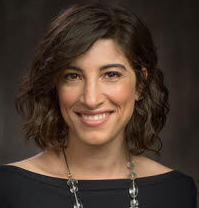
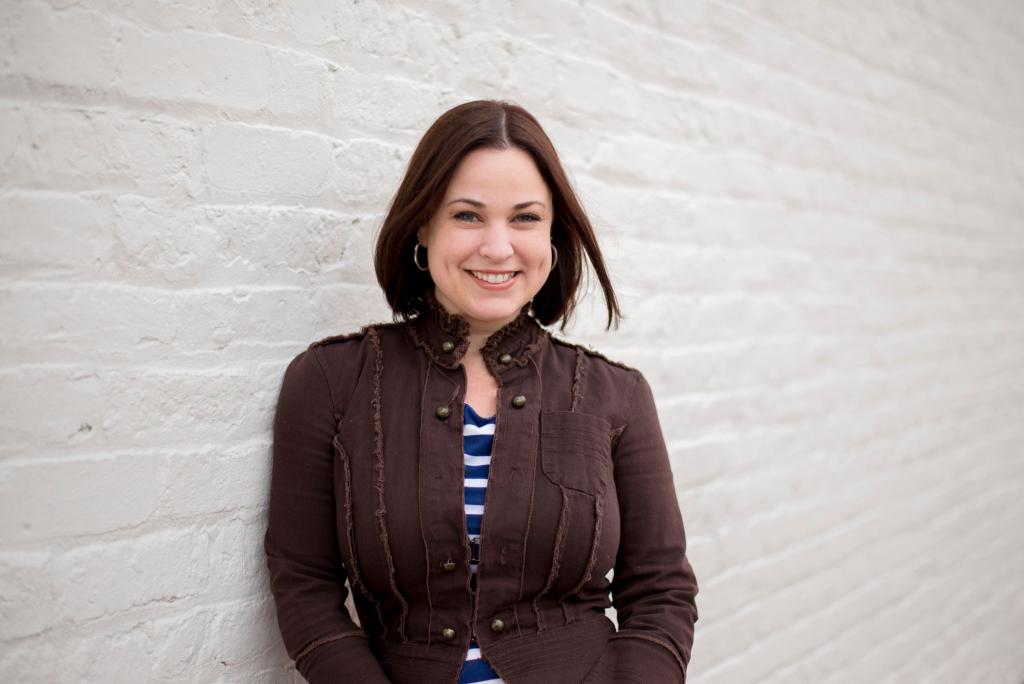
In a Lawfare Live on Substack on Wednesday, May 27, Lawfare Contributing Editor Renée DiResta talked with Christopher Hale, author of the Substack newsletter “Letters from Leo,” about the Vatican entering the AI debate, what it means to “disarm” AI, and why the Pope’s new encyclical is best read not as anti-technology, but as anti-centralized-power. They discussed AI and human dignity; labor and automation; truth, democracy, and disinformation; autonomous weapons; and Silicon Valley’s response.
To receive ad-free podcasts, become a Lawfare Material Supporter at www.patreon.com/lawfare. You can also support Lawfare by making a one-time donation at https://givebutter.com/
Click the button below to view a transcript of this podcast. Please note that the transcript was auto-generated and may contain errors.
Transcript
[Intro]
Christopher Hale: He really offered, I would argue, the middle road. The middle road. He says that tech is inevitable, AI is inevitable, but what the church wants is a profound influence over and ensure that the human person is put at the center of it.
Renée DiResta: It’s the Lawfare Podcast. I’m Renée DiResta, contributing editor at Lawfare, and I’m here with Christopher Hale, who writes the Substack “Letters from Leo” and ran Catholic outreach for President Obama.
Christopher Hale: Pope Leo says, “No we should talk a lot about guardrails. We should talk a lot about displacement of jobs. We should talk about how this impacts those in the margins.”
Renée DiResta: Today we’re talking about the Pope’s new AI encyclical, which may sound like a departure from Lawfare’s usual terrain, but it isn’t. The encyclical touches on national security, autonomous weapons, information integrity, and the question at the center of AI governance, who gets to wield technological power and under what constraints.
[Main Podcast]
So I think maybe we can start, since people were asking actually in the chat, what the encyclical is and why it matters. Maybe you want to just sort of start with the basics.
Christopher Hale: Yeah. So I think that the word “encyclical” is Latin in roots. It means to encircle, to encompass the entire globe, and the idea of encyclical is it’s a document that the pope sends to the entire globe.
Before Second Vatican Council, it was really meant for bishops within the Catholic Church who are the teaching authority of the Catholic Church. After Second Vatican Council, we moved on to say that it’s also for the laity, and under Pope Fr- Pope Francis, he said even more so it’s for the entire world, for non-Catholics itself.
Some people say it’s kind of like the State of the Union Address. It’s where the pope kind of gives, like, what he, his priorities are for the year to come. That’s a little bit inaccurate because it’s not just, like, really one year, it’s several years at a time that it’s supposed to go out. And so really in Fran- Francis spoke for 13 years, and there’s four encyclicals, so it’s, I think what we’re seeing here is Pope Leo XIV articulating what he thinks is at the forefront that the world’s facing, that the Church is fac- is facing for the next three or four years. I think this will have a shelf life, he hopes, well into the future.
Renée DiResta: And one of the comparisons that I’ve seen making the rounds in the commentary is that this was released it was released two days ago, I think, on the 25th, signed on May 15th. This was when I think we started talking about it, which was the 135th anniversary of, I believe, a different encyclical, one by Leo the, Pope Leo XIII Rerum Novarum, which was responding to industrial capitalism. So how do you feel about that comparison?
Christopher Hale: I think it’s very apt.
I mean, so Leo XIV has not been hiding his cards here. I was in Rome on his election. Also had bad internet that day as well on May 8th, 2025, and two days after his... he gets elected, he has his first speech his policy speech as he moves to the cardinals, and he says, “I am naming myself after Leo XIII,” and Rerum Novarum, which he s- spoke of is the inspiration he said that, that made him choose that name.
And in fact, in that speech, he says that AI is of the new things. Rerum novarum is Latin for “of new things,” and AI is the rerum novarum, the “of new things” of 2025, now 2026. So it’s very clear to him that document is the inspiration for this document. But a lot of we live in a secular society, so I think there’s a little bit, I think, an unfair mismemory of what that document was.
The labor movement as we know it, the progressive movement of the 20th century, weekends labor unions, 40-hour workweeks, its intellectual birthplace though it became a secular movement, is really in rerum novarum. It is the intellectual formation of that. Now, it goes a couple different ways, really.
You could argue that 20th century socialism as well sees that document as a starting point. So I think what Leo the XIV is trying to do is he wants to create the rerum novarum of today, and he wants this document to, to give birth to new intellectual ideas for labor, for capital for social justice in this—here in 2026 forward.
So, it is in-in deeply connected, and Leo doesn’t hide the ball on that.
Renée DiResta: And one of the things I think that stuck out for me as a person primarily in tech, that’s where my career’s been for the last, you know, 14, 15 years or so, is the way he nails it by very directly saying technology is not inherently evil, but it’s also never neutral, right?
And that distinction being very important, something that those of us who try to work on what is now called pro-social tech try to make that point actually quite a bit, things that I think we did badly in the age of social media that you’re seeing people try to think about differently in the age of AI.
How do you think about that sort of foundational framing that he puts out there?
Christopher Hale: I think it’s correct. I think, well, there’s a lot of traditionalist Catholics, so we—these words get thrown around i-in a strange way. But really, the far right, if you will, the very traditionalist wing of the Catholic Church is very different than the secular right in the United States.
And there was a lot of folks on the s- on the religious right and the Catholic right who were upset that he didn’t come out, and they asked for a Butlerian jihad, which for folks who don’t know what that means—Actually, can you explain what that is, maybe? I don’t know if you if you’re able to do this even better than I am.
Renée DiResta: So I think—let me see. How—what’s the best way to explain that one? The idea that it comes out of Dune, which I am not a big Dune person, so I’m afraid that there’s probably people who are watching who could explain it a whole lot better than me. But the idea that it’s a sort of a massive human rebellion against the machines, I guess, would be the way to, to explain that.
I saw this come out a little bit also. I-I’ve read a lot of reactions to this as a person with my own, you know, my own reaction to it as a person in pro-social tech, but I too saw that. I think there were folks who were hoping for I think you alluded to this, one of the Catholic scholars who may—I think published in The New York Times saying, “No, it is actually evil.”
You do need to be resisting it. You need to be resisting... I think I also saw the sort of godlessness of the sort of post-humanist movements, the AI-enhanced, you know, sort of even biological enhancements that you see kind of come out of the Valley, that, that kind of mode of thinking. I saw some of the calls for that too.
I don’t know if that’s what you’re referring to.
Christopher Hale: Yeah. And I think that what we found, and I think this wasn’t a surprise, people, the people that kinda have been following us, is that he really offered, I would argue, the middle road. The middle road. He says that tech is inevitable, AI is inevitable, but what the church wants is a profound influence over it and ensure that the human person is put at the center of it.
As you know way better than I, I think that the problem with that is as Silicon Valley and technology writ large is, of course, deeply ingrained with capitalism. And there isn’t, if I—now, correct me if I’m wrong, the money isn’t there in the same way. I mean, I don’t think the money is there towards these pro-human movements within tech.
And so I think we’re competing against the monetary interest. And Christopher Olah, he comes to Rome, and he pretty much says the same thing. He says that left to our own devices, anthropic, he implies his competitors as well, aren’t able to, aren’t able to create a tech that is human-centered because the incentives aren’t aligned in such a way.
Is that a fair say—is that a fair I think, analysis of how you see it?
Renée DiResta: I think, you know, I was in the Valley as a venture capitalist in 2013, right? 2011 to 2013 was when I moved out to the Valley and did that before going into startups myself. And and I spent a lot of time in the hardware space, and you would see the quantified self movement, right?
There would be these meetups where people were talking about how we could enhance ourselves, how we could use devices to enhance our performance. So it wasn’t—we didn’t even—AI was not—AI was sort of seen as a thing that had been. You know, it wasn’t going anywhere. People weren’t investing in it, right?
It was like quantified self, devices you know, mobile, social, local was another thing. How could people use their phones to connect to their environment? That was a big theme around that time also. One of the things, though, that I think people who maybe—I spent about, for those who don’t know me, I spent 10 years living in the Valley.
I was there for 2011 to 2021 before moving out to D.C. again. There’s always a, there’s a sense of adventure and a sense of can we do this? The should we do this is maybe a little bit not necessarily at the forefront. Sometimes it’s just can we do this? And so I think that is a, is a, an interesting cultural difference that sometimes has very serious unintended consequences.
But that question of it’s not thought of necessarily as a moral decision so much as a can you take... Particularly as sensors became cheap as you know, hardware became easy to manufacture, 3D printing really took off, people could prototype very easily. This question of what could you do now?
Just holding AI aside, just at that moment in time in the Valley then was this question of what could you do with it? What was possible? And I think that question of what is possible is really the thing that motivates the culture of the Valley in a way that is maybe a little bit alien to people who are out-outside of it.
Christopher Hale: I find—So I have clients in Silicon Valley. I started working with Silicon Valley clients starting the year 2023. And as you know, in the flesh as I experienced much better in flesh than I did, it’s like Silicon Valley is a very different world from the rest of the country especially quite frankly, D.C. and the East Coast.
And one of the things I find that, so for folks who are from the Letters from Leo community, you read this encyclical, I encourage you I’m a nerd, so I t- I wa- I wanna point you to really two paragraphs in it. I can retread it a little bit, but there’s—in paragraph 120 and paragraph 220.
And I think that these two paragraphs actually really, I would say, are the biggest critique of Silicon Valley culture. And Pope Leo XIV says that in Christian teaching, in Catholic teaching, you talk about the limitless possibility, which I think is the embodiment of the Silicon Valley ethos the move fast and break things, but also see what is impossible and make it possible.
Leo says that in Christianity, that it, you know, that we must actually embrace our finitude, our shortcomings, our limits. And in fact, in our limits, in our shortcomings we learn the fullness of our humanity. It’s not something to be overcome the, that idea he says creates this culture, so that’s like the problem, and he says it creates a culture where we try to measure everything.
I mean, I’m more guilty of it than most. I mean, I have both. I have the Apple Watch and the WHOOP. I, y- I measure everything. But Leo s- Leo I think this is the most beautiful p- for me the most beautiful part of The Encyclical. In chapter 220, he says, he’s fl- he’s really sourcing from Pope Francis.
He says, “We need to learn the art of wasting time. We need to learn how to waste time with our families, with our children, with our neighbors with our communities, and with strangers.” And I t- I hear that, Renée, and I think a lot about... I consume Andrew Huberman. I listen to Andrew Huberman. I listen to Bryan Johnson.
So these two men, Huberman is less extreme than Bryan Johnson, but for my, for folks who don’t know him, they both are big into protocols and measuring oneself to, for self-improvement. And Bryan Johnson goes as far as he says that he wants to live forever, and he’s not kidding.
He actually claims that he’s making a new religion. And I think that what Leo says is there has to be parts of our lives that are immeasurable. There has to be parts of our existence that are immeasurable. You cannot measure the quality of time with your children on a Apple Watch or on a WHOOP.
I think that language is in some ways an anathema to a lot of the way Silicon Valley imagines itself, but also most importantly, monetizes itself. I think there’s a, an incentive misalignment there. I—maybe you could do better than I. I know there are movements for using technology for in live encou—i-in real live encounters, but my sense is that’s not where the money is, at least at the very minimum.
Renée DiResta: There were these... I don’t know how many people on here remember Foursquare, like comment if you do . But yeah, there were apps that did seek to bring people together. I used Foursquare as a way to, to meet up with people when I lived in New York when I was in my 20s, right? Everybody would check in, you would know where your friends were.
It’s sort of weird to me how much information I telegraphed at the time, just letting, you know, letting complete randos know I’m at this bar at this time, come find me, right? I would never do that today, but I had a different profile and a different life then. I think one of the things that I see quite a bit actually is social media is not really social so much anymore.
It’s entertainment, it’s content, it’s a different style. You’re not engaging with your friends. You’re not using it to find friends. You’re no longer connecting through your social graph. You’re getting what the companies call unconnected content. That is literally the name of it. That’s the name that they use, and it’s unconnected in the sense that it’s an algorithm pushing you something that it thinks you are going to like.
It’s supposed to feel serendipitous. It’s supposed to feel charming, but what it really is it’s sort of tapping into that addiction center, right? To that sense of... And I don’t mean addiction in the literal sense. There’s a whole, you know, John Hite and the entire movement debating whether it’s actually addictive or not actually addictive.
Holding all of that aside, I just mean everybody who has ever tried to resist their phone when they are with their children knows what this feels like. The sense of, you know, I’m here, I’m in this moment, but also I know that there’s some stuff happening on the internet. Also, when I take out my phone, there’s gonna be a million notifications.
I’m gonna see the red dots, and I’m gonna feel compelled to do something about them, right? So there is a a behavioral component to it that I—that was very central to social media. One of the things that’s been interesting about AI for me as a person who I use agentic tools constantly in my own work, and I have come to realize that I will spend two to three hours with agents late at night these days.
I don’t know what your flows are like. I don’t mean for writing, I mean for research, I mean tasking. Things where I’m like, “Man, I can do six projects at once.” And then sometimes I pause and I think like, I used to like, like play games or read a book during that time . And now I’m like, “Okay, but my kids are in bed and I can turn on Claude and I can kick off like three or four different projects.”
And they’re things I want to be doing, but it’s the sense that because I can amp up my productivity to an insane degree, I do it now. Whereas before I would be like, “Okay, I’m kinda tired, I’m gonna read a book,” because the option wasn’t even available to me to feel that pressure or that compulsion to go do it.
Christopher Hale: And I find, I mean, I say that number one, absolutely. I find that with my day job. So there’s this pro... I mean, it’s, it I guess it’s better than scrolling Twitter all night ‘cause you’re producing something, you’re making something. Right. But it’s the same thing. I mean, I think that what Leo has been so clear during his pontificate, he believes technology at its best can limit the work hours.
Like he wants less work and more time for your family. That’s like if you put it in the most blunt way, that’s what he wants. But clearly that’s not what’s happening. Our work is expanding now. We’re, we can just produce more, and there’s an addictive quality to the agents themselves because all of a sudden you know, with one unit at a time, you can produce 20 units of work where a year ago it was five or six.
So it has this I don’t know what you... I don’t wanna say there’s a spiritual component where you—to, to—In Christian theology, God is the one who creates, and Silicon Valley obviously is filled with builders, and so there’s this super creation moment you feel, but it can lose its sense of correctness in terms of proportionality.
And so I’ll give you example, like, so people who do use Claude, et cetera, one of the things about it is people suggest you get what’s called a Mac Mini. And for folks who don’t know what that is, it’s a desktop that basically it can run 24/7, and you can now... You, your computer doesn’t have to go off.
Your computer never has to go off, et cetera. But if you use Claude and use these things on your laptop you know, you eventually close your laptop, and now they have tools that, like, can keep your laptop open when it, the lid’s closed. So the entire thrust is to always be working, to always be online.
And that’s not what, that’s not how it’s sold to us, right? It’s not sold as, “Well, let’s get our let’s get our free time back.” It’s let’s do the impossible. Let’s build the impossible.” So I think I think there’s an addictive quality for it that, that is like maybe modestly more noble than social media, but the end goal is to free up time for relationship that is not being achieved
Renée DiResta: So one of the things I think the Vatican labels it in their sort of summary lines portions 126 and 129, humanity in all its grandeur and woundedness must never be replaced or surpassed.
And he talks quite a bit about technological progress without regression of the heart, which I thought was an interesting turn of phrase. I wondered if you might talk about that component.
Christopher Hale: Yeah. So the word heart, obviously in Catholic teaching and Christian teaching, is not just the, the—not just the physical heart, but he—I think what’s really important to understand about Pope Leo XIV is he’s an Augustinian, and so, he’s the first Augustinian pope, and St. Augustine, of course, being the patron of the Augustinians and the patron of Pope Leo.
Augustine says the heart is the most important element of a Christian’s life, of a human being’s life, and he has this beautiful prose that he does I believe it was in the City... No, it was in Confessions, excuse me, which was his kind of his autobiography.
And he says that, “My heart is restless until it finds rest in Thee.” “In Thee,” of course, referring to the divine, to God. And so I think that what Leo is referring to here is the proper notion of what the heart ought to be. The heart has restlessness, but it does, in fact, find rest. And so I think what he’s hoping for, I think what he’s alluding to is this idea that we need times in our lives, we need moments in our lives where we have—our restlessness finds a home, that we find peace.
And I think that he thinks, I think he argues pretty much that when we imagine ourselves to be capable of all things, to be able to overcome the limits of death itself, there’s a restlessness in us that will never be healed. So let me put it a little bit like, you know, let me tie this up.
The restlessness is good if it finds a home When the restlessness is never satisfied, when the ne- restlessness never finds a home in God, Chri- Augustine would argue it becomes evil. It becomes an agitation. And the biggest example that Augustine gives in his own life to get, you know, to make to add a little PG-13 to the novel is that in his younger years, St. Augustine had this restlessness.
He, he’d imagine himself, he says, to be greater than God. He imagined himself to be all-powerful, to be able to do all things, and he got into prostitution, and he would, he would visit—he would visit prostitutes and go and go to brothels.
And he gives this very beautiful statement. He says that what he realized was that at the end of the day, what he was looking for when he was knocking on the door of a brothel was not sex. He was looking for relief, for God. He was looking for peace. And I think that what Leo is pointing to here is that when our restlessness is pointed in the wrong direction into self-absorption and power, we will never find peace.
Renée DiResta: On the subject of peace, that comes up quite a bit in this encyclical.
We see it in the context, I think you wrote a little bit about this too in, in your summary of it, on the idea of disarming AI, where when he uses that term, I think he means it to be freed from the logics that turn it into an instrument of domination, exclusion or death. So he talks about the moral stakes of this power and also the question of where that power lives.
What did you think about the disarmament part? Also, I imagine that was something interesting given other people asked earlier, Chris Olah was in the room from Anthropic, and that of course had become quite a topic of conversation in the literal sense in terms of the fight with the administration over autonomous AI-powered weapons.
Christopher Hale: So I want to actually start with Chris and just give a very quick backstory, and then I’ll go to disarm. So I was able to confirm this week, in fact, that—So for folks who don’t know, Christopher Olah, who is the founder, co-founder of Anthropic, also at least according to his high school blogs, he’s not religious.
He’s—he calls himself agnostic, atheist. He, of course, spoke at the event introducing the encyclical and gave this very, I thought, beautiful and honest speech about the goals of Anthropic and the shortcomings of Anthropic and AI and the help that they needed from the Vatican. But the reason that Christopher Olah was in that room was twofold.
For about a decade, the Vatican had been working with Sili—trying I was actually tried to help in this in some capacity, was trying to build relationships with Silicon Valley to get this ethical framework of artificial intelligence to be a part of the conversation. They were mostly rebuffed.
There was very kind ways of rebuffing a very business savvy way you never tell the Pope no, but you kind of, if you will, pat the Pope on the head and move on. But Anthropic, they made a sincere effort, at least in the Vatican’s mind, to engage. And that meant a lot to Pope Francis, Pope Leo’s predecessor.
But Pope Leo XIV, based on my reporting and my conversations, found that Anthropic’s stand up against the Pentagon was, quote, “courageous.” He consumes Western media. He con- he watches CNN all day, like a good boomer. So you know, he likes Fox, CNN. According to his brother, he watches CNN all day long, and he was inspired by the Anthropic stand.
So that is—I think that was particularly why he was in the room because of this recent history. I find that... I do find that admirable as well. That’s actually how I started getting into Claude was because I was inspired by that moment. I switched from OpenAI to Claude Software. So the disarming part you talked about peace and disarmament.
Leo XIV has used the word disarming since the beginning of his election. Right after he came out on the balcony on May 8th, he said this interesting phrase. He says, “I want a peace that is unarmed.” So I wanna do this vision for a second. “Is unarmed,” so I myself have no weapon and is disarming. So I take away the weapon of the opponent.
Which is an incredible phrase because how does one take away one’s weapon without having one, a weapon of their own. How do you peacefully disarm another person? It kind of reminds me of, was it Khloé Kardashian?—commercial, like the Pepsi commercial in the Super Bowl where, like, she like-
Renée DiResta: Oh, yes ...
Christopher Hale: The equivalent of putting the flower in the gun.
Renée DiResta: The, yeah.
Christopher Hale: But it’s from a Christian worldview, it only, it’s a miracle. Like, it takes God to disarm someone that without a weapon. And so I think that’s w- an interesting idea is like Pope Leo XIV has no military. He has no money really. Like he, he actually took a vow of poverty. He only has moral influence.
And the question I have myself is the moral influence, and I hope the answer is yes, but is the moral influence of the Pope himself, who I find fascinating because Silicon Valley is used to dealing in a transactional world, but Pope Leo cannot be bought. You can’t sign a contract with him. He cannot be indicted.
He cannot be deported. He cannot be tariffed upon. He cannot be voted out of office. So he answers to an authority that they have never dealt with before. And I’m wondering and hoping, I guess I say hoping that that moral authority, which is unabated, is unimpeachable, I would argue, is that enough to disarm AI?
And so I think that’s, that, that is the hope. So an unarmed Pope Leo, can an unarmed Pope Leo disarm AI?
Renée DiResta: That question of how does he engage with Silicon Valley directly, there’s been, I think you’ve covered this back and forth, not only with Silicon Valley, but with J.D. Vance also, right? Who’s sort of the most prominent Catholic in the administration.
What was their reception to this disarmament language?
Christopher Hale: Well, so the short answer of like the post-encyclical is mixed. J.D. Vance gave more positive commentary than he has in the past, but I want to kind of flesh that out from just a political stance. In February 2025, right after he is inaugurated into office, J.D. Vance goes to Paris, this famous AI summit all the European leaders are there. The short of it is that J.D. Vance says that Europe and the United States, that’s referring to the Biden administration, was too obsessed with guardrails and regulation. And he said, “We need to focus more on inno-innovation.”
I think he even says the word disruption innovation less on guardrails. And so obviously that statement is completely rebuffed by this forty-two-thousand-word encyclical where Pope Leo says, “No we should talk a lot about guardrails. We should talk a lot about displacement of jobs. We should talk about how this impacts those in the margins.”
So there’s a disagreement at the forefront. That being said- In my political work and sort of watching this play out, and maybe, I think we’ll probably talk about David Sacks here, but there was a course that was when Elon was at the beginning of the administration, he was renewing DOGE, and then David Sacks, who I—you actually could probably explain his background a little bit better than I could, but he served as the White House AI czar.
He has a long career in Silicon Valley that I’m unable to articulate very well. Maybe you can give us a little background. Do you know much about his career? I don’t actually really know what got him, like what his start was.
Renée DiResta: Yeah. So he was a partner at a VC firm, Craft Ventures, but I think he was part of the, you know, the sort of PayPal mafia, as it’s called.
I don’t know if that means anything to you, but okay. For those who don’t know- reoffending company—Basically, for those who are not familiar with the term PayPal Mafia, it’s the early founding team of PayPal did extraordinarily well for themselves, and many of them went off and then had second-order successes starting companies, and then those companies were extraordinarily successful as well.
Many of them supported each other in those second-order companies as well. There is a metaphor that some of us in the Valley use to describe it, which is if you’ve ever seen Game of Thrones, the sort of like houses of Silicon Valley where, you know, you, you have like House Thiel and you know, House...
For a while there, it was like Ron Conway was another one, like House Conway and there would be these like sometimes they would co-invest with each other, sometimes they would go to war with each other over obscure political fights. 2016, things were still mostly sort of liberal. By the time you got to 2020, you really started to see the Valley splinter and those political factions became quite visible.
David Sacks was a big supporter of President Trump early on, you know, quite friendly with Elon Musk. This comes into play in the 2024, w- no, God what year are we in now? 2024, 2024election. And then you start to see the the dynamics of the political realignment in the Valley taking shape.
He’s also got a podcast, so he’s also quite out there publicly talking about the being a thought leader or content creator, but very much part of the public conversation. And then he became the AI and crypto czar for the Trump 2024administration. He stepped down in March 2026, I believe.
I think he has some other—I think he has some role in the administration in some advisory capacity now though not quite so directly as he did. But he was very much involved in the writing of the White House AI Act alongside Dean Ball, is my understanding.
Christopher Hale: Yes, I think that. So, so they, they—So Dean Ball was in the administration.
So Dean Ball makes an appearance in my essay today, for folks who are “Letters from Leo” subscribers. You can see we got a little tit-tat on Twitter. But so, these are two, two of the main architects of the president’s AI policy. So David Sacks leaves in March. And so here’s what I’ve been seeing, at least on the ground, is that there is a political reality the president has to face with that David Vance’s worldview on artificial intelligence, quite frankly, is just not popular with the American people and not popular with his base.
I have somewhat proprietary data, but I can share the baseline that we see that the American people, their view of the word Silicon Valley, not not a particular product, not AI, et cetera, just the word Silicon Valley. When you ask the American people popular versus unpopular, like versus dislike on the past five years, that has gone down 25%.
So Silicon Valley is deeply underwater with the American people. And the person who showed me the surveys, they, they said the only example they can see that’s compares—comparable is that Wall Street’s view of the American people, Wall Street from 2003 to 2008.
One of my, one of my zero wedges claim, but one of my deep claims is that the American people in their flesh, they might not be able to s-speak the economic indicators, et cetera, but they know when something’s wrong. They know when something’s up, and they can feel it in their bones when things are going awry.
And that’s to say, so I have seen a shift, a fight, as you can see playing out in the Trump administration about the proper role of AI. And of course, there was this AI executive order that the president was gonna sign. I actually don’t know the details. Maybe you know a little bit of the details of it better.
But David Sacks made a phone call, and this was gonna be a very positive step towards AI regulation, and it got nixed at the last minute.
Renée DiResta: So there’s a, there’s some interesting stuff there. There’s the question of—The way I frame it is like who has the legitimacy to regulate the companies at this point, right?
That is what you’re seeing play out there. The conversation around safety got reframed as being about censorship, and this was actually what everybody—Half the people in the Valley have the “Why did Marc Andreessen block you on Twitter”story. For me, it was for saying AI safety is not censorship.
Boom. That was it. We had been friendly back in the day, and that was it. So this became, like, an incredibly polarizing thing where when you said stuff like you know, it’s like the meme we should improve society somewhat. Not, you know, not like crazy guardrails, just like maybe like little guardrails.
But this executive order is also, at the same time, interesting because it was things like reviewing models or auditing models, things like that question of what should be auditable, what should models have to show, what should the companies have to disclose, what kinds of checks should be put on the system at a governmental level.
People are very uncomfortable with the idea of the government having control over AI because of the fear, because, as you know, 50% of the American public distrusts the government at any given point in time, and which 50% it is flips back and forth depending on which party is in power.
So nobody likes the idea of the government being the overseer, right? But that then translates to the question of who gets to do it then, right? Because we have unfortunately sort of talked ourselves out of the idea that the government can do it, right? I see people saying, “Not this government.” But funny enough, people didn’t want the Biden administration doing it either.
Marc Andreessen will tell you that. So then you have this question of should the companies do it themselves, and that’s like the fox guarding the henhouse there. Nobody—You know, people as you are alluding to, and we see this at our polling also, do not trust the tech companies. They do not believe they have their best interests at heart.
And this ties into also that question of what are the potential harms that we are looking at, and is that in the realm of of very serious things like checks for AIs deployed in weapon systems? Is this did the AI get a fact wrong, right? That’s a different tier of things. Some people are very concerned about that.
You know, this question of is the AI going to be proselytizing or nudging or propagandizing people in ways that are unseen, that’s a source of concern for people on various sides of the aisle. You see both par—politicians on both parties alluding to that. So a-and you see this come out actually in the encyclical as well.
The Vatican puts out you know, the Pope puts out this text with a section on truth as a common good, truth and democracy, an ecology of communication, and I read those things and I thought, “Oh, man, we’re gonna land right back in the safety and censorship discussion this week, aren’t we?” Because that is that is a fight that I think only one side fought And that reframing really stuck two years back here in the States.
Christopher Hale: Yeah, I think that it’s one of the things that the Vatican has historically done that just does not align with the—where the United States has been in the past 20 years, is the Vatican believes strongly in international cooperative organizations with teeth. Like they, they believe that the UN should have power.
They believe that regulatory agencies should not just be you know, stateside, but they should be global, and they should have power. And in fact, I think that even as you know, for me I’m much more skeptical of international entities than the Vatican is, which, you know, I gotta be to the right of Rome on something.
And it, it strikes me, though, that this is definitely where the church has always been. Benedict XVI, too, is no liberal. Benedict XVI, after a financial crisis, said that there should be an international regulatory agency on currency, on trade, et cetera. So this is a deep belief in the Catholic worldview.
I think what’s hard is the Catholic Church is a global organization, so they’re not going to, they’re not going to prioritize, you know, a national regulation. They believe that it should go beyond borders. And so I think that what we’re gonna find is that Leo believes that there should be pushback against falsehoods and information on his worldview and that there should be government and regulatory authorities that do that.
I mean, like what he said is that that a democracy cannot function without truth. And he said the government is responsible for promoting the truth. And I think that is what David Sachs That’s what he picked up on and he attacked. He said that—He tweeted about this. He said that, you know, if the government gets too much power what’s that gonna look like?
And I think that is actually Silicon Valley’s by far, just in terms of pure politics their best pushback that they have against Leo the Fourteenth and against this movement writ large.
Renée DiResta: Right. No, that, that was my sense of it also. I think the other big theme that we maybe haven’t touched on yet is the dignity of work and the labor and economic power piece of it, where there too you see a lot of tension with Silicon Valley and with these different...
They’re very divergent visions of the future. I think I should also mention, David Sacks as a VC has a portfolio. Marc Andreessen as a VC has a portfolio. And so they do what’s called talking their book, right? Which is they don’t want regulation that is gonna negatively impact the potential growth of their portfolio companies, and so that’s also when they speak, there’s an economic motivation and a portfolio that they are representing and that they are trying to maximize.
So that’s another component to what’s happening there. When you put guardrails on a system, there is a semi-legitimate critique that sometimes you are privileging the largest incumbents in the space at the expense of the smaller ones. That sometimes is true but that is also the undercurrent of what’s happening there.
The thing is, with those folks in particular, there is this vision that AI is going to create an abundance, that it is going to create new jobs, whereas you also see on the other side, and I think an, a growing percentage of the public believes that it is going to be a very serious job killer in the short term, that there is going to be very serious unemployment, and that the government is not going to step in with a safety net, and that Silicon Valley is not gonna step in with a safety net.
And so I think you see that come through with the sort of fourth industrial revolution allusions here, new ways of working are not necessarily better promises to boost productivity. I think there’s quite a lot in there on the dignity of work and the labor and economic power components. I don’t know if you wanna tackle that section.
Christopher Hale: I thought what was most interesting about it is in the Christian worldview. So there’s actually, really there’s kinda two iterations of the Christian worldview on the question of work that I think are at play here. In the Genesis work as sweat by the brow as punishment for sin. So like in the or- the original notion of work as a punishment, something not good, something that is part of our recovery from sin, we have to work.
But Christianity really almost immediately kinda rejects that notion of the of Genesis and said that work’s actually valuable. Work’s good. It’s sacred. It’s a part of divine fulfillment. We are participating, as we said before, when you’re building something, you’re participating in God’s act of creating.
And so what Leo says in this document that I find really remarkable is that s- essentially, it kinda sound like Joe Biden there or Sherrod Brown even, that like, a government check and not having a job is not going to solve the problem, that you need meaning with your life. You need to do something with your hands.
You can’t just simply sit around and get a dole out of cash. And I think that I think that the tech optimists they talk about all these brand new jobs, but I think there’s just not a wanna talk about the transition. And Leo as the pope, he is morally obliged to think about who will get left behind and even in the interim period, and what we will do for those people who are left behind.
But I don’t think there’s a lot of, Maybe I’m wrong on this. You’re much closer to this than I am. I don’t think there’s like a lot of, I would say positive. There’s a lot of doom conversation about, I don’t think there’s like a lot of positive about what we do in the short term besides UBI. I believe even Elon Musk has said, “Let’s just give checks.”
But I think that Leo XIV, it’s pretty clear that a check alone is not going to give meaning to someone’s r- life I think that question of, yes, you do hear the UBI conversation come up quite a bit. That ties into all sorts of other, you know, challenging conversations in the Valley because people there, I don’t think believe in any way that is going to be sufficient because most of the people in the Valley are there because they are strivers.
Renée DiResta: There is no—they would be happy with UBI or with receiving a check. And so I think that anybody with a modicum of empathy understands that is just not what people want, and it is just not going to play. And more importantly, I also just don’t understand, you know, unless the pitchforks come out, what is gonna actually motivate that?
What, what is going to actually realize that? Who is going to do it? Who has the political capital to actually make it happen? That’s the thing where, you know, I sit in these rooms sometimes and I go to the conferences, I raise my hand, and I get to the like, “Okay, but who does it? When does it happen? Give me the specifics.
I would like the, I would like the roadmap. I would like us to stop speaking in abstract hand-wavy terms and get to the actual what is the policy implementation that, that we’re talking about when we say that.” And you never get an answer when you ask for specifics. So I have no confidence whatsoever that will actually happen.
And this is why I d- I don’t know if you saw this, but there—let me connect that to one other small thing. The administration coming out with that note about the alarming rise of anti-tech sentiment and extremist rhetoric. Did you catch that? That’s also interesting.
Christopher Hale: No. So, I mean, and so, so is Silicon Valley the new victim of hate speech?
Is that the argument? Is that, are they the number one?
Renée DiResta: In all, it’s more like volume of threats against things like data centers is rising. Like that rhetoric is actually heating up, and so that is, So there was a report, I think out of DHS, if I’m not mistaken one of the agencies made some comment about it this week also.
And so just tying those things together, too, I think unfortunately it is that sense that rhetoric is tied to this concern. And that question that we see here is what alleviates that concern? And I thought that the way that the Pope tackled that concern very head-on, really very clearly taking a moral and ethical stance on, as you’re alluding to, that that question of what gives people meaning it’s not really being reckoned with, I don’t think, in a meaningful way here.
Christopher Hale: Yeah. And one of the things I just want to add to that is I think that—So number one, people I talk to in Silicon Valley, I think they, they view themselves above politics, quite frankly. That they’re too powerful to be touched by politics or even popular resistance. There’s just a deep skepticism that it will matter in any capacity.
I obviously work in politics, so I have a bit higher view of the collective will of the American people. But I think that what Leo XIV provides, a lot of these populist bases might, as you said, tend towards violent rhetoric maybe, or tend towards a very negative rhetoric and don’t actually have a very, I would say, unifying, compelling vision.
I think what we see here is Leo XIV can provide the moral grammar. He can provide a collective, cohesive vision. This document is chock-full of rhetoric and language that can be secular, is very secular, very very unifying, very cohesive, and very popular. And so I hope that maybe from this, those populist movements, hopefully, I think they will find a hero in Pope Leo XIV, and maybe some sense of a better way of proceeding.
I think that my sense of it is that the American people right now are with them but they need to create a collective movement that is persuasive and unifying, and maybe Leo XIV really provides some language to do so.
Renée DiResta: Do you think that the encyclical is morally ambitious, but do you think it is operationally vague?
I saw that as a critique also. Are encyclicals supposed to have policy meat to them, or are they supposed to just be skeletons on which governments and others can hang their policies?
Christopher Hale: Yes. So when we answered, so that, that is a category error for, by the, for the critique. Encyclicals are not programmatic really per se, at least in the Catholic understanding of them.
They’re supposed to provide principles and ideas, and really the fourteenth is so clear that he wants to start processes but not end them not lead them per se. He wants to wrap things up but not give the structure for how things ought to look. And I’ll just say this I don’t know if I-I’ve been on like a thousand podcasts and television set, so I can’t remember if I said this earlier, but I don’t think I did.
I think what makes this remarkable, at least in the history of the Catholic Church, this my—this will not surprise my readers, maybe your, yours will be surprised at this, but the Catholic Church is a little slow sometimes. We’re not always we’re not always, you know, t-top speed ahead of things. When Leo XIII wrote Rerum de Arbore on the Industrial Revolution, we were 20 years into the Industrial Revolution.
He had a lot of information, a lot of data. It was kind of a retrospective unifying document from that. Benedict XVI, he wrote about the financial crisis and how to respond to the financial crisis in June of—2009, so two years after the financial crisis. Pope Francis wrote Laudato Si on attacking climate change in 2015, really 20 years after it has become a mainstream issue in American politics.
Leo, this is different. He’s actually really on the front end of this. And so I think that there’s kind of less cohesion to some degree. He’s taking a shot into the dark. I mean, the—one of the entire things that is so clear with Christopher Olah’s statements that I found for a fact is like he said, “We do not know what it is we are doing, essentially.
We do not know what it is we are building.” And Leo is trying to address something that we don’t know what it is. And so I think that makes it, I think it makes it a courageous document, but it’ll—it makes it almost necessarily vague. And I think that I will be very intrigued to read this in 10 years and see did it age like fine wine or like spoiled milk?
Like, and I—my hope is it will be fine wine.
Renée DiResta: I guess, probably getting to the time of closing here what sentence or idea from the encyclical do you think people will still be quoting 10 years from now?
Christopher Hale: I think that I wanna go back, so I hope everyone reads li—paragraph 120.
And one of the things I love about the Catholic Church is we deal in paragraphs, so even you have different editions, everyone has 120. I’m just gonna read it to you, and I want you to, I want you to think about this line in the t-context of the generation we live, the era we live, where we are told nothing is impossible, to quote the Gospel of Matthew, but we told that we ourselves are able to overcome all limitations.
And so he says, quote, “Even when limitations are experienced as inner suffering, human wisdom teaches us not to deny nor suppress it, but to integrate it. To eliminate suffering entirely would mean, in the end, extinguishing love and desire as well. Those who love and desire cannot avoid passing through trial and suffering, and over the years we carry with us the lessons that leave their mark like scars, the memories of a journey shaped by freedom and failure, dreams and disappointment.
It is only thanks to this interplay of these elements that the wonders of the soul occur within us, allowing us to sense the richness of our humanity. To renounce this adventure, both tragic and splendid, in the name of presumed transcendence of all limits could mean many things, but it would no longer be human.”
I think that is is a timeless claim, and I think that what Leo XIV, I think that, I think we call this an AI ensignable today. I think years from now we will see this as a, an ensignable about recentering the human person over and above the technological movements of the era. I think he’s really trying to re—remember the title.
Title’s not “On AI.” The title is Magnificas Humanitas, on the magnificence of the human person. So I think that what he says is the human magnificence is not just in our accomplishments, but in our failures and our shortcomings. And to be a Christian is to say that God redeems not only the broken parts of the world, the broken parts of society, but also the broken parts of us.
And I think that’s what Leo is saying, that those weak parts of us that we’re embarrassed, that we find shame in that God redeems those, and we need not be afraid of our limitations, and we may not need to convince that we have to overcome them. In fact, God will redeem them even if we always struggle with them to the day we die.
Renée DiResta: It’s a great it’s a great choice. Appreciate you having the time to do this after a full day of media hits on this. So yeah, appreciate it.
Christopher Hale: Well, thank you so much. I appreciate it.
[Outro]
Renée DiResta: The Lawfare Podcast is produced by the Lawfare Institute. If you want to support the show and listen ad-free, you can become a Lawfare material supporter at lawfaremedia.org/support. Supporters also get access to special events and other bonus content we don’t share anywhere else. If you enjoy the podcast, please rate and review us wherever you listen.
It really does help. And be sure to check out our other shows, including Rational Security, Allies, The Aftermath, and Escalation, our latest Lawfare Presents podcast series about the war in Ukraine. You can also find all of our written work at lawfaremedia.org.
The podcast is edited by Jen Patja. Our theme song is from ALIBI Music. And as always, thanks for listening.