
Lawfare Daily: Terrorism and Insurgency in sub-Saharan Africa
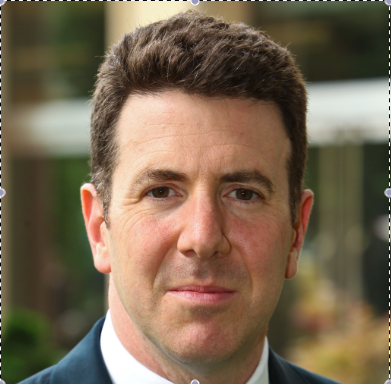

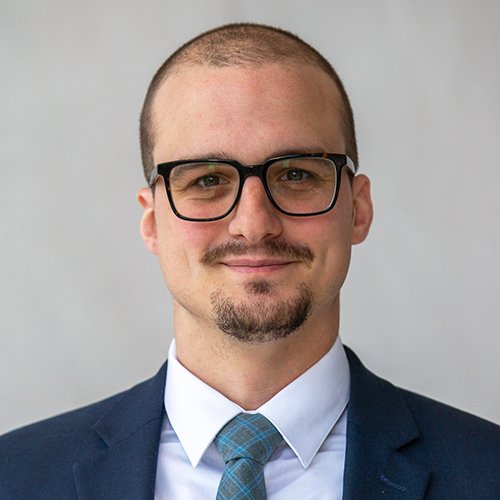
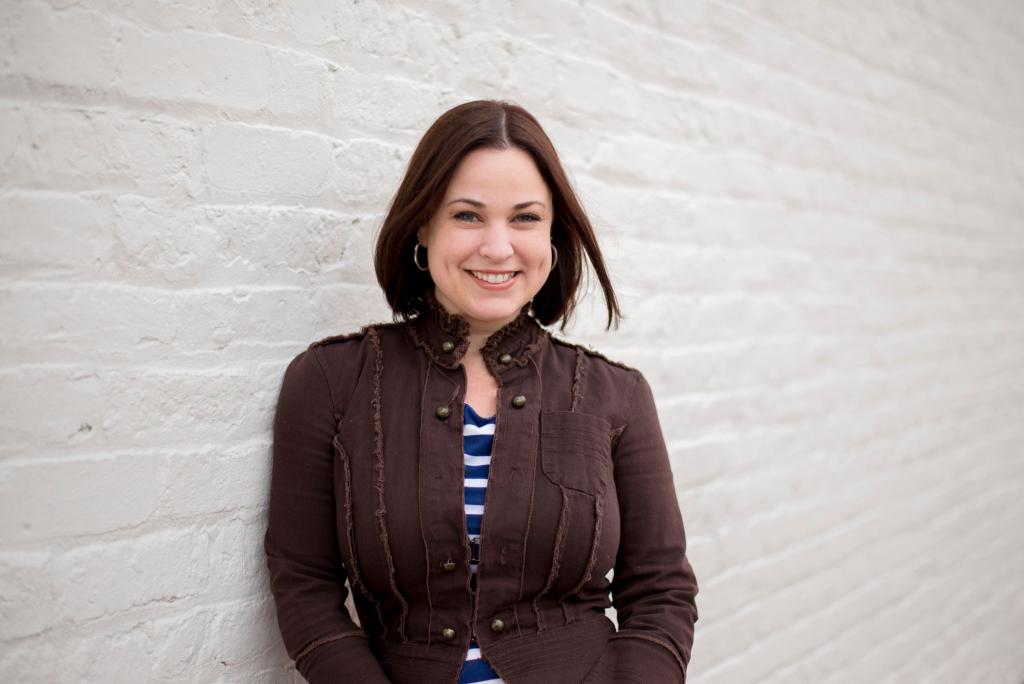
For today's episode, Lawfare Foreign Policy Editor Daniel Byman sits down with Holly Berkley Fletcher, former CIA Africa analyst, and Alexander Palmer, fellow at the Center for Strategic and International Studies, to discuss the growth of terrorism and instability in East and West Africa, the fragility of regional governments, and how the United States and other outside powers are shaping the region.
To receive ad-free podcasts, become a Lawfare Material Supporter at www.patreon.com/lawfare. You can also support Lawfare by making a one-time donation at https://givebutter.com/lawfare-institute.
Click the button below to view a transcript of this podcast. Please note that the transcript was auto-generated and may contain errors.
Transcript
[Intro]
Scott R. Anderson:
Hey, everyone, Scott R. Anderson here. As a senior editor with Lawfare,
you might know me as the guy always rambling about treaties and war powers, or
perhaps as the host of Rational Security. What you might not know is
that Lawfare has been a part of my life a lot longer than I’ve been
contributing to it.
Before I came to Lawfare, I was a national security
lawyer and occasional diplomat working for the government, both here in
Washington, D.C. and overseas. They were the sorts of jobs that wrestled with
hard national security choices of the type Lawfare specializes in, which
is why Lawfare is one of the first things I opened when I got to my desk
each morning.
Well, from Iran to Venezuela to back here at home, those
questions haven’t gotten any easier. Policymakers, journalists, and citizens
all need the sort of deep, non-partisan expertise Lawfare specializes
in, now more than ever. Lawfare is also a nonprofit, meaning we’re
committed to keeping all of our core content from getting put behind a paywall.
We can’t do it without help from the people who read and listen
to us, people like you. So if you can, visit lawfaremedia.org/support and join
our community of supporters. Just $10 a month will make a world of difference
in helping us keep Lawfare free to everyone for a long time to come.
Alexander Palmer: I
think, you know, the center of the action is really the Sahel at the moment,
although, I mean, it would be a mistake to ignore the Horn of Africa, to ignore
especially Al-Shabaab.
Daniel Byman: It’s
the Lawfare Podcast. I’m Daniel Byman, the foreign policy editor of Lawfare,
with Holly Berkeley Fletcher, a former senior CIA Africa analyst, and Alexander
Palmer, a fellow at the Center for Strategic and International Studies.
Holly Berkley Fletcher:
It does go back to state weakness. I do think there’s a particular challenge
when you do have... you have a sizable population that would be possibly
ideologically receptive to Islamic extremism.
Daniel Byman: Today,
we’re talking about terrorism, insurgency, and instability in sub-Saharan
Africa.
[Main Podcast]
I wanna plunge into our discussion of extremism and instability
in both East and West Africa. And Xander, I know you have a report coming out
on the subject. Can you give us the kind of top lines of the extremist groups
and the biggest threats they pose and your overall conclusions?
Alexander Palmer: So
our report looks at transnational terrorist groups, which are just one aspect
of kind of extremism and violence in Africa.
But we look at kind of two to three kind of interlinked
theaters, right? There’s very much West Africa and the Sahel, which has been in
the news recently because of the ongoing JNIM offensive. JNIM is an Al-Qaeda
affiliate operating across Mali, Burkina Faso, Niger, a little bit in Nigeria,
Benin, Togo, a kind of multi-country large group that is currently kind of
sweeping across Mali.
In the Western Sahel as well, there is the Islamic State Sahel
Province, ISSP, a smaller group that has been kind of in on-again, off-again
conflict with JNIM for years. In the last couple of years, it’s been
increasingly active in Niger. Very recently hit Niamey International Airport
and Air Base 101, which used to host U.S. troops before the withdrawal. And it’s
expanding as well into northwest Nigeria. Further east in the Lake Chad Basin,
you’re looking at Islamic State West Africa Province, which is currently the
Islamic State’s most active international province. It’s primarily active in
kind of the vicinity of Lake Chad and has been really escalating its campaign
in northeast Nigeria in the last few years.
You also have kind of JAS as the kind of remaining Boko Haram
group is usually called. Also active in the Lake Chad region, also in conflict
with ISWAP, but has been kind of resurging after several years of being beaten
down by Islamic State gains and government pressure. Kind of shifting further
east in the Democratic Republic of the Congo, you have the ADF, Allied
Democratic Forces, also a Islamic State affiliate, although there’s kind of
debate on how active they are and kind of how strongly aligned they are with
the Islamic State.
In Mozambique, you have Islamic State Mozambique, known by a
variety of other names, kind of local insurgency largely confined to Cabo
Delgado Province, been under significant pressure in the last couple of years,
but is really sort of expanding within northern Mozambique, kind of splintering
into smaller, more mobile groups.
And this is changing the nature of the threat, even if it’s not
kind of an ascendant group the way that the Sahel’s jihadist groups are. And
then, of course, you have Somalia, Al-Shabaab. Probably the wealthiest and most
active Al-Qaeda affiliate in the world, controls a large chunk of Somali
territory and has been on the offensive again after the Somali government was
able to put some pressure on the group with a series of operations in
collaboration with local forces.
The Islamic State Somalia province is also kind of still in the
country, although it’s been really battered by a offensive by the Puntland
Security Forces. Puntland is kind of one of the federated member states of
Somalia, but there was a kind of internationally backed offensive that really
put a lot of pressure on IS Somalia, and it remains to be seen whether it’ll be
capable of resurging.
So those are the main Islamic State Al-Qaeda affiliates, Salafi
jihadist groups across sub-Saharan Africa. I think, you know, the center of the
action is really the Sahel at the moment, although, I mean, it would be a
mistake to ignore the Horn of Africa, to ignore especially Al-Shabaab.
Daniel Byman: Thanks,
and I know for our listeners that’s kind of a lot to take in.
There are a lot of groups, and many of the names and acronyms
are not familiar. But we’re gonna go deeper on a lot of these as the podcast
goes forward. Holly, I want to turn to you and just ask you about kind of the
broader conditions that are leading to all these groups, the weakness of the
states and other problems that are creating this kind of, you know, huge area
of crisis.
Holly Berkley Fletcher:
Yeah, so you, that’s it. The weakness of the state is really the foundation of
all of these crises, and then there are sort of particular conditions in each
place. Obviously, there’s also, you know, the, there’s a in some cases more
than others, there’s a strong appeal of actual religious ideology.
But I think the state weakness is actually the bigger issue,
and I think you see that in particular with the fact that there’s an Islamic
extremist group in somewhere like DRC. You know, I remember when that, that one
popped up in the reporting, we were just like, “What is this?” You know? Like,
kind of, it was kind of a head-scratcher because that is not an area of, you
know, that’s not a heavily Muslim area.
But nonetheless, Islamic extremists were able to exploit state
weaknesses. And state weakness is a complex issue. Unfortunately, there’s a
chicken or egg issue where the conditions you need to address state weakness
are, you know... The conditions needed to create a strong state are the
conditions created by a strong state.
So you have a real you, a really intractable issue for that
reason. You have security, economic development, you know, state legitimacy,
inclusive political and economic institutions. Those all tend to reinforce each
other, and so you, you either get the snowball runn- you know, rolling in a
good direction or a bad direction, and then once in these motions, it’s hard to
sort of break out of it.
I think the best book I’ve read on this is James Robinson and
Daron Acemoglu’s Why Nations Fail, and they describe this throughout
history and all around the world. So it’s a very complex issue, and
unfortunately, it’s not one that is easily solved, certainly by external
assistance. You know, I think Mali is a case where all of those things seem to
be rolling in the right direction for a time, you know, and by Western
judgment, you know, they were meeting certain benchmarks of elections and
things like that, and they had sort of made a peace with the Tuareg, the
Tuaregs in the north.
But it didn’t go deep enough, and then when you had the
opportunistic virus of Islamic extremism that really got going after Libya’s
failure, another state failure then you saw it all unravel in fairly, in
shockingly short order. So that’s kind of the bottom line. I think to riff on
Tolstoy, you know, all stable nations are the, are alike, but failed states are
failed in their own special ways with some common foundational conditions.
Daniel Byman: That’s
a kind of depressing, but I think quite accurate description. Xander, let me t-
let me turn back to you. We often use the term terrorist group to cover lots of
different things, and one thing that your report makes clear is the- these
groups are actually not the same, both in their capabilities and in their
orientations.
Can you talk a little bit about kind of the balance between
terrorism, insurgency, criminality whatever other adjectives we want to use
before these groups, in some cases even pseudo state, and how we should be
thinking about them?
Alexander Palmer:
Yeah, I mean, I think of most of these groups, with some exceptions, very much
as kind of, especially in the Sahel as insurgencies, right?
These are insurgencies. They have links to international
terrorist groups Al-Qaeda, the Islamic State. But particularly kind of looking
at JNIM, there’s a focus on local goals, and there’s a real local political
driver here, right? JNIM’s precursor groups really came to prominence in the 2012
uprising in northern Mali, and there were kind of at the time before sort of
the breakdown of the kind of cohesion of the rebellion, right, these links
between the sort of more traditional kind of Tuareg separatists and what then
became JNIM.
And, you know, there’s certainly overlap in kind of these
ethnic conflicts with the kind of the terrorist groups. And this problem has
you know, has probably been worsening rather than getting better, right? The
polarization of communities is rarely helped by ten to fifteen years of
violence.
And there are certainly signs that JNIM is trying to position
itself as a kind of legitimate alternative to the state, right? It provides
kind of parallel governance structures the way that a kind of traditional
insurgency would. It has been really pointing to atrocities by the Malian
government, by Russian forces backing the Malian government, and increasingly
positioning itself as kind of the defender of Malian sovereignty, defender of
Malian communities against kind of what it’s, you know, sees as rapacious
international forces.
Some of the other groups h- are a little closer to more kind of
opportunistic, criminal, sort of taking on that kind of melange of ideologies,
right? I think there’s a significant debate on the ADF. How much is it really
just sort of a criminal group a bunch of bandits basically putting on Salafi
jihadist clothing and kind of- legitimizing their predations using religious
language.
I think you see kind of a similar discussion always around JAS,
kind of the former Boko Haram, right? How much is it really serious about some
of these ideas and how much of it is just kind of banditry, crime,
opportunistic kind of raiding and looting that is then sort of dressed up and
given legitimacy?
And the answer, of course, right, is you can’t reduce this even
in the case of any one group because, like, human beings are complex, groups
are complex. People get involved in these types of enterprises for very
different reasons. But it’s really important to recognize that these are
blurred lines and that, you know, they require kind of complex, multifaceted
solutions rather than just focusing on, “This is a terrorist group. We’re gonna
do counterterrorism.”
Daniel Byman: Ali, I
saw a lot of head nodding there. So, can I ask you first off if you wanna kind
of expand on any of Xander’s points? And then I do have a additional question
for you.
Holly Berkley Fletcher:
Yeah, I mean, I think he’s correct about the local... there’s international
links and certainly financing.
They wanna sort of create common cause with these larger groups
so they can get s- you know, support, money and support. And so that probably
magnifies some of the ideological bearings of the groups. But I think they’re
all really responding to local conditions in certain ways. You know, and some
of that is, you know, a lot of places it’s exploiting sort of ethnic conflict,
and certainly the other dynamic that’s really key, I think, is the center
periphery divide, which is pervasive in Africa, and you see this in other
non-terroristic conflicts like Sudan, where there’s, you know, the sort of
historical, structural, political economy benefits the elite in the sort of
center near- nearest to the capital and center, and then these peripheral areas
are sort of left, you know, without any support or development, and they’re not
really, both politically they’re not integrated into the state, they don’t have
allegiance to the state, and then economically they’re underdeveloped and they’re
not being integrated into larger economies, which creates a lot of different
grievances.
Somalia is an interesting case because Somalia is, you know,
ethnically homogenous. There’s clans, of course, a very complex clan structure,
and also religiously homogenous. Religious conflict, particularly in Nigeria,
is another dynamic you see in a lot of these situations. But the clan dynamics
are, you know, are definitely driving a lot of the problems in Somalia, and it’s
also a replication still of a state failure, of a rapacious extractive state,
and there’s never been a broader sense of being Somali or a sort of buy-in to a
pan-clan, if I can call it that, project.
I’m interested in Xander’s point of view in terms of whether
these groups actually, you know, do anything in terms of providing service or
if it’s just sort of fear and extraction and exploitation that sort of keeps
them, them going. And I imagine that probably varies by region, but I but I’m
interested in his point of view on that.
Alexander Palmer: I
mean, my sense is that, right, when we talk about service provision, we’re not
talking about, you know, they’re providing running water they’re doing this,
they’re doing that. It’s a little bit more kind of the, like, negative s-
service provision if you, we, I can borrow the term and, like, map it over from
kind of the negative peace idea, right?
It’s—There’s always been kind of an absence of services in
these areas, and kind of the main service is security, right? They’re providing
a degree of security. They’re providing a degree of stability in areas that
have long, I think, recently, of course been very unstable. And that’s not to
say that the insurgents, the jihadists did not play a major role in creating
this instability.
Of course, they did. But again, they’ve been painting
themselves as sort of the protector of these communities. There’s sort of a
taxation infrastructure at least in kind of JNIM-controlled areas, right? They’re
taxing gold mining, that sort of thing. And while they don’t provide, like, the
services that we would think of as services, right, they are providing a degree
of security in kind of the negative sense.
Maybe it looks a little bit more like a protection racket.
Maybe that’s a better way to think about it. Yeah.
Holly Berkley Fletcher:
I think so.
Alexander Palmer:
But, right, pivoting off of your point as well, these aren’t countries, right,
where the state formed the way it did in Western Europe, right, by, by either
co-opting or basically defeating alternative power centers, right?
They didn’t kind of co-opt the tribes or the ethnic groups or
whatever the same way because they’re post-colonial kind of constructions, and
there are independent power centers in these states, and there is contestation.
There’s long been contestation, and I think that the jihadist groups are able
to take advantage of that.
Daniel Byman: Holly,
let me follow up with kind of the reverse of this question, which is when we
look at some of the groups in the Middle East, I look at the Islamic State
core, Al-Qaeda, I would argue, and I think with a lot of credibility, that
these groups are much weaker than they were fifteen years ago in the case of
the Islamic State or ten years ago and, you know, twenty years ago in the case
of Al-Qaeda.
But when we look at groups like JNIM and Shabaab, these areas
have been a focus of U.S. counterterrorism for decades, as you know quite well.
Yet they seem to be not only resilient but expanding or at least, you know,
able to do govern lots of territory, do major military operations. Why has
international counterterrorism pressure been less effective against these
groups?
Holly Berkley Fletcher:
Yeah, I think that’s really complicated. I mean, the short answer, which w-
would still, I would... you would think would apply to the Middle East, is
that, you know, they’re attacking the problem militarily when it’s a deeper
governance issue. The twenty-first century has been humbling for U.S. power in
terms of, you know, our ability to do nation-building, whatever, you know,
whatever that is.
Clearly, an external force cannot build a nation where there’s
not internal impetus and desire and, you know, not to put the full blame on,
you know, the people in these countries, but certainly the elite in these
countries are fairly uniformly rapacious and corrupt. And there does have to be
some internal commitment to...
then, you know, then I think the international community could
do more on, on nation building, but you can’t really invent it out of nothing
from the outside. And in fact, very often the international community can be
seen as an invasive force. And in fact, these groups exploit animosity towards,
you know, the West.
And we’ve seen that very powerfully particularly in in Somalia,
I think. So that’s the sort of short and long answer, I guess. It’s really we’ve
been-- you can do military aid, but then you’re not really addressing the root
issues, and addressing the root issues are just really difficult.
I do think that in the last 10 years, you know, you’ve seen
the, with the international consensus and cooperative framework has really
unraveled with the U.S., of course, leading the way in, in creating chaos in
that. I think climate change has probably exacerbated things, but I suppose
that would apply to the Middle East a- as well.
And then Russia inter- inserting itself as an alternative to
European, Western, more international security forces. And clearly the Russians
are, their motivations are not great. But also, I think we’ve seen in the
Ukraine war their capabilities are not good either. That’s my best guess, but I
don’t know.
I’m not an expert on the Middle East, so... Fair,
Daniel Byman: fair
enough, but I think your points on Africa and the limits there are extremely
well taken. Let me ask you both, but start with you, Xander the kind of so what
question from a very narrow American point of view. We know these groups are
devastating to the countries and communities where they operate.
But the Trump administration, I think many Americans would say
that’s too bad, but not our problem, right? And that this is, you know, faraway
people about which we know nothing, right? This is not something Americans need
to concern themselves about. And one of the counters that counterterrorism
people often make is, yeah, maybe today it’s not our problem, but when we see
an international terrorist attack emanating from one of these places, then it
suddenly becomes our problem, and it would’ve been a lot smarter to act early
rather than late.
Is that a plausible argument? Like, what’s the likelihood of
these groups going from pretty local or at most regional to having
international ambitions?
Alexander Palmer: It’s
just not... Right, you ask what the likelihood is and I’ll push back on that
framing ‘cause it’s not something I think you can put a number on, right?
We’re looking at essentially, you know, fairly unbounded
timeframe to that question, right? ‘Cause, ‘cause if we’re assuming that they’re
ascendant, we’re assuming that this is gonna be a problem in the future, and it
seems like that’s likely. I don’t see kind of any of these governments
reversing the trends anytime soon.
We have to be thinking about not just one year in the future,
but five years in the future, 10 years in the future, and a lot can change
during that time. So what we’re really talking about isn’t sort of a point
estimate on how likely is it that an attack emanates from one of these
countries. We’re talking about an enormous range of uncertainty over a long
period of time.
And whether that means the United States should be engaged in
kind of militarily containing or degrading these groups, it certainly means
that the United States is taking on... Or there is greater risk to the United
States as these groups gain power because, right, power is gonna give them
greater capability, greater potential to develop external operations
capabilities, and then intentions can shift, right?
And there’s a reason why people monitor both intentions and
capability. But there’s a reason that there’s this focus on kind of figuring
out what the capabilities are because that’s what kind of brings the potential
danger.
Daniel Byman: Holly,
do you have thoughts on this question? ‘Cause I know it’s something that is of
concern to, you know, any U.S. administration.
Holly Berkley Fletcher:
Yeah, and if I could I’ll address what Xander said and then also dovetail, go
back a little bit to what I said before, and that is U.S. engagement and
leading international engagement, I don’t know that it can fix the problem, but
I think the absence of it can definitely make the problem worse.
And I think on multiple fronts you’ve seen, again, the
unraveling of the U.S.-led international order and the U- U.S. commitment to
Africa and also to democracy in Africa. You know, one of the things that has
complicated and fueled the rise and the success of these extremist groups are
s- are discrete democratic failures as well.
And I think Mozambique is a case in point. Obviously, this
insurgency began earlier, several y- you know, multiple years ago and feeds
into longstanding historic historical political dynamics in the country in
which the north is marginalized relative to the south, and the s- you have that
center periphery divide.
But the fact is that they, you know, they had a very bad
election in 2024, followed by massive protests. And so not only does that sort
of weaken the overall legitimacy of the state for the population everywhere,
even in places where the state is strong, but it really complicates
international engagement because now you’re engaging with an illegitimate
government.
And then you see this in West Africa too, this sort of vicious
cycle of these military coups, and then that complicating international and
regional engagement. I mean, ECOWAS. ECOWAS used to be a real bulwark for
democracy in that region, and the sort of consequences from ECOWAS, I think,
you know, they did help, but then you have a sort of critical mass of countries
where there are military coups, and ECOWAS simply runs out of capacity to
respond, you know, strongly.
And then these countries can kind of team up against ECOWAS,
you know, and s- create this other bloc which undermines regional cooperation
and complicates international engagement So I think the reduced commitment to
democracy, you know... Oh, and there were some corrective, you know, measures
under Biden, but really it’s been since Trump won, definitely the U.S. sort of
commitment to democracy, you know, doing the hard work of sort of building
civil society and opposition capacity and all of that very difficult work that
the results are not obviously evident, but I think the absence of it makes a
difference.
So it’s not a very satisfying foreign policy stage in which you
know, you don’t see like clear tangible gains for your engagement, but you’re
mainly working to prevent something worse. Not terribly satisfying, but I think
that’s definitely the case.
Alexander Palmer: I
think you can see some of these like political dynamics, right, and the
importance of the political side and the democratic engagement and sort of sm-
small “d” in Mali as well, right?
The kind of current offensive is being led by JNIM alongside
the Azawad Liberation Army, right? But that kind of alignment came out of the
collapse of the peace deal between the Malian government and the kind of Tuareg
separatist groups that then kind of came back together and formed the FLA,
right?
And that really happened after the shift to Russia as kind of
an external security provider. And right, I can’t kind of connect the causal
dots and say, “Here’s the smoking gun that, that this was Russia, not the
United States. This comes out of the lack of commitment to democracy and peace
and s- and anything like that.”
But it’s certainly a plausible story, and Russia certainly does
not have kind of, as we can see in Ukraine, right, enormous respect for
international agreements. It does not have an enormous respect for peace and
security in general and writ large. And I think you can see some of the
consequences of that breakdown in the current offensive and the fact that you
have two groups that, that, you know, aren’t really ideological allies have now
been able to come together in the face of the opposition or the—their enemy in,
in Bamako, which is now backed by an authoritarian power.
Daniel Byman: Holly,
I wanna ask you a question about variation. I’ve been kind of lumping these
states and regions together as vulnerable or having problems, but if we think
about countries as, as different as Somalia and Mali and Nigeria and
Mozambique, how do you think about which countries are most vulnerable?
And conversely, how do you think about which countries are
actually more effective at fighting these groups?
Holly Berkley Fletcher:
Yeah. Well, I think again, unfort- you know, it’s hard to beat a dead horse,
but it does go back to state weakness. I do think there’s a particular
challenge when you do have you have a sizable population that would be possibly
ideologically receptive to Islamic extremism.
Again, I think that’s kind of a invasive virus that needs a
good host, but still, like, part of being that host is a large population where
there’s already maybe some religious or ideological fertile ground there. But
again, as we’ve seen in DRC, you don’t even necessarily have to have that when
you have general lawlessness and so on.
I think Kenya is a interesting case in point. I always go back
to Kenya because that’s what I know the best anyway. But you know, obviously
Kenya is not a perfect democracy, and there have definitely been abuses of
power in combating terrorism and terrorists. But for one thing, it’s democratic
enough to have a good partnership with the U.S. and other international, you
know, other countries and w- and, you know, sort of pro-democracy
counterterrorism efforts.
So there’s ... That’s always been a very strong partnership.
And then again, it’s again, it’s not a ... Believe me, I have some worries
about Kenya in the next couple years, but it’s, you know, it’s a f- by African
standards, it’s a fairly strong state where there is a sense of nationhood,
there is real economic development, and there’s Kenyans are invested in the
system enough that, you know, they support, you know, their government in
confronting Al-Shabaab, for instance.
It has not created huge religious divides in the country. Kenya
has a sizable Muslim population, and they have been able to confront extremists
without really marginalizing even further. Again, not perfect, but w- you know,
where Muslims in general are not sort of this heavily discriminated against
class.
They are, you know, integrated into the political economy. But
again, Kenya has been able to get enough of that- good snowball rolling down
the hill, you know, with security, economic development, political, inclusive
political institutions, and the sort of building blocks of state strength, not
perfectly, and it can definitely reverse.
And I am concerned about that always. But I think it’s a case
in point of you could see a scenario with, especially with Somalia right on the
border, and Kenya has its own very large indigenous Somali population and then
an indigenous Muslim population, non-Somali Muslim population. And they’ve
suffered multiple terrorist attacks, but they’ve been able to manage it for the
most part and even confront it next door in Somalia.
So I think Kenya is a good case in point.
Daniel Byman: Xander,
I want to switch gears a bit and ask you about some of the tactics, techniques,
and procedures. And in particular, we’ve seen an increased use by armies around
the world, but also by non-state groups of uncrewed systems. And could you talk
a little bit about the use of UAVs by groups in Africa, as well as governments
in Africa, and how that’s kind of shifting the military balance between the
groups and the governments?
Alexander Palmer:
Right. It’s tough to say how much it’s shifting the balance because this is all
relatively new and use of drones by, in particular, terrorist groups is really
kind of now on the upswing, but it’s a relatively recent development. So JNIM
is kind of the most active terrorist group in Africa in terms of drone
operations, kind of large increase in recent years, especially kind of after
March 2025.
Appears that there’s been some kind of cross-pollination
between FLA groups and JNIM kind of at the tactical level and some learning by
the organizations, learning from one another. There have been kind of
weaponization of drones by JNIM, by ISWAP, but less so by kind of Al-Shabaab,
which is kind of an interesting kind of outlier case.
Most of Al-Shabaab’s drone use, my understanding, is
surveillance, propaganda, but very low levels of weaponization, if anything. It’s
really the Sahelian groups that are driving the Kind of aggregate numbers in
terms of UAS attacks in Africa. These tend to be kind of fairly simple kind of
quadcopter FPV drones that have been kind of weaponized by, by, you know,
putting grenades on them, explosives on them, that sort of thing.
What I’m worried about and what I’m thinking about a lot
recently is the way that the Islamic State, kind of the original ISIS, was such
an innovator in kind of weaponization and use of drones kind of well before the
war in Ukraine kind of put it really in the headlines, and, you know, worried
about what that innovation looks like in the future, kind of what a future
innovative uses of drones look like that could come out of these battlefields
that could come out of terrorist experimentation that could then be kind of
exported to other countries maybe intentionally, but maybe just by kind of
observation and diffusion.
Daniel Byman: So I
wa- I want to stay in the future a little bit and ask you a follow-on, Xander.
So we’re seeing the Islamic State’s West Africa Province as perhaps the Islamic
State’s most capable province globally. And w- how do we think about this in
the context of the future Islamic State movement? Or for that matter, the
Al-Qaeda, where the Shabab is obviously one of the most capable parts of it.
Is there kind of an Africanization of jihad? And we really,
for, you know, many of our listeners, we kind of mentally situate these groups
in the Middle East, and we actually should be shifting how we frame all this.
Alexander Palmer: I
mean, this is an open question and a point of serious debate, right? And I
think it’s important to, to note that kind of ISWAP is kind of the world’s kind
of most active Islamic State group by claims, but that is in no small part the
result of decline in activity by other groups.
And so, so this is partly driven by extreme weakness in other
areas rather than just kind of this colossal surge in ISWAP activity. So we
shouldn’t be comparing... You know, I think there, there might be this idea
that, you know, ISWAP is kind of like the original ISIS but it’s not there.
It’s not like that at least not yet. The open question is
around the longer-term trajectory and the longer-term focus on the kind of
local or regional goals of the group and then the parent group, so either
Al-Qaeda or the Islamic State’s kind of international agenda. While most of the
assessments By both kind of independent folks and kind of U.S. government,
AFRICOM, are that the groups are locally focused for now.
But it, it’s not clear that’s going to be permanent, and they
may eventually face kind of incentives towards external operations. But also
they can shift their priorities due to internal politics that, that we don’t
understand. You see, reports of increasing ISWAP role in kind of the global
Islamic State infrastructure, its governance infrastructure, the general
director of provinces.
And, you know, something I think about a lot is, right, that
involves contact between people, and people kind of are influenced by each
other and are socialized differently. And maybe that leads to a world in which,
you know, the Islamic State’s groups like local goals become more important.
But maybe there’s kind of a socialization of the West African jihadists into
this kind of more global ideological project, or at least sort of a global
operational project.
And that’s a question that, you know, remains unanswered, and I
think is if not totally unanswerable, is certainly really hard to anticipate.
Daniel Byman: I want
to ask you both about another kind of current event that’s dominating most of
our headlines, at least on international affairs, and that’s the Iran war.
And it’s affecting every part of the world. But of course, it’s
having a significant impact on poorer countries that have fewer resources to
deal with the resulting problems. Holly what’s your thinking about how the Iran
war is affecting stability in in sub-Saharan Africa?
Holly Berkley Fletcher:
Yeah, well, I don’t think it’s like directly affecting this extremism problem,
but what it is, what it, the longer it goes on, the more it threatens the
underlying conditions of state weakness.
You know, it’s really a shame because Africa, you know, began
2026 in a really strong economic position according to the IMF. Some of the,
recorded some of the more s- you know, the stronger economic growth for a
number of years, and this is just potentially devastating because especially
for East Africa, because it gets all of its fuel pretty much from the Gulf, you
know, and fertilizer.
You know, c- countries like Kenya, Ethiopia, heavily
agricultural, big agricultural sectors, and they depend on fertilizer and, you
know, all sorts of trade, all manner of trade goes through the Strait of Hormuz
for East Africa. West Africa is a little bit different, I think, because of
Nigeria, but there’s some i- impact there as well.
So I think about a country like Kenya that again is, has a lot
of structural strengths, both politically and economically. But it depends
heavily on commercial agriculture and tourism, both are which heavily fuel
dependent. I’m supposed to lead a big safari in Kenya in June. I’m very
concerned about getting fuel and getting all the people there on the European
airliners, for instance.
Not that I’m the major player in this drama but you have this
coming at a time of a lot of political restiveness as well, where we’ve seen in
Kenya, as an example youth protests the past few years. There’s an election
next year. The government is already under the gun. There’s also rising
political violence of politicians funding e- ethnic gangs, which of course
there’s a long history there.
But, you know, as the cost of living and economic hardship
increases, there’s gonna be a more fertile ground to recruit people for th- for
such gangs and such violence. And so, the longer this goes on, the more you
see, you see that, that good cycle potentially start to reverse. Yeah, and then
of course, it’s in, in countries like Sudan and Ethiopia where there’s open
conflict and potential conflict, the humanitarian elements of it are
devastating.
Food security is already spiking in those areas. The other
thing I’ve seen recently is that two ships have been hijacked by pirates off
the coast of Somalia, and that’s a problem that we had solved or thought we had
solved some years ago. But now, you know, hijacking ships with goods,
particularly oil, is probably gonna be a lot more lucrative, and so that is
something to watch as well.
So it really throws a huge wrench in a fragile system, and the
longer this goes on, the more concerns I would have of having a big impact on
the underlying stability of large parts of the continent.
Alexander Palmer: I
think the piracy element kind of brings in another interesting question here,
which is sort of as this goes on, kind of what are the Houthis’ actions going
to be?
There have been reports, you know, in the UN Analytics Support
and Sanctions Monitoring Committee documents for the last couple years about
increasing Houthi-Al-Shabaab ties. There have kind of constantly been kind of
intimations, allegations that some of this was related to kind of the Houthis
attempting to build up Shabaab’s maritime capabilities, ability to put pressure
on ships in the Bab el-Mandeb.
That hasn’t materialized. So, so if the kind of Houthis decide
to once again get involved and put additional pressure on the international
system by attacking ships transiting off the coast of Yemen, I think you could
potentially see kind of activity from the Horn of Africa if these reports are
correct.
But I think more interestingly, right, that has put pressure...
the original kind of wave of Houthi attacks was associated with a spike in
piracy off of Somalia because ships rerouted down around the Horn of Africa to
avoid the Bab el Mandeb, and that exposed them to piracy off of Somalia’s kind
of eastern coast, southeastern coast.
And, you know, there are just a lot more opportunity when there
are more ships, and, you know, as long as kind of disruption continues, if
disruption increases once again because of Houthi attacks, I think you’ll see
that kind of threat continue to worsen.
Daniel Byman: Holly,
let me start with you. We’ve covered a lot here, problems with government
weakness the criminality, and of course, the insurgent and terrorist groups
themselves.
Given all this, what sort of things should the U.S. government
be thinking about and probably or perhaps doing differently in U.S. to better
address the problems?
Holly Berkley Fletcher:
Well, honestly, Dan, I think our own dysfunction is spilling out into the
world, and so I, I really don’t see a coherent strategy on Africa or extremism
or much of anything else coming out of this government.
I think what you’re seeing here, particularly with the Iran
war, is our own sort of mini state failures which hopefully won’t reach African
proportions, but our own level of state failure because we are a superpower
really sucking much of the world down with us. So I don’t see any, I don’t see
any solutions coming out of this government, and I hate to say that, but that’s
the way I see it.
But for sort of the next government, you know, th- there has to
be some sort of more coherent, cohesive strategy in terms of promoting all the
pillars of state strength. Counterterrorism’s important, but that in absence of
democracy building and, you know, a more economic development and
humanitarian... I mean, I think the collapse of USAID, the ramifications will
continue to unfold, some of them dramatic, like just in terms of lives lost,
and some of them more slow-burning and hard to measure in terms of the end of
so many democracy and g- and government programs.
I think we have to get back to a level of engagement, h- high
level of engagement that isn’t condescending, that is, you know, there’s been a
shift under Biden, for instance, a shift more towards, you know, in emphasizing
partnership, which is good, but still that addresses comprehensive state
failure. But I just don’t see us being able to do that when we’re dealing with
our own form of state failure, how- albeit on a much less severe scale.
Daniel Byman: Xander,
Holly has made this even more depressing, so I’d welcome your thoughts. You
know, ideally cheer us up, but more realistically give us your assessment and
tell us where we might do better.
Alexander Palmer: I’m
not gonna cheer you up. I think that, right, the activities of these terrorist
groups, these terrorist insurgencies, if you wanna call them that, have been
going on for such a long time, and it’s not like they’ve been in decline over
those last kind of 10 plus years.
They’ve largely been, you know, strengthening over the last 10
plus years, and the idea that- You know, we’re gonna be able to reverse that in
any timeframe that the U.S. government might be willing to kind of fund or stay
involved is just really implausible to me. I think this is a long time problem
that’s going to be dealt with over kind of the next few decades, and it’s about
managing the problem, unfortunately, far less than it is about solving the
problem.
The idea that the United States could defeat any of these
groups is... Maybe I’m wrong, you know, but I... it strikes me as pretty
implausible. I mean, I think where you’re looking at sort of areas of potential
hope is in kind of some of these conflicts where there might be room in kind of
the longer term, and I don’t think we’re there yet.
I don’t think we’re, the situations are ripe yet for at least
some kind of advancement along kind of more diplomatic tracks. So, I mean, I
think that the collapse of the peace agreement between Mali and the Tuareg
groups was, you know, a major contributor to the current situation, and that
ship has probably sailed for now.
But kind of continued political accommodation between the
center and the periphery in some of these countries, or restarted political
accommodation between the center and periphery in some of these countries maybe
in, you know, some years could bear fruit. In Mozambique, right, there’s a
large natural gas project off the coast that the U.S. has just approved kind of
end of last year, I think, approved a loan for.
If the benefits from that actually flow to communities that
could help at least sort of undermine some of the appeal of the Salafi jihadist
group in the area. But that depends on kind of willingness to exert leverage
and willingness to ensure that the benefits don’t just flow to the center the
way that they historically have, and it’s unclear to me what appetite for that
kind of engagement the U.S. has at the moment.
Daniel Byman: Holly
Berkeley Fletcher, Alexander Palmer, thank you both very much.
Holly Berkley Fletcher:
Thanks.
Alexander Palmer:
Thanks.
[Outro]
Daniel Byman: You can
get ad-free versions of this and other Lawfare podcasts by becoming a Lawfare
material supporter at our website, lawfaremedia.org/support. You’ll also get
access to special events and other content available only to our supporters.
Please rate and review us wherever you get your podcasts. Look
out for our other podcasts, including Rational Security, Allies, The
Aftermath, and Escalation, our latest Lawfare Presents
podcast series about the war in Ukraine. Check out our written work as well at
lawfaremedia.org. The podcast is edited by Jen Patja, and our audio engineer
this episode was Goat Rodeo. Our theme song is from ALIBI Music.
As always, thank you for listening.