
Lawfare Daily: The Coming Winter and the Latest Betrayal of Ukraine
Discussing the reported breaks in intelligence sharing and in Ukrainian access to Starlink.
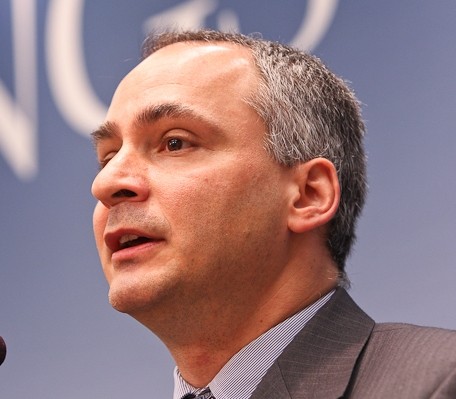



Jimmy Rushton of the Kyiv Independent and Anastasiia Lapatina, Lawfare’s Ukraine fellow, join Editor in Chief Benjamin Wittes to discuss the latest news from Kyiv: the grave rupture in U.S.-Ukrainian relations, reported breaks in intelligence sharing and in Ukrainian access to Starlink, the Russian assault on Ukrainian energy infrastructure, and the impending arrival of winter.
To receive ad-free podcasts, become a Lawfare Material Supporter at www.patreon.com/lawfare. You can also support Lawfare by making a one-time donation at https://givebutter.com/
Click the button below to view a transcript of this podcast. Please note that the transcript was auto-generated and may contain errors.
Transcript
[Intro]
Jimmy Rushton: So, I personally believe that Elon Musk’s SpaceX did this on behest of someone in the White House. And that’s what currently both my reporting and other people’s reporting and conversations, that I have had with sources which are not yet public are leading me to believe.
Benjamin Wittes: It’s the Lawfare Podcast.
I’m Benjamin Wittes, editor-in-chief of Lawfare, with Anastasiia Lapatina, Lawfare’s Ukraine fellow, and Jimmy Rushton of the Kyiv Independent.
Anastasiia Lapatina: Kyiv is entering this cold season with these new attacks when they have, you know, when we’re running out of Patriot interceptors, when Russia’s using its new drones that are a lot harder to shoot down.
We’re facing this, and there is an investigation showing that not a single cogeneration plant has been built.
Benjamin Wittes: Today we’re talking a lot of stuff going on in Ukraine. Starshield has speed limits. Winter is coming, and the presidents of the United States and Ukraine are at each other’s throats over energy strikes.
All right. I don’t know where to start, so let’s just start with the competing, escalating Trump temper tantrums directed at Ukraine and the president of Ukraine and fallout from that. So, Nastia, get us started. Over the weekend, the president decided that this whole war was Ukraine’s fault, and that the big problem here was that you guys were attacking Russian diesel refineries, and that was the cause of high diesel prices.
Take it from there. What happened and what has been the reaction from Ukraine?
Anastasiia Lapatina: I mean, nothing completely out of the ordinary happened. I think what happened is just another round of President Trump, you know, siding with Russia in one way or the other, and blaming President Zelenskyy for not willing to make a deal and not being capable of making a deal.
And this time around, you know, and I think my personal reading of the situation and also many others that I’ve seen is that, you know, midterms are approaching in the U.S., it’s a very sensitive time, and there is a lot of problems with affordability in the U.S., a lot of problems with gas prices for a variety of reasons, chiefly also in terms of gas prices, you know, the U.S. war against Iran.
But of course, Trump is not gonna go and say that, hi, guys, I caused your gas prices to be really high, you know, but vote for my party anyway. He can’t really say that so he’s blaming the high gas prices on Ukraine’s attacks on Russian energy infrastructure, which, you know, my understanding and the understanding of, you know, the majority of energy experts is that’s just not correct.
Ukraine, for a very long time now, has been attacking Russian energy infrastructure for the reason that, you know, that is really the bulk of Russia’s state revenue, that’s how Russia funds its war, and it’s very important for Ukraine to knock that infrastructure out. And Russia has been launching its own attacks against Ukrainian energy infrastructure in response.
But the Russians are doing it for different reasons. They’re basically trying to bomb Ukraine into submission and, you know- As my favorite phrase goes that the media uses every winter, the Russians are trying to plunge Ukrainians into darkness and cold, and they do it every single winter, and they’ve done it every year since the start of Russia’s full-scale invasion.
Benjamin Wittes: It’s a plunge. It’s a cold plunge.
Anastasiia Lapatina: Correct.
Benjamin Wittes: It’s like a health thing.
Anastasiia Lapatina: Something like that, yes. And so yeah, basically, there has been reporting for the past few months that the Americans, the White House, has been pushing the Ukrainians again and again to stop attacking Russia’s energy infrastructure, and, you know, they’ve done it at various levels to various Ukrainian delegations, and the Ukrainians basically refused.
And well, you know, the Ukrainian position on this is that Ukraine ever since the disastrous Oval Office meeting where Zelenskyy got scolded by JD Vance and Trump, the Ukrainian position on any form of ceasefire has been that, look, if Russia is up to it, we’re up to any ceasefire as well.
If Russia says that they’re gonna stop bombing X, Y, and Z, we will do the same. And Ukraine has consistently embraced that. Of course, the reality is that Russia has never embraced that, and Russia has always opposed any ceasefire, and, you know, wherever they have proclaimed a ceasefire, even a temporary one, like some sort of Easter thing or, like, a weekend thing, they’ve done that a few times, they’d always break it anyway.
And so, we’ve never really had a normal, real ceasefire, and so that has been the, the Ukrainian position is, like, look, we can’t just unilaterally stop bombing the thing that brings to the Russians a huge amount of money that they use to power their war machine to kill more of us. We can’t just unilaterally stop causing that damage.
This is part of our war strategy. It’s a valid military sort of industrial target. But if there is an energy ceasefire on the table that both the Russians and us are gonna abide by, sure, but there isn’t. And Trump came out and announced on Truth Social that Ukraine and Russia are entering an energy ceasefire. This was a few days ago.
He’s done this before, and it’s always very interesting when he does this because he just unilaterally proclaims the thing, and then the Ukrainians come out immediately, basically utterly confused, saying, this is the first time we’re hearing about it. We’ve never, you know, we have not agreed to it.
Again, if the Russians say yes, then sure, we’ll back it but this is the first time we’re hearing about it. And so basically, this has been the situation, and Trump has grown more and more angry at Ukraine for continuing to attack Russian energy infrastructure. But this is just too important.
These targets are too important for the Ukrainian war effort.
Benjamin Wittes: So, Jimmy, I’m curious if you agree with me about this. It seems to me that the phrase energy ceasefire is a little bit mischievous because when the Ukrainians attack Russian energy infrastructure, what they’re attacking is refineries that produce fuel products that are either driving the Russian economy or directly supporting the Russian war effort.
When the Russians attack Ukrainian infrastructure, they’re attacking power plants and energy facilities that support cities and civilian life. How parallel are the energy strikes here really, and what is the leave aside the craziness of Trump being madder about, you know, pronouncing the thing on his own and then being angry at Ukrainian attacks, but seemingly fine with Russian attacks.
How parallel are the attacks themselves?
Jimmy Rushton: It’s broadly correct. The Ukrainians have hit a number of Russian power plants on occasion, particularly the power plant in Belgorod which is relatively close to the Ukrainian border. That being said, you’re correct, the majority of the Ukrainian strikes on Russian energy infrastructure is against oil refineries, the oil pipelines, oil terminals where they export crude oil and refined products.
And yeah, the, the proposed energy ceasefire has always been, at least as far as the Ukrainians understand it, as far as almost everyone else understands it, has been that Russia would stop its attacks on Ukrainian power plants and Ukraine would stop its attacks on Russian oil infrastructure. Because Ukraine does not have oil refineries.
There was one that was heavily bombed at the start of the full-scale invasion, and it hasn’t worked for many, many years at this point. So, you know, asking Ukraine to stop bombing Russian oil infrastructure in exchange for Russia not bombing Ukrainian oil infrastructure is not a deal. It’s a unilateral concession by the Ukrainians.
Benjamin Wittes: You know, there have been various reports this week about U.S. intelligence sharing being curtailed or cut off entirely as an execution of Trump’s threats. The administration has denied it. The president of Ukraine has sort of hinted at it without quite saying it, but the Ukrainian messaging on intelligence sharing has been a, frankly, a little bit muddled over the last few days.
What do we know about the state of U.S. intelligence sharing with the Ukrainians in the wake of this dispute?
Jimmy Rushton: So, intelligence sharing has not been suspended. The Ukrainian Foreign Minister, Andrii Sybiha, was pretty clear about this at the Warsaw Security Forum. He said that it hasn’t been suspended.
All of my contacts that I’ve spoken to have confirmed that. There was some misunderstanding, I think, in relation to... There were these S-400 missile strikes on Kyiv, and there was no advance warning when these missiles hit. And there was a suggestion that this was because America had received intelligence of these launches via infrared monitoring satellites, which are in the part of the, the old Cold War system to monitor launches from the Soviet Union, et cetera, et cetera, and had not passed it on, but that’s not true as far as I’m aware.
The simple fact is that this system is not infallible. Sometimes it does not pick up launches for whatever reason. It’s happened multiple times before. It happened in July, as, as recently as July. We had missile strikes on Kyiv with no advance warning. It happened during the Biden administration as well, multiple times.
I looked back at my notes, and I found multiple cases of this happening. So, it was, I believe, a coincidence, or it was potentially the Russians understanding that they have this system, which is occasionally not picked up on these early warning satellites, and they, you know, ‘cause the Russians aren’t stupid, they understand how psychological warfare works.
They launched an attack which was not detected. They launched another attack which was not detected the next night, again, because it was the same system, and they understood that this would, in the febrile atmosphere in Kyiv right now, it would create these rumors that intelligence sharing has been suspended.
But again, everyone that I speak to has told me that it’s not been suspended, and I don’t think this could be concealed. I think if it were suspended, you would hear about it pretty much immediately. It wouldn’t be subtle. It’d be very obvious.
Benjamin Wittes: And talk to me about what intelligence sharing these days consists of.
How much of it is defensive intelligence, i.e., there’s been a launch that’s headed toward, you know, Kyiv, and how much of it is offensive targeting intelligence at the tactical level of the type that the U.S. does not talk about, but the Ukrainians are candid that a lot of their intelligence on, you know, targeting matters, they’ve diversified it, but a lot of it still comes from the CIA.
Jimmy Rushton: It’s pretty broad and it covers everything that you suggested. So defensive intelligence, it covers when Ukraine is planning these deep strikes into Russian territory they get intelligence about the distribution of Russian air defenses so they can plot routes for their drones around them.
And it is important. It’s not critical, but it is important. And if, especially the sort of defensive intelligence, the intelligence about Russian, you know, tactical offensive actions on the front line if that was to be withdrawn, it would, you know, Ukraine would definitely take more casualties.
Benjamin Wittes: So one thing that, that clearly was withdrawn for some period of time this week was unrestricted Ukrainian access to the relevant Starlink service, which, as I understand it, is actually run by the U.S. military, but it’s using Starlink technology, and my impression is that this was a relatively brief outage that, that affected Ukrainian drones traveling at more than 100, I don’t know if it’s miles an hour or kilometers an hour, but which is to say everything.
But that it went away pretty fast. So, Jimmy, at the tactical level, and Nastia at the political level, what was this about? And was it a Trump administration thing, an Elon Musk thing, or a misunderstanding?
Jimmy Rushton: So right now, essentially you explained it pretty much right. There is what was, has been termed a speed limit that was introduced.
So as soon as the terminals detected it going faster than 160 kilometers an hour, initially it would lose connectivity. But then throughout the course of yesterday, we saw that speed limit drop down to as low as 70 kilometers an hour, 80 kilometers an hour in some cases. And it came with no warning, which meant a lot of Ukrainian drones suddenly lost communications and either dropped out of the sky or won’t be able, weren’t able to continue their missions.
And as far as we’re aware, it’s now better, but this speed limit has not been removed. So, there is still a limit of 160 kilometers per hour that any object controlled by a Starshield terminal can travel at. And that obviously is it works for some applications, but for example, some of the interceptor drones, which are tasked with dealing with these jet-powered warheads, they need to fly way faster than that, up to 600 kilometers an hour in some cases.
So that is obviously incredibly insufficient for that. And it caused a lot of problems for the Ukrainians, and we’re still, the Ukrainian military’s still dealing with those problems. And to be completely clear, it wasn’t a technical malfunction. It was a deliberate limitation introduced by someone who had access to the system.
That would be someone at SpaceX, someone at the Pentagon, someone at the White House.
Benjamin Wittes: I cannot see this as anything other than the administration, either through SpaceX or directly saying to the Ukrainians, we can screw you six ways from Sunday. Get in line. Is there any other possible explanation for it?
Jimmy Rushton: No, there’s no explanation for it. You could, for example, imagine, say, a hostile actor had compromised Starshield, and they had the ability to somehow influence the operation of the terminals. Well, firstly, you wouldn’t use it in this case because that would be an incredibly value, valuable exploit, and you’d wanna save it for something useful.
If the Russians had the ability to do that, they would’ve coordinated this outage or this restriction with a major offensive, and they wouldn’t have just limited the speed. They would’ve cut it out completely. I spoke to some Ukrainian soldiers that told me that if they’d lost access to Starlink completely, the front lines would just potentially collapse because they said that they rely on it so much for communication that, you know, if it suddenly disappeared, it would be devastating.
If they, if it disappeared with a warning, potentially they could, you know, adapt and use other communication methods. But if it just disappeared overnight with no warning, it would be awful for the Ukrainian military. So-
Benjamin Wittes: Well, and we know this because it happened earlier this year to the Russian side, and it was kind of catastrophic in February, March for the Russians.
Jimmy Rushton: Yeah, absolutely. So, when the Russians lost Starlink, it was one of the reasons why their spring offensive failed. It’s also been one of the reasons why Ukraine has been doing a lot better on the battlefield this year because they’ve you know, losing Starlink was really difficult for the Russians.
I spoke to Rob Lee, he’s a relatively well-known military analyst, and he said that it was a game changer in regards to battlefield communication, and that’s a relatively unsexy thing. Lots of people like to concentrate on weapons, drones, et cetera, but actually communications is one of the most important things on a battlefield.
And when the Russians lost Starlink, they really struggled for a long time. They are making… they are adapting now. They’re using lots of mesh networks. They’re using a lot of Wi-Fi bridges and stuff like that. But it was very difficult for them, and it continues to be difficult for them.
Benjamin Wittes: Nastia, talk about the political fallout from this. It’s a big deal, and it’s more tangible than on the front lines than presidential statements or diesel fuel. What’s been the reaction in Ukraine?
Anastasiia Lapatina: I think there’s just been a several weeks of doom and gloom here in Kyiv for a variety of reasons.
Some of them, as Jimmy has said, kind of part of the Russian, you know, psyops and trying to make us all depressed here, and part of it has been, you know, objective reality of Trump once again siding with Russia. But yeah, I mean, it just... It’s been difficult because these headlines and these news, right, of, like, the diesel deal and then the Starshield cut off, they’ve kind of have all come one after the other, and it’s just been a, you know, like, a week of kind of terrible news, and it’s been really hard to parse what’s actually true or not and what happens why.
And as far as I understand, neither side of the U.S. kind of government or military claimed responsibility for what happened. And I mean, Jimmy, correct me if I’m wrong. Jimmy has covered this pretty closely for The Kyiv Independent.
Benjamin Wittes: So, Jimmy, I believe that I read somewhere that Elon Musk said this was entirely a Pentagon decision or a U.S. government decision, that it wasn’t something that he did.
On the other hand, he did tweet the other day, Zelensky has gone too far, with reference to this latest set of Ukrainian strikes on Russian energy targets. What do we know about what the ever-elusive Musk position, you know, that he’s essential to the Ukraine war effort, on the other hand, he’s you know, he’s quite hostile sometimes to the Ukrainians and very friendly to Trump.
What do we know about what his posture and SpaceX’s posture is now?
Jimmy Rushton: So, to be completely clear, he didn’t deny anything. A lot of people thought he did, but if you actually read what he said he said, Starshield systems are owned and controlled by the U.S. government. Any limits on speed or usage are decided by the U.S. military and ultimately by the President of the United States, POTUS.
So, that’s a statement that on the face of it might seem to suggest that, hey, we had nothing to do with it. But actually, no. What that says is that the U.S. military and the President of the United States decide any limits on speed and usage. It doesn’t actually say that he didn’t impose limits on Starlink under the instruction of someone in the U.S. government.
Benjamin Wittes: He just said it’s, he’s not ultimately the decision-maker.
Jimmy Rushton: He said he didn’t make the decision, right? But he didn’t say he wasn’t responsible for the slowdown. So, I personally believe that Elon Musk, SpaceX did this on behest of someone in the White House. That’s what I believe. And that’s what currently both my reporting and other people’s reporting and conversations that, that I have had with sources which are not yet public are leading me to believe.
Anastasiia Lapatina: And also, Reuters reported as well that it came from the White House. So, there is plenty of reporting, Jimmy’s and other medias to suggest that.
Jimmy Rushton: Yeah, I believe that’s what happened. I think they were slightly surprised by the level of outrage. I think they were slightly surprised by how, and maybe didn’t really think through the outcome of this in regards to SpaceX’s reputation. Because, quite frankly, this is the best advertisement for all of their competitors. And to be clear, they are the best satellite internet system on the market. But if this comes with the massive caveat that the U.S. government can use this system to pressurize you and to essentially cripple your military at any point or your, you know, civilian infrastructure at any point if you’re not in line with U.S. policy, that’s a pretty big negative, even if they are better in terms of connectivity and price point, what have you.
So, I think when the, the truth comes out, ‘cause it will come out, you know, something like this is not gonna remain a secret for long, I think it’s gonna do significant damage to whoever ordered it, whether that is ultimately Elon Musk, whether that is ultimately someone in the administration or even Trump himself.
I kind of feel it’s too subtle a restriction to come from Trump. Trump does not seem to be, to me, someone that would understand bandwidth, speed limits, you know, the relative speed of drones. If Trump was telling them to do this, I mean, he might have given them the, his consent to do this, but I don’t think ultimately the idea came from him.
I think he’d be more like, well, just cut it off completely, right?
Benjamin Wittes: Yeah. But he could have also been dial it back, limit access, right? You know, or at a even higher level of altitude, screw them and, you know, a brownout, right?
Jimmy Rushton: Sure. But I... Nothing about Trump in anything that he’s ever done strikes me as he’d be someone that would be, you know the, he wouldn’t just come out and admit it, you know?
He doesn’t really care what anyone thinks. He just says, yeah, I did that, and what? You know? He’s not the sort of person that I don’t I think would kind of demure about this.
Benjamin Wittes: So, what is the status of it now? You said the speed limits have been raised but not eliminated. Is that-
Jimmy Rushton: Yeah. So-
Benjamin Wittes: Is that fair?
Jimmy Rushton: The speed limit of 160 kilometers per hour is, as far as we’re aware, still in place. The Ukrainians are working to try and get that removed completely, because, again, it’s difficult for them. They’re speaking to the Pentagon, they’re speaking to SpaceX, but because nobody actually is owning responsibility for this decision they don’t really know who to speak to. So-
Benjamin Wittes: It would help, though, if they had a defense minister who was on a sort of first-name basis with Elon Musk, right? And had the ability to pick up the phone as hypothetically somebody did earlier in the year and asked him to turn off the Russian access to it on Ukrainian territory. But who might such a person be, Nastia?
Anastasiia Lapatina: Well, you’re obviously referring to Ukraine’s former minister of defense, Mykhailo Fedorov, who was fired under very strange circumstances, which we covered on this podcast. Yeah, he did have communication with, you know, Starlink and Elon Musk personally. You know, he helped, you know, bring Starlink to Ukraine and make that technology work in the early days of Russia’s full-scale invasion.
And then he was instrumental in also helping to you know, curb Russian access to it. But he is no longer the minister, and he’s doing a lot of strange things, which we’ll discuss on a different podcast episode. But I also wanted to mention something that I forgot to mention earlier, that when you were asking me about the reaction to this is, also one of the reasons why so many people got furious about this is because when first various sort of military adjacent, like, activists and insiders started talking about it, they specifically raised the point that Starlink is instrumental to all of Ukraine’s operations, but specifically our mid-range strike campaign, right?
So that’s the campaign against Russian logistics that we’ve also covered on this podcast before. And that campaign in the past few months has been, has basically given a big morale boost to Ukraine, I think, and to the Ukrainian society because there was a lot of success in, you know, the mid-range strike campaign maturing over the past few months, and the new drones being deployed, and us burning Russian logistics routes.
Benjamin Wittes: But just to be clear, it’s not just a morale boost.
Morale boost is like the Kursk incursion, which... You know, this really contributed to the failure of the Russian offensive and the Russian supp-
Anastasiia Lapatina: For sure. Yeah ...
Benjamin Wittes: the Russian supply lines are a mess largely as a result of this campaign.
Anastasiia Lapatina: But the point is that I think to a lot of Ukrainians, when this news came out, you know, and people would talk about it like, Starlink, like, introduced a speed limit, and thus fucked up our mid-range strike campaign.
And to a lot of people, that felt like the rug is being pulled under us. Like, there’s this thing that’s going in our favor for once, finally. The war has been going badly for a while, and now it’s going well, and they’re messing up with that. And I think that mattered to people.
Benjamin Wittes: So, speaking of things that were going well for a while and are suddenly going badly again, let’s talk about the weather.
Because, you know, there was this really cold period, we called it winter, and then the sun came out and all the snow melted, and there was a glorious summer, and, you know, people weren’t freezing, and the Ukrainian military wasn’t, you know, super cold in trenches, and attacks on energy infrastructure were less dire as a result.
And now it is mid-October, the leaves are changing and falling, and if you’re a Russian commander, this suddenly feels like a really good time to knock out power to Ukrainian cities, because boy, a blackout when it’s cold out is worse than a blackout when it’s warm out. So, Nastia, how well prepared is Ukraine for the coming winter?
Anastasiia Lapatina: I’m really glad you asked because a lot of people here in Kyiv are asking that question, and many are arriving, and the answer, not prepared enough, not at all. And so much so that actually tomorrow, we’re recording this on Friday, the 16th, tomorrow there’s gonna be a protest, there was a protest announced, demanding the removal of the Kyiv mayor, Vitali Klitschko.
So, it’s been very difficult and very frustrating to people to see that, you know, Russia does broadly, at bird’s-eye view, the exact same thing every winter, right? Ever since the full-scale invasion began in 2022, they’ve tried knocking out Ukraine’s power infrastructure and damaging it and causing power outages, you know, messing up with water supply, messing up with heating, with electricity.
Every single person who lives in this country knows that it’s going to happen, and, you know, five years in, people are expecting that the government is gonna start to, you know, address these problems. And-
Benjamin Wittes: And which you mentioned the mayor as the focus of anger here. What units of Ukrainian government are responsible for power plants, are responsible for, you know, cleaning up snow that, or ice that piles up, are responsible for warming stations.
Like, all the things that constitute preparedness, why is the mayor... You know, which part of that is he really responsible for?
Anastasiia Lapatina: That is another good question, Ben. The word responsibility is kind of a funny one in Ukraine, especially when stakes are so high, and I think everyone is kind of really afraid to take responsibility, and pawns it off on everyone.
And I mean, I think Jimmy will confirm that it happens in the military around the, all the time, and it also happens in just the civilian government all the time. There is no one body, you know, responsible for anything really. Like, there is the Ministry of Energy that does a lot of stuff. There is Energoatom, which I’ve written about, you know, a lot of corruption in there.
That’s the, the institution responsible for Ukraine’s nuclear power plants, which provide roughly half of the country’s electricity. You know, there is state-owned grid operators, and there’s just, like, so many different chunks of the system. And of course, there is the state government that allocates resources.
There is the Kyiv City Administration, and there’s also the Kyiv City Military Administration. So, there is sort of, you know, the mayor, Klitschko, the civilian government, and then also since 2022, Zelenskyy introduced this new concept of a city military administration. So, a bunch of cities have their own military administration, and their responsibilities sometimes overlap and conflict with the civilian city administration, which produces a bunch of conflict and sort of turf wars and pawning of responsibility on each other, and all of that is very complicated. But people are mad at Klitschko, I think, because he’s really been at the face of so many controversies and conflicts in regards to why Kyiv is not as livable as it could be.
And, you know, a lot of it has nothing to do with winter, so I’m not gonna spend a lot of time on it. But, you know, as someone who’s lived in Kyiv most of her life, I know that there are so many things in terms of, like, urban planning, and government access to various buildings, and the conservation of historical heritage, and basic stuff like parking and water and heating systems.
Like, there is so much stuff that makes a city livable or not that’s just not going in the right direction and hasn’t been going in the right direction for a long time. There is a myriad of corruption investigations from the National Anti-Corruption Bureau of Ukraine. Something like more than half a dozen of people in Klitschko’s immediate circle in his office at the city administration have been, you know, accused of various crimes.
And so that, this has been going on for many years, and I think people are just fed up. But why it’s happening now is that the Russians have started attacking the energy infrastructure, as they do every year, and suddenly Kyiv went from no power outages at all to like having no water for chunks of the day in some areas, having no power.
I think we’ve had a few days where we’ve had no power for more hours a day than power. And again, I’m speaking from my personal experience, of course, there are different neighborhoods of Kyiv that have different power situations, but I definitely have experienced that kind of dynamic myself. And I think a lot of people were shocked that, you know, wait, the Russian campaign just started.
Like, we’re still in the… this was like the first week of October when it really all started happening, and people are like, we’ve only had a few attacks, and it’s already getting this bad? Like, what are we gonna do when we’re in January, when the Russians have been sending ballistic missiles at these power plants or at these substations or at this infrastructure for a month?
How bad is it gonna get if it’s getting so bad this quickly? And of course, a lot of it is just, you know, a lot of it is just this emotional tension and people expecting the winter’s gonna be as bad as the last. But I think people are asking valid questions. Like just an hour ago, you know, or two hours ago before we sat down to record this podcast, a big investigation came out by a prominent Ukrainian media outlet, Dzerkalo Tyzhnia, that basically tracked down the company that got government contracts to build these cogeneration power plants.
Basically, the, you know, to really distill the energy problem in Kyiv in a nutshell, Kyiv relies on like three giant power plants to generate a lot of electricity and heat, and there are these huge Soviet-era buildings. Everyone knows where they are. They’re perfect targets for Russia. And of course, Russia bombed the hell out of them, and now none of them produce any electricity and any heat, and it’s a big problem.
And so, for many years everyone has known this, and for many years everyone has been saying Kyiv and other cities, but specifically Kyiv, needs to diversify how it generates electricity. You need to build a bunch of kind of little-
Benjamin Wittes: More smaller plants ...
Anastasiia Lapatina: … smaller plants. Right. The logic is super simple.
Like, it, you don’t have to be an engineering genius to figure this out, and this has been an obvious solution to the problem, right? Because if the Russians bomb one that, you know, cuts out electricity from a third of Kyiv, I’m exaggerating, but that’s basically true. But if you have, I don’t know, two dozen, then if you knock out one, the rest of the system is fine.
And so, this investigation came out showing that the company behind all of these government contracts, that received contracts to build, like, a dozen of these, is a shady company that has not built a single one. Kyiv is entering this cold season with these new attacks when you have, you know, when we’re running out of Patriot interceptors, when Russia’s using its new drones that are a lot harder to shoot down.
We’re facing this and there is an investigation showing that not a single cogeneration plant has been built.
Benjamin Wittes: So, I have a question for Jimmy about this. So, Jimmy one thing that our listeners don’t know about you is that you have an ongoing multi-year love affair with the city of Kharkiv. And, you know, Kharkiv is under more consistent, closer attack that are harder to repel because the distances are so short and the front is so close.
It’s not as big a city as Kyiv, but it’s, I don’t know, a million and a half people. It’s a big city. How is it doing with this kind of municipal administration issue relative to Kyiv? Is the anger at Klitschko just ‘cause he’s in power or you know, and he’s the convenient person to criticize? Or are other cities that are facing maybe higher impact, higher stress handling it better?
Jimmy Rushton: So there, there are lots of people that are also pretty mad at the mayor of Kharkiv Ihor Terekhov. In fact, I know people in the military who refuse to deal with him because they believe that he was corrupt, and they’re probably not wrong. That being said, Kharkiv-
Anastasiia Lapatina: He is very corrupt, yes ...
Jimmy Rushton: Kharkiv has more distributed heating plants than Kyiv does, which was why when we went to visit Kharkiv last year, the heating system was still working, whereas it wasn’t in large parts of Kyiv.
The power situation is also not great in Kharkiv, but because the heating plants still work or still they’re more resilient, Kharkiv is generally not as badly affected. I think, you know, there is a little bit of truth to the, you know, the, any mayor would have a difficult job right now.
That being said, there are Ukrainians are especially residents of Kyiv, are absolutely right to be very pissed off with Klitschko. He is not a good mayor, and he has been credibly accused of, you know, corruption multiple times. There are so many instances of him apparently giving preferential treatment to his friends in regards to construction, supposedly protected buildings demolished in the middle of the night only for his, you know, contractor friends to move in and build a new business center there.
The roads in Kyiv in, in last winter were, you know, incredibly treacherous ‘cause he hadn’t invested in gritting equipment and road gritters and that sort of stuff. So, and again, this is a country which experiences tough winters every year regardless of the war, so you know they have every right to be pissed off with him to be honest, and I think it will only grow, and he doesn’t seem to show any signs of acknowledging the criticisms that, you know, Kyivites, you know, legitimately have of his administration.
Benjamin Wittes: Well, of course he has the perfect professional background for city administration in wartime. Nastia what did he do before going into politics?
Anastasiia Lapatina: He was a professional boxer.
Benjamin Wittes: Which is what you want in your mayor.
Anastasiia Lapatina: It’s as good as being a professional comedian, Ben.
Benjamin Wittes: Actually, no, because being a comedian is at least about communicating ideas and-
Anastasiia Lapatina: I guess you’re right.
Benjamin Wittes: And he was a comedian who wrote, the president, that is, was a comedian who wrote scripts about governance. He was thinking about real issues. All right, let’s wrap up, but as we do, I wanna think about what are you looking for over the next few weeks on the governance side, Nastia?
What do you expect from this protest which will have happened by the time anybody hears this?
Anastasiia Lapatina: So, there is a years-long very public and ugly feud between President Zelenskyy and Mayor Klitschko, and we don’t have enough time to go into, you know, the intricate details of their relationship, but it’s very openly antagonistic.
Zelenskyy, you know, has come out and publicly said that basically Kyiv is the worst prepared city in Ukraine, and it’s not doing well, and has basically called out the Kyiv city administration for not doing enough. And to which then Klitschko, you know, it’s kind of a local, on one level it’s like a local versus state government feud where Zelenskyy says they aren’t doing enough.
Klitschko says, well, you didn’t give us enough money. We actually are doing enough considering the resources we’re given. And it goes back and forth, but really the two men hate each other. And so, I think what I’m actually looking at mostly for the next few weeks is not really the results of these, of this protest because I think really what Zelenskyy is gonna do is he’s gonna try to capitalize on this.
He’s gonna try to ramp up his own rankings, even if a little bit, by basically getting himself behind the protesters and saying that I get you, I understand you. I also live in Kyiv, and I see how bad it is. He’s already been doing some of this. But I’m mostly concerned with the recent reporting that said that Ukraine has, you know, either starting to run out or has completely run out of Patriot interceptors.
Now, my guess is that Jimmy is gonna say this happens every other week. It’s not that big of a deal because, you know, often it happens, and nobody just reports it. But I worry about this because what usually happens is the Russians try to exploit this moment of weakness, even if it’s just a few days before the next delivery or something, as much as possible.
And so, I think the Russians are gonna try to bomb the energy infrastructure as much as they can in the next few days.
Benjamin Wittes: And Jimmy what are you looking for? You know, we’ve got so many threads in going on at once. There’s the resolution of the Starshield question in whatever direction it resolves.
There’s open hostilities between the presidents of the United States and Ukraine. There’s this weird Putin wants a deal, Zelenskyy does not meme going on. And there is amidst all of it, a war that the Ukrainians have to fight. What are you looking for over the next few weeks with regard to the international and military situations?
Jimmy Rushton: So, I think for the military, the crucial thing is does Starlink service and Starshield service, does that stabilize? Are there any further disruptions? Ukraine today apparently blew up another Russian oil refinery. It hasn’t been confirmed yet, but all the signs point to a Ukrainian drone raid. So, you know, Zelenskyy said that they were gonna resume their strikes on Russian oil infrastructure because Russia refused to adhere to any form of ceasefire, and they’re entirely in- you know, entitled to that.
That’s, you know, they’re defending themselves. It, they’re adhering to international law. If Russia doesn’t want its oil refineries blown up, well, they should stop the war or they should agree to an agency ceasefire. It’s as simple as that. In regards to political environment, I’m interested to see obviously what happens after the midterms ‘cause it looks like the Republicans are gonna get historic drubbing because, you know, they’re very unpopular, as obviously you probably know better than I do.
And then, you know, I think what is interesting about this, this Starshield slowdown is how politically toxic it was in the United States. You saw Republicans and Democrats all coming out to say, this is just unacceptable. We can’t do this. It obviously undermines American power and American credibility.
It sends a signal to allies that American military hardware, because Starshield is explicitly military hardware, cannot be trusted. You cannot trust the Americans. Even if there’s a friendly president, right, a Democratic president next term, you buy American military hardware and then some lunatic gets elected into the White House and he decides he’s gonna cut it off.
So quite frankly, the safest thing to do is not to buy American. You cannot trust the Americans. I’m sorry, Ben, but you just can’t. Because even though there are lots of sane Americans like you, you are outnumbered by the lunatics. And there’s no guarantee that this isn’t gonna happen again in, you know, five years’ time.
That’s the problem.
Anastasiia Lapatina: Right, but what’s the alternative?
Jimmy Rushton: The alternative is buying European hardware There’s plenty of good European defense hardware. There’s-
Benjamin Wittes: Right, but the Europeans don’t have a Starlink alternative right now.
Jimmy Rushton: They do. It’s not as, yeah. Yeah, they do. No, to be completely clear, they do.
It’s not as good, but it is an alternative, and it does work in Ukraine, and it’s already been supplied in Ukraine. The reason why Starlink is, you know, predominant is because it’s cheaper and it has wider coverage. But that’s largely because a lot of people have been using it and have been trusting it.
And for example, the Poles have been buying millions and millions of dollars of Starlink hardware and supplying them to Ukraine. And Radoslaw Sikorski was saying to Musk, you know, we’ve been buying a lot of your product, and now you seem to be using it for political purposes. I’m paraphrasing him, but that’s essentially what he was saying.
And you will see, I think, a big move away from anything controlled by, especially Elon Musk, but generally by the Americans, because it’s just a national security risk. And I would be, if I was sitting in a European capital I would be using this to promote European defense technology. I would be attempting to move away from American weaponry, especially high-tech weaponry that can essentially be bricked, either directly or by the withdrawal of essential parts, services.
I’m talking F-35, for example. Because it can’t be bricked, like there’s no like off switch for it, but if they withdraw critical technical support and spare parts, your, you know, fleet of fancy F-35s will quickly become expensive paperweights.
Benjamin Wittes: Right. These are not hardware that are delivered and then you have them. These are platforms that require large scale, long-term support, and that support, turns out, can be politically contingent.
Folks, we are gonna leave it there on that cheerful note for the future of American miltech in Europe. Jimmy Rushton, Anastasiia Lapatina, thank you both for joining us today.
Jimmy Rushton: Thanks for having me.
Anastasiia Lapatina: Thank you for having us.
Benjamin Wittes: The Lawfare Podcast is produced by the Lawfare Institute. You can get ad-free versions of this and other Lawfare podcasts by becoming a material supporter of Lawfare at our website, lawfaremedia.org/support. You’ll also get access to special events and other content available only to our supporters.
The podcast is edited by Jen Patja, and our theme music is from Alibi Music. As always, thanks for listening.