
Lawfare Daily: The Enduring Appeal of George Smiley, November 18
Michael Feinberg and Nick Harkaway discuss the enduring legacy of George Smiley
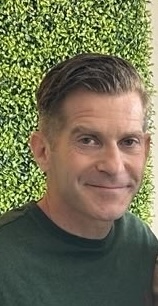
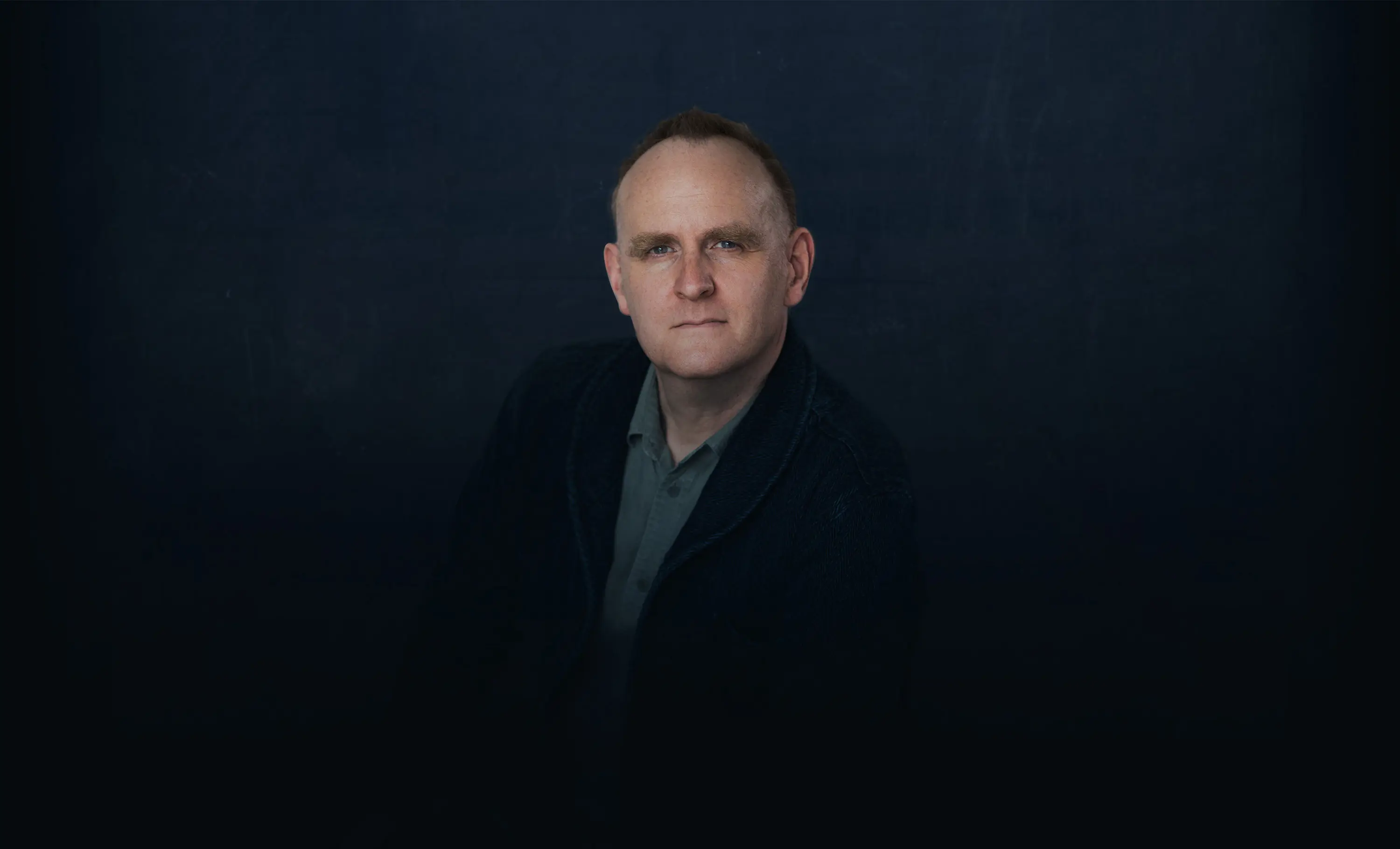
Senior Editor Michael Feinberg sits down with Nick Harkaway, author and son of John le Carré, to discuss the enduring legacy of George Smiley, one of spy fiction’s most indelible characters. They talk about fact and fiction in the world of spy novels—and about Nick’s new book, “The Taper Man: A Novel of John le Carré's Circus.”
To receive ad-free podcasts, become a Lawfare Material Supporter at www.patreon.com/lawfare. You can also support Lawfare by making a one-time donation at https://givebutter.com/lawfare-institute.
Click the button below to view a transcript of this podcast. Please note that the transcript was auto-generated and may contain errors.
Transcript
[Intro]
Nick Harkaway: So, his criticism of Germany, of Britain, of the U.S., of any country that he loved anywhere would always be subject to the same demand, you know, which was, first of all, how do you treat the people you despise? How do you treat the lowest in your society? How do you treat... You know, and second of all, like, you know, do you live up to your promise?
Michael Feinberg: It’s the Lawfare Podcast. I’m Lawfare senior editor Michael Feinberg, here today with Nick Harkaway, who has been building on his father’s creations and continuing the legacy of his dad, John le Carré’s most famous character, George Smiley.
Nick Harkaway: When you do find one of these rare instances where someone’s described exactly how the trick is done, you’re like, well, I can’t use that.
But on the other hand, it also means that there’s a liberation from truth. Truth is sometimes messier. Truth is sometimes more absurd. We do fiction here, so we can get away with kind of, you know, the creation of these perhaps too baroque bits of tradecraft, because otherwise the truth pulls you out of the drama.
You can’t have it.
[Main podcast]
Michael Feinberg: Today, we’ll be talking about fact and fiction in the world of spy novels. Before we begin, I do have to admit this is a bit awkward, because this is a conversation between the two of us, but I do feel like there are two ghosts in the room or in our respective rooms with us. The first is most obviously your father, who is known by his pen name, John Le Carré, who created the character in the universe in which your novel takes place.
And then the second person who I think is sort of at our side is the character itself, himself, of George Smiley, who has... He hasn’t quite overtaken James Bond as most people’s stereotype of what a spy is, but I’d like to think he’s overtaken James Bond in the mind of more cultured and literary readers.
So, I’ll leave it-
Nick Harkaway: You’re gonna get me in trouble.
Michael Feinberg: I’m not trying to get you in trouble, but, I mean, I’d be remiss if I didn’t note, you know, your father creates George Smiley in his first two books, which I think it would be fair to characterize almost as straight-ahead mysteries rather than espionage fiction.
But in 1963, like within a year of Dr. No opening in theaters, The Spy Who Came in from the Cold is published, and Smiley’s only a minor figure in that one. But the book is almost explicitly marketed as the anti-James Bond, as a more gritty, down-to-earth, realistic portrayal of the espionage world. And, you know, what’s interesting is both your father and even Ian Fleming had careers in the-
Nick Harkaway: Mm-hmm.
Michael Feinberg: British intelligence community. I think a lot of fans would make more of both of their careers as spies than the record probably would actually support. Is that a fair characterization, do you think?
Nick Harkaway: Fleming got a movie about his career. He got like a ... There was actually, there was a… there was a film about his actual spying.
My dad’s espionage career is kind of ... I think that one of the interesting things about it is probably that he did more… Well, let’s not say more, let’s say as much actual spying before he officially joined the intelligence community as he did afterwards. He was recruited very young to do odd jobs when he was, I think when he was living in Bern.
You know, so he was kind of boy spy. He would’ve been 16, 17, you know. And then later, obviously his espionage career came to a screeching halt because of Spy Who Came in From the Cold, because you can’t be an agent under official cover if your name is plastered across the world as the author of a spy novel.
And in between times, at some point, he was in some way fast-tracked within the intelligence service, but he was always very careful about what he would tell anybody about that period of his life, and he kept the secrets of MI6 at, and indeed MI5. He kept the secrets to himself, you know, as promised, as it were.
Despite writing in fiction he kind of, the truth remained behind closed doors, and I don’t know anything about his espionage career that I think isn’t part of the public record. There’s no moment in my life where he sat down with me and said sort of, let me tell you what it really was.
And I don’t think he did that with my brothers either. So, you know, funnily enough, like the women of Bletchley Park, more than a lot of male agents in the intelligence community, he did not kind of blab it all later.
Michael Feinberg: For what it’s worth, my wife learned more about my career when my resignation was covered in newspapers than she ever learned from me.
So, I do not think your father was totally unique,
Nick Harkaway: No, very much not ...
Michael Feinberg: approach to discuss his work.
Nick Harkaway: It’s only that, so a few years ago, oh, it’s a while now actually, the kind of British establishment, the press and the intelligence services had a kind of reckoning with the women who were part of the code-breaking effort at Bletchley Park, who were told to keep it all completely secret, and kept it secret from their families, never told anybody, and so on.
And were never recognized, whereas the boys got medals. And so, there was a kind of extraordinary moment where they were suddenly acknowledged, and everyone came out of the woodwork. And one of the things that was a little bit painfully obvious was the extent to which some of their male colleagues had found ways to write memoirs and, you know, to be acknowledged for what they’d done while they kept the code of silence about it all.
And it was just a, it was just a kind of slightly extraordinary moment. And I think it was probably, and we’ll get to it, but I think it was probably kind of influential when I wrote Karla’s Choice, and now Taper Man, you know, that’s an aspect of the conversation.
Michael Feinberg: Yeah, so I’m curious, your father created an immense number of memorable characters.
I mean, in Tinker Tailor alone, I can name five offhand who have sort of developed afterlives as tropes or stereotypes in the espionage world. In A Perfect Spy, he did a very similar thing almost in Dickensian fashion, where you have this panoply of characters with these lovely and unrealistic names that perfectly suit who they are and how they act.
When you chose to continue his universe, you went straight for George Smiley. You went straight for the most well-known character who, as we mentioned, appears in quite a few books, but most people would know largely from a trilogy. So, I’m just curious, how did you arrive at the decision to carry on Smiley’s story?
And why did you set the novels you’ve written at the times you did within the context of the larger universe.
Nick Harkaway: Yeah. So, there are sort of internal artistic reasons for doing those things, and then there are kind of external commercial ones. The commercial side is kind of tolerably simple. When we inherited the literary estate, it came with a letter of wishes which said kind of, you know, enjoy this.
Make some movies if you can. My brothers have the film company, film and TV company that makes the, the le Carré shows. You know, do well by it, do well by yourselves, and by the way, I’d like to be the most famous author in the English language throughout the history of the universe.
And you know, and I can see him laughing, him just crying with laughter, holding a glass of scotch in one hand and a pen in the other, writing this damn letter, imagining us kind of encountering this.
It’s actually very soberly phrased, but it’s pretty clear what it means, this kind of injunction to secure his legacy. And, you know, and obviously it’s what we would want to do. So, there is a limited number of ways of achieving that in the short term. In the long term, the genuine generational time, you just can’t tell what’s gonna happen.
But in the short term, in terms of publishing cycles and the attention economy, you have a bunch of options. You have TV and movies and theater and audio dramas and so on, and those are more and, more or less expensive, more diff- more or less difficult to get commissioned. They are what they are. They require external forces to align for you, and if you can do it, that’s great and if you can’t, you know, there’s very little you can do about, you know, being unable to shift the needle in that way.
The second one is school and university curriculum studies. You know, if you can get a book onto the curriculum in the UK, every school child will hate you, but they will remember your name, right? You know, so your legacy is, to some extent, assured for the duration of their lives. And then finally, there’s new books, and new books on some level, although they, generally speaking, if you have a prestige TV show or a movie, the sheer marketing weight that’ll go behind it is so immense that it’s gonna get more eyeballs.
The books are the beating heart of the enterprise in some way. They seduce people. They acquire audiences, draw them into the whole body of work, and from a book you get people who read the whole rest of the Smiley sequence and become obsessed with it, and become the next generation of advocates for the corpus and so on.
So, you want books, and so I ... We had this whole conversation as a family, and I prepared a… I said, I’m not gonna do it. You know, it’s obviously not me. And I prepared a list of really interesting authors who could write into the le Carré universes, and as I went to kind of unscroll it my brother Simon, my oldest brother said I think you should do it really.
Michael Feinberg: Nice of him to put you in that position and in the worst position as well.
Nick Harkaway: Well, I mean, you know, and it was really interesting because I had said to myself, it’s this huge commercial property, it’s this huge cultural touchstone, it’s how many people just understand the Cold War even if they don’t really know that’s what they’re doing.
They’re understanding the Cold War through a kind of le Carré lens. You know, and it’s my father’s world. I don’t wanna do this. Those are not things I wanna touch. And when he said it, I realized that those were all reasons why I should, that I should take ... you know, if you’re writing, if you’re doing art, you’re always taking risks, you’re pushing the boundaries of what you can do.
And if somebody had come to me and said, Nick, will you write a Star Wars movie? My feet would not have touched the ground before I said yes, right? I would have been right there. So, this was really only about having cold feet because it was my dad’s universe. And I mean, at that point still, you know, to some extent forever, but at that point still very much grieving, and so it just, you know, I bounced off it the first time I thought about it. But when it came to it, I sort of sat down and started trying it out, and I wrote Smiley at the shops, and Smiley going for a walk, and so on.
It wasn’t Espionage Smiley, it was just... and I found that I could write into the universe of Smiley, not write like my dad. That’s much more difficult and very different, but I could write into the universe of George Smiley in terms that seemed authentic.
Michael Feinberg: I mean, I suspect the answer to this is partly commercial.
George Smiley is your father’s most well-known character. Maybe Alec Leamas from The Spy Who Came in from the Cold could edge him out in some quarters. But was that the main reason you chose to continue your father’s work through him, or are you just attracted to the character in general?
Nick Harkaway: I mean, you said Smiley’s sort of inevitably in the room with us, and that is, on some level, that’s the norm in my life.
I was born in ‘72. My dad was writing the trilogy, this, the Tinker Tailor trilogy through the ‘70s, and part of his way of writing was that he would write, my mother would type. He would then scribble all over the typing. They’d get a pair of scissors and stapler, and they would cut and paste or cut and staple the manuscript back together.
There was a discourse. But the practical upshot of that is that while I was acquiring the English language for the first time, while I was learning to speak for the first time, I was getting 90 minutes of George Smiley every day. And so, I, you know, when I came to write these bits of Smiley, I had to turn the dial very, a very short distance before coming across, you know, a space that would work, and that was me, and that was also Smiley.
So, in that sense, you know, it was a very obvious choice. And then, you know, if you’re gonna continue something like the le Carré corpus, in a sense you have to start with the bullseye. You know, it wouldn’t have made any sense to, to try to do a sequel to Single & Single. Like, I love Single & Single, right?
And you could absolutely write more into that universe of detection and deception and so on. But it would not have been something that would’ve been received in the world as the same event creatively. It’s not the same challenge. It’s a different conversation. It’s continuation rather than kind of, I don’t know, revitalization.
So, Smiley just seemed like the... I don’t think we ever discussed doing something else as a first port of call. And Alec Leamas, the difficulty with... I mean, well, the…
Michael Feinberg: Well, he’s dead at the end of the book.
Nick Harkaway: He’s dead. Well, unless you wanna go... I mean, and this is the thing, right?
Michael Feinberg: Yeah.
Nick Harkaway: If you absorb the le Carré universe, Smiley is inherently bound up with it.
There’s no... The principal universe of le Carré is the Circus, and there’s no Circus without Smiley in a sense, in the sense that He defines the circus world and is defined by it just as Karla is the incarnation of the cruelty of the Soviet system at the time and is, you know, and is also the sort of human version of the wall, and the wall and the Soviet system are created by the presence of men like Karla.
So Smiley is the product of the universe and its emblem. You know, you kind of can’t escape it. And also, there are bookends. The Cold War to many people doesn’t actually begin with the Berlin Wall, but the Berlin Wall is an inherent part of it, which means that you’ve got to have the Berlin Wall. You know, and then in the le Carré universe, there’s also the mole at the far end of that tunnel, the discovery of the mole and ultimately the confrontation with Karla and Smiley’s people, and those events define the space that you can work in.
You can go back. We know that Smiley was, did something very brave in the Second World War, but we don’t know what it was, and the Second World War is a different venue. It predates the Cold War in the sense that we understand it. The kind of spying you do in a hot war conflict is different. So, you want something, if you’re going into the, the le Carré universe, you want something which the audience will automatically accept as belonging to the space they want to be in.
You don’t… in the first outing, you don’t want to push anybody’s tolerances too much because you’re already asking a huge indulgence of them just saying, I’m gonna do this story, and you’re, you know, I’m gonna take these treasured characters that you like, and we’re gonna do some more with them. That’s already a huge ask in terms of trust.
So, you give them everything else that is comfortable. You give European theater story, you know, and you have the very familiar trappings of the circus because you want, before you test anyone’s patience, you want their indulgence.
Michael Feinberg: So, I’m curious, on film, Smiley’s been portrayed by a really diverse group of individuals.
I think you had James Mason in one film. You had Denholm Elliott in a BBC production. Alec Guinness, of course, is incredibly famous for the two miniseries he made, and then Gary Oldman, and I know I’m even missing a couple in that list. And each of them, you know, chose to focus, I think, on a different aspect of Smiley, and their portrayals, I think, actually differ quite a bit from each other.
And even in your father’s work, I think Smiley changes over time.
Nick Harkaway: He does ...
Michael Feinberg: The version we see in the Karla trilogy is a bit more reserved and, I’ll just say less warm than the version we encounter at the end of Legacy of Spies. And I’m curious, to you, as you’re writing this, as you’re setting out at the beginning of Karla’s Choice or The Taper Man, which we’ll get to in specific in a moment, who is George Smiley to you?
What are his, you know, what are the characteristics that he must always have? What is optional? What’s motivating him? Like, just sketch him out as if he were a real human being that you are trying to describe.
Nick Harkaway: Smiley, first of all, is the guy who can unbreak the vase. He looks at the chaos of the world, and he sees how the pieces fit back together.
He can’t always do it, but he’s there to show us how things should be, how the vase was broken, how these things happen, and what we can do about it. He’s a, he’s in some senses, he’s a kind of moral guide, but he’s practical as well. So, I tend to think of him in various ways. I think of him, first of all, as a composite of all those extraordinary actors, and of my dad, who also performed him kind of all the time within my hearing and so on.
So, when Guinness played Smiley for the first time, my dad found it then very difficult to write Smiley. He heard Guinness’s voice rather than the voice of Smiley in his head. I don’t have that problem because I accept Guinness as part of the mixture automatically. And Michael Jayston, who read the audiobooks when I was a kid and did a kind of Guinness impression, I have that too in my head.
Simon Russell Beale, who did the audio more recently. And, you know, Denholm Elliott you mentioned and Denholm Elliott’s portrayal was very jovial. It was almost Father Brown-like because Smiley in A Murder of Quality is much more of a kind of, has much more G.K. Chesterton feel to him in a way.
And so, I inherit all of those. And then there is a part of me which looks at Smiley and sees a mask from my father, and inevitably that must be true. You know, authors can only put themselves into their characters. They can borrow bits from other people, but in the end, the motivating force is you, however many masks you wear.
And more than that, there’s a kind of contention which I’m never entirely at ease with, that Guillam is the sort of the young version of my dad, and Smiley is this kind of perfect espionage father figure, you know, and Guillam functions as his Watson, and he is Guillam’s Sherlock Holmes. All kinds of things going on.
In the end, though, if my dad was in a position of imagining a perfect authority figure, a perfect father, a perfect reasoner of intelligence, he was inevitably in the business of thinking of the virtues he believed such a person should exemplify and then try to inhabit them. And so, I see him… I treat Smiley as having more in common with my dad than people might necessarily realize.
Above all, I guess, I think that the defining quality that Smiley has is compassion, and I also see that in my dad, and I think that on one level or another, compassion, empathy, specifically for the underdog, the person who’s getting stepped on, really for kind of quite painfully obvious psychological reasons.
It… he fled from a criminal abusive dad. His mother had already left when... by the time he was five. You know, he took himself out into the world to be in Switzerland rather than in the UK, where his dad wanted him to become a kind of fake gentleman. You know, so he was always looking for the person who was getting smacked around. And that drove his politics, and it drove, I think, a lot of the perspectives in his writing.
And so then here we are, you know, looking at Smiley, and what do we find? We find a guy who no matter who he is dealing with can put himself sufficiently in their shoes, even if he despises what they stand for, to understand the decisions that they make. And so, Smiley’s the guy who is clear-sighted enough and ruthless enough with himself to do that.
You know, his ruthlessness is another quality that people ascribe to George Smiley. But for me, one of the interesting things about that is that the first person he is always ruthless with is himself.
Michael Feinberg: It’s actually ... Your description of compassion as being his overriding characteristic brought to mind a scene from one of your father’s later books, which I haven’t thought of in some time, but I’m gonna relate it for our audience just ‘cause I think it really encapsulates what you’re talking about.
If I’m recalling correctly, in The Secret Pilgrim, there’s a sequence where an elderly pensioner comes to George Smiley-
Nick Harkaway: Oh, is this the cufflinks?
Michael Feinberg: Yeah, he says-
Nick Harkaway: Oh ...
Michael Feinberg: and the ... I forget if it’s a father or a mother, but they basically say, my son was in the service. We have no idea whatever happened to him.
Nick Harkaway: Yeah.
Michael Feinberg: And could you help us? And Smiley looks into it, and he comes to learn that the son was sort of a common criminal and con man who was lying to his parents about what he was actually doing. But Smiley decides to resolve the situation not just by letting the parents live in the comfort of their naiveté, which is an incredibly compassionate thing to do in the context of the story, but he actually gives them a pair of cufflinks that he says every former member has, and because of the inability to give them to your son, we’re gonna give them to you.
And it’s just, it’s ... It humanizes him in a way that the traditional mole hunter, double agent stories, I think, never could. And it’s just, it’s quite beautiful.
Nick Harkaway: Yeah. No, I love that story. It breaks my heart. I ... It’s really interesting. It’s a very short snippet within the body of The Secret Pilgrim book, but for me, it is somehow definitive.
I absolutely adore it. And it, as I say, I mean, it’s totally devastating. Yes, I mean, and it’s also ... It’s sort of ... I mean, it’s absurd. You know, they come to him with this story. The boy has died in prison, and they want to know whether he was a great hero of Britain or whether he was actually the common thug that that they have been told he was.
Footpad might be a better word, the common footpad that they’ve been told he was. And he, Smiley just establishes, first of all, that there is just not a word of truth in any of it, and then he tells them with, in as many words, that there’s not a word of truth in it. But he passes them the cufflinks, and he says, you know, quite by coincidence, I happen to have these.
So, he doesn’t even lie to them, but he obviously, as you say, leaves them with the option to believe that it was all true. I mean, it is extraordinary. And it ... Yeah, I love that story. I think it’s interesting that comes very late, obviously, in the process of my father writing Smiley. And I think he, as he aged and wrote his other books and came back to Smiley, he gave him more of his own later calm and fury at the same time and made, he made the compassion more overt.
But I feel that it’s very often said that his books are morally ambiguous. I… as I look at them, I don’t think that’s true. They deal with situations where morality is contested, but the job of the characters is to show you what the correct choice looks like, and you’re never left in serious doubt about whether Smiley’s the good guy or the bad guy.
You know, it- he’s very clearly the good guy, and he makes choices, you know, with an eye to preserving or creating better days.
Michael Feinberg: So, all right, I’m gonna make an observation about your father that is going to lead into a very loaded question about The Taper Man.
Nick Harkaway: Excellent.
Michael Feinberg: I think the reason he was portrayed as morally ambiguous has nothing to do with any actual ambiguity in the books, as you said.
But the fact is your father, in his comments about the real world, about how the Cold War turned out, you know, he has this line, the right side lost, but that doesn’t mean that the right side won. He was always just as tough on the West, on Great Britain and U.S. for not living up to its purported principles as he was the Soviet system.
To me, that bespeaks moral clarity, not moral ambiguity.
Nick Harkaway: Yeah.
Michael Feinberg: But, the reason I’m bringing that up now is in your newest Smiley novel, The Taper Man, you place Smiley in, I was a resident there, I lived there, so I feel like I could get away with this description, arguably the most superficial and artificial city in the United States, and you do it in the ‘60s, which is a time of immense social and cultural conflict in America.
Nick Harkaway: Yes.
Michael Feinberg: And I’m curious if that was your way of exploring the same fault lines in the West that your father often hinted at.
Nick Harkaway: I mean, I think, so first of all, I think the Smiley books tend to be less direct about their politics. This is why I kind of evolve this notion of compassion as his kind of guiding star, because I think it’s very obvious that there’s compassion in the books, and that leads you towards political judgments about East and West, and ultimately to being able to say, you know, the West is superior in this moral debate because the East as depicted in the books does not possess that kind of compassion.
With this book, with Taper Man, I mean, first of all, because of the decisions I’ve already made, I’m tied to the ‘60s. So, if we go to the U.S., which I wanted to do, we’re going in 1965. I mean, that’s the, it’s kind of the next stop on my road, and then I deal with the consequences of that. What I found when I kind of began to fold myself into that moment was inevitably that it’s a moment where the question that is being fought over is who counts as a person?
Who gets to be an American? Who gets rights? You know, and which qualities can also obviate those rights, which is of course a question that my father got involved in very heavily with the war on terror. I mean, we, all of us who were alive then were involved in that question, but he was very public about his perception.
And so, I wrote into that conversation without really realizing how live it would be in the world when we came to the moment of publication. You know, I- we’re on a two-year cycle, so I’m always launching into the teeth of the U.S. election, you know, which is kind of a commercial situation that is either wonderful or catastrophic depending on how it goes.
And-
Michael Feinberg: And let’s be clear, what might be wonderful for sales might be catastrophic for those of us who have to live here. But-
Nick Harkaway: Well, it might be. But also, what might be wonderful for sales could be very perilous for me.
Michael Feinberg: Yes.
Nick Harkaway: You know? There is there is not always deep security in taking the Mickey out of powerful countries.
Anyway, I, ... No, you know, and so I found myself in a situation where I had told this story, and the rule for Dad was always you tell the story first, the message takes care of itself. And so, I told the story, and I followed ... There’s a line in the book, there’s no secret history of America. It’s all right there on the page.
You just have to want to read it or be allowed to, you know, to know that it’s there. And I followed the sort of dictates of the story, and it ended up in this place where we’re talking about who counts as a real American, and obviously you turn around in 2026 and that question is basically on the ballot.
You know, if the resonance is uncomfortable, then we should all be uncomfortable. If the, you know, it, but it actually, it’s just that’s the conversation, that’s the fight that’s worth having. And my dad’s perception of America and of the UK and of a bunch of other countries, I mean, he got into a fight with August Hanning, Dr. August Hanning, formerly of the BND who’s now in all kinds of trouble.
But they got into a fight during the war on terror because Dad expressed the strong feeling that the way that the war on terror was being conducted was antithetical to morality, common decency, and good intelligence work.
And Hanning wrote to him in a rage and said, how dare you insult the BND and the, you know, we have a responsibility to protect our country from these dangerous outsiders, and we’ll do what is necessary, and necessity is by definition is also moral. They had a huge utilitarian consequentialist fight at a very high level, with deep respect, but also deep passion with one another.
And some, a tiny bit of that dialogue is in the letters book. You know, and the point, I guess, of all this is that with all the countries that he loved, because he adored Germany, at some point in his childhood, someone told him that there was a version of Germany, whether it was romantic Germany, Goethe’s Germany, Weimar, whatever, that it was the cradle of liberal democratic thought and, you know, and all that had been swept away by the war and so on.
I mean, you know, but-
Michael Feinberg: We should note, I mean, one of Smiley’s main interests that-
Nick Harkaway: Yes ...
Michael Feinberg: is referred to in almost every book, he’s basic… he’s fundamentally a scholar of German Romanticism.
Nick Harkaway: He is a scholar of German Romanticism, and that also has, I don’t know whether it’s obvious, that also has an implication because traditionally in British civil service contexts, the object of study is classical civilization, the greats.
So, you do your Latin, your Greek, your Julius Caesar, your Marcus Aurelius, whatever, and Smiley is not that. Smiley is a German Romantic scholar, so he has a completely different intellectual tradition from some of the people around him. He’s set apart, and Romanticism is also kind of more emotional and less pragmatic or ruthless in a way.
And so, you know, there’s a distinction made about Smiley by that choice, but it’s also just the choice that Dad made because there is him in Smiley, right?
Michael Feinberg: Well, and also this is a thread that runs through your father’s own life as well as his other novels. I mean, he, if I recall correctly, he taught German at Eton for some time, and in A Perfect Spy, which he himself called his most autobiographical novel, there are extensive references to a German romantic novel that only somebody who had gone far deeper than the writings of Goethe and the paintings of Caspar David Friedrich would ever even know existed.
Nick Harkaway: Yeah. I mean, it was, you know, it was a great love for him. The German language was part of him, I mean, from a very young age. And so, there’s a moment, 1947 I think, when he runs away from one of his slightly brutal English public schools and ends up in Bern, 16, 17 years old, immersed in the language, in the German language, which he’s only ever learnt at school.
And bear in mind, to go from London to, towards the German language in that moment is to cross a divide. You know, the war is only two years finished. It’s to cross a divide of almost unimaginable magnitude. Even if, you know, Switzerland obviously was neutral and it’s a different, it’s a different aspect of culture, but the language Dad was speaking was still German, and he was heading into the German language.
So, he finds himself in the back of a public lecture for the University of Bern, and the guy at the front is talking about Die fliegende Blätter von Art und Kunst, the floating leaves of... I always translate it as art and artifice. It’s not quite right, but doesn’t matter. And my dad is sitting there. The lecture comes to an end, and this guy walks up the aisle and sees this lost English schoolboy, the last person to leave the auditorium sitting in the back row, and he says, wait, who are you?
What are you doing in my lecture? And my dad says, well, I’m a refugee from England. And the guy says, well, then we better find you somewhere to stay. And from that moment, he is brought into the University of Bern and he studies there. His identity is shaped by the German language, by the kindness of strangers in Bern.
It is a defining fork in his road. Then he eventually studies modern languages at Oxford, and as you say, teaches briefly at Eton, which I think embeds his loathing of the establishment and cements his sense of being on the outside looking in, you know, and so on. But yes, German, I mean, and even late into his life when he spoke German, he could vary the accents for the regions of Germany he wanted to come from, and German speakers were always wowed by the way he spoke this extraordinary, elegant German, which could turn into something that sounded like Schwyzerdütsch, could become something from Munich or Heidelberg or, you know, I mean, just artful.
And so yes, it was an immense part of his world. So just to circle back around, the point about it, we were talking about August Hanning and so on, the point about it was, I mean, you said it really, if we are democracies, we hold ourselves to a higher standard than the bad guy. And, you know, so his criticism of Germany, of Britain, of the U.S., of any country that he loved anywhere would always be subject to the same demand, you know, which was, first of all, how do you treat the people you despise?
How do you treat the lowest in your society? How do you treat... You know? And second of all, like, you know, do you live up to your promise? And if your promise is liberty and justice for all, that means all, it doesn’t mean some. You know? So, and he got into a lot of fights with a lot of people at a lot of different times about that.
And in the end, you know, he was occasionally intemperate. Sometimes he got on the wrong side of things because he was… his compassion took him down a kind of strange road. But in the end, all of those fights were fights worth having. And I think they are also consistent, and I think they’re united by this conversation around who’s getting smacked around, who do you have compassion for?
And I think they’re the only, that kind of perception of him is the only one that really makes cognitive intellectual sense of the different political positions he held and so on throughout his life. That what it comes down to is about trying to find a pathway to taking care of the people who were on some level him when he was five.
Michael Feinberg: Okay, so this is going to lead into a question about the Taper Man again. I know my thoughts are connected to the question I want to ask, but I’m not quite sure how to get there, so just bear with me a moment.
Nick Harkaway: Okay, I’m bearing. Here we go.
Michael Feinberg: All right. So, some of your father’s most deeply etched characters are not main characters.
They’re the people who populate the fringes of the stories. I’m thinking in particular he always, whenever they appear, does an excellent job of detailing the lives of diasporas, of expatriate groups, of people who made the conscious choice to turn away from the corrupt systems and seek a life in those that claim to be more just.
Nick Harkaway: Mm-hmm.
Michael Feinberg: And, you know, you could describe that motivation in a refugee or a political asylee coming to the West out of Soviet Union. But I imagine some of the same motivations would also apply to the people who choose to spy for the West. And in The Taper Man, you have one of, I don’t wanna say MacGuffin, I don’t like that term because it sort of-
Nick Harkaway: Oh, I do…
Michael Feinberg: minimizes the char-
Nick Harkaway: But all right.
Michael Feinberg: No, it, I don’t think it’s fair to how difficult it is to construct a plot. But one of your MacGuffins, we’ll use the word if you like it, is a high-ranking spy in the Soviet Union who is feeding information to the West. And, you know, a lot of people, when they read Tinker Taylor, were very quick to assume that Bill Hayden was a simulacrum of Kim Philby.
And I don’t know if that holds other than that they’re sorta, they both represent the establishment. But when I read The Taper Man, I instantly thought of two real-life Soviet spies. I thought of Penkovsky-
Nick Harkaway: Right. Yeah ...
Michael Feinberg: and I thought of Gordievsky.
Nick Harkaway: Guilty as charged.
Michael Feinberg: Yeah. Well, and that was my question, was how much does the real world of espionage and events that have already happened impact your construction of the dilemmas your characters face?
Because I’m going to guess, you’re probably not gonna admit to it, but I’m quite sure you yourself were never a spy.
Nick Harkaway: I was never a spy. Do you know, I had that conversation at a literary festival here in London, and I was sitting with Charlie Cumming and Charlotte Philby. Charlotte obviously wrote beautifully, Edith and Kim about Kim Philby.
And I gave the reply that I always give when someone asks whether I was ever a spy, was, I think I’m generationally banned.” And Charlotte was like, yeah, me too. Like-
Michael Feinberg: Yeah ...
Nick Harkaway: you know. And Charlie was just like, well, they just turned me down. You know? Yeah. Absolutely.
Michael Feinberg: I’m just curious. Your father had the first-hand experience of having lived in this world, first as somebody on the periphery who helped out the professionals, and then a professional himself.
You, if I understand correctly, have always been engaged in writing for the most part.
Nick Harkaway: Yes.
Michael Feinberg: Where do you go to for the verisimilitude of your novels, having not lived in that world of shadows?
Nick Harkaway: So, let’s, there are lots of bits of that. First, just to pick up on, on the question around Hayden and Philby. So, the thing I think that, I mean, they have a lot in common.
I have the sense that The Cold War narrative in the Smiley universe is a kind of attenuated permanent paranoia. It’s stretched thin across the decades of the Cold War. And to what extent that’s possible, my dad tried very hard not to shackle the individual books to historical moments.
Michael Feinberg: Mm-hmm.
Nick Harkaway: So, there’s a lot of fluidity about when they take place.
It’s actually not difficult to set them in time, but it’s also, there’s a degree of flex. There’s a, there’s often 18 months here and there where it, you know ... And the sort of primary tent pole events of the historical Cold War are alluded to, but only rarely, and they don’t really affect the action, so that they can be in the background and you don’t feel that you’re dealing with the exact history of the world.
You’re dealing with a kind of fog of espionage where the events in this fictional alternative universe can take place. Philby obviously comes earlier in the kind of procession of the decades, the Cambridge Spies, and, you know, incidentally, the Cambridge Spies appear to have betrayed David Cornwell among their many conquests, my dad.
Michael Feinberg: Which for the listeners who are just learning about this universe, is your father’s real name.
Nick Harkaway: Is my father’s real name. Yeah, and you have ... I mean, it’s Sir Richard Dearlove recently kind of got slightly cross again about, I don’t know why he chose to resurrect this argument particularly now that my father’s dead, but he did, you know, saying that, I don’t know what, what terrible thing must have happened to John Le Carré to make him so cynical about MI6.
Certainly wasn’t like that when I was there. Well, he was there three years later after my dad left. My dad lived through a completely different historical period, which included being betrayed by the Cambridge Spies, so that would make you cynical. I mean, you know, and it would probably make everybody around you cynical, you know, and mistrustful.
I mean, there’s an inevitability to that. And my dad, you know, one of the very few things that I know about his espionage career was that the, obviously the wall went up while he was stationed in Germany. He was at a, as he describes it, he was at a rally and this is one of those places where I think the days run together and the narrative doesn’t quite make connected sense, but he was at a Willy Brandt rally and listening to him saying, wir haben Fingerspitzengefühl, which doesn’t quite mean we feel it in our fingers.
It means we have the craftsman sense of the object we’re making, and we feel something’s wrong, something’s happening. And then he went back to the embassy to write up the rally. The lights were all on in the middle of the night, and the Berlin Wall was going up. Is, you know ... And he spent then the next weeks, months dashing up and down the Berlin Wall and the increasingly hard border between East and West actually doing the thing you talked about, meeting defectors, some of them siphoning them to be debriefed and so on, others asking them if they would go back in.
And obviously a lot of those who went back in would automatically, because of their contact with David Cornwell and because of the Cambridge spies that you know, potentially have been betrayed and destroyed. You know, so that must have been a formative moment. I mean, it was a formative moment for the world, so to be at the kind of the actual coal face, the moment, the place where the drill meets the diamond, you know, must have been extraordinary.
So that was his formation. Mine, you know, for this is nowhere. I mean, I, you know, I have no espionage narrative and no abusive father. I had this wonderful kind of Gandalf figure who was sort of constantly making magical worlds in the office. But what I did have, and at the risk of kind of, I don’t know, overcooking this, my dad talked about becoming a natural watcher when he was a child, you know, just as a consequence of his environment.
And for me, what that was we lived in a, an isolated house, but we had a protocol. If you… we had these big old Bakelite gray telephones with a rotary dial and this row of buttons so that you could buzz from room to room because communication was important. You know, and so you could transfer calls.
It was like a mini exchange. But we had these big telephones and it and obviously I was, as a young kid, I was not supposed to take the phone. But if both of my parents were otherwise engaged and the phone rang, I had to take the phone. And I would pick up the phone, and I was to say hello. I was not to identify the house, not to give the number but to ask who was calling, to get a name, and then without giving anything away, certainly not agreeing that my dad was in the house, whatever, could then pass the call on to whatever responsible adult was around, and so on.
So we lived, to some extent, we lived not under siege, but with a kind of eye to external surveillance because he was famous and, you know, the most boring paparazzi shoot ever conducted was 212 sort of speed film photographs of me eating a bath bun in the garden because someone climbed over our wall and photographed, you know, child me hoping for whatever scandal they thought was going on and got, you know, rapid film of a child with a bun.
You know, and so there was an awareness of the possibility of an external scrutiny which formed my life, and it was actually borne out occasionally in my experience. You know, very occasionally somebody would tell me that they had been asked to let the newspapers know if I did anything interesting while I was at school, you know.
And so, I lived with a weird situation of potential surveillance at any time, which was not the experience of my peers. Kind of I alone in the crowd had that conversation. I mean, not quite. There would, there will have been a couple of other kids who had it for whatever other reason. But You know, and so I suppose that is the closest I come to having an experience of the kind of childhood determiner that my father felt made him into a natural watcher.
I became a natural counter-surveillance thinker because I had to assume I was being observed and that there was somebody trying to get information that we did not want them to have as part of this kind of incredibly tight unit of me and my mum and my dad who lived in this isolated house, and then later when we lived in London, very similar thing.
And so, I had that as a kind of thing to draw on. And then after that it is the knowledge of my dad, the secondhand, the stories that he told about his own training, which were hilarious and which were, as… were unclassified stories about training, and the stories that he occasionally told at book events and so on about his own experience in the space.
Very occasionally people would come and visit him who were also former or current officers in the intelligence community, and they would have incredibly difficult to understand conversations couched in kind of euphemisms or so- I mean, you know. And so, I had a kind of background espionage chatter.
And then there’s the way in which espionage actually works in the le Carré universes, which is slightly different, you know, and which involves bits of tradecraft which subsequently may have been adopted, but which were made up out of whole cloth and, you know, and so on. And finally, you know, any research that I can do, and it’s fascinating what is and is not obtainable.
It, you know, the National Archive in the UK is a wonderful thing. You can get all kinds of eccentric documents out of it, which are fascinating. But then there are all these extraordinary books, Tim Weiner’s book, A Legacy of Ashes on the CIA was big reading for me recently.
Michael Feinberg: And he recently published, I don’t know if we’d call it a sequel, but he continued the story up through the war on terror and the present as well.
Nick Harkaway: Did he?
Michael Feinberg: Yeah.
Nick Harkaway: Oh, I must get that. That’s great. I, we, you know... And so, but what’s fascinating about all of these books, and you get the Mitrokhin Archive and you look at the various things that are around is that while they talk about the product and the personalities and the politics, and occasionally they talk about the, you know, let’s say the discovery of an illegal residence in the, on the East Coast or, and how that came to be that I can’t remember whose it was, but essentially what happened was that the Russian resident there was, became infatuated with a life of booze and broads and just kind of decided enough was enough, was, spying for Moscow was less fun than being a New Yorker.
You know, but one of the things that is missing is there’s very little that’s a direct account either of the day-to-day existence of being an intelligence officer in the field or of operational protocol behavior, whatever you wanna call it. And so you’re sitting there and you’re going, this book, these wonderful books have all this information in, but the actual, like, you go out of the house, you get in your car, you do this, you go to the office, you check in like this, you go through this security, that’s all missing.
Michael Feinberg: Well, I think there’s a good reason for that, though. Because-
Nick Harkaway: Presumably because it’s secret ...
Michael Feinberg: the people doing that for a living, they essentially experience two emotions: boredom and fear.
Nick Harkaway: Yeah.
Michael Feinberg: And the boredom takes up about 90% of the time. You know, if you’re doing a dead drop in a non-permissive environment, like, it’s not real exciting to run a seven or eight hour surveillance detection route where you go run errands and pick up your laundry, and then the moment you’re actually doing the operational act, when you hope you’re in the black, is utterly terrifying.
Because if you’re discovered, you’re going to a prison that is probably not observing the Geneva Conventions, let’s say.
Nick Harkaway: That’s might not be a very nice place. Yeah.
Michael Feinberg: Yeah.
Nick Harkaway: Absolutely. No, but I think, I mean, that for sure, but I think it, the reason, you know ... I mean, actually the way you describe that is immediately fascinating, right?
So, you know, I think sometimes when ... Either when people write accounts of espionage, they miss that out because it’s less academically verifiable or because ... But I think maybe because the people who do it are generally speaking discreet about operational niceties and precise actions, because those are the things from which you can deduce, actually, you know, you can deduce and generate proper counter-security.
I mean, you can really, you know ... That’s the stuff that my dad, I think, occasionally submitted to MI6 to kind of go, did I trip over something real here? Because I don’t wanna do that. You know, and the positive thing about the Smiley universe in that context, for me coming into it without the benefit of an intelligence background, is that the kinds of things which are in it, first of all, it’s the ‘60s, and so some aspects of it are new, you know, the tactics can be new.
There’s a spurious moment in Karla’s Choice, but it’s, it was a thing that occurred to me. Everybody’s constantly writing on panes of glass, but transparent plastic film was a new thing, and if you write on that, you can just pull it straight off and get the text off it. And it was just…
It was fun to think about the idea that would be something which for a very brief period of time would be an impenetrable deception to somebody who just wasn’t aware that it existed. Like, how did they possibly find my letter when I wrote it on a pane of glass? You know, because you just don’t know that there is such a thing as transparent plastic that can be deployed that way.
In Taper Man, I mean, the technology stuff is fascinating. Obviously in Taper Man, the photocopier is the new crisis in intelligence because it allows for the mass reproduction of documents which should be held close. And you have something which used to happen in the ‘90s when I was working in film before I was a writer, and I used to be photocopying scripts, and if they were particularly confidential, we would photocopy them onto red paper because the machine would render red as black.
So, if you tried to copy it again, you just got black sheets out of it. You know, so they have they have that dodge in Taper Man as a kind of highly sophisticated bit of obfuscation. You know, and I can get away with that because we’re in the ‘60s, we’re in the early space, and because it’s to some extent real.
It’s just also, you know, I haven’t, have never encountered anybody who was dealing with the worry around copying of, photocopying of secure documents who said, oh, yes, we used red paper, but it would have worked, you know? To some extent it would have worked. But so, what you have is this kind of, these wonderful bits of magic, and this is something that maybe is a particular advantage for me because I normally write... or normally I have written stories which are speculative, where the laws of physics get bent or broken, and I’m very used to the idea that this, the characters I’m dealing with can do some form of magic, whether it’s magic or science magic doesn’t really matter. And in this context, spying is magic.
A spy is someone who can disappear in a crowded space, who can see around corners, who can hear something no one else can hear, get to a place no one else can get to. Those are all superpowers. Doesn’t matter that they have tangible pathways to achieve them. From a, from an audience perspective, from an external perspective, those are sort of Jedi mind tricks.
And with, the Carré tradecraft, there’s a lot of that. You know, the classic thing is this thing that my dad made up out of whole cloth where he’s, where Smiley puts the two pieces of wood above and below the lock of his door, and where he knows that Guillam’s in the house because Guillam’s somehow managed to put them back while he’s inside the house.
As far as my father was concerned, that was tangibly impossible when he wrote it. Because the book was successful and because people are what they are, a huge number of extremely ingenious minds then spent vast amounts of time working out how you could achieve that end result, and there are now techniques on the internet for how you do Smiley’s trick with the pieces of wood with the thing.
He was bewildered by the idea that it was possible. And it’s also, like, it’s not a completely pointless trick, but it kind of also is because, you know, it doesn’t necessarily tell you what it purports to tell you. But no one has ever really seriously queried its utility in a, you know, in a real sense because it’s magic, because it’s seductively espionage-ish.
And so similarly in Taper Man there’s a trick with a suitcase of has the suitcase been opened, which, you know, yeah, it would work. It would also be immensely easy to fix if, you know, if you caught it. You wouldn’t have a problem being able to demonstrate that, you know, the suitcase hadn’t been opened.
You know, so I lean into the, I guess, the willing suspension of unbelief with the espionage side. You know, one of my jobs is not to have been a spy. I am just in the business of writing these books, and if I can... My rule with everything where the, the stories touch the real world is that it should not be risible to the point where if you know this stuff you’re actually thrown out of the story by what’s happening.
If it is an acceptable formulation of nonsense, that’s fine. If it’s better than that, that’s even better. But one of the other things that I ran across, and it’s one of the, one of the difficult bits for me, is that actually in the occasional accounts that you do get of technique, operational technique, sometimes they’re really absurd and very bizarre.
And the example that I always give is the CIA’s either inflatable or mechanical spy to be in the car in Moscow in denied territory. When you go around a corner and you, the guy jumps out to go and make his clandestine rendezvous, and because you don’t want the chase car to see that the passenger seat is empty, you have a figure that pops up.
Michael Feinberg: Yeah, it’s fundamentally a spring-loaded mannequin of sorts. Yeah.
Nick Harkaway: Right. And so, but in the original version, apparently according to I think it’s even Tim Weiner, they tried an inflatable version, which just conjures a, a moment of kind of glorious absurdity with the waving hands and the-
Michael Feinberg: Particularly, and this may be a deep cut for some listeners, but if you’ve ever seen the movie Airplane!-
Nick Harkaway: Ha. Yes ...
Michael Feinberg: there is a scene where this similar thing happens visually.
Nick Harkaway: The autopilot.
Michael Feinberg: Yeah.
Nick Harkaway: Yeah. Yes, exactly. Exactly. And I mean, but even the most respectable iteration of that where you have a spring-loaded figure that pops up. Try as I might, I cannot put that into the Smiley operational canon.
It is too nuts. It’s the kind of thing you could have in one of my books if I wasn’t writing Smiley, right? It works perfectly in a Nick Harkaway novel. But the notion that there is a spring-loaded mechanism that looks like the outline of a figure that you carry around in a briefcase and it just pops up, and the KGB don’t tumble to that because they just believe that all American agents under stress are just very square-shouldered, you know, or they wave their hands.
I mean, it’s ... You cannot do that. The le Carré spy universe does not admit of that kind of ludicrous thing, and yet in the real world, people are able to stake their lives on it, you know? So that kind of thing is extraordinary. So that disparity on the one hand, you know, is aggravating because you kind of, when you do find one of these rare instances where someone’s described exactly how the trick is done, you’re like, well, I can’t use that.
But on the other hand, it also means that there’s a liberation from truth. Truth is sometimes messier. Truth is sometimes more absurd. We do fiction here, so we can get away with kind of, you know, the creation of these perhaps too baroque bits of tradecraft, because otherwise the truth pulls you out of the drama.
You can’t have it.
Michael Feinberg: Well, I think that’s a good place to leave it, because I can reassure you in terms of verisimilitude and your own standards about would people who did this stuff for a living find it ridiculous, I can assure you in good candor that everybody I know who worked for the FBI or CIA or MI5 or MI6 who read yours and your father’s Smiley books consider them the most true to life portrayals.
So-
Nick Harkaway: That’s fantastic.
Michael Feinberg: Yeah, I think we will leave it there for now. Nick Harkaway, thank you again for joining us on the Lawfare Podcast, and I will do the plug so you don’t have to. If you are a fan of espionage fiction or just cultural portrayals of the Cold War, I would recommend picking up The Taper Man.
Nick Harkaway: Thank you so much.
[Outro]
Michael Feinberg: The Lawfare Podcast is produced by the Lawfare Institute. If you want to support the show and listen ad-free, you can become a Lawfare material supporter at lawfaremedia.org/support. Supporters also get access to special events and other bonus content we don’t share anywhere else. If you enjoy the podcast, please rate and review us wherever you listen.
It really does help. And be sure to check out our other shows, including Rational Security, Allies, The Aftermath, and Escalation, our latest Lawfare Presents podcast series about the war in Ukraine. You can also find all of our written work at lawfaremedia.org. The podcast is edited by Jen Patja with audio engineering by Goat Rodeo.
Our theme song is from Alibi Music. And as always, thanks for listening.